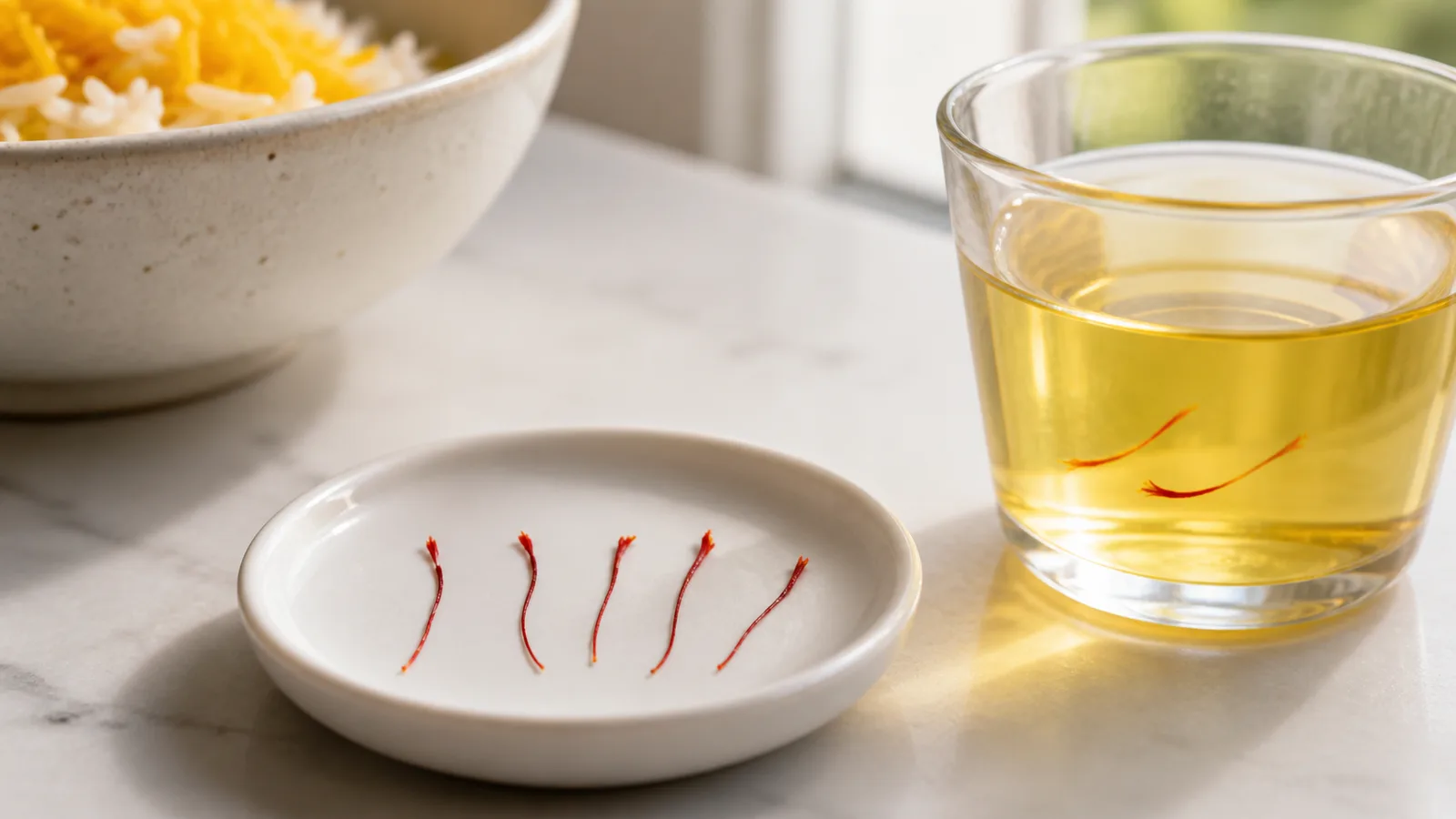
Most saffron sold today comes from Iran, while the cultivated saffron crocus is most strongly associated with an ancient Greek origin. Those answers describe two different things. Iran leads modern production; the plant itself has a much older history. India, Afghanistan, Spain, Greece, Morocco and Italy are also established saffron producing countries.
What Country Is Saffron From?
If “from” means the country producing the largest share now, the answer is Iran. A November 2025 update from the UN Food and Agriculture Organization placed Iran at about 85–90% of world saffron production. Harvests and estimates change, so that range is more useful than treating 90% as an exact permanent figure.
If the question is about the plant’s earliest origin, the answer needs more care. Saffron is the dried stigma of Crocus sativus, a crop that people have moved and cultivated for centuries. The Royal Botanic Gardens, Kew currently lists it as a cultigen from Greece. Iran’s great importance comes from its deep farming history and present scale, not from a requirement to call one modern border the only place saffron has ever belonged.
For a closer look at domestication and ancient history, read our separate guide to where saffron originally came from. This article concentrates on the countries and regions that grow the spice today.
Which Country Produces the Most Saffron?
Iran is the clear production leader. Much of its crop is associated with Razavi Khorasan and South Khorasan, where saffron fits an arid and semi-arid farming landscape and generations of growers know how to manage the short flowering and harvest period. FAO’s profile of the qanat-based saffron system in Gonabad shows how cultivation and local water management developed together.
Scale matters beyond the field. A large producing region supports seasonal picking, stigma separation, drying, grading, laboratories, packaging and trade. That network helps explain why Iran can supply so much of the world market. It does not mean that every Iranian pack has the same strength or purity.
Our detailed answer to which country produces the most saffron explains why production, exports and repacking statistics should not be mixed together.
The Main Saffron-Growing Countries
After Iran, it is safer to describe important origins than to publish a rigid second-to-seventh league table. Countries report different harvest years and metrics, and a prominent exporter may have packed saffron grown elsewhere. The following regions have genuine, documented production traditions.
Iran
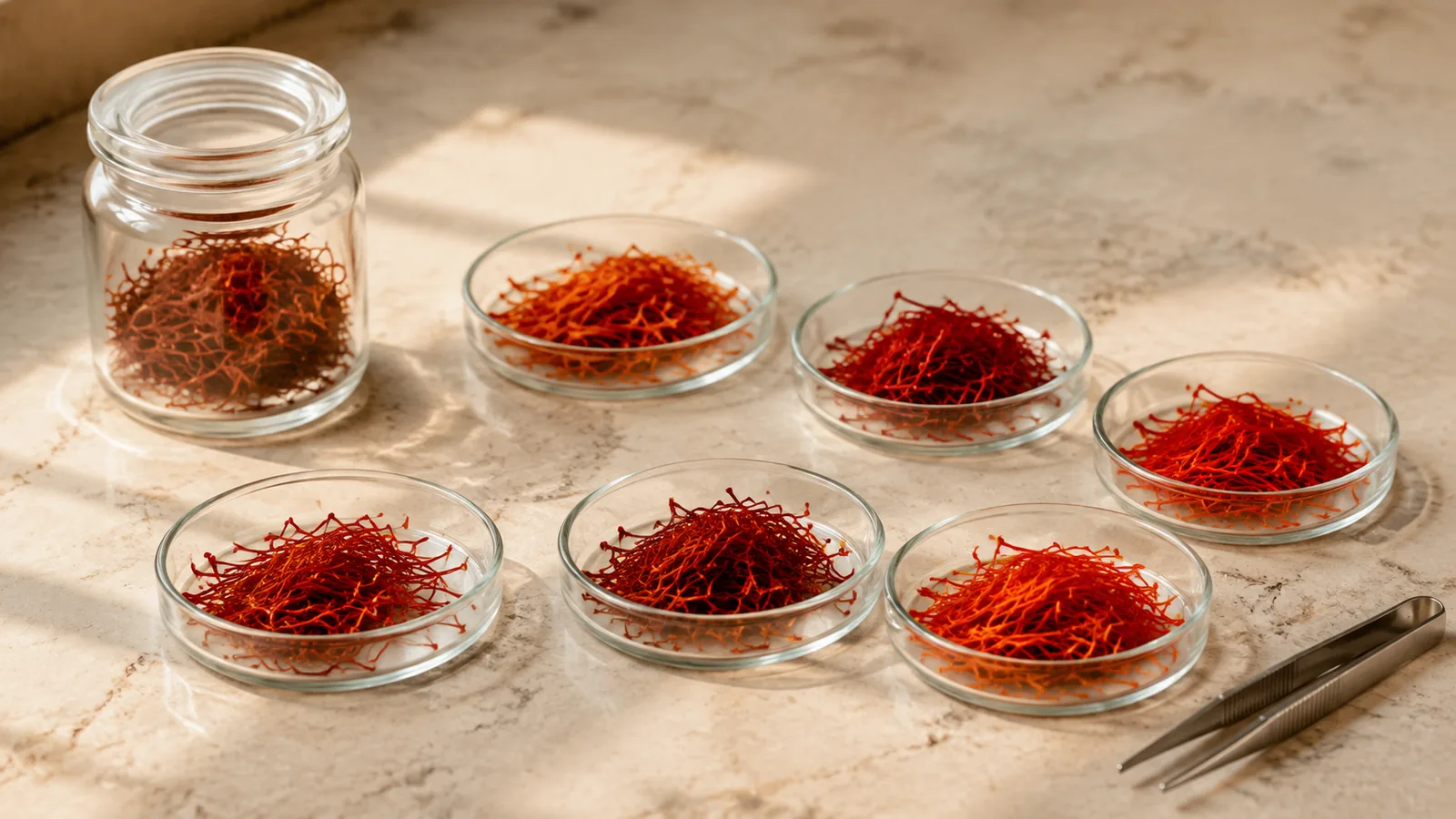
Iran combines by far the largest production base with a wide range of commercial thread styles. Names such as Bunch, Pushal, Sargol and Negin describe how much red stigma and lighter style remains and how the threads are presented. They are not countries, and they do not replace batch-specific quality evidence.
Iranian saffron can offer strong colour, aroma and flavour, but the buyer should still examine the responsible seller, origin statement, lot information, condition of the threads and any credible testing supplied for that batch.
India, Especially Kashmir
India’s best-known saffron area is Kashmir, particularly around Pampore and other parts of Jammu and Kashmir. Kashmir Saffron is a registered geographical indication. The official Intellectual Property India record identifies the registered name, geographic area and Agriculture Production Department of Jammu and Kashmir as the applicant.
That protection helps verify a defined origin when a product is properly authorised. It does not prove that every loose packet described as “Kashmiri” or “kesar” came from the protected area.
Afghanistan
Afghan saffron is strongly associated with Herat Province. FAO’s origin-product profile names districts including Ghoryan, Zindajan, Guzara, Anjil, Karokh, Pashtun Zarghun, Shindand and Obe as production areas for Herat-Bastan Saffron. Afghanistan’s production is far smaller than Iran’s, but its origin-linked production is formally documented.
Spain
Spain has a long connection with saffron in cooking, farming and trade. La Mancha is its best-known growing region. The European Union record recognises Azafrán de la Mancha as a protected designation of origin for saffron that meets the defined geographic and product specification.
A Spanish company can also import or pack saffron from another country, so “packed in Spain” and “grown in Spain” are different claims. Look for the precise origin wording rather than judging by the style of the container.
Greece
Greek saffron is closely linked with Kozani. The European Commission describes Krokos Kozanis PDO as a protected regional product whose cultivation, harvest, drying and packaging follow place-specific requirements. Greece produces much less saffron than Iran, yet its controlled regional identity makes it important to buyers comparing traceable origins.
Morocco and Italy
Morocco’s best-known saffron area is Taliouine in the Anti-Atlas. Its production is smaller in global terms but culturally and economically important in the region. Italy also maintains several local saffron traditions, usually at a scale that should not be confused with Iran’s national output.
Saffron is grown in other countries as well. A country can produce genuine Crocus sativus without appearing near the top of a volume ranking. Our guide to where saffron is grown successfully explains the seasonal and soil conditions behind cultivation.
Does the Country Decide Which Saffron Is Best?
No. A saffron country of origin statement is useful provenance, but it cannot describe every packet from that country. Picking time, the proportion of stigma and style, drying, moisture, cleanliness, age, storage and adulteration all affect the finished spice. Excellent and weak batches can come from the same origin.
Protected names such as Kashmir Saffron, Azafrán de la Mancha and Krokos Kozanis connect a product with a defined region and specification. That is stronger than an unexplained geographic claim, but it still answers “where and under what rules,” not a universal contest for the world’s best taste.
When choosing a pack, check:
- the stated country of harvest, not only the seller or packing address;
- the botanical identity Crocus sativus;
- net weight, lot information and useful packing or harvest dates;
- clean, dry threads and a sealed food-suitable container;
- whether a certificate or test report actually matches the lot offered.
Our high-quality saffron buying guide covers those checks in more detail. The current saffron range also shows how origin, thread style, pack size and product information appear in a real comparison.
The Short Answer
What country is saffron from? Iran produces roughly nine-tenths of the modern crop and is the country most saffron comes from today. Kew’s botanical record points to cultivated saffron as a cultigen from Greece. India, Afghanistan, Spain, Greece, Morocco and Italy are among the other recognised saffron-growing countries. For a purchase, use country as one part of the evidence, then judge the particular batch, its traceability and its handling.