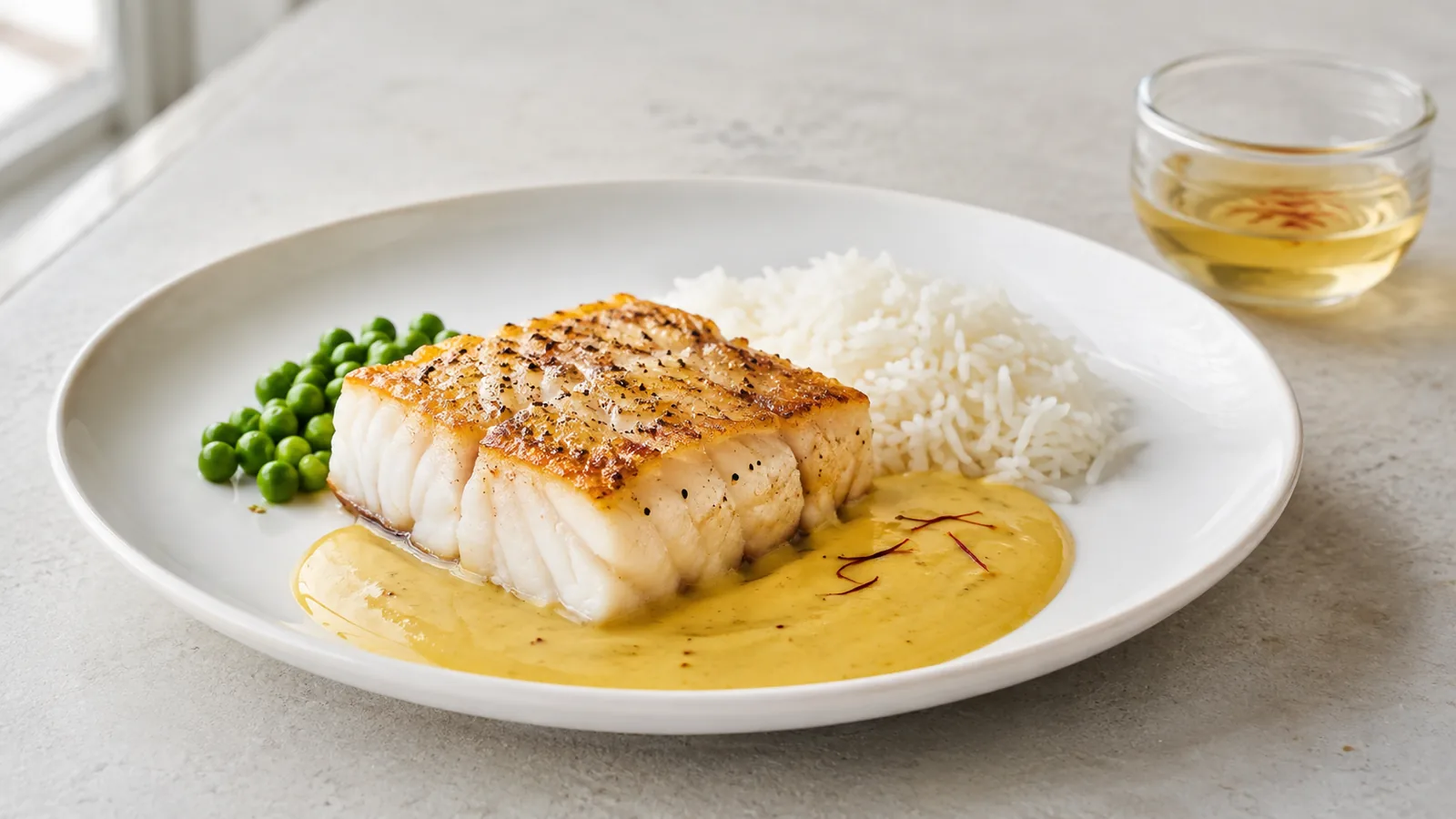


Yes, ginger goes well with saffron. Ginger brings fresh heat and citrusy sharpness, while saffron is more delicate, with floral, honeyed and earthy notes. A good ginger and saffron pairing keeps the ginger restrained so both ingredients remain recognizable.
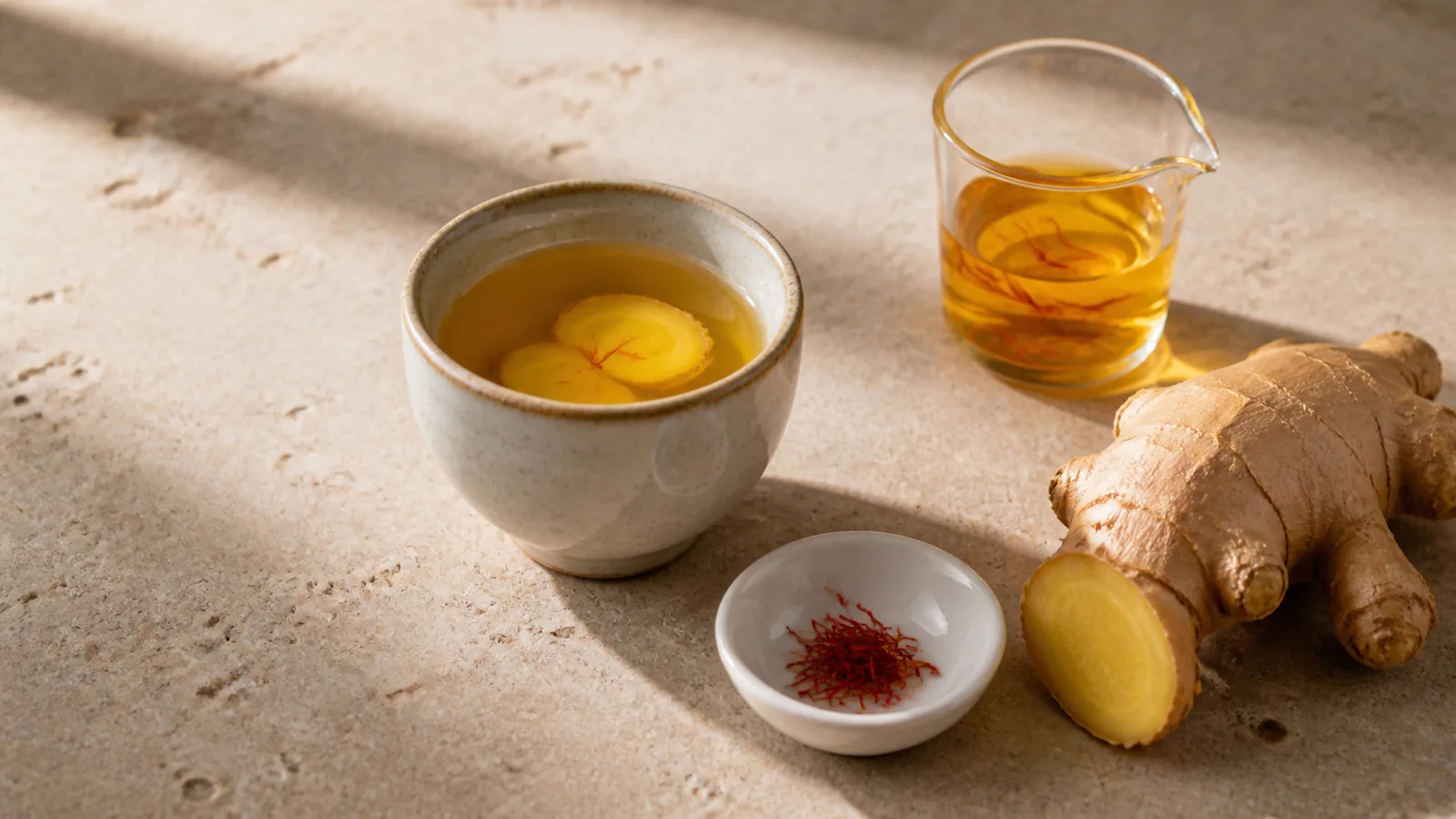
What does a ginger saffron pairing taste like?
Fresh ginger is bright and warming. Dried ginger is usually rounder but can feel hotter when too much is added. Saffron has a quieter aroma and a slight bitterness beneath its floral character. Used together, ginger gives the combination an immediate lift and saffron provides a longer aromatic finish.
The balance can be lost quickly. A large piece of ginger may dominate a small pinch of saffron, especially in a clear drink or light broth. Start with less ginger than you think you need, taste after it has infused, and add more only if the saffron is still easy to notice.
How to prepare ginger and saffron
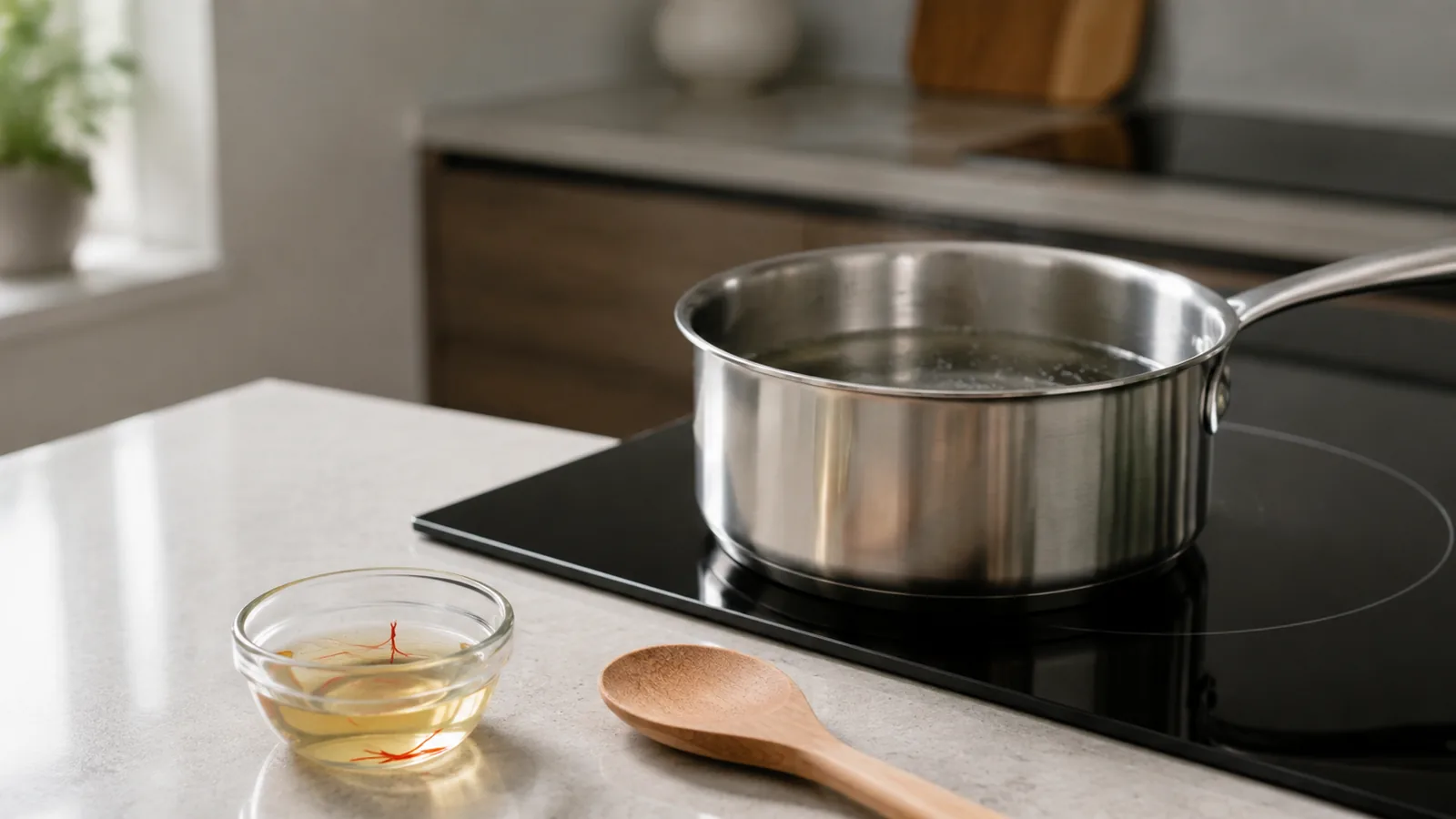
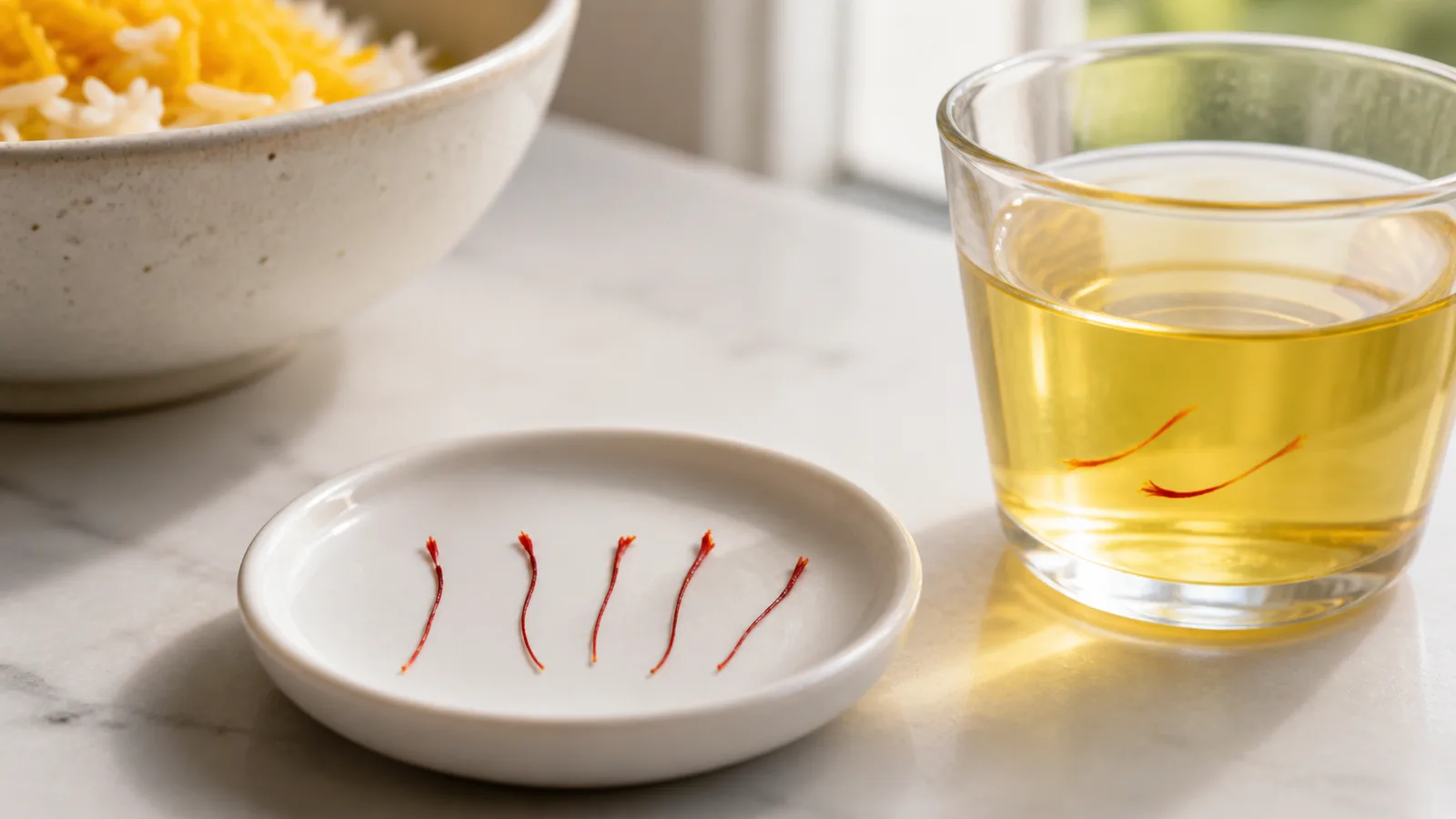
Bloom the saffron separately before combining the two ingredients. Lightly crush a small pinch of threads, cover them with a few tablespoons of warm water and leave them for 10 to 15 minutes. The liquid should gradually become golden and aromatic.
Slice or grate the ginger according to the dish. Thin slices are easy to remove from tea and broth; finely grated ginger spreads more strongly through rice, sauces and marinades. Add the saffron liquid, including the threads, after the ginger has had time to soften.
Warm water helps saffron release its colour and aroma. It does not need aggressive boiling, and prolonged high heat can flatten its more delicate fragrance. Our explanation of whether hot water ruins saffron covers the difference between blooming and boiling.
A simple ginger saffron tea
For two small cups, use a few thin slices of fresh ginger and a small pinch of saffron threads.
- Steep the ginger in hot water for five to eight minutes.
- Bloom the lightly crushed saffron in a separate spoonful of warm water.
- Remove the ginger if the drink has reached the heat you like.
- Stir in the saffron infusion and taste before adding anything else.
Honey can soften the ginger, while a little lemon makes the drink brighter. Neither is required. Add them after tasting so they do not hide the saffron.
Where the combination works in cooking
Rice and grains
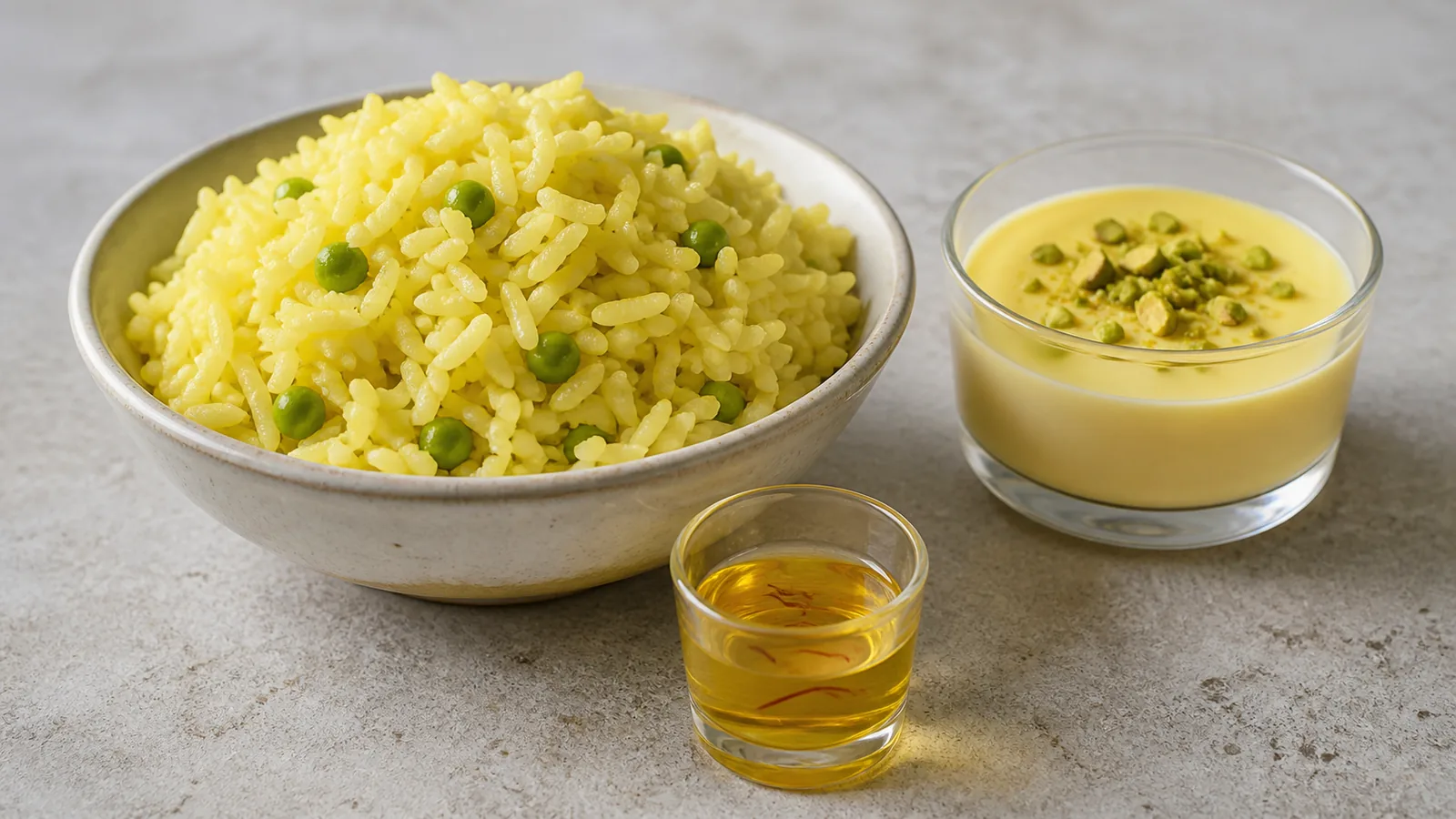
Ginger and saffron suit aromatic rice, pilaf and couscous when the ginger is used as a background note. Cook the ginger with the savoury base, then add bloomed saffron toward the end or fold it through a small portion of cooked rice for an even golden finish.
Chicken, fish and vegetable dishes
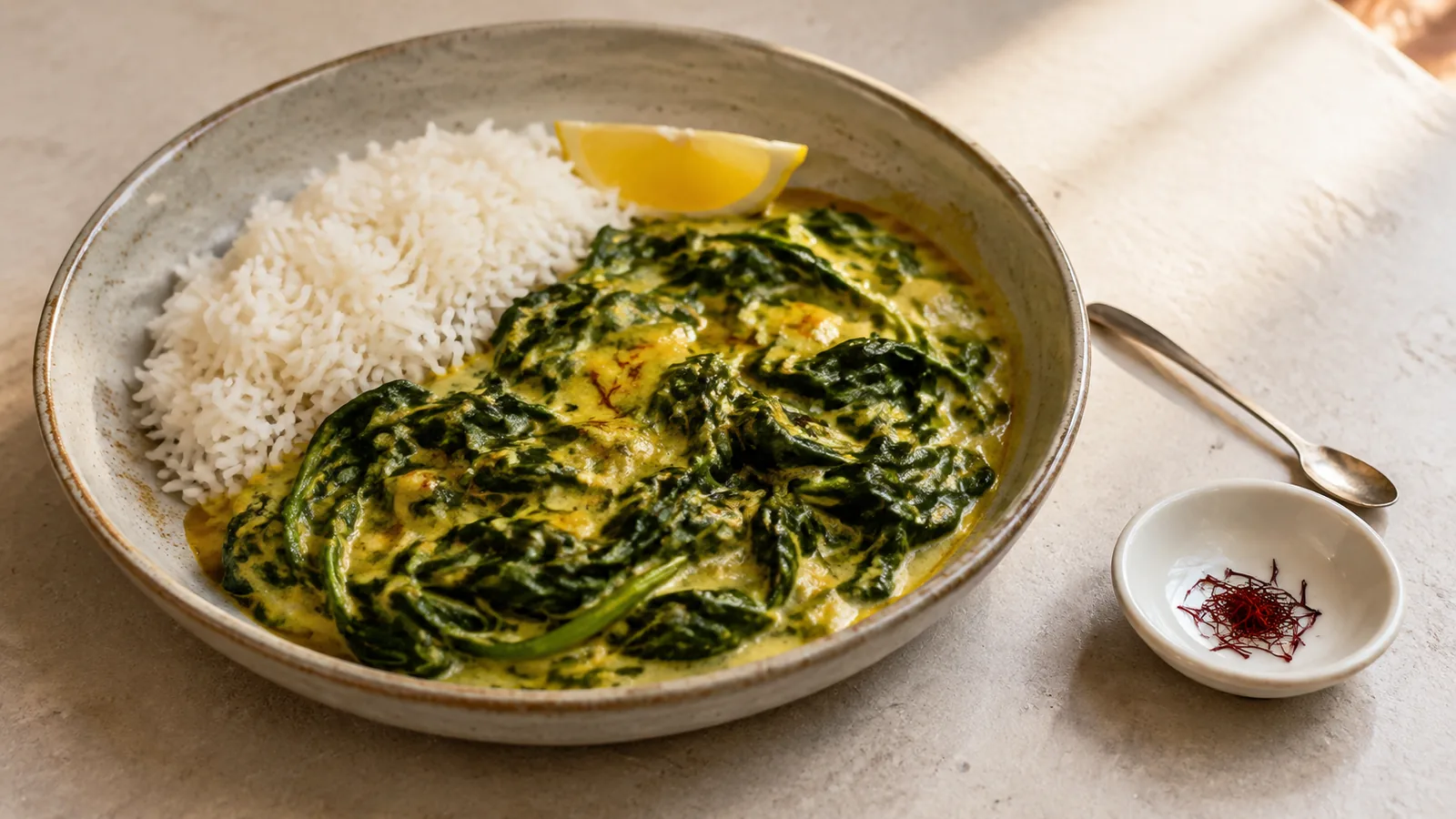
A little ginger can sharpen a saffron marinade or light sauce. Garlic, onion, lemon and mild stock can join the pairing, but strong chilli and heavy smoke make saffron harder to detect. In vegetable dishes, carrots, squash, cauliflower and spinach all provide a mild enough base.
Soups and broths
Fresh ginger works particularly well in a clear chicken or vegetable broth. Simmer the ginger first, reduce it if the heat becomes too strong, and add bloomed saffron during the later part of cooking. This keeps the aroma fresher than boiling both from the beginning.
Desserts and warm milk
The pairing can also work in rice pudding, custard and warm milk. Here, a very small amount of ginger is enough. Cardamom, cinnamon or rose can be included, although using all of them heavily at once creates a crowded flavour.
How much should you use?
There is no single ratio for every recipe. For a four-serving dish, begin with a small pinch of saffron and roughly half a teaspoon of finely grated fresh ginger, or a few thin slices if they will be removed. A drink for one person needs less.
Potency varies with the age and form of the ginger, the quality of the saffron and the amount of liquid. Taste is more useful than chasing an exact strand count. Saffron should be present in the aroma, while ginger should supply warmth without turning the dish sharply hot.
Fresh ginger or ground ginger?
Fresh ginger is the more flexible choice for tea, broth, rice and marinades because its flavour is lively and its strength can be controlled by removing the slices. Ground ginger is convenient in baking and dry spice blends, but it disperses completely and is harder to correct once added.
If substituting ground ginger for fresh, begin with a light pinch rather than an equal spoon-for-spoon swap. Give it time to hydrate, then taste. The aim is still to leave room for the saffron.
Other flavours that connect the pair
Lemon links ginger’s brightness with saffron’s aroma. Honey rounds the heat in drinks and desserts. Cardamom can support both, while garlic and onion move the combination in a savoury direction. Mild dairy or coconut milk softens ginger and carries the saffron colour well.
These are options, not a checklist. Choose one direction that suits the dish. For a broader look beyond ginger, see what pairs best with saffron.
The practical answer
Ginger and saffron belong together when the recipe leaves space for saffron’s quieter character. Bloom the saffron, introduce ginger gradually and taste before adding stronger aromatics. The result should be warm and fragrant, not simply hot or heavily spiced.