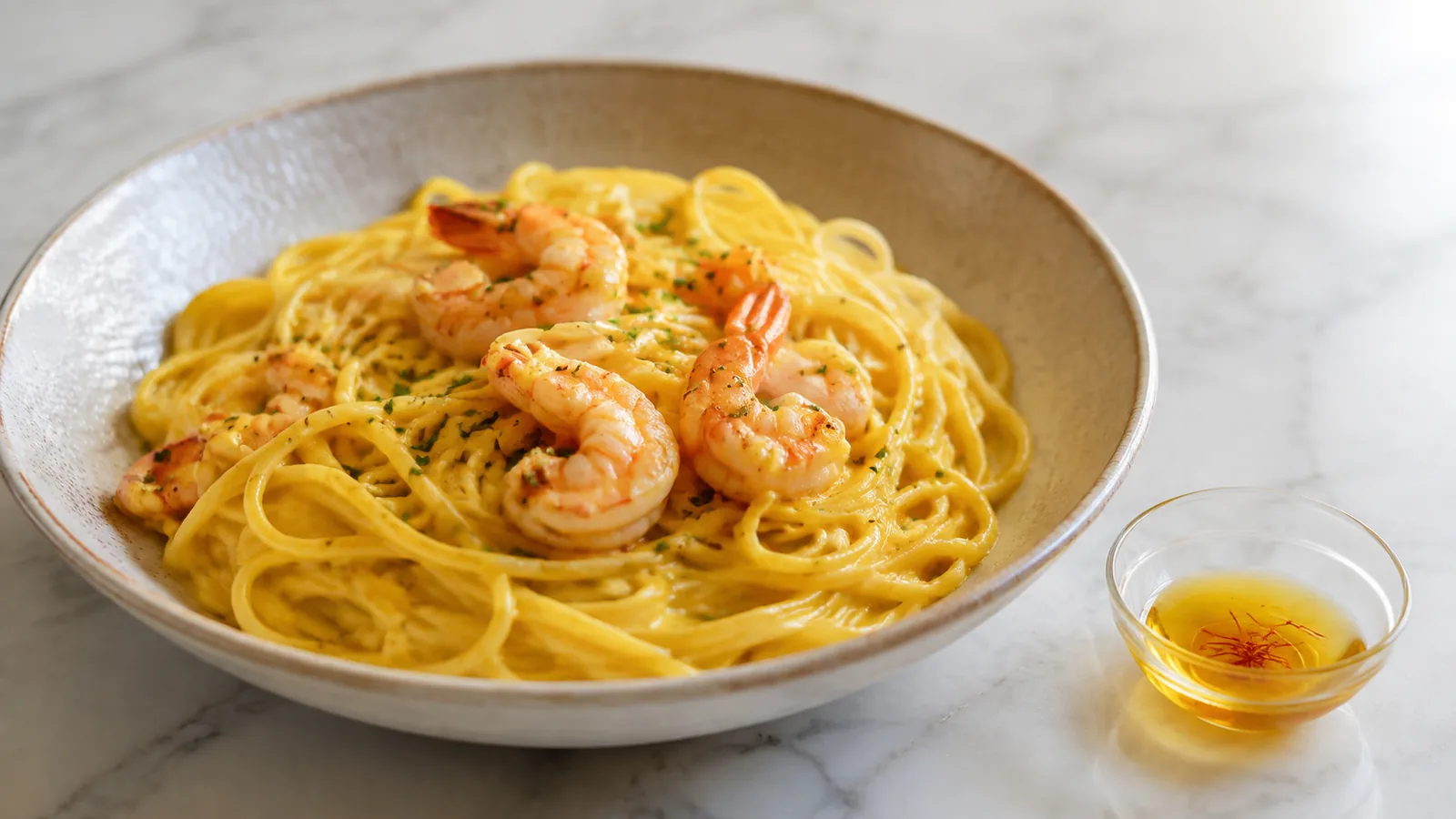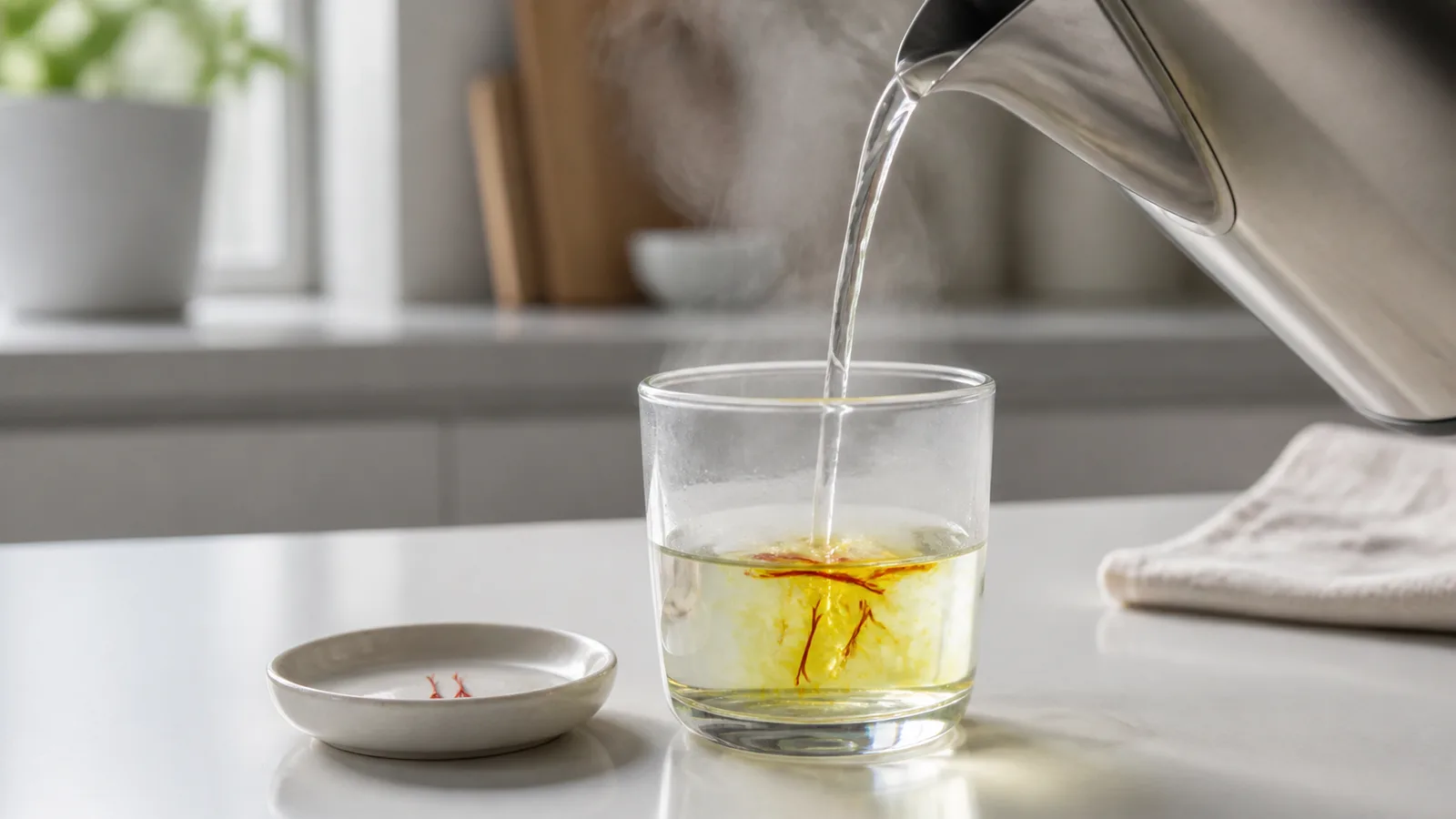
No—hot water does not automatically ruin saffron. It helps move saffron’s colour, bitterness and aroma into a liquid. The practical saffron hot water tips are to use a small amount, give it time to bloom and avoid prolonged aggressive boiling when you want to preserve the most delicate aroma.
A kettle that has just boiled is not a disaster. Pouring that water over a few threads and steeping them is very different from keeping saffron at a rolling boil for a long cooking period. Temperature, time and the dish all matter.
What hot water extracts from saffron
Crocins contribute much of saffron’s golden colour and dissolve readily into water. Picrocrocin contributes bitterness, while safranal is central to the aroma. These compounds do not behave identically, so “heat destroys saffron” is too simple.
A 2024 study of saffron infusion temperature and time compared 60°C, 80°C and 100°C conditions in water/oil systems. It found that water and temperature affected the main compounds differently: water supported crocin extraction, picrocrocin was relatively stable, and lower temperatures favoured safranal in the oil phase. Hotter is not uniformly worse or better; it changes what is extracted.
Warm water or boiling water?
Warm-to-hot water is forgiving for a short bloom. If aroma is the priority, let freshly boiled water stand briefly before pouring it over the threads, cover the cup and steep for 10–15 minutes. If colour is the priority in a robust rice or stew, hotter water can still extract it effectively.
The risk comes more from time at high heat than from one quick pour. A culinary-processing study at 100°C found that cooking time affected saffron compounds differently: picrocrocin did not show the same change, while crocins and safranal were adversely affected. That supports avoiding unnecessary prolonged boiling without pretending a single splash of boiling water ruins the spice.
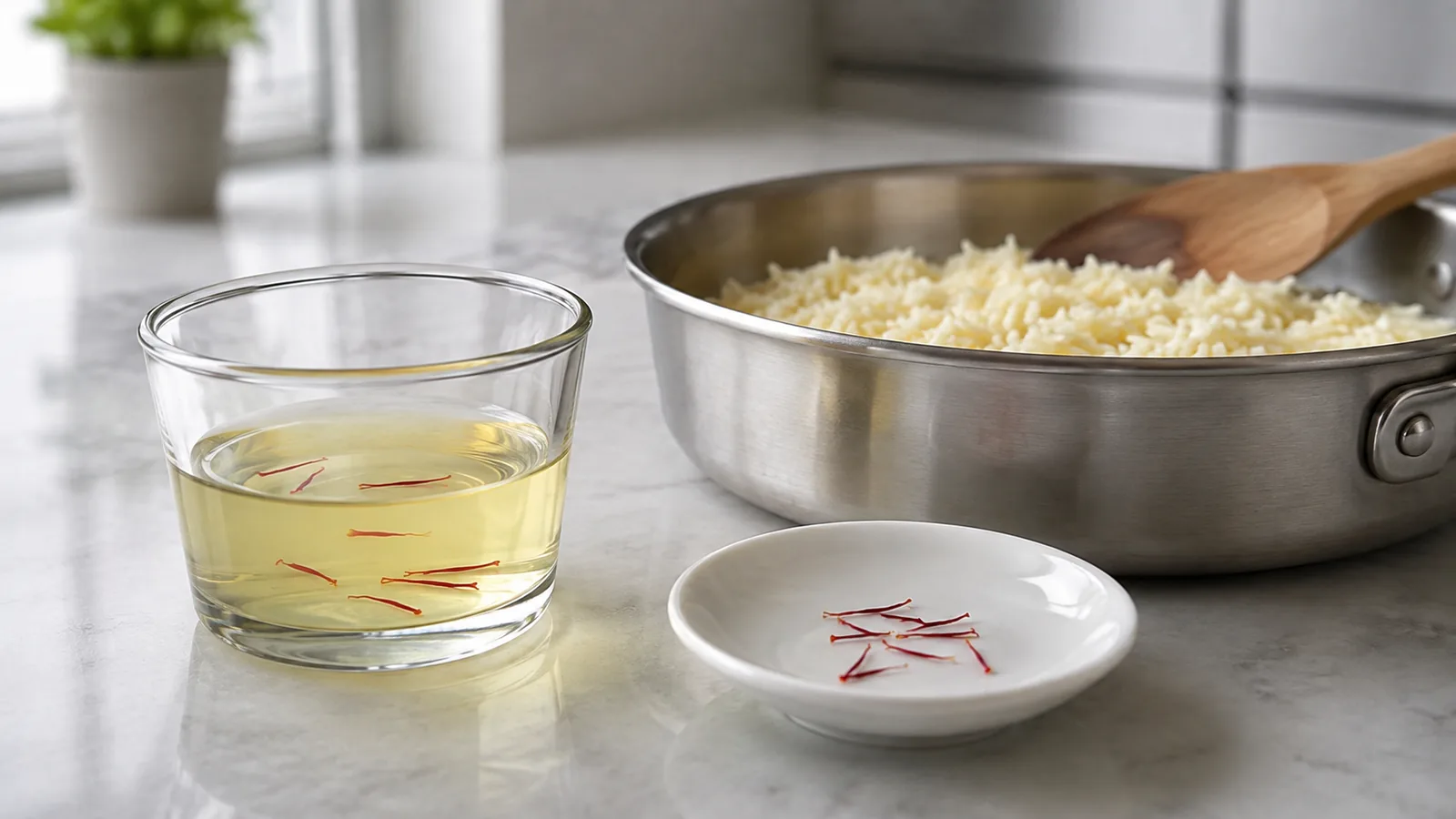
How to bloom saffron in hot water
- Lightly crush a small pinch of whole threads. Do not grind them into dust unless a recipe calls for it.
- Place the saffron in a cup and add two or three tablespoons of warm-to-hot water.
- Cover and leave it for 10–15 minutes. The liquid should become golden and aromatic.
- Add both liquid and threads to the dish so nothing useful is left behind.
A small volume makes the infusion easy to distribute without adding excess liquid to rice, sauce or dough. Blooming is a culinary extraction method, not a way to increase medical “potency.”
Saffron in hot water benefits: culinary, not clinical
The dependable benefits of hot water are practical. It gives more even colour than scattering dry threads over finished food, releases aroma before the threads reach the pot and helps a modest quantity reach more of the dish. A golden infusion also lets you judge the saffron before adding it.
Hot saffron water should not be promoted as a detox, treatment or guaranteed wellness drink. Research on extracts or supplements cannot be transferred automatically to a homemade infusion, and a visible colour change does not prove a health outcome.
When to add the infusion to food
Rice
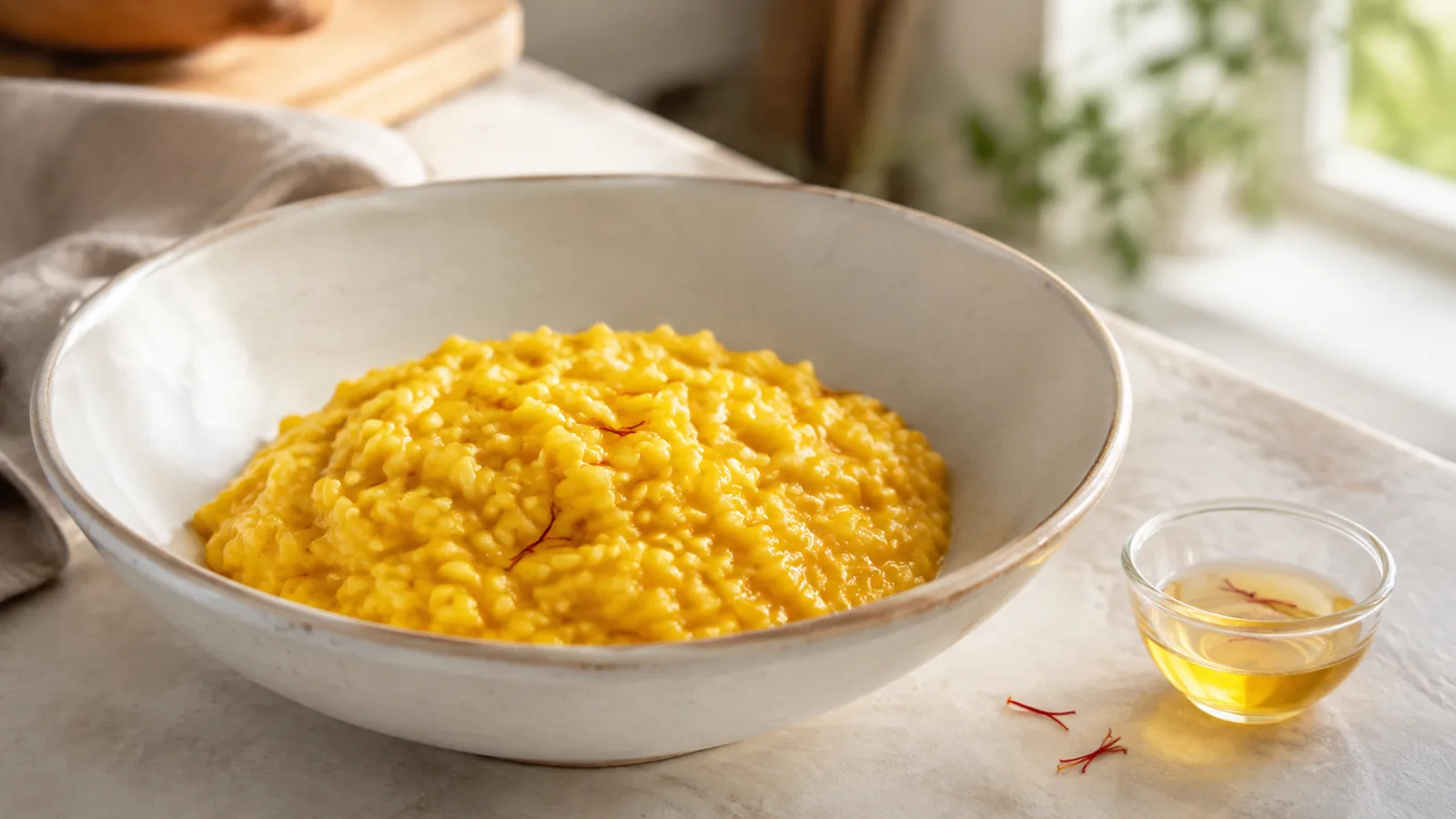
For absorption-method rice, add the blooming liquid with the cooking liquid or shortly before the rice finishes. For steamed Persian rice, mix it into a small portion of cooked rice and use that golden rice over the finished platter.
Soups, stews and sauces
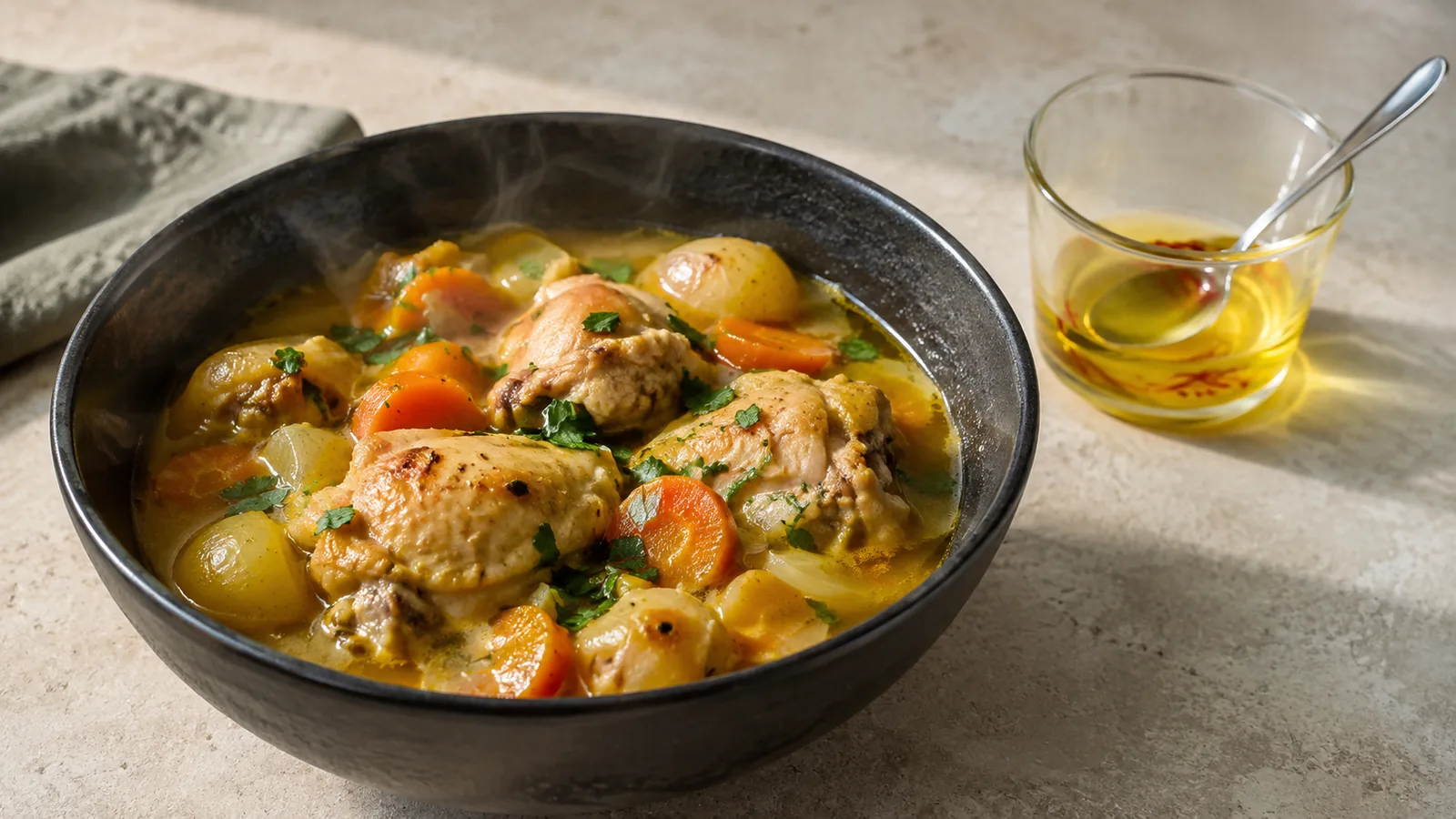
Add the infusion during moderate cooking or near the final stage when you want the aroma to remain clear. A stew that simmers for hours can receive saffron later than onions or stock. For more detail on direct heat and prolonged cooking, see what happens when saffron is boiled.
Tea and milk
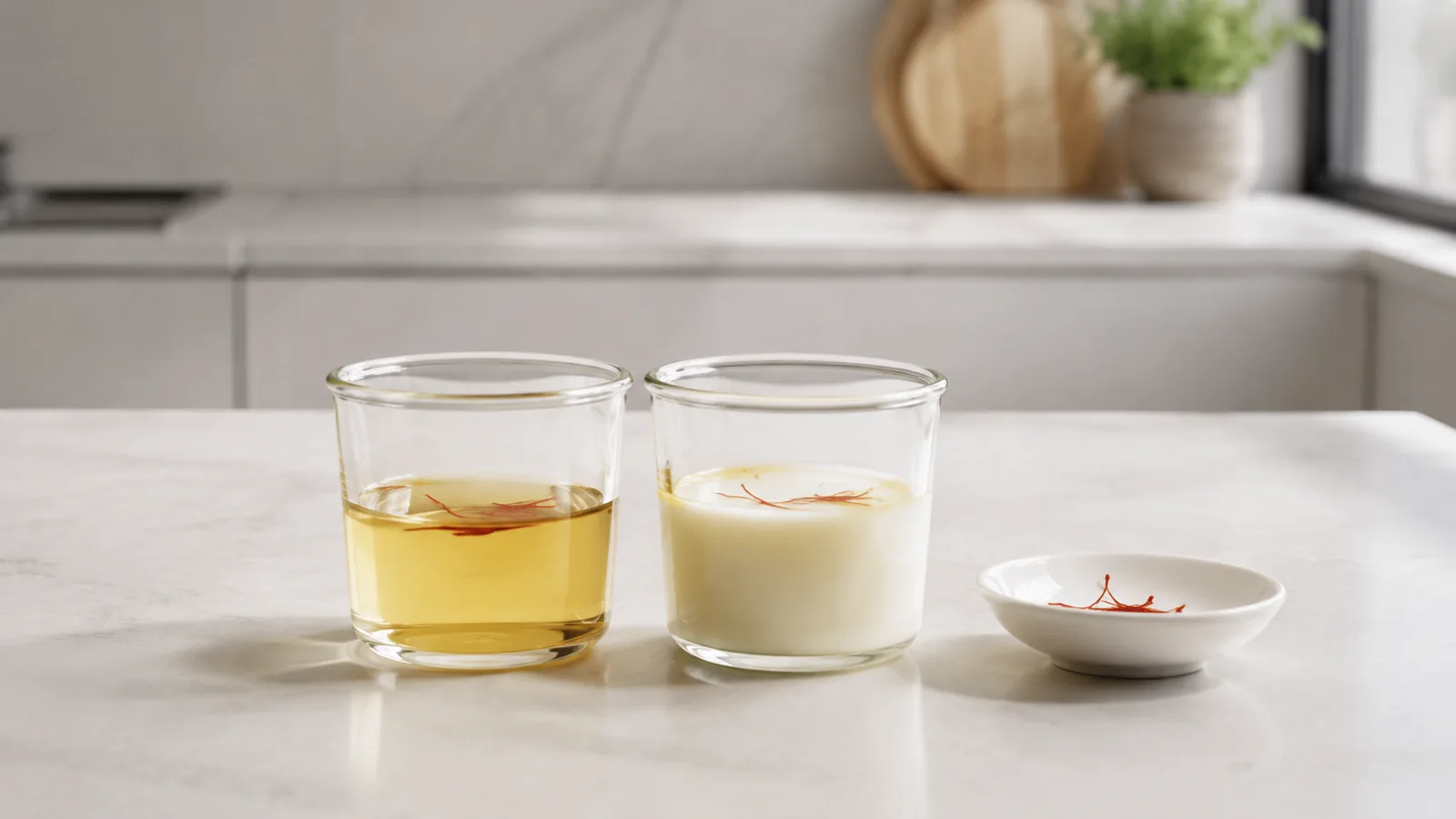
Steep a few threads in hot water for tea. For milk, bloom in a small warm portion, then combine it with the rest. Milk or a little fat can change the way aroma is perceived, but water is already effective for colour extraction; butter or oil is not required to “activate” saffron.
Common mistakes
- Using a large pile because the infusion has not coloured instantly.
- Leaving an uncovered cup to sit while aroma escapes.
- Boiling the infusion hard for a long time before it reaches the recipe.
- Judging quality from colour alone; adulterated products may also colour water.
- Discarding the softened threads after blooming.
Quality and storage still matter
Fresh, well-stored whole threads usually give a clearer aroma than stale or anonymous powder. Keep saffron sealed away from heat, light and moisture. Quality can improve flavour and traceability, but it does not make every temperature harmless or guarantee a medical benefit.
The Rowhani Saffron products page lists whole-thread formats for cooking and drinks. Use hot water with confidence—then control time and handling so the infusion keeps the character you bought it for.