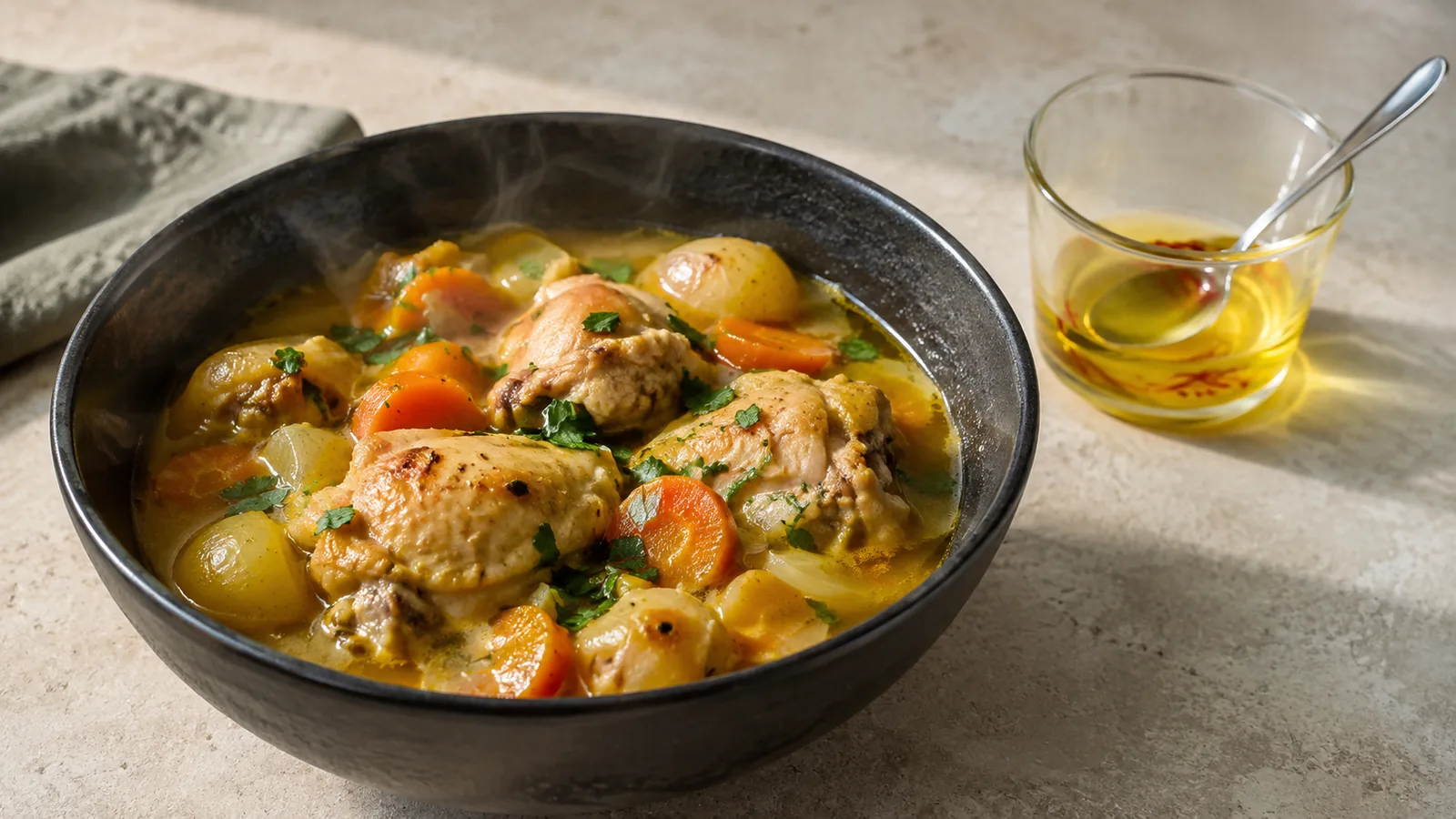
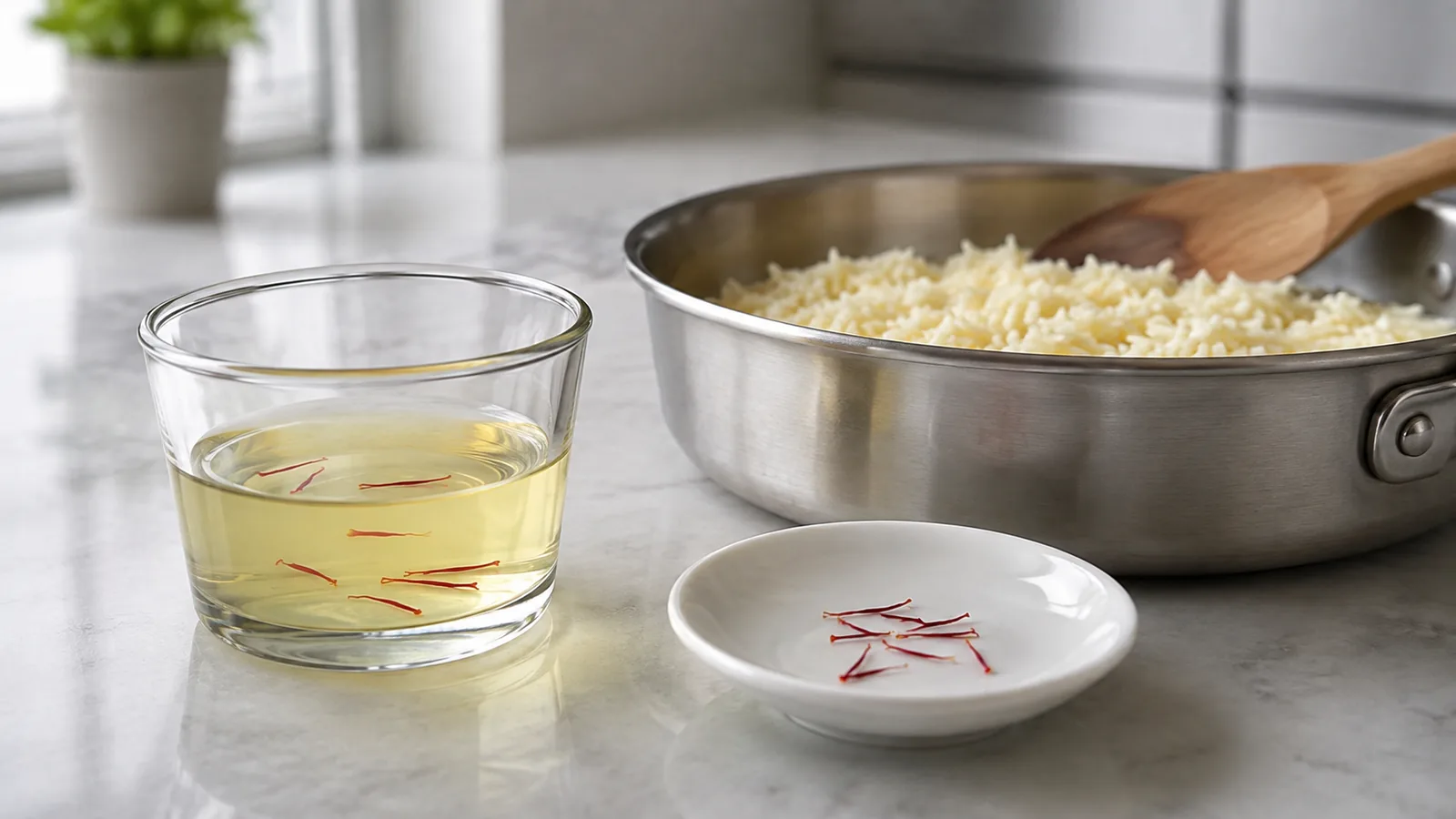
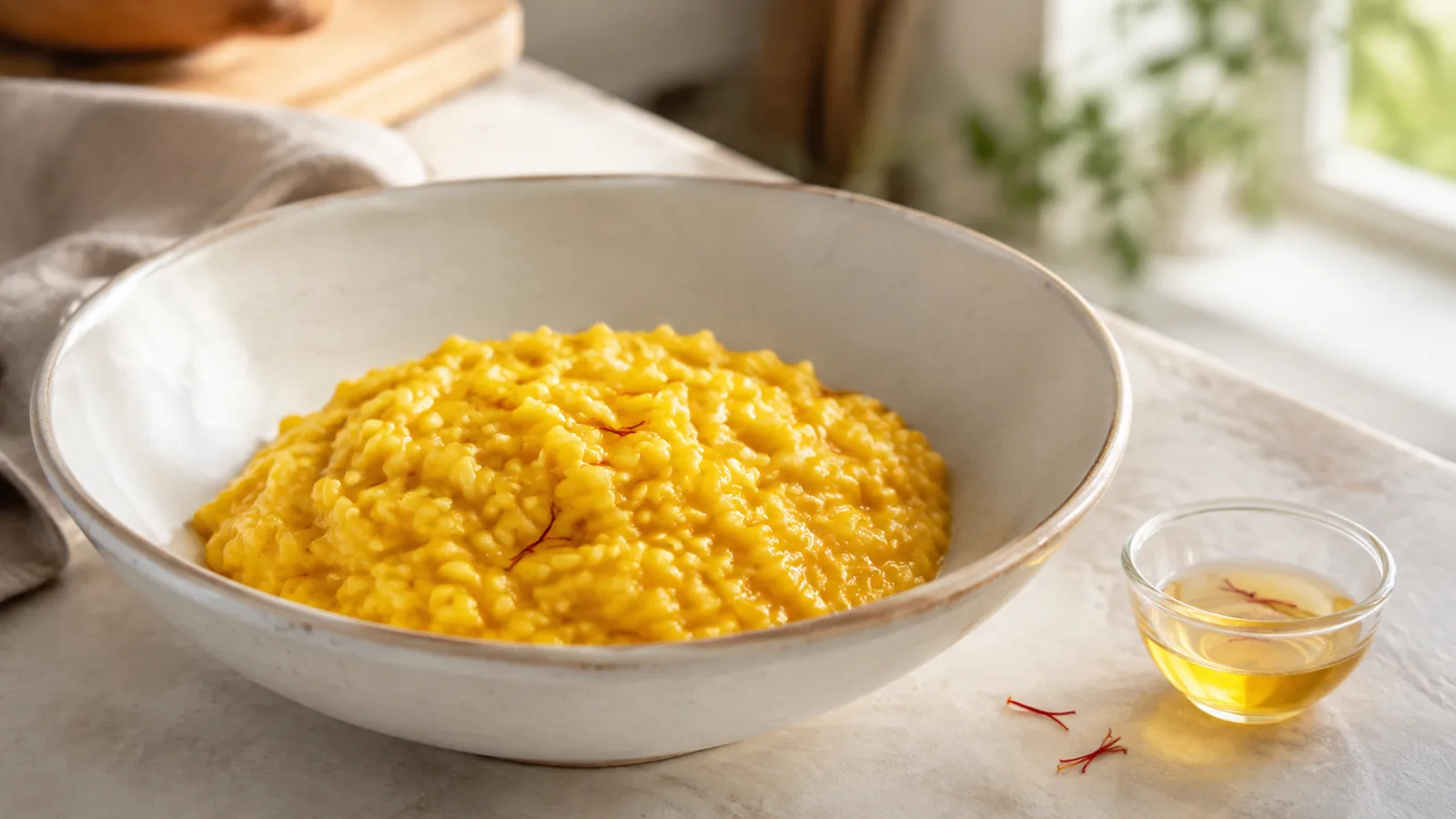
You can soak saffron in either milk or water. Choose warm water for rice, soup, tea and most savory dishes; choose warm milk for custards, ice cream, creamy recipes and saffron milk. Both milk and water can work, and these saffron soaking methods preserve a subtle flavor without diluting the recipe. The important part is using a small, concentrated amount and giving lightly crushed threads 10 to 15 minutes to bloom.
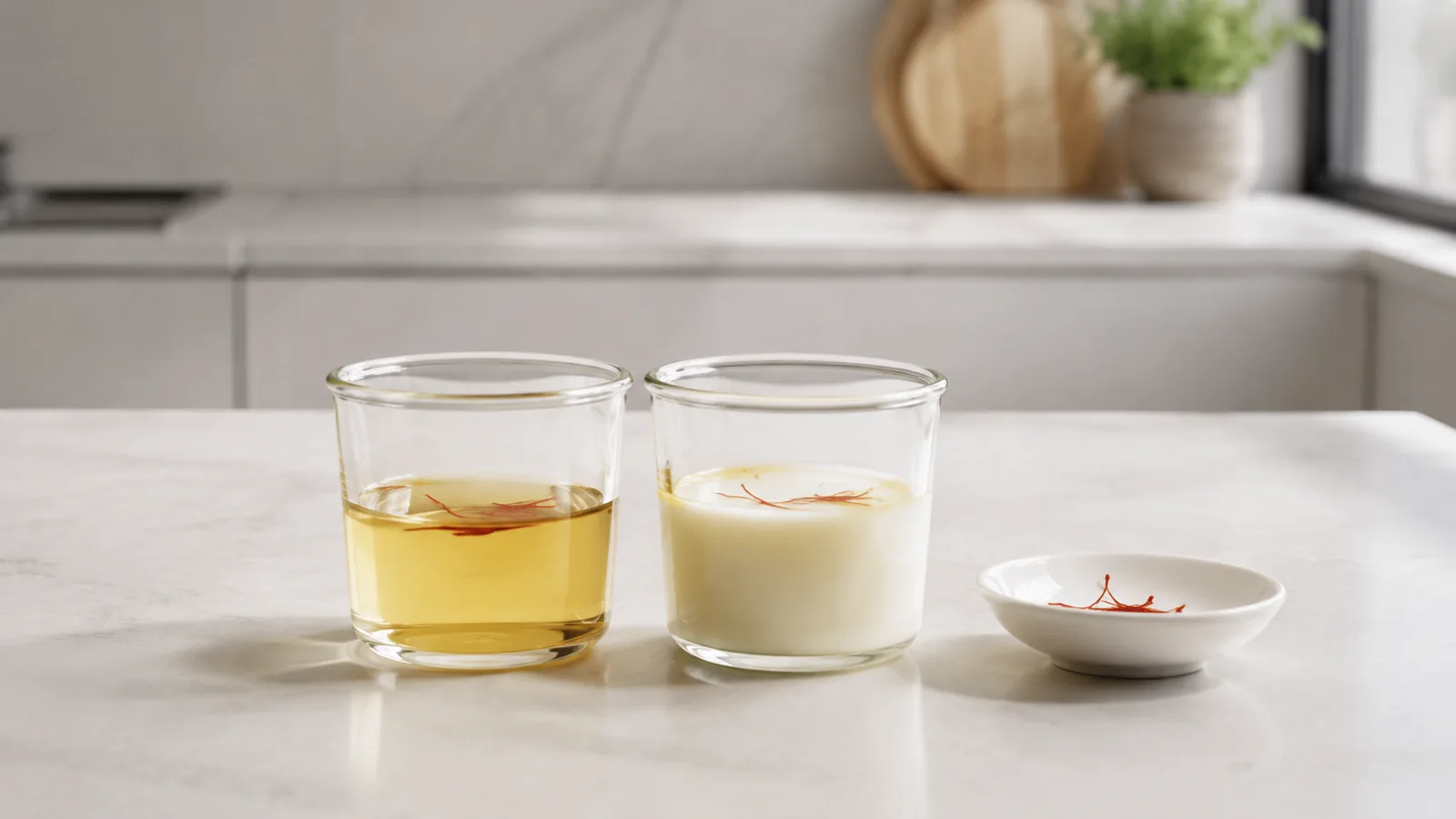
Water or milk: the practical choice
- Use water when you want a neutral infusion that will not change the richness or seasoning of the recipe.
- Use milk when dairy already belongs in the dish or drink and you want the saffron to blend directly into it.
- Use stock as a third option for risotto, pilaf, sauces, soups and stews.
All three can release saffron’s colour and aroma. Milk also contains fat, which can make the finished flavour feel rounder, but water remains the most versatile saffron soaking method.
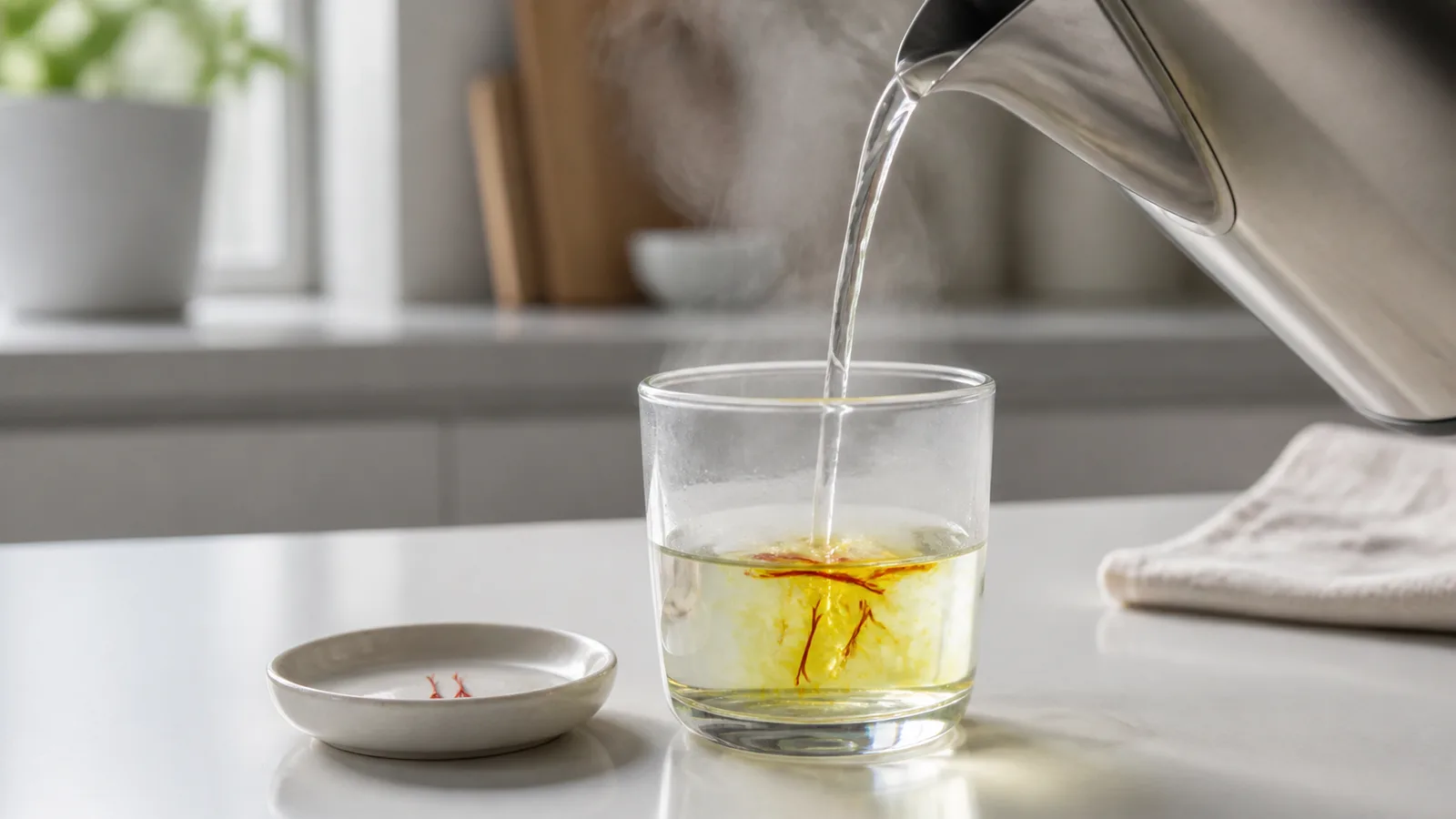
How to soak saffron in water
- Lightly crush a small pinch of saffron threads.
- Place them in a heatproof cup.
- Add two or three tablespoons of warm water.
- Leave the infusion for 10 to 15 minutes.
- Add both the golden liquid and softened threads to the recipe.
Saffron in water works well for rice, pasta, soups and tea, providing a vibrant hue without adding dairy. A tablespoon may be enough for a very small recipe, but the threads need to be covered. Avoid using a large cup of water unless the recipe already requires that much liquid; a diluted bloom is harder to taste and may water down a sauce.
How to soak saffron in milk
- Warm a small amount of milk until it is hot but not boiling.
- Lightly crush the threads and stir them into the milk.
- Let the mixture stand for 10 to 15 minutes.
- Stir it into the custard, dessert, sauce or drink.
Milk-soaked saffron is useful for custards, ice creams, rice pudding and saffron-infused beverages. It also works in savoury cream sauces. For a complete drink method, see our saffron milk recipe.
How to eat saffron with milk
If you are searching how to take saffron with milk, the culinary method is simple: make a small bloom, then stir it into a normal serving of warm milk. The softened threads can remain in the cup. They do not need to be strained out or eaten separately.
Saffron how to use in milk depends on the recipe and the strength of the threads. Start with a modest culinary amount rather than treating the drink as a concentrated supplement. Add sweetness or spices only if they suit your taste; honey, cardamom and cinnamon can all dominate when overused.
How warm should the liquid be?
Warm liquid is helpful; boiling liquid is unnecessary. Very high heat can flatten the delicate aroma, and hard boiling milk creates its own problems with scorching and a skin on the surface. Heat the water or milk until comfortably hot, remove it from direct heat, then add the saffron.
The liquid should gradually become golden-yellow and aromatic. Exact colour varies with dose, thread quality, liquid and time, so a pale bloom does not always mean failure. Lightly crushing the threads and using a small volume usually improves extraction.
Is soaking saffron essential?
It is a reliable technique, not an absolute rule. Dry threads can cook directly in a sufficiently moist dish, but they release flavour and colour less evenly. Blooming first gives the cook more control and makes it easier to judge the infusion before it reaches the whole recipe.
Our broader guide to soaking saffron before cooking explains when a separate bloom matters most.
Common saffron soaking mistakes
- Using boiling liquids: gentle warmth is enough.
- Leaving the threads whole: light crushing helps the liquid reach more surface area.
- Using too much liquid: keep the bloom concentrated.
- Discarding the threads: add them with the infusion unless the recipe specifically needs a perfectly smooth finish.
- Expecting instant colour: allow 10 to 15 minutes for the bloom to develop.
- Adding too much saffron: a very concentrated dose can taste bitter or medicinal.
Choosing threads for soaking
Authentic saffron threads should be dry, aromatic and predominantly deep crimson. Whole threads are easier to inspect and dose than an unidentified powder, which makes identity and purity easier to assess. High-quality saffron can provide rich aroma and vibrant color, but no ingredient guarantees maximum taste; correct proportion and preparation still determine the result.
Which liquid should you choose?
Use warm water when flexibility matters, warm milk when the recipe is dairy-based, and warm stock for savory food that already uses broth. Each can produce even color distribution and a clear saffron aroma. No method guarantees “maximum flavor” or the “full essence” of every batch. The aim is full flavor at the recipe’s intended strength, using a liquid that fits naturally without adding unwanted water, richness or seasoning.