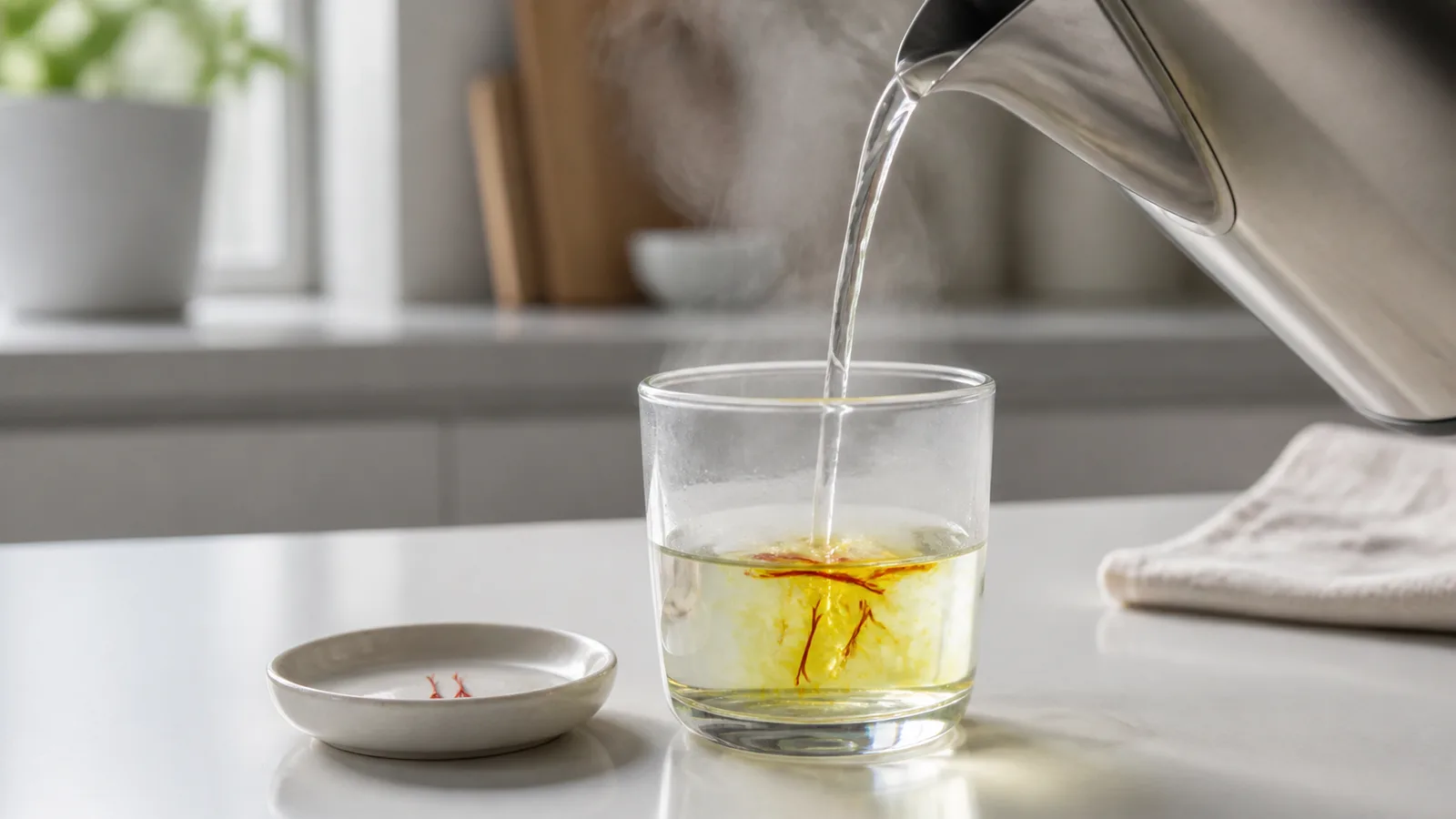
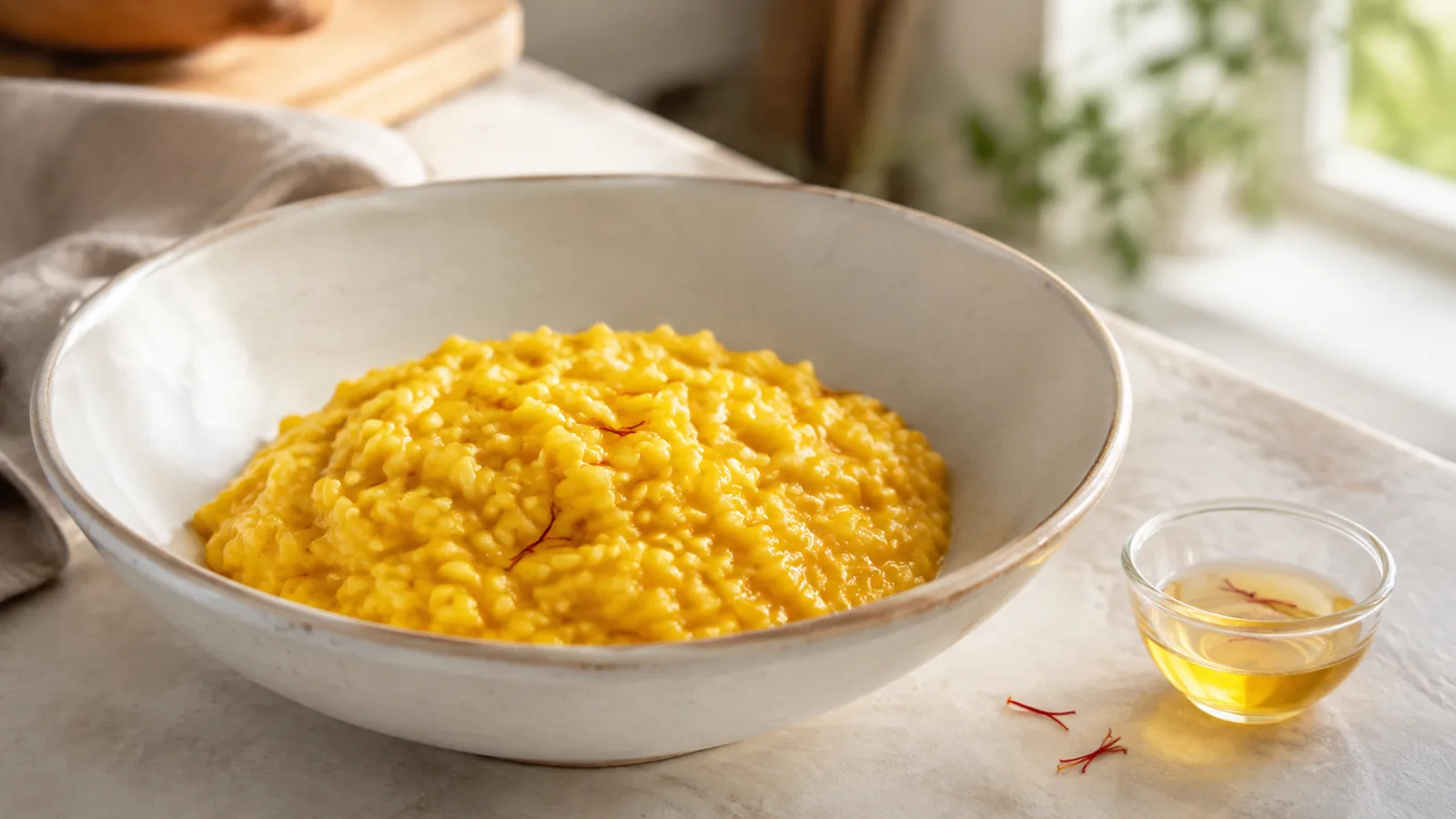
Yes, soaking saffron before cooking is usually worthwhile. This approach, often described as soaking saffron for cooking or blooming it, gives the cook more control. Lightly crush a measured pinch, cover it with a small amount of warm water, milk or stock, and leave it for 10 to 15 minutes. This blooming step spreads saffron’s golden colour, floral aroma and flavour more evenly through the dish.
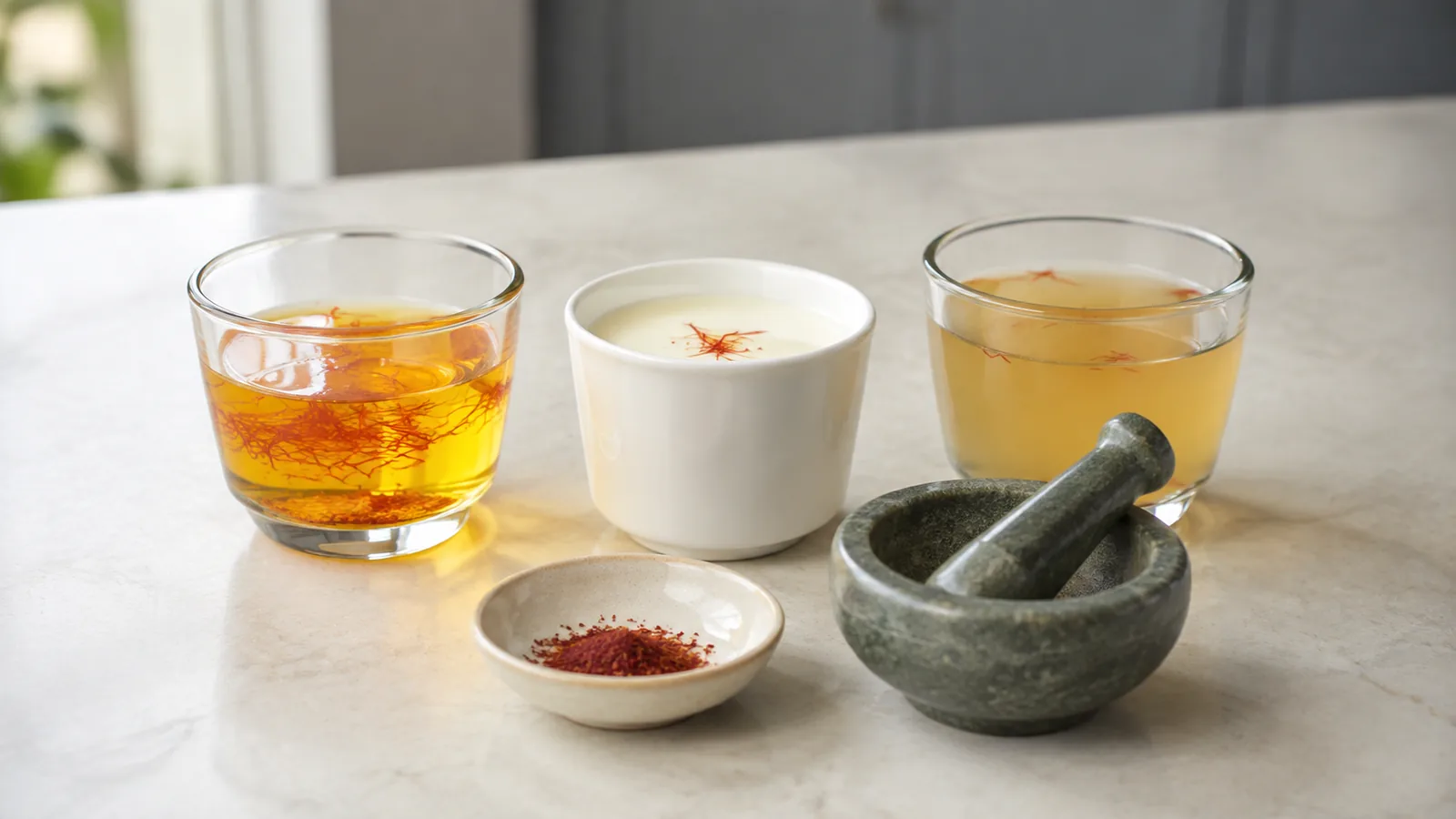
Why soaking saffron works
Saffron’s colour and flavour compounds need contact with liquid to move out of the dried stigmas. A small separate infusion begins that process before the threads enter a large pot, so one part of the food is less likely to receive all the spice.
Blooming is extraction, not a ritual. Warmth, time, particle size and the amount of liquid all affect the result.
How to soak saffron step by step
- Measure the saffron while the threads are whole.
- Crush them lightly with a clean mortar and pestle; do not grind them into invisible dust.
- Place the pieces in a small heat-safe cup.
- Add a few spoonfuls of warm liquid.
- Cover and leave for 10 to 15 minutes, or a little longer if convenient.
- Add both the infused liquid and the softened threads to the recipe.
The liquid should be warm rather than furiously boiling. Very high heat is unnecessary and can drive off delicate aroma.
Should you use water, milk or stock?
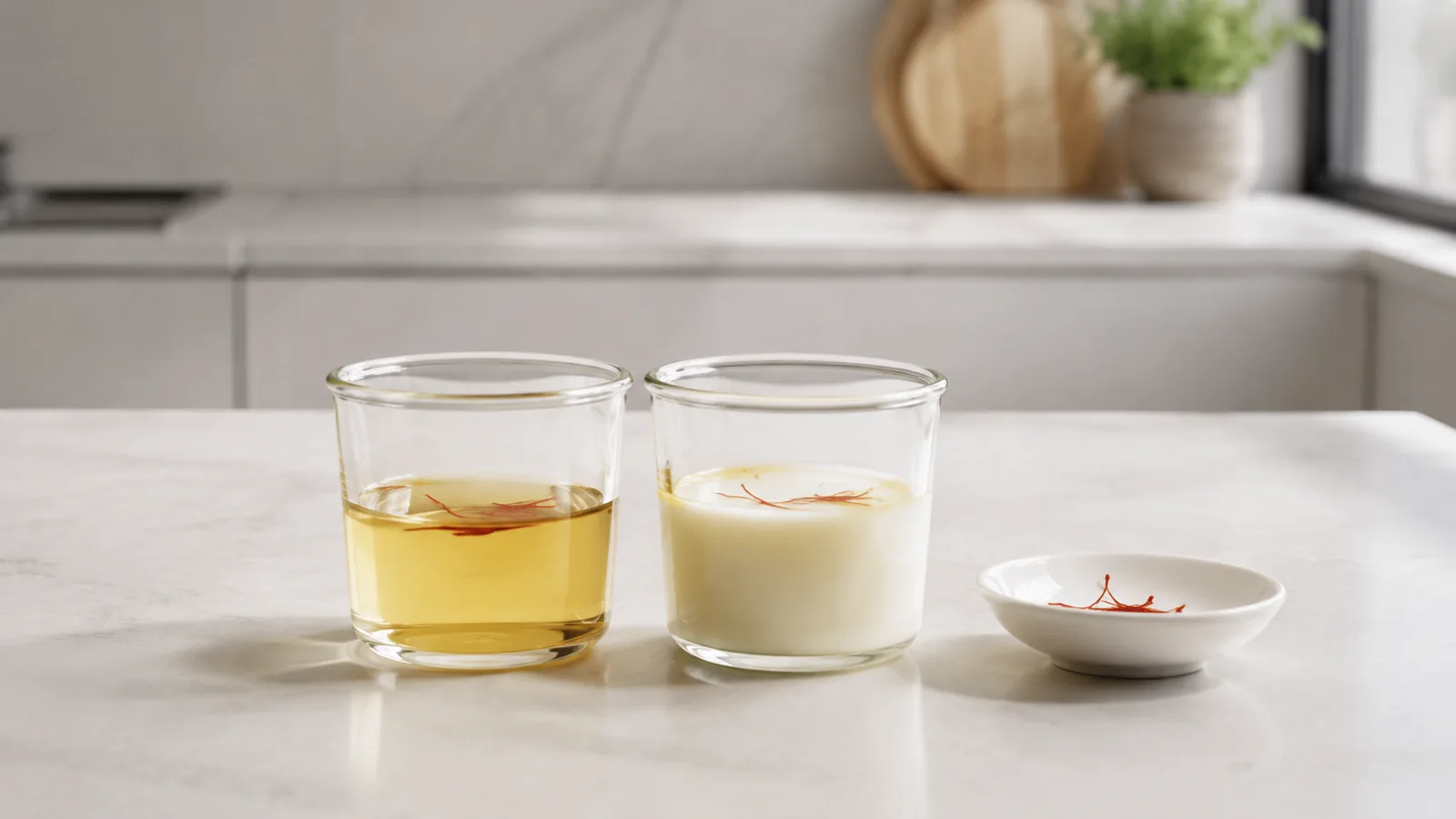
Water is the neutral default. It lets you see the golden-yellow colour develop and works in almost any savoury or sweet recipe.
Milk or cream suits custards, puddings, ice cream, baked goods and milk drinks. Count the infusion as part of the recipe’s liquid.
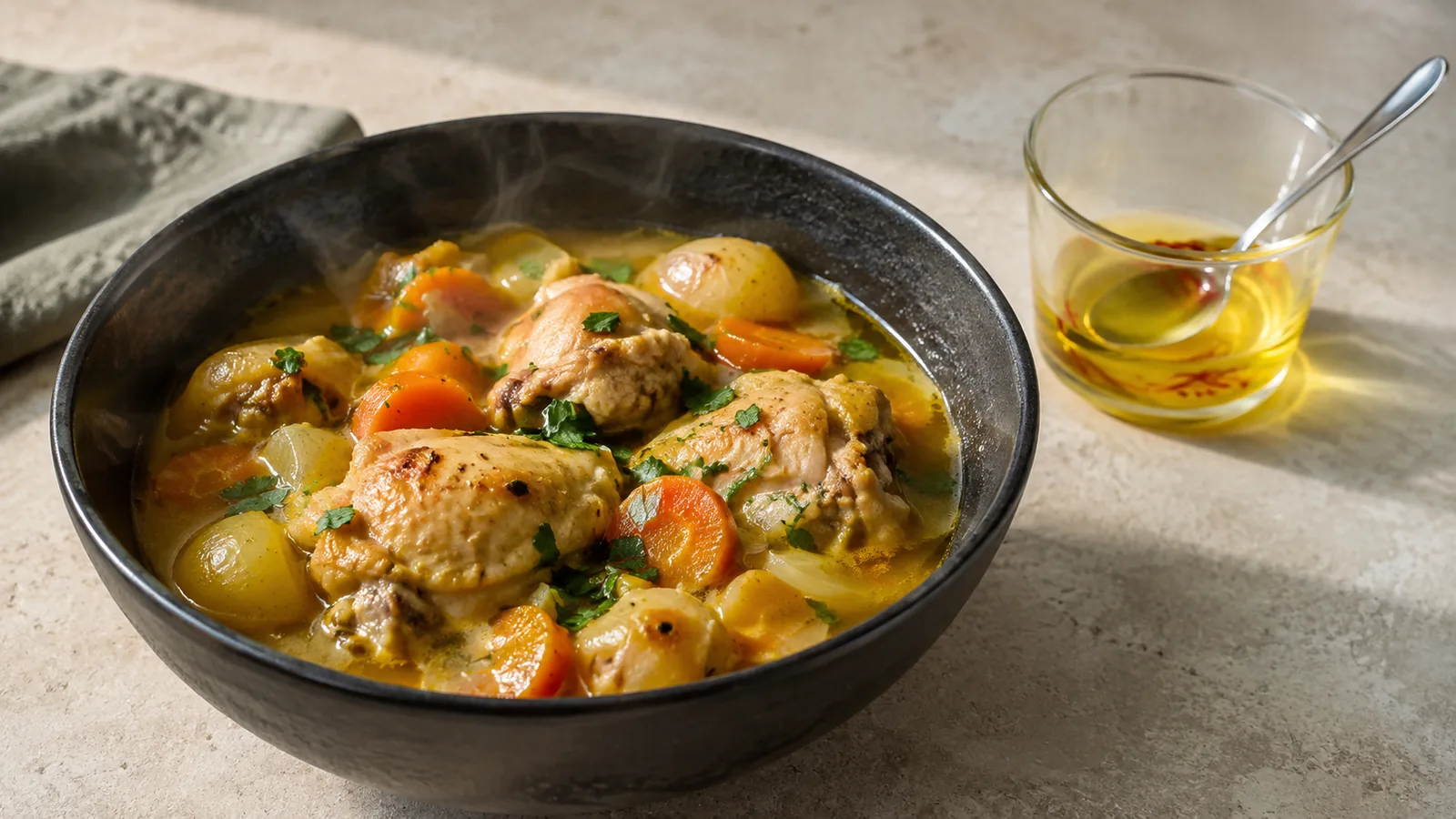
Stock is useful for rice, soups, stews and sauces. Choose a stock mild enough that the saffron remains noticeable.
How much liquid should you add?
Use enough to wet and surround the crushed threads, not enough to dilute the recipe. A few spoonfuls is practical for many household dishes. Dough, icing and thick sauces need special care because extra liquid can alter texture.
If the recipe already contains warm milk or stock, take a little from that measured amount rather than adding more.
Is 10 to 15 minutes always enough?
That range is a useful minimum, not a deadline. Finely crushed fresh threads in warm liquid begin releasing colour quickly. Whole or older threads may work more slowly. A covered infusion can stand longer while the rest of the meal is prepared.
Judge the liquid by its aroma and yellow-gold colour, not by expecting every thread to become pale at the same moment.
When to add bloomed saffron
Add the infusion early enough to distribute through the food, but avoid boiling it uncovered for the entire cooking time. In rice, it can enter the cooking liquid or be added before the final steam. In a sauce or stew, later addition often retains more aroma.
For a broader sequence, see how to use saffron in cooking.
Using the infusion in rice
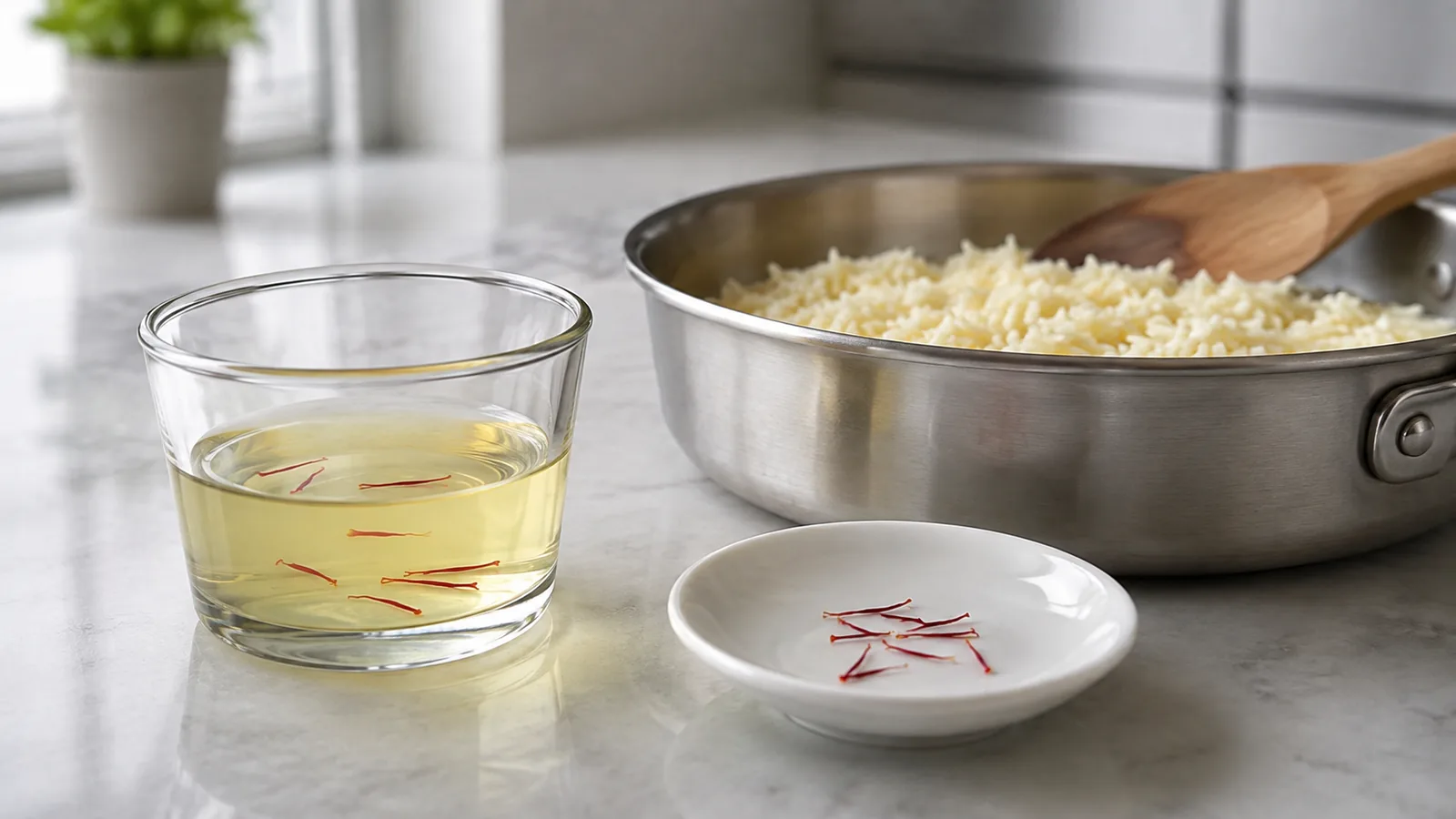
Paella, biryani and risotto can take the saffron liquid through their broth or stock. Persian rice may use a concentrated infusion on a portion of the cooked grains, creating a deliberate golden layer or garnish.
Stir when the technique allows. Pouring all the liquid into one corner without mixing can leave the colour and flavour patchy.
Using it in desserts
For custards, ice creams and puddings, infuse saffron in warm milk or cream before combining it with the other ingredients. This distributes the aroma and prevents dry thread clusters.
Cardamom, vanilla, citrus, rosewater and nuts pair well, but keep the aromatic balance restrained.
Can saffron be added dry?
Yes. If a recipe contains enough warm liquid and cooking time, dry threads can extract in the dish. Whole threads may also be used as a visible garnish. The disadvantage is less predictable distribution.
With authentic saffron, soaking for cooking is the dependable default, not an absolute requirement. It matters most when the recipe is short, dry, delicate or expected to have even colour.
Common blooming mistakes
- Using too much saffron: blooming cannot prevent an excessive dose from tasting bitter.
- Adding a large volume of liquid: this can disturb the recipe’s consistency.
- Using a contaminated grinder: coffee or other spices can mask saffron.
- Discarding the threads: add the complete infusion unless a specific texture requires straining.
- Boiling for a long time: the colour may survive after the delicate aroma has faded.
Cold and ice methods
Cold water or melting ice can extract saffron, but the process is slower and offers no automatic quality advantage. Warm liquid is faster and easier to fit into ordinary cooking. Whichever method you choose, keep the container clean and covered.
Our detailed guide to blooming saffron compares practical methods and temperatures.
The short answer
Soak saffron before cooking when you want reliable colour, aroma and even distribution. Crush a measured amount lightly, steep it in a few spoonfuls of warm water, milk or stock for 10 to 15 minutes, and add the complete infusion at a sensible stage. Dry addition can work, but blooming gives the cook more control.