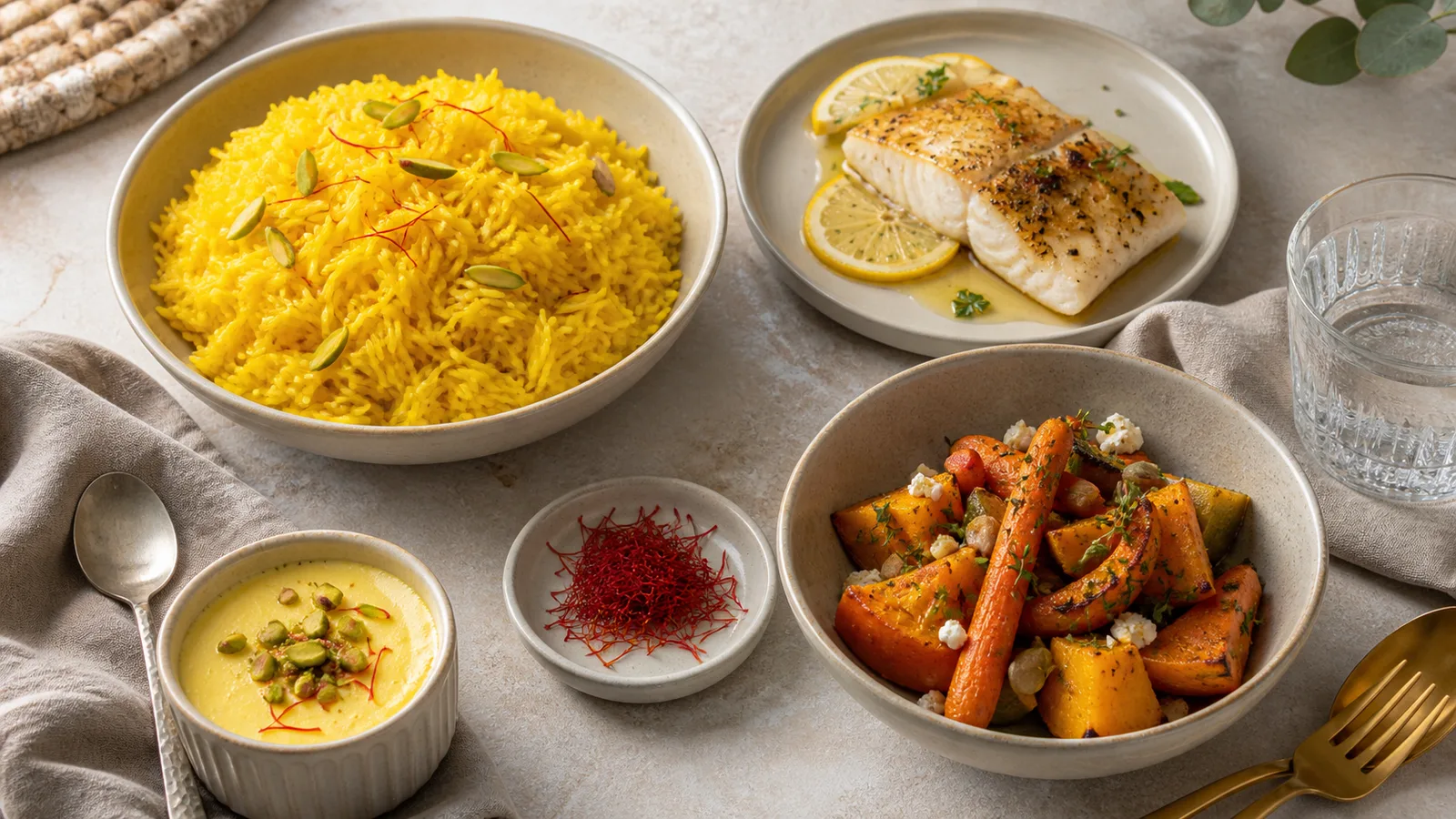
Saffron works especially well with rice, seafood, chicken, lamb, dairy, eggs, tomatoes, root vegetables, citrus, honey and nuts. Its aroma is floral and hay-like, with a gentle bitterness, so it suits foods that give it room rather than burying it under heavy smoke or too many aggressive spices.
The best foods that pair with saffron are not limited to famous dishes such as paella and risotto. Once you understand how to bloom the threads and balance the flavour, the same small pinch can move from a weekday soup to ice cream or bread.
Rice and grains
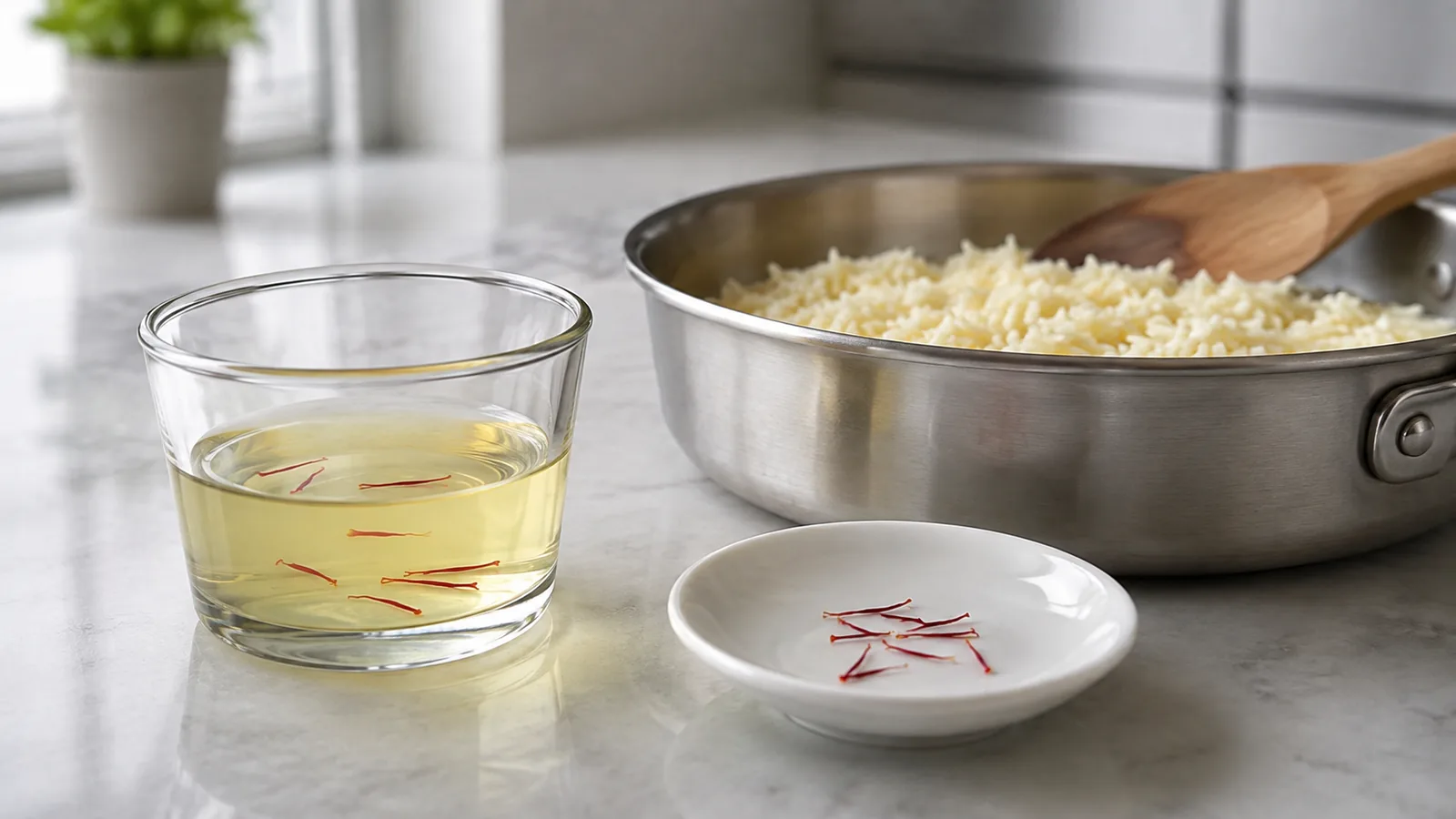
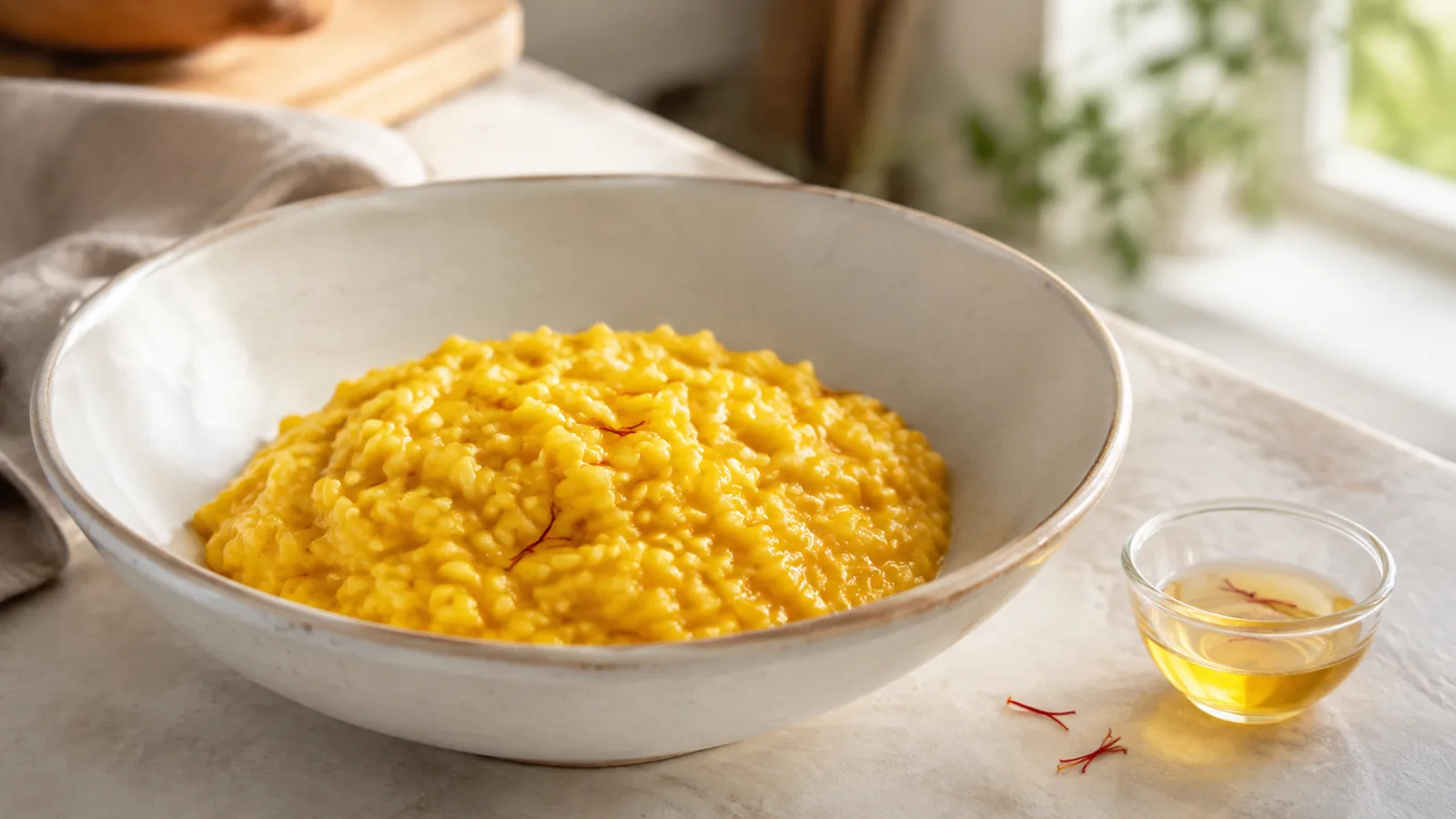
Rice is saffron’s most familiar partner because the grains absorb the golden infusion and carry its aroma evenly. Basmati pilaf, Persian rice, biryani, Spanish paella and Italian risotto all use the spice differently, but the pairing principle is the same: add a well-distributed saffron liquid rather than dropping dry threads into one corner of the pot.
Couscous, bulgur, pearl barley and quinoa also work. Keep the seasoning focused. Onion, a light stock, butter or olive oil, and one or two complementary spices are often enough.
Fish and seafood
Saffron has a natural place with shrimp, mussels, scallops and firm white fish. It gives seafood broth and tomato-based stew depth without the heat of chilli. Garlic, fennel, leek, tomato, white wine and orange zest can all support the combination.
For a quick sauce, steep saffron in warm stock, then reduce it gently with shallot and finish with butter or cream. Add delicate fish near the end so it stays moist.
Chicken and lamb
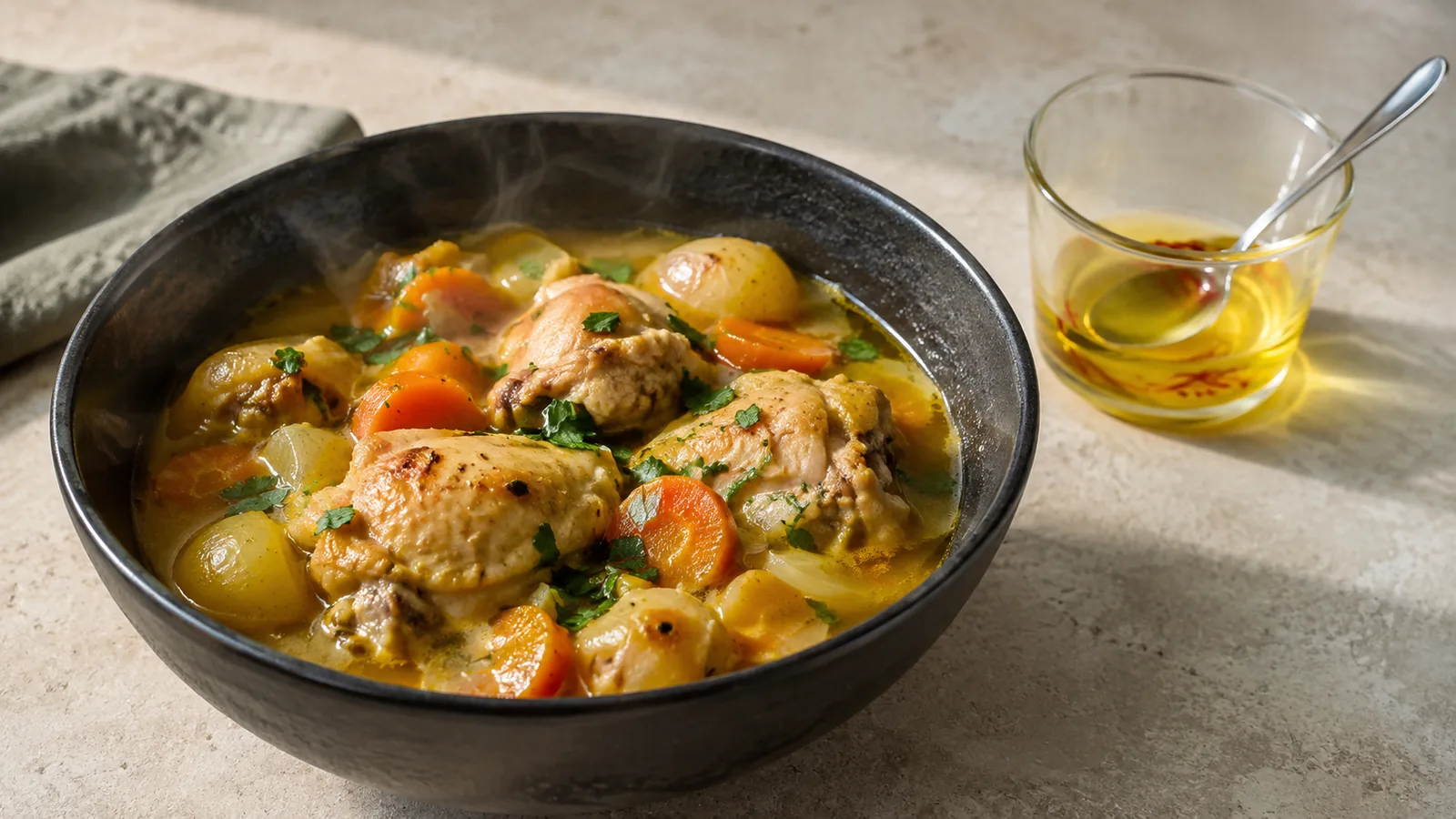
Chicken takes saffron readily in yoghurt marinades, braises and rice dishes. Lamb’s richer flavour benefits from the spice when balanced by onion, lemon, dried fruit or a modest amount of warm spice.
Bloom saffron separately before adding it to a marinade or sauce. Oil alone does not extract its water-soluble colour as efficiently, and a concentrated clump on the meat can taste bitter.
Vegetables, soups and pulses
Carrots, squash, pumpkin, potatoes, cauliflower and tomatoes are dependable partners. Their sweetness softens saffron’s bitter edge. A pinch can lift a puréed squash soup, a potato stew or a tomato-and-chickpea broth without making the dish feel elaborate.
Lentils and white beans work best when the broth is not overloaded with dark spices. Add saffron with stock, citrus or herbs such as parsley and keep tasting as the dish develops.
Dairy, eggs and cheese
Milk and cream capture saffron’s aroma beautifully, which is why the spice appears in custards, puddings, ice cream, cakes and milk drinks. It also pairs with eggs in a soft scramble, omelette or baked custard. Mild fresh cheeses can carry it; very pungent aged cheeses are more likely to dominate.
Warm the dairy gently with the bloomed saffron and allow time for infusion. Avoid prolonged hard boiling, which can flatten the more delicate aroma.
Fruit, nuts and sweets
Orange, lemon, pear, apple, apricot and dates all make useful partners. Pistachio, almond and cashew add richness and texture. Honey can round out bitterness, but too much sweetness hides the spice rather than showing it off.
Easy saffron recipes include yoghurt with saffron-infused honey and pistachios, a simple milk pudding, poached pears, or shortbread flavoured with a small saffron infusion. These are forgiving places to learn how the aroma behaves.
What flavours support saffron?
- Aromatic base: onion, leek, shallot and gentle garlic.
- Acidity: lemon, orange, tomato and a restrained splash of wine.
- Richness: butter, olive oil, yoghurt, milk and cream.
- Warm spice: cardamom, cinnamon, coriander seed and cumin in measured amounts.
- Fresh finish: parsley, mint or a little citrus zest.
Strong smoke, excessive chilli, heavy clove and too many competing aromatics can obscure saffron. They are not forbidden; they simply require a lighter hand.
Cooking with saffron threads
- Lightly crush the threads.
- Cover them with a few spoonfuls of warm water, milk or stock.
- Leave the infusion for 10 to 15 minutes.
- Add both liquid and threads at a point where they can spread through the dish.
- Taste before adding more.
Cooking with saffron is easier when you measure by the recipe and serving count rather than chasing one universal thread number. The dish should smell gently aromatic and taste integrated, not medicinal.
What about saffron extract or saffron lager?
In a recipe, “saffron extract” may mean a culinary infusion made from threads. A supplement extract is a different product and should not be poured into food as a substitute. If you are wondering what saffron extract pairs well with, first identify which of those products you have.
Some brewers make saffron lager or other saffron beers. The spice can complement light malt, citrus and floral hop notes, but brewing requires controlled quantities and food-grade ingredients. A finished beer is a beverage style, not a general reason to add supplement extract to lager.
Foods “high in saffron”
A search for foods high in saffron needs one correction: foods are not naturally high in saffron; it is an added spice. Recipes using saffron range from a faint infusion to a more pronounced flavour, and more is not automatically better. If a menu makes the amount important, ask how the dish is prepared rather than relying on colour, which can also come from turmeric or food colouring.
A useful starting point
For easy saffron recipes, begin with rice, a light seafood broth, squash soup or a milk dessert. Each gives clear feedback about colour and aroma. Our saffron products provide whole threads for cooking; bloom a small amount, pair it with one supportive flavour family, and let the spice remain recognisable.