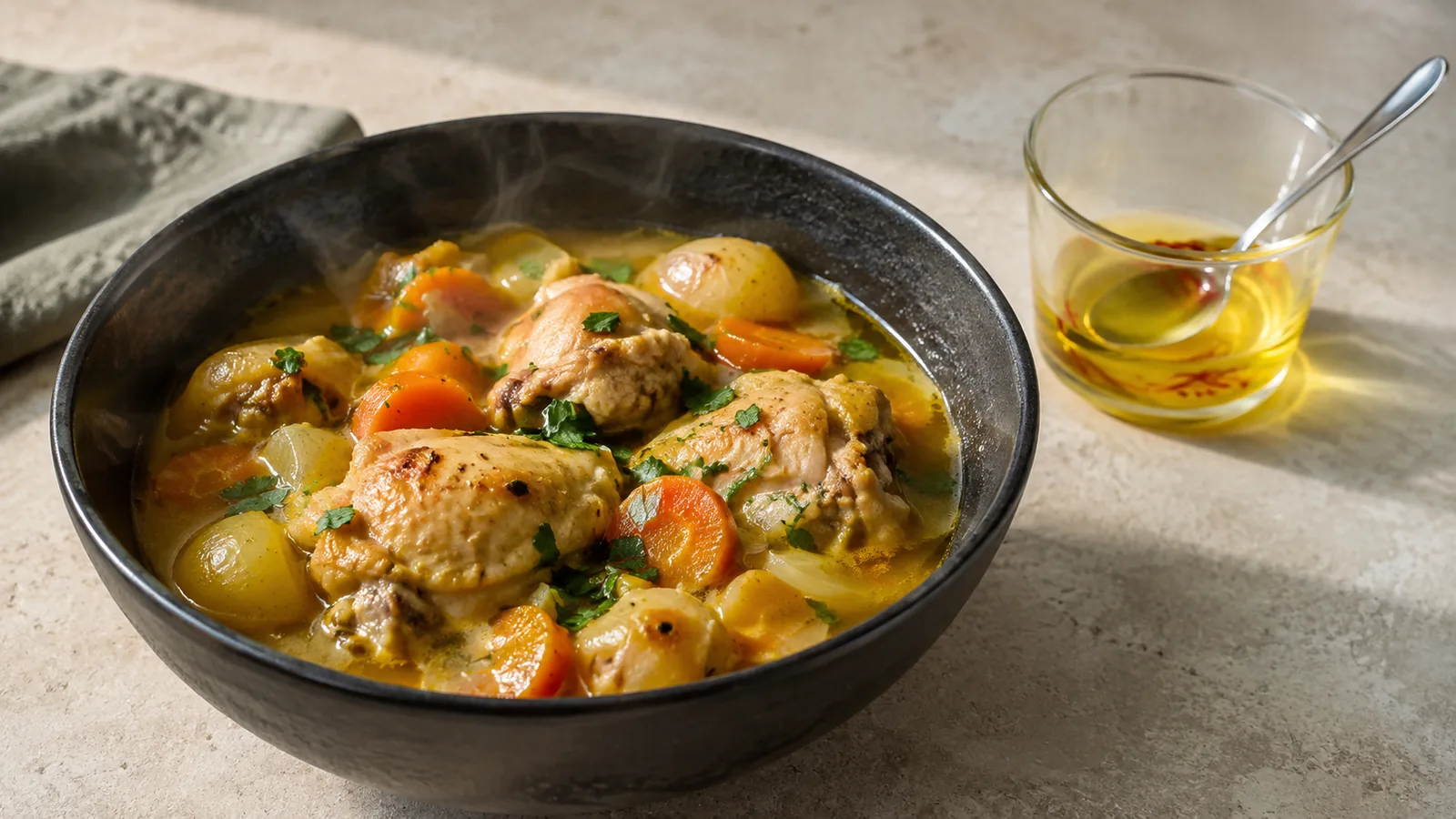
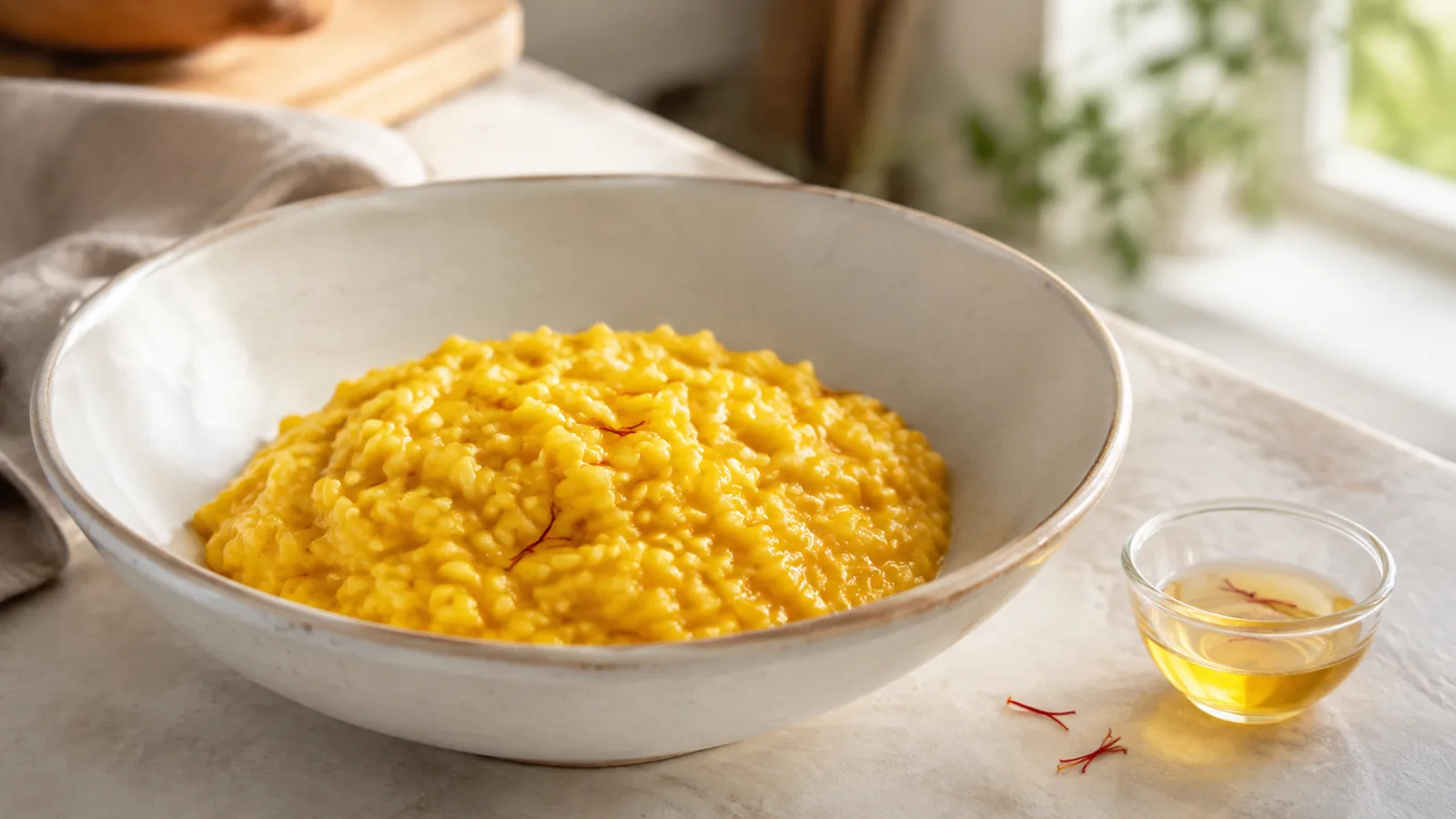
Saffron changes a meal in three connected ways: it turns receptive foods golden, adds a distinctive floral and hay-like aroma, and brings an earthy taste with mild bitterness. These saffron culinary effects are clearest when a small measured amount is bloomed in warm liquid and distributed evenly.
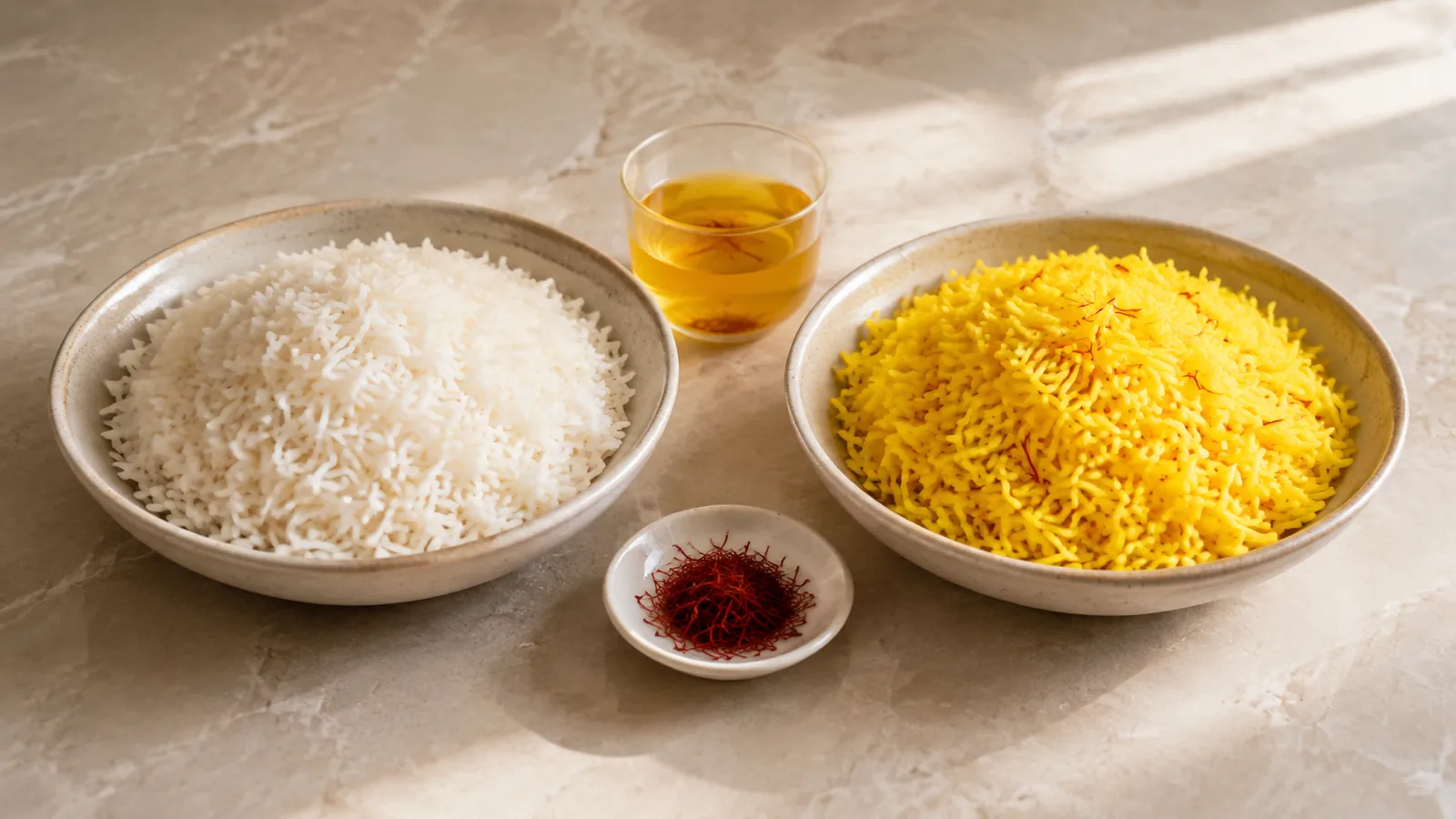
Saffron gives food a golden colour
Colour is usually the first change people notice, often as a vivid golden-yellow hue. Saffron’s natural pigments move into water or cooking liquid and tint rice, risotto, sauces, custards and dough from yellow to deep gold. The exact shade depends on dose, extraction, the food’s starting colour and the strength of the threads.
The result is not normally bright red. A red thread creates a yellow-gold infusion, which can be surprising to someone using saffron for the first time.
It adds aroma before it adds obvious taste
Much of saffron’s character is experienced through fragrance. Warm floral, dry-hay and honey-like notes rise from a well-prepared dish, especially when it reaches the table hot. This aroma can make a simple base seem fuller without needing a heavy spice mixture.
Long uncovered boiling can reduce that effect. The dish may stay yellow while the more delicate fragrance fades, so timing matters.
Saffron changes flavour in a subtle way
Saffron is not sweet even when its aroma reminds someone of honey. Its taste is earthy, aromatic and lightly bitter. Used well, that restrained bitterness gives contrast and depth; used heavily, it can become medicinal or obscure the food.
For a closer sensory description, read what saffron tastes and smells like. It is easier to balance a recipe when aroma and taste are treated as related but different.
Blooming spreads the effect through the meal
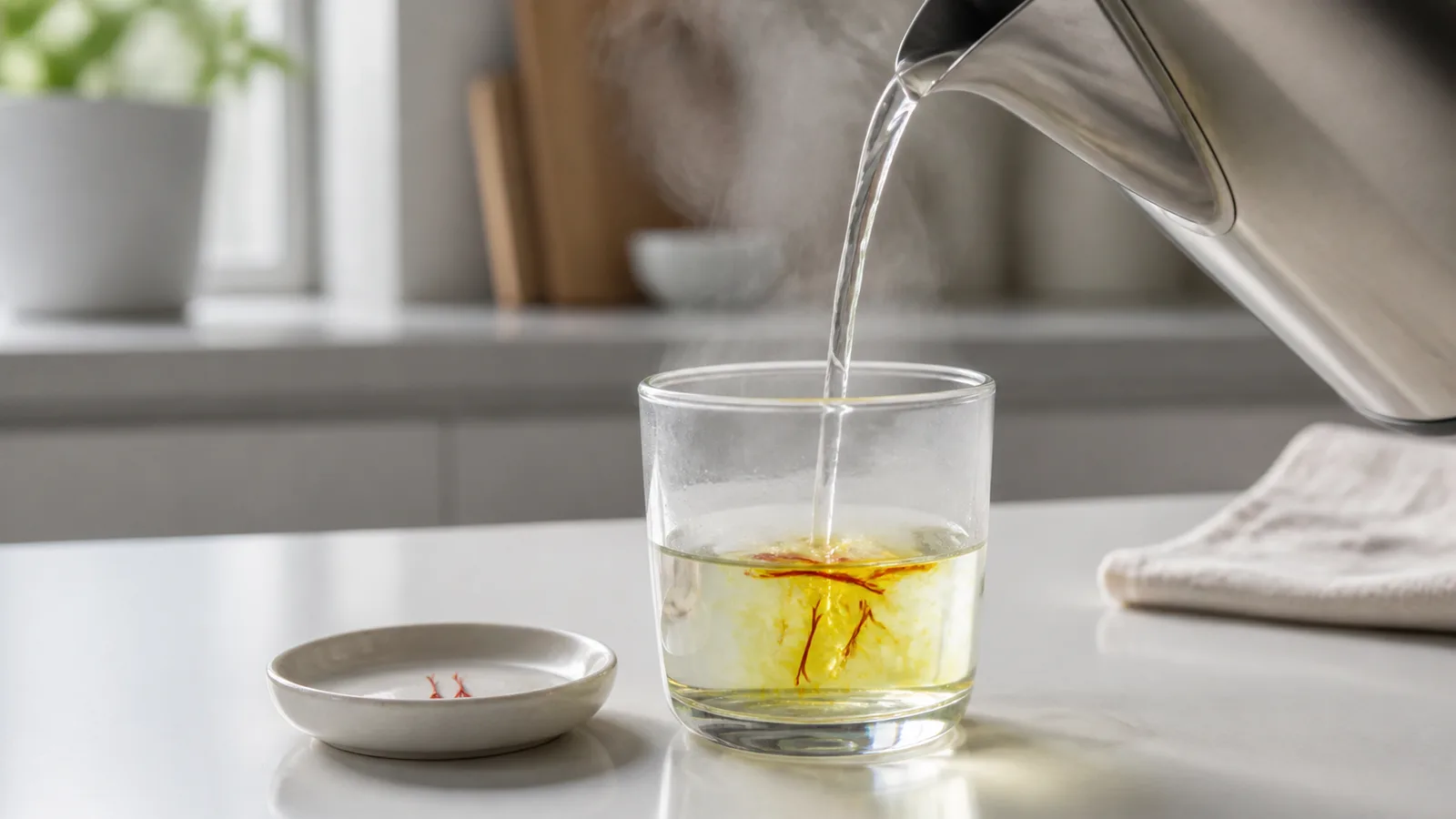
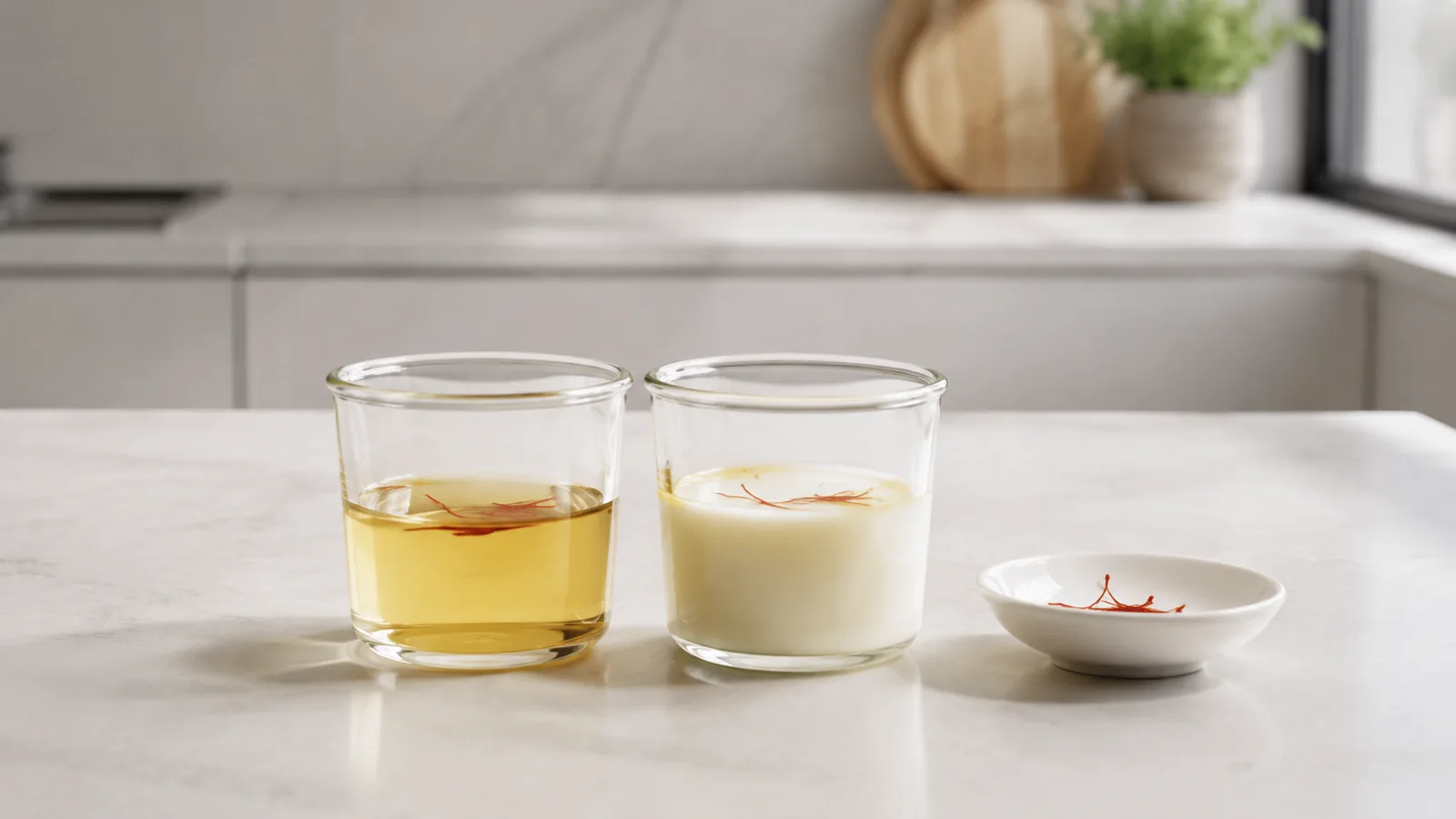
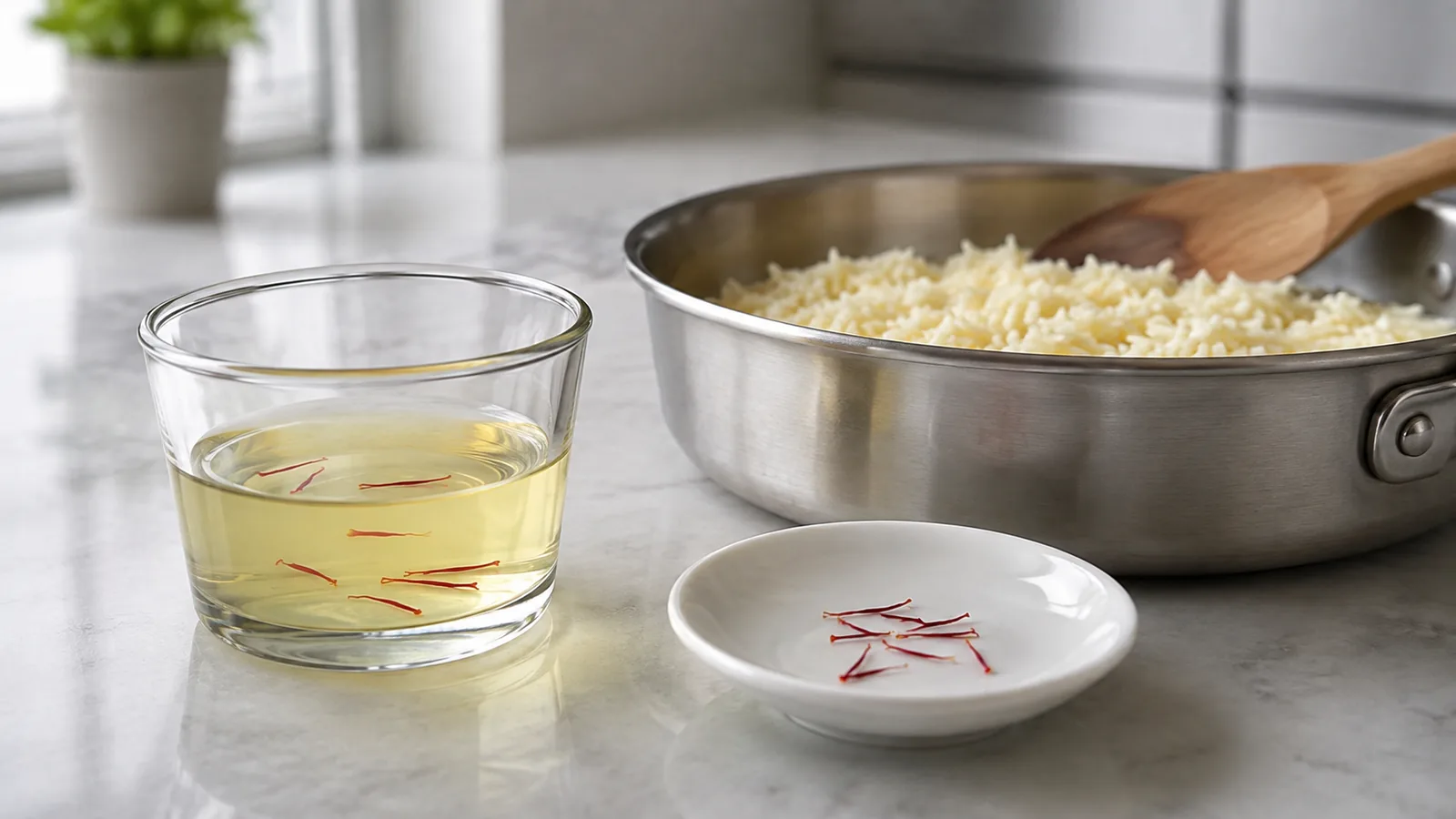
Lightly crush a measured pinch of threads, cover them with warm water, milk or stock, and wait 10 to 15 minutes. Add the liquid and the softened pieces to the dish. This helps colour and aroma reach more than one spoonful.
Dry threads can be added directly where enough hot liquid and time remain, but extraction may be uneven. For a full method, see how to use saffron in cooking.
What saffron does to rice
Rice offers a quiet background, so all three effects are easy to notice. The grains take on a golden hue, steam carries the aroma, and the mild earthy flavour sits beneath butter, stock or other seasonings.
Paella, biryani, Persian rice and risotto handle the infusion differently. In each case, good distribution is more important than making every grain equally dark. Some dishes deliberately keep white and saffron-coloured rice side by side.
What it does in savoury dishes
In light broths, sauces and stews, saffron adds colour and a fragrant layer rather than heat. It works with meats such as chicken and lamb, as well as seafood and vegetables, but the base still needs sound seasoning. Saffron will not repair stale stock, burnt onion or an overly salty sauce.
Garlic, onion, citrus and gentle herbs can support it. Strong smoke, a large amount of chilli or too many competing spices can hide it.
What it does in desserts
Milk and cream carry saffron’s aroma well, which is why it appears in custards, puddings and ice cream. It gives pale desserts a warm gold colour and a savoury-bitter counterpoint to sugar.
Cardamom, cinnamon, vanilla, rosewater, pistachio and almond are familiar partners, including in baked goods. Restraint matters: too much rose or vanilla can make the dessert perfumed, while too much saffron can make it bitter.
It affects texture only indirectly
Saffron threads do not thicken a sauce or tenderise meat in normal culinary quantities. Any texture change usually comes from the infusion liquid, dairy, stock or cooking method used with it. Keep the added liquid small if a dough, icing or delicate sauce has a precise consistency.
How the base changes what you perceive
- Water and light stock reveal colour and aroma clearly.
- Milk and cream soften the bitter edge and carry fragrance.
- Fat can round the eating experience but should not overwhelm a delicate infusion.
- Acid can sharpen the dish and change how the aroma is perceived.
- Sugar creates contrast; it does not turn saffron itself sweet.
More saffron does not create a better meal
A larger dose gives stronger colour only up to a point. It also intensifies bitterness and can make aroma feel heavy. Measure the spice, keep a note of the recipe size and adjust the next batch rather than adding repeatedly while the dish is still developing.
Authentic, well-handled saffron matters too. Old or poorly stored threads may colour food but contribute little fragrance. Airtight, dark and dry storage protects the characteristics you paid for.
The short answer
Saffron makes a meal golden, fragrant and more complex. Its floral aroma and earthy, slightly bitter taste can transform rice, sauces, savoury dishes and desserts, but the effect should remain balanced. Bloom a small amount, distribute it well and protect it from excessive heat; the meal should still taste like itself, with saffron woven through it.