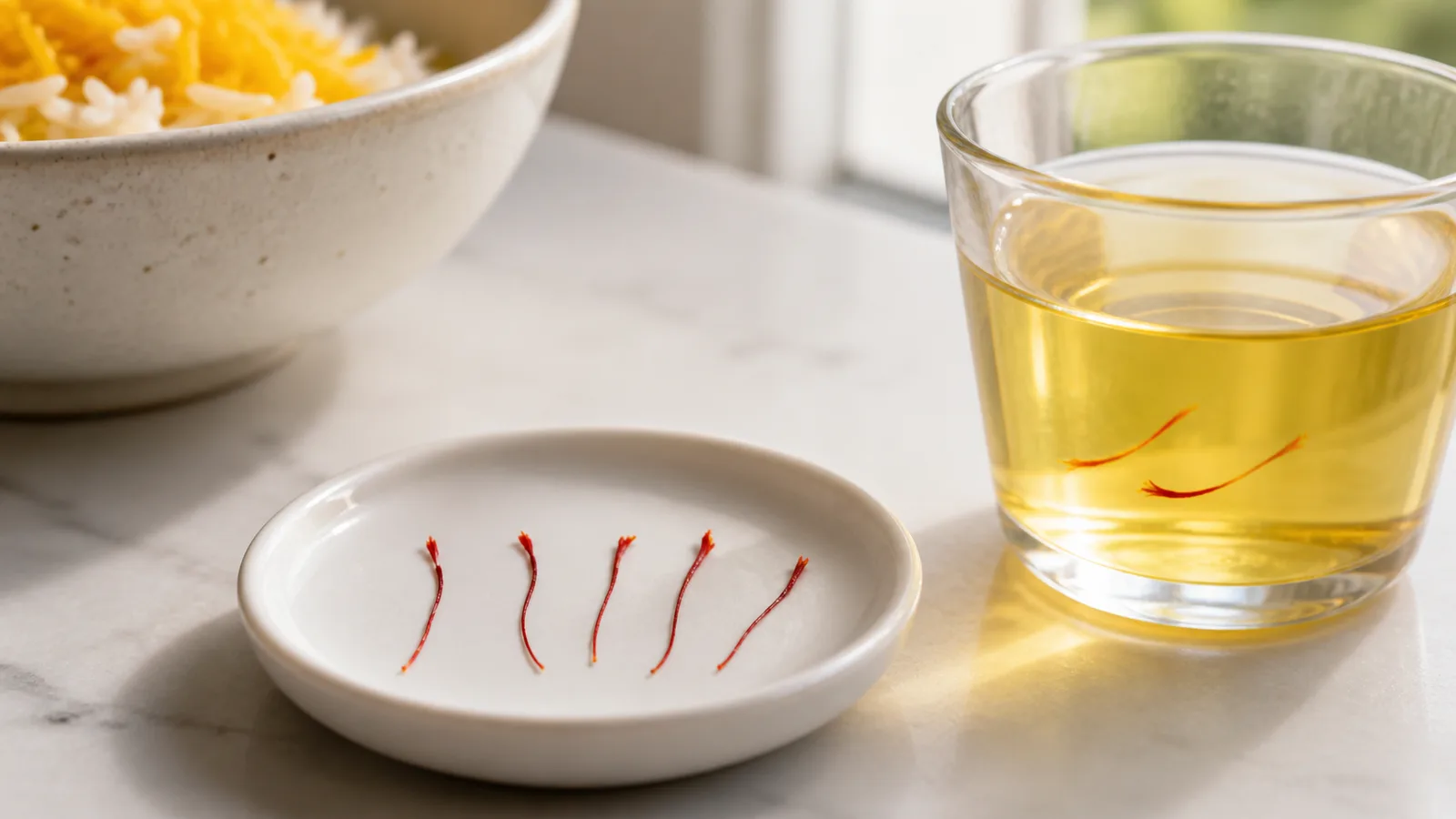
A useful saffron taste description starts with contrast: the spice is floral and honeyed, but it is not simply sweet. Genuine threads also bring an earthy, hay-like depth, a light bitterness and an aroma that can seem warm or faintly metallic. The result is delicate in a well-balanced dish and medicinal when too much is used.
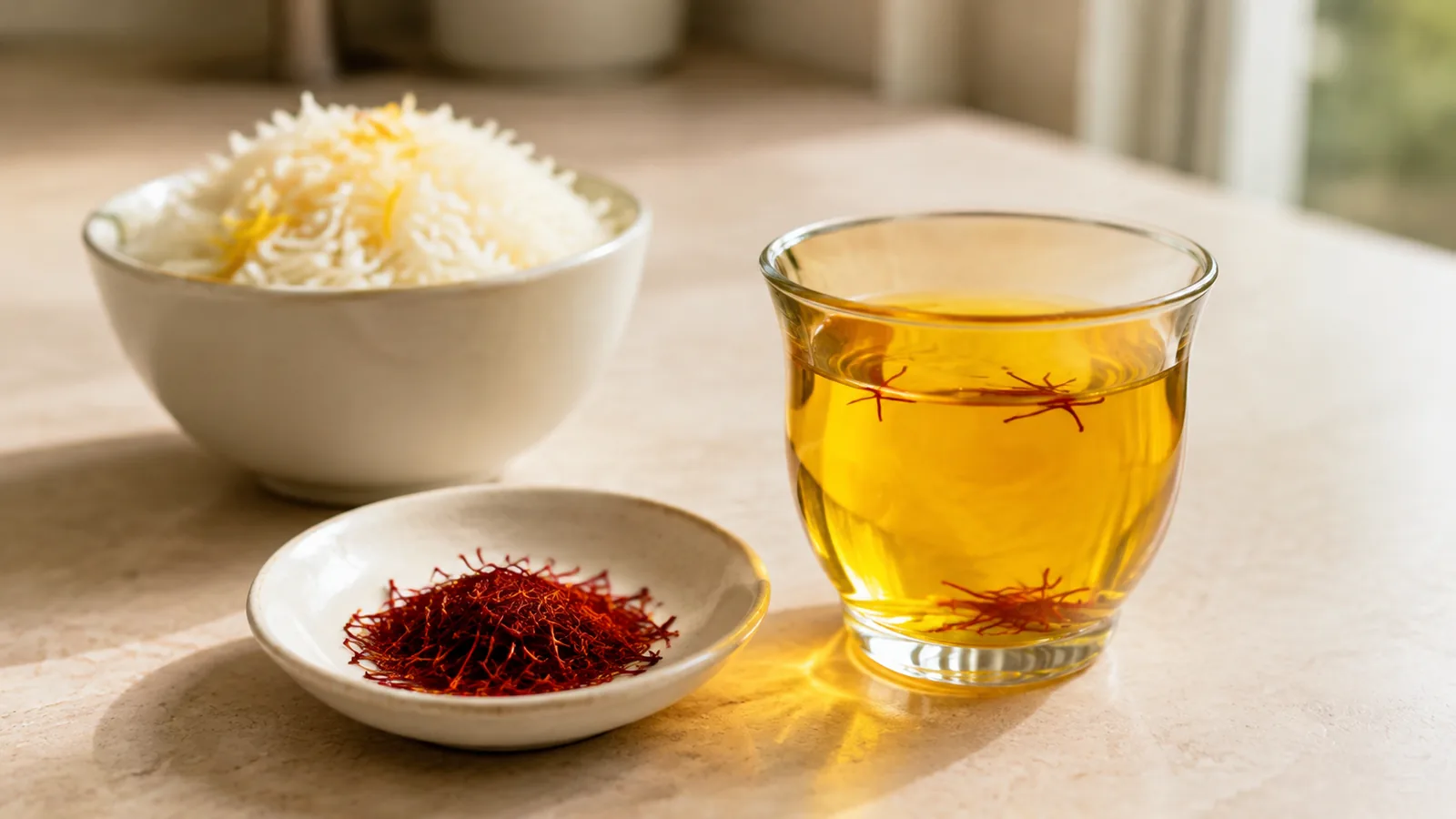
What does saffron taste like?
Does saffron have a taste of its own? Yes. If you are wondering how does saffron taste, or what does saffron spice taste like apart from a recipe, the saffron flavor profile is floral, earthy and lightly bitter rather than hot or sugary. The flavor of saffron and its aroma are easiest to recognise in a simple infusion before stronger ingredients are added.
Saffron has a layered flavour rather than one easy comparison. The first impression is often its fragrance: dry grass, warm flowers and honey. On the tongue, gentle sweetness sits beside an earthy note and a restrained bitterness. Some people notice a mineral or metallic edge, especially in a concentrated infusion.
None of those descriptions works alone. Calling saffron floral can make it sound perfumed; calling it bitter misses its warmth; calling it sweet suggests sugar. Its character comes from those sensations arriving together.
How to describe saffron flavour in plain language
If you are explaining the flavour of saffron to someone who has never tried it, “floral, earthy and lightly bitter, with a honey-like aroma” is a fair starting point. The wording may change with the food around it:
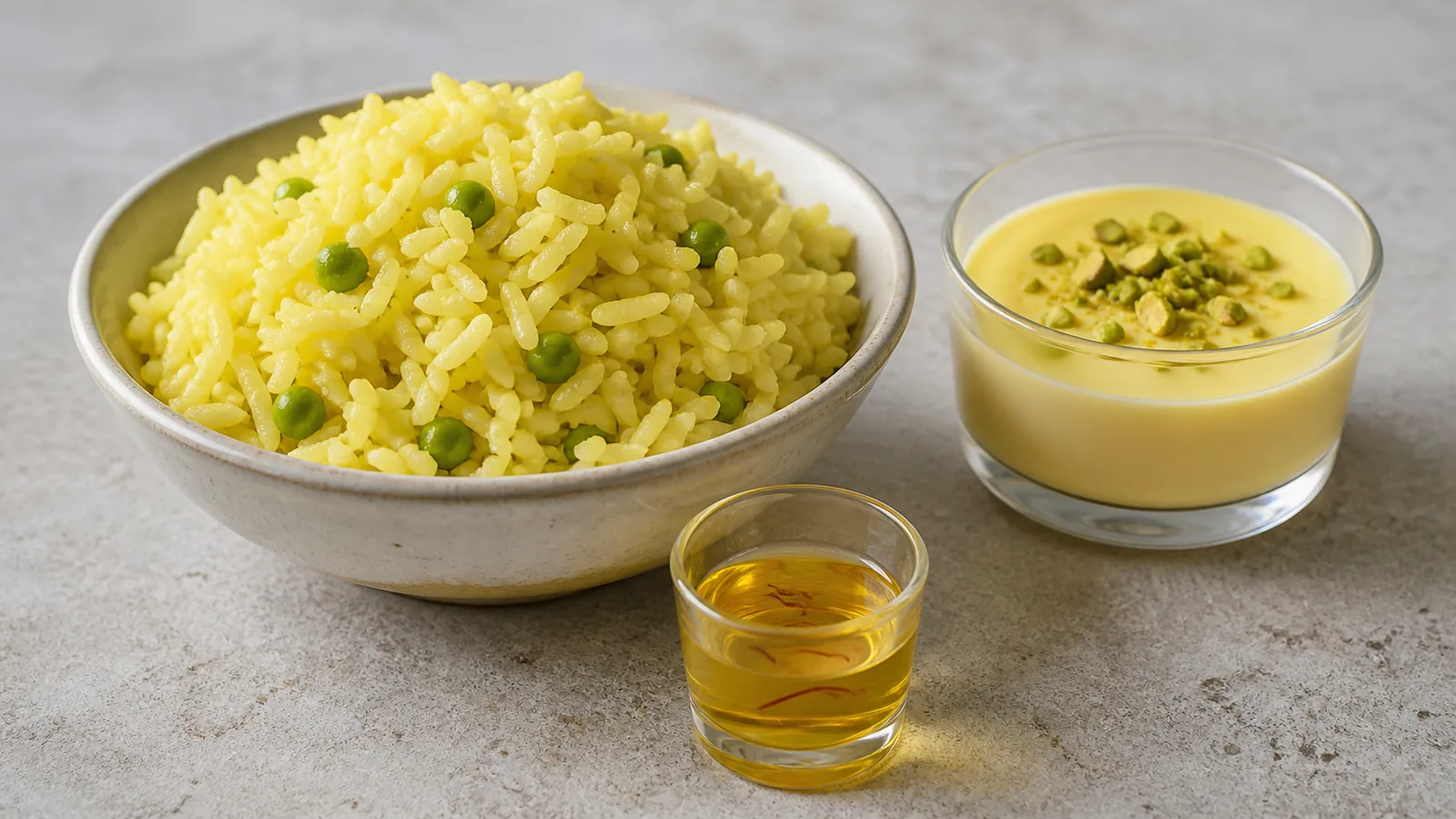
- in rice, it often feels warm, aromatic and gently earthy;
- in milk or custard, its honeyed and floral side is easier to notice;
- in a savoury broth, the dry-hay and mineral notes can come forward;
- in a strong infusion, bitterness becomes more obvious.
People perceive aromas differently, so two careful tasters may choose different words without either being wrong. It is more useful to describe the balance than to hunt for one perfect synonym.
What does saffron smell like?
Much of what we call flavour reaches us through smell. Before tasting a prepared dish, pause over it and notice the aroma. Properly infused saffron should smell distinct but integrated, not like artificial perfume.
A peer-reviewed overview of saffron’s chemistry and quality markers discusses the compounds commonly associated with its aroma, taste and colour. In practical kitchen terms, those qualities are connected but not interchangeable: a deep yellow dish does not automatically have a strong or authentic saffron flavour.
Does saffron have a sweet or bitter taste?
It has elements of both, although neither should dominate at a sensible culinary dose. The aroma can suggest honey and flowers even when no sugar is present. A subtle bitterness gives the spice structure and keeps that fragrant side from feeling flat.
If a dish tastes sharply bitter, first consider the dose. More saffron does not always make better food. Burnt threads, an overly long high-heat cook or another bitter ingredient can also distort the result.
What saffron should not taste like
Authentic saffron is not chilli-hot, salty or sugary. It should not taste like cinnamon, turmeric or vanilla, although recipes may combine it with those ingredients. A harsh chemical flavour, a musty odour or no aroma at all can point to poor storage, age, contamination or a product that deserves closer inspection.
Saffron quality cannot be proved by taste alone. The origin, thread appearance, storage, seller traceability and, where relevant, laboratory testing all matter. Food safety comes first: do not continue tasting material that smells mouldy or otherwise spoiled.
Why the same saffron can taste different from one dish to another
Dose
A small measured pinch can perfume a whole pot. Too little disappears behind stronger ingredients; too much can turn the gentle bitter note into the main event.
Infusion
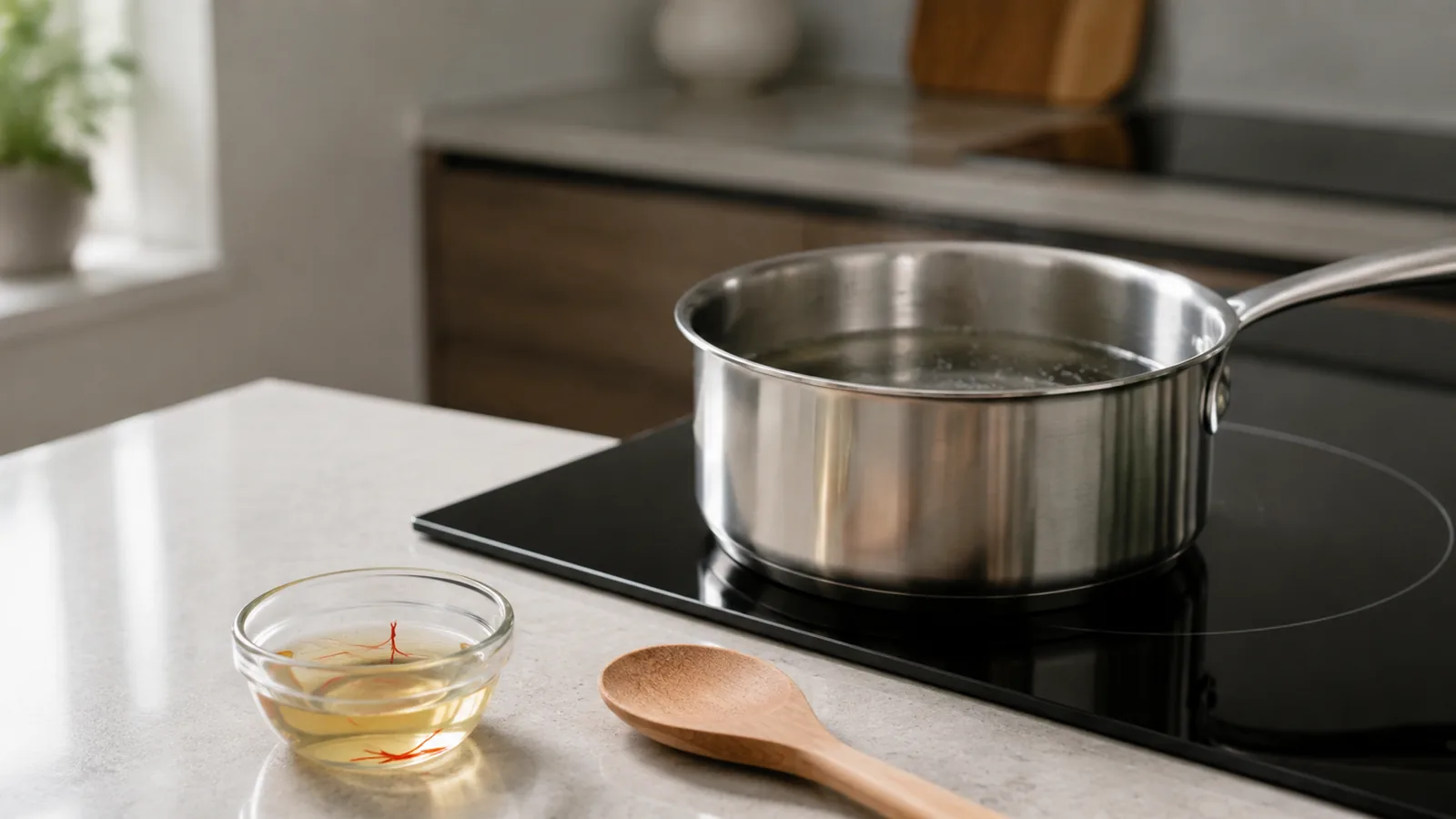
Crushing the threads lightly and steeping them in warm water or milk helps distribute their flavour. The liquid should be warm rather than furiously boiling. Our guide to brewing saffron explains the process step by step.
Supporting ingredients
Fat, starch, sugar, salt and acidity change perception. Dairy can round the spice; a plain rice base gives its aroma room; heavy smoke or aggressive seasoning can cover it. Rosewater and cardamom are traditional partners in many sweets, but both can overwhelm saffron if used carelessly.
Storage and age
Light, heat, air and moisture weaken delicate aroma over time. Keep dry threads airtight in a cool, dark place and prepare only the amount of infusion you need. Old saffron may still colour food while offering a much quieter smell and flavour.
How to taste saffron on its own
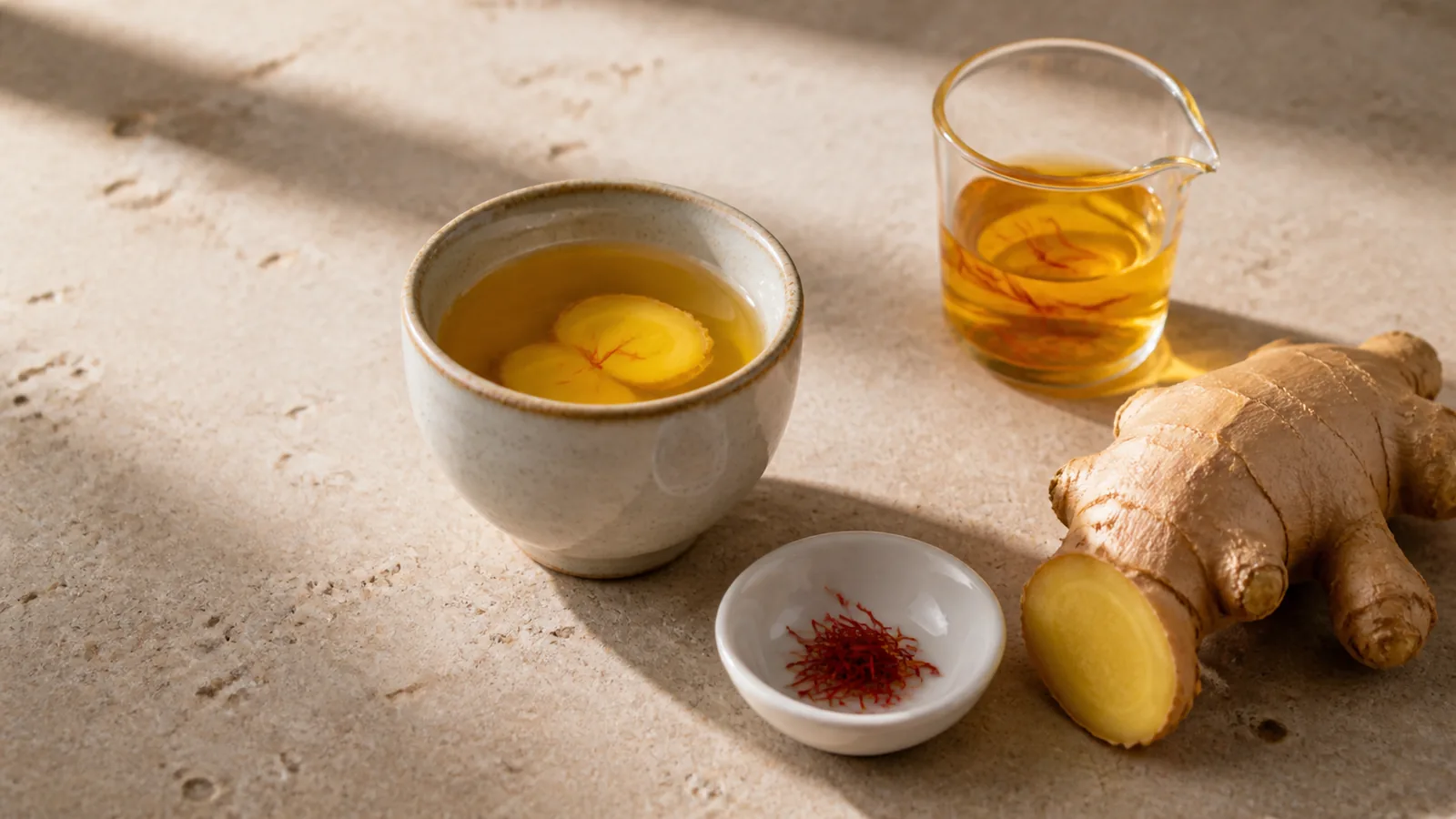
A concentrated mouthful of dry threads is not the best introduction. Instead, make a small controlled infusion:
- Lightly crush a few threads in a clean cup.
- Add a few tablespoons of warm water.
- Cover and leave it for about 10–15 minutes.
- Smell first, then taste a small spoonful.
- Notice aroma, sweetness, earthiness, bitterness and the length of the finish.
Use plain water for the clearest comparison. Milk makes a softer tasting sample, while sugar can hide the natural balance. If you are comparing two lots, use the same weight, water volume, temperature and steeping time for each.
How saffron changes a finished dish
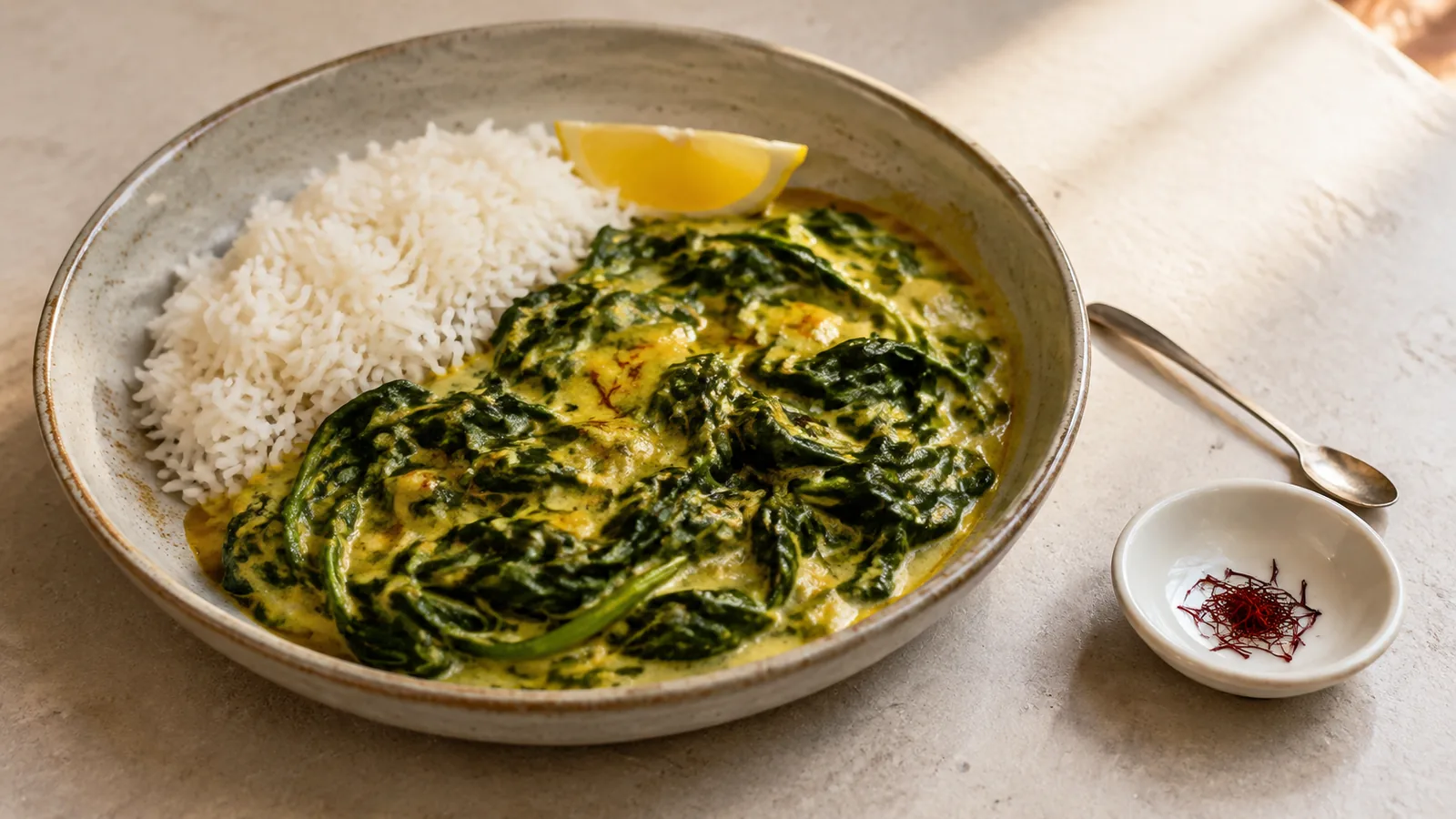
Saffron should feel woven into the food. In rice, stews, desserts and beverages, a measured amount adds fragrance and warm depth. In plain rice it brings an aromatic upper note; in seafood or a light stew it can connect broth, fat and gentle sweetness. In ice cream, milk pudding or cake, its floral-honey aroma becomes rounder. In seafood or a light stew it can connect broth, fat and gentle sweetness. In ice cream, milk pudding or cake, its floral-honey aroma becomes rounder.
This is why substitutes rarely reproduce the full effect. Another spice may supply yellow colour, bitterness or floral aroma, but not the same combination. For a comparison based on cooking function, see what saffron’s flavour is similar to.
What is the taste of saffron?
What is the flavor of saffron in one sentence? It is a floral, earthy, honey-like flavor with restrained bitterness and a long aromatic finish.
A concise saffron taste description
Saffron tastes floral, earthy and faintly bitter, with an aroma often compared with honey and dried hay. A small amount gives food warmth and depth; too much can taste medicinal. Infusion, dose, storage and the surrounding ingredients determine which part of its flavour profile you notice most.