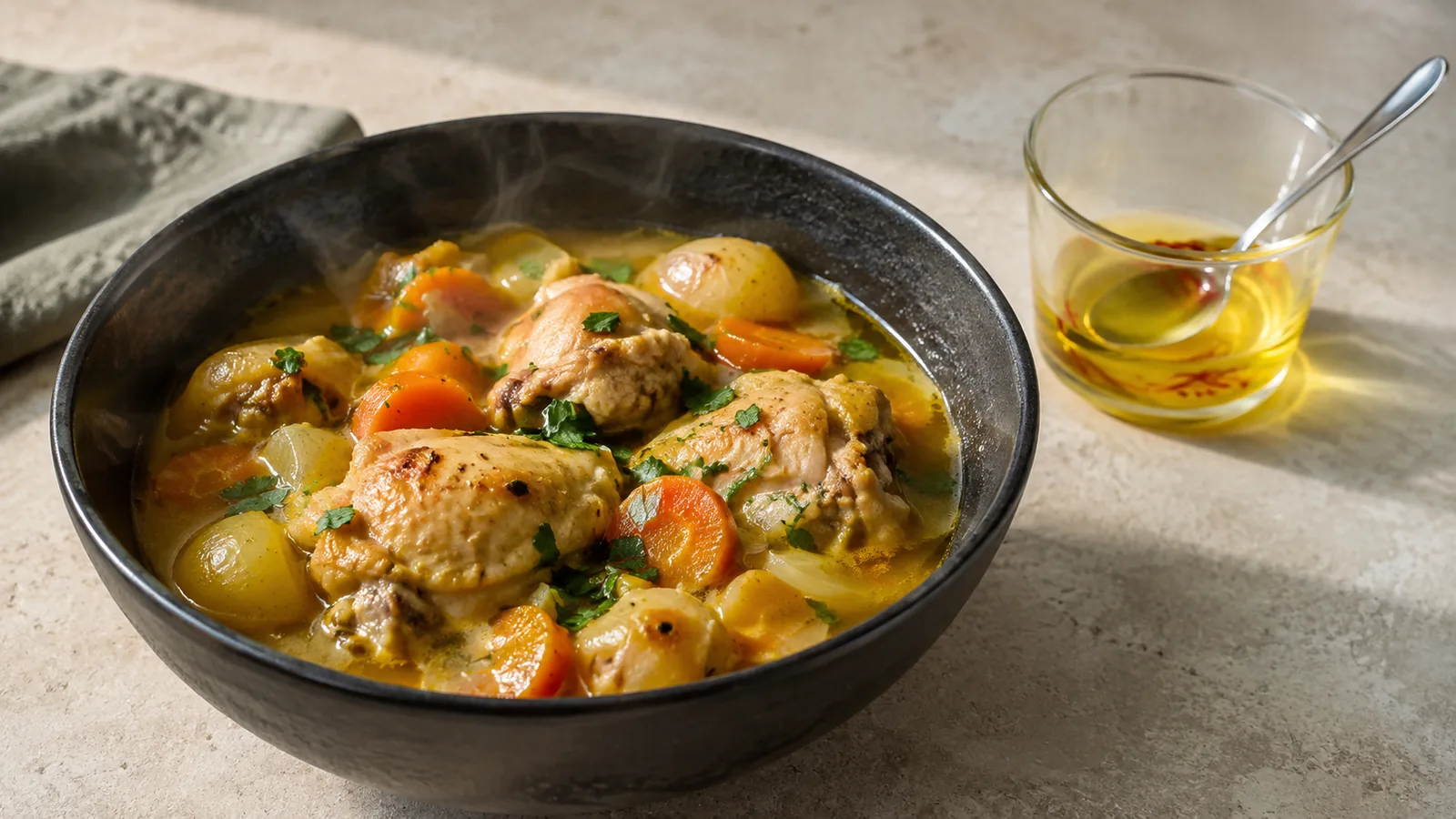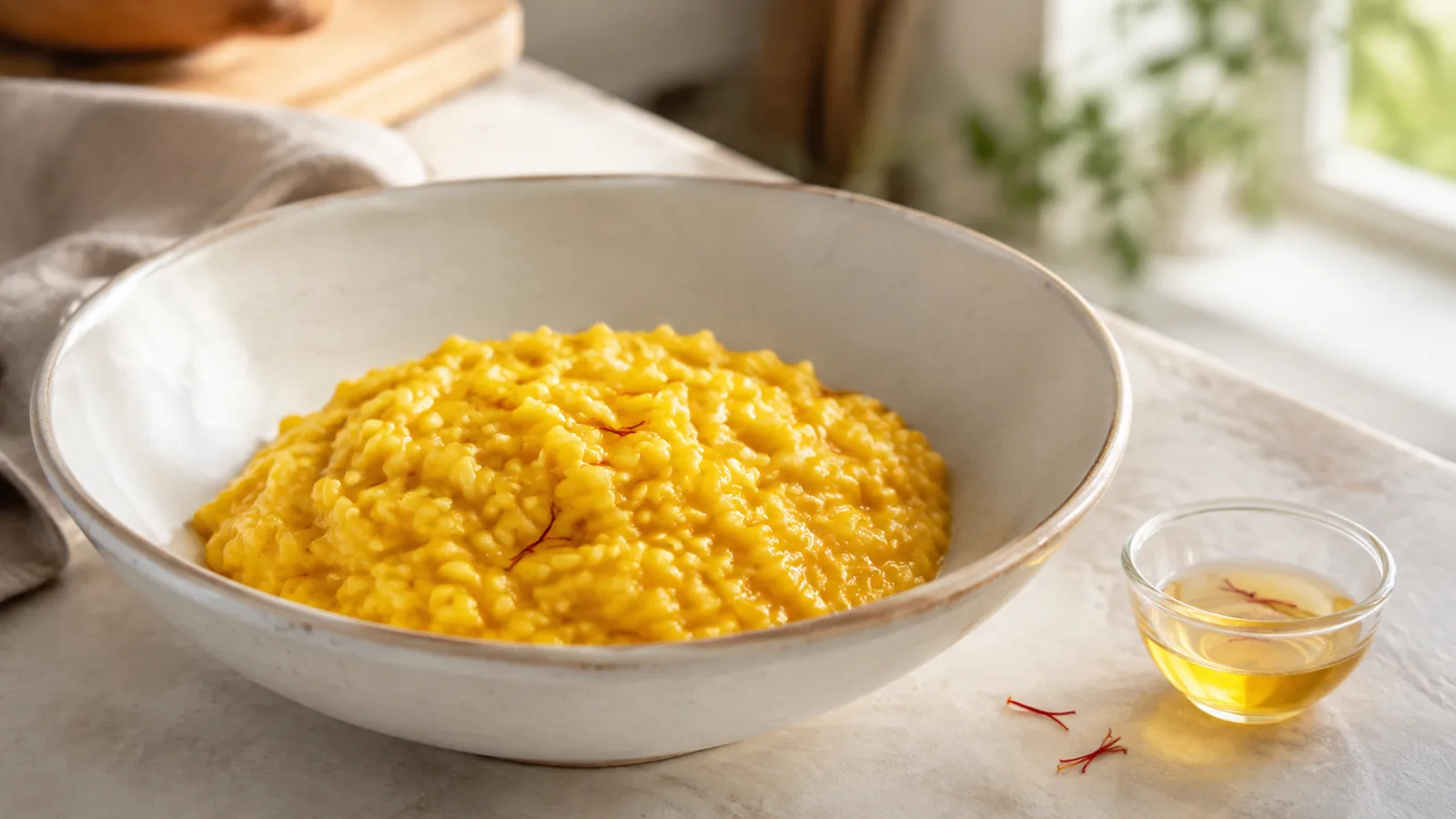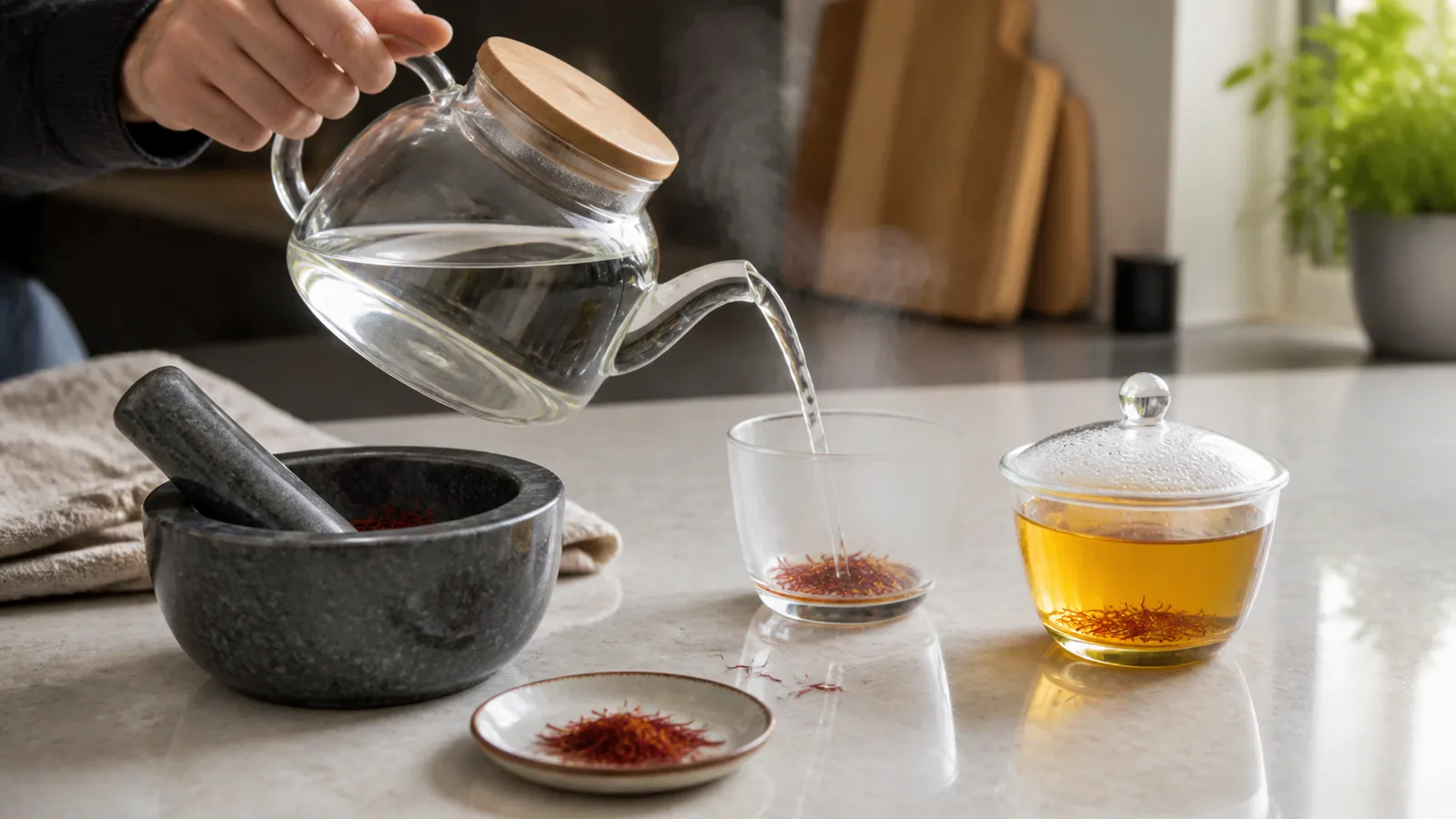
The best way to brew saffron is to crush a small measured amount, cover it with warm water and let it steep for 15 to 20 minutes. This makes a concentrated saffron water that distributes colour, aroma and flavour evenly through rice, stews, drinks and desserts.
You do not need to boil the threads, and saffron does not literally dissolve in water. Its water-soluble compounds move into the liquid while the softened threads remain visible. That is why “brew,” “steep,” “infuse” and “extract” all describe the kitchen method more accurately than dissolve.
What you need
- 1/4 teaspoon saffron threads, about 0.15 to 0.2g
- 120ml water (1/2 cup), heated to about 80–90°C/175–195°F
- a small mortar and pestle
- a heatproof cup with a saucer or lid
A pinch of sugar can be added to the mortar as an abrasive, especially if the threads bend rather than crumble. It is not needed for flavour and can be omitted from savoury dishes.
How to brew saffron step by step
- Measure the threads. A small amount goes a long way. Use more only when you know the volume of the finished dish.
- Grind gently. Crush the saffron with the mortar and pestle until it is fine but not dusty. A small pinch of sugar can help.
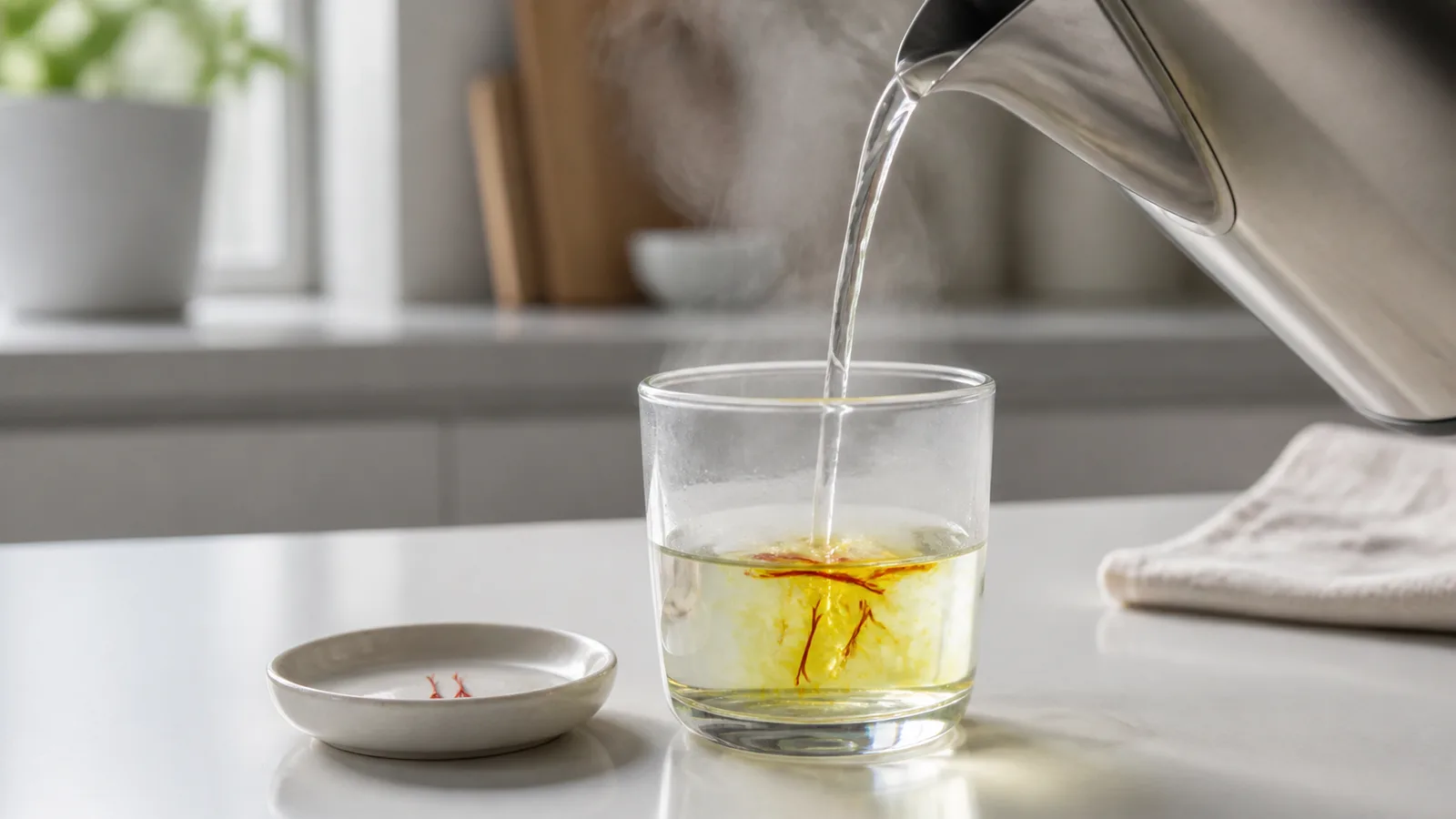
- Add hot water. Pour 120ml of water just below boiling over the ground saffron.
- Cover and steep. Put a saucer or lid over the cup and leave it for 15 to 20 minutes.
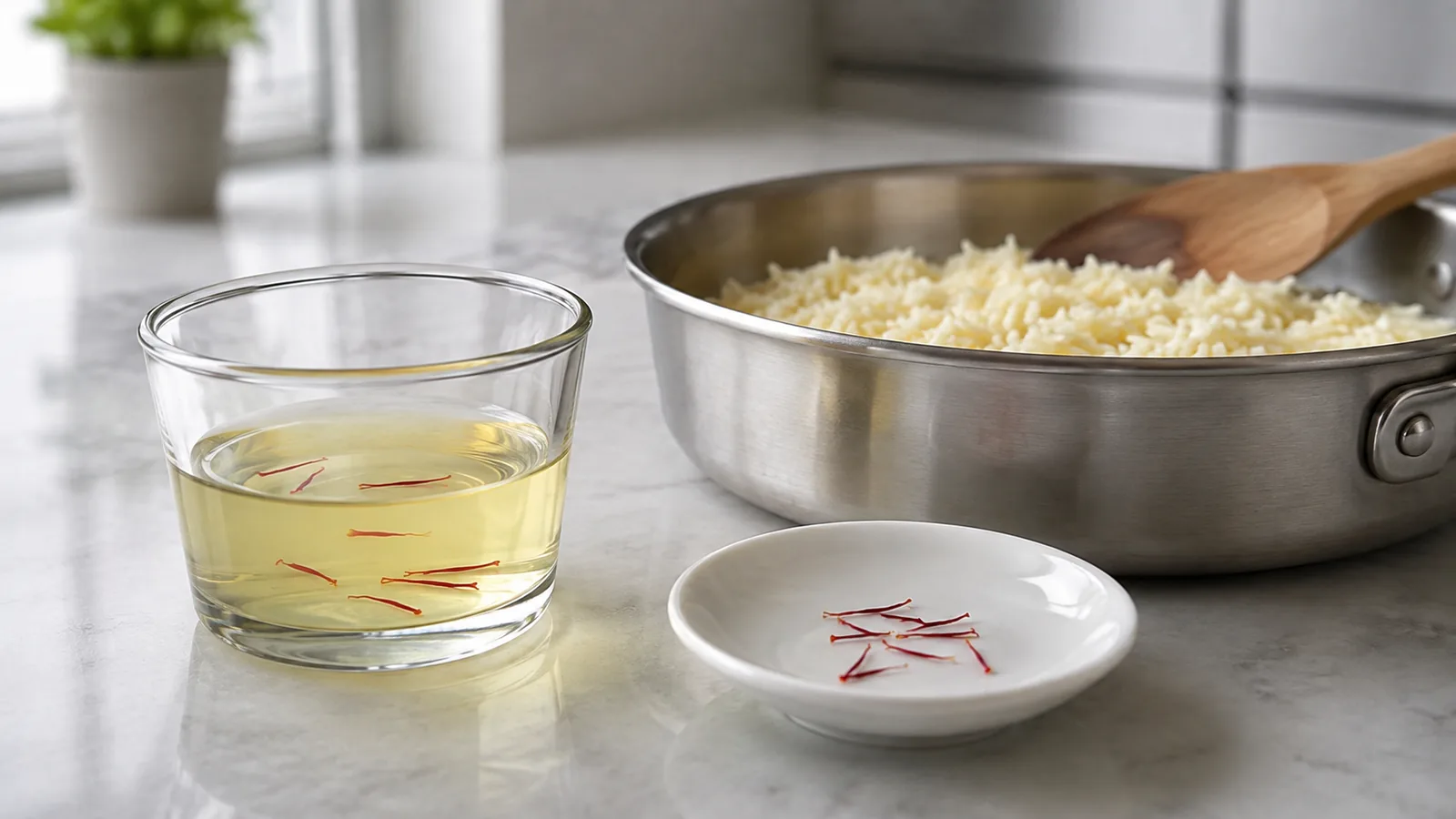
- Use the concentrate. Stir it, threads and all, into the dish. For rice, add part during cooking and reserve a little for the coloured top layer.
The earlier version of this recipe called for one teaspoon of ground saffron in half a cup of boiling water. That makes a very strong and expensive concentrate. The measured version above is easier to scale for home cooking; you can always add more after tasting.
How long to soak saffron
For most cooking, soak saffron for 15 to 20 minutes. Ten minutes gives a usable infusion, while 30 minutes produces a deeper extraction when the water is warm and the cup stays covered. There is little benefit in leaving brewed saffron at room temperature for hours.
If the infusion is destined for a cold dessert or drink, make it with warm water first and cool it afterwards. Starting with very cold water slows extraction.
Does the ice method work?
A popular Persian method puts ice over finely ground saffron and lets it melt slowly. It does extract colour, but there is no need to combine an ice cube with boiling water in the same cup. That sudden temperature change offers no clear kitchen advantage and can make the result inconsistent.
To try the cold method, place the ground threads in a covered cup, add two small ice cubes and let them melt completely. Then allow another 10 minutes before use. It takes longer than warm steeping. Compare both with the same weight of saffron if you want to decide by flavour and colour rather than tradition.
How to make saffron water for different dishes
The basic ratio above makes a versatile saffron water. For a small pot of rice, two to four tablespoons is usually enough. Add one tablespoon at a time to custard, cake batter or a sauce so the extra liquid does not disturb the recipe.
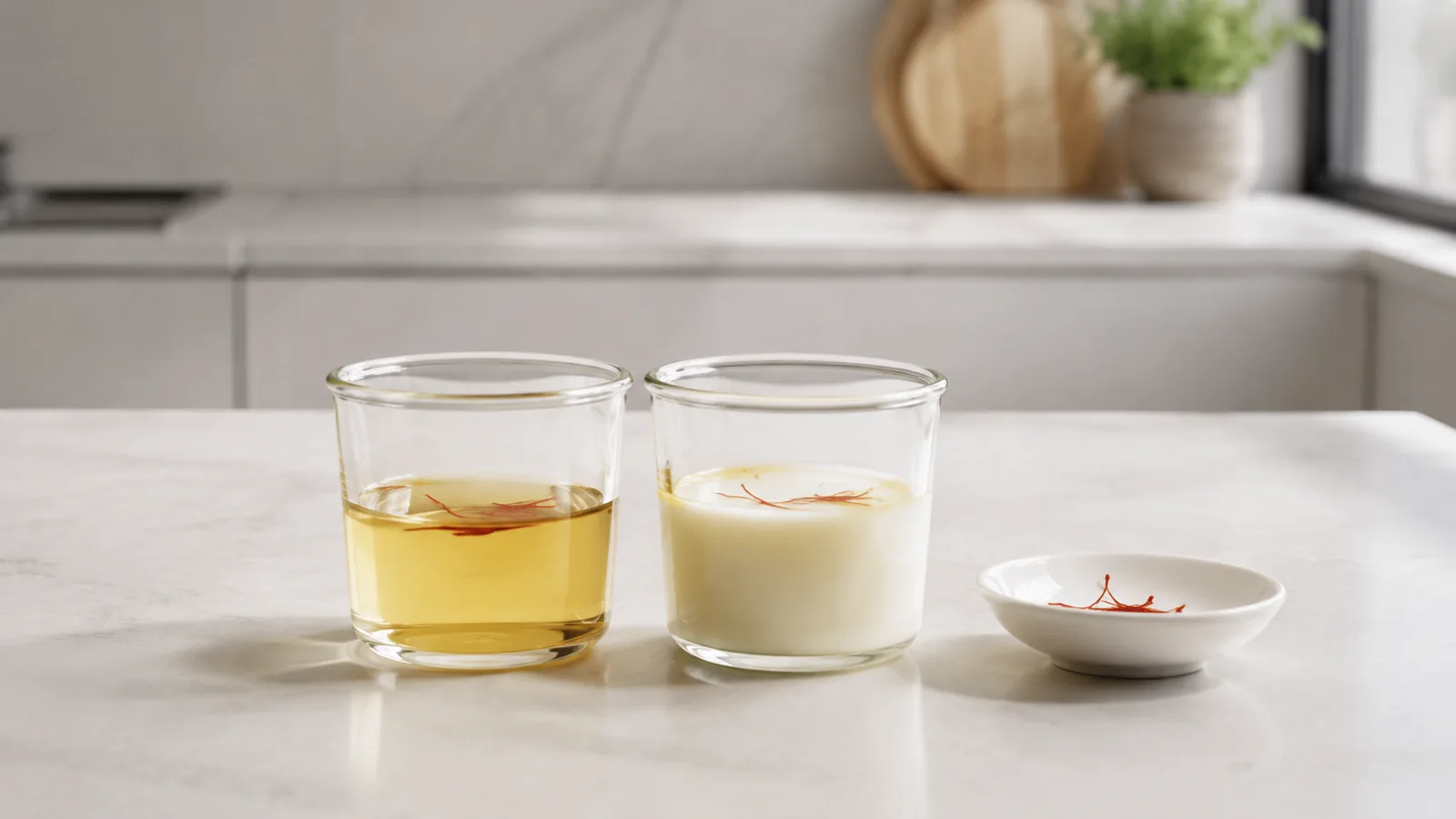
If you are wondering how to drink saffron, begin with one teaspoon of brewed saffron per cup of hot water, milk or tea, then adjust to taste. This is simply a culinary drink; it is not a treatment. Honey, cardamom, rose water or lemon can be added if they suit the recipe.
When people ask how to dissolve saffron in water, the useful answer is to grind and steep it. The threads will not vanish like sugar, and filtering them out is optional.
How to grind saffron and store it
Keep whole threads until needed because a ground spice has more surface exposed to air. Store saffron in a small airtight glass container, away from light, humidity, heat and strong odours. A cupboard is better than an open spice rack beside the stove.
Do not wash dry saffron before storage; added moisture encourages deterioration. Food-grade threads should arrive clean and ready for culinary use. If saffron has become soft in humid air, avoid microwaving it for 30 seconds as the old article suggested. Gentle grinding with a pinch of sugar is safer than applying uncontrolled heat to a tiny amount of spice.
How long brewed saffron keeps
Refrigerate brewed saffron promptly in a clean, covered container and use it within three to four days. The former guidance allowed a week, but a shorter period better protects aroma and reduces food-handling uncertainty. Discard it if it develops an unusual smell, cloudiness or mould.
For longer storage, freeze the concentrate in a clean ice-cube tray, then transfer the frozen portions to an airtight bag. Label the date and use the cubes within about three months for the best flavour. Do not repeatedly thaw and refreeze them.
Why the infusion may look weak
A pale infusion can result from too much water, short steeping, old threads or poor-quality saffron. It should develop a clear golden-yellow to orange colour, not an instant opaque red cloud. More saffron creates a stronger infusion, but quantity cannot correct adulterated or badly stored material.
Start with intact, traceable threads and an accurate measure. Our guide to identifying real saffron explains sensible checks, and the saffron extract guide covers a larger, freezer-ready preparation.