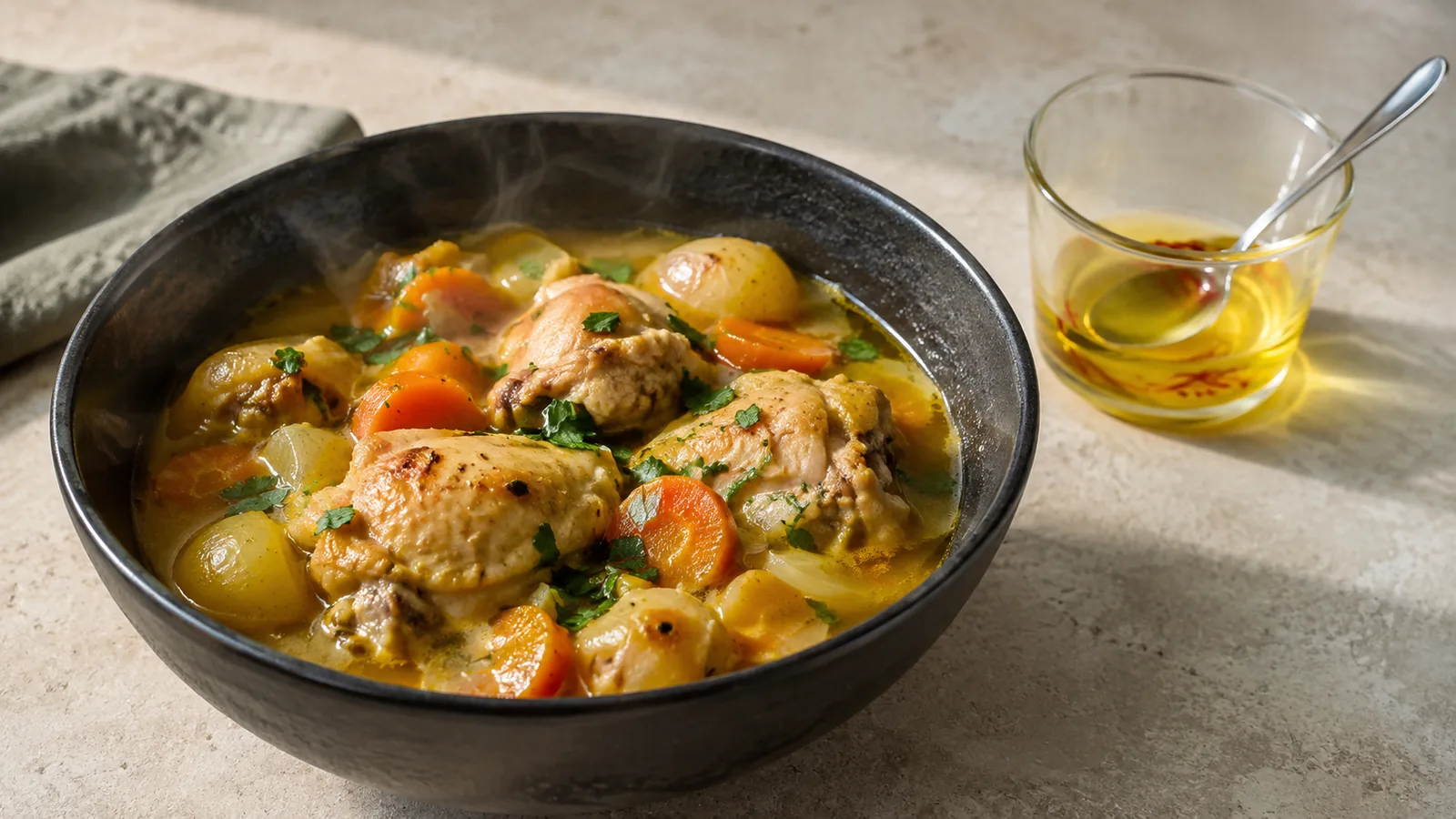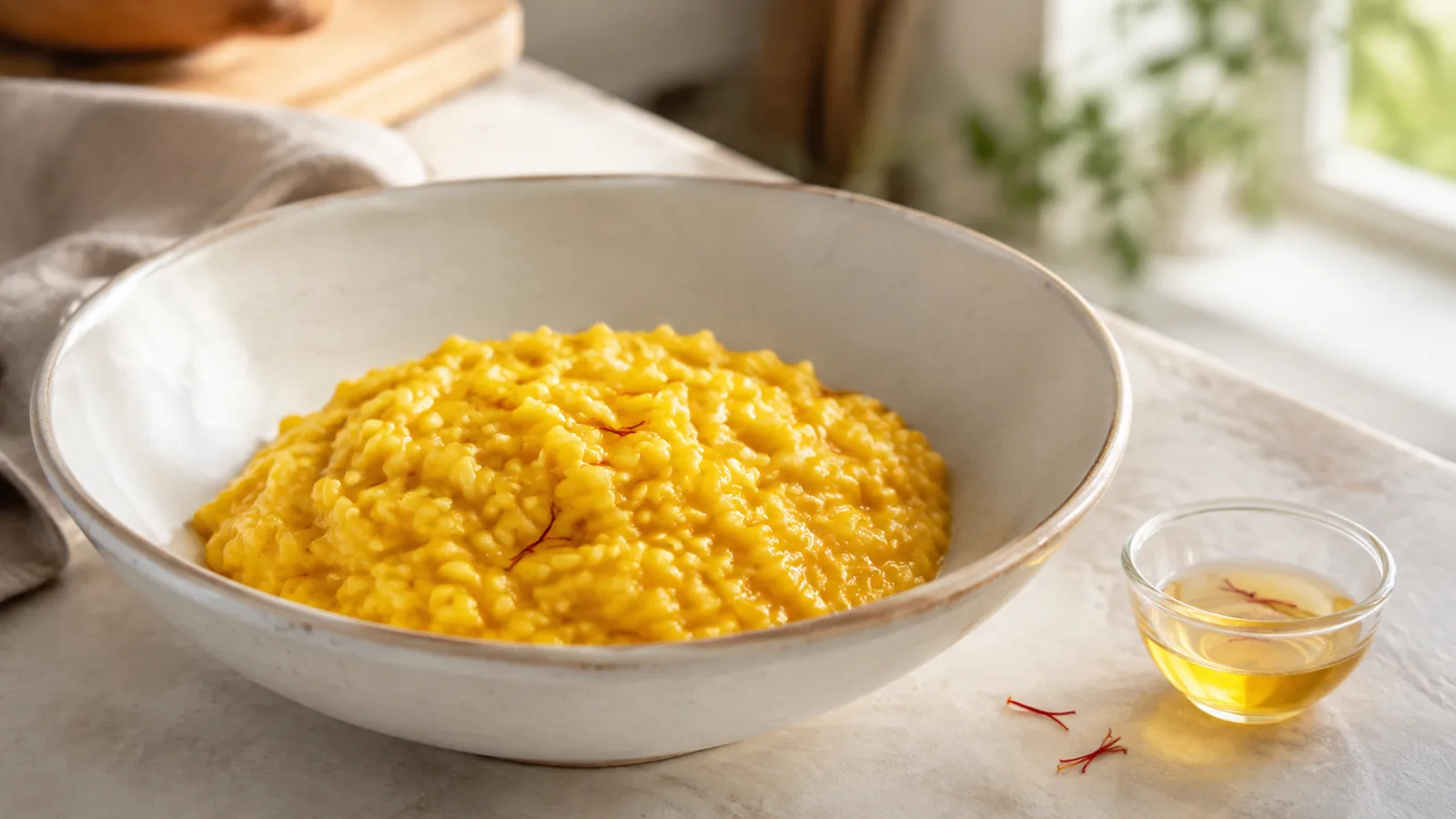
Is saffron healthy? As a culinary spice, saffron adds colour, aroma and flavour with very little sugar, salt or energy. Standardised saffron extracts have also produced promising results in small clinical trials, particularly for mood. Those findings do not turn a pinch of threads into a treatment, and concentrated products can have side effects or interact with care.
The benefits and disadvantages of saffron for health become clearer when three exposures are kept separate: a few threads in food, a cup of lightly brewed saffron tea, and a measured supplement or research extract. They should not share the same claims or dose assumptions.
The Benefits and Disadvantages of Saffron for Health
Saffron advantages and disadvantages at a glance
Saffron comes from the three red stigmas inside each purple Crocus sativus flower. It is picked and separated largely by hand, which helps explain its price. Crocin contributes colour, picrocrocin bitterness and safranal aroma.
- Advantage: a small amount gives food a distinctive sensory character.
- Advantage: defined extracts and constituents can be studied in controlled human trials.
- Disadvantage: early research and traditional use are often overstated as proven treatment.
- Disadvantage: high-value saffron is vulnerable to adulteration and inaccurate supplement labels.
- Disadvantage: concentrated intake may cause side effects and may be unsuitable in pregnancy or with some medicines.
These are the practical pros and cons of saffron. Product form, amount and reason for use determine which side matters most.
What health benefits have human evidence?
A systematic map of saffron clinical evidence found trials across mood, cognition, eye conditions and metabolic outcomes, but the number, size and consistency of studies varied.
Mood has one of the more developed evidence bases. Short trials of standardised saffron preparations have reported improvement in depressive symptoms compared with placebo. The products, amounts and populations were defined; this does not prove that tea treats depression or that saffron can replace psychotherapy or prescribed medicine.
Small studies have also explored mild cognitive impairment, Alzheimer’s disease and age-related macular degeneration. Results are encouraging enough for further trials, not strong enough to promise restored memory or vision. Cancer effects remain largely laboratory and animal research. The National Cancer Institute states that no herb or special food has been proved to slow or cure cancer or stop it returning.
Does saffron provide vitamins and minerals?
Food databases may show manganese, iron, vitamin C, vitamin B6 and potassium per 100 grams. That number is nutritionally misleading for normal use: a whole recipe may contain only a fraction of a gram. Saffron is not a practical way to correct iron, potassium or vitamin deficiency.
Its culinary value comes from volatile and pigment compounds at tiny quantities, not from supplying a daily serving of micronutrients.
Saffron tea benefits and side effects
Saffron tea offers aroma, colour, warmth and hydration. It may feel relaxing as part of a routine, but the health effect cannot be assumed from extract trials. The query saffron tea benefits and side effects needs both halves: tea is pleasant, while strength and serving size can vary widely.
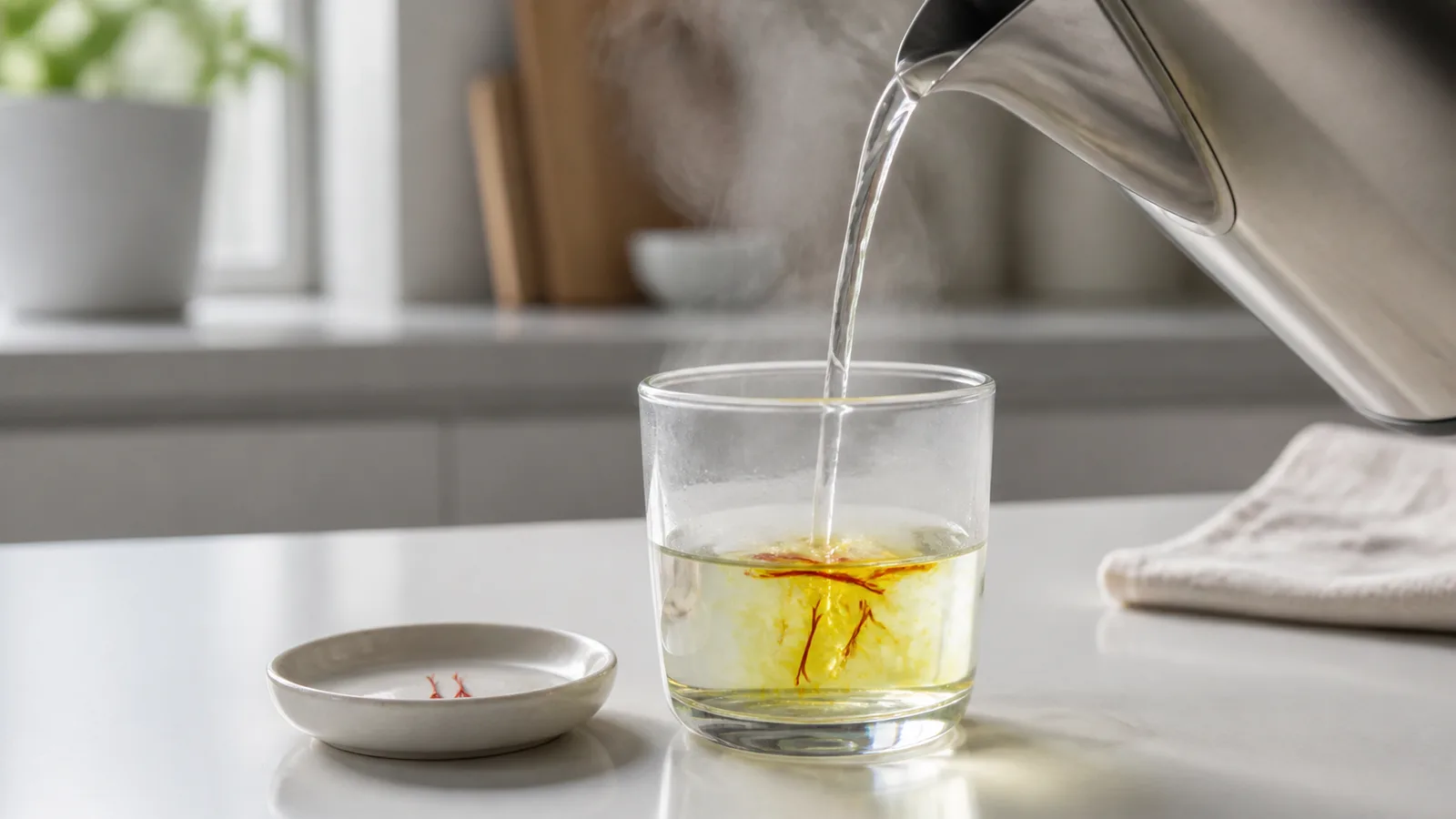
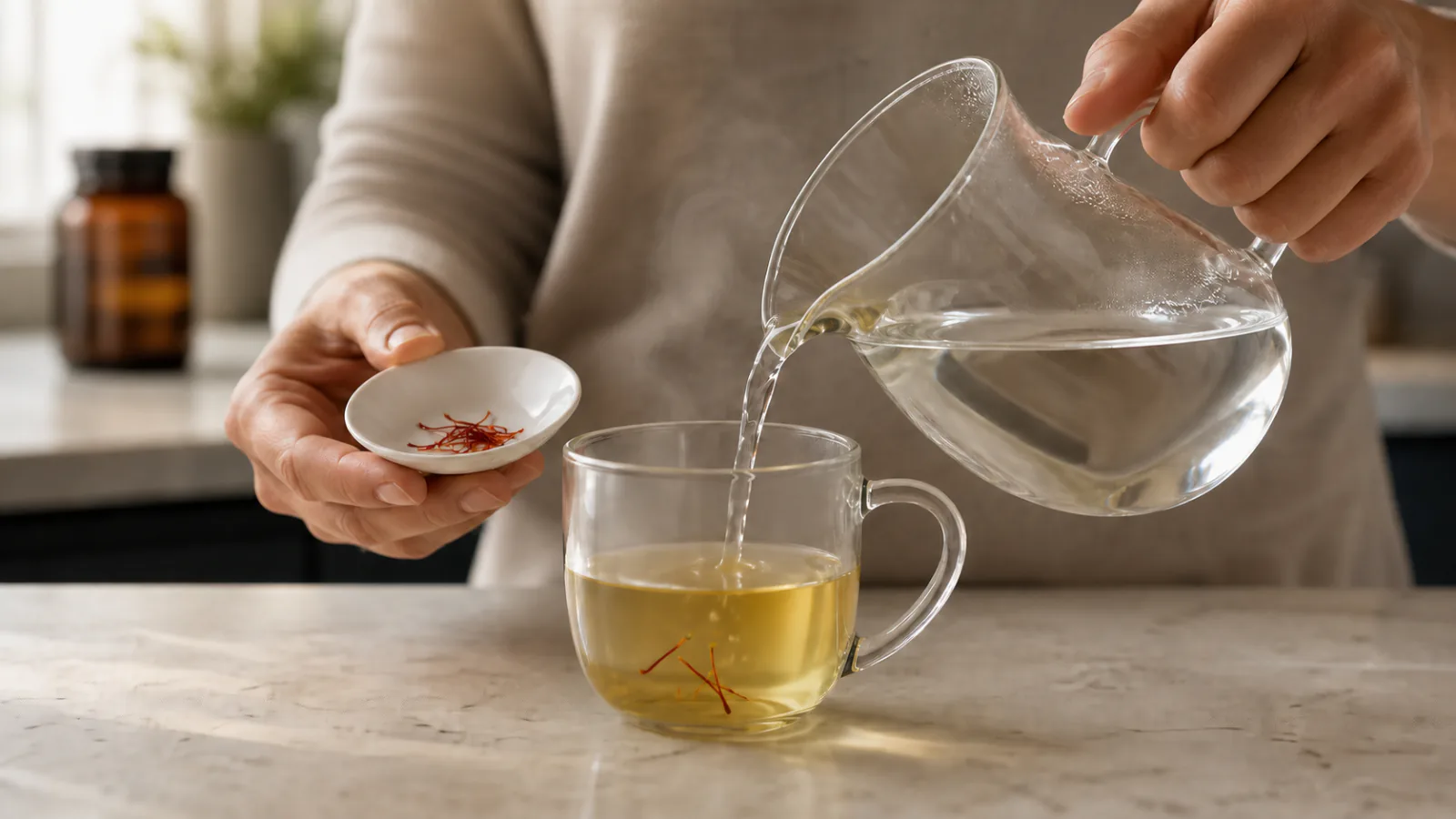
To brew one cup, lightly crush 5–8 threads, add about 240 ml/8 fl oz of hot—not furiously boiling—water and steep covered for 10–15 minutes. The earlier method on this page called for ground saffron over indirect heat for 20–30 minutes. That produces colour, but prolonged heat can flatten aroma. Start small; the drink should not be intensely bitter.
Possible side effects of saffron tea include nausea, headache, dizziness, dry mouth, drowsiness or an allergic reaction, especially as the drink becomes stronger or more frequent. Stop if it causes symptoms. Sweeteners and other herbs add their own risks and calories.
Saffron benefits and side effects from supplements
The pros and cons of a saffron supplement differ from tea. A credible product can state a defined extract and daily amount, making research and monitoring possible. A capsule also makes it easy to consume a concentrated dose repeatedly, and its contents may not match the label.
A 2026 systematic review of saffron adverse events examined the safety reporting across clinical studies. Trial tolerance does not guarantee that every commercial supplement is safe for every person. Look for batch testing, full ingredients, manufacturer identity and realistic claims.
Do not combine a supplement with antidepressants, blood-pressure treatment, anticoagulants, antiplatelet medicines or other prescriptions without advice from a clinician or pharmacist. Interaction evidence is incomplete, which is a reason for caution rather than a guarantee of no interaction.
Saffron health risks in pregnancy
Pregnancy is the clearest reason not to experiment with concentrated saffron. Traditional use around labour and possible uterine effects have led to conflicting online advice. A 2026 pregnancy review found limited and inconclusive evidence, possible low-dose effects at term, and concern about higher or occupational exposure. It called for standardised preparations and longer-term safety data.
Pregnant people should not take saffron extracts or medicinal amounts unless their obstetric clinician specifically recommends and supervises them. A normal recipe question is different from supplement use, but anyone with a high-risk pregnancy should still ask. Evidence during breastfeeding is insufficient.
Other saffron health risks
- Allergy: saffron or another ingredient can trigger rash, swelling or breathing symptoms.
- Blood pressure: a concentrated product may be inappropriate for someone prone to low blood pressure or taking medication.
- Bleeding: people using anticoagulant or antiplatelet medicine should seek professional advice.
- Adulteration: substituted plant material, dyes or inaccurate extract amounts add unknown risk.
- Delayed care: using saffron for cough, infection, jaundice, anaemia, eye disease or cancer can be harmful if it postpones diagnosis.
The older page mentioned traditional uses for coughs, colds, digestion, insomnia and appetite. Tradition can motivate research, but it does not establish a treatment. Sudden or persistent symptoms deserve appropriate care.
How much saffron is too much?
There is no single safe upper number that applies to culinary threads, extracts and every person. Normal cooking uses a pinch distributed across several servings. Gram-level self-experiments are not culinary use and can be dangerous.
Do not convert a study dose by guessing from a jar of threads, and do not assume twice the supplement amount works twice as well. Follow the product label and clinician’s instructions; keep saffron and supplements away from children.
How to brew and store saffron well
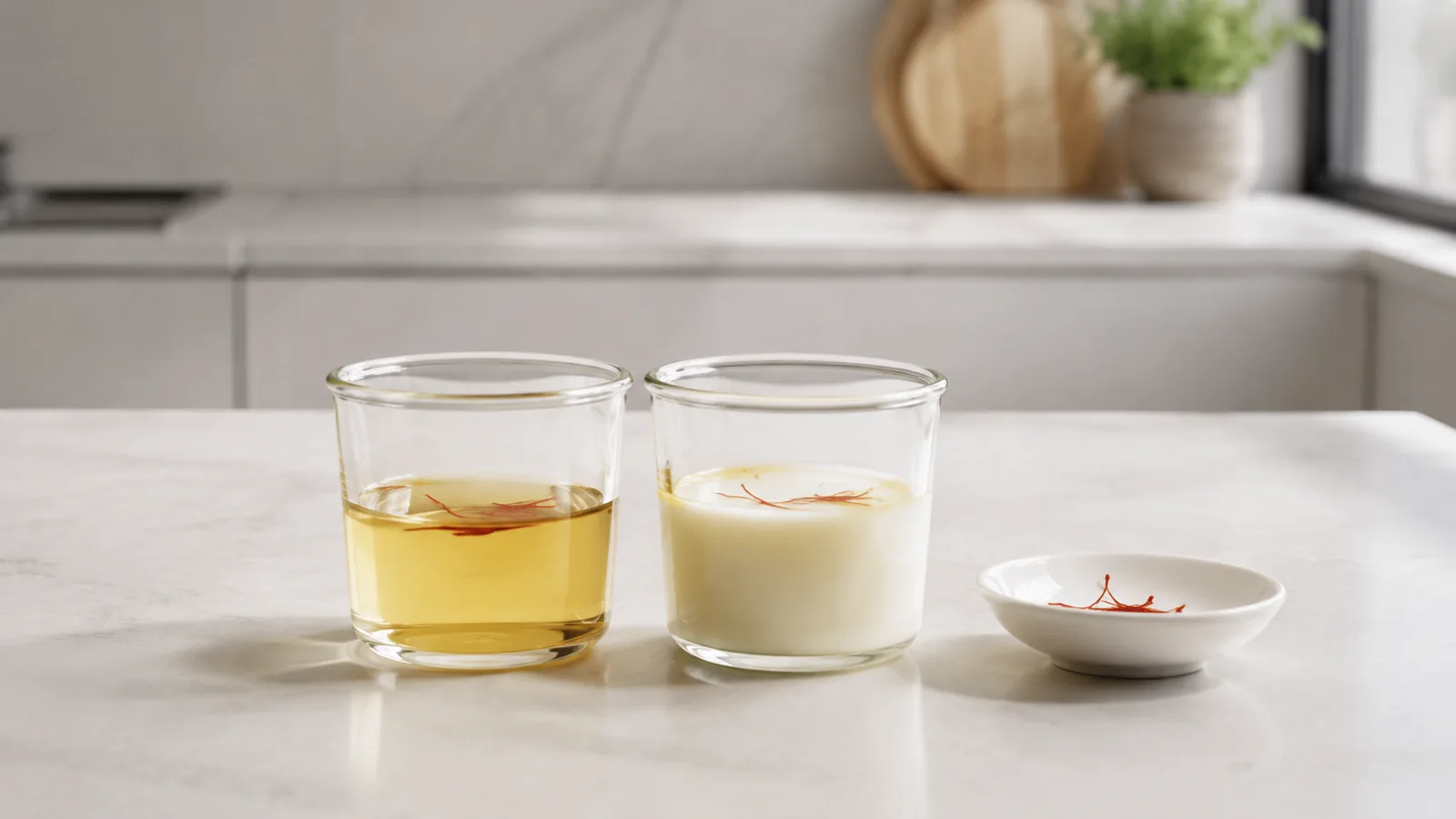
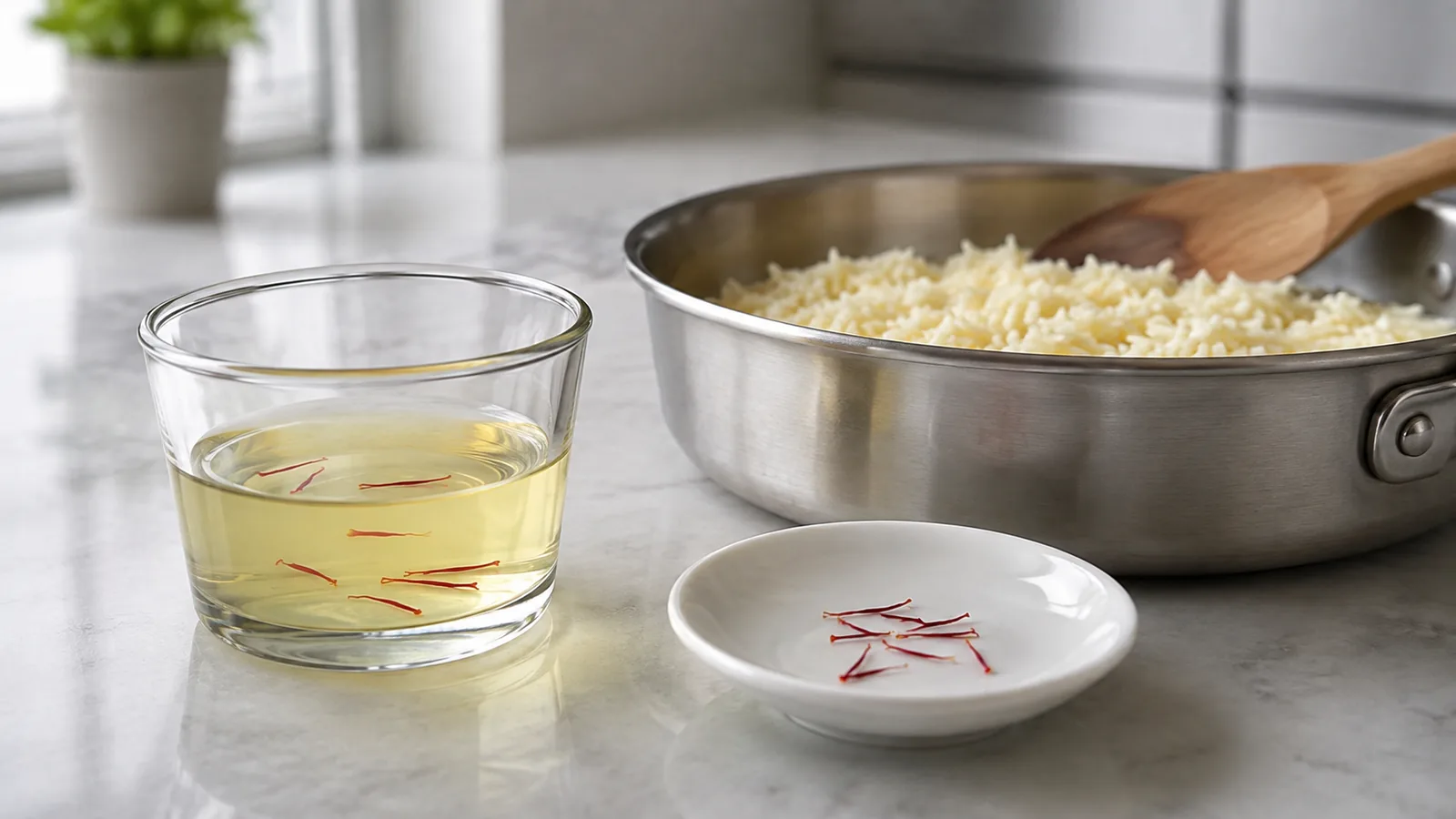
For food, crush a small portion shortly before use and bloom it in warm water, milk or another recipe liquid. Keep the remaining dry threads in a tightly closed, food-safe container away from light, heat, moisture and strong odours. An open jar gradually loses aroma.
Purchase intact threads from a traceable lot when possible. Powder is convenient but harder to inspect and easier to adulterate. Quality testing and provenance are more informative than an unusually deep red colour.
A balanced answer on saffron pros and cons
The saffron pros and cons are not a contest between miracle spice and dangerous herb. Culinary saffron is an enjoyable high-value ingredient used in tiny amounts. Research extracts may have useful biological effects, but those effects require better confirmation and do not belong in every cup of tea.
Enjoy saffron for flavour and aroma. If the goal is mood, memory, eye health or another medical outcome, identify the exact product, review the evidence and discuss safety with a professional. That is how the benefits remain realistic and the disadvantages stay manageable.