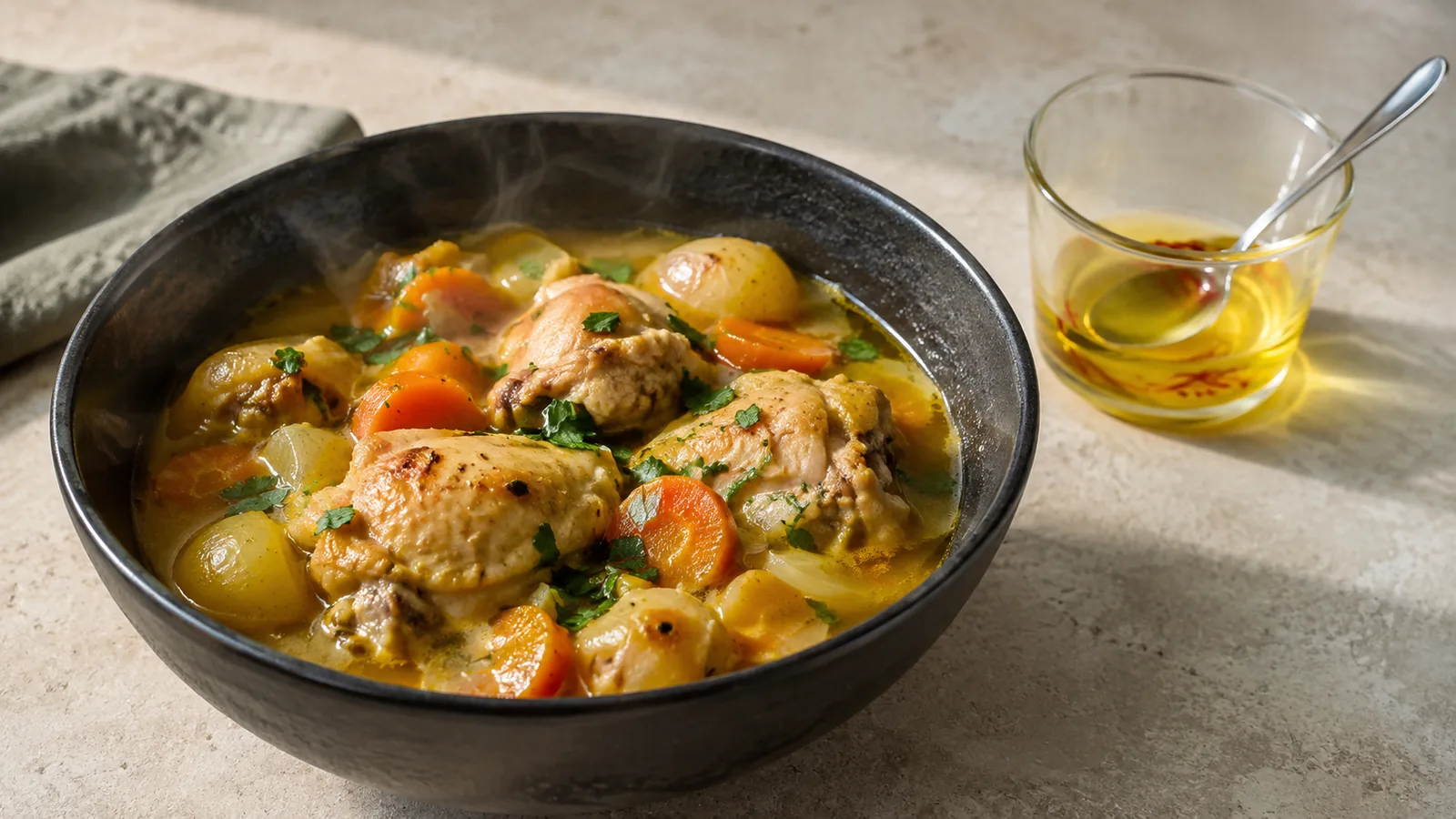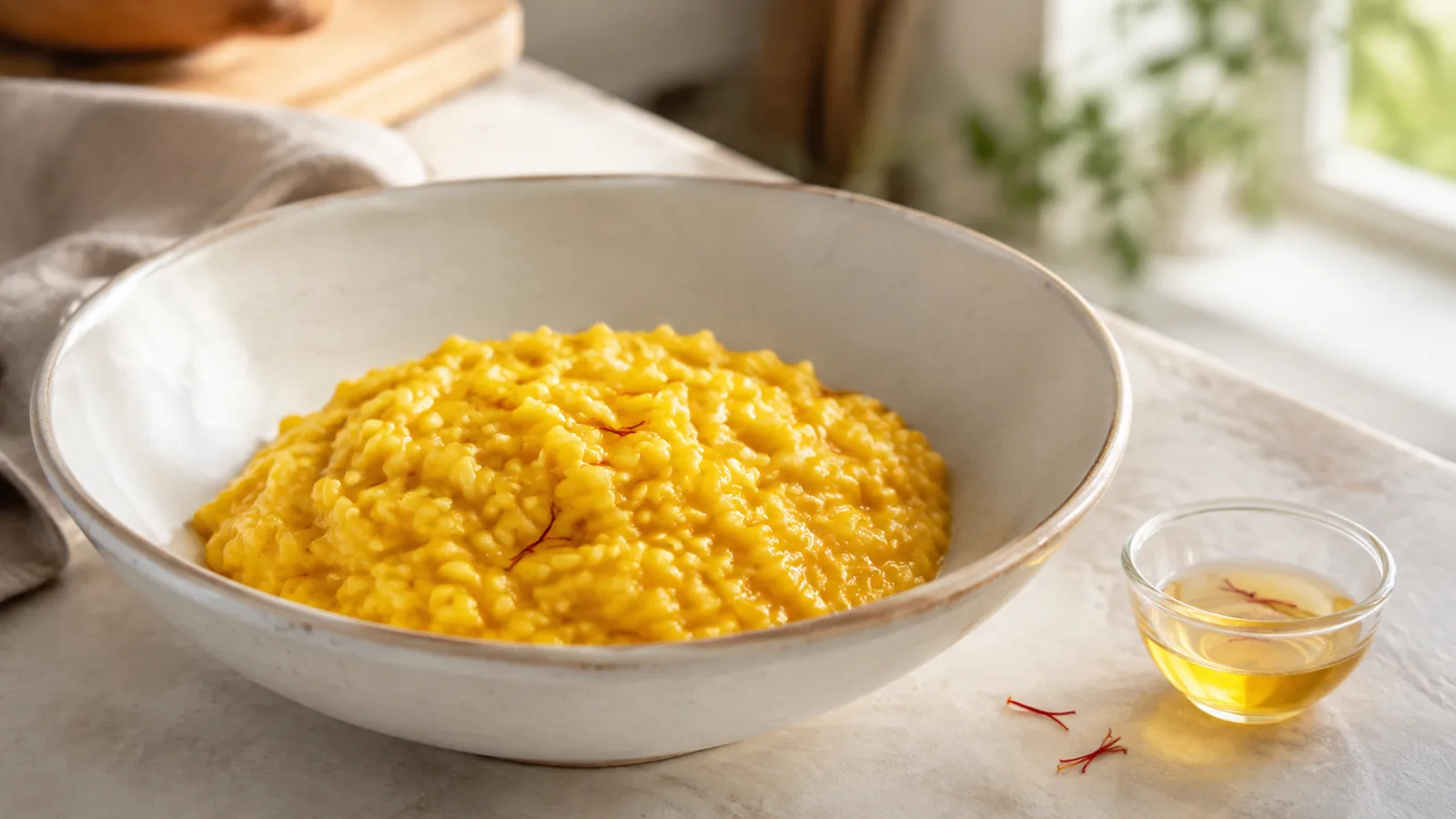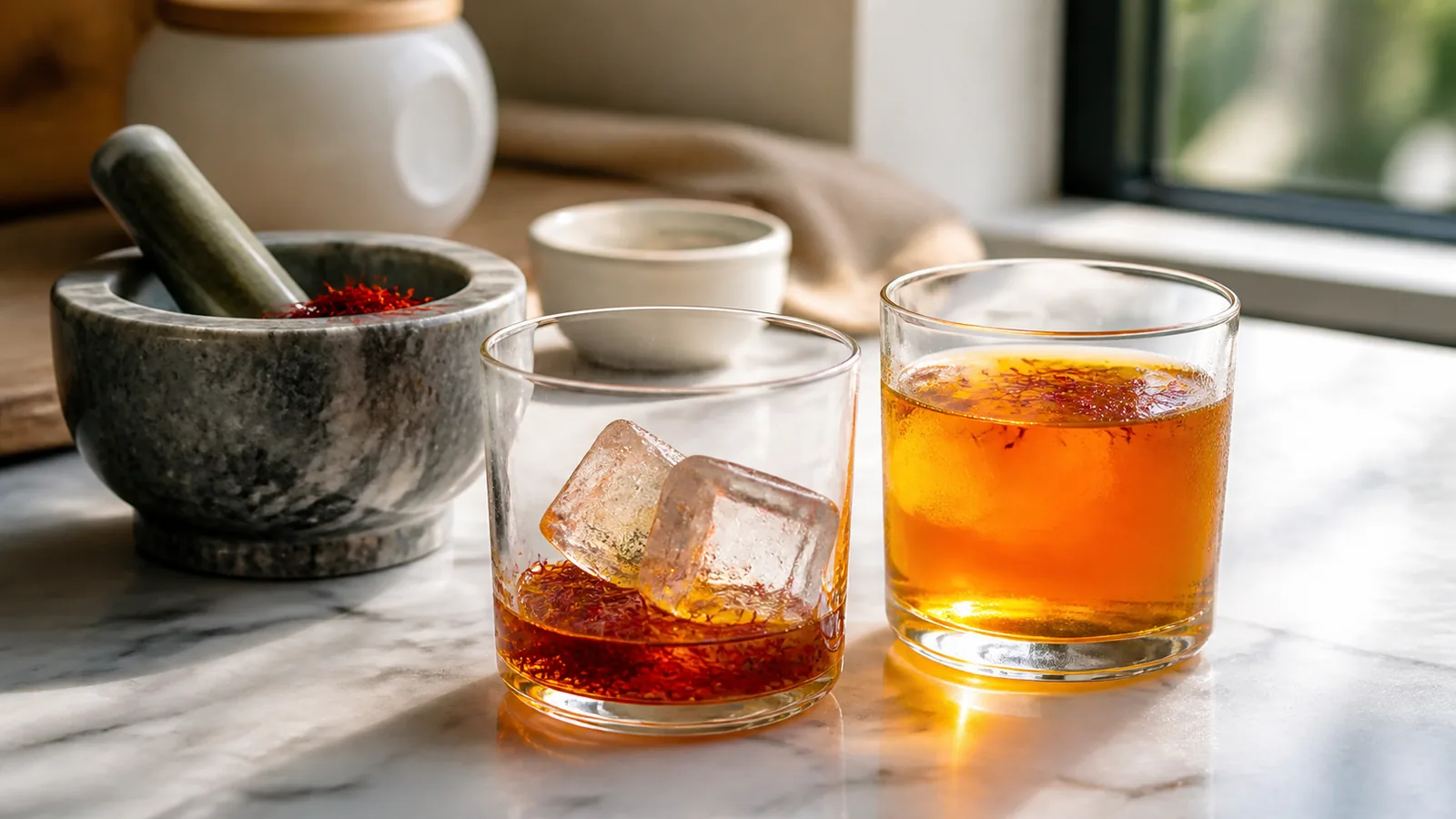
To make saffron extract for cooking, grind 1/4 teaspoon of threads, cover them with two small ice cubes and let the ice melt at room temperature. The slow melt produces a concentrated golden liquid that can be portioned into rice, desserts, drinks and sauces. It is a culinary water infusion, not a medicinal or commercial solvent extract.
The ice method is convenient when you want a make-ahead concentrate. Warm water works faster and is at least as practical; neither method creates extra saffron. Good extraction comes from measuring the spice, breaking the threads gently, using enough liquid and giving the infusion time.
Ingredients for saffron extract
- 1/4 teaspoon saffron threads, about 0.15 to 0.2g
- 2 small ice cubes, about 50–60ml water in total
- a small mortar and pestle
- a clean glass cup with a lid or saucer
Use food-grade saffron with a known lot or supplier. Whole red threads are easier to inspect and stay aromatic longer than pre-ground spice.
How to make saffron extract with ice
- Grind the saffron. Crush the threads to a fine texture. A pinch of sugar can help as an abrasive but is optional.
- Add ice. Put the powder in a clean cup and place two small ice cubes on top.
- Cover the cup. Leave it at room temperature while the ice melts, usually 30 to 45 minutes.
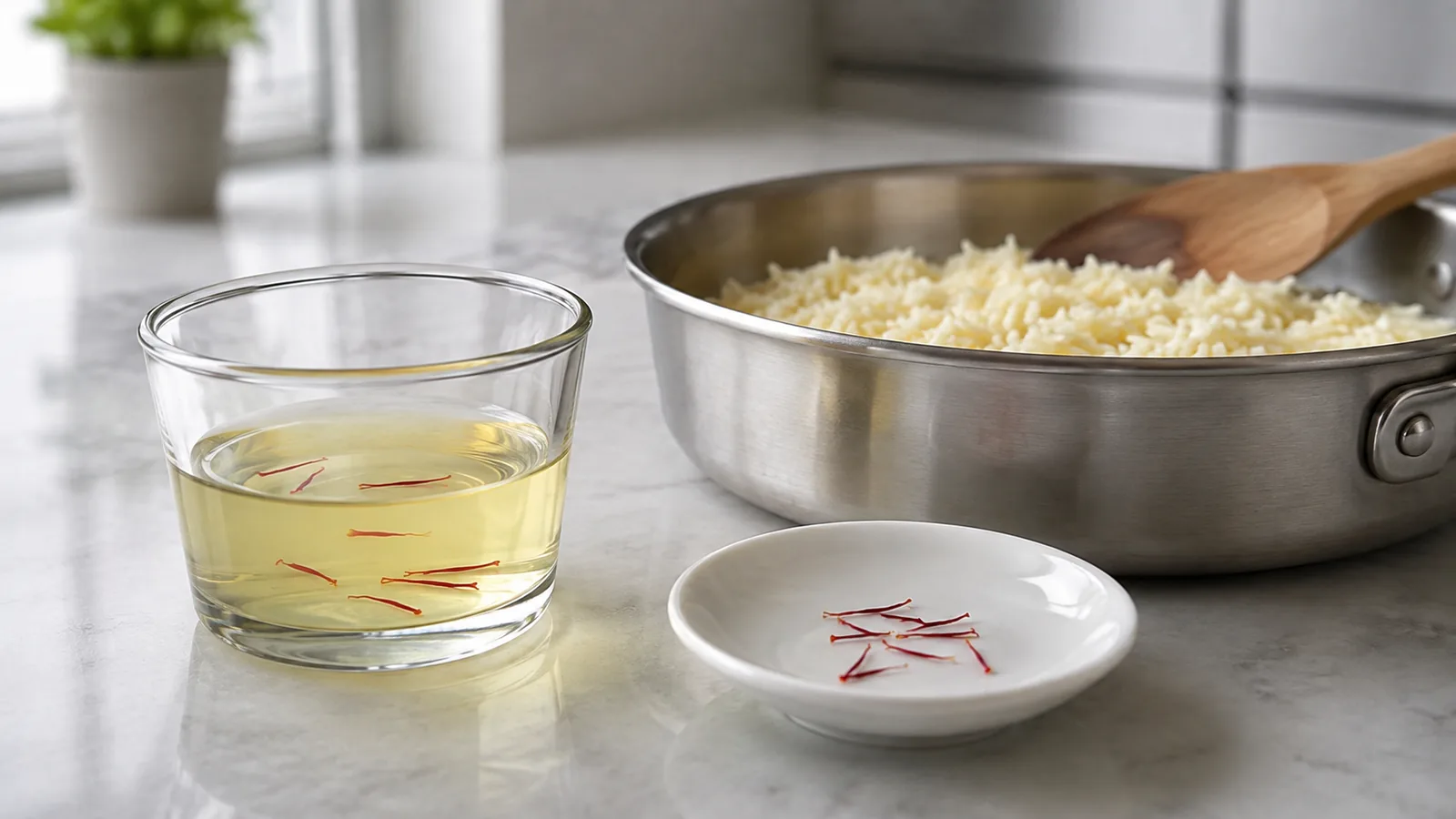
- Stir and inspect. The liquid should be clear golden yellow to orange, with softened threads still visible.
- Use or chill promptly. Add the extract, including the threads, to the recipe or transfer it to the refrigerator.
The previous recipe used half a teaspoon of powder with two standard ice-maker cubes. That is a stronger ratio and remains workable for a large dish. Scaling should be proportional: double both the measured saffron and the water rather than adding an unknown handful of ice.
How to extract saffron with warm water
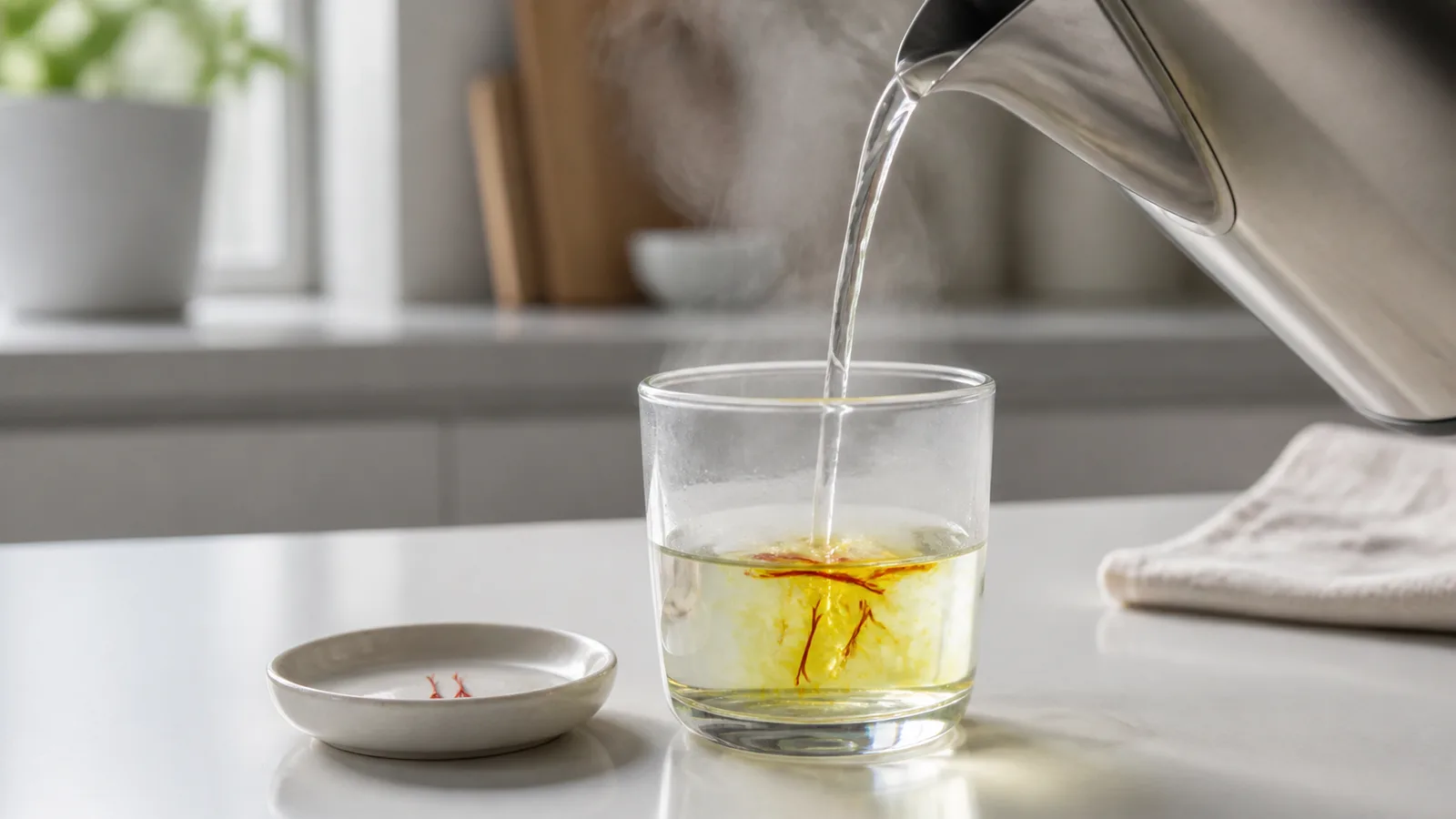
For a faster saffron extraction, pour 60ml of water at about 80–90°C/175–195°F over the same 1/4 teaspoon of ground threads. Cover and steep for 15 to 20 minutes. This is the best option when you need the liquid during the current cooking session.
Boiling the threads in a pan is unnecessary. Very high heat and long cooking can flatten saffron’s delicate aroma. Add the brewed liquid near the stage the recipe specifies rather than reducing it aggressively on its own.
Does ice extract more colour?
Ice clearly produces a coloured infusion as it melts, but claims that it always extracts “more” or creates a superior flavour have not been established by the original cooking tip. A fair kitchen comparison uses the same saffron weight, the same water volume and the same resting time, then evaluates both samples in the finished dish.
The cold method can look vivid because the extraction is observed against a small volume of clear water. Colour intensity is also affected by saffron quality, age, storage, particle size and the ratio of spice to liquid. Adding more threads makes a stronger concentrate, but it is not evidence of greater efficiency.
How to extract saffron flavor into milk
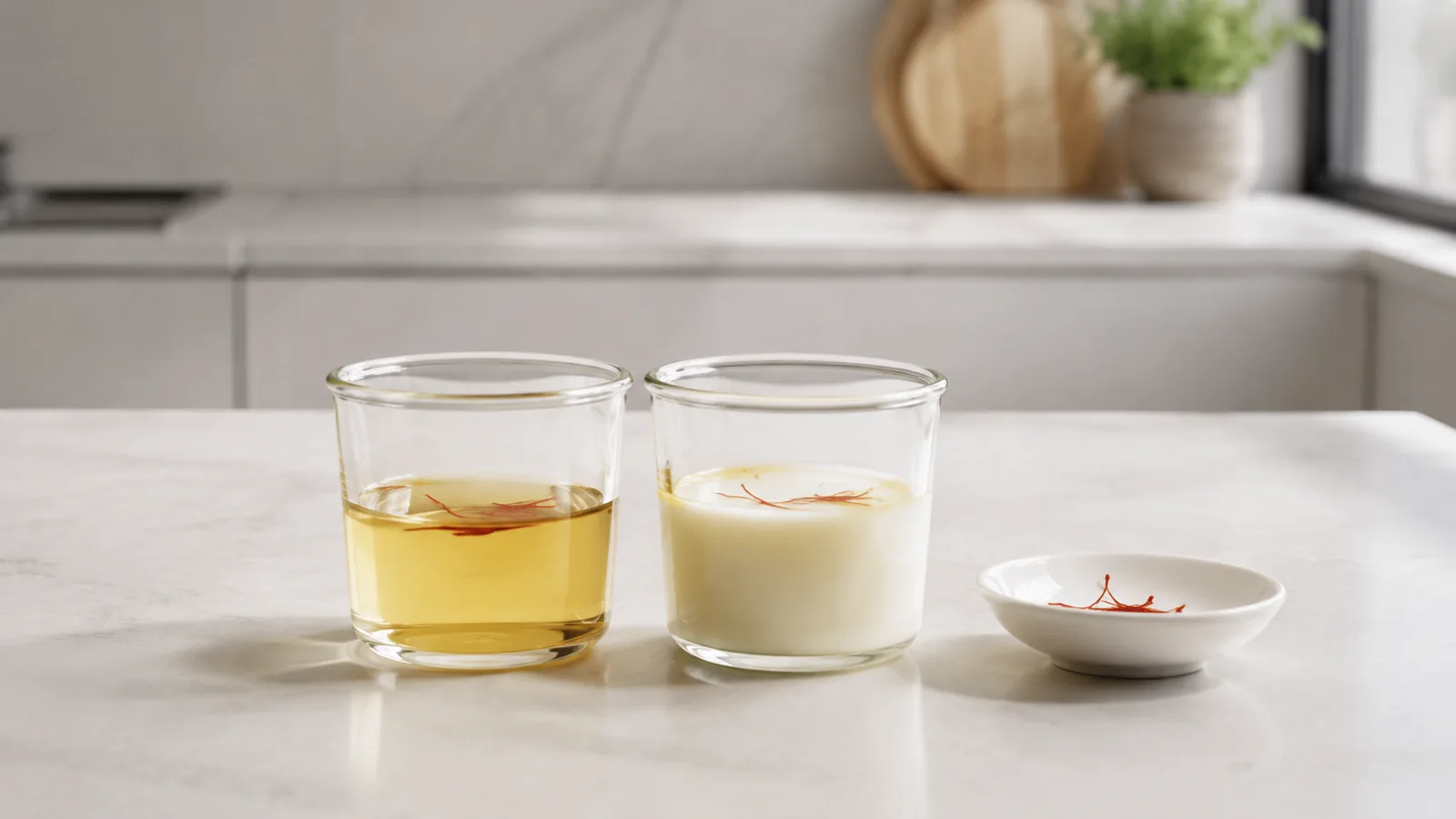
For custard, ice cream, rice pudding or a milk drink, grind the saffron and steep it in 60ml of warm milk for 20 minutes. Keep the milk below a simmer and cover the cup. This method carries the extract into the recipe without adding extra water.
Saffron works best when it has contact with liquid before it enters a thick mixture. Dropping dry threads directly into cold butter or dense batter gives uneven colour and less predictable flavour.
How much extract to use
Begin with one or two tablespoons in a family-size dish, stir, then decide whether more is needed. For Persian rice, reserve part of the infusion to mix with a small portion of cooked rice for the golden top layer. For cake or custard, account for the added liquid in the recipe.
A stronger-looking concentrate is not automatically better. Saffron should be aromatic and gently bitter, not harsh. Measuring also keeps one batch repeatable and prevents an expensive spice from overwhelming the food.
Freezing saffron extract
Pour the fresh extract into a clean ice-cube tray in measured portions. Freeze until solid, then move the cubes to a labelled airtight freezer bag so they do not absorb odours. For best flavour, use them within about three months.
Add a frozen cube directly to a hot dish or thaw it in the refrigerator. Do not leave the liquid on the counter after the ice has melted, and do not repeatedly thaw and refreeze it. In the refrigerator, use fresh extract within three to four days.
Common problems
- Weak colour: the ratio may be too dilute, the threads may be old, or the resting time may be short.
- Instant red cloud: rapidly bleeding surface colour can be a warning sign; it does not by itself prove adulteration.
- Flat aroma: check storage age and avoid leaving the cup uncovered.
- Dark brown liquid: this usually reflects too much heat rather than better extraction.
- Uneven food colour: stir the liquid through the dish instead of adding dry powder in one spot.
For the warm-water method in more detail, see the best way to brew saffron. If the threads or colour seem unusual, review our guide to identifying real saffron before using a home observation as proof.
The original article also gave extremely long historical dates for saffron use without a dependable source. Those claims are not needed to make a good extract and have not been repeated as facts here.