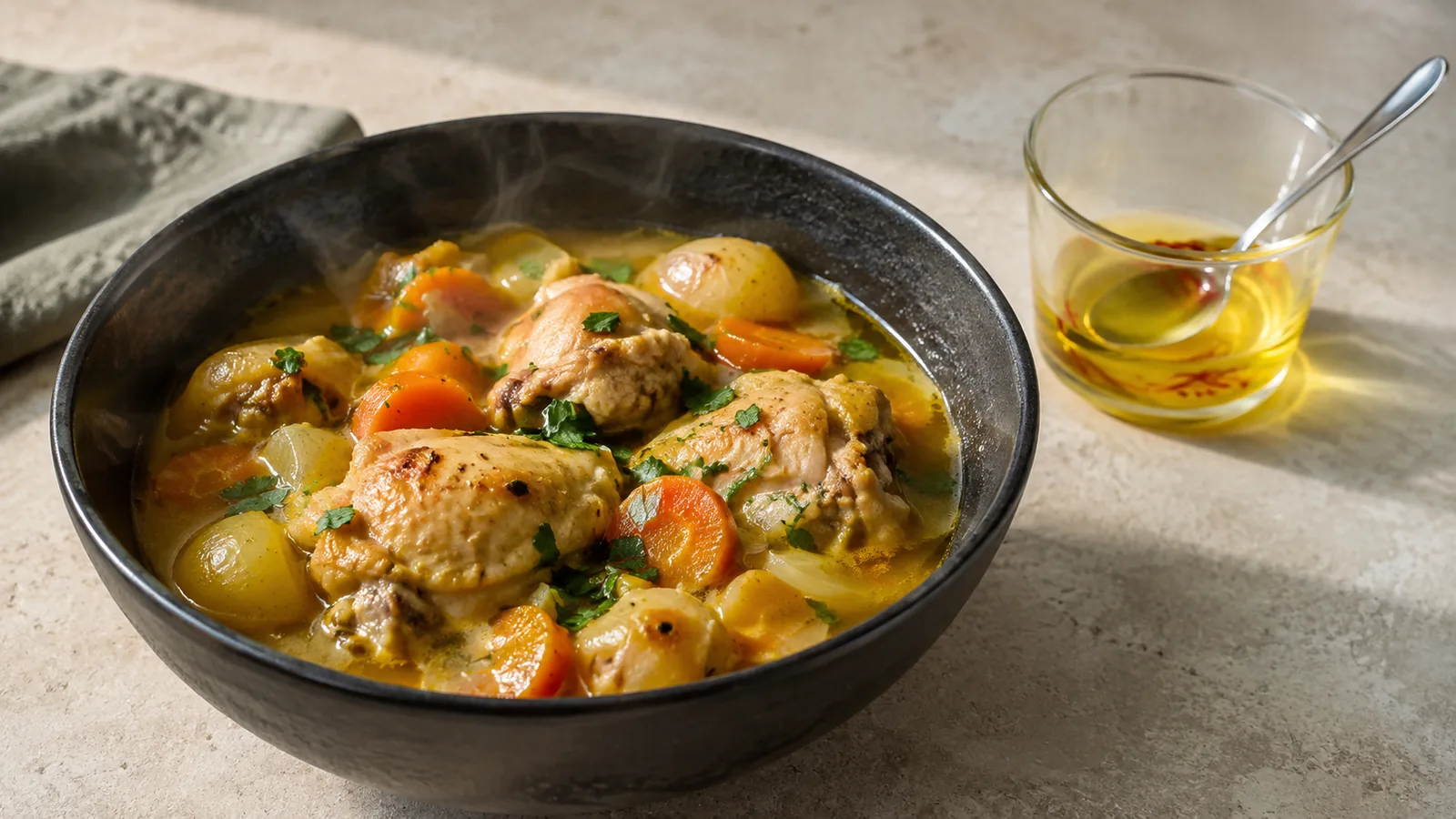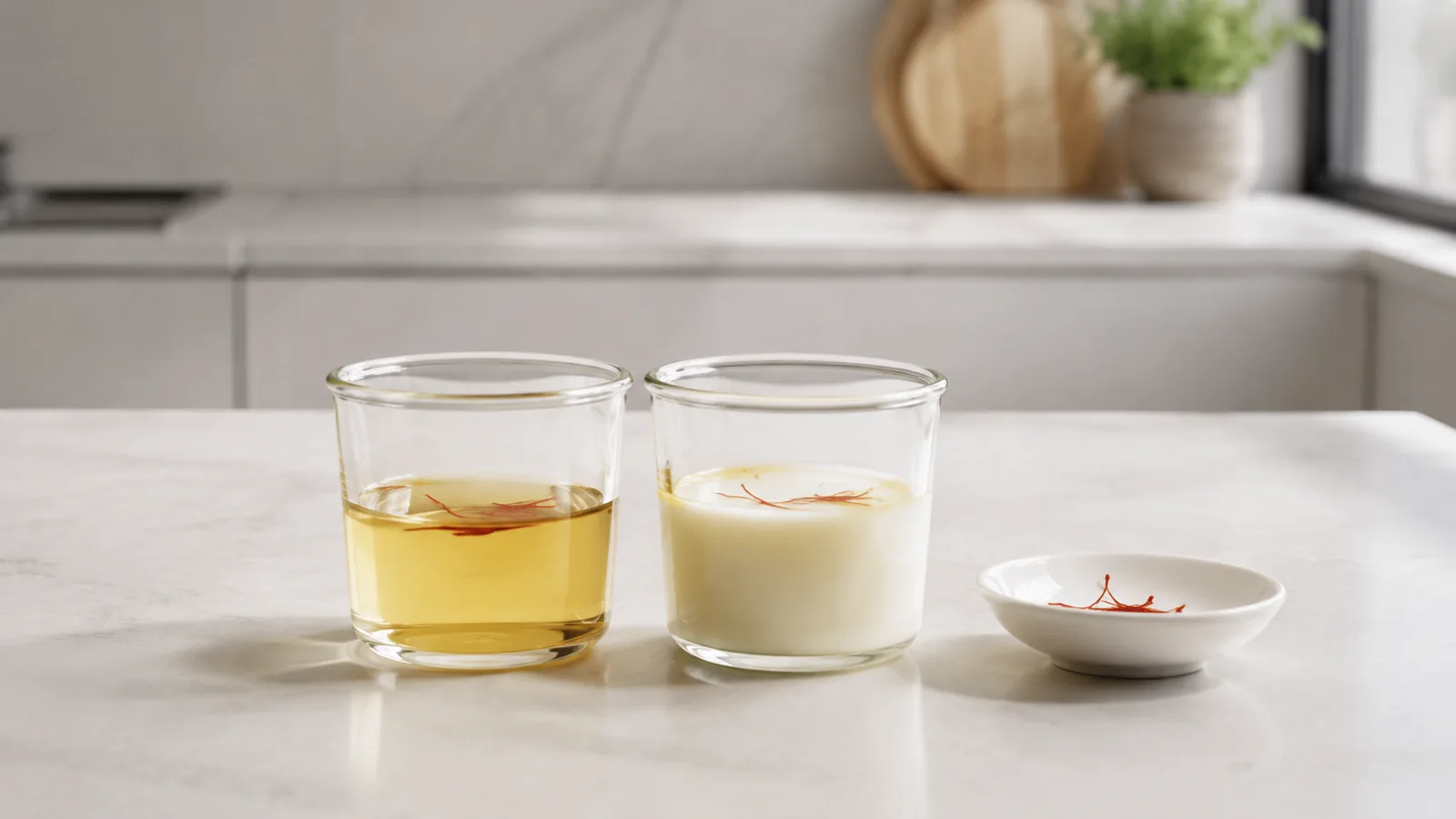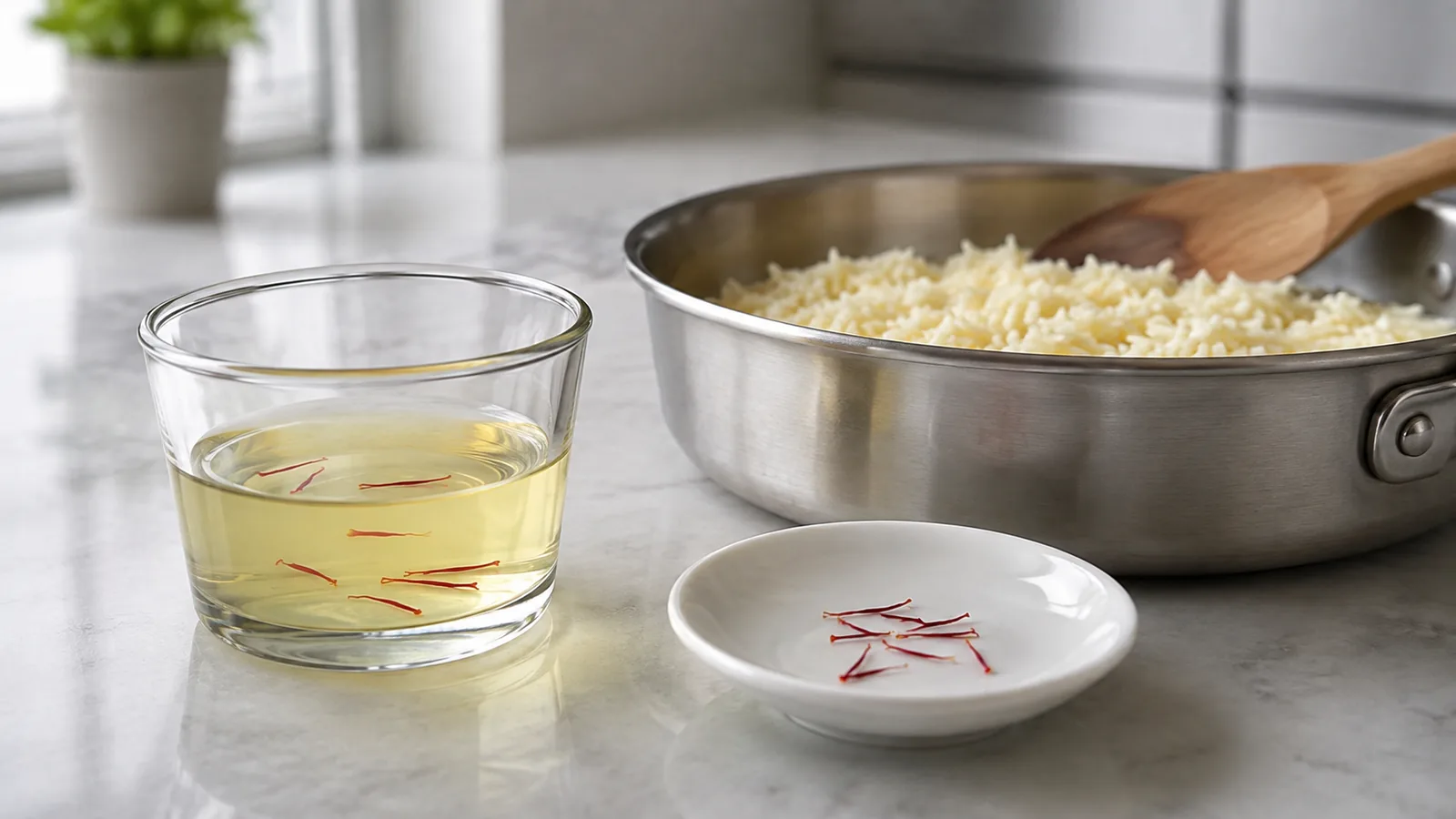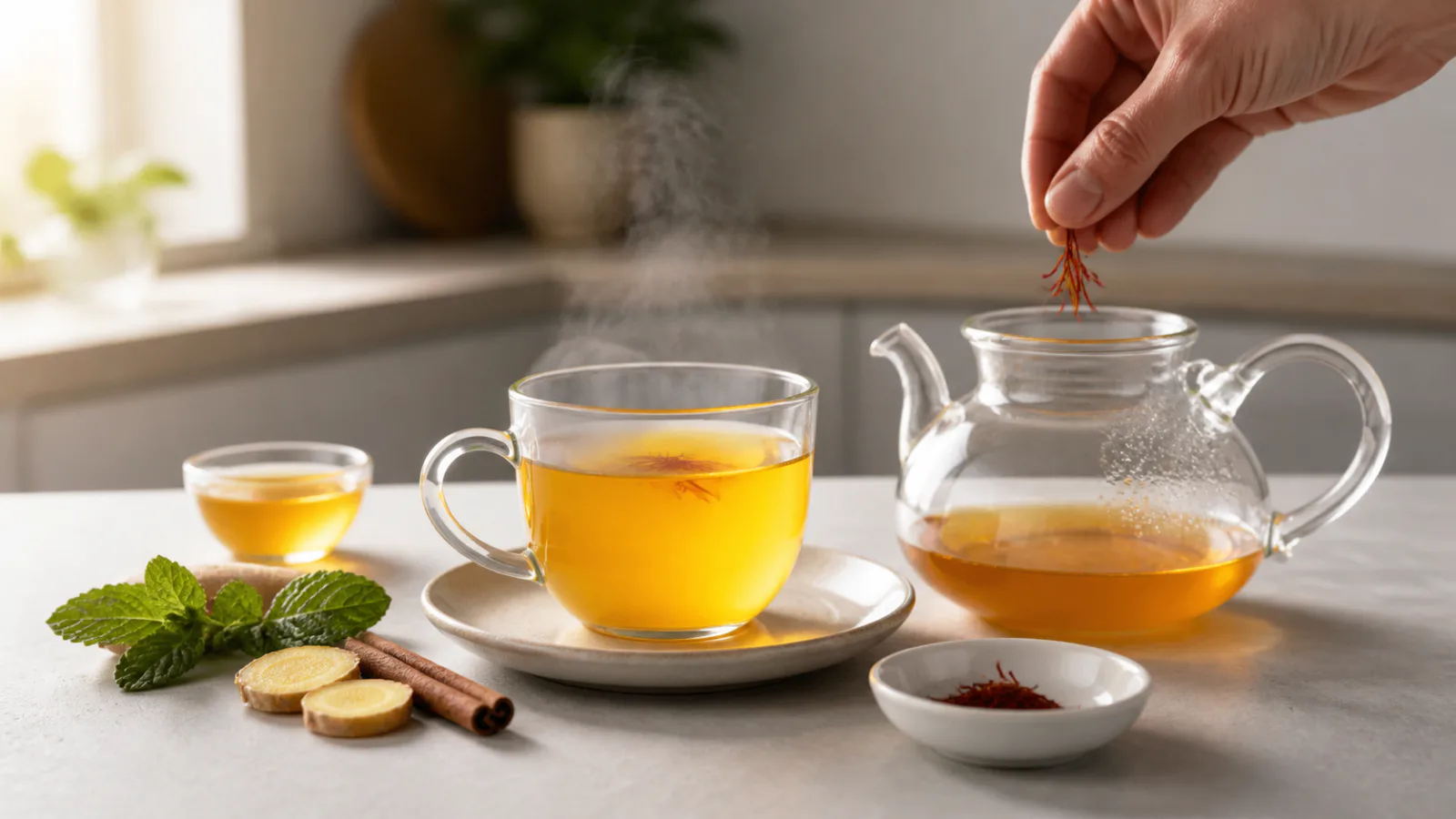
How to make saffron tea: lightly crush 5–8 saffron threads, put them in a cup and add about 240 ml (8 fl oz) of hot water. Cover the cup, steep for 10–15 minutes, then taste. Drink it plain or add a little honey, lemon, ginger or mint. That is the complete basic saffron tea recipe.
The drink should be fragrant, golden and gently bitter rather than harsh. Starting with a small amount makes it easy to adjust the next cup without wasting saffron. Below you will find the basic method, a ginger-and-cinnamon variation and a green-tea version inspired by Moroccan mint tea.
How to make saffron tea step by step
Ingredients for one cup
- 5–8 whole saffron threads
- 240 ml (8 fl oz) fresh water
- Optional: honey, lemon or a few mint leaves
Method
- Place the threads on a clean saucer and press them lightly with the back of a spoon. They do not need to become a fine powder.
- Heat the water until it has just boiled, then let it settle briefly so it is no longer rolling.
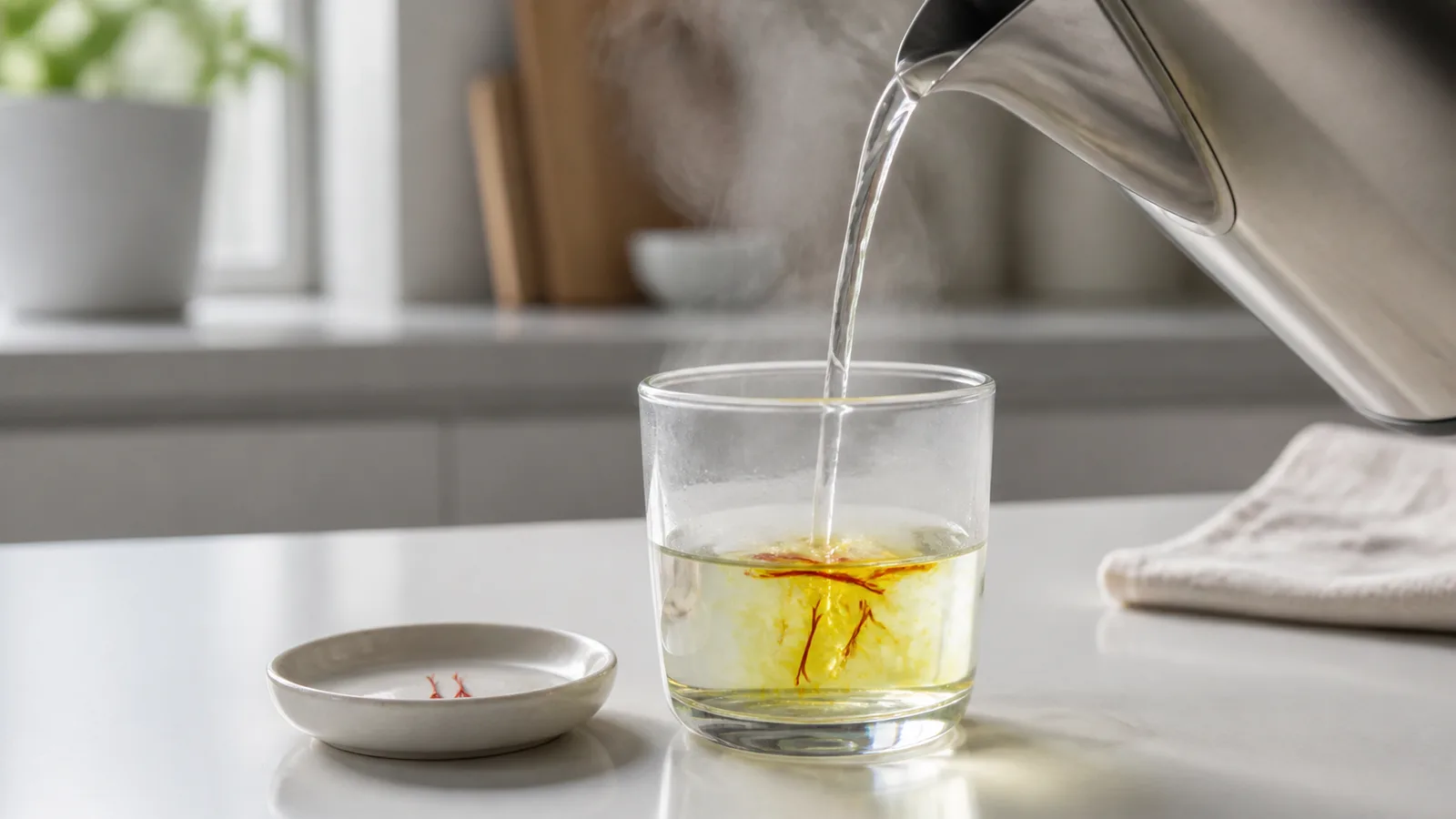
- Put the saffron in a cup or small teapot, pour in the hot water and cover it.
- Steep for 10–15 minutes. The water will turn golden and the aroma will open gradually.
- Taste before adding anything. If desired, stir in a small amount of honey or add lemon or mint.
This answers both how to prepare saffron tea and how to use saffron in tea: crush lightly, use hot water, cover and wait. Boiling the threads hard for another 15 minutes is unnecessary and can flatten the delicate aroma.
How much saffron for tea?
If you are wondering how many saffron threads to use in tea, begin with 5–8 threads per cup. Threads vary in size and strength, so this is a culinary starting point rather than a medical dose. Use fewer for a light drink or a few more in a shared pot, but do not assume that an intensely bitter cup is more beneficial.
For two cups, 10–15 threads are usually enough. A very small spice scale can help with repeated recipes, but a teaspoon is too imprecise. Loose threads, tea and standardised saffron extracts are not interchangeable.
Saffron and ginger tea
The old recipe on this page called for “four pounds of water,” which was a translation error. This version makes two sensible cups.
Ingredients
- 480 ml (16 fl oz) water
- 10–15 saffron threads
- 3–4 thin slices of fresh ginger
- One small piece of cinnamon stick
- Honey to taste, added after steeping
Method
- Simmer the ginger and cinnamon in the water for five minutes.
- Remove the pan from the heat. Add the lightly crushed saffron, cover and steep for 10 minutes.
- Strain into two cups. Let it cool slightly before adding honey.
Ginger and cinnamon can easily dominate saffron, so keep both modest. This is a warming flavour combination, not a treatment claim.
Green tea with saffron and mint
This Moroccan-inspired green tea with saffron retains the mint, green tea and sugar option from the original recipe while using clear quantities.
Ingredients for two cups
- 480 ml (16 fl oz) water
- 2 teaspoons loose green tea, or 2 unflavoured tea bags
- 10–15 saffron threads
- A small handful of fresh mint
- Optional honey or sugar, to taste
Method
- Bring the water to a boil, then leave it for about one minute.
- Add the green tea and steep according to its package directions, usually two to three minutes. Remove the leaves or bags so the drink does not become astringent.
- Add the saffron and mint, cover and steep for another 7–10 minutes.
- Strain, taste and sweeten only if wanted.
Green tea contains caffeine. Anyone who limits caffeine can use decaffeinated green tea or make the water-and-saffron recipe instead.
Persian saffron tea and Iranian serving ideas
A simple Persian saffron tea can be made with saffron, hot water and a little honey or rock candy. Cardamom or rose petals are optional, but use them sparingly so the saffron remains noticeable. An Iranian saffron tea may also be served beside black tea rather than mixed into it, allowing each guest to adjust the strength.
Saffron works in black tea too. Brew the black tea normally, remove its leaves or bag, then add a few lightly crushed saffron threads and cover for another five minutes. This avoids over-brewing the tea while the saffron infuses.
Can I put saffron in tea without crushing it?
Yes. Whole threads will release colour and aroma, though light crushing increases the surface area and usually makes the infusion more even. Avoid grinding a large batch in advance; the exposed spice loses aroma faster. Powdered saffron is harder to inspect and may be easier to adulterate.
Can saffron tea help with weight loss?
How to make saffron tea for weight loss is a frequent search, but the recipe does not need a special ingredient or stronger dose. Saffron tea is not a proven weight-loss treatment. An unsweetened cup contributes very little energy and can replace a sugary drink, while honey and sugar add energy back.
A systematic map of saffron clinical evidence found varied studies across health outcomes, using defined preparations rather than a standard cup of tea. It does not support promising that homemade tea will cause weight loss. Sustainable changes to food, activity, sleep and appropriate clinical care matter more.
Saffron tea safety
Culinary saffron tea is different from concentrated supplements and very strong infusions. A 2026 systematic review of saffron adverse events found inconsistent safety reporting across clinical studies. More threads do not guarantee more benefit, and large self-directed amounts can cause unwanted effects.
Pregnant people should avoid extracts and medicinal amounts unless their obstetric clinician specifically recommends them. Ask a clinician or pharmacist before using concentrated saffron with antidepressants, blood-pressure medicines, anticoagulants or antiplatelet medicines. Stop if a drink causes nausea, dizziness, rash, swelling or breathing symptoms.
Common saffron tea mistakes
- Using too much: a bitter, expensive cup is not a better cup.
- Boiling for too long: covered steeping protects the aroma better.
- Adding strong flavours first: heavy ginger, cinnamon or mint can hide the saffron.
- Buying unidentified powder: intact threads from a traceable lot are easier to assess.
- Expecting a cure: enjoy saffron tea as a drink, not a replacement for medical care.
Making saffron tea ahead
Fresh tea has the clearest aroma. If you prepare it ahead, cool it promptly, cover and refrigerate it, then use it within a day. Reheat gently rather than boiling it repeatedly. Store the dry saffron separately in a tightly closed container away from light, heat, moisture and strong odours.
For the wider evidence and safety picture, read our guide to the benefits of drinking saffron tea. For the recipe itself, remember the simple ratio: a few real threads, one cup of hot water and 10–15 minutes under a lid.