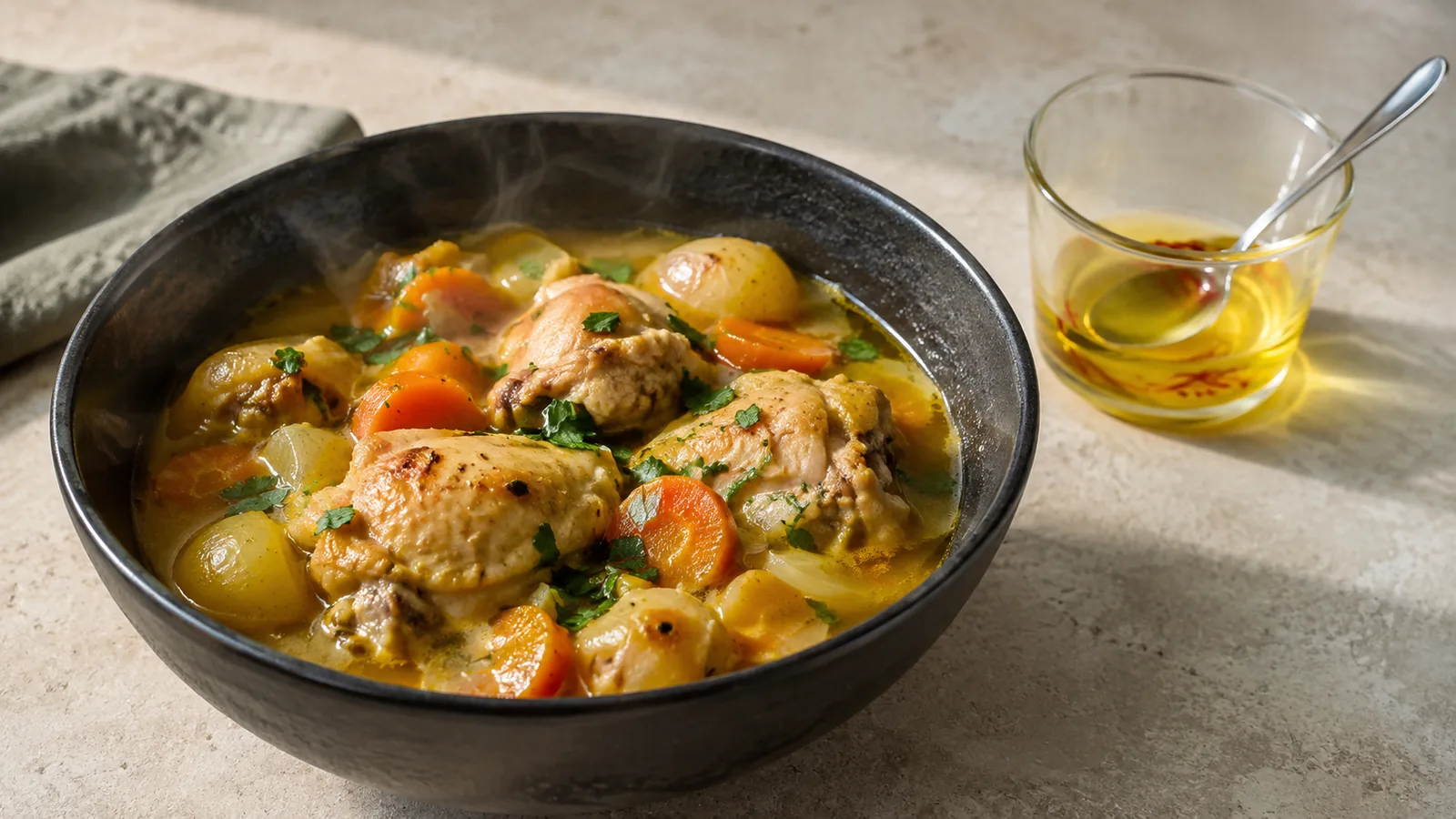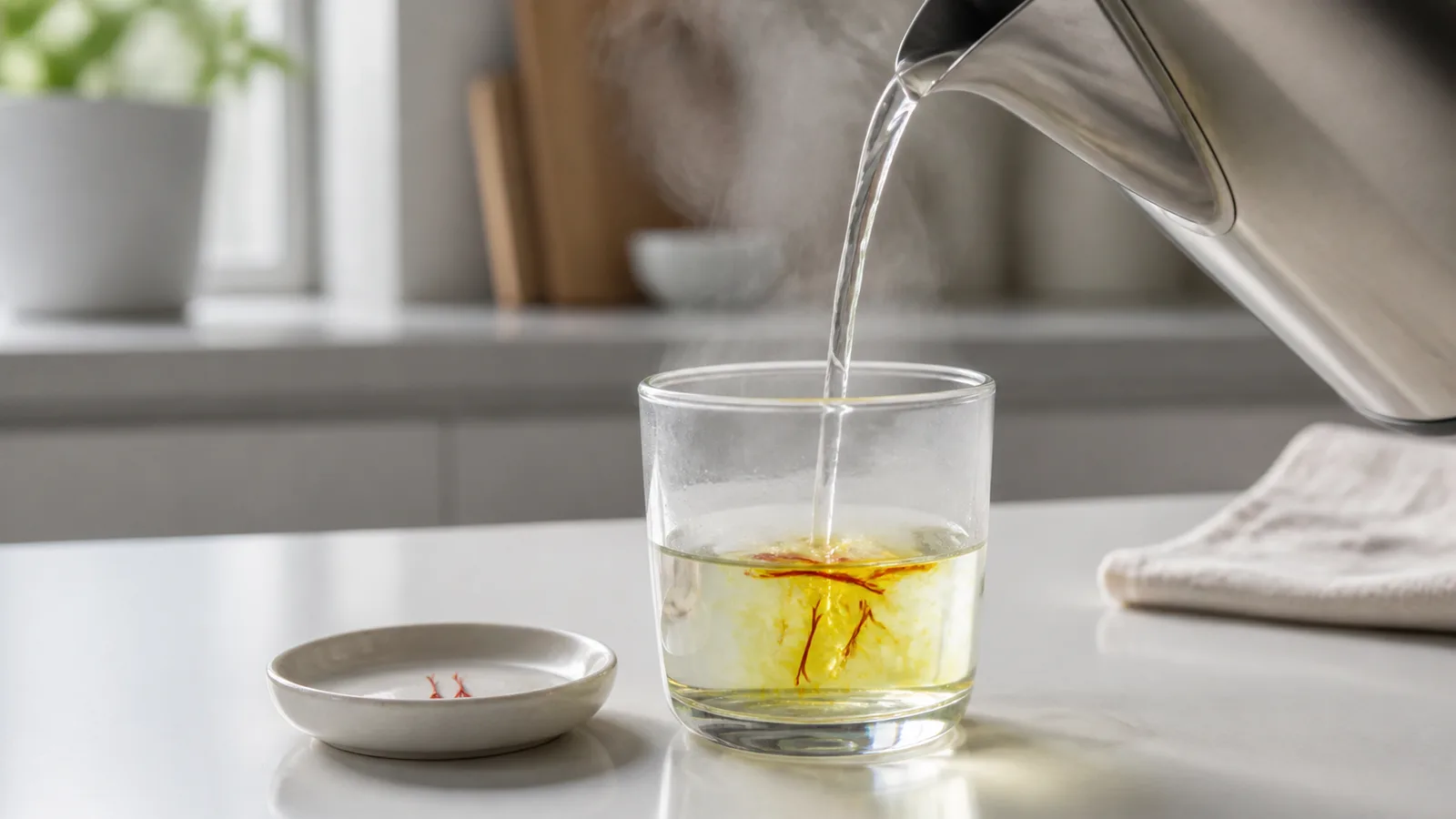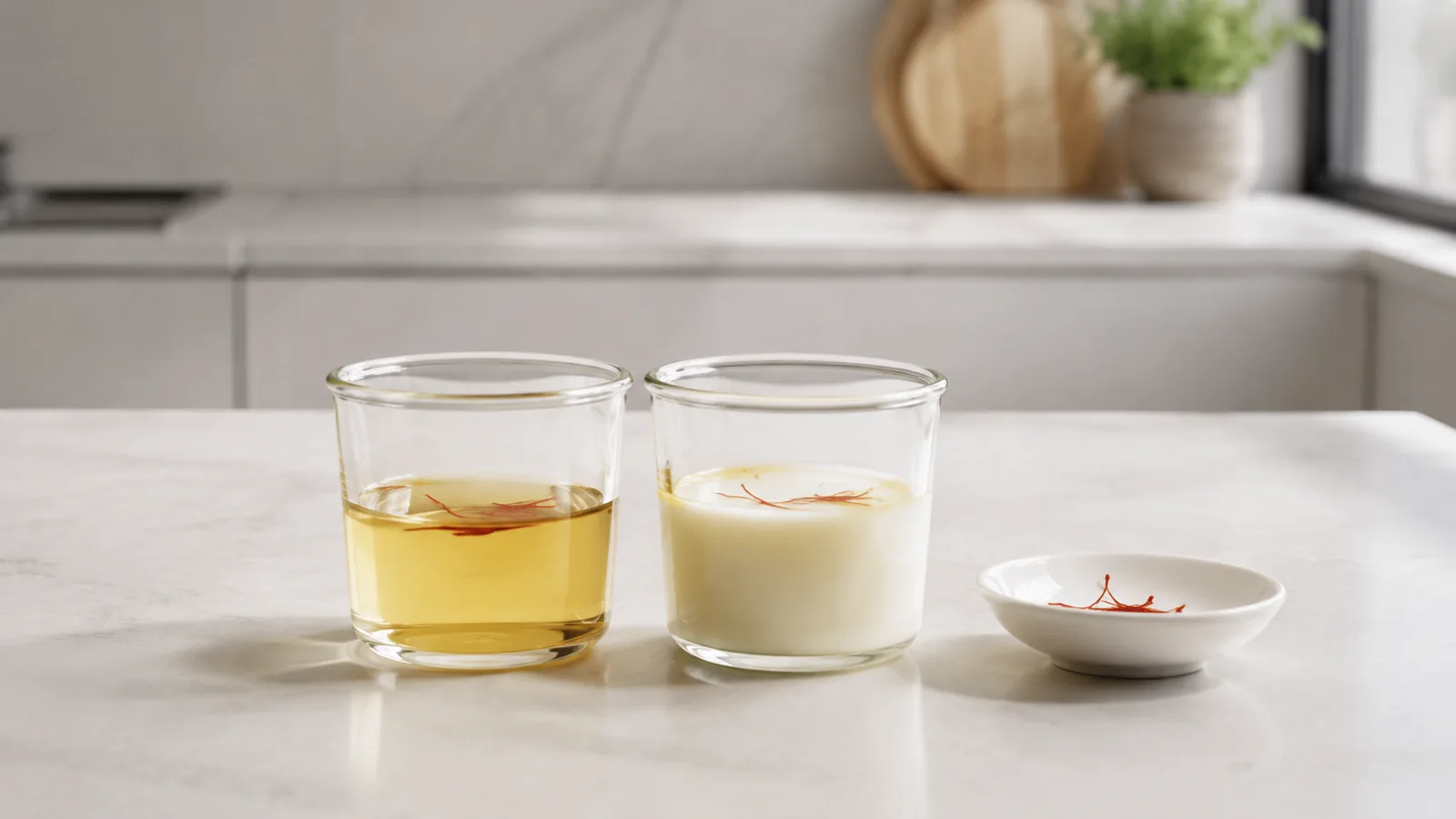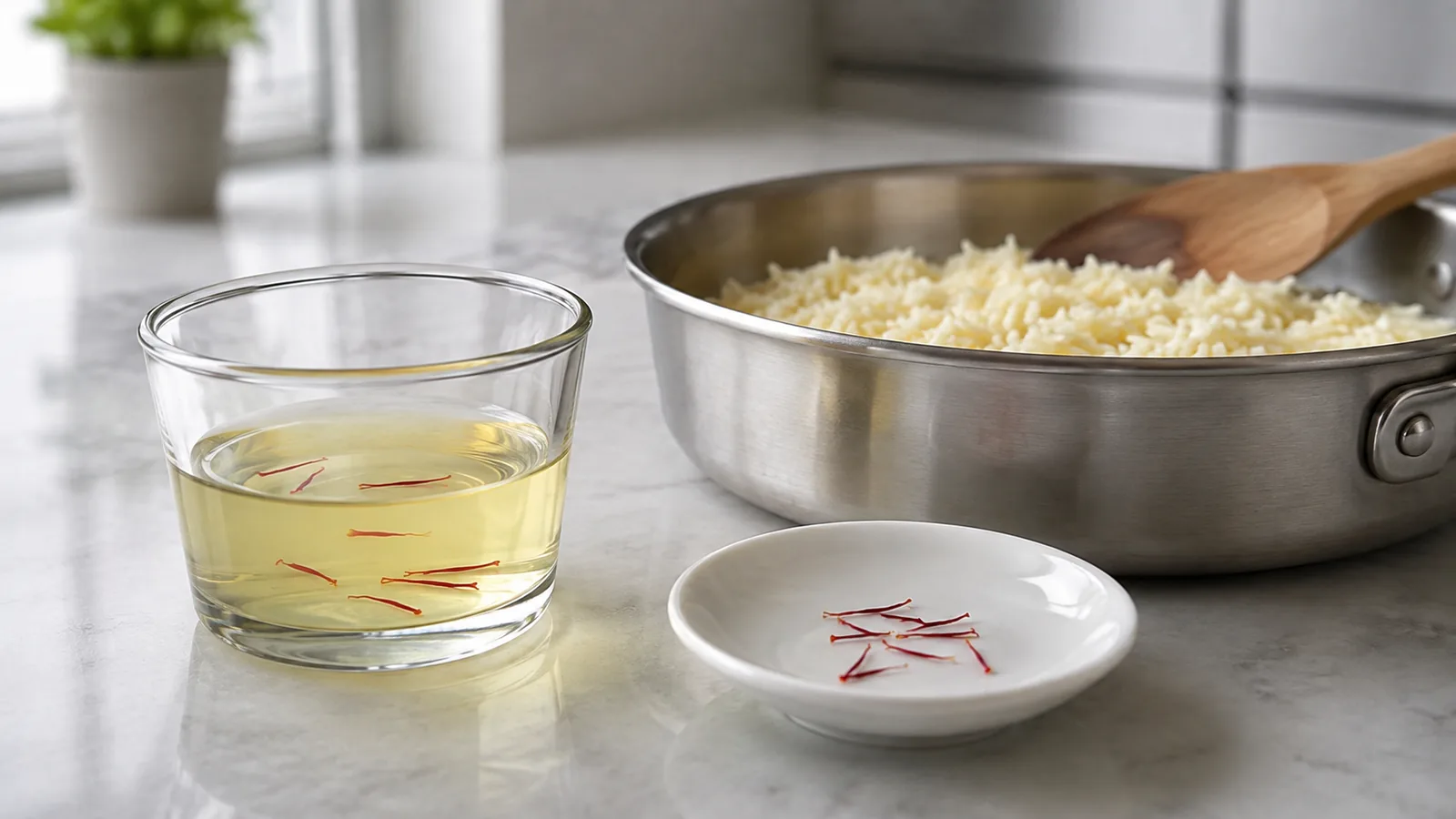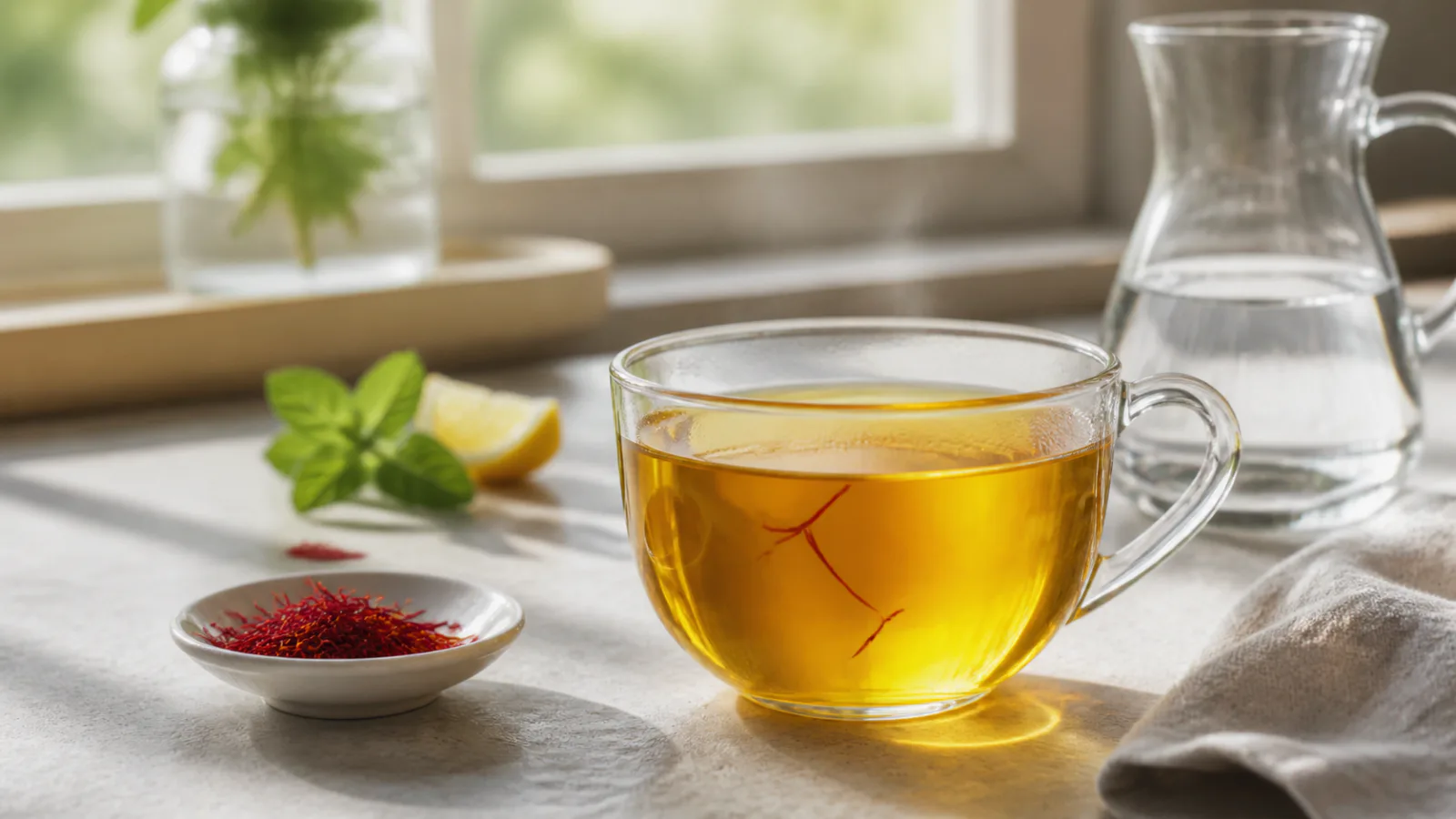
The benefits of drinking saffron tea begin with what the cup can reliably offer: warmth, hydration, a distinctive aroma and a naturally caffeine-free option when it contains only saffron and water. Saffron also contains crocin, crocetin and safranal, compounds that researchers study for possible effects on mood and other health outcomes.
The important limit is preparation. Most human trials use a measured saffron powder or standardised extract, not homemade tea. Those results cannot be transferred automatically to every cup. Saffron tea is a beverage, not a cure or replacement for medical care.
What is saffron tea?
Saffron tea is made by steeping the dried red stigmas of Crocus sativus in hot water. The same spice colours rice and desserts. Each flower produces three stigmas, and harvesting and separating them is largely done by hand, which helps explain saffron’s price.
Kesar tea, zafran tea and zafrani tea are names readers may encounter for a saffron infusion. Recipes vary: some add ginger, cinnamon, mint, cardamom, lemon, honey, green tea or black tea. Those additions change the flavour, caffeine and nutritional profile.
Is saffron tea good for you?
For most adults, a mild cup made with a few genuine threads can be an enjoyable part of a varied diet. It contributes very little energy when unsweetened and can replace a sugary or caffeinated drink. That practical answer is more certain than many lists of claimed health benefits of saffron tea.
Saffron’s compounds do show antioxidant activity in laboratory work. Finding an antioxidant in the plant does not prove that drinking the tea prevents cancer, heart disease or ageing. What matters is whether a defined preparation improves a meaningful outcome in good human trials.
Mood and emotional wellbeing
Mood is one of saffron’s more developed areas of research. A 2024 systematic review of neurological and psychiatric trials found favourable results for depression and anxiety in studied saffron preparations. The trials differed in product, dose, population and duration.
This does not establish that ordinary saffron tea treats depression. If the ritual and aroma feel calming, that is a valid reason to enjoy the drink, but persistent low mood, anxiety or thoughts of self-harm need qualified care. Do not replace prescribed treatment with tea or a supplement.
Saffron tea benefits for women and periods
Questions about saffron tea benefits for female health often concern premenstrual symptoms and period pain. A 2026 systematic review and meta-analysis reported improvements in PMS and dysmenorrhoea in included saffron trials. It studied defined interventions; it did not establish a universal tea recipe, serving or response.
Someone may choose mild saffron tea for periods as a warm drink, but severe pain, very heavy bleeding, faintness or a sudden change deserves medical assessment. Saffron should not delay diagnosis of endometriosis, anaemia or another cause.
Digestion and a warm drink
In traditional practice, saffron infusions have been used after meals or for mild stomach discomfort. Warm fluid may be soothing, but clinical evidence for saffron tea as a digestive treatment is limited. Ginger or mint in a recipe contributes its own flavour and possible effects, so a response to a blended drink cannot be credited to saffron alone.
People prone to nausea or reflux may prefer a weaker cup and may find that drinking it with food is more comfortable.
Heart health, cholesterol and blood pressure
Saffron preparations have been studied for blood pressure, blood lipids and metabolic outcomes. A systematic map of clinical evidence found a broad but uneven research base. Results from a measured extract do not mean tea prevents high blood pressure, lowers cholesterol reliably or protects against heart disease.
Anyone taking blood-pressure medicine, anticoagulants or antiplatelet medicines should discuss concentrated saffron products with a clinician or pharmacist. Continue prescribed care and monitoring.
Does saffron tea have caffeine?
Pure saffron tea made only with saffron threads and water is naturally caffeine-free. That makes it an option for people who avoid coffee or ordinary tea. A blend made with green tea, black tea or mate does contain caffeine unless its label says otherwise.
Check packaged ingredients rather than relying on the words “saffron tea” on the front. Some products contain mainly black or green tea with a small amount of saffron or flavouring.
When to drink saffron tea
There is no medically required time. A caffeine-free cup can be taken in the morning, after a meal or in the evening. If a strong infusion causes stomach discomfort, have a weaker cup with food. If the recipe includes caffeinated tea, consider the same timing limits you would apply to that tea.
Drinking saffron tea every day is not necessary. Use it according to taste rather than trying to reach a health quota. For measured instructions and flavour variations, follow our guide on how to make saffron tea.
Saffron tea effects and safety
A mild culinary infusion and a concentrated extract are not equivalent. Possible unwanted effects reported with saffron preparations include nausea, headache, dizziness, dry mouth, drowsiness and allergic symptoms. A 2026 systematic review of saffron adverse events found gastrointestinal problems were the most frequently reported and usually minor, while also calling for monitoring with higher or prolonged medicinal use.
Stop and seek urgent help for swelling, breathing difficulty, fainting, severe vomiting or unusual bleeding. Keep saffron and supplements away from children, and do not deliberately drink gram-level amounts.
Pregnancy, breastfeeding and medicines
Pregnant people should avoid saffron extracts and medicinal amounts unless an obstetric clinician specifically recommends them. Evidence for concentrated use during breastfeeding is insufficient. Ask a clinician or pharmacist before combining a supplement or very strong regular infusion with antidepressants, blood-pressure medicines, anticoagulants or antiplatelet medicines.
How to get the useful parts without the hype
- Use a few intact, traceable saffron threads rather than an unidentified powder.
- Steep covered in hot water so the aroma is not boiled away.
- Drink it unsweetened or sweeten lightly if reducing sugar is one of your goals.
- Judge blended tea by every ingredient, including caffeine and added sugar.
- Treat health research as product-specific evidence, not permission to self-dose.
The best-supported saffron drink benefits are modest but real: an aromatic, colourful, caffeine-free drink and an enjoyable way to use saffron. Mood and menstrual research is promising enough to discuss accurately, but it does not turn a cup into treatment. That distinction keeps the benefits useful and the expectations honest.