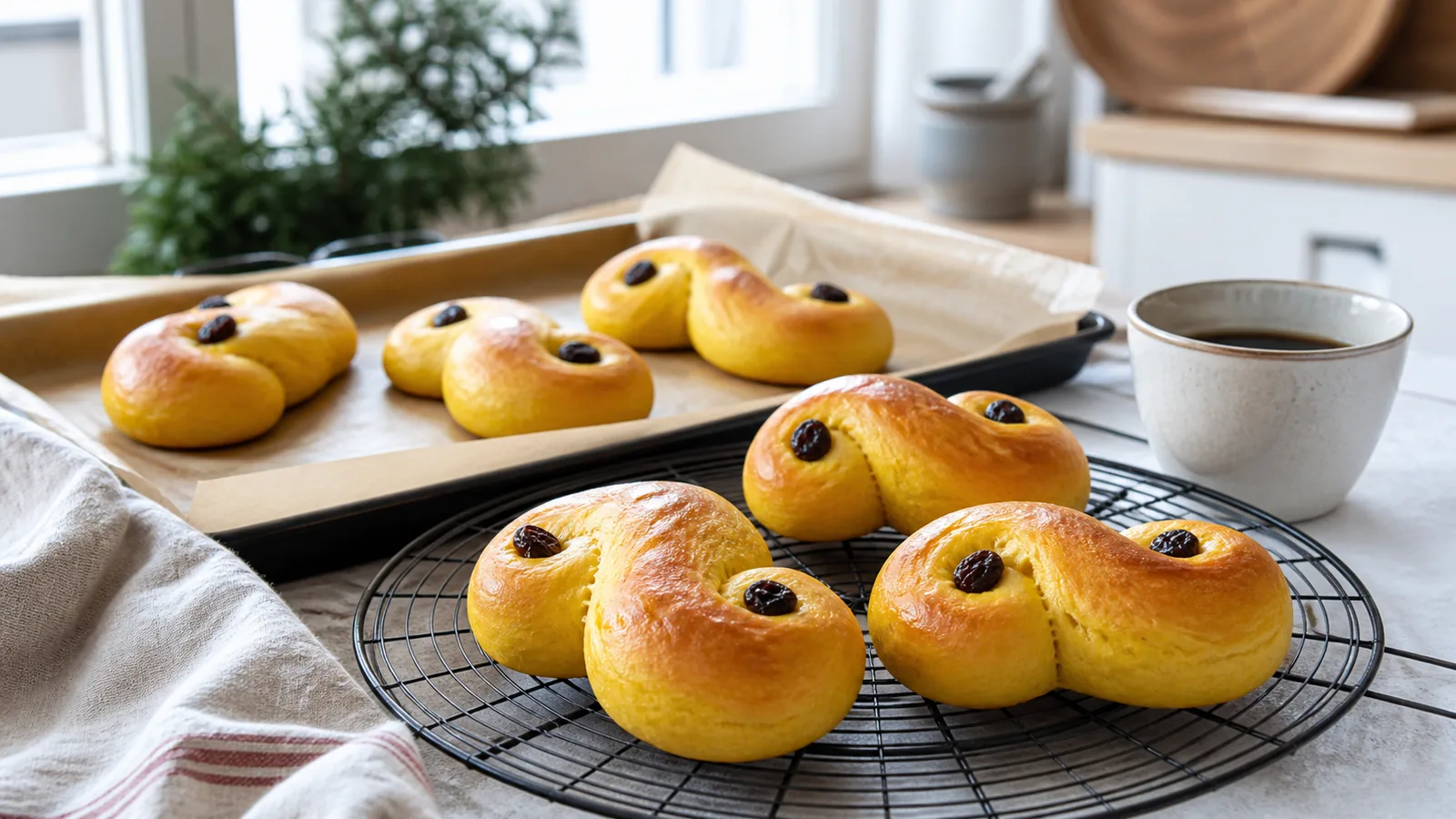
Swedish saffron bread is best known as lussekatter: soft golden buns shaped into an S and finished with a raisin in each curl. They are traditionally associated with St Lucia’s Day, but the gently sweet, fragrant buns are good with coffee whenever saffron feels welcome.
This recipe makes 16 buns. Allow about three hours including two rises; the earlier “one hour” estimate did not include enough proofing time.
Ingredients
- 60ml lukewarm water (1/4 cup)
- 2 teaspoons active dry yeast
- 50g sugar (1/4 cup), divided
- 240ml just-boiled water, cooled slightly
- 75g butter or margarine (1/3 cup), softened
- 1 teaspoon saffron threads, lightly crushed
- 2 eggs, at room temperature
- 420g plain flour (about 3 1/2 cups), plus a little for shaping
- 1 teaspoon salt
- raisins as needed
For the glaze, use one egg beaten with two tablespoons of milk. Powdered sugar is optional after baking. The original used one teaspoon of yeast; that works with patient rises, while two teaspoons gives a more predictable home-baking schedule.
Wake the yeast and saffron
Stir the yeast and one tablespoon of the measured sugar into the lukewarm water. Leave for 10 minutes. It should look creamy or foamy; if nothing happens, replace the yeast.
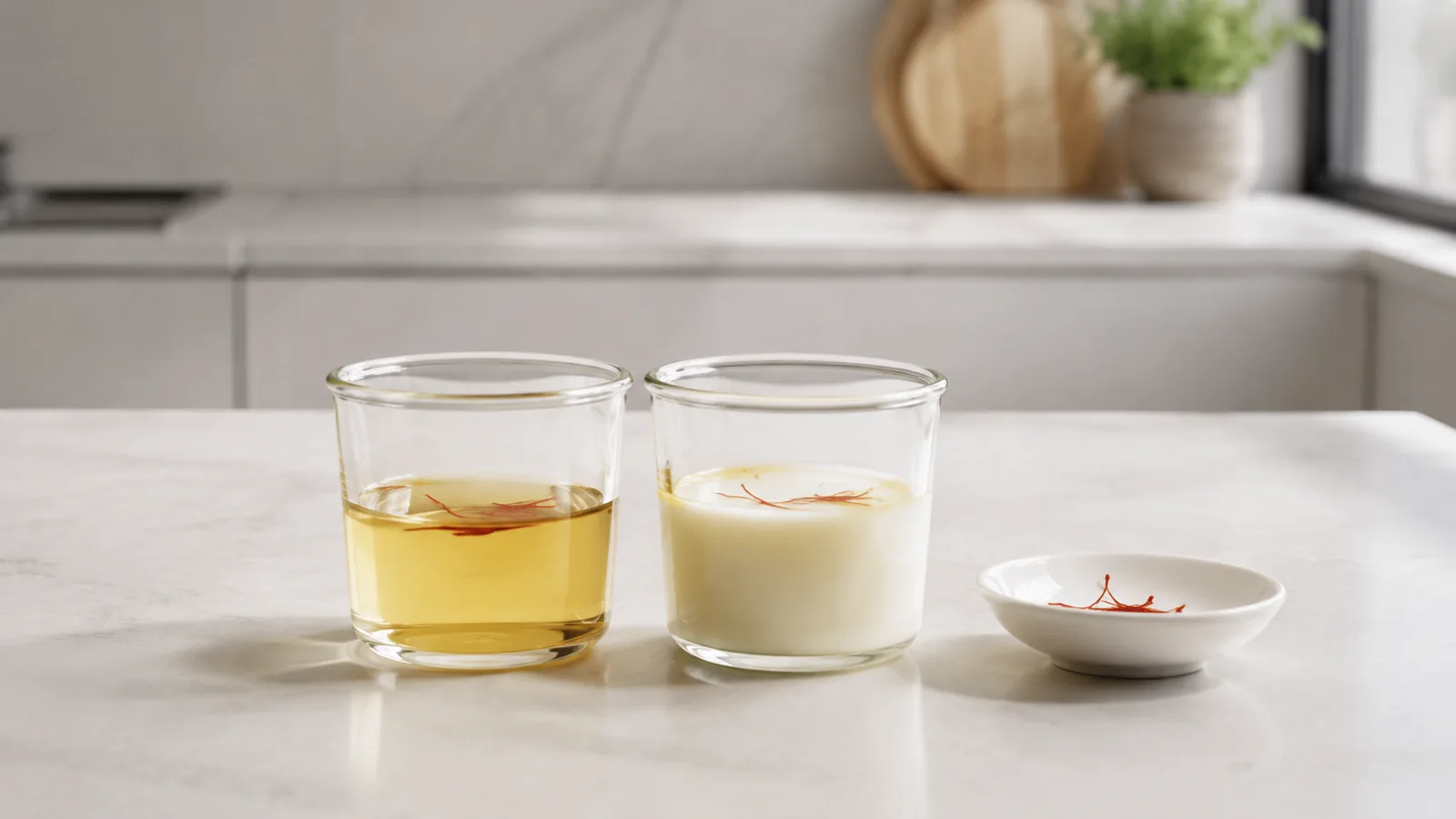
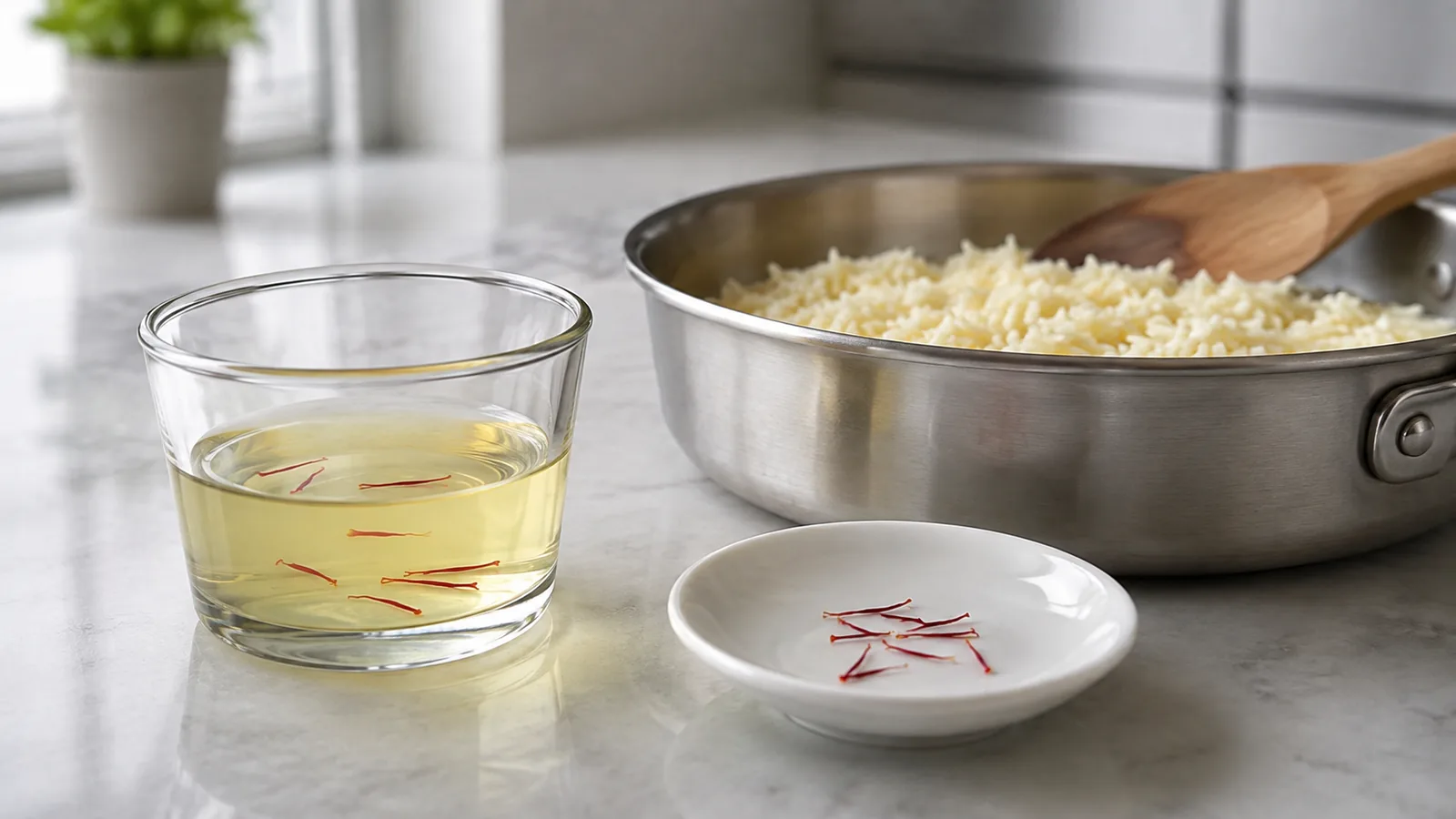
In a large bowl, combine the softened butter, remaining sugar and hot water. Stir until the butter melts, add the crushed saffron and leave for two minutes. Let the mixture become comfortably warm before adding the eggs—boiling liquid would cook them and harm the yeast.
Mix and knead the dough
- Whisk the two eggs into the warm saffron mixture, then add the yeast mixture.
- Combine the flour and salt in another bowl.
- Add the flour gradually until a soft, slightly sticky dough forms. Do not force in extra flour simply to make it dry.
- Knead on a lightly floured surface for 8–10 minutes, until smooth and elastic.
- Place in a lightly oiled bowl, cover and leave somewhere warm for about one hour, or until doubled.
A soft dough gives lighter saffron bread. If it sticks heavily after several minutes of kneading, add flour one tablespoon at a time.
Shape the classic S buns
Divide the risen dough into 16 equal pieces. Roll each piece into a rope about 35–40cm long. Coil one end inward from the left and the other from the right to form the classic S.
Other curls and twists use the same dough, but the opposing S coils are the most recognisable form. Place the buns on paper-lined trays with room to expand and press a raisin into the centre of each curl.
Proof and bake
Cover the shaped buns lightly and let them rise for another 45–60 minutes. Heat the oven to 190°C/375°F. Brush each bun gently with the egg-and-milk glaze.
Bake for 12–15 minutes, rotating the trays if your oven browns unevenly. The buns are ready when evenly golden and the underside feels set. Move them to a rack so condensation does not soften the base.
Serving and storage
Serve warm or at room temperature, plain or with a light dusting of powdered sugar. The saffron should be aromatic rather than harsh; if you are starting with whole threads, our guide to preparing saffron explains how to release its colour.
Store cooled buns airtight for two days. They freeze well for up to two months; thaw at room temperature and warm briefly before serving. Raisins exposed on top can darken quickly, so press them firmly into the dough before baking.