White saffron sauce is a simple béchamel flavoured with real saffron. Butter and flour form the base, warm milk creates the smooth sauce, and bloomed threads add colour and aroma. It takes about 15 minutes and works with pasta, chicken, fish, vegetables, rice or gratins.
The key is order: bloom the saffron first, cook the flour in butter without browning it, add warm milk gradually, then add the saffron near the end. Constant whisking prevents the lumps and mistranslated “bullets” mentioned in the old recipe.
White saffron sauce ingredients
This quantity makes about 500 ml (roughly 2 cups), enough for four modest servings.
- 10–15 saffron threads
- 2 tablespoons warm water or warm milk, for blooming
- 30 g (2 tablespoons) unsalted butter
- 30 g (about 3 tablespoons) plain/all-purpose flour
- 500 ml (2 cups) whole milk, warmed
- ¼ teaspoon fine salt, then more to taste
- A small pinch of white or black pepper
Optional additions include a small pinch of nutmeg, 25 g finely grated Parmesan or a spoonful of cream. Use them only if they suit the final dish. Strong cheese and pepper can hide saffron’s aroma.
How to make white saffron sauce
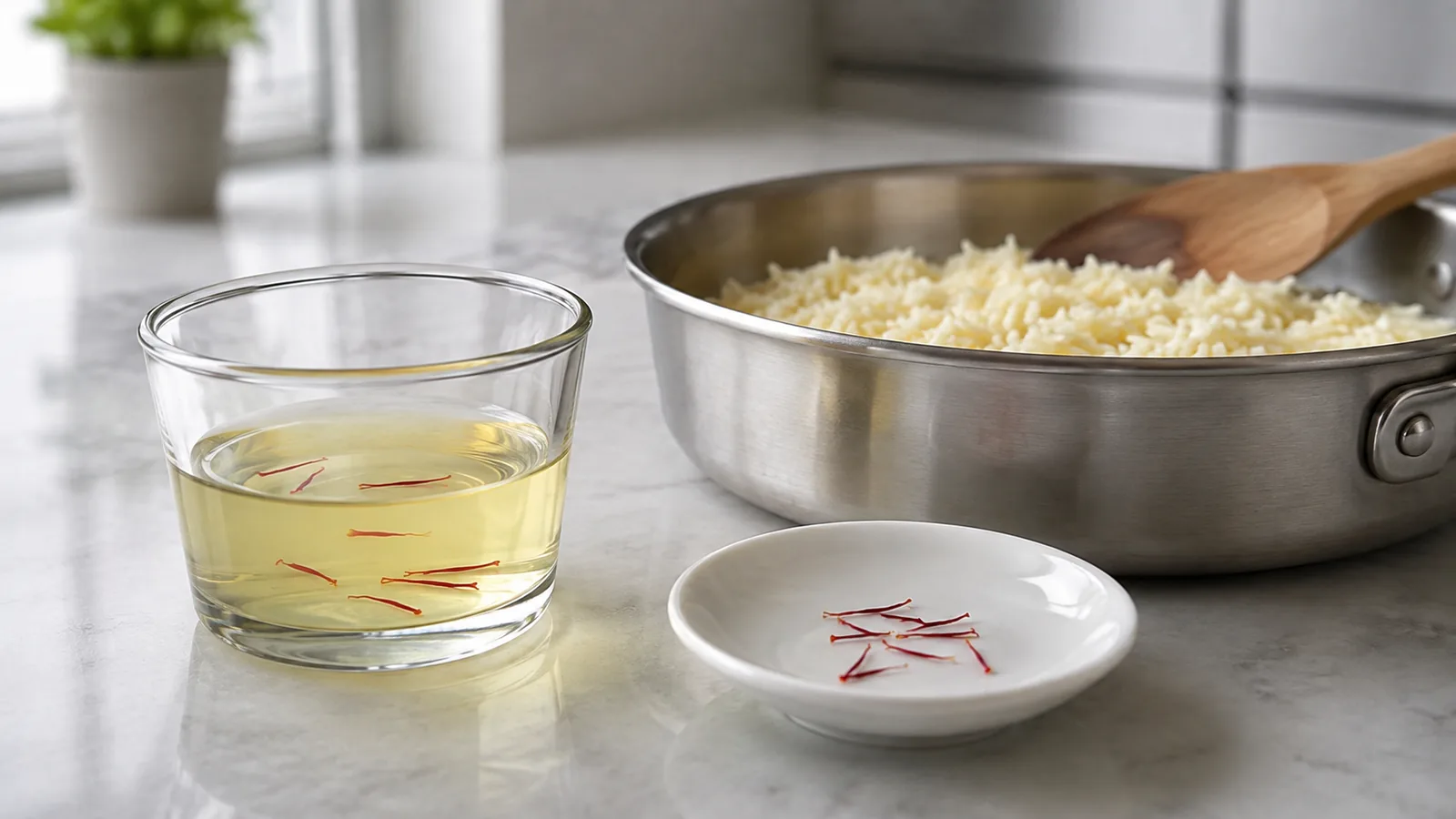
- Bloom the saffron. Lightly crush the threads on a clean saucer. Cover them with two tablespoons of warm water or milk and leave for 10 minutes.
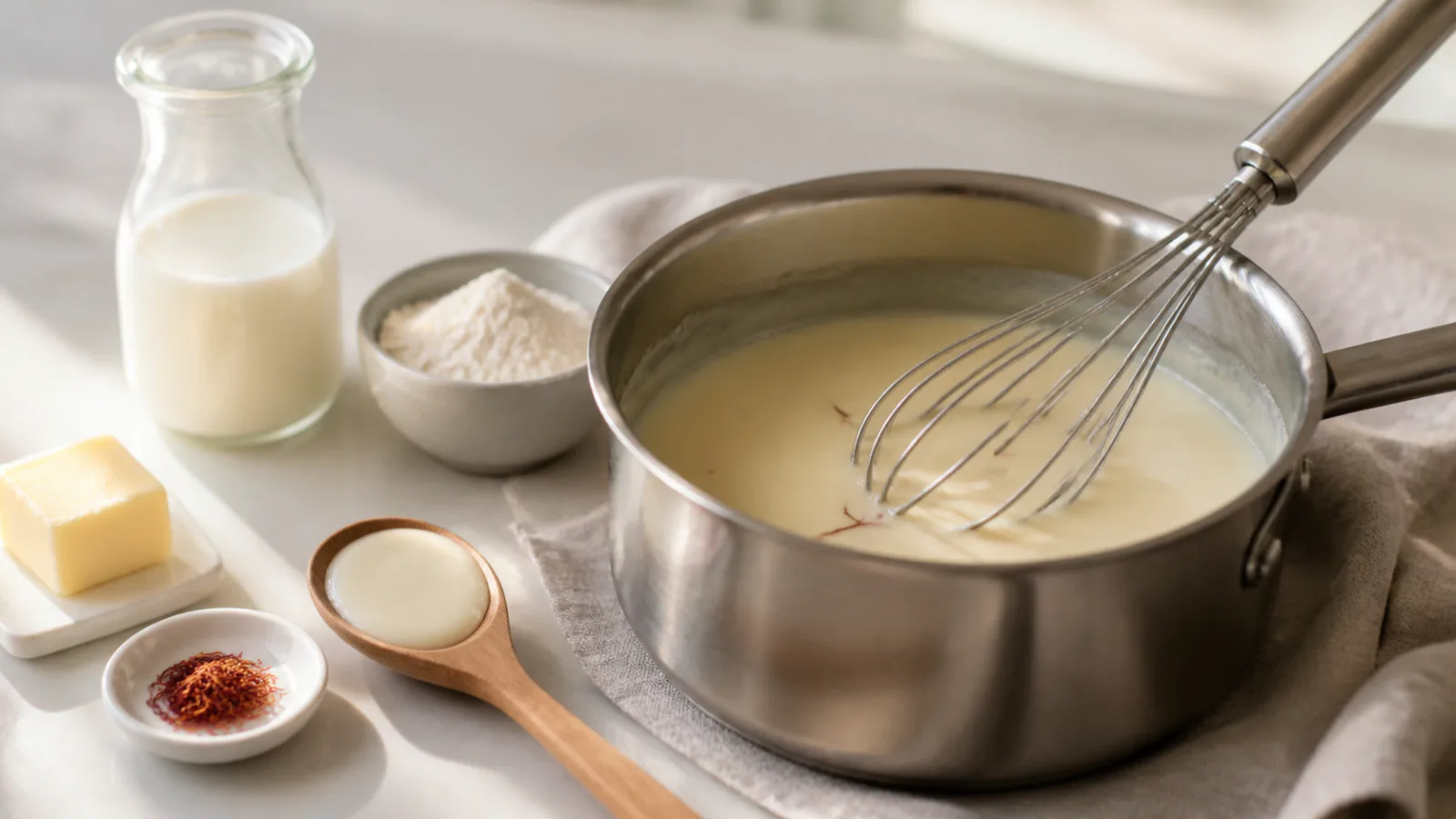
- Make the roux. Melt the butter in a medium saucepan over low-to-medium heat. Add the flour and whisk for 1–2 minutes. Keep it pale; this is a white sauce, not a browned roux.
- Add the milk gradually. Pour in a small splash of warm milk while whisking. Once smooth, add another splash. Continue until about half the milk is incorporated, then add the rest in a slow stream.
- Thicken gently. Cook over medium-low heat, whisking and scraping the corners of the pan, until the sauce lightly coats the back of a spoon.
- Add saffron and season. Stir in the bloomed saffron and its liquid. Cook for another minute, then add salt and a little pepper. Taste before adding more.
- Adjust and serve. If the sauce is thicker than the dish needs, whisk in warm milk a tablespoon at a time. If it is thin, simmer gently for another minute or two.
How thick should the sauce be?
The original instructions compared the texture with porridge. For most uses, that is too thick. A finished saffron white sauce should fall from a spoon in a smooth ribbon and leave a clean line when you draw a finger across the coated back of the spoon.
For pasta, keep it slightly loose because starch and cooling will thicken it. For a gratin or lasagne, a medium sauce stays in place without becoming pasty. For dipping, simmer a little longer or add cheese after removing the pan from direct heat.
How to prevent lumps
Lumps usually form when liquid is added too quickly or the flour collects at the edge of the pan. Warm milk helps the sauce combine evenly, but technique matters more than a rigid temperature rule.
- Use a saucepan with enough room to whisk across the base.
- Cook the flour briefly so the finished sauce does not taste raw.
- Add the first half of the milk in small portions and whisk each one smooth.
- Keep the heat moderate; violent boiling can catch the milk on the pan.
If lumps still appear, take the pan off the heat and whisk firmly. An immersion blender can smooth a badly lumpy sauce, but keep its blade fully submerged to avoid splashing hot liquid. A fine sieve is a simple alternative.
When to add saffron
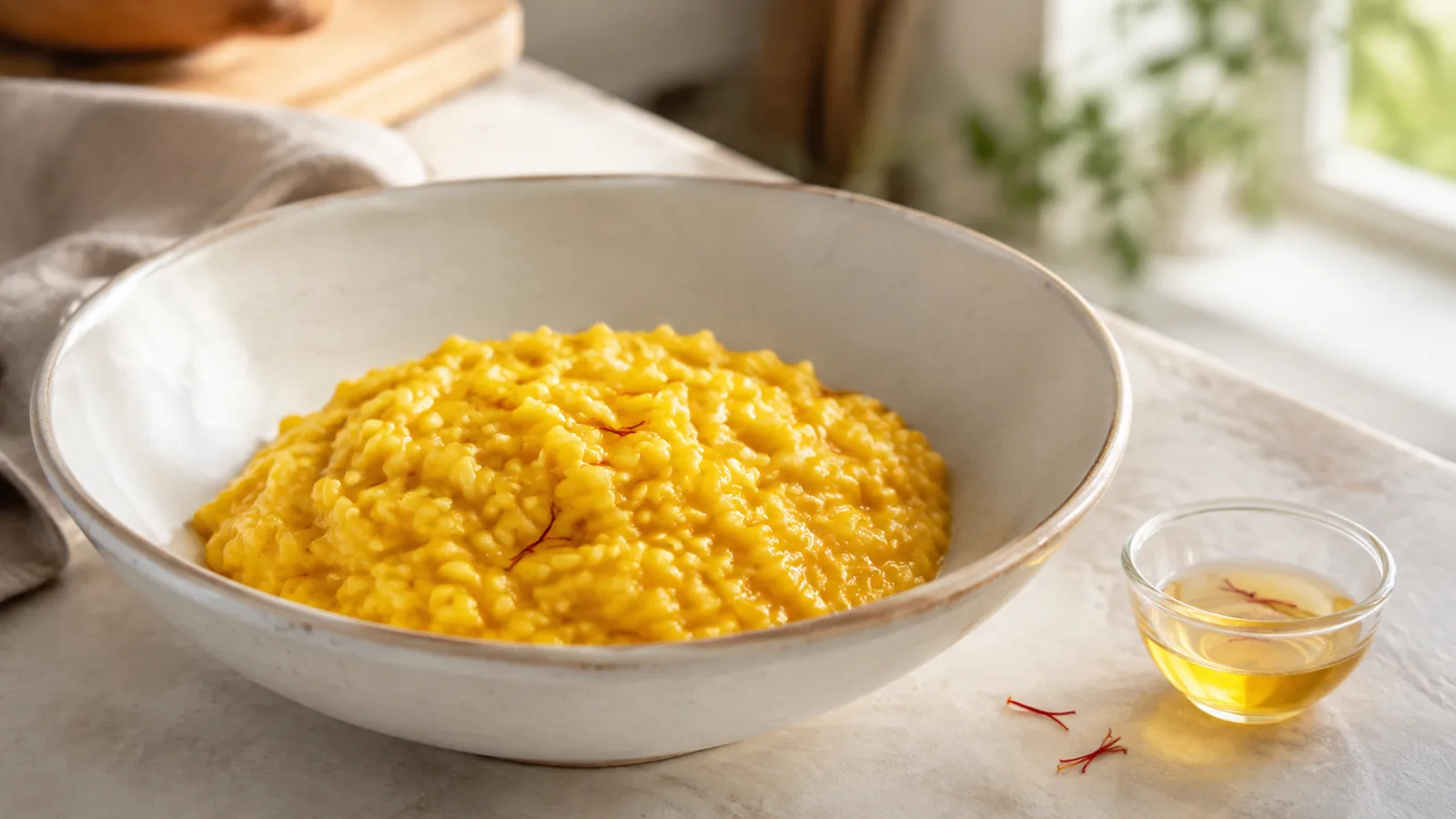
Add saffron after the sauce has thickened. Blooming releases its colour and aroma before it meets the full volume of milk, while late addition avoids prolonged cooking. You should see an even pale-gold colour rather than dry red clumps.
Whole threads are easier to inspect than powder. If using powder, make sure it is pure saffron, not a seasoning blend or artificial colour. Start with a small amount; more saffron can make the sauce bitter.
What to serve with saffron white sauce
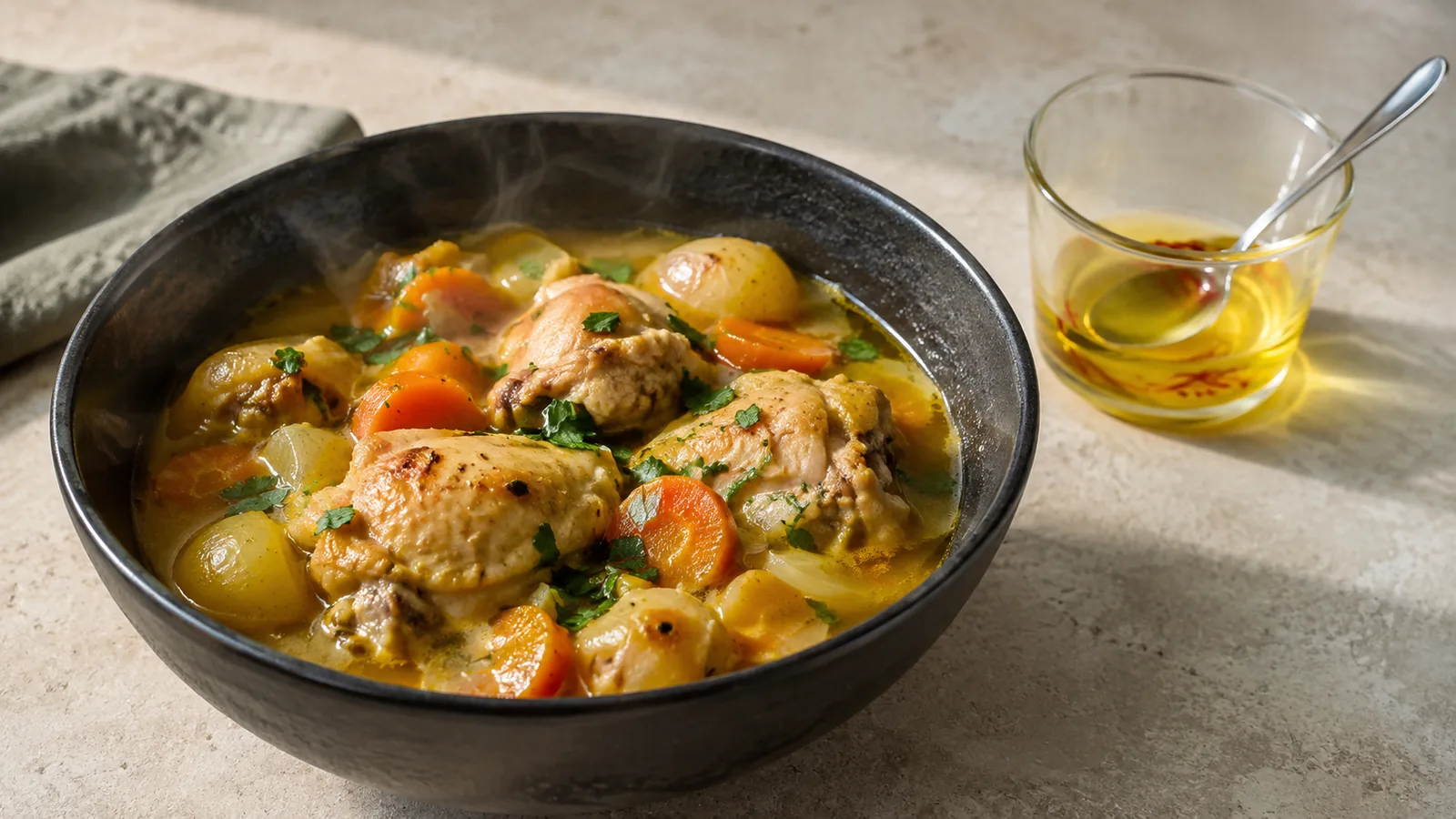
Spoon it over roasted cauliflower, asparagus, potatoes, grilled chicken or mild white fish. Fold it through pasta, use it between lasagne layers or serve it beside saffron rice. A squeeze of lemon added at the table can balance rich dishes, but adding a large amount of acid to the pan may affect the milk sauce.
For a vegetable version, sautéed mushrooms, peas or spinach can be folded in after the sauce is finished. Keep the additions cooked and well drained so they do not thin it unexpectedly.
Make-ahead and reheating
Press reusable food wrap or baking paper directly onto the surface if the sauce must wait briefly; this limits skin formation. Reheat over low heat while whisking, adding a splash of milk to restore the consistency.
Because it contains milk and butter, cool leftovers promptly and refrigerate them in a covered container. The official FoodSafety.gov cold-storage chart gives three to four refrigerated days for gravies and meat broths; for best quality, use this delicate milk sauce sooner and discard it if storage or temperature control is uncertain.
A smooth sauce in one sentence
Bloom a small pinch of saffron, whisk warm milk gradually into a pale butter-and-flour roux, cook until it coats a spoon, then add the saffron and season gently. That is all the training needed for a reliable white saffron sauce.