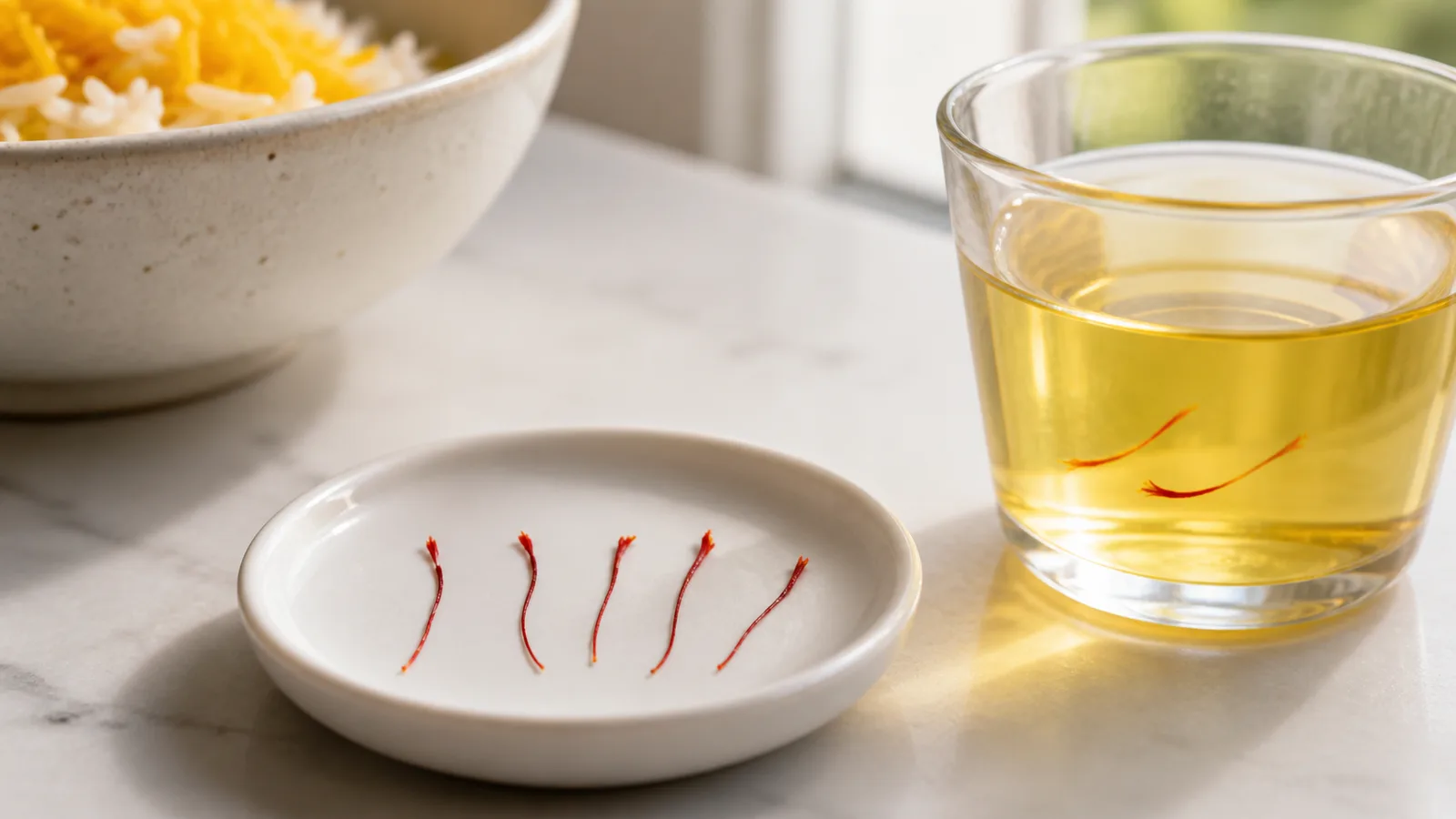
Yes, you can taste saffron. Its flavour is quieter than chilli, cinnamon or citrus: subtle yet complex, slightly sweet in aroma, and not merely a source of yellow color. A good saffron flavor experience combines aroma and taste: warm floral notes, dry earth and hay, a honey-like impression and a light bitterness that becomes stronger if too much is used.
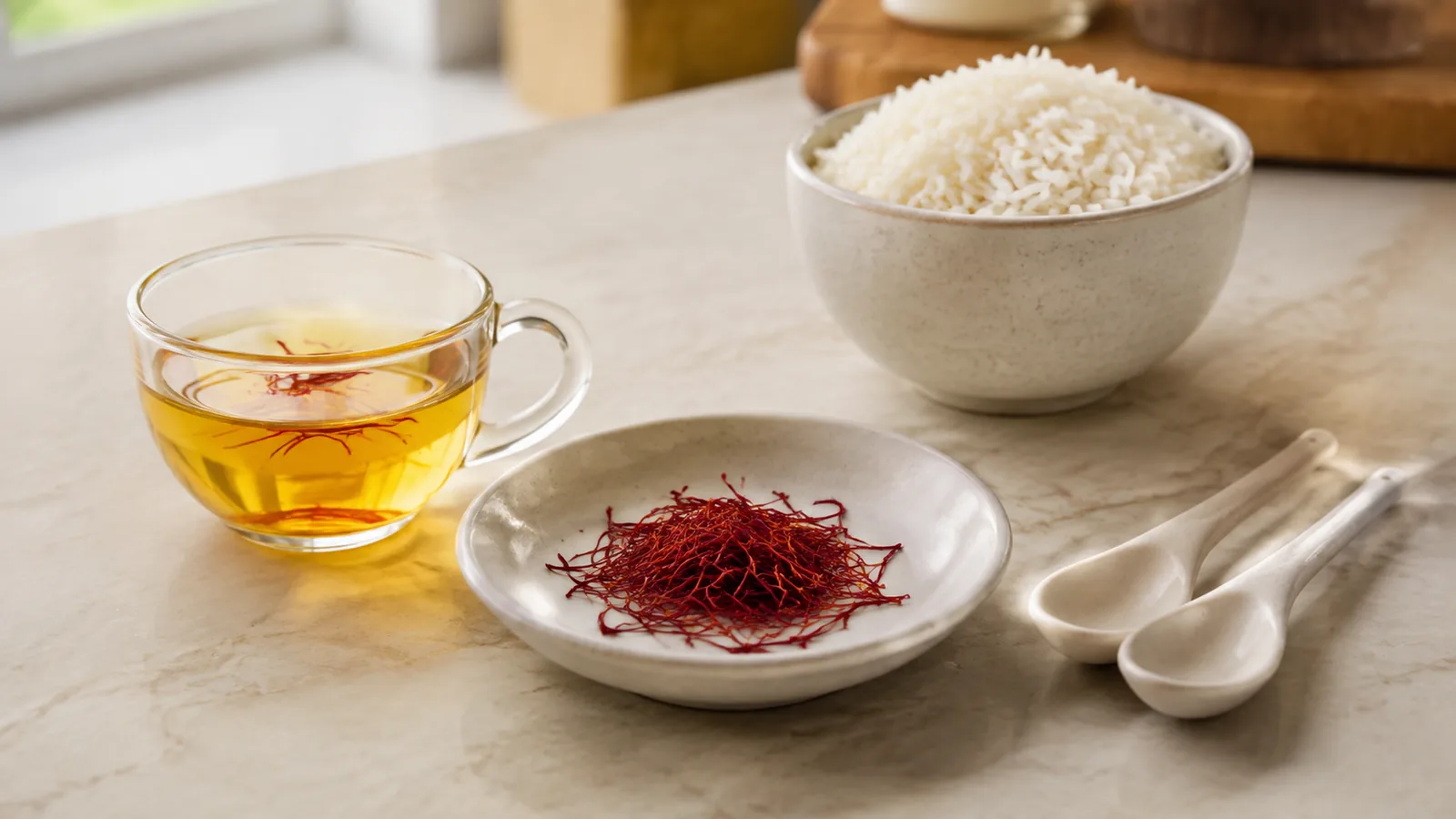
Why saffron can be easy to miss
Saffron does not announce itself with heat or sharpness. In a crowded dish, stronger spices can cover it. Simply adding raw threads straight to food may release the spice unevenly, leaving one bite aromatic and the next almost plain.
Age and storage matter too. Light, warmth, moisture and repeated exposure to air gradually weaken the aroma. A dish can still look yellow even when the saffron has lost much of the character you hoped to taste.
What does saffron taste like?
The taste of saffron is floral and earthy with restrained bitterness. Its smell can suggest honey, dried grass and warm flowers. Some tasters notice a mineral or faintly metallic edge in a concentrated infusion. These notes overlap, which is why comparing saffron with just one familiar ingredient never quite works.
For a fuller sensory vocabulary, read our saffron taste description. The important point in the kitchen is balance: the flavour should be recognizable without turning harsh or medicinal.
How to taste saffron properly
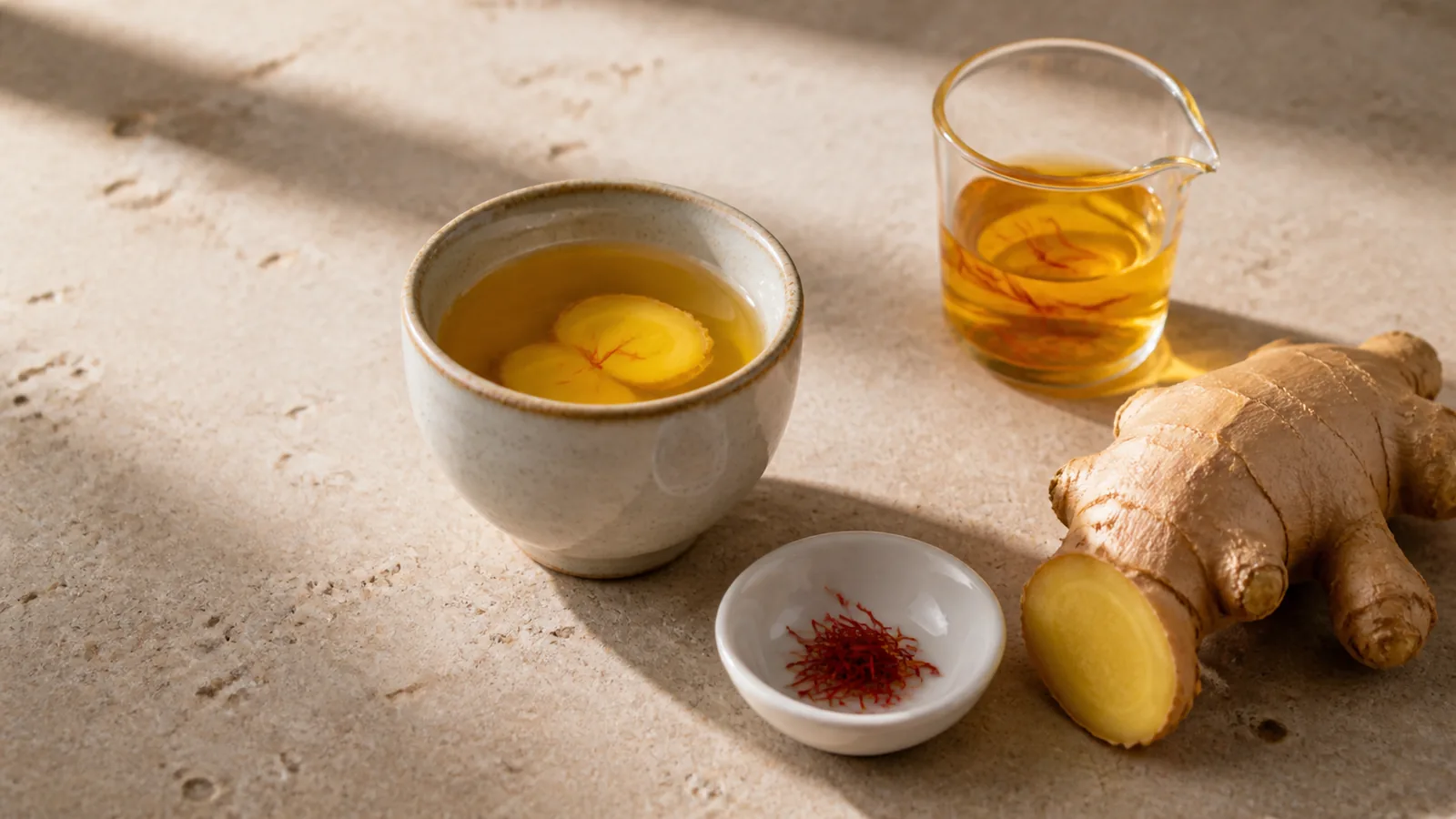
The clearest method is a small water infusion. It removes most of the distractions found in a finished recipe and makes different batches easier to compare.
- Put a few dry threads in a clean cup and lightly crush them.
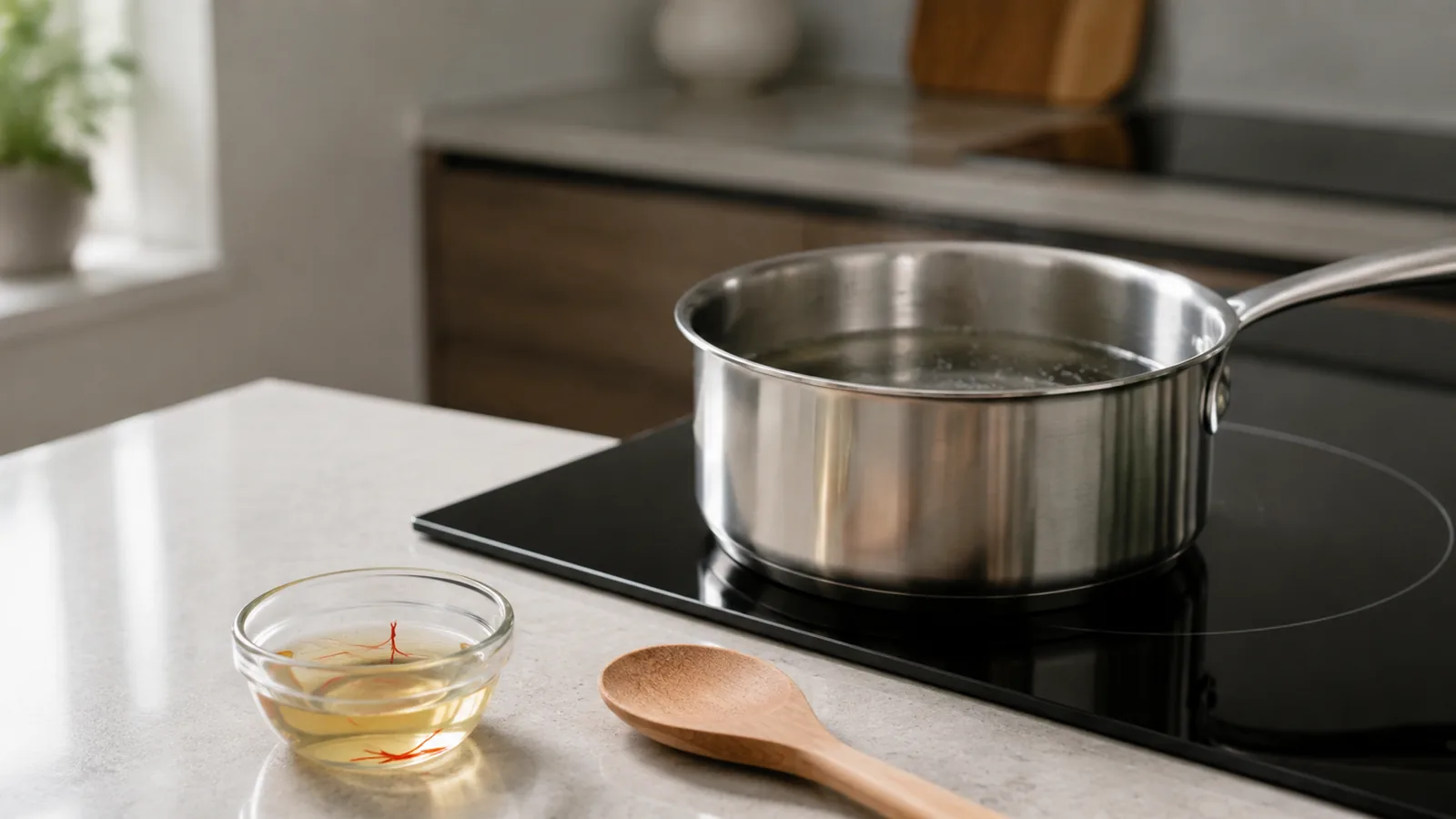
- Add two or three tablespoons of warm water. It should not be violently boiling.
- Cover the cup and wait about 10–15 minutes.
- Smell the infusion before tasting a small spoonful.
- Notice the floral aroma, earthy depth, slight bitterness and length of the finish.
Plain water gives the most neutral tasting sample. Warm milk softens the edges, while broth adds its own salt, fat and aromatics. If you compare two lots, use the same thread weight, water volume, temperature and time.
Can you taste saffron in rice?
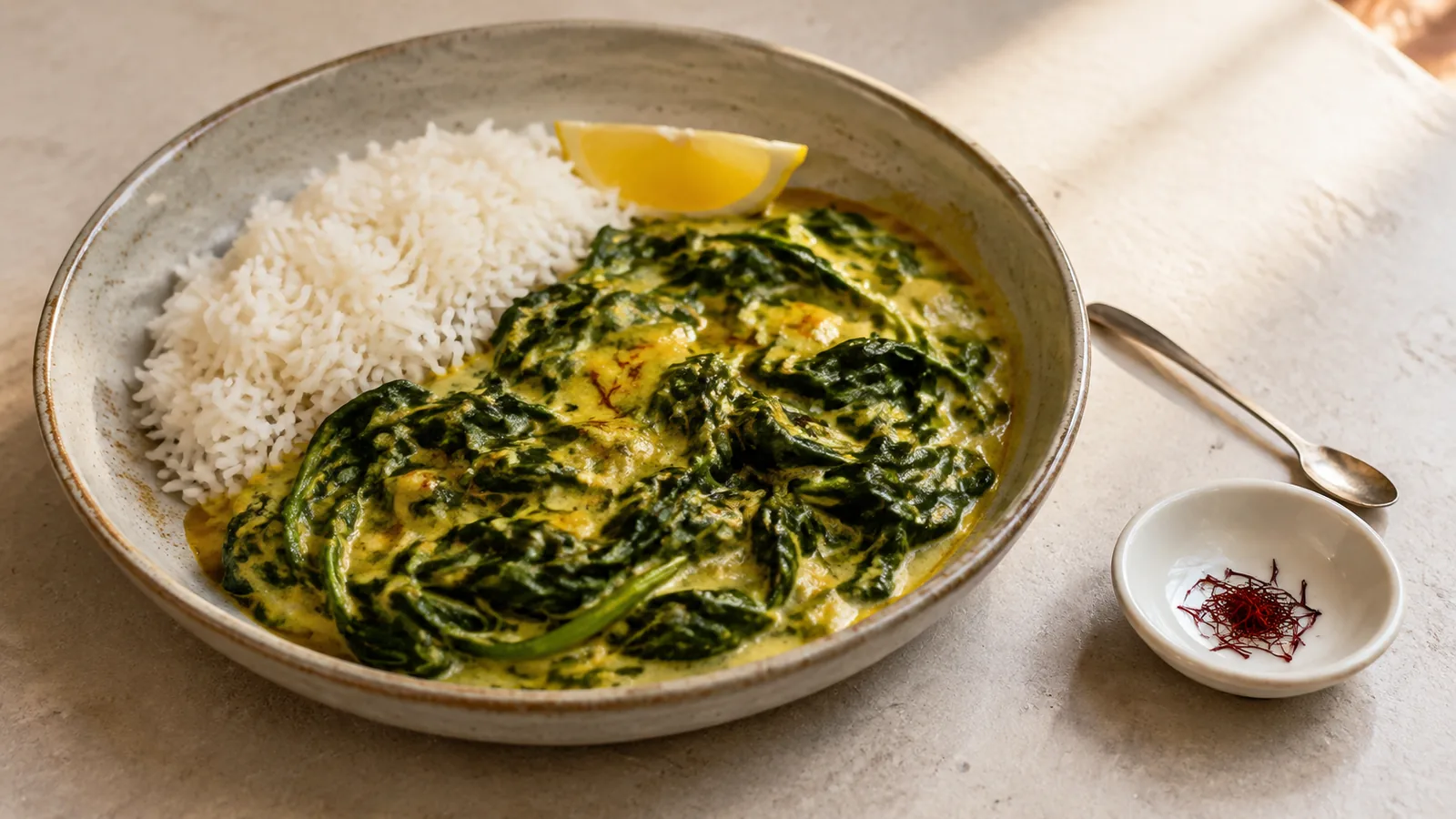
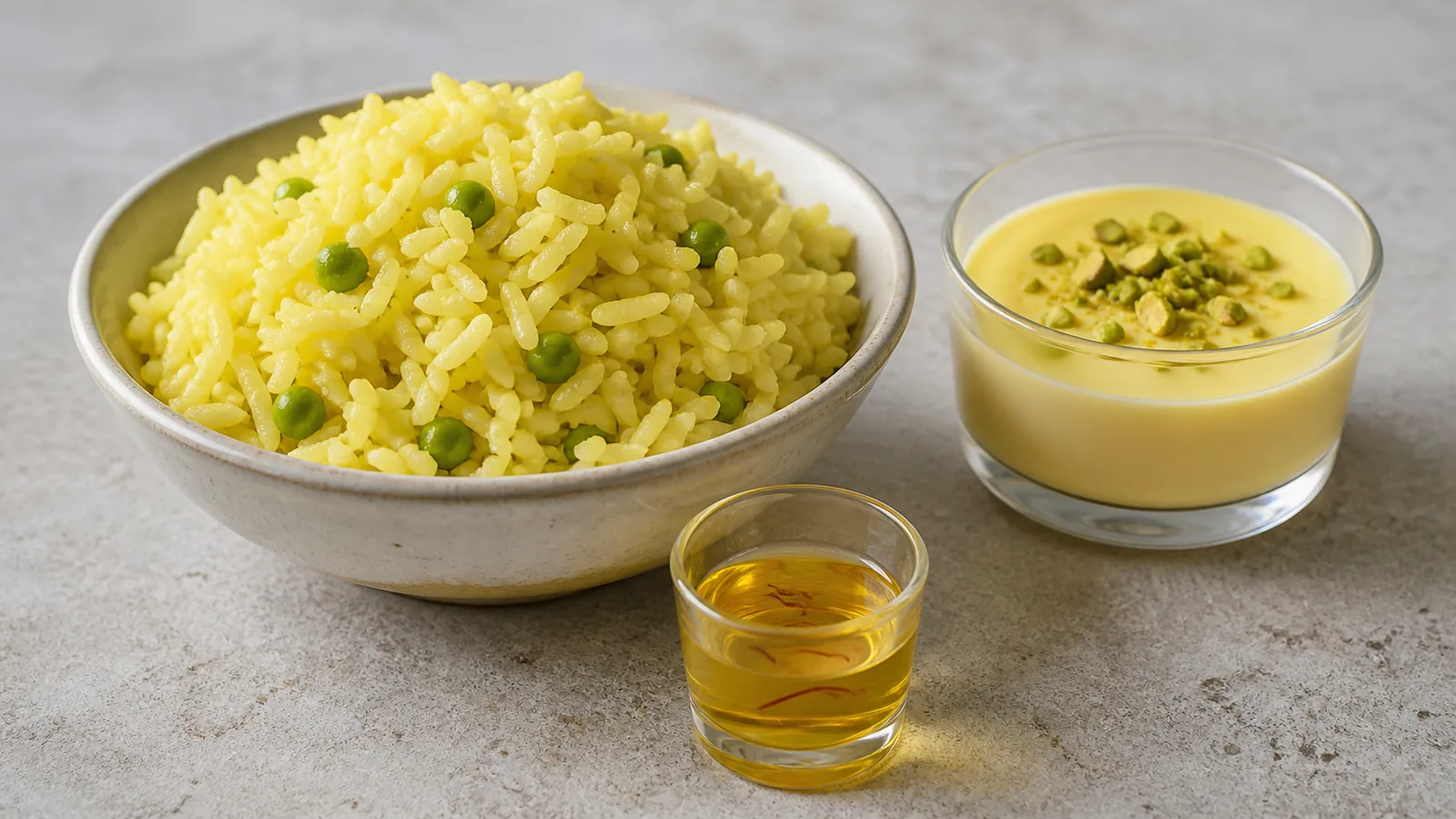
You should be able to, provided the dose is suitable and the infusion is distributed evenly. In plain rice, saffron contributes a warm fragrance and a dry, gently earthy finish. It should not taste sugary or spicy-hot.
Mix most of the infusion through the rice and reserve a little for the top if you want variation in colour. Adding the liquid only to one corner may create a vivid patch without seasoning the whole pot.
Can you taste saffron in desserts and tea?
Yes, although sugar can change what you notice. In custard, milk pudding or ice cream, the honeyed and floral side becomes rounder. Too much rosewater or cardamom can mask it. Add those partners with restraint and taste before increasing either one.
In teas, soups or another beverage, start with a mild infusion. A crowded herbal blend can make it difficult to tell which aroma belongs to saffron. The spice should give the drink a warm, lingering fragrance rather than an aggressive bitter hit.
Why adding more may make saffron taste worse
A common response to weak flavour is to add a large pinch. That can overshoot the balance. Saffron’s gentle bitterness becomes much more obvious at a high dose, and the result may taste medicinal.
Improve extraction and distribution before increasing quantity. Lightly crush the threads, steep them, and stir the infusion through the food. Our guide to the best way to brew saffron covers that process in detail.
What if the saffron has colour but almost no flavour?
Several explanations are possible:
- the threads are old or were stored in light, heat or damp conditions;
- the dose is too small for the volume of food;
- the saffron was not infused or distributed well;
- stronger ingredients are masking it;
- the product is low quality, adulterated, contains low-aroma material or is not what the label claims.
Colour alone does not prove quality or authenticity. Artificial colour and other plant material can create a convincing visual effect. Look at the threads, aroma, seller traceability and storage history together. Do not taste material that smells musty, shows moisture damage or raises a food-safety concern.
Does authentic saffron always taste identical?
No. Harvest conditions, drying, thread cut, age and storage can shift the balance. Preparation has an equally large effect: the same jar can taste muted in a strongly spiced stew and beautifully clear in plain rice or milk.
Personal perception varies as well. One person may lead with “floral,” another with “hay-like,” and another with “earthy.” That disagreement is normal. A controlled side-by-side infusion is more informative than expecting every taster to use the same word.
How to protect saffron’s flavour after opening
Keep the threads dry, airtight, cool and dark. Avoid storing them next to the cooker, where heat and steam are frequent. Open the container briefly, use a dry utensil and close it promptly. Grinding an entire pack in advance increases the surface exposed to air, so crush only what you need.
The short answer
You can definitely taste saffron when it is fresh, measured sensibly and prepared well. Its flavour is subtle but distinct: floral, earthy, honey-like and lightly bitter. Blooming the threads in warm liquid and adding that infusion evenly gives the spice a fair chance to be noticed without becoming overpowering.