

Yes, saffron goes with spinach. Saffron’s floral, honeyed aroma softens the earthy edge of cooked spinach, while the greens give a savoury base to the spice. The best saffron and spinach pairing uses enough saffron to be fragrant without masking the vegetable.
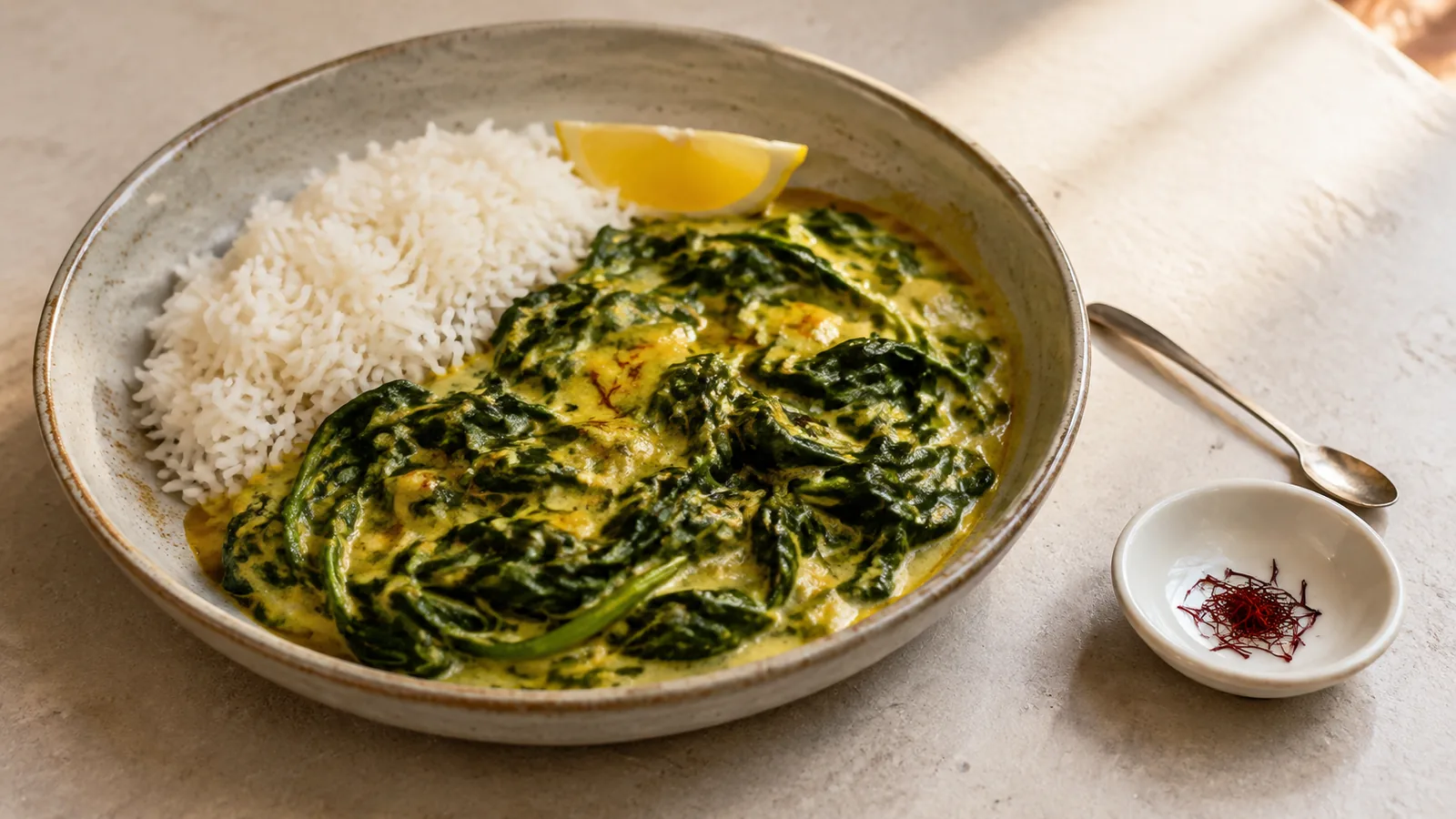
Why saffron and spinach work together
Spinach becomes mild, earthy and slightly mineral when cooked. Saffron contributes aroma, a gentle bitterness and golden colour. The flavours meet most naturally when a third ingredient—such as onion, rice, cream, yogurt or light stock—carries the saffron through the dish.
Colour works differently. Saffron cannot turn dark green spinach gold, but it can colour the surrounding rice, broth or sauce. That contrast is often more attractive than trying to force both ingredients into one uniform colour.
Bloom the saffron before adding it
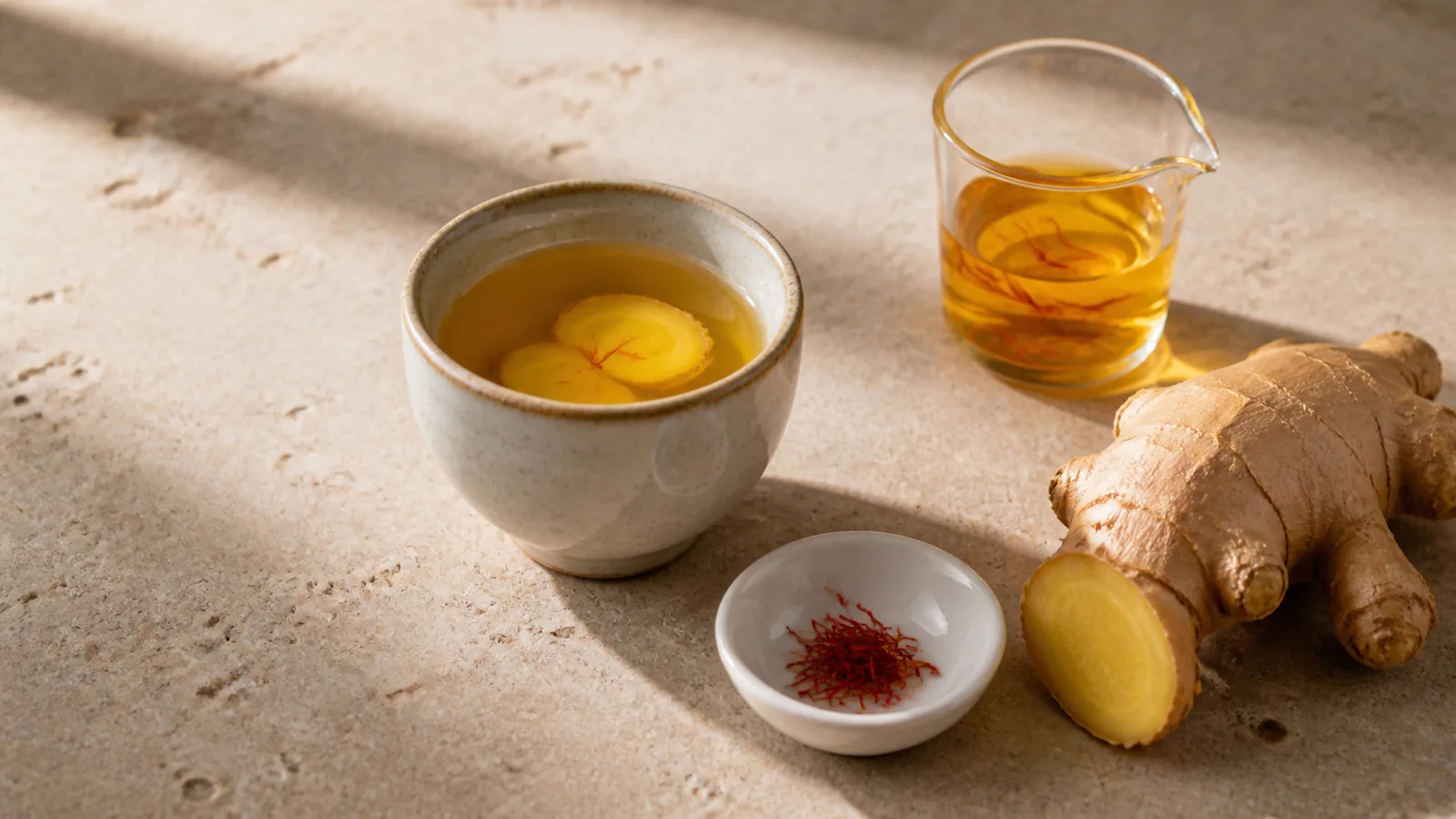
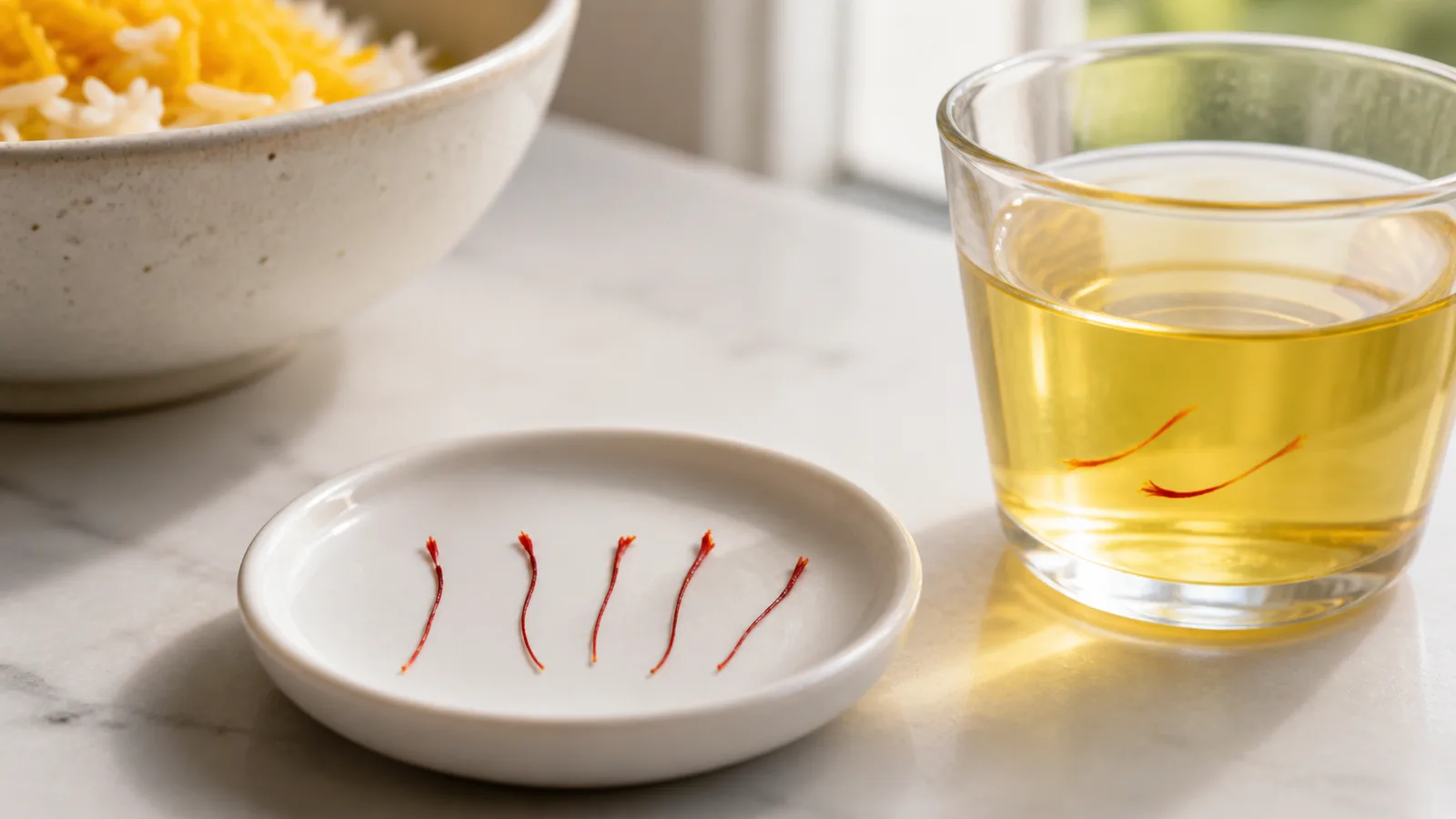
Lightly crush a small pinch of saffron threads, cover them with a few tablespoons of warm water, milk or broth, and leave the mixture for 10 to 15 minutes. Add both the liquid and the threads to the dish.
Blooming spreads a small amount more evenly than dropping dry threads into a pan of greens. Warm liquid is useful; hard boiling is unnecessary. If you want a closer look at heat, see what temperature to use for a saffron infusion.
Prepare the spinach without making it watery
Spinach releases plenty of moisture as it wilts. Wash it thoroughly, drain it well and cook it in a wide pan so excess water can evaporate. If frozen spinach is used, thaw it and squeeze out the extra liquid first.
Add the saffron infusion after the spinach has collapsed and most loose water has cooked away. Otherwise, the dish may taste diluted and the saffron liquid can disappear into the bottom of the pan.
A quick saffron spinach side dish
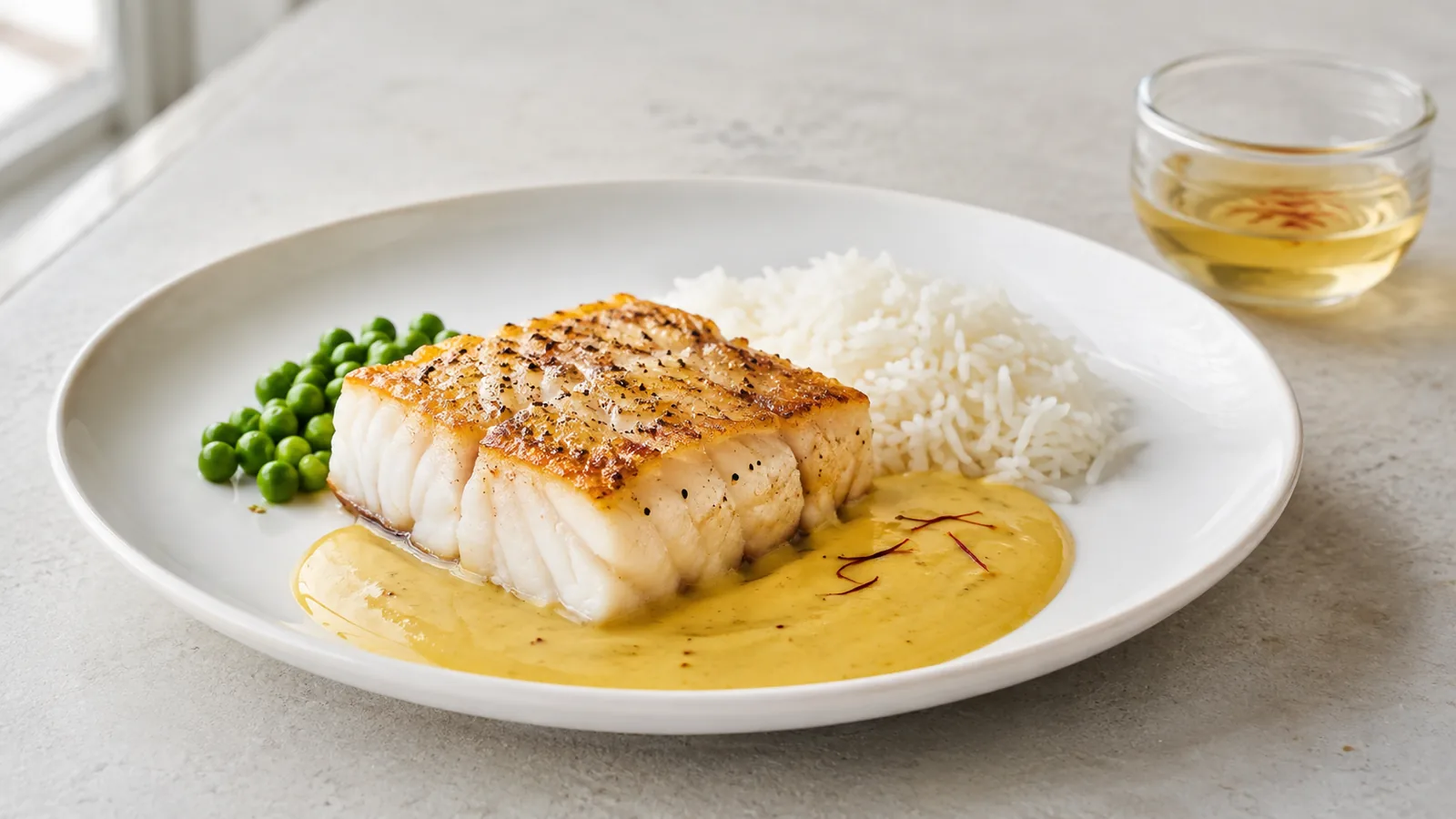
This simple method makes a savoury side for rice, chicken, fish or beans.
- Bloom a small pinch of lightly crushed saffron in two tablespoons of warm water for 10 to 15 minutes.
- Soften a small amount of finely chopped onion in olive oil or butter over medium heat.
- Add well-drained spinach and cook until wilted.
- Let excess moisture evaporate, then stir in the saffron infusion.
- Season with salt and a small squeeze of lemon; taste before adding more.
Garlic can be added with the onion, but one small clove is usually enough. Too much garlic can push the saffron into the background.
Good ways to use the combination
With rice or risotto
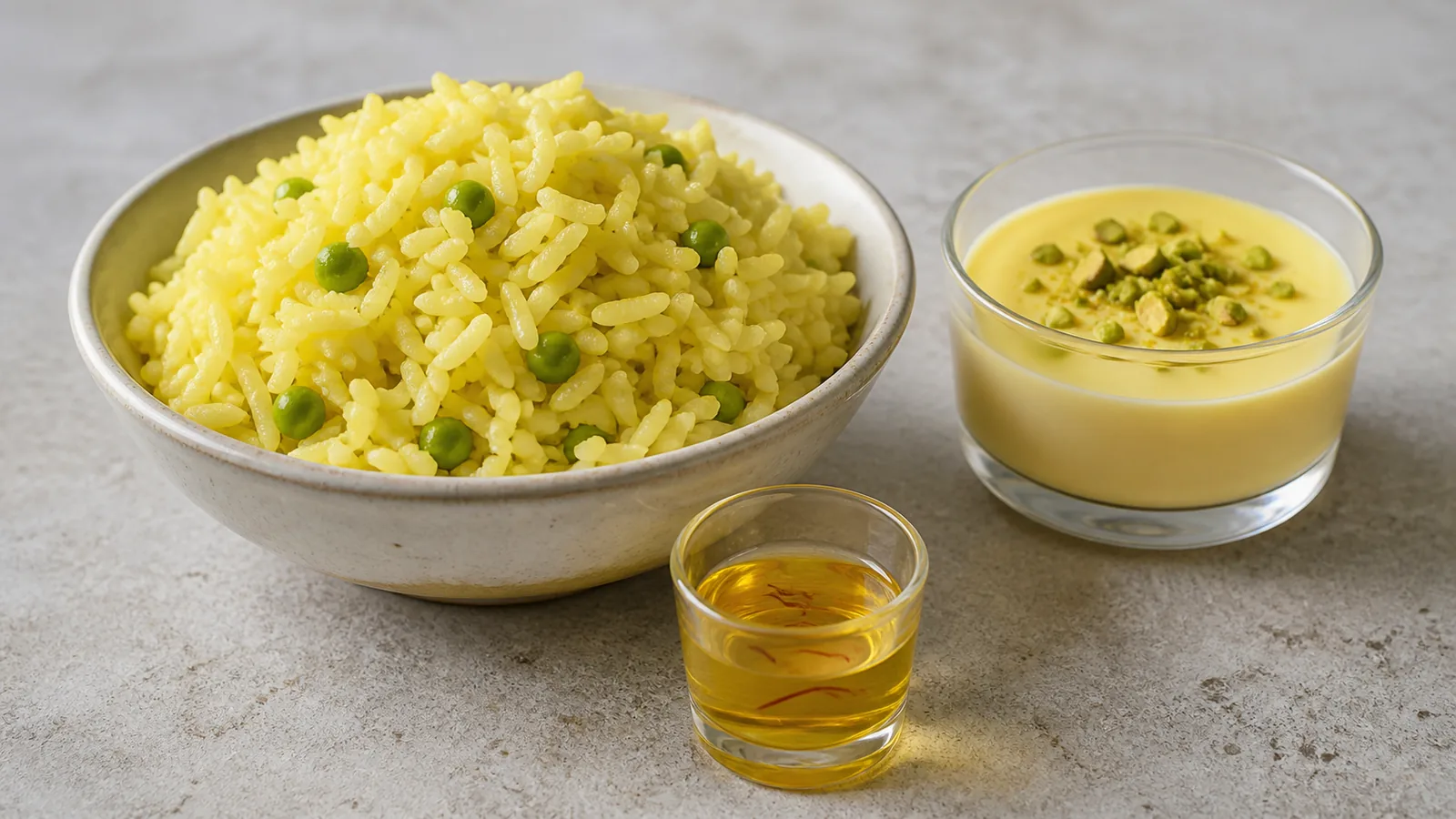
Saffron rice and wilted spinach make an easy pairing because the rice carries the spice while the spinach supplies contrast. For risotto, add the saffron liquid during the later stages of cooking and fold in cooked spinach near the end. This protects the green colour and prevents the leaves from becoming stringy.
In a creamy sauce
Cream, soft cheese or unsweetened yogurt can round out spinach and distribute saffron evenly. Keep the sauce light enough that both ingredients remain identifiable. If using yogurt, lower the heat before stirring it in to reduce the chance of splitting.
In soup
A light chicken, lentil or vegetable soup can take both ingredients. Add bloomed saffron to the broth, then stir in spinach during the final minutes. Long boiling dulls the leaves and is not needed to integrate the flavour.
With eggs
Spinach and saffron can be folded into an omelette or baked egg dish. Mix the saffron infusion into the eggs before cooking, then add spinach that has already been wilted and drained. This keeps the finished eggs from becoming wet.
Flavours that support saffron and spinach
Onion and leek provide sweetness; lemon lifts the spinach; mild garlic adds depth. Butter and olive oil both carry the aroma well. Cardamom is better suited to rice or a gently spiced sauce than to a simple sauté.
Strong chilli, heavy smoke and large amounts of bitter spice can overwhelm saffron. Choose one or two supporting flavours instead of treating every compatible ingredient as necessary. Our broader guide to vegetables that go with saffron offers more combinations.
How much saffron should you use?
For a spinach dish serving four, begin with a small pinch of threads. Bloom it, mix it through the finished base and taste. The right amount depends on the saffron, the volume of spinach and whether rice, broth or dairy is also present.
Adding more saffron does not automatically make the dish better. Too much can introduce a medicinal bitterness. It is easier to add a little more infusion than to correct an over-seasoned pan.
Fresh or frozen spinach?
Both work. Fresh spinach gives a lighter texture and is useful for a quick sauté or eggs. Frozen spinach is convenient for soup, rice fillings and creamy dishes, provided its excess water is removed. Saffron should be bloomed in either case.
Does the pairing add special health benefits?
Spinach remains a nutritious vegetable, but combining it with saffron does not create a proven special health effect. This pairing is recommended for flavour, aroma and presentation. It should not be described as a treatment or as a way to guarantee better absorption of a particular nutrient.
The practical answer
Saffron and spinach pair well in rice, creamy sauces, soups, eggs and simple sautés. Drain the spinach, bloom the saffron separately and bring them together late enough to preserve their character. A small pinch, a mild base and careful seasoning are usually all the combination needs.