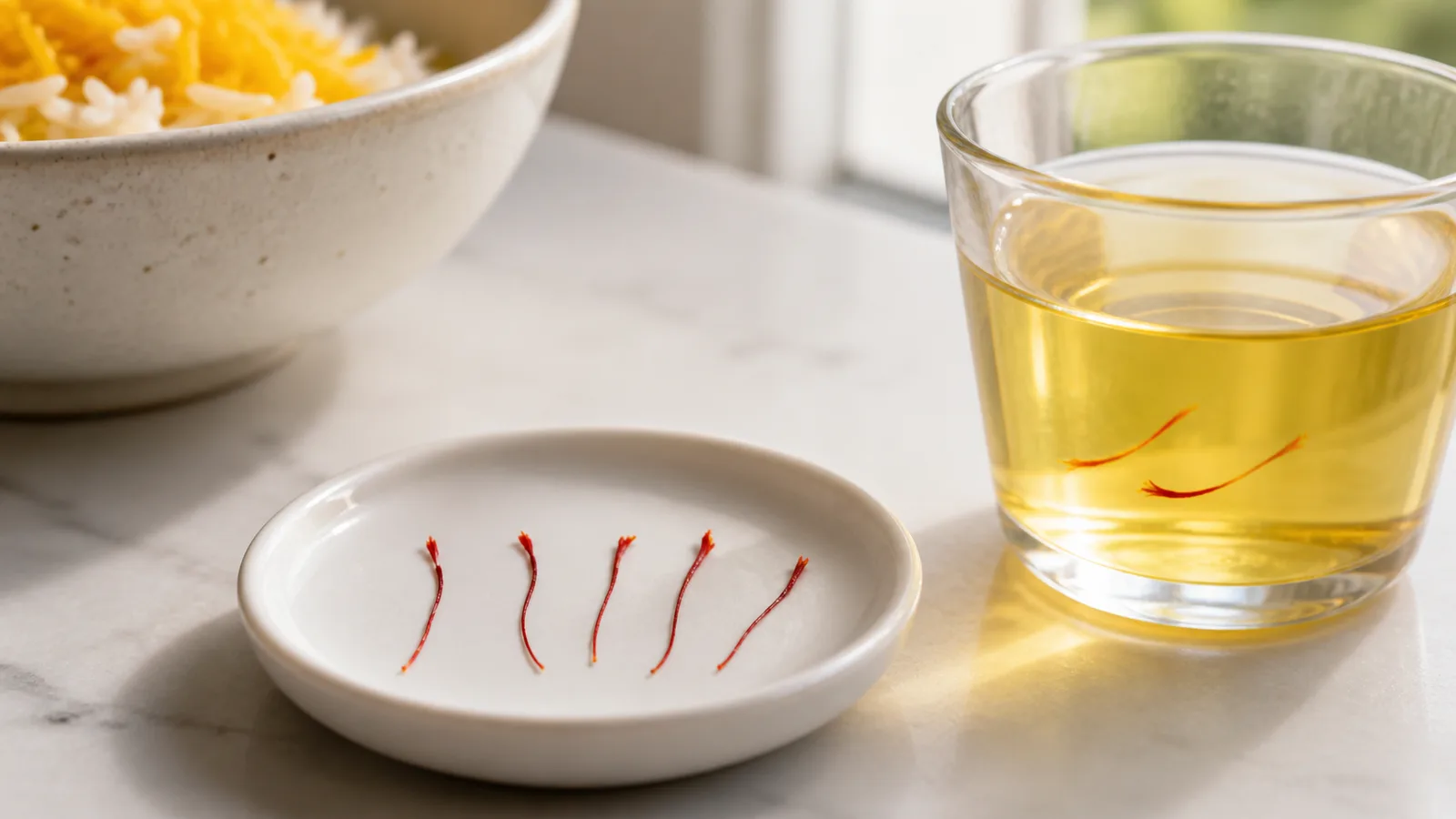
A useful saffron infusion temperature is about 60–80°C (140–176°F): hot enough to extract colour and flavour efficiently, but below a rolling boil. If your water has just boiled, let it stand briefly before pouring it over the threads.
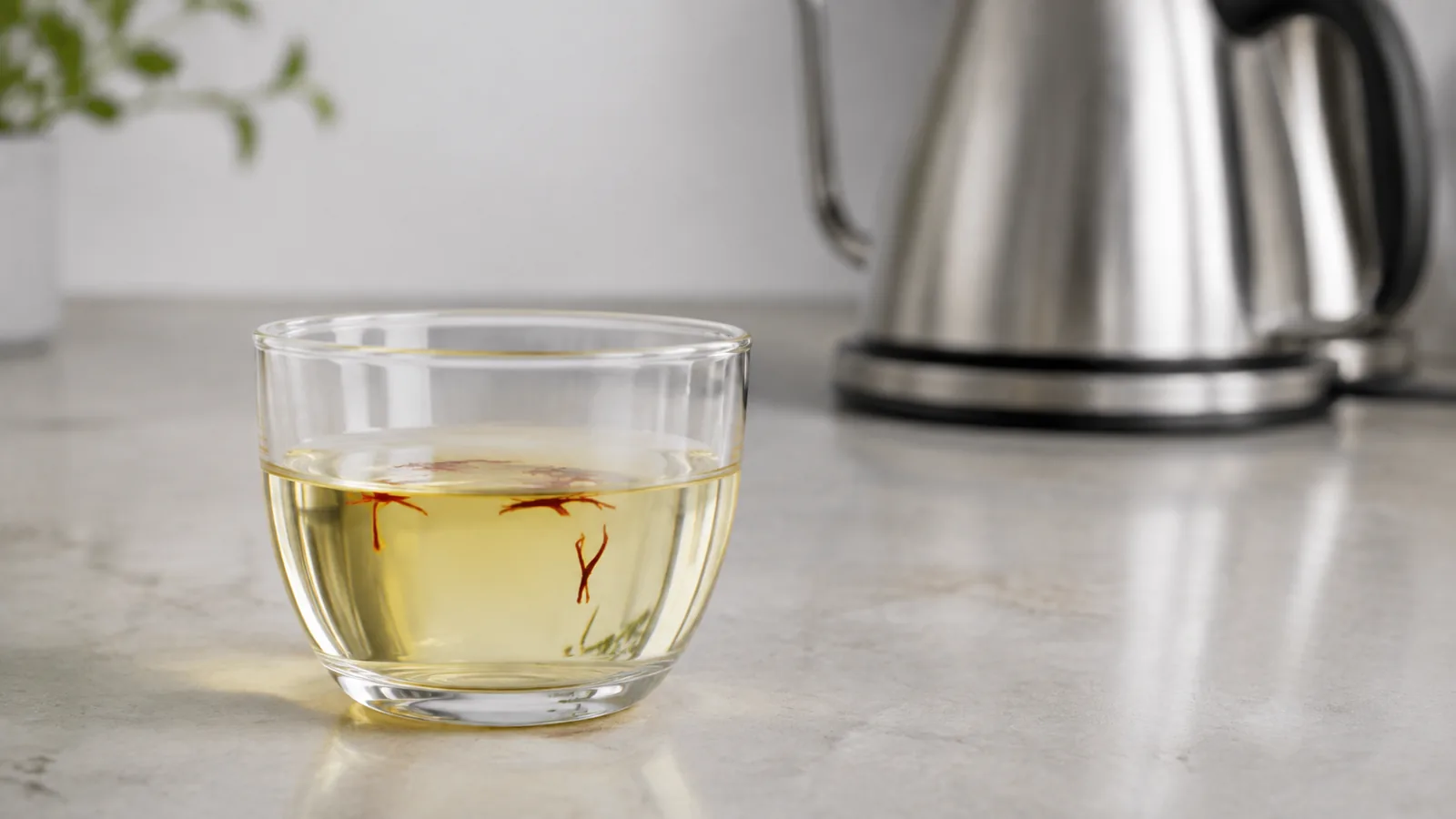
The ideal temperature for saffron infusion
There is no single degree that every kitchen must hit. Saffron blooms in warm liquid as well as hot liquid; temperature mainly changes how quickly extraction happens. Around 60–80°C gives a practical balance between speed and aroma.
At the lower end, the infusion develops more slowly. Near the upper end, lightly crushed threads can colour the liquid within minutes. What matters is that you do not keep the saffron at a vigorous boil for longer than the recipe needs.
How to infuse saffron properly
- Measure the saffron for the dish and lightly crush the threads.
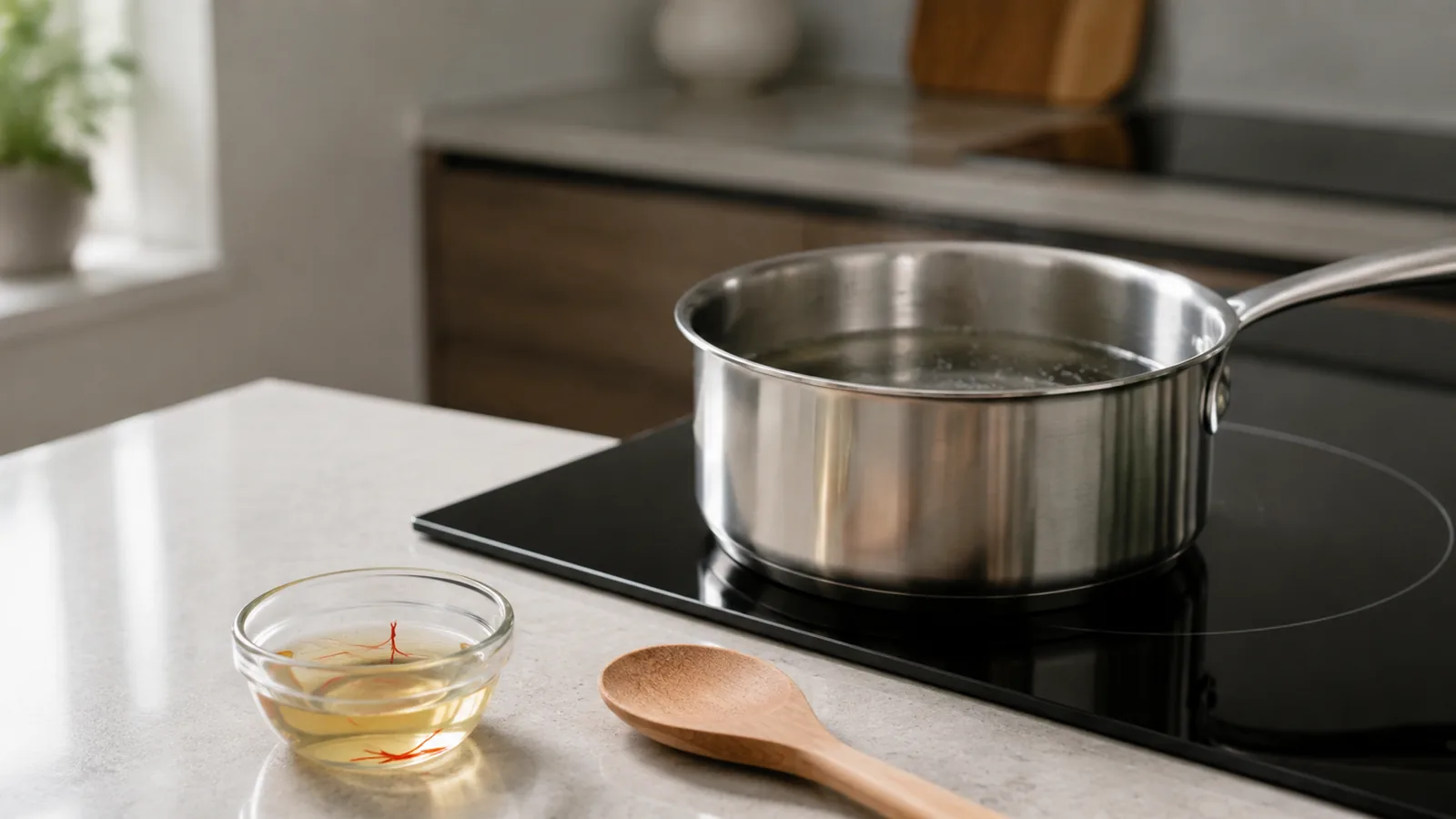
- Heat a small amount of water, milk or broth.
- Pour the warm liquid over the saffron in a heat-safe cup.
- Cover it and steep for 5 to 15 minutes.
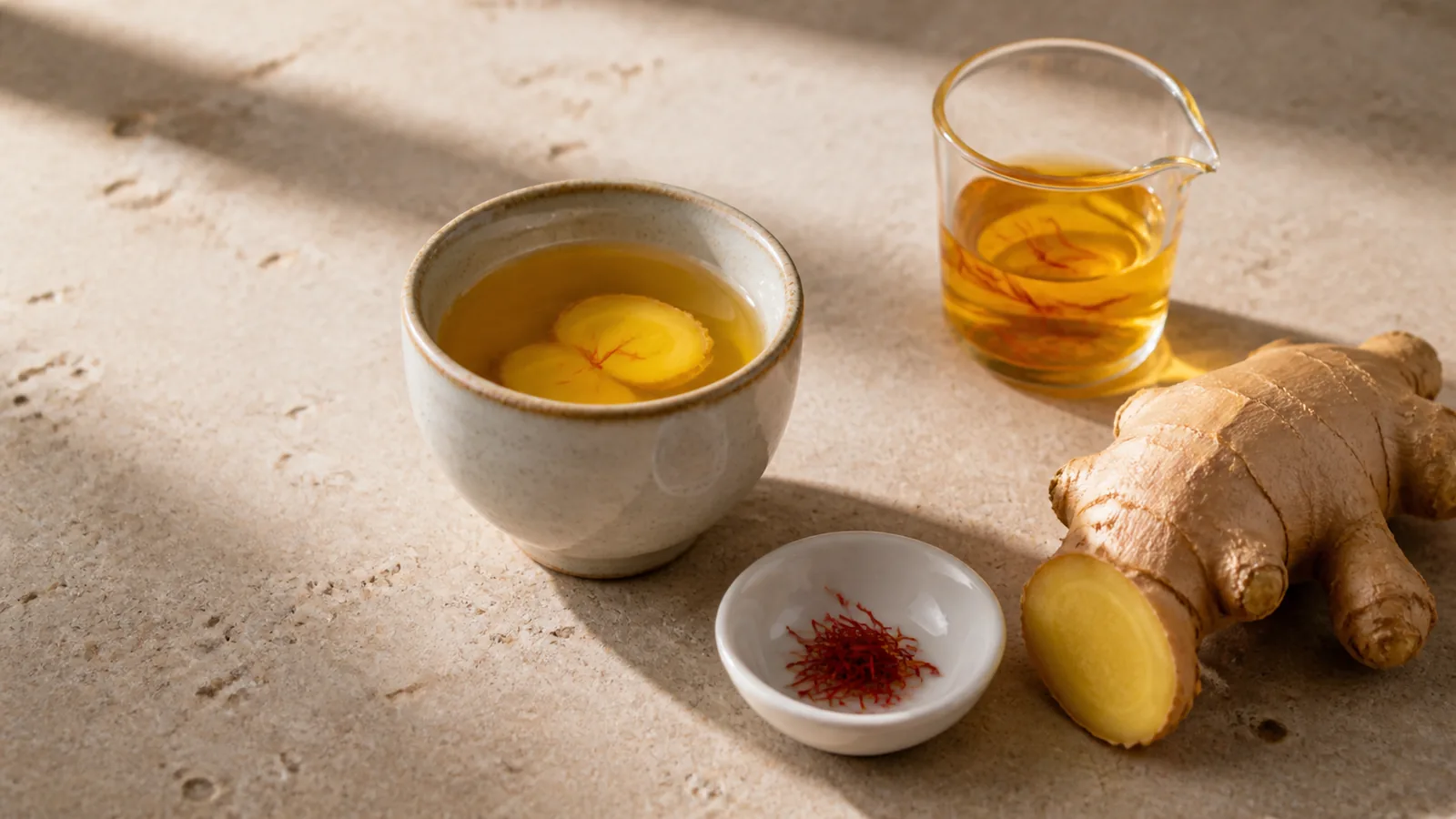
- Add both the golden liquid and softened threads to the recipe.
Crushing increases surface area, while the small liquid volume keeps the bloom concentrated. For detailed timing by thread size and temperature, see how long to soak saffron in hot water.
Does boiling water ruin saffron?
Not instantly. Pouring freshly boiled water over saffron is unlikely to make the entire infusion useless, especially when the cup is off the heat and begins cooling at once. The bigger concern is prolonged boiling, which drives off aroma and can leave the flavour flatter.
If you prefer a more controlled method, boil the water, wait 30 to 60 seconds, then pour. There is no need to discard an infusion simply because the water was slightly hotter than planned.
Why temperature changes the result
Crocin and related pigments are responsible for saffron’s golden-yellow colour. Safranal contributes strongly to the characteristic aroma. Warmth helps the water-soluble colouring compounds move into the liquid, but volatile aromatic notes do not benefit from a long, uncovered boil.
The best result is therefore not the hottest possible extraction. It is a clear, fragrant bloom that can be distributed through the dish before its aroma is lost.
Water, milk and broth behave differently
- Water: makes the colour easy to see and is the simplest liquid for a concentrated saffron infusion.
- Milk: is opaque and may make the gold look paler. Heat it gently and stir so it does not catch on the pan.
- Broth: already has colour and flavour, so judge the bloom by aroma as well as appearance.
For milk-based drinks and desserts, read why brief heating is different from prolonged boiling.
How to judge the infusion without a thermometer
Look for hot liquid with no sustained rolling bubbles. A cup that is comfortable to handle carefully but still gives off gentle warmth is suitable. Covering the bloom holds in aroma and prevents the small volume from cooling too quickly.
The liquid should gradually become yellow to deep gold. The threads may soften while retaining some red or dark-orange colour. An instant red dye cloud is not the goal, and speed alone does not prove authenticity.
Adjusting temperature and time
- Finely crushed threads: use the middle of the temperature range and start checking after 5 minutes.
- Whole threads: allow closer to 15 or 20 minutes.
- Cooler liquid: extend the steep rather than assuming the saffron is weak.
- Older or poorly stored saffron: more heat cannot restore aroma that has already faded.
- Larger recipes: keep the bloom concentrated, then distribute it through the finished volume.
Using infused saffron in cooking
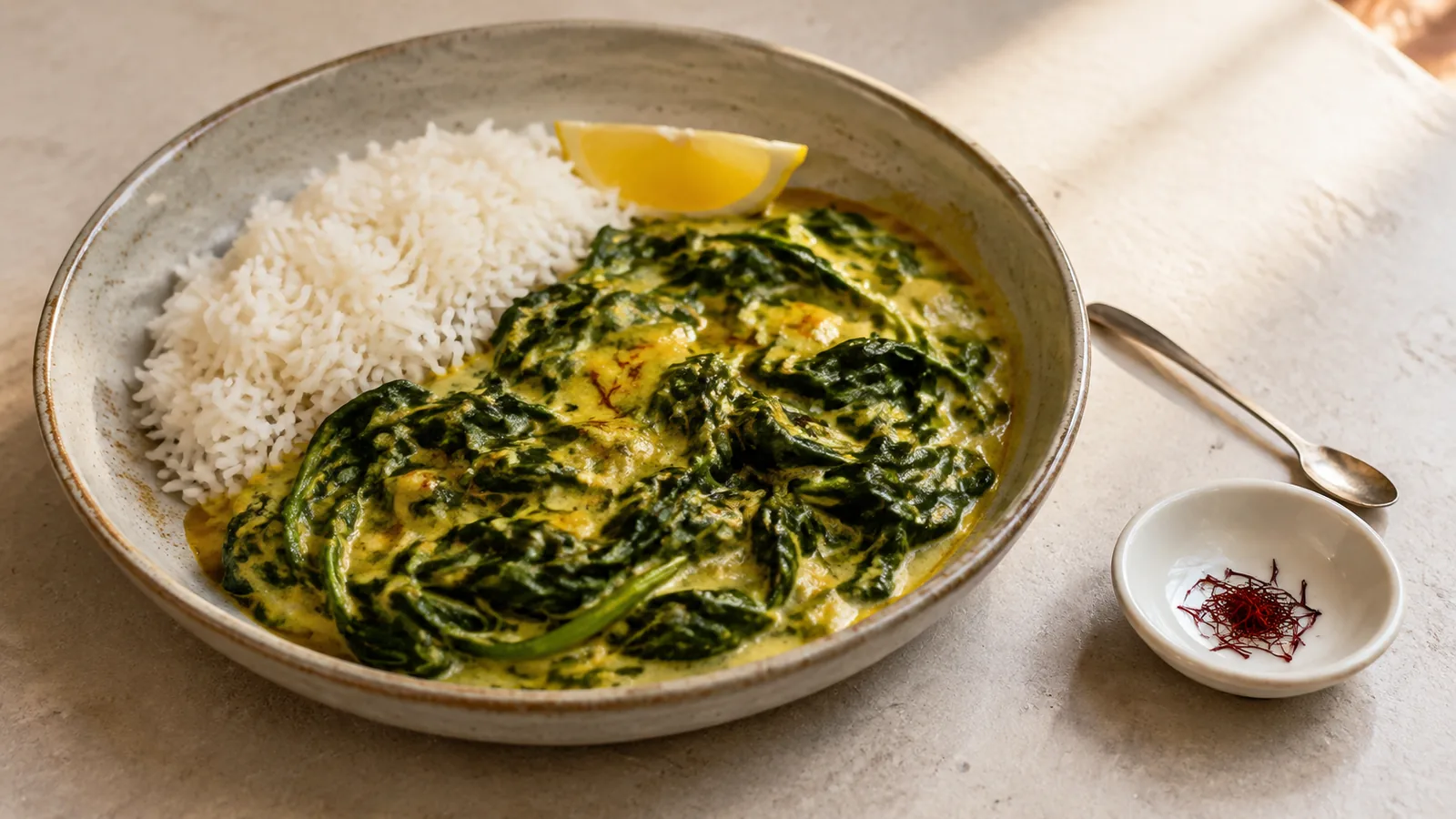
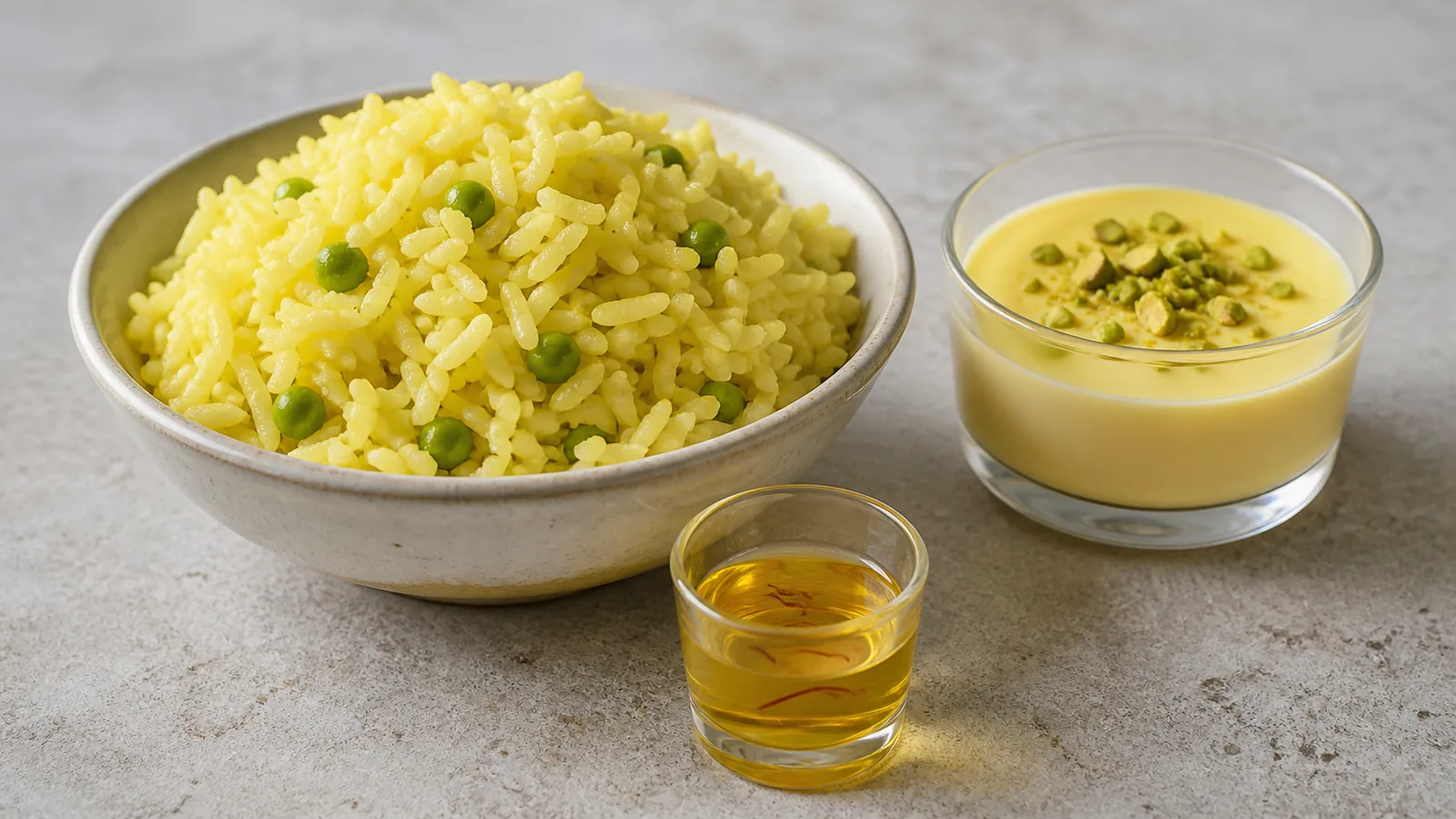
Add the bloom to rice, biryanis, stews, sauces, custards, desserts and beverages. In savoury food, adding it late enough to protect aroma but early enough to spread evenly works well. In a cold drink, prepare a warm bloom first rather than expecting dry threads to extract quickly in chilled liquid.
Milk-based desserts often need heat for reasons unrelated to saffron. Cook the base correctly, then add the infusion during the final stage. For rice, drizzle it over a portion of the cooked grains or fold it through gently for an even golden colour.
Quality matters, but labels are not proof
High-quality saffron generally gives stronger color, aroma and flavor at the same dose. Authentic saffron should also have plausible thread structure, sensible storage and traceable sourcing; the word “premium” on a label is not proof. A visually appealing result cannot compensate for stale, damp or adulterated material.
Store saffron airtight, away from light, heat and moisture. Good storage protects the material before infusion; careful temperature protects what remains when you cook with it.
The temperature rule to remember
Keep the liquid warm rather than boiling: roughly 60–80°C (140–176°F), followed by a 5-to-15-minute steep. That method gives a rich golden-yellow hue, delicate floral sweetness and evenly distributed flavor in both savory and sweet dishes.