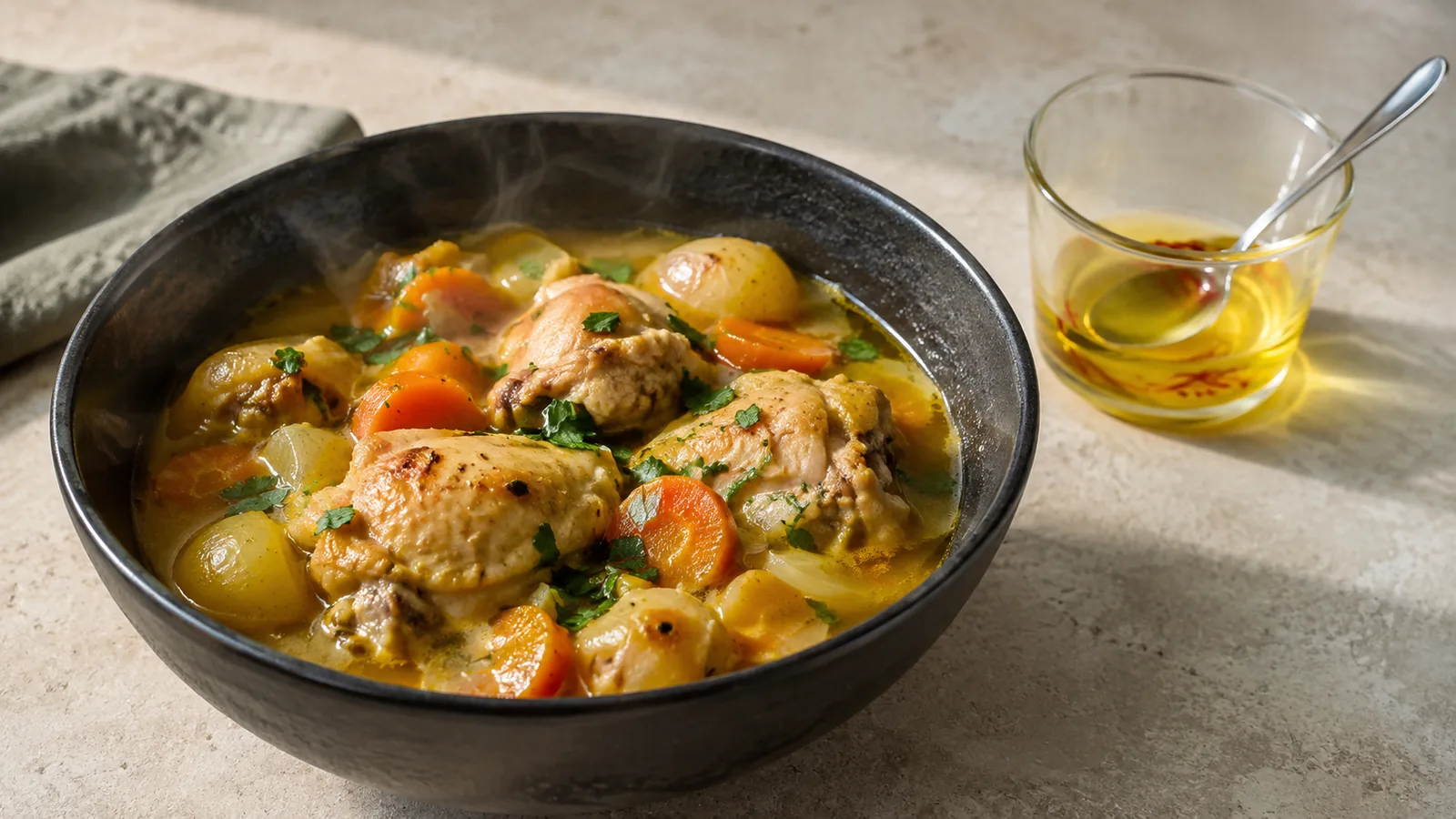
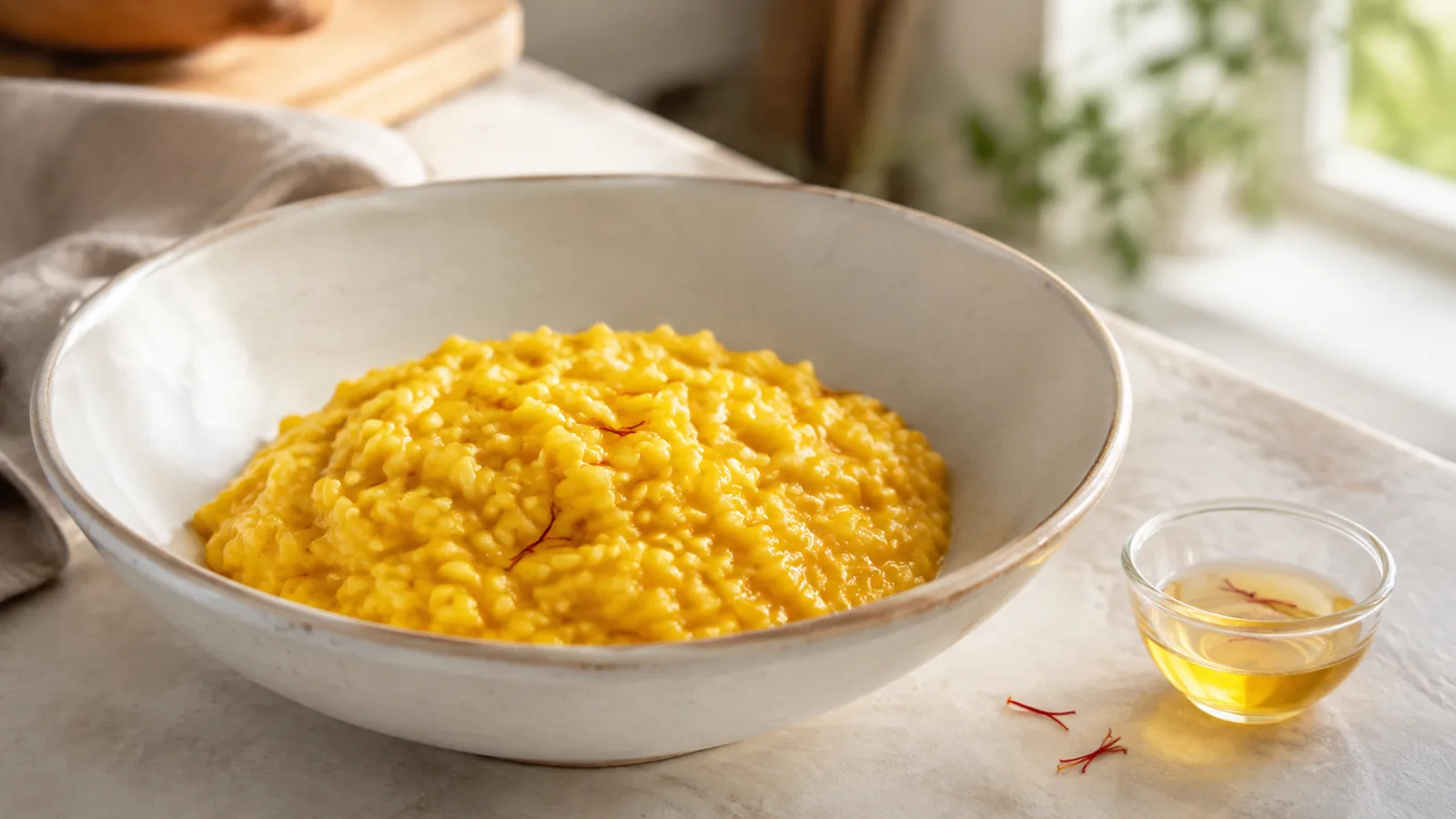
Yes, it is okay for saffron to go into hot milk, but do not hard-boil it for a long time. The better approach is to bloom the threads first, heat the milk gently, and add the infusion near the end. Cooking saffron in milk this way protects more of its aroma while giving the drink or dessert an even golden colour.
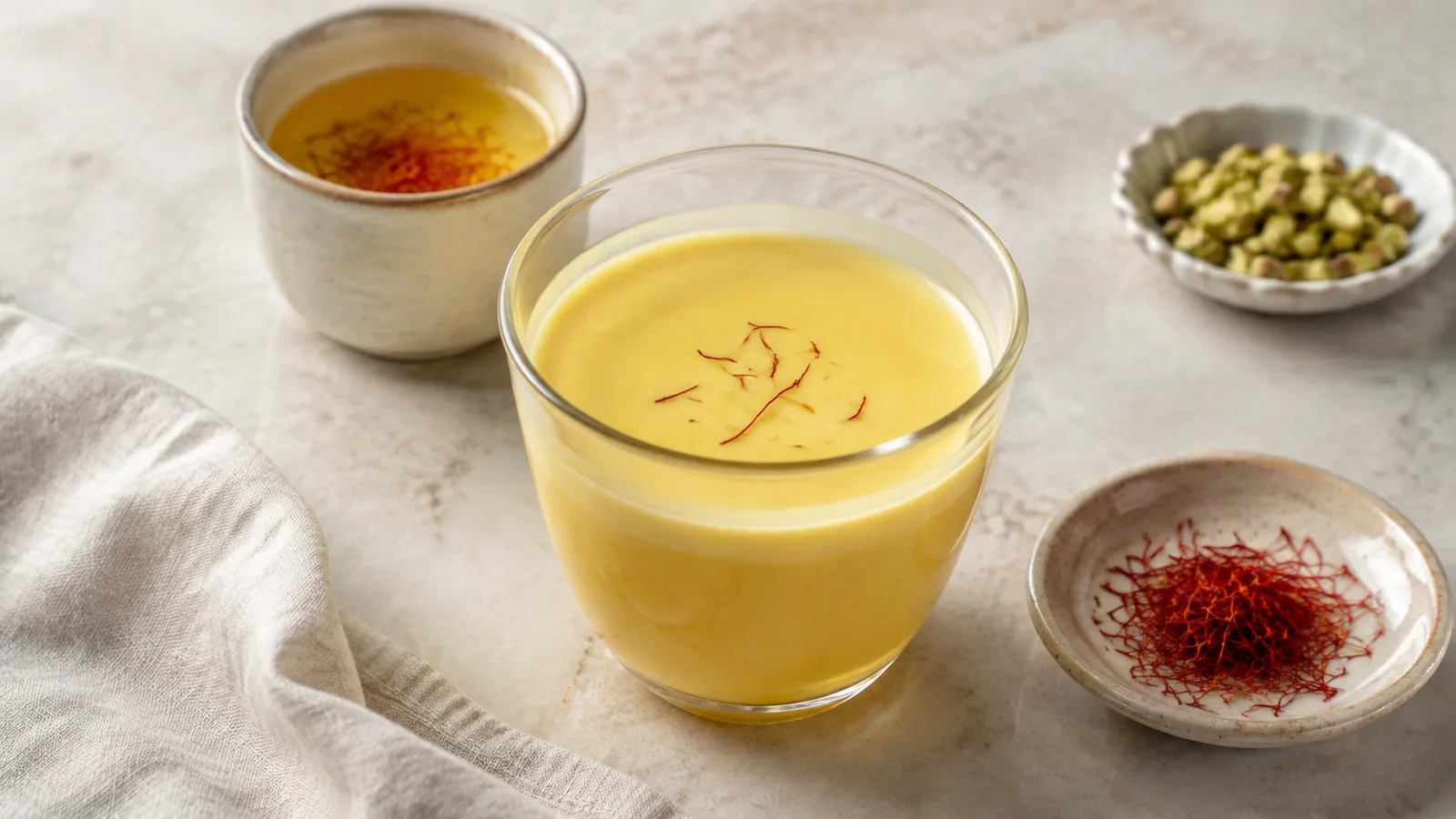
Can I boil saffron in milk?
You can bring milk containing saffron briefly to a simmer when a recipe requires it. The problem is prolonged, vigorous boiling. It drives off delicate aromatic compounds, can flatten saffron’s flavour and raises the chance that the milk will scorch or form a skin.
So the practical answer to both “can I boil saffron in milk?” and “can we boil saffron in milk?” is yes, briefly, but there is usually a better method. Heat the milk as the recipe needs, lower the heat, then stir in bloomed saffron.
The best method for cooking saffron in milk
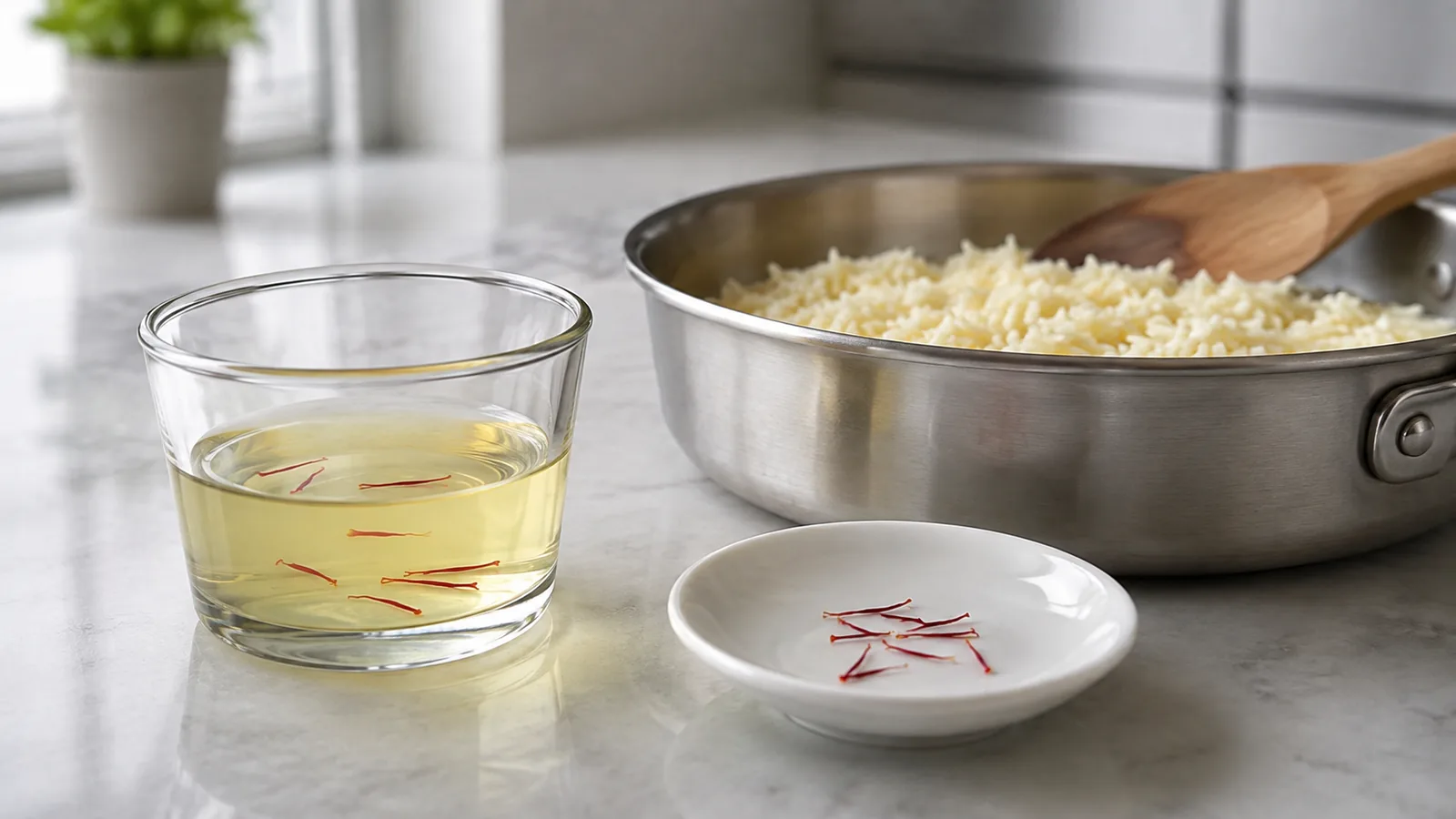
- Lightly crush a small pinch of saffron threads between clean fingers or in a mortar.
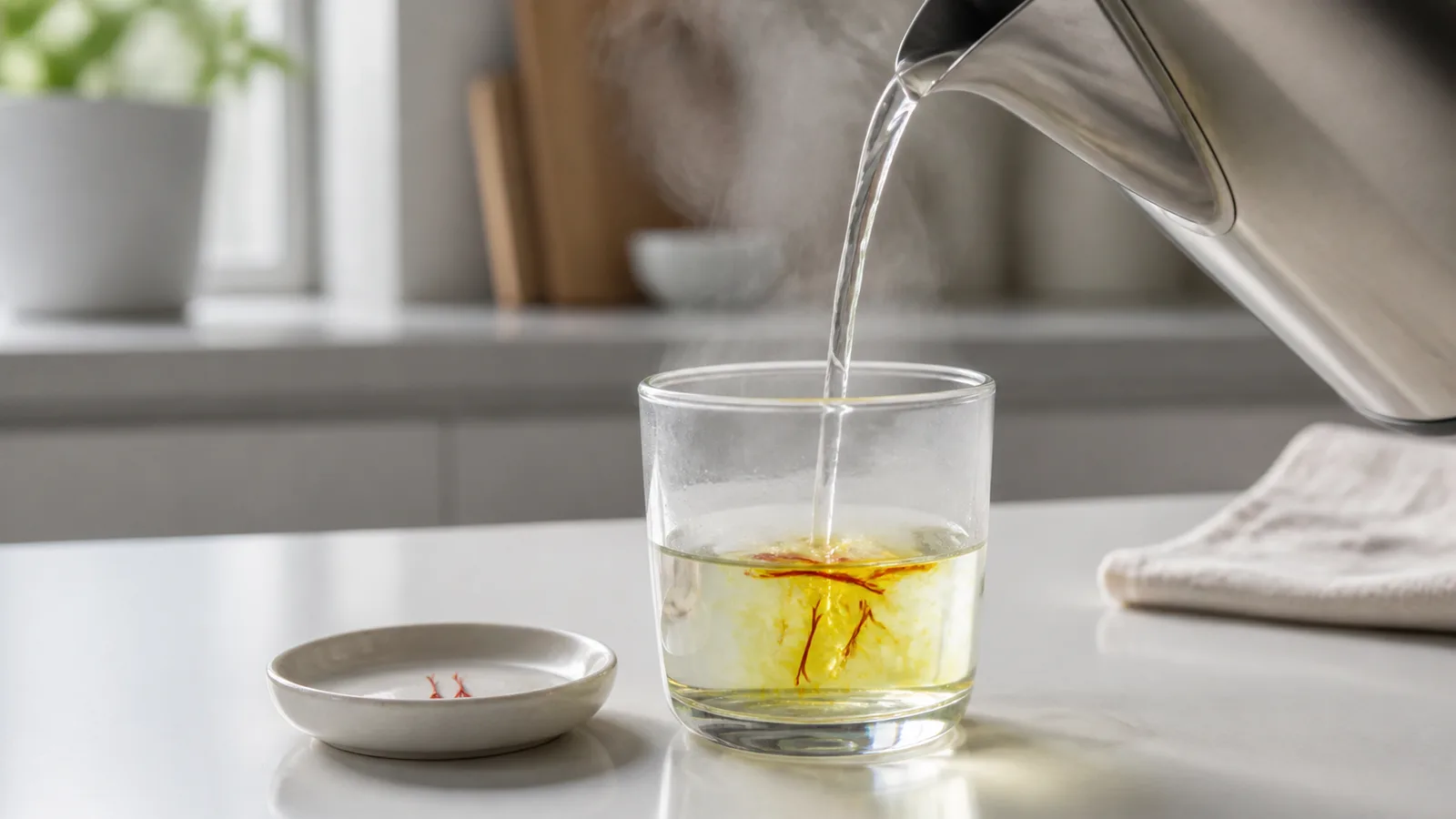
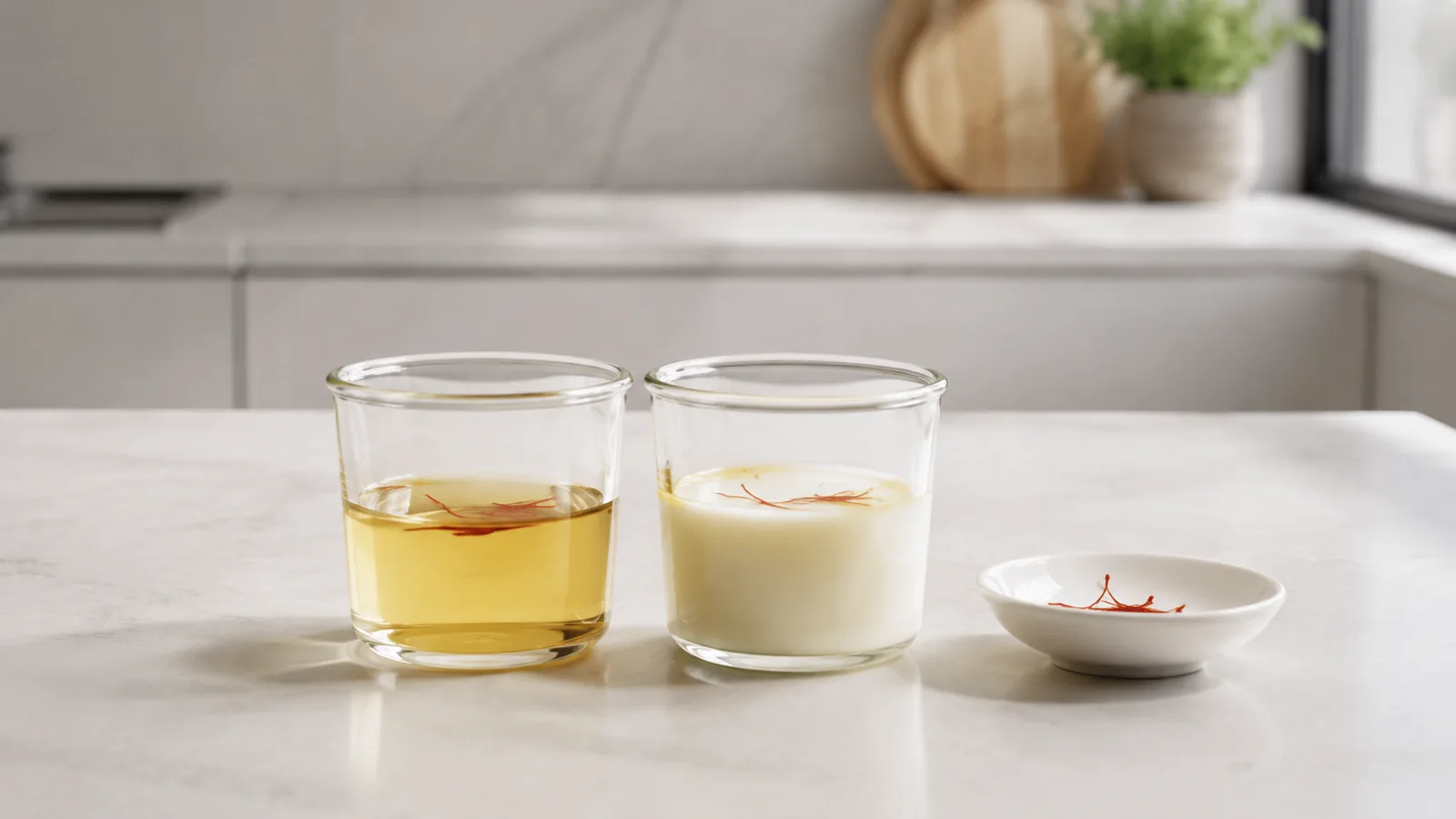
- Cover them with two or three tablespoons of warm milk or warm water.
- Leave the mixture for 5 to 15 minutes so the colour and aroma begin to develop.
- Heat the rest of the milk gently. Stir often, especially in a heavy dessert mixture.
- Add the saffron infusion, including the softened threads, during the final minutes of cooking.
This blooming method gives high-quality saffron time to release a golden-yellow color and delicate flavor. It also helps produce consistent flavor in custards, rice puddings, kheer and saffron-infused drinks.
For a thinner drink, add the infusion after taking the hot milk off the heat and let it stand for a minute before serving. For custard, kheer or rice pudding, stir it in late enough to preserve the aroma but early enough to distribute the colour.
If timing is the main concern, our guide to infusing saffron in milk explains how the result changes as it rests.
Why prolonged boiling is a poor trade-off
Saffron’s colouring compounds include crocin, while safranal contributes much of its characteristic aroma. Warm liquid helps extract them, but extraction and preservation are not the same thing. More heat is not always more effective.
Milk also needs attention of its own. A rolling boil can catch on the bottom of the pan, concentrate the surface and cover the saffron’s delicate notes with a cooked-milk flavour. Gentle heat and regular stirring give you more control.
This does not mean that a few seconds at boiling point ruins the spice. If the pot reaches a boil accidentally, lower the heat and continue. Avoid holding it there unnecessarily.
How to make kesar milk at home
Kesar is the common Hindi name for saffron, and kesar milk can be very simple. For one cup, use a small pinch of threads, bloom them as described above, and warm the milk without letting it boil over. Stir in the infusion and taste before adding anything else.
Cardamom, pistachio or almond can work well, but each one changes the balance. Add sweetener sparingly after tasting; too much sugar can hide the gentle floral, hay-like and honeyed notes you paid for.
What should the colour look like?
The finished milk should move toward pale gold or warm yellow, not necessarily a deep orange. Opaque milk softens the appearance of saffron’s pigment, and a large cup needs more threads than a small one. A gradual colour release is normal.
If the milk remains white, the cause may be a very small dose, whole threads that were not given enough time, low-quality or old saffron, or lighting that makes the change hard to see. See the detailed checks for saffron that is not turning milk yellow.
What do saffron milk benefits claims really mean?
The immediate benefits of saffron milk are culinary: fragrance, colour and a distinctive flavour in a warm drink or dessert. The milk supplies most of the drink’s protein, carbohydrate and other nutrients; adding a culinary pinch of saffron does not turn it into a treatment.
Searches for saffron milk benefits, kesar milk benefits, kesar doodh benefits, milk with saffron benefits and saffron in milk benefits often lead to broad health promises. Be cautious with them. Research on measured saffron extracts or supplements cannot automatically be applied to an occasional homemade cup, and saffron milk should not replace medical care.
If you avoid dairy because of an allergy, intolerance or dietary choice, use a suitable alternative and check how it behaves under heat. People who are pregnant, take medicines or plan to use concentrated saffron supplements should discuss that use with a qualified clinician.
Using the method in desserts and drinks
- Kheer and rice pudding: cook the rice until nearly tender, then add the bloomed saffron for the finishing simmer.
- Custard: add the infusion before the custard reaches its final thickness so it disperses evenly.
- Warm saffron milk: take the milk off the heat, stir in the bloom and rest it briefly.
- Cold drinks: make a warm, concentrated bloom first; dry threads extract slowly in chilled milk.
In every case, the aim is even extraction rather than maximum temperature. The same small change in timing can make the finished dish smell fresher and taste less flat.
The short rule to remember
Do not simmer saffron in milk longer than the recipe requires. Bloom the threads, warm the milk gently, add the infusion near the end and serve while its aroma is fresh. Brief boiling is not a disaster; prolonged boiling is simply an avoidable loss of quality.