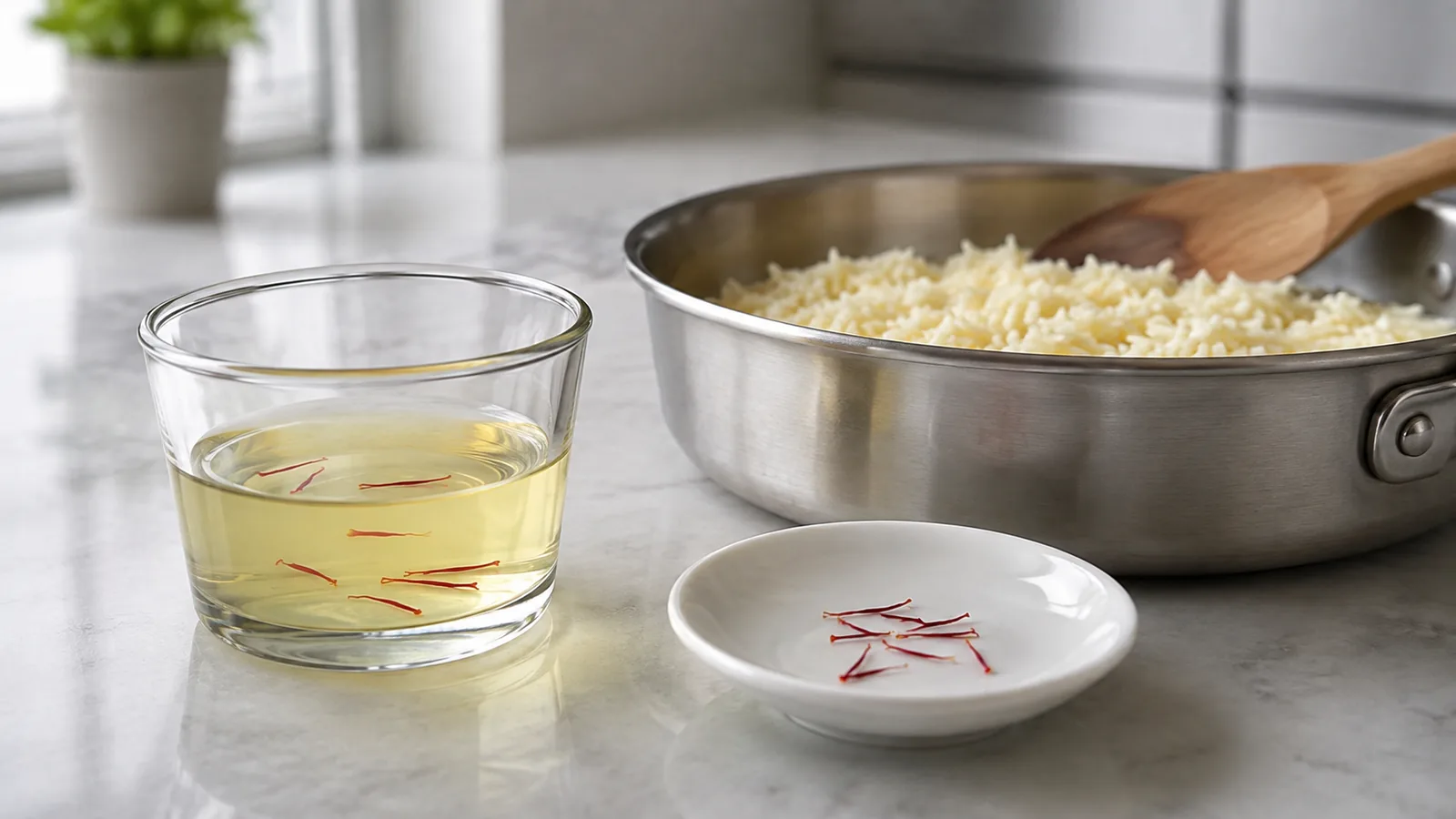
Infuse saffron in warm milk for 10 to 15 minutes for most recipes. If your question is how long to soak saffron in milk, the practical timing is the same. If you want a deeper golden colour and have time, leave the covered infusion for up to 30 minutes. Lightly crushing the threads and using a small portion of the recipe’s milk makes the process quicker and more even.
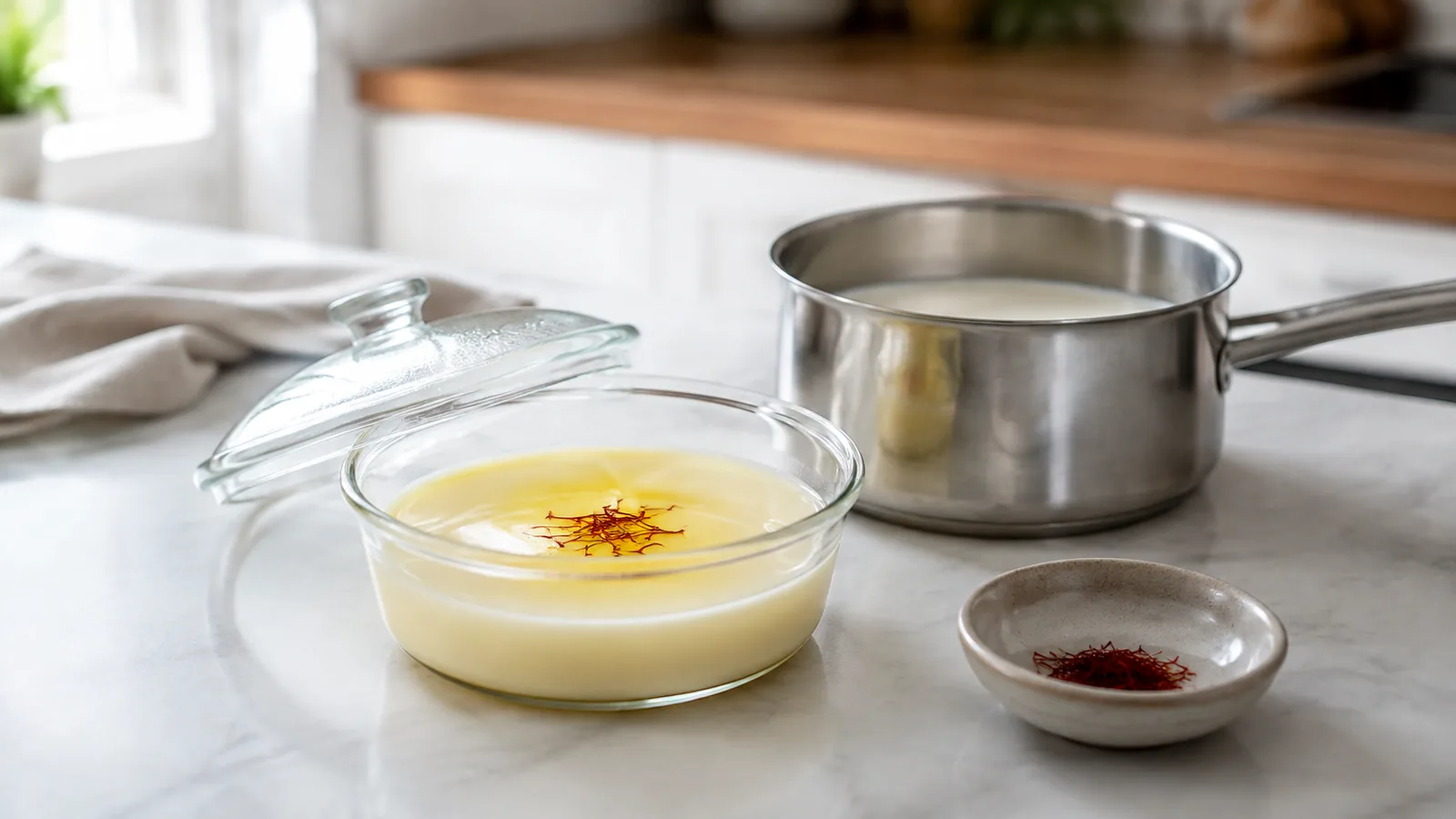
What happens during a saffron milk infusion?
Warm liquid draws saffron’s colour, aroma and flavour compounds out of the dried stigmas. The milk becomes pale gold and takes on the spice’s floral, earthy-sweet character. The threads soften, but they do not have to disappear.
People sometimes ask how much time saffron takes to dissolve in milk. Strictly speaking, the whole threads do not dissolve like sugar. Their soluble compounds move into the liquid, and the softened pieces can remain in the finished dish.
How to infuse saffron in milk
- Measure the saffron while the threads are whole.
- Crush them lightly with a clean mortar and pestle.
- Take a few spoonfuls of milk from the amount required by your recipe.
- Warm the milk without bringing it to a rolling boil.
- Add the saffron, cover and steep for 10 to 15 minutes.
- Stir the complete infusion into the dish, including the softened threads.
Using milk already included in the recipe prevents the infusion from changing the final consistency.
When should you leave it for 30 minutes?
A longer infusion is useful when the threads are left mostly whole, the saffron has been stored for some time, or the dish needs a concentrated golden accent. It is also convenient when you can prepare the infusion before starting the rest of the recipe.
More time cannot compensate for poor storage or an extremely small amount of saffron. If the milk has almost no colour or aroma after 30 minutes, review the dose and condition of the spice rather than simply waiting for hours.
How warm should the milk be?
The milk should be warm enough to encourage extraction but not furiously boiling. Prolonged high heat is unnecessary and may flatten the delicate aroma. If you are making a cooked custard or pudding, infuse first and then follow the recipe’s normal heating instructions.
Cold milk can also extract saffron, but it takes longer. Keep a cold dairy infusion refrigerated and allow sufficient time; do not leave milk on the counter for an extended steep.
How much saffron should go into a cup of milk?
Thread size and strength vary, so counting is less exact than weighing. A small pinch—often around 10 to 15 threads—can be enough for a cup in a lightly flavoured drink or dessert. A large batch may require more, while an assertive dish may use a more concentrated infusion.
Begin conservatively. Excess saffron can taste bitter, and adding more colour is not the same as improving flavour.
Why use a small amount of milk first?
A concentrated saffron milk infusion is easier to mix into sweet or savoury rice, dough, custard or cream than dry threads scattered through the full recipe. Light crushing exposes more surface and helps release colour and volatile aroma compounds, sometimes loosely described in recipes as essential oils. It also lets you see and smell the extraction before committing it to the dish.
If your infusion remains unexpectedly pale, our guide to why saffron may not turn milk yellow works through temperature, time, opacity, dose and storage.
Where saffron-infused milk works well
- Custards and puddings: add the infusion with the measured dairy.
- Ice cream: infuse in part of the warm base before chilling it.
- Rice dishes: drizzle concentrated saffron milk over selected layers or grains.
- Cakes and breads: count the infusion within the recipe’s liquid so the dough stays balanced.
- Warm drinks: stir well and taste before adding extra sweetener or spice.
Cardamom, vanilla, rosewater, citrus and nuts can complement saffron, but strong additions can easily mask it.
Milk or water?
Milk is a natural choice for dairy desserts and drinks. Water is more neutral, makes the developing colour easier to see and suits recipes where extra milk would be unwelcome. Neither is universally better; the recipe should decide.
Our comparison of soaking saffron in milk or water helps choose between them.
Storage and preparation details that matter
Use authentic, good-quality saffron and keep it in an airtight container away from light, heat and moisture. Crush only the amount you need. A clean mortar is important because traces of coffee or another spice can overwhelm the infusion.
Once made, use warm saffron milk promptly in the recipe or cool and refrigerate it as you would other prepared dairy. Discard it if it has been mishandled or shows signs of spoilage.
The practical timing guide
- 10 to 15 minutes: the dependable range for lightly crushed threads in warm milk.
- Up to 30 minutes: useful for a deeper infusion or mostly whole threads.
- Longer in cold milk: possible, but keep the mixture refrigerated.
The best result is not the darkest possible milk. It is an even saffron infusion whose colour, aroma and flavour suit the finished dish.