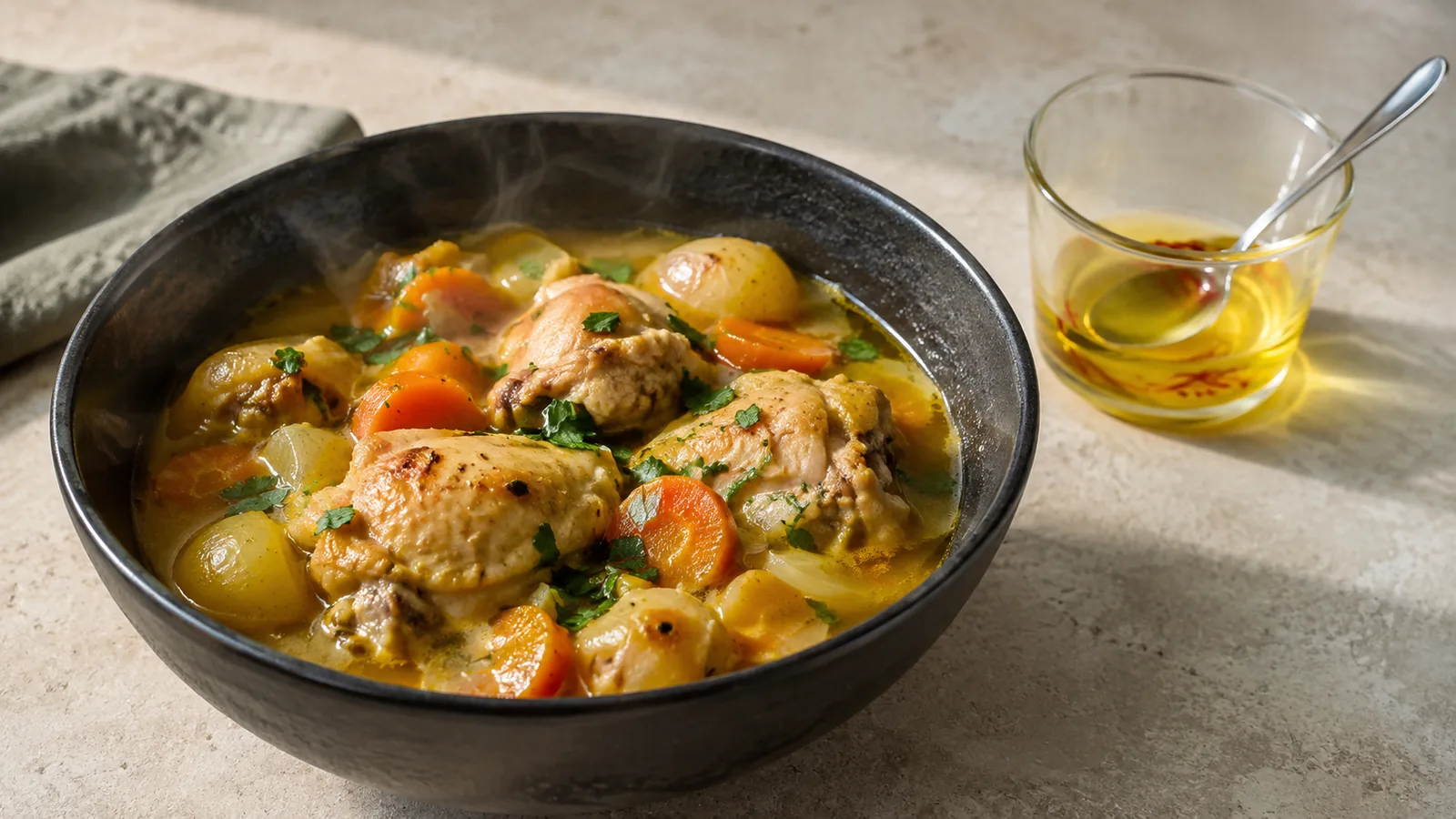
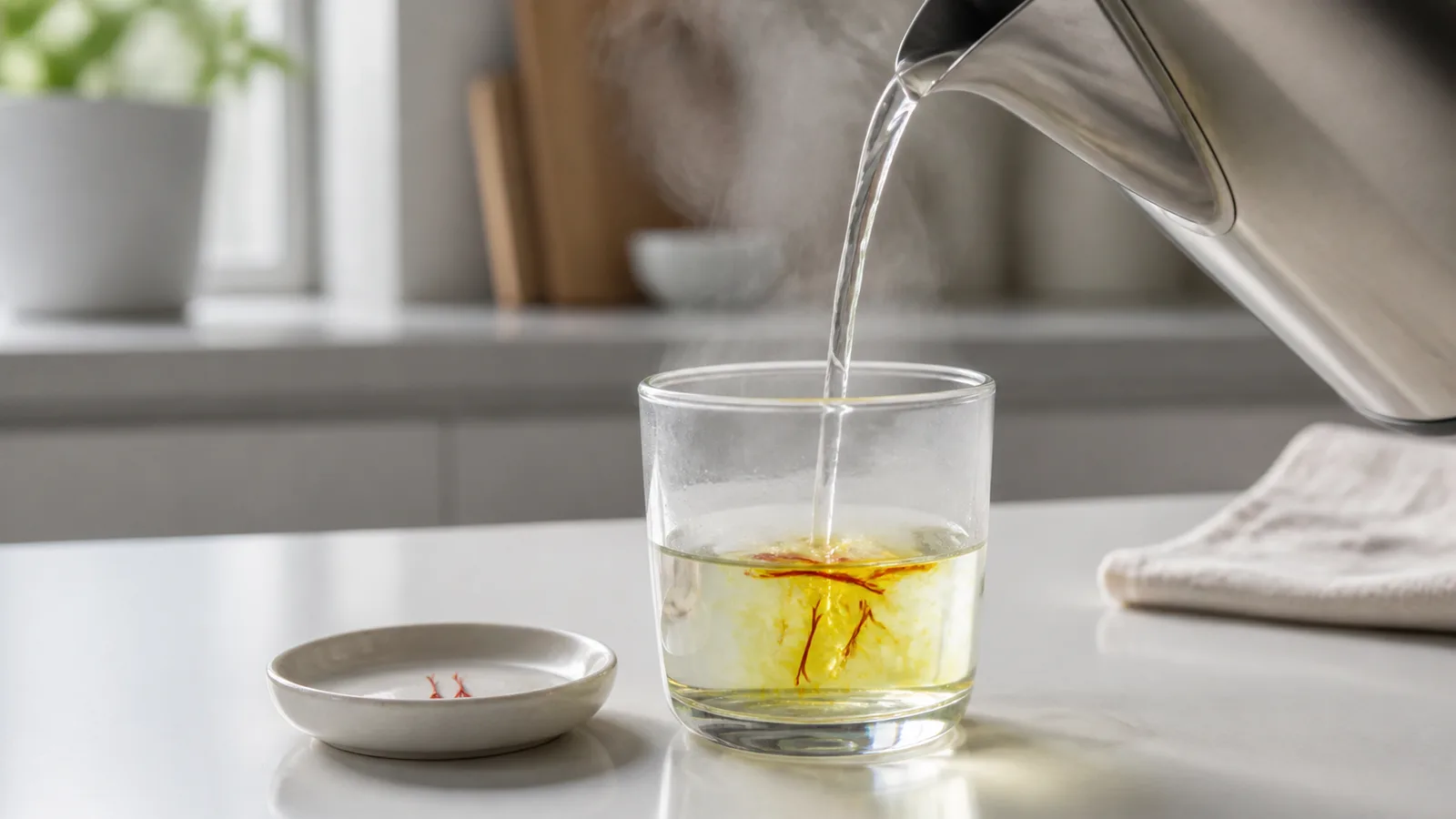
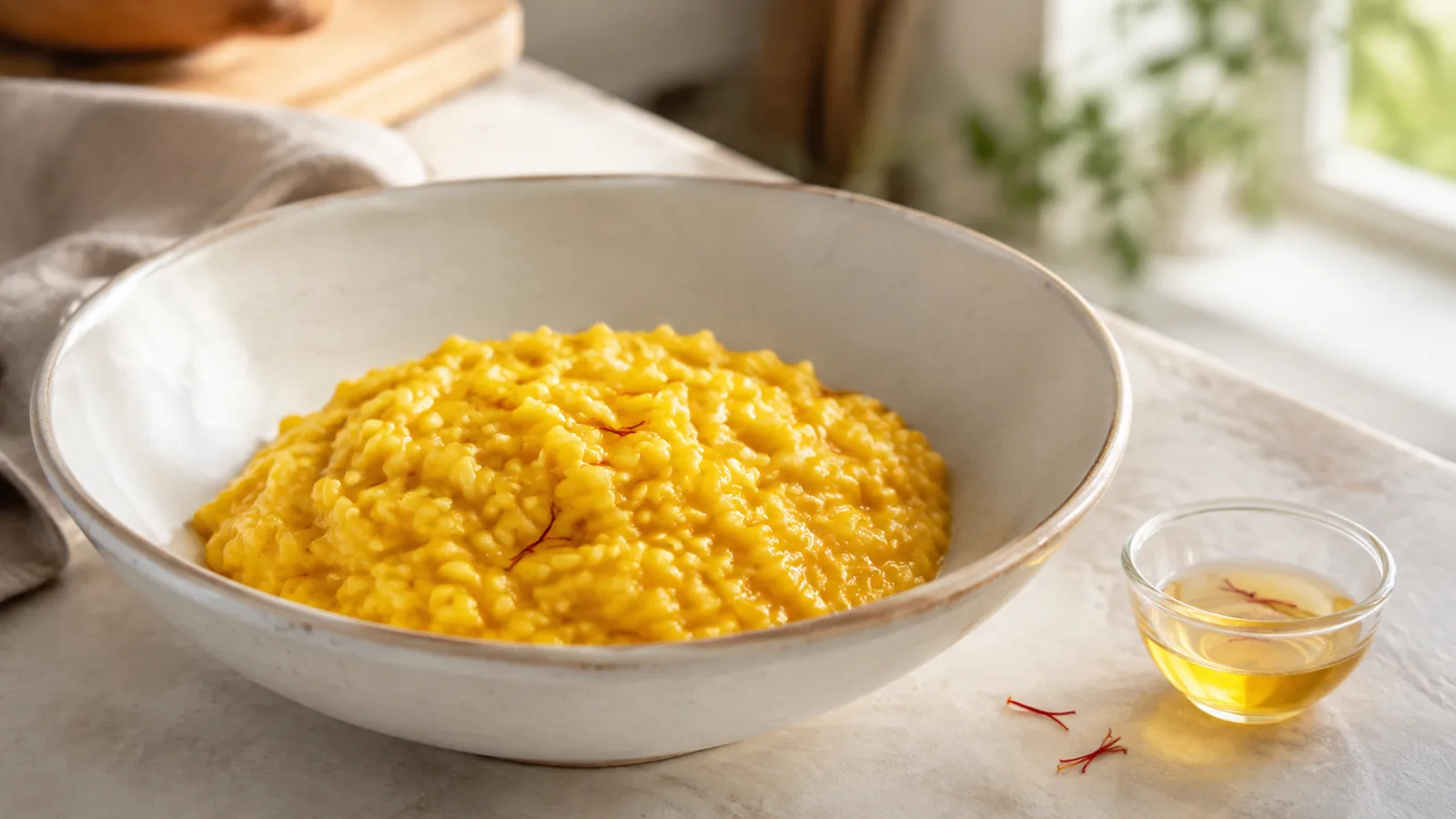
Yes, you can add saffron to boiling water, but do not keep the threads boiling for a long time. For better control, remove a small amount of water from the heat, let the vigorous bubbling settle, and steep lightly crushed saffron in it for 5 to 10 minutes before adding the complete infusion to your drink or dish.
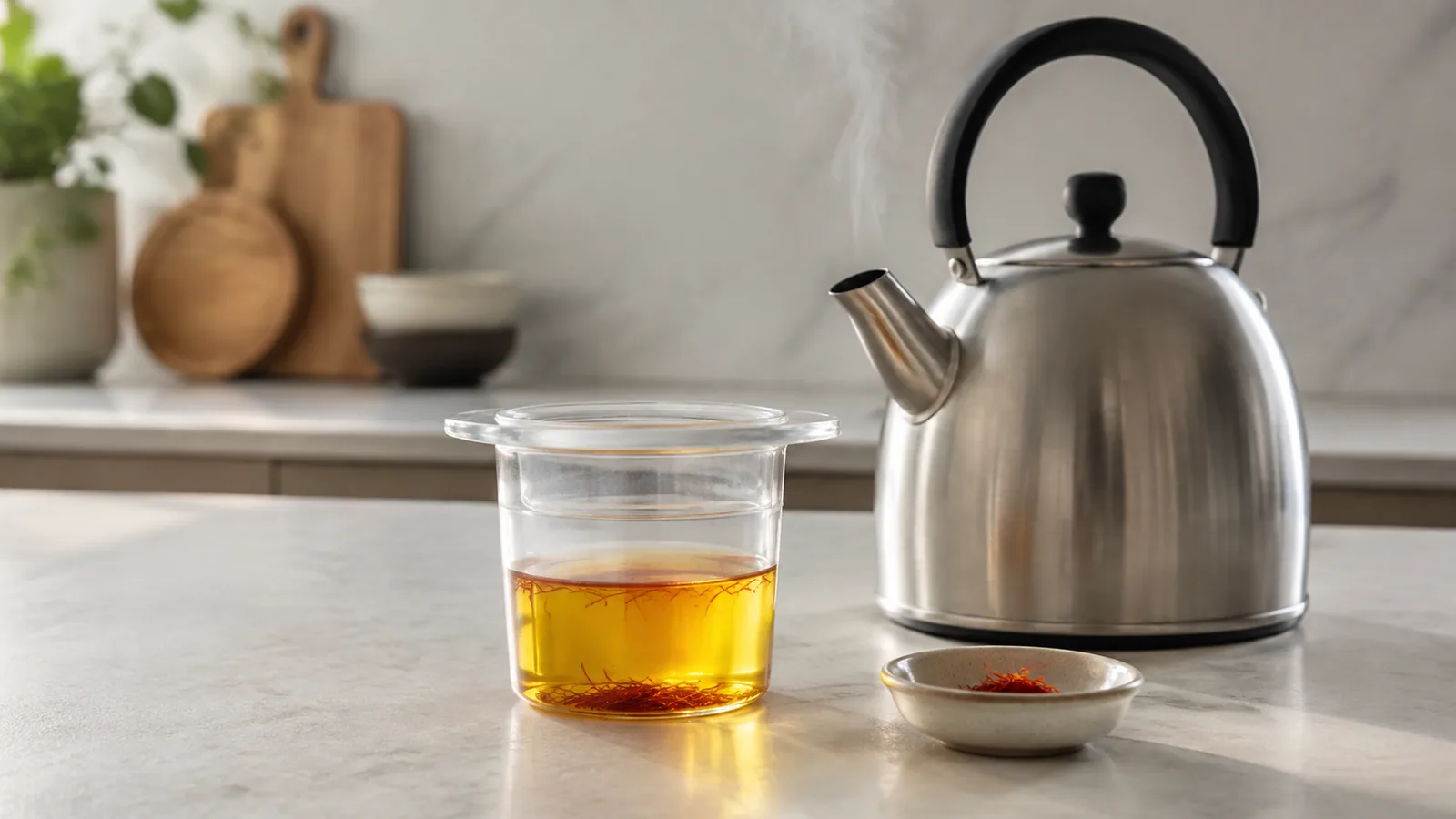
Why gentle heat gives you more control
Hot water helps saffron release the compounds responsible for its golden colour, floral aroma and distinctive flavour. A brief contact with water at the boil does not instantly destroy the spice. The concern is prolonged intense heat, especially in an uncovered pan where aroma can escape with the steam.
Blooming separately lets you see the colour develop, smell the infusion and spread it evenly. The bloomed saffron can then be introduced gradually into boiling liquids, while avoiding prolonged exposure to high heat. It is a practical technique, not an absolute rule.
How to make saffron water
- Measure the saffron while the threads are whole.
- Crush them lightly with a clean mortar and pestle.
- Place the pieces in a small heat-safe cup.
- Pour in a few spoonfuls of hot water after the strongest bubbling has stopped.
- Cover and steep for 5 to 10 minutes.
- Add both the golden liquid and softened threads to the recipe.
This produces a concentrated saffron infusion in water. For a stronger preparation, extend the covered steep rather than returning it to a rolling boil.
Can you put the threads straight into the pot?
You can. Rice, soup, sauce and tea all contain enough water to extract saffron while they cook. The disadvantage is that dry threads may gather in one area, and a long simmer can diminish the more delicate aroma before serving.
If adding saffron directly, crush it lightly, stir well and choose a point late enough to retain fragrance but early enough to distribute colour. Our guide to whether saffron should be boiled explains how that timing changes across dishes.
How hot should the water be?
Freshly boiled water is usable once it is off the heat. You do not need to measure an exact temperature for ordinary cooking. The useful distinction is between pouring hot water over saffron and continuously boiling the threads in an open pan.
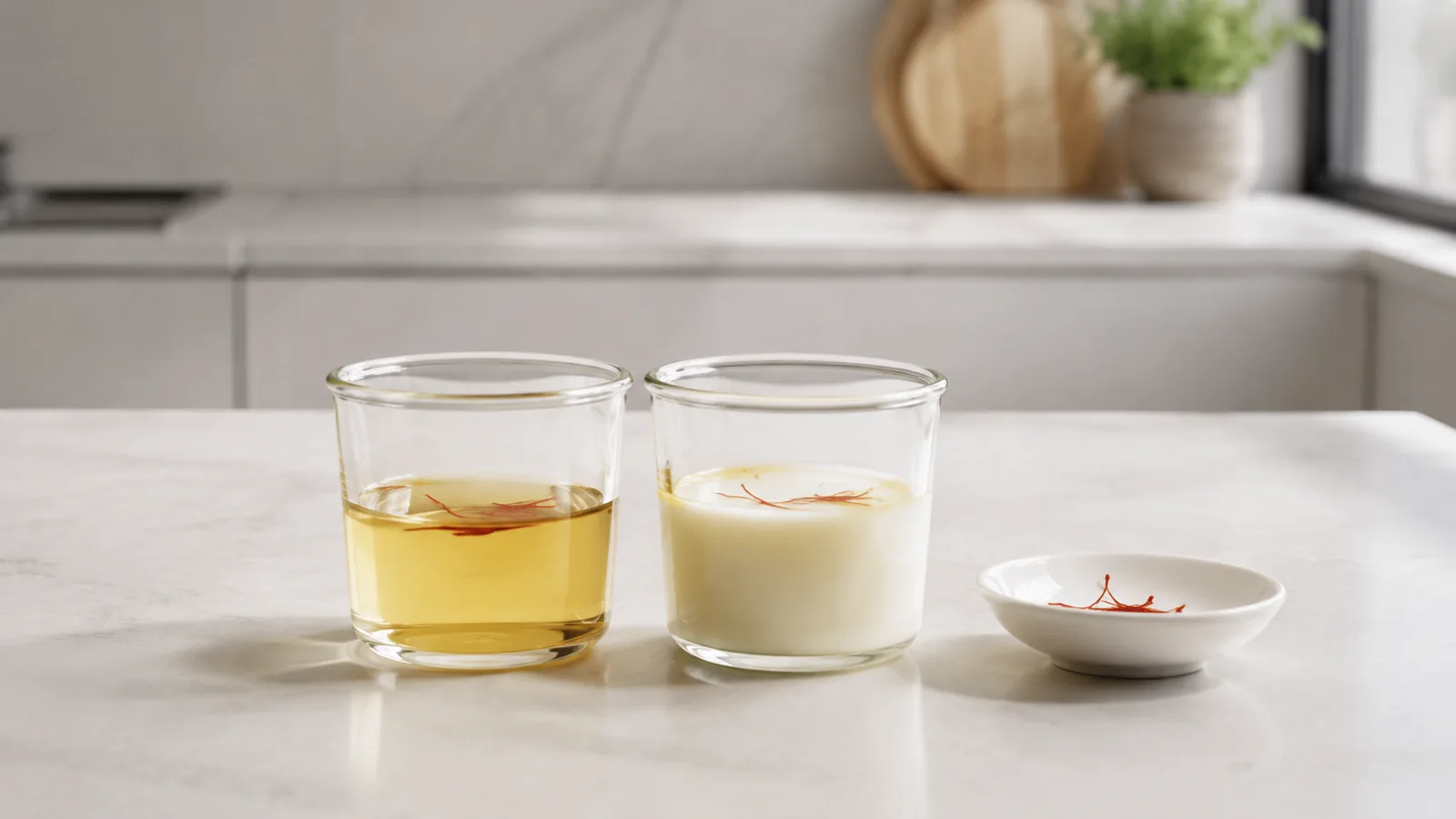
Warm water works too, although extraction may take longer. Cold-water methods are possible but require patience and offer no automatic quality advantage.
How much saffron should you use?
A small pinch is usually enough for a household infusion. Thread size and strength vary, so 10 to 15 threads per cup is only a starting point, not a universal dose. Follow the recipe when one is provided and scale by the total quantity of food or drink.
Too much saffron can taste bitter. A neon-yellow liquid is not the goal; genuine saffron normally develops a clear golden-yellow hue.
Using saffron water in food and drinks
- Tea: add the infusion to the cup or steep saffron directly after the kettle comes off the boil.
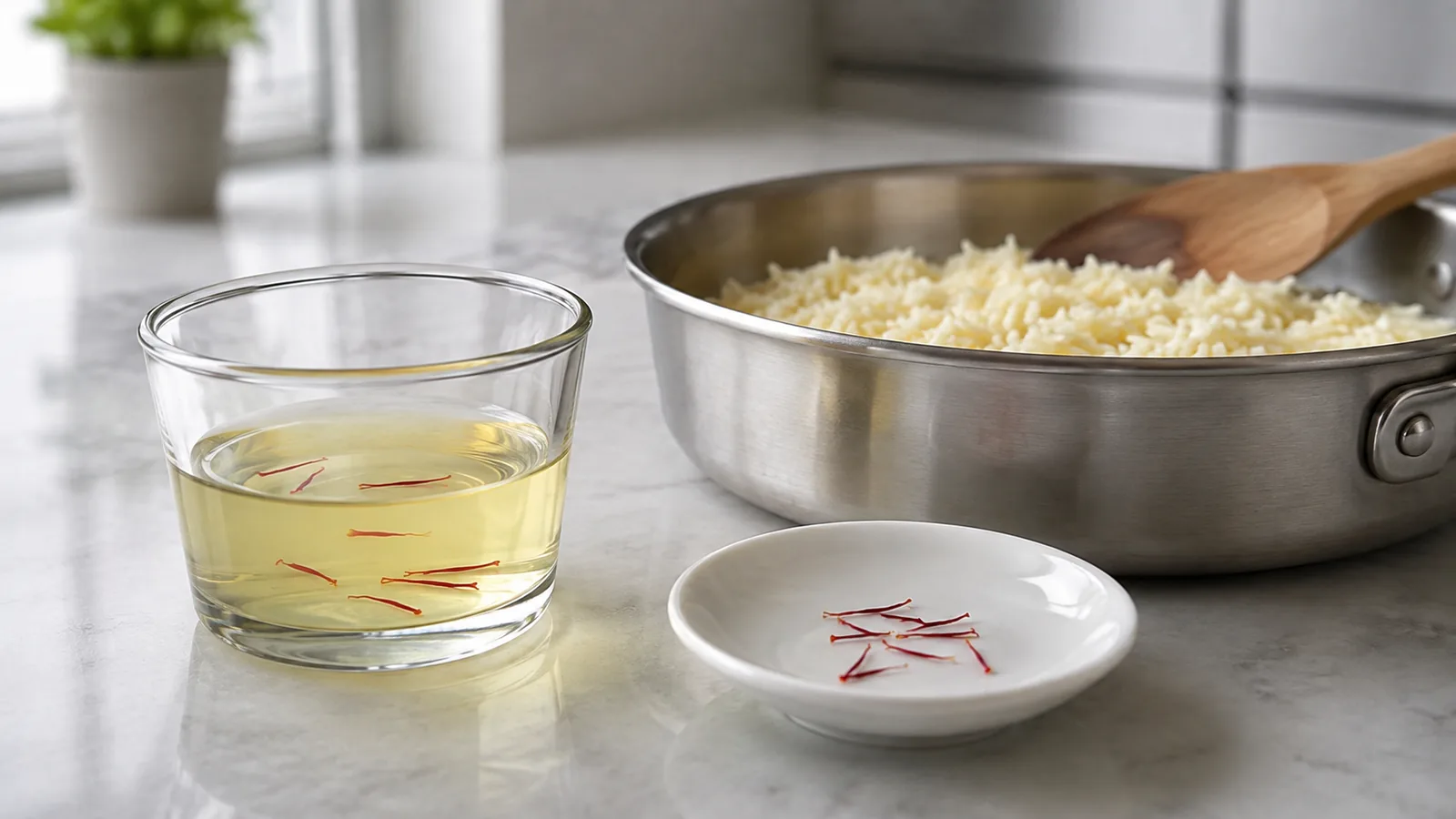
- Rice: mix it with cooking liquid or drizzle a concentrated portion over selected grains before final steaming.
- Soups and sauces: stir it in toward the later stages so the aroma is not cooked away.
- Desserts: count the infusion as part of the recipe’s liquid, especially in doughs and thick mixtures.
For alternative warm, cold and ice methods, see the best way to brew saffron.
Does boiling reduce the colour?
Colour is often more heat-tolerant than aroma, so a dish may remain golden even after its fragrance has become less vivid. Direct boiling can also make the result look muted when the saffron is old, under-dosed or dispersed through a large volume.
Use colour, aroma and taste together when judging the infusion. Photographs taken under warm lighting are not a reliable standard for your kitchen.
Quality and storage matter
Authentic, well-stored threads usually provide a clearer aroma and more dependable colour than old or damp saffron. Keep the spice airtight and away from heat, light and moisture. Crush only what you need.
Prepared saffron water is best used promptly. If you make it ahead, cool it in a clean covered container, refrigerate it and use it within the normal safe storage window for the other ingredients in the recipe.
Common mistakes to avoid
- Boiling the threads uncovered for the full cooking time.
- Using a large volume of water for a tiny pinch, then expecting a concentrated colour.
- Grinding in a mortar contaminated with coffee or other spices.
- Discarding the softened threads when they could go into the dish.
- Adding more and more saffron to compensate for poor storage.
Adding saffron to water works best when the heat serves the extraction rather than dominating it: use freshly boiled water off the heat, cover the infusion, wait 5 to 10 minutes and add it at a sensible stage of cooking.