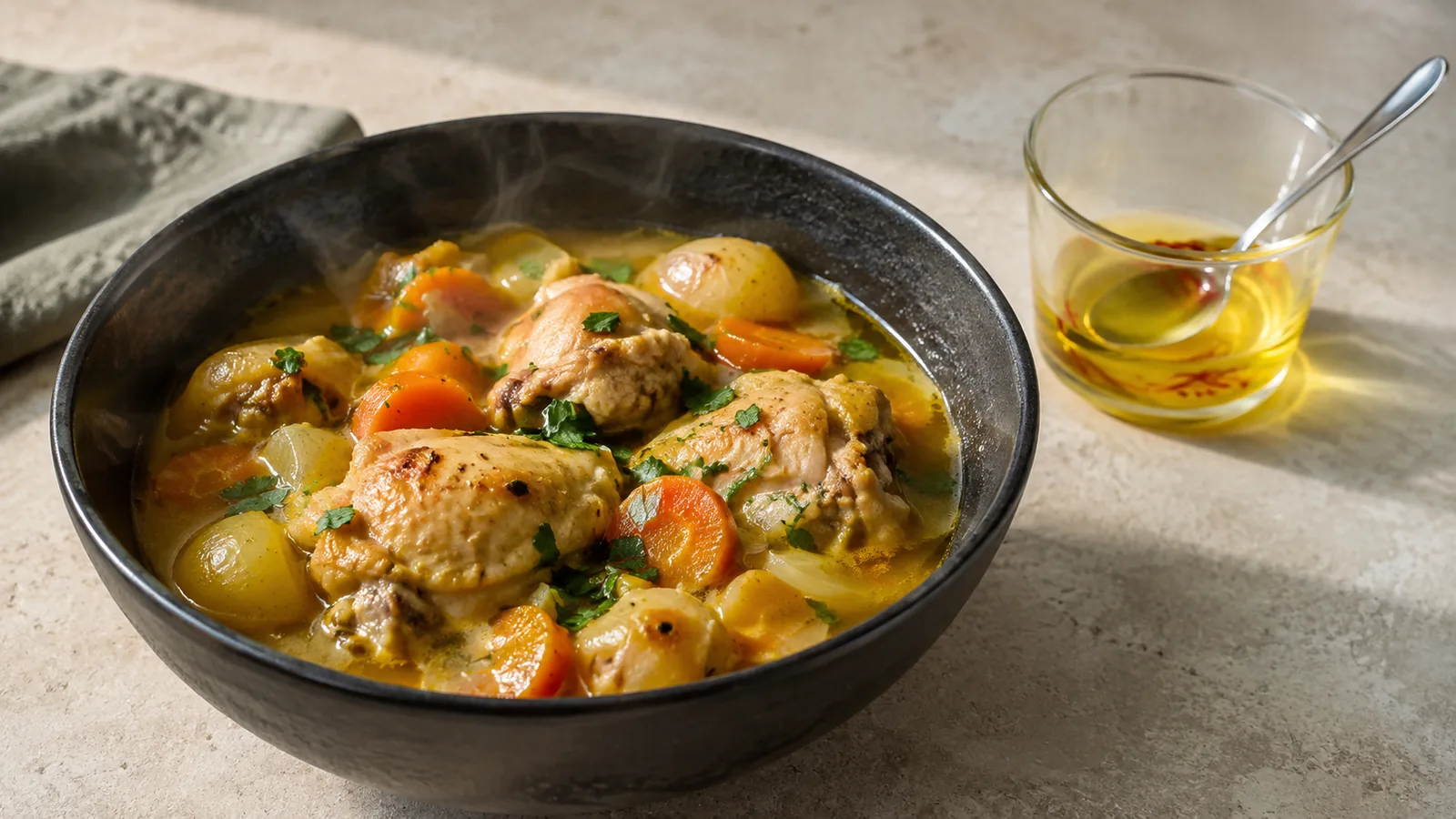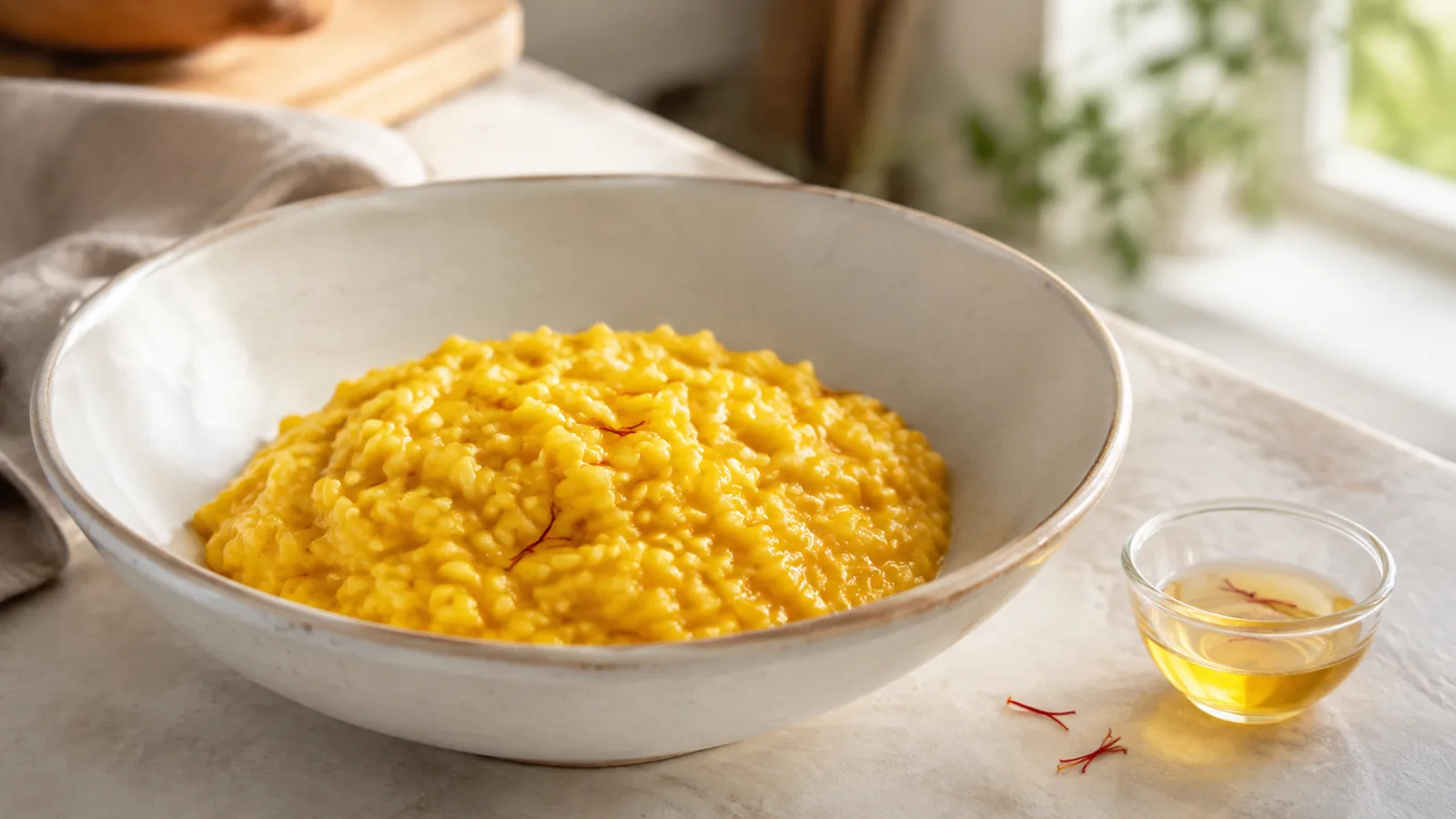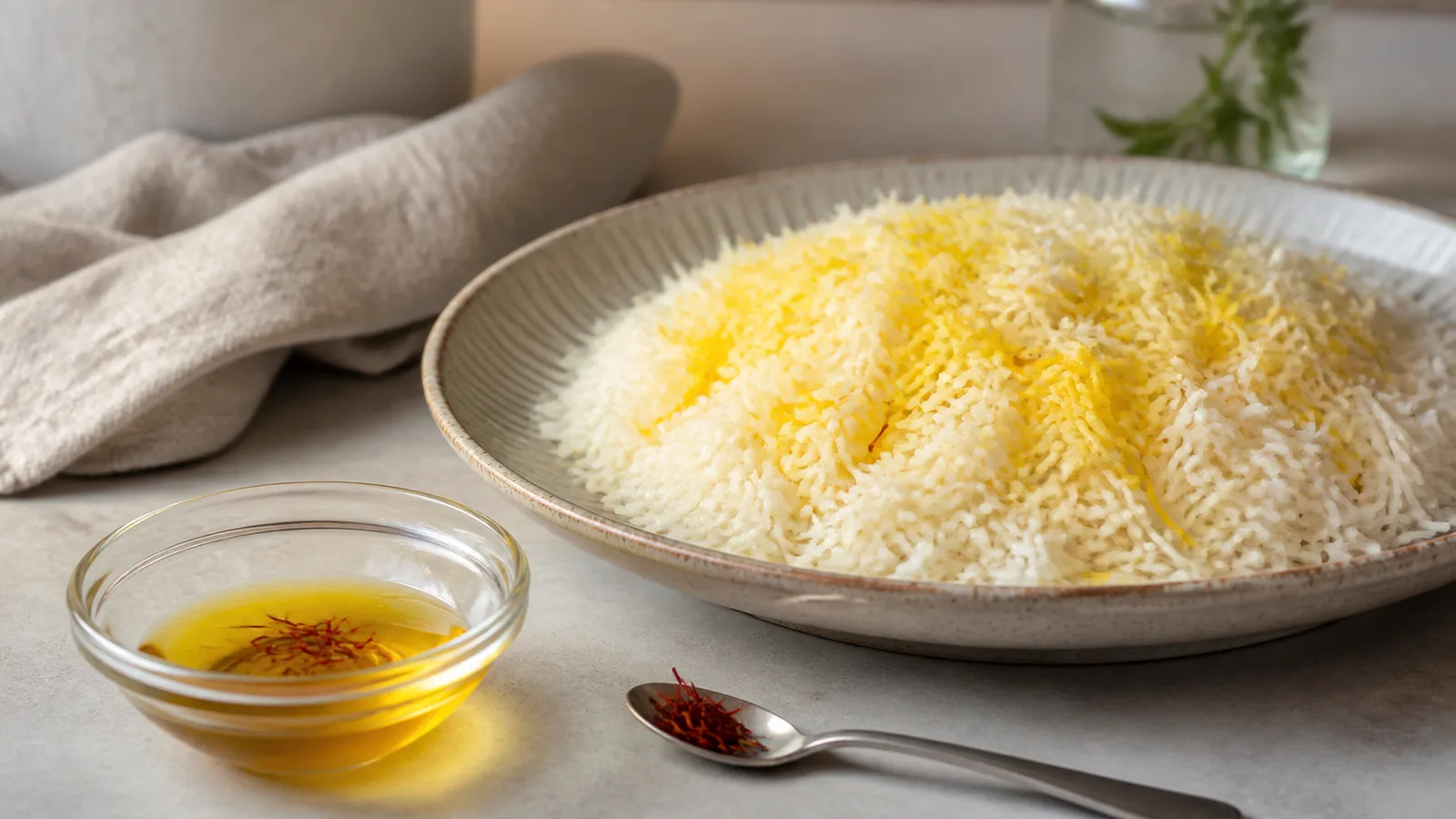
For most home-cooked rice, a useful saffron rice dosage is about 10–15 threads per cup of uncooked rice. That gives a gentle golden colour and a clear aroma without making saffron the only flavour in the bowl. Use a little more for a richer Persian-style crust or celebration dish, and a little less when saffron shares the dish with strong spices.
The number is a starting point, not a rule carved in stone. Threads differ in size and strength, while a “pinch” can mean very different things from one cook to another. If you are deciding how much saffron for rice, blooming it first is what makes a modest quantity work evenly.
How much saffron to use in rice
For a pot made with one cup of uncooked rice, start with 10–15 whole threads. For two cups, use roughly 20–30. This is the practical answer to “how much saffron per cup of rice?” and a small pinch is usually enough for four to six side-dish servings, depending on how prominently you want the saffron to taste.
Those amounts suit plain steamed rice and a restrained pilaf. Biryani contains many other aromatics, so the saffron is often used in selected layers rather than throughout the entire pot. In tahdig or another rice dish where saffron should be unmistakable, you can increase the quantity gradually after tasting the blooming liquid. So, when someone asks how much saffron to use for rice—or simply how much saffron to put in rice—the style of the finished dish matters as much as the number of cups.
Measure the rice before adjusting the saffron
Base the amount on uncooked rice, because cooked volume changes with the variety and method. If you are making rice for the first time, resist the temptation to add a large handful for stronger colour. Too little saffron produces a faint colour and aroma, but too much can make the dish bitter and needlessly expensive.
Thread counts are more useful than a vague pinch, although they are still approximate. A few long, thick threads can weigh more than the same number of short ones. For repeatable results, note the rice quantity, the saffron used and whether the finished flavour felt light, balanced or strong. The next pot is then easy to fine-tune.
How to make saffron rice with even colour and flavour
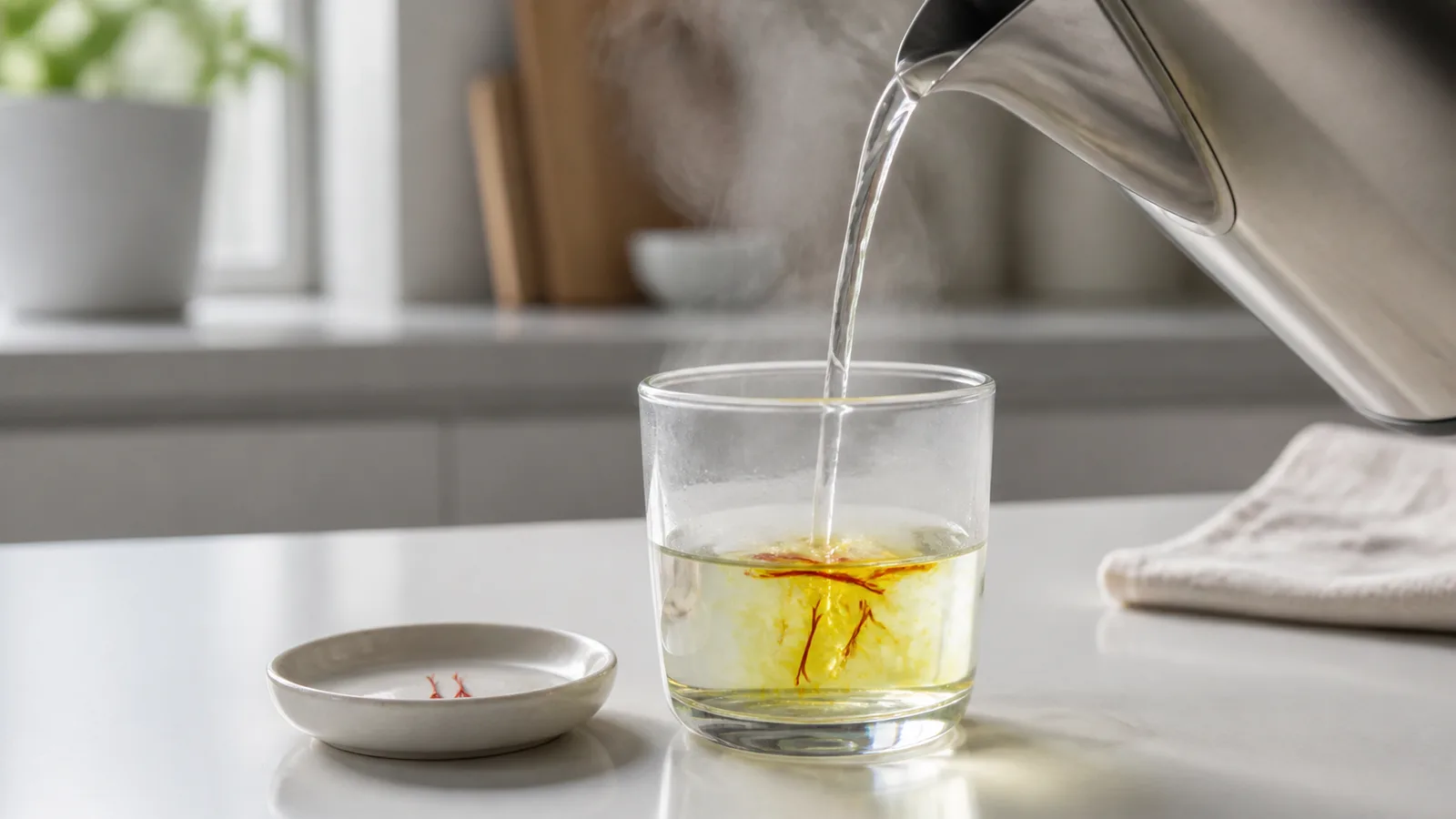
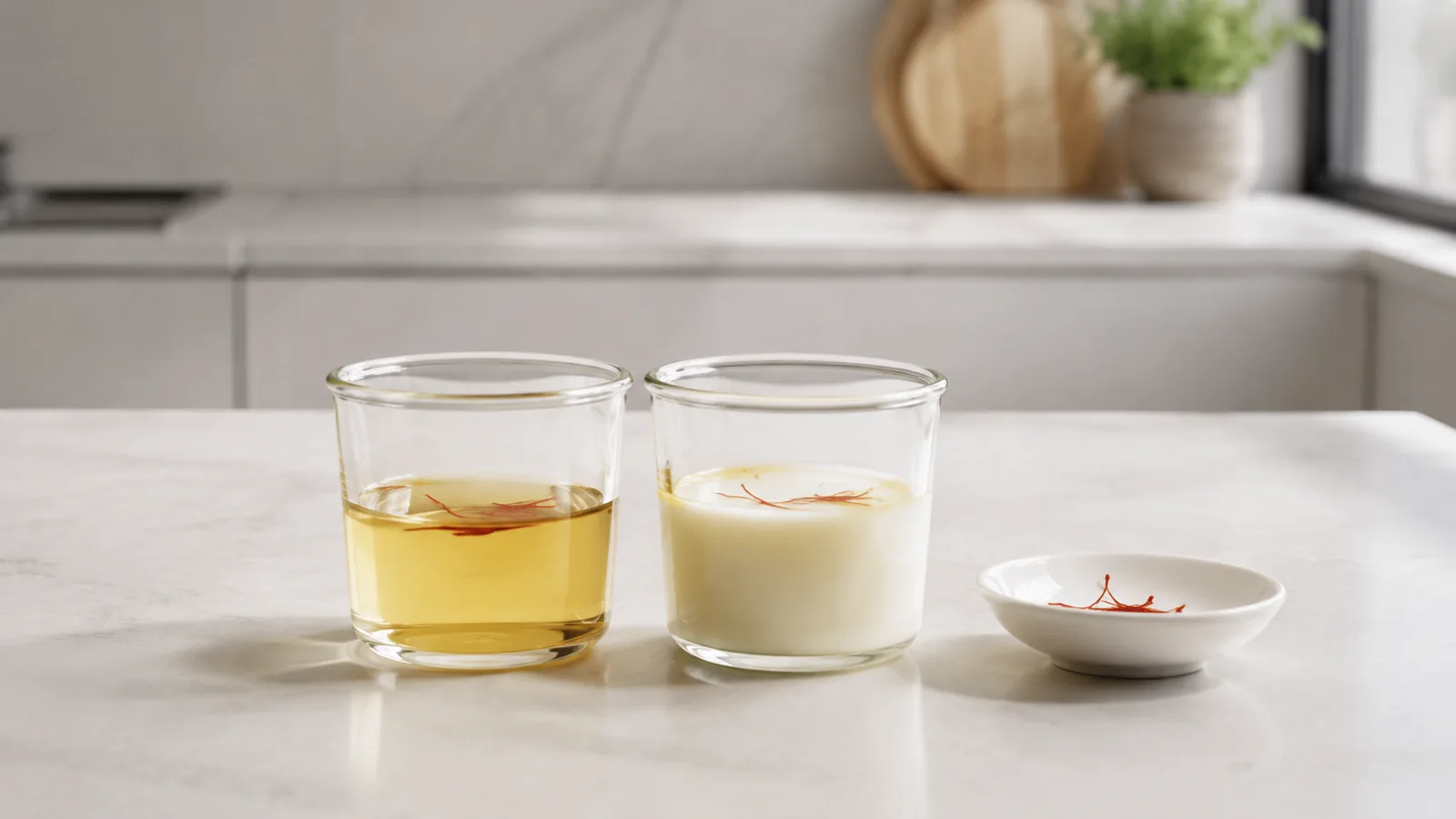
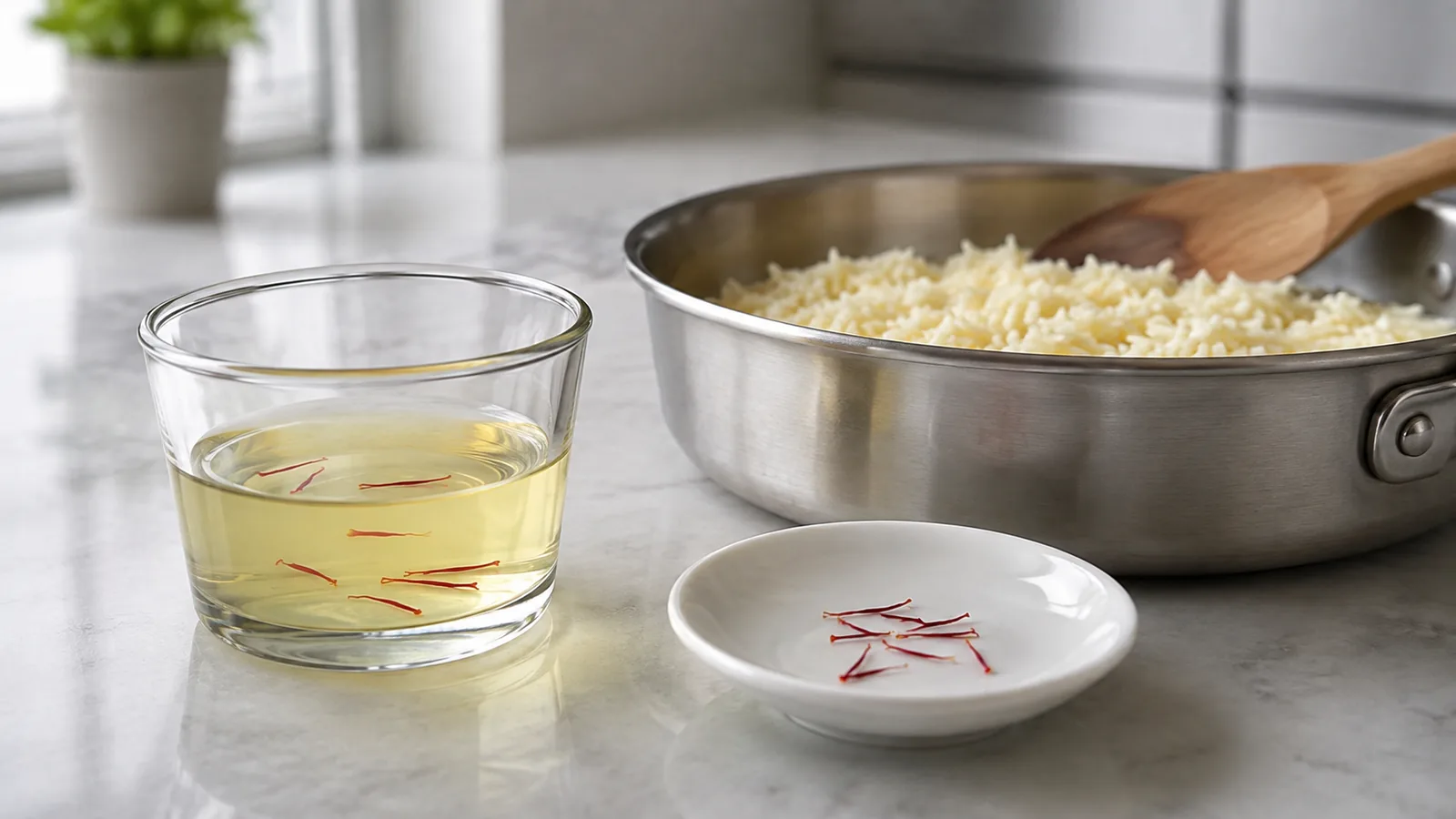
Lightly crush the threads between clean fingers or with a small mortar. They do not need to become a fine powder. Put them in a cup and add two or three tablespoons of warm water, milk or unsalted broth. Leave the mixture for 10–15 minutes, until the liquid becomes fragrant and golden.
This step helps distribute the saffron through the rice instead of leaving isolated red threads and pale patches. Crocin supplies much of saffron’s colour, while safranal contributes strongly to its aroma. Warm liquid releases both more evenly than dropping dry threads directly onto hot rice.
When to add the blooming liquid
For absorption-method rice, stir the infused liquid into the measured cooking liquid before the rice finishes. For steamed Persian rice, mix it with a small portion of cooked rice, then spoon that bright rice over the finished platter. In biryani, drizzle it across selected layers so the dish keeps attractive streaks of white, gold and spice-coloured rice.
Avoid vigorous, prolonged boiling after adding saffron. Normal rice cooking will not ruin it, but extended high heat can flatten its delicate floral aroma. Gentle heat and even distribution give a cleaner result.
Adjust the dosage to the style of rice
Plain steamed rice
Use the lower end of the range when saffron is an accent. Ten threads per cup of rice can be enough if the spice is fresh, fragrant and properly bloomed.
Pilaf and biryani
Start with 10–15 threads per cup, then consider a modest increase when the recipe contains onions, stock, dried fruit or assertive spices. Add the saffron separately from salty stock at first, so you can judge its colour and aroma clearly.
Persian saffron rice and tahdig
Use the blooming liquid to colour only part of the rice if you want a vivid contrast. This gives a stronger visual effect without loading the entire pot with saffron. The same infused liquid can flavour the rice used for the crust, provided the recipe’s fat and heat are controlled.
Small choices that improve saffron rice
- Choose whole threads rather than an anonymous powder, which is harder to assess and easier to adulterate.
- Crush lightly just before blooming; pre-ground saffron loses aroma faster.
- Use warm, not aggressively boiling, liquid for the infusion.
- Keep the blooming cup covered while it stands to retain aroma.
- Add more only after smelling and tasting the infusion. Colour alone does not tell you how the finished rice will taste.
Good rice does not need to be uniformly orange. A soft golden tone, a floral aroma and a clean finish are better guides than maximum colour. If the question is how much saffron for saffron rice with a balanced taste, starting with 10–15 threads per cup, blooming them for 10–15 minutes and adjusting from one batch to the next gives reliable control.
If you need whole threads for rice, the Rowhani Saffron products page shows the available formats. Whatever product you use, measure modestly and let preparation—not excess—do the work.