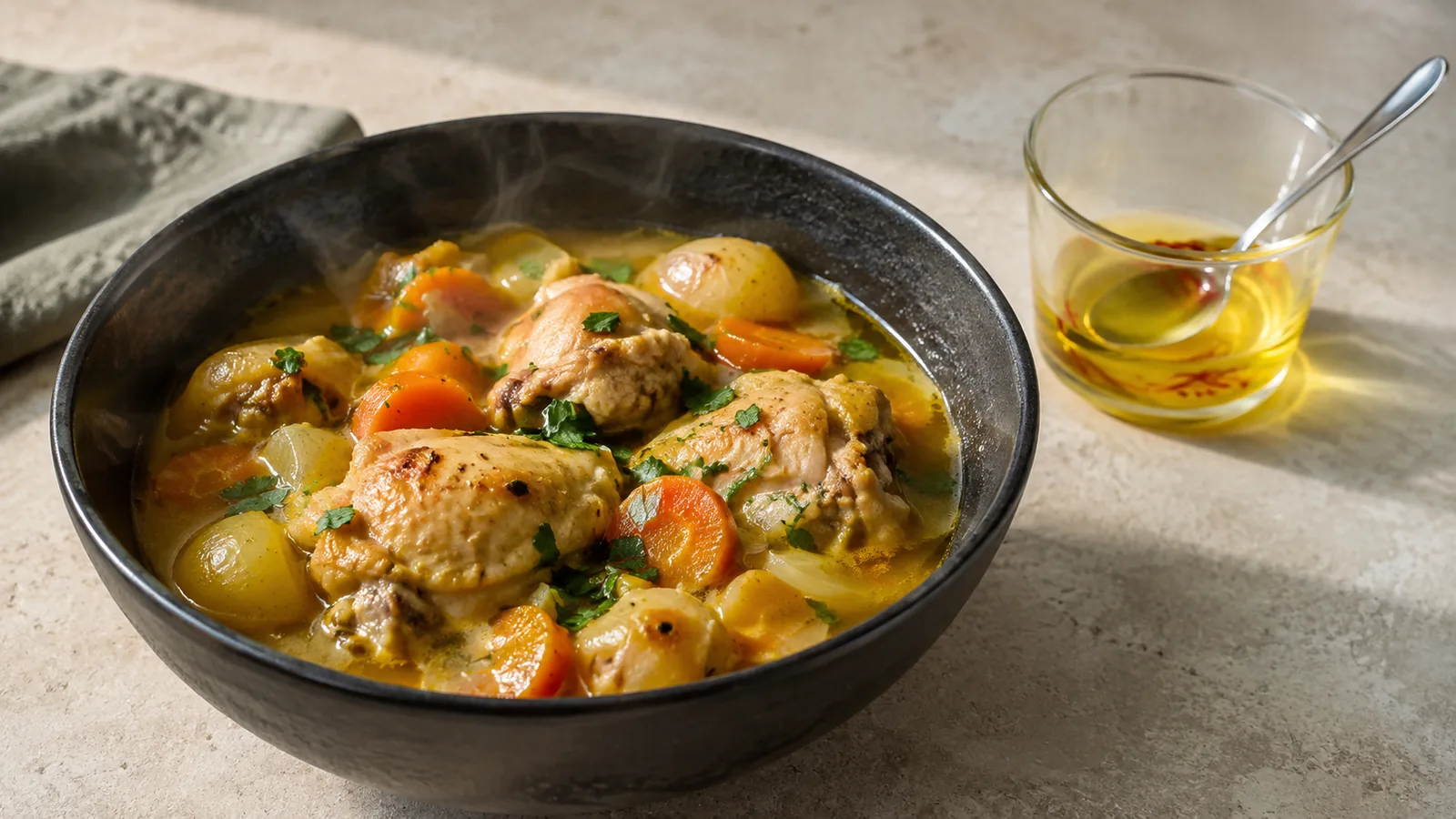
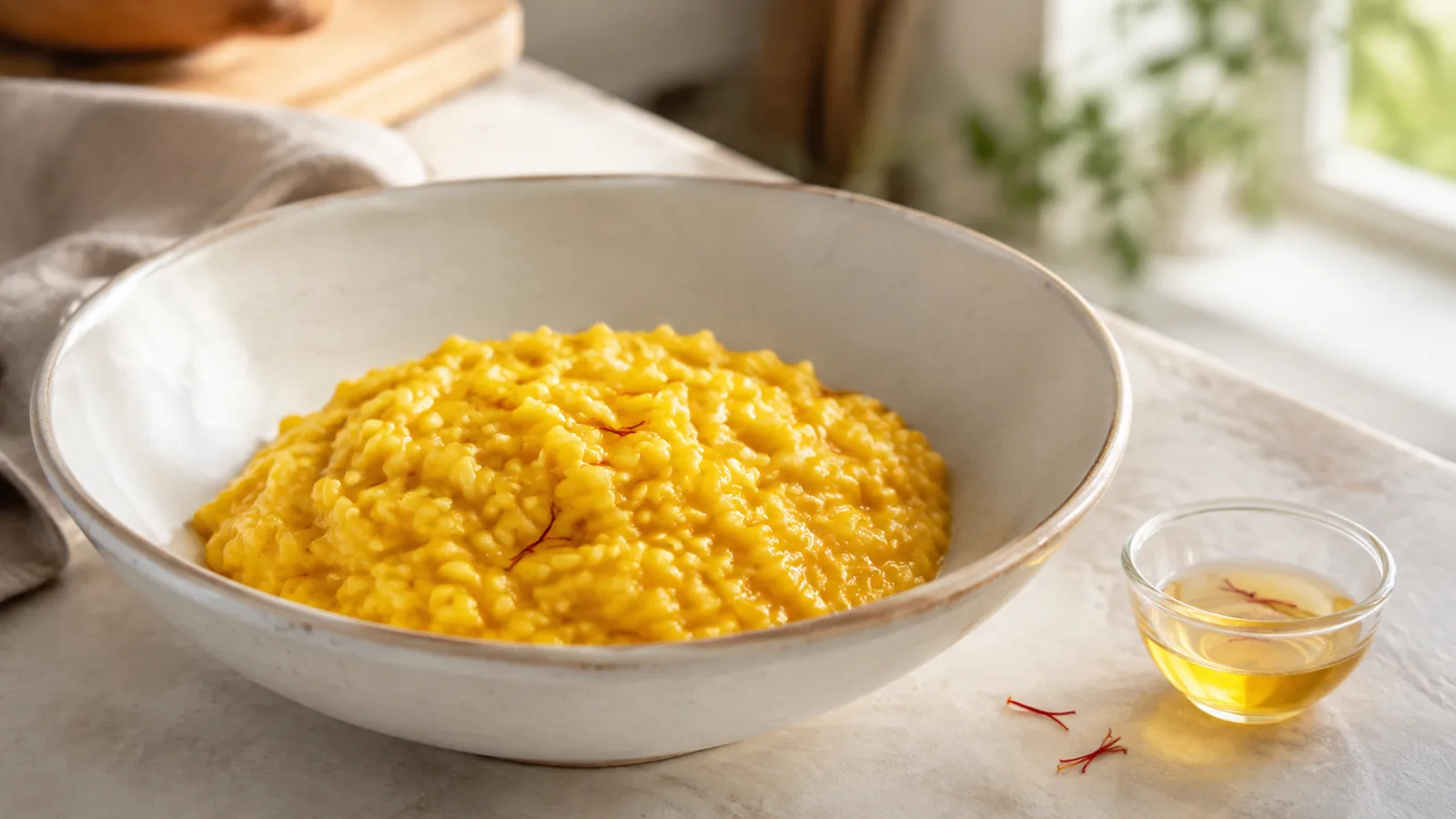
You can cook saffron into rice, seafood, chicken, lamb, soups, sauces, vegetables, breads, desserts and drinks. It is especially good in dishes with enough moisture to carry its colour and aroma, and with flavours gentle enough to let the spice remain noticeable.
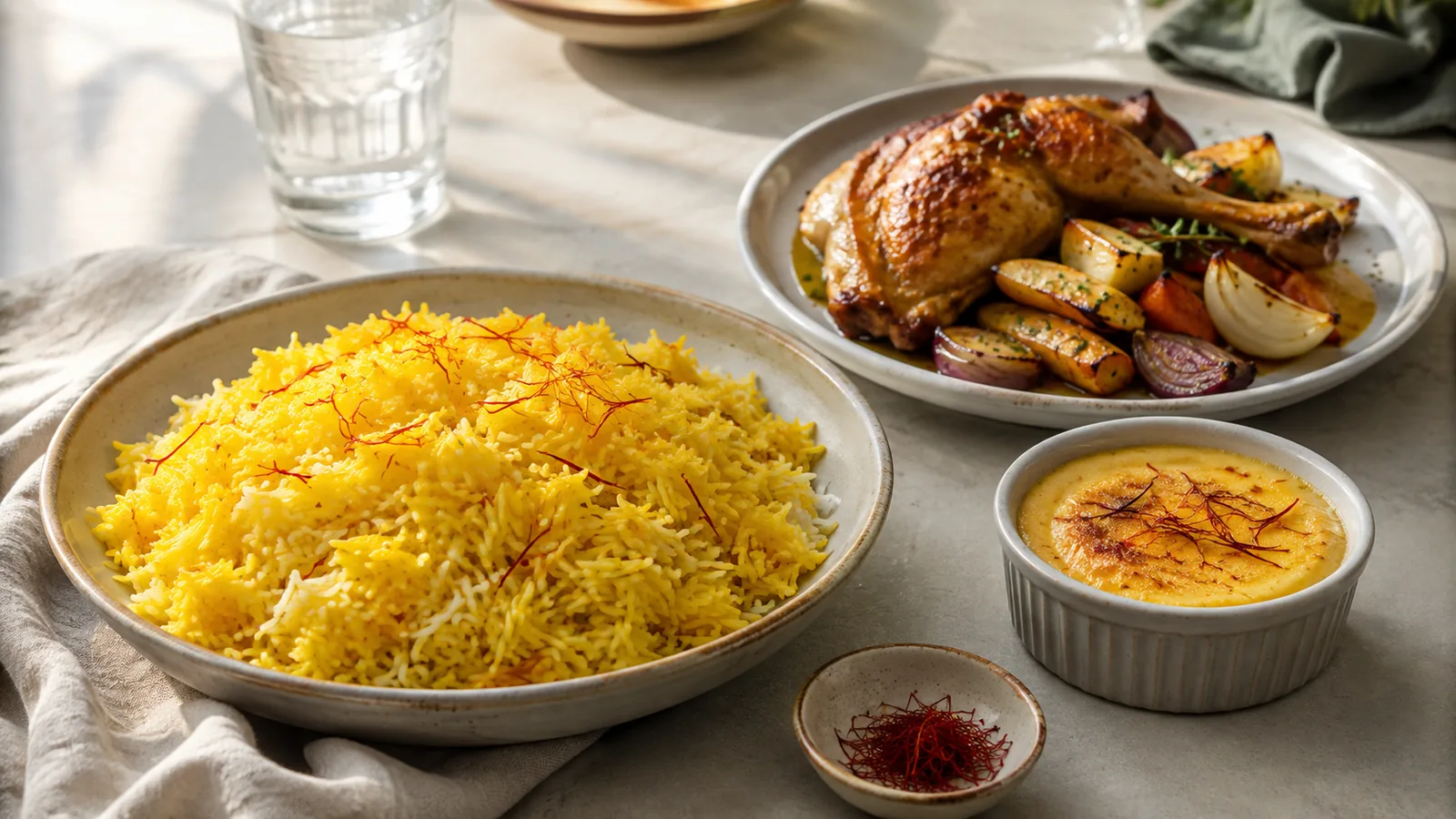
Good dishes to make with saffron
If you are wondering what to cook with saffron, start with a dish where the spice has a clear job rather than adding it to everything. Common dishes using saffron include: These are dependable choices:
- paella, biryani, Persian rice, pilaf and risotto;
- seafood stew, fish soup and shellfish broth;
- chicken, lamb and vegetable stews;
- cream sauces and light tomato sauces;
- potatoes, carrots, squash and cauliflower;
- custard, rice pudding, ice cream and cake;
- tea, warm milk, lemonade, simple syrups and other beverages.
That range is why lists of saffron dishes span many cuisines. The preparation changes, but the spice’s golden colour and floral, honeyed, earthy flavour remain the connecting thread.
How to cook with saffron threads
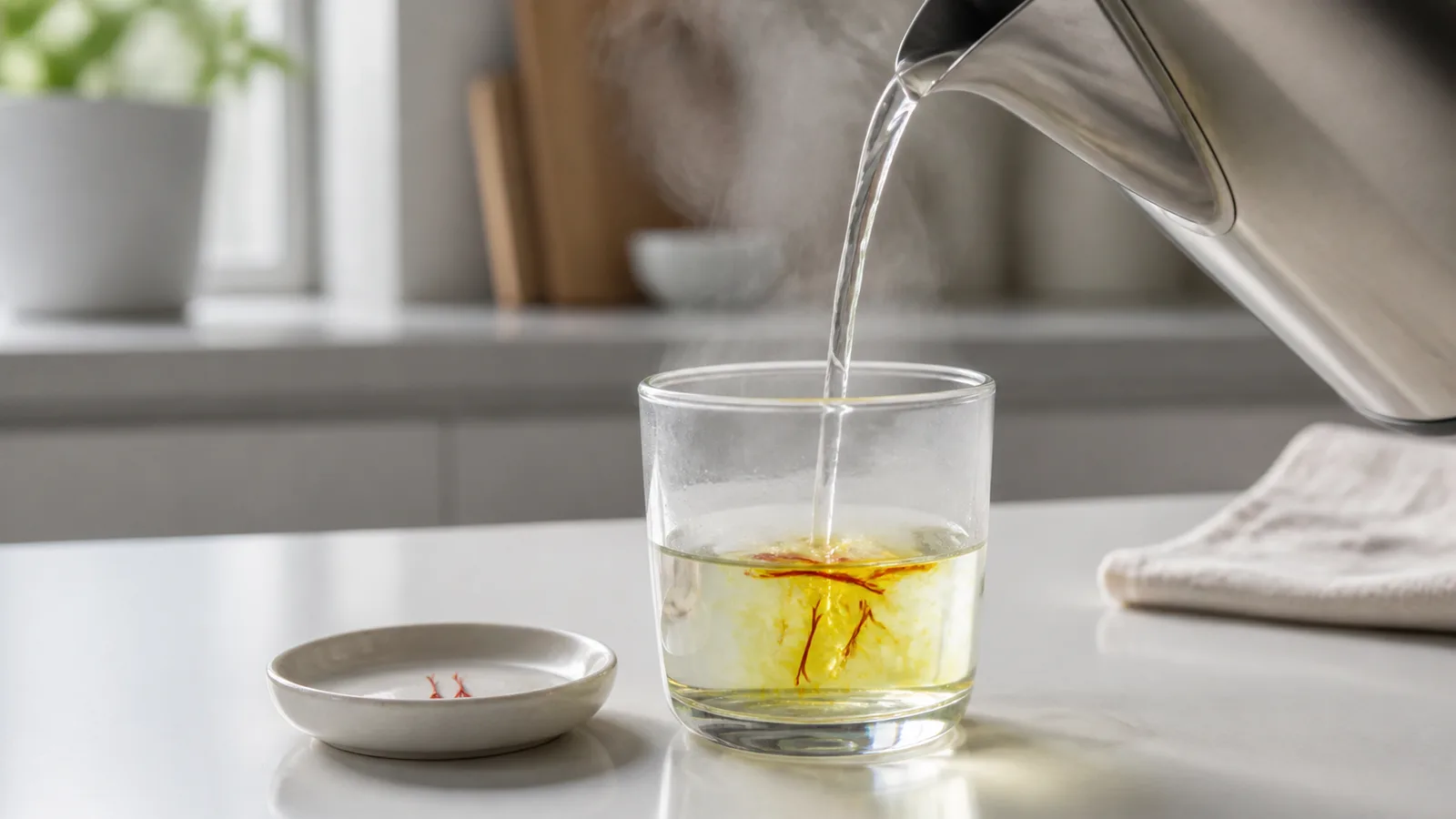
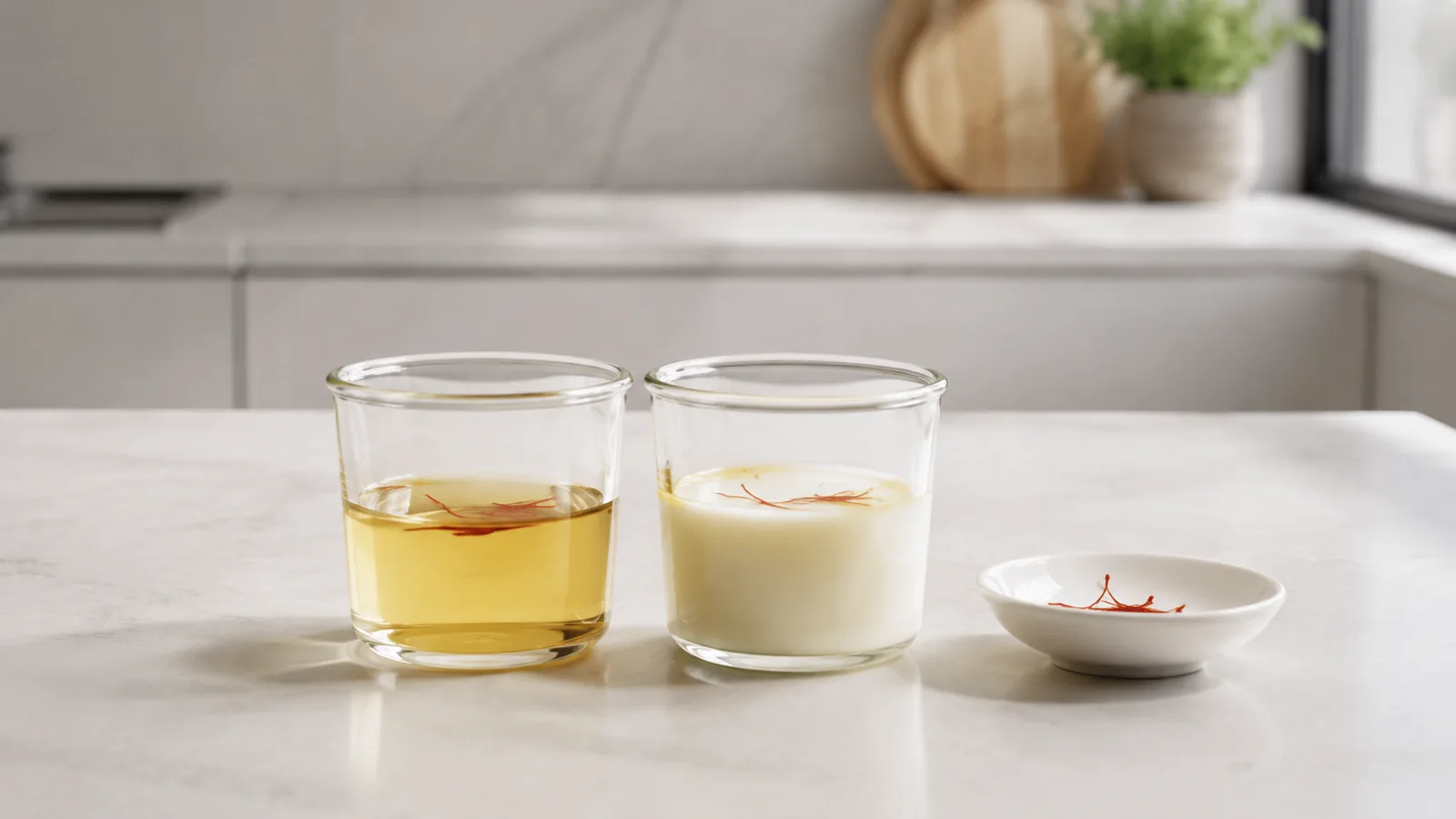
Cooking with saffron threads usually begins by measuring them, crushing them lightly and steeping them in a small amount of warm water, milk or broth for 10 to 15 minutes. Add the entire infusion, including the softened pieces, at a stage that allows even distribution without prolonged uncovered boiling.
This simple bloom is useful when learning how to use saffron in cooking because it prevents an expensive pinch from sitting in one corner of the pan. Our full guide to using saffron in cooking explains the technique in more detail.
Rice dishes
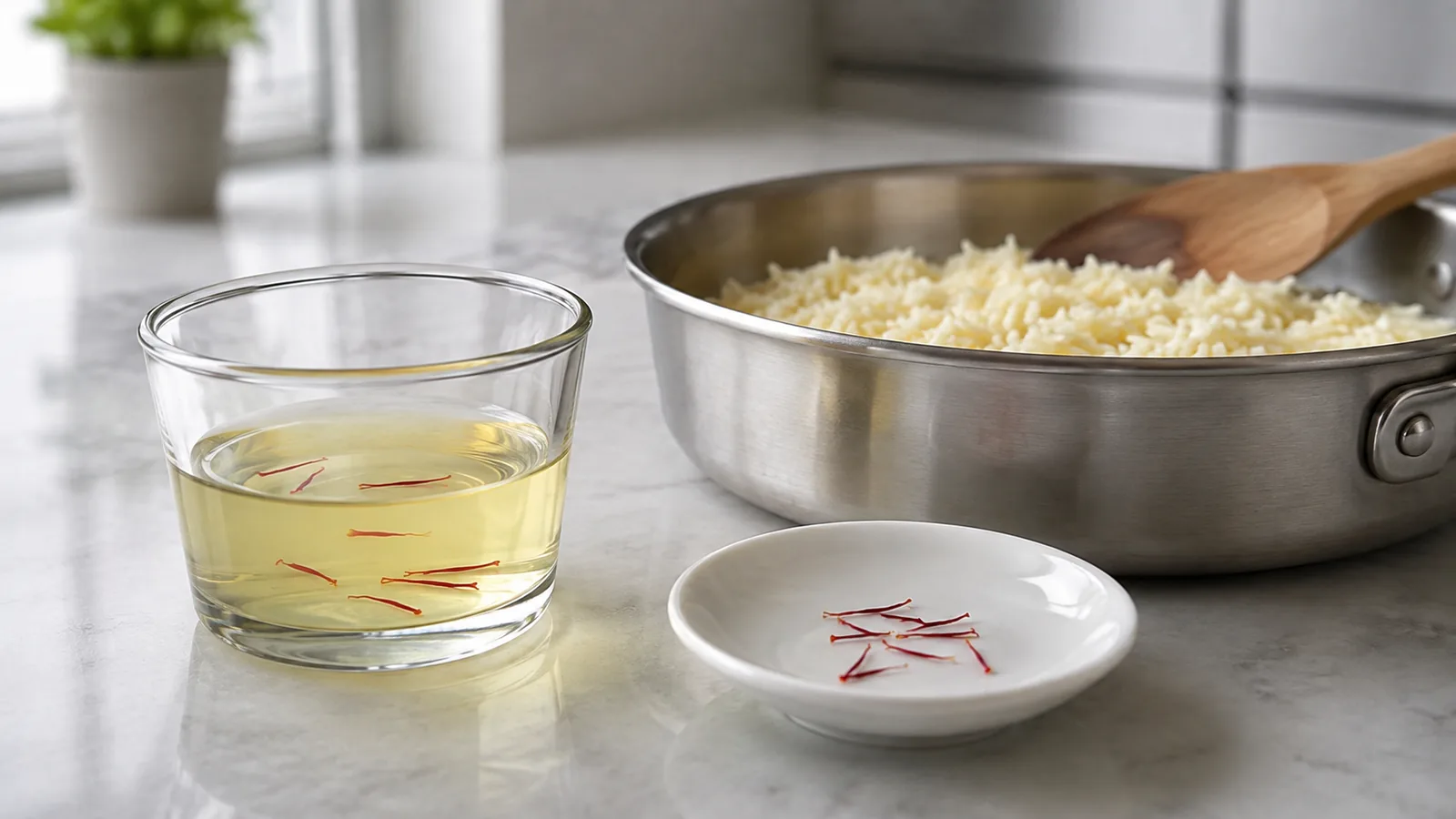
Rice is one of the best answers to “what do you put saffron in?” The grains show the colour clearly and absorb the infusion evenly.
In paella and risotto, saffron usually enters through the stock. Biryani may use saffron milk drizzled between layers. Persian rice often uses a concentrated saffron infusion on a portion of the cooked grains, creating a golden top layer or garnish.
Pilaf can be simpler: add bloomed saffron to the cooking liquid, then leave the lid closed while the rice finishes.
Seafood, chicken and lamb
Saffron has enough character for seafood without covering its natural sweetness. It works in fish soup, mussel broth, prawn rice and sauces for white fish. Garlic, fennel, tomato and citrus can support it when used with restraint.
Chicken takes saffron well in marinades, braises, rice dishes and cream sauces. Lamb benefits from a measured amount in a slow-cooked stew or pilaf. Bloom the threads first, then add the liquid to the marinade or cooking pot.
Soups, stews and sauces
A saffron broth can give vegetable soup, chicken soup or seafood stew a warm aromatic base. Add the infusion after the main ingredients have begun cooking so it has time to spread, but avoid boiling away its aroma for hours.
For sauces, saffron works particularly well with cream, butter, light stock and gentle tomato. Reduce the base first if it needs a long cook, then add saffron during the later stages.
Vegetables
Potatoes, carrots, squash, cauliflower, fennel, leeks and spinach are useful partners. Saffron can enter through a braising liquid, a light cream sauce or a dressing added to warm vegetables.
Roasted vegetables are dry, so mix the saffron infusion into oil, yogurt or a finishing sauce instead of scattering dry threads across the tray.
Desserts and baking
Saffron suits custards, puddings, ice cream, cakes, cookies and enriched breads. Infuse it in warm milk or cream when the recipe contains dairy. For doughs with little liquid, use a concentrated infusion and count it within the recipe’s measured moisture.
Cardamom, rosewater, vanilla, orange, lemon, pistachio and almond are familiar partners. Use them carefully; too many strong aromas can make the saffron disappear.
Drinks
Saffron tea can be made by steeping lightly crushed threads in hot water off the boil. Warm saffron milk is another straightforward option. A cooled concentrated infusion can also flavour lemonade or a simple syrup for alcohol-free drinks.
When making a sweet drink, taste before adding a large amount of sugar. Saffron should contribute more than colour.
What dishes use saffron in traditional cooking?
If you are asking what foods have saffron in traditional cooking, well-known examples include Spanish paella, Italian risotto alla Milanese, Persian tahdig and jeweled rice, Indian biryani and kheer, French bouillabaisse and Scandinavian saffron buns. Recipes vary by family and region, so the name alone does not guarantee saffron is present.
For someone researching foods containing saffron, these examples are useful starting points, not a rulebook. Saffron uses in cooking extend from everyday rice to special-occasion sweets.
How much should you use?
A small measured pinch is a sensible starting point for a household dish. Thread counts are imprecise because stigmas differ in size, so follow a tested recipe or weigh the spice when consistency matters. More saffron can become bitter and does not automatically make food better.
Freshness, grade, storage and the volume of the dish all affect the result, so start with authentic threads from a source you trust. Keep saffron airtight, dark, dry and away from heat.
How to choose what to make
Think about the meal in three parts:
- The liquid: can the saffron bloom in water, milk, cream or broth?
- The flavour balance: will very hot chilli, smoke or heavy seasoning drown it out?
- The timing: can you add the infusion late enough to retain aroma and early enough to spread?
For ingredient ideas beyond individual recipes, see what food goes well with saffron.
A practical first recipe
If this is your first time cooking with saffron, make a simple rice pilaf. Bloom a measured pinch in warm water, add it to the stock, cook the rice as usual and keep other spices restrained. You will be able to see the colour, smell the aroma and learn how the flavour changes a familiar food.