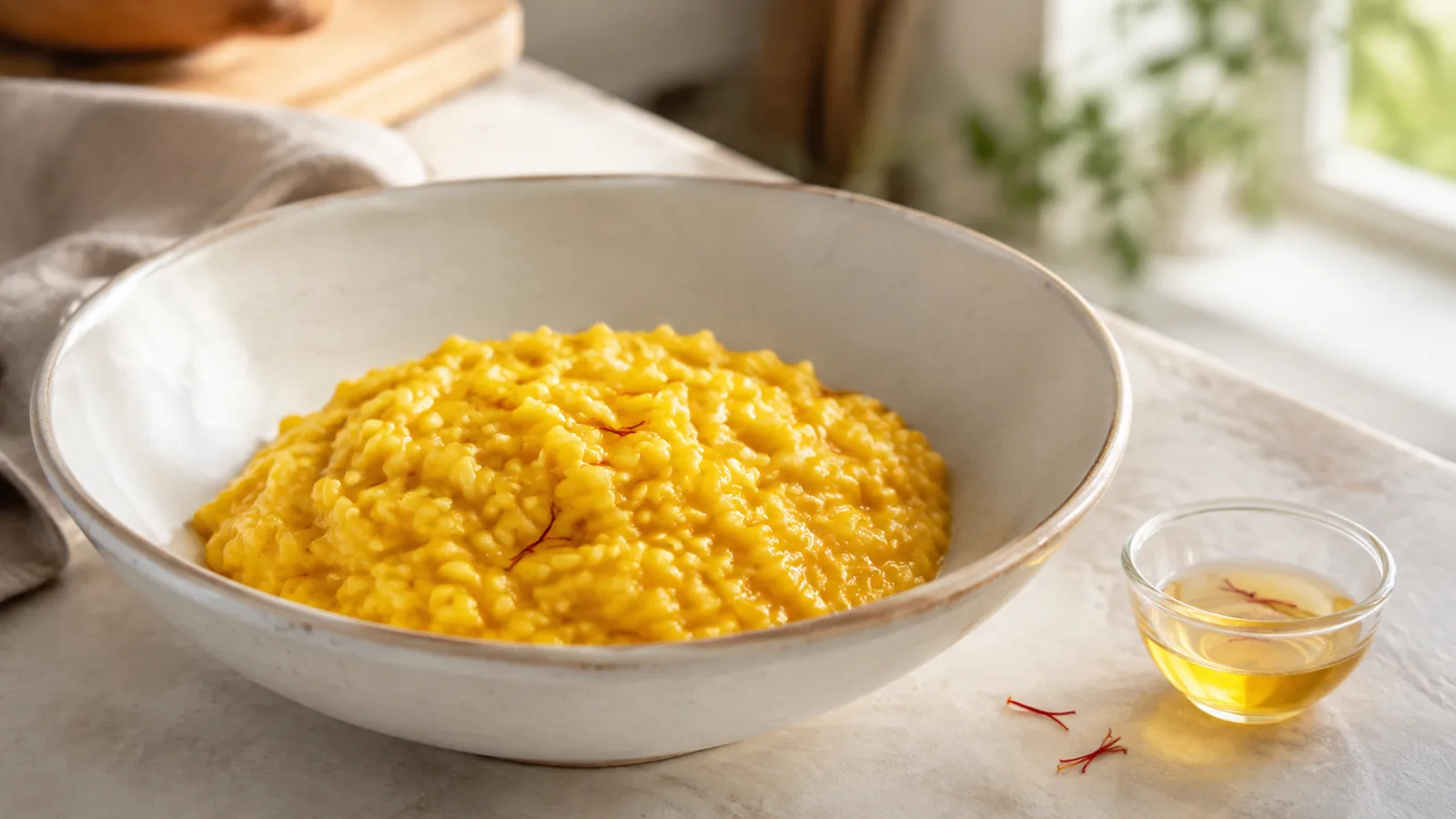
Does saffron have a flavor? Yes, saffron has a flavour. In food it is usually floral, honeyed and earthy, with a gentle hay-like or mineral edge and a restrained bitterness. It should be noticeable without tasting harsh; the best result adds depth and aroma rather than making every bite taste only of saffron.
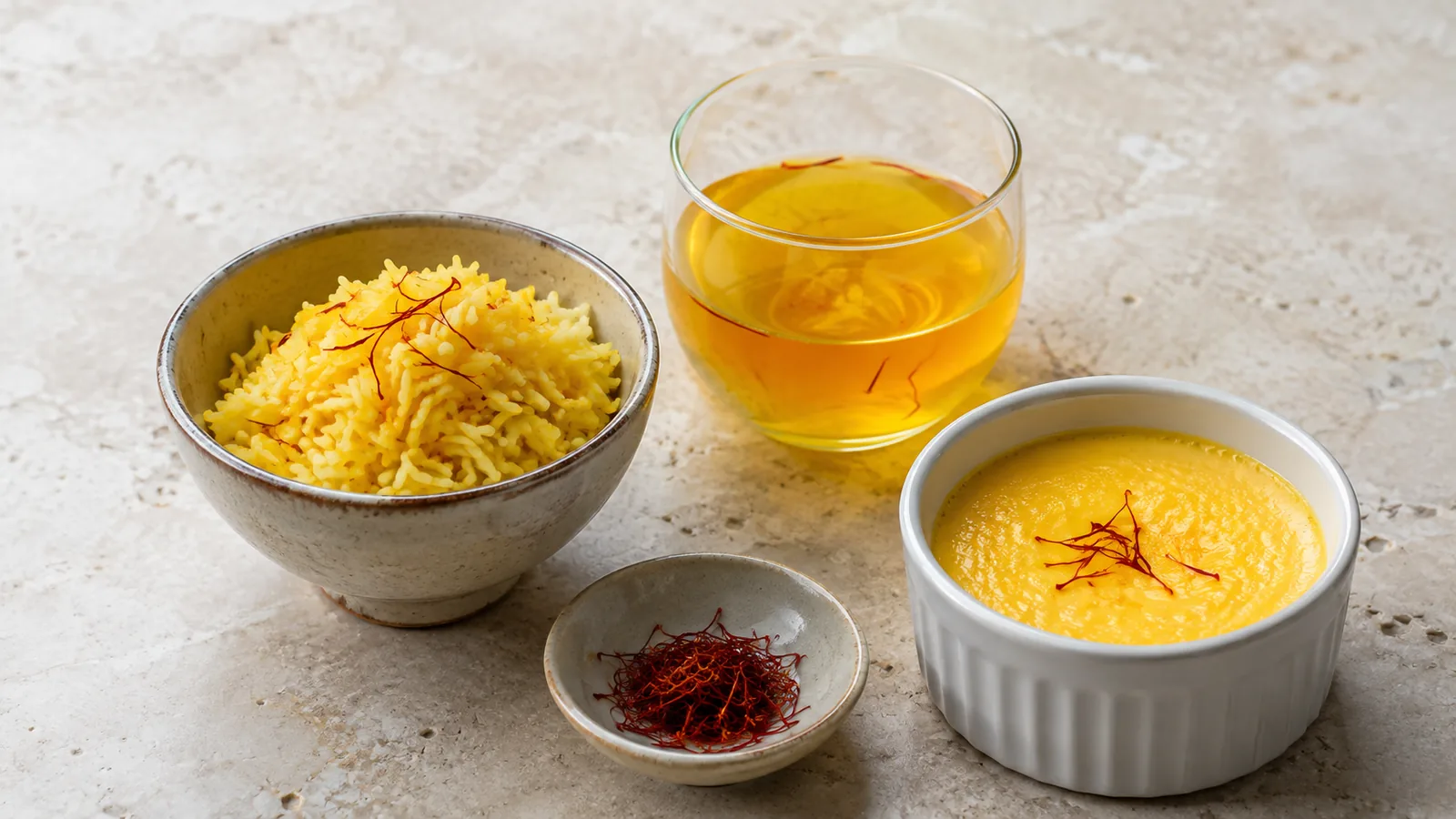
What the flavour of saffron is like
The flavour of saffron is difficult to reduce to one familiar ingredient. Some people notice dried flowers or warm honey first. Others find a grassy, tea-like or slightly metallic quality. These descriptions refer to different parts of the same complex spice, not to several saffron flavours added together.
Aroma shapes the experience strongly. If you smell the dish before tasting it, the floral impression may seem sweeter than the flavour on the tongue.
Does saffron taste sweet?
Saffron can suggest honey, but it contains no sweetness that replaces sugar. In a custard or rice pudding, sugar and dairy bring out its warm floral side. In a savoury broth, the same spice may seem earthier and more mineral.
This is why calling saffron simply “sweet” is misleading. It can support sweetness without functioning as a sweetener.
Why can saffron taste bitter?
A slight bitterness is part of saffron’s natural profile. A harsh or medicinal taste usually means too much was used, the threads were scorched, or the infusion was boiled for too long. Old, damp or contaminated spice can also taste unpleasant.
Begin with a measured pinch and give it time to spread. Adding more halfway through tasting is easier than rescuing an over-saffroned dish.
Saffron flavor in savoury cooking
Saffron flavor in cooking is usually subtle, whether the recipe is savoury or sweet.
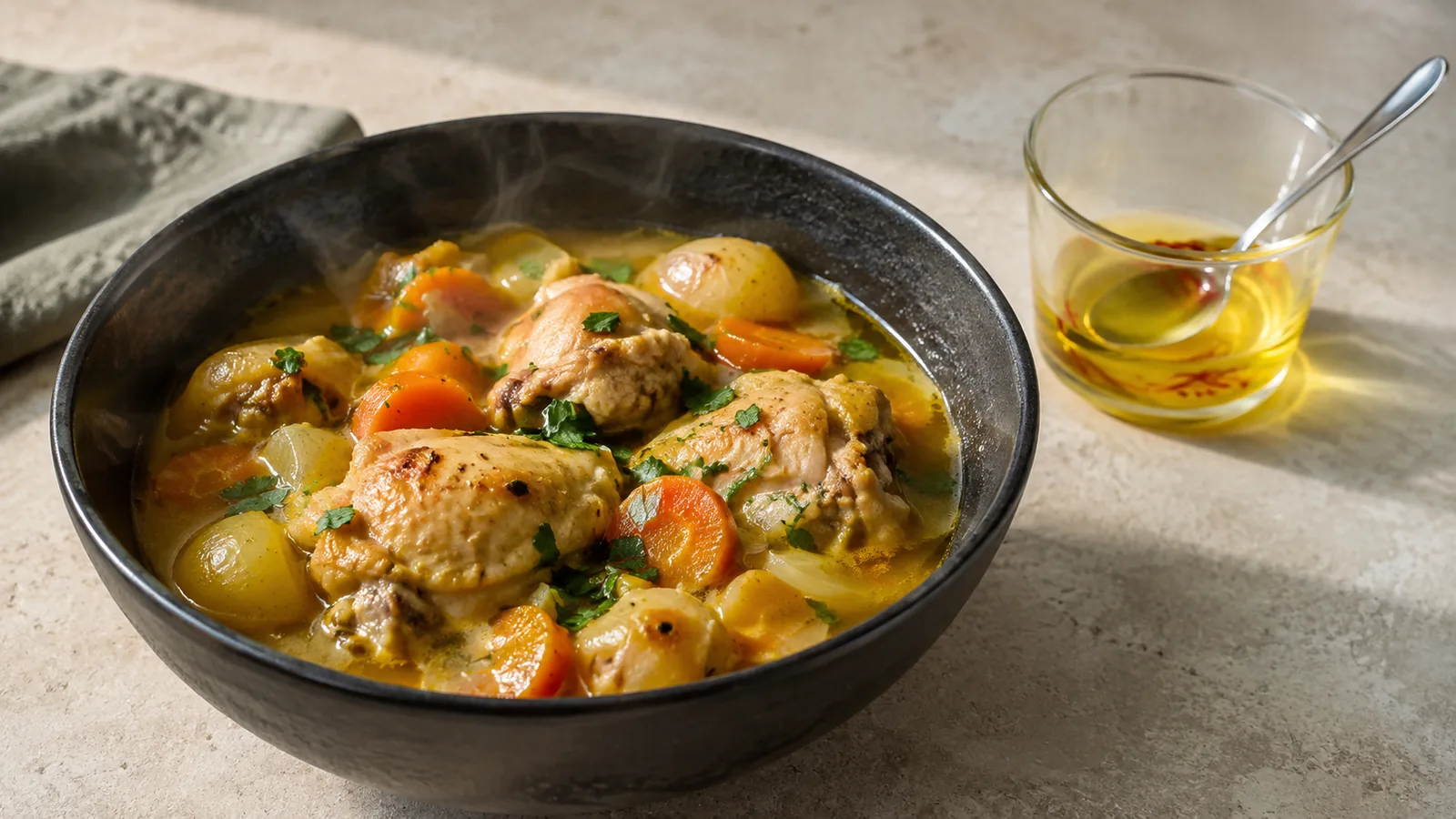
In savory rice, soup, stew and sauce, saffron creates warm aromatic depth. It also works across meat dishes, especially chicken and lamb. It works especially well with chicken, lamb, seafood, potatoes and gentle vegetables. The flavour becomes part of the broth or cooking liquid rather than sitting on the surface like a dry seasoning.
Garlic, onion, tomato, fennel and citrus can complement it. Very hot chilli, heavy smoke or a large mixture of strong spices may mask its more delicate notes.
How saffron tastes in desserts
Milk, cream and sugar make saffron’s floral and honey-like qualities easier to recognise. That is why it appears in custards, puddings, ice cream, cakes, pastries and enriched breads. Rosewater, cardamom, vanilla, pistachio and almond are familiar partners, but balance matters.
A dessert should still taste like its main ingredients. Saffron gives colour and perfume as well as flavour; it does not need to dominate.
How preparation changes the taste
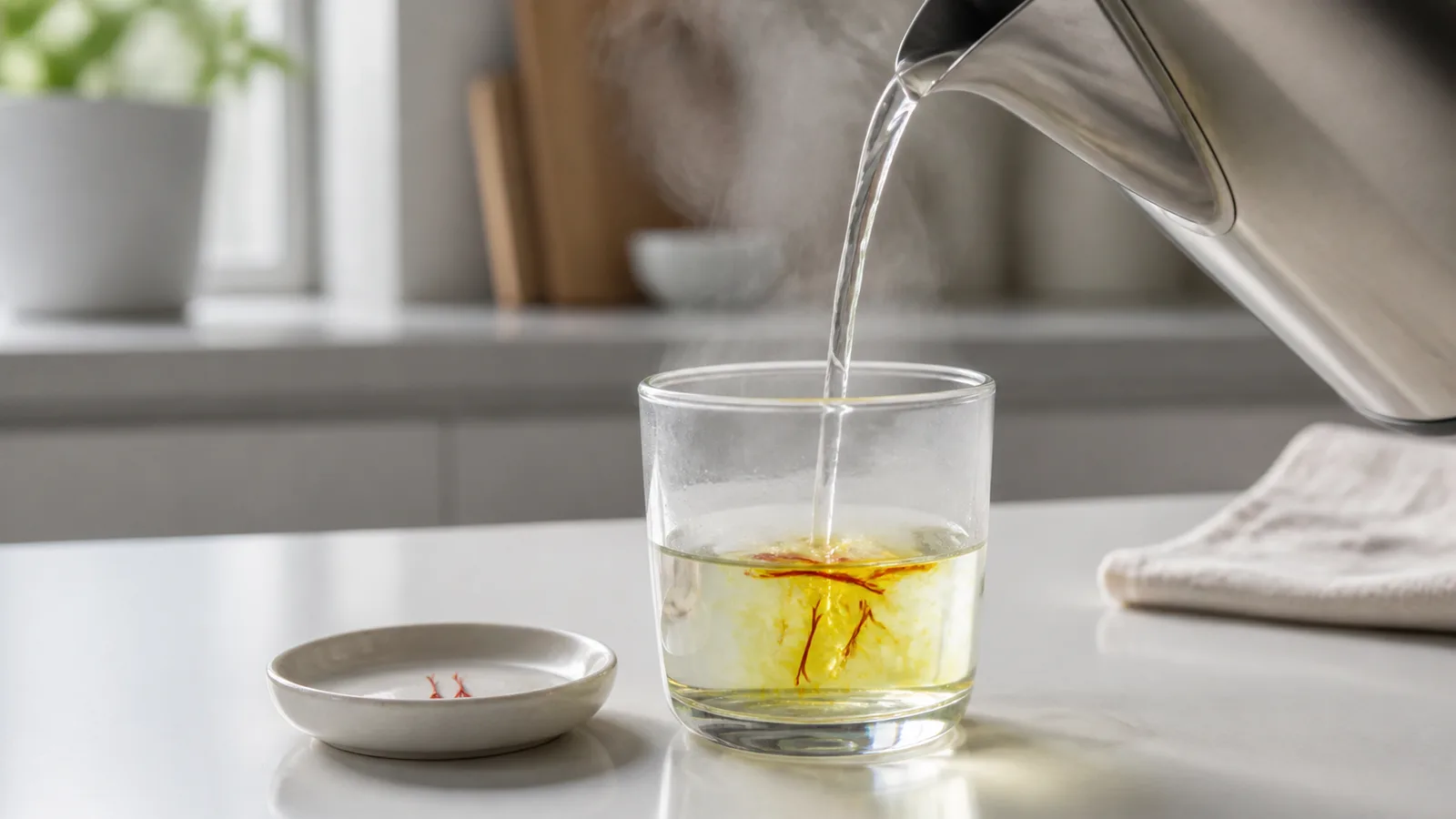
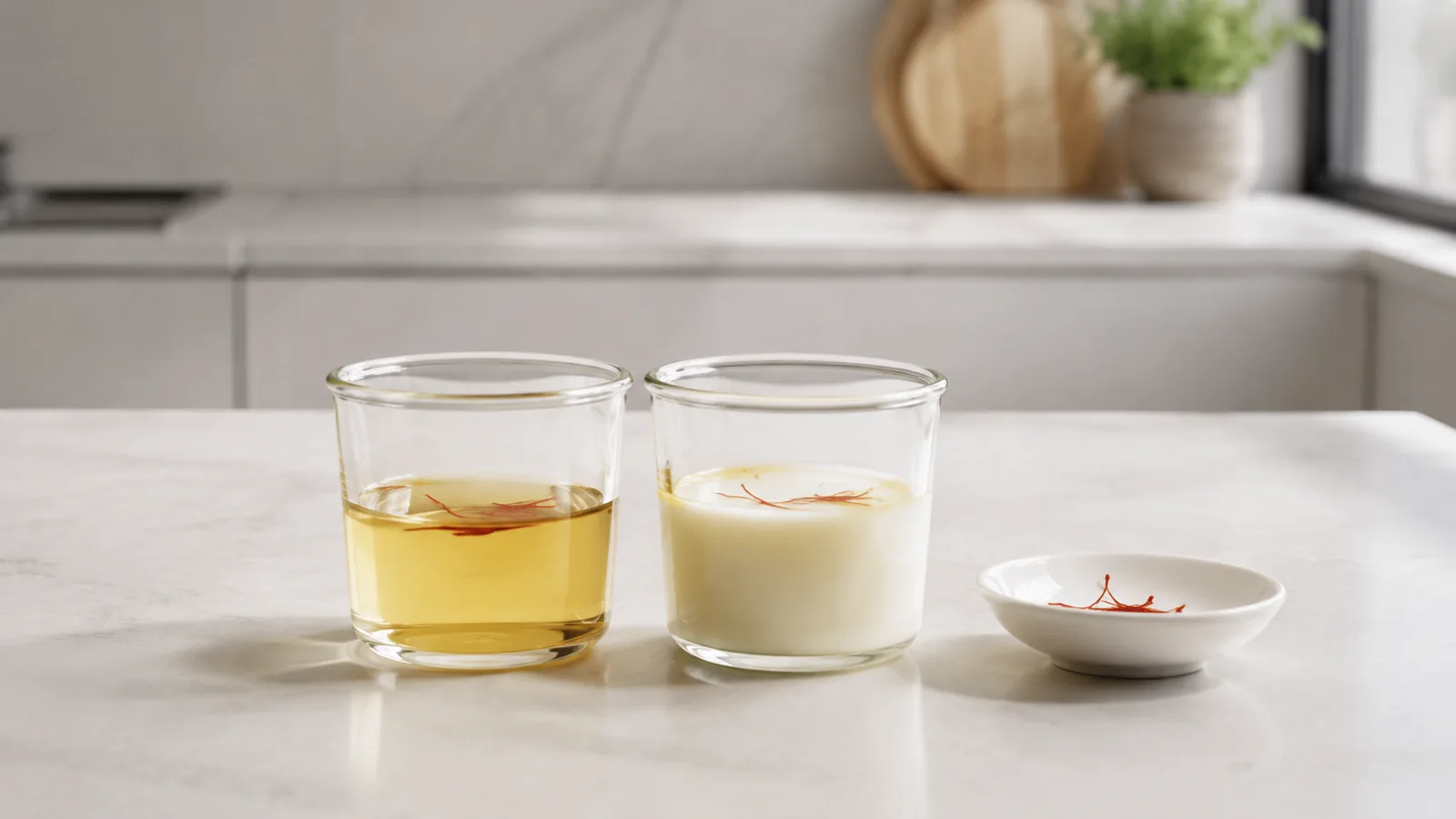
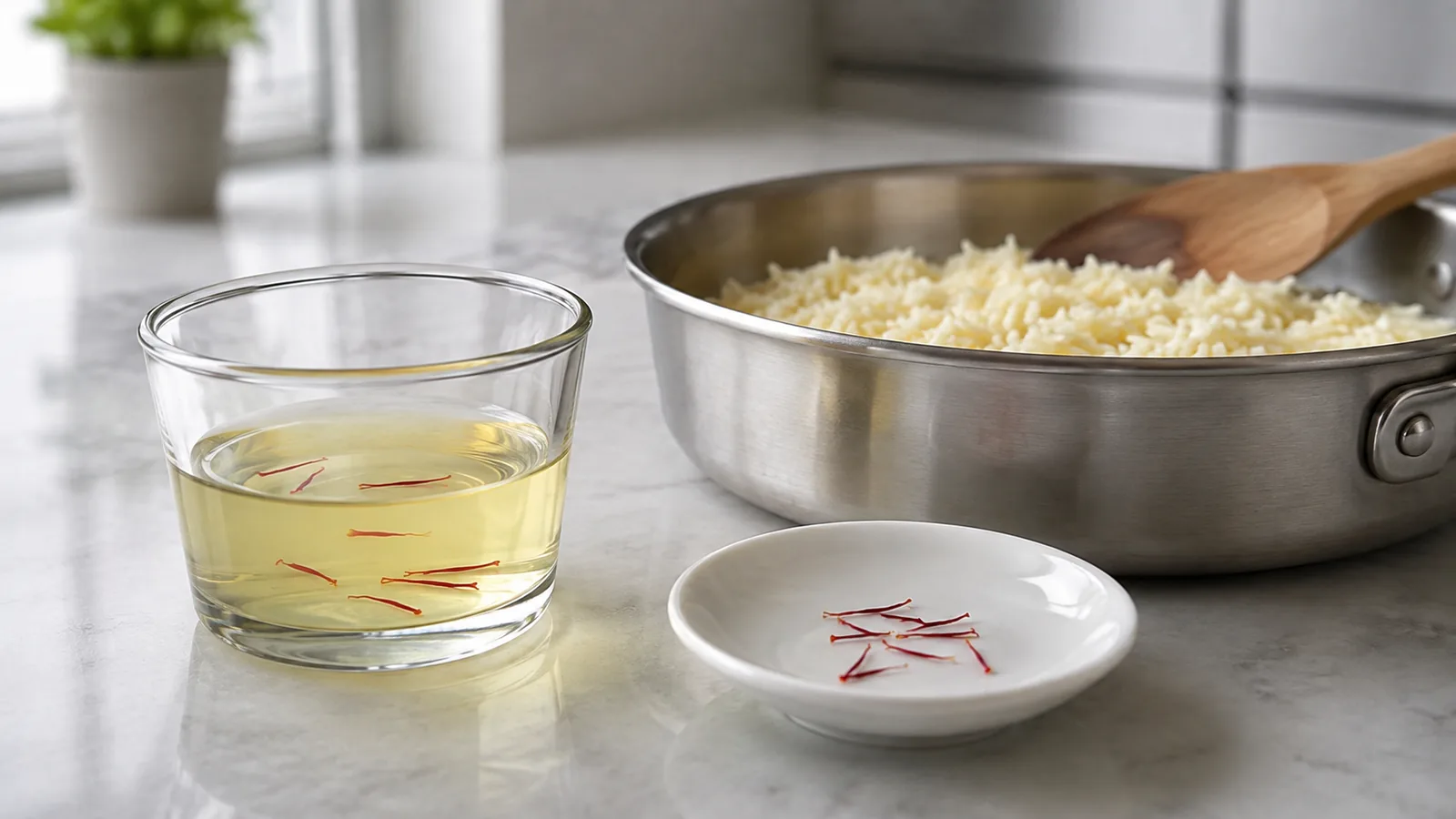
Lightly crush the threads and bloom them in a small amount of warm water, milk or broth for 10 to 15 minutes. This releases colour, flavour compounds and aroma more evenly than scattering whole dry threads through a large pan.
Long uncovered boiling may leave the golden colour while reducing the more volatile fragrance. Add the infusion at a stage that lets it distribute without cooking away for hours.
For a fuller sensory vocabulary, see how to describe the taste of saffron.
Does quality change the flavour?
Yes. Authentic, well-dried saffron stored away from light, heat, air and moisture should have a recognisable clean aroma. Poor storage makes it fade. Adulterated material may introduce unrelated sweetness, bitterness, dye or plant flavours.
Powder is harder to inspect visually and loses aroma faster once exposed to air. Whole threads let you check their structure and crush only the amount you need.
Saffron flavoring and real saffron
The terms saffron flavoring and saffron flavouring can refer to different products. A recipe may use them casually for an infusion made from real threads, while a packaged food may use a flavour preparation that contains little or no whole saffron. Check the ingredient list rather than relying on the product name or colour.
Turmeric, annatto and artificial colour can make food yellow, but they do not reproduce saffron’s flavour.
What should saffron not taste like?
It should not taste strongly of chemicals, soap, mould, damp storage or burnt spice. It is also not naturally sugary, vanilla-like or hot in the way chilli is. If the dish tastes aggressively bitter, review the dose and cooking time.
Likewise, a dish can be golden without having much saffron flavour. Colour alone does not establish quality or amount.
How to taste saffron in a dish
- Smell the food while it is warm, before adding garnish.
- Taste a part that contains the cooking liquid or infusion.
- Notice the floral aroma, earthy depth and gentle bitter finish separately.
- Compare another bite with the main ingredients rather than searching for one exact reference flavour.
Our explanation of how saffron changes the taste of food shows how dose and dish type affect that balance.
What flavor is saffron? The short description
What flavour is saffron? Think floral and honeyed at the front, earthy and slightly bitter underneath, with an aroma that makes the whole dish seem warmer. Used carefully, it is distinctive but never blunt.