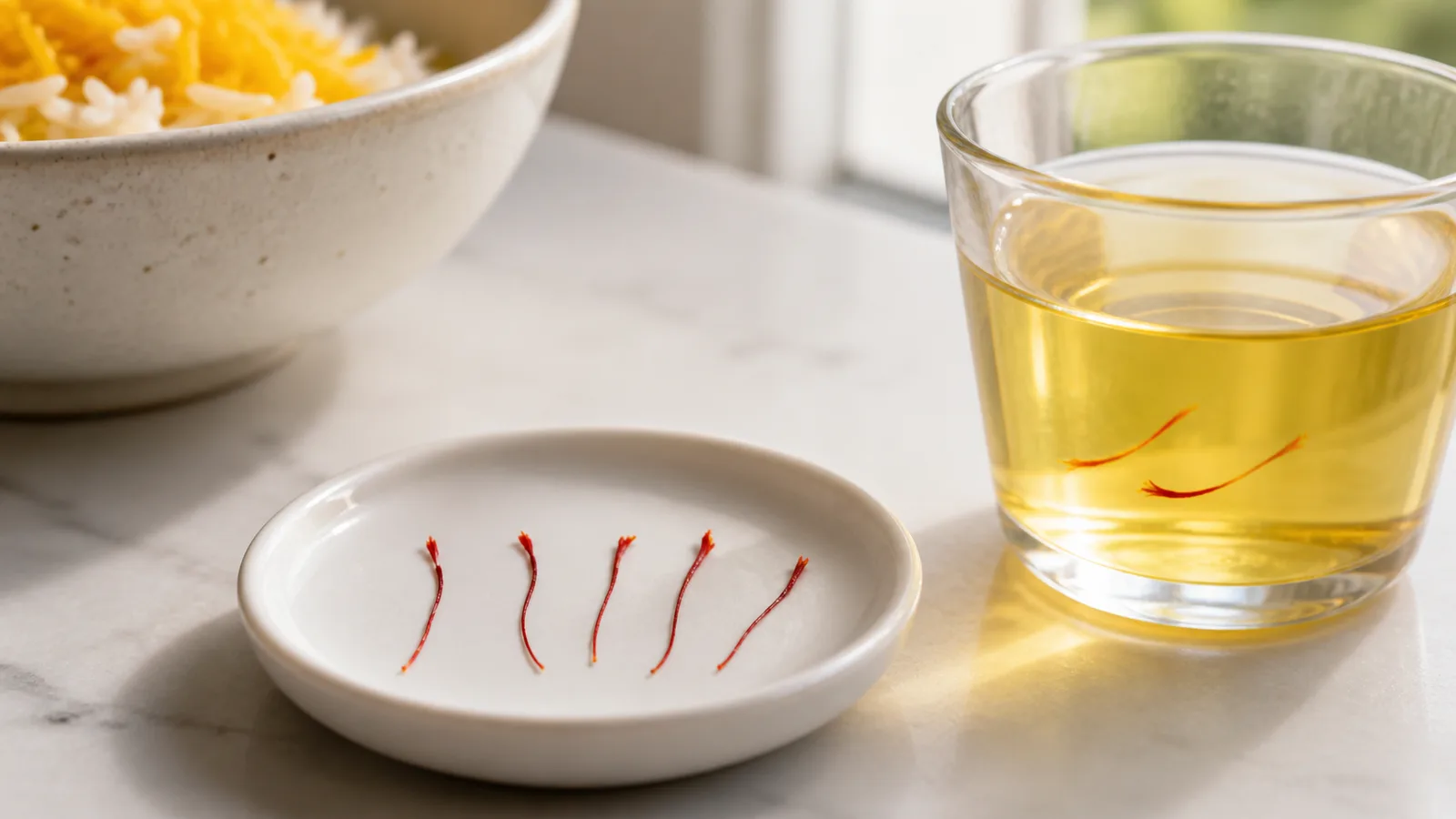
To use saffron in cooking, lightly crush a measured pinch of threads, steep it in a small amount of warm water, milk or stock for 10 to 15 minutes, then add both the liquid and threads to the dish. This spreads the colour, aroma and flavour more evenly than dropping dry threads into one spot.
Begin with whole saffron threads
Whole threads let you see what you are using and hold their aroma better than an open jar of powder. Choose clean, deep-red stigmas with a characteristic fragrance. Powder can be convenient, but it has more exposed surface area and is harder to inspect for dilution.
Keep the main supply intact. Take out only the amount needed for the recipe, then close the container before steam or kitchen moisture reaches it.
Measure before you crush
Saffron is potent, and a little goes a long way. A small pinch is often enough for a family-size rice dish, sauce or dessert, though the right dose depends on the number of servings and the strength of the lot.
Count or weigh the threads when consistency matters. Our guide to how much saffron to use in cooking gives a more detailed way to scale the amount. It is easier to add a little more next time than to remove an overpowering, bitter dose.
Crush the threads lightly
Place the measured saffron in a clean mortar and press it just enough to break the long stigmas into smaller pieces. You do not need to grind it into dust. A light crush increases the surface area while keeping the spice easy to transfer.
If the amount is too small for a mortar, fold the threads in clean parchment and press gently with the back of a spoon. Avoid a damp board or a grinder carrying coffee or spice residue.
Bloom saffron in warm liquid
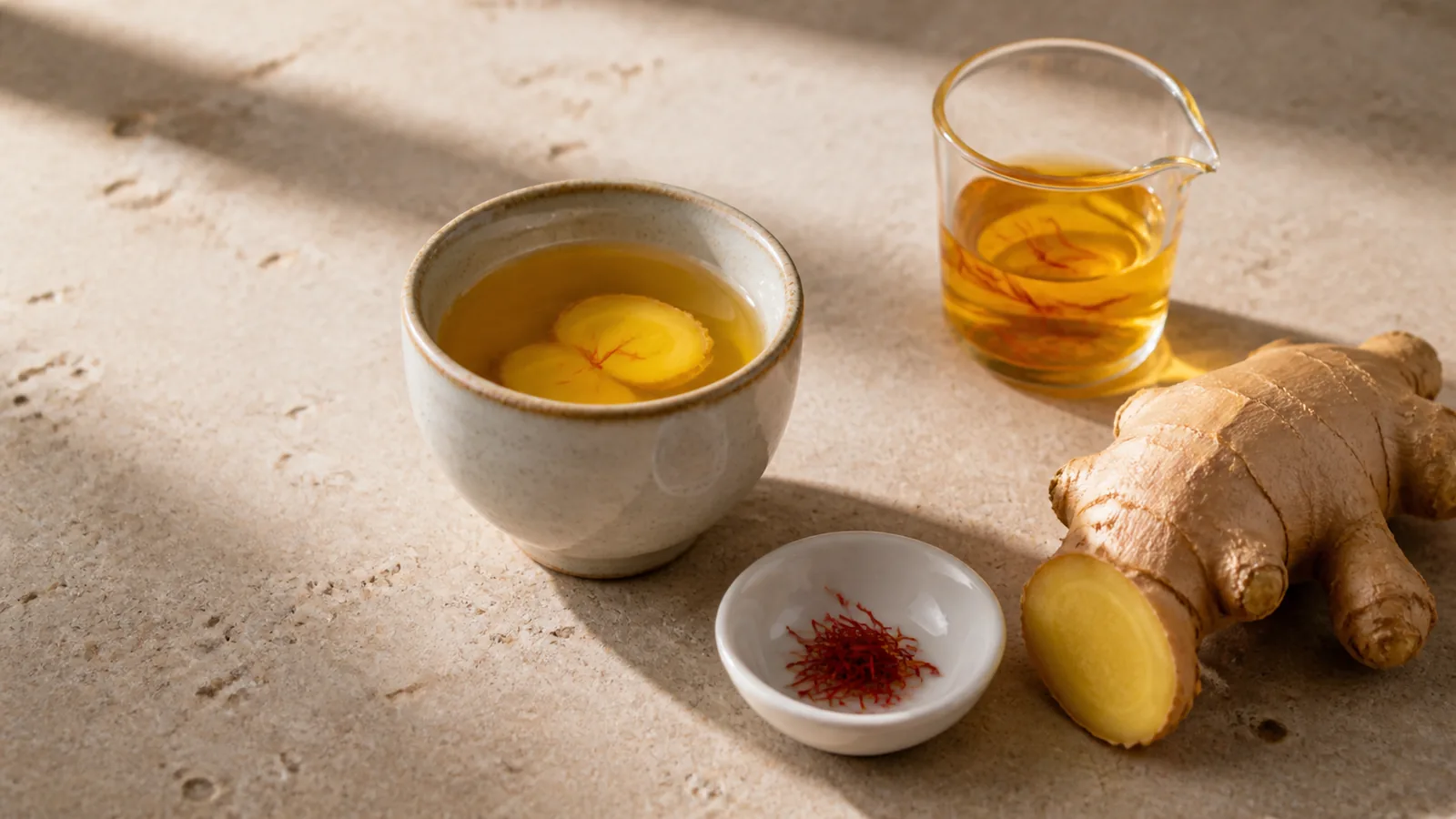
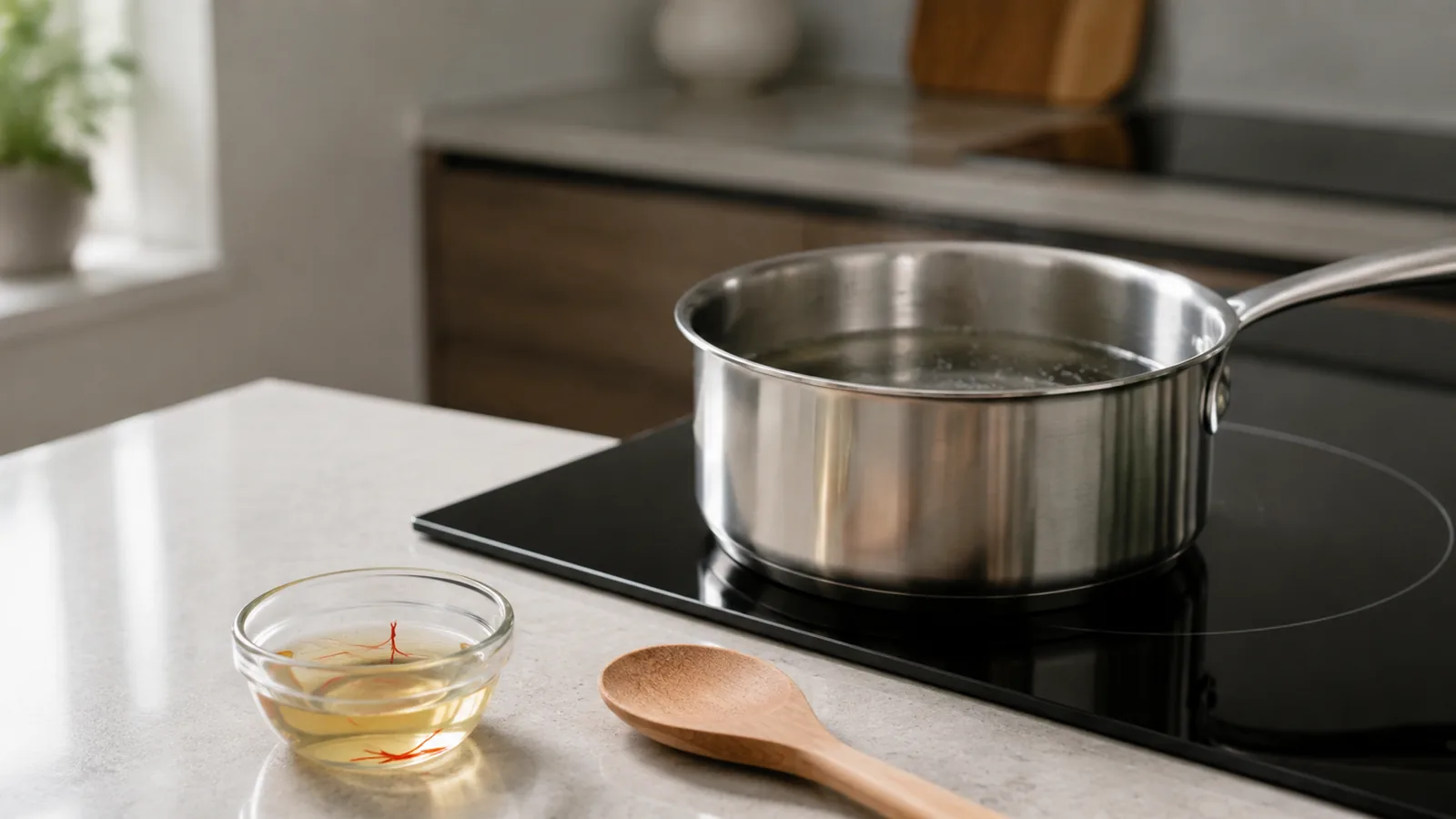
Cover the crushed threads with a few spoonfuls of warm liquid and let them stand for at least 10 to 15 minutes. Water is neutral and lets you observe the golden colour. Milk suits custards and drinks; stock is practical for savoury cooking.
The liquid should be hot enough to encourage extraction but not furiously boiling. Covering the cup helps retain fragrance. For method variations, see the best way to brew saffron.
Add the whole infusion to the recipe
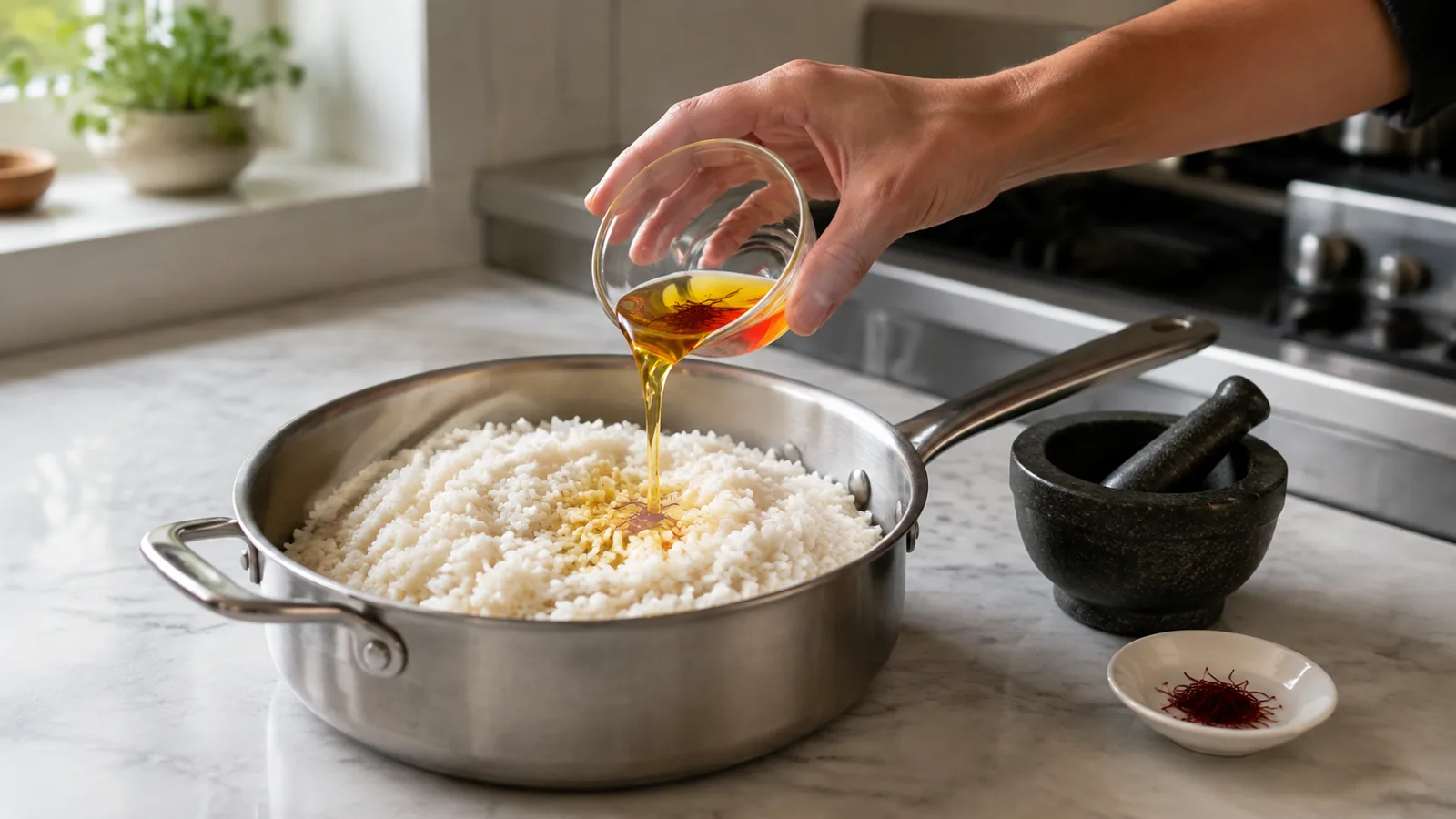
Pour in both the coloured liquid and the softened pieces. Stir where the recipe allows so the infusion reaches the full dish. Holding some back can create deliberate colour contrast in rice, but random dry clumps usually produce uneven flavour.
Timing depends on the food. The infusion needs enough cooking time to spread, yet a long uncovered boil can drive away delicate aroma. In many dishes, adding it during the later part of cooking is a sensible balance.
How to use saffron in rice
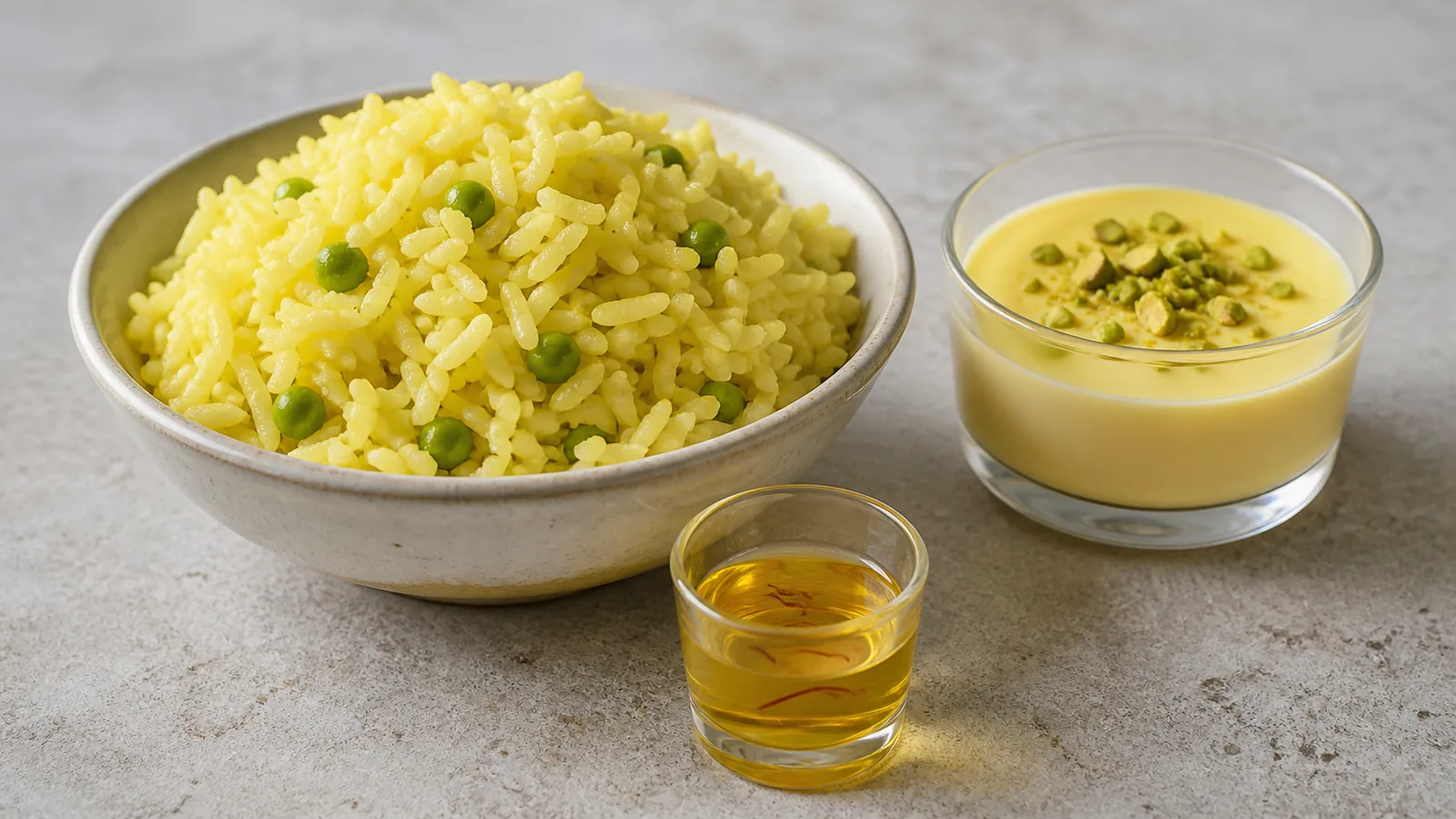
For pilaf or biryani, add the infusion to the cooking liquid or drizzle it over part of the nearly cooked rice before the final steam. For Persian-style colour contrast, combine a portion of cooked rice with concentrated saffron liquid and fold or spoon that golden rice over the rest.
Paella and risotto use different techniques, but the principle is similar: distribute the infusion through liquid that the grains can absorb. Avoid flooding one small section at the end.
Using saffron in savoury food
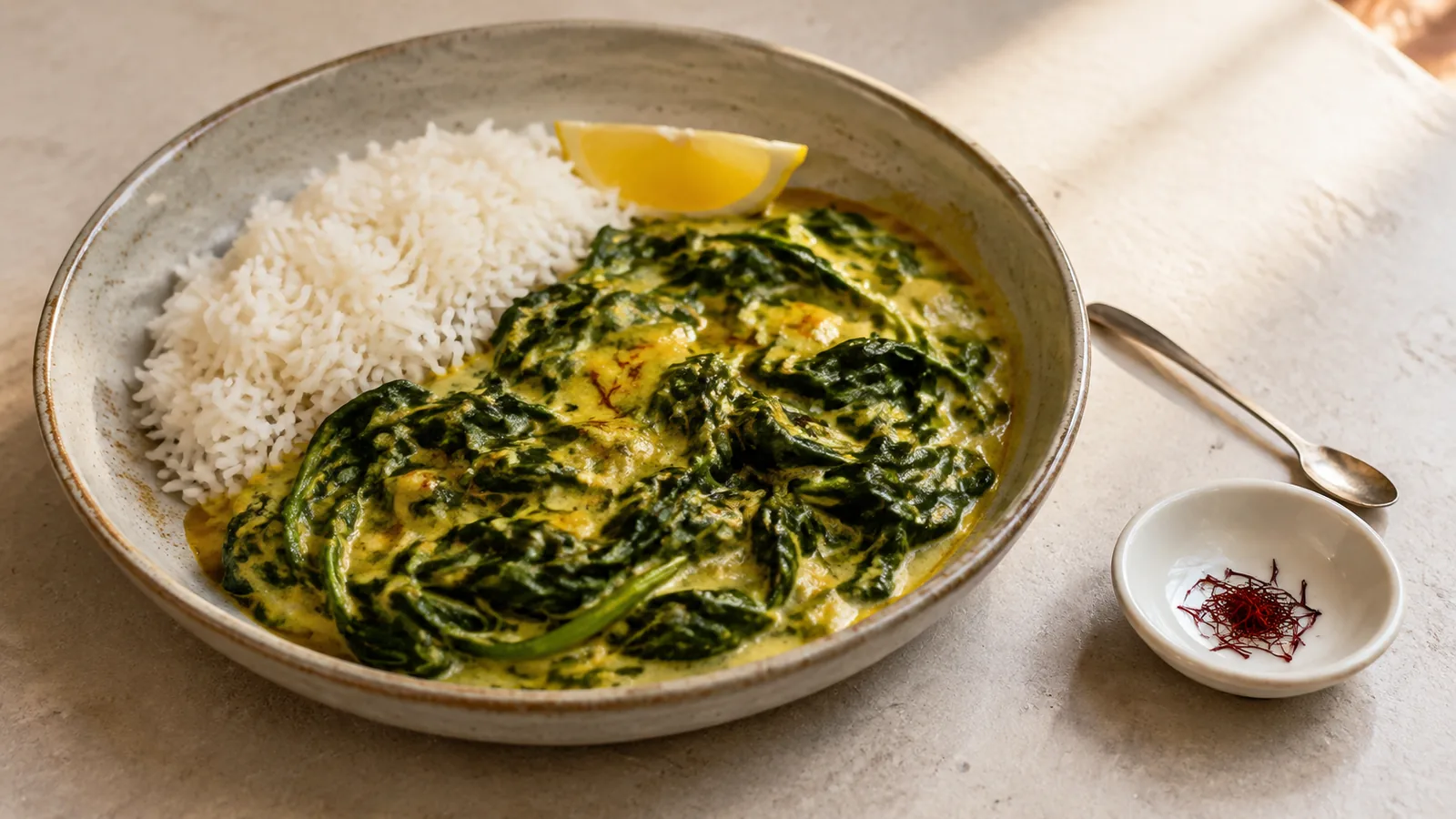
Saffron in food works especially well where its aroma has room to show. Use saffron sparingly in soups and other liquid dishes so its bitter edge does not dominate. Add it to light broths, seafood stews, chicken dishes, sauces and vegetable preparations. A restrained base often carries the spice better than a mixture crowded with smoke, chilli and many aggressive seasonings.
Citrus, onion, garlic and gentle herbs can support savoury saffron. Taste the base before adding more spice; salt, acidity or a burnt ingredient may be the imbalance rather than the saffron.
Using saffron in desserts and drinks
Warm milk is a natural infusion liquid for custards, puddings, ice cream and milk drinks. Saffron also suits baked goods when the steeped liquid can be counted as part of the recipe’s moisture.
Cardamom, vanilla, rose, citrus and nuts such as pistachio and almond are familiar partners. They should frame saffron rather than hide it. In tea, begin with a mild infusion; a concentrated cup can turn needlessly bitter.
Can you add dry threads directly?
Yes, particularly in a dish with enough warm liquid and time for extraction. Whole threads can also be used as a visible garnish. The trade-off is uneven release: one spoonful may contain a strong thread while the rest of the food receives little colour or aroma.
Blooming is the dependable default. Direct addition is a deliberate technique, not a rule for every recipe.
Common mistakes
- Using too much: excess saffron can become bitter and medicinal-tasting.
- Boiling it for a long time: colour may remain while aroma fades.
- Adding dry threads to a dry mixture: extraction and distribution stay limited.
- Masking it with heavy seasoning: the expensive spice disappears behind stronger flavours.
- Leaving the jar near heat or light: poor storage weakens later batches.
Store what remains properly
Keep saffron airtight, dry and away from direct light and heat. A small opaque or dark container inside a cool cupboard is more suitable than an open dish by the stove. Do not refrigerate an ordinary jar if repeated opening will introduce condensation.
The short answer
Using saffron in recipes is straightforward: measure it, crush it lightly, bloom it in warm liquid, and add the complete infusion at a stage that allows even distribution without prolonged boiling. Match the infusion liquid to the dish, keep the dose restrained and store the remaining threads well. That method gives saffron’s golden colour, distinct aroma and balanced flavour a fair chance to appear.