Do not eat a product merely because someone calls it “false saffron.” The term can describe a known food spice such as safflower, a deliberately adulterated packet, dyed fibres, or even a poisonous plant with a confusing common name. Safety depends on what the material actually is.
If the identity is unknown, consuming fake saffron is not worth the risk. Keep the package or plant for identification, stop using it, and seek case-specific advice if anyone has swallowed it and feels unwell.
What does “false saffron” mean?
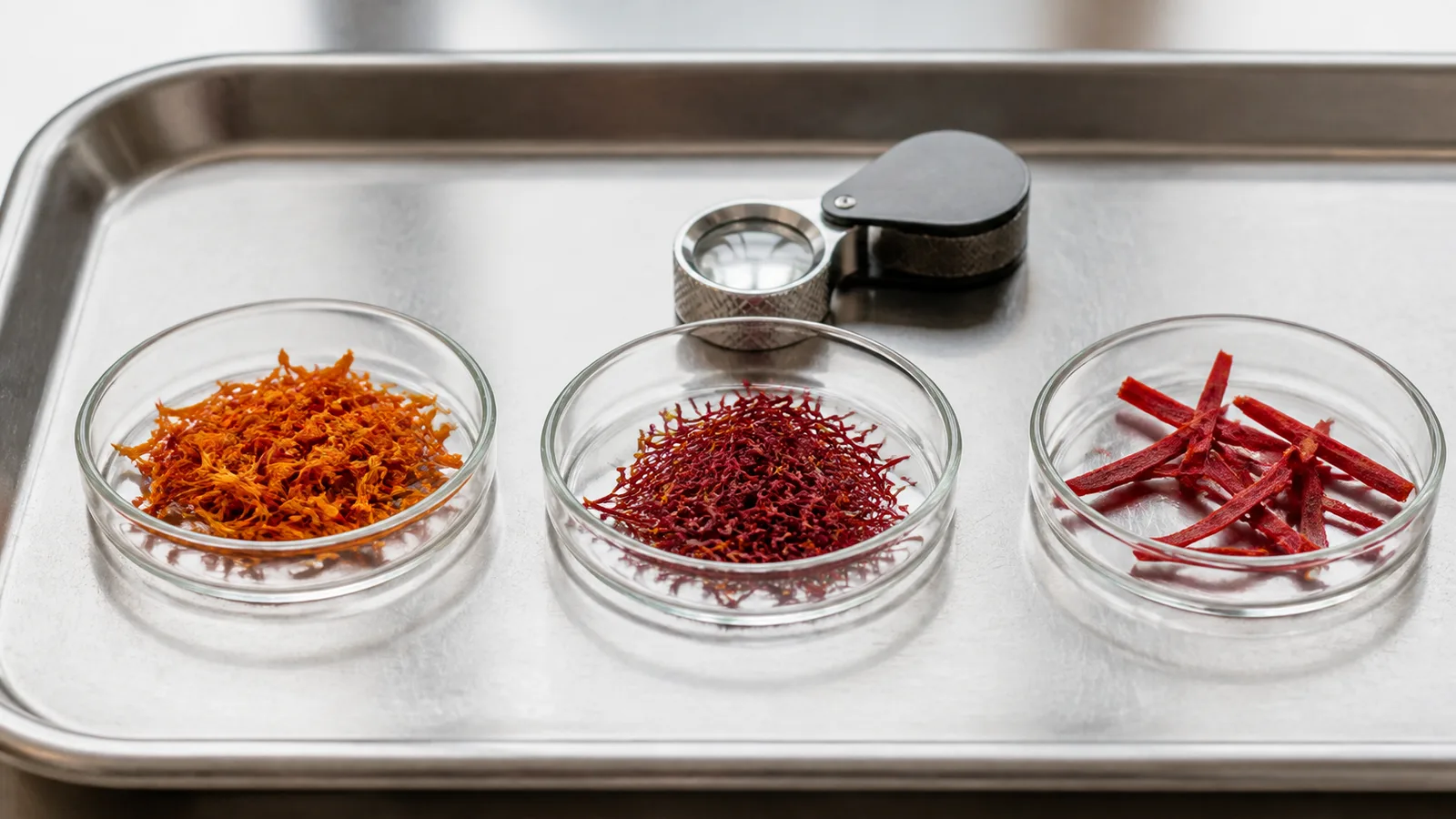
There is no single false-saffron ingredient. Common possibilities include:
- Safflower petals: a separate plant sometimes sold as a low-cost colourant or “Mexican saffron.” Food-grade safflower is used in cooking, but it is not Crocus sativus and does not provide the same aroma.
- Turmeric: an edible spice when it is a genuine food product, but turmeric powder substituted for saffron is still mislabelling.
- Flower petals or plant fibres: their safety cannot be assumed from orange or red colour. “Marigold” can refer to different plants and preparations.
- Dyed or mixed material: the fibres, colourants and contamination history may be unknown.
- Meadow saffron or autumn crocus: Colchicum autumnale is not culinary saffron and contains toxic colchicine.
A properly labelled, food-grade safflower product can be edible in its own right. That does not make an unidentified packet safe, and it does not excuse selling a substitute as saffron.
Never eat meadow saffron
True saffron is Crocus sativus. Meadow saffron, Colchicum autumnale, is a different plant despite the shared common name. Ingestion can cause severe colchicine poisoning. A 2026 clinical case report on accidental Colchicum autumnale ingestion illustrates why plant identification is a medical-safety issue, not a kitchen authenticity game.
If a wild or garden plant has been eaten, do not wait for a home saffron test. Contact your local poison service or emergency service immediately and keep a sample or clear photograph for identification. In the United States, Poison Control provides case-specific guidance. Do not induce vomiting unless a medical professional tells you to.
Risks of eating an adulterated product
Unknown false saffron may contain undeclared plant material, fillers or dyes. The immediate concern is not that every colouring agent causes harm; it is that the ingredients, dose, hygiene and allergen information are missing. Nausea, vomiting, abdominal pain, dizziness, breathing difficulty, swelling or a spreading rash after ingestion require prompt medical advice, with emergency care for severe symptoms.
Depending on what was used, artificial dyes, undeclared allergens or contaminated fillers may cause allergic or digestive reactions. The package cannot be assumed safe when its real contents are unknown.
Do not try to make a suspicious product safe by rinsing, cooking or using only a small amount. Those steps do not identify what it contains.
How to identify fake saffron before use
Inspect the thread shape
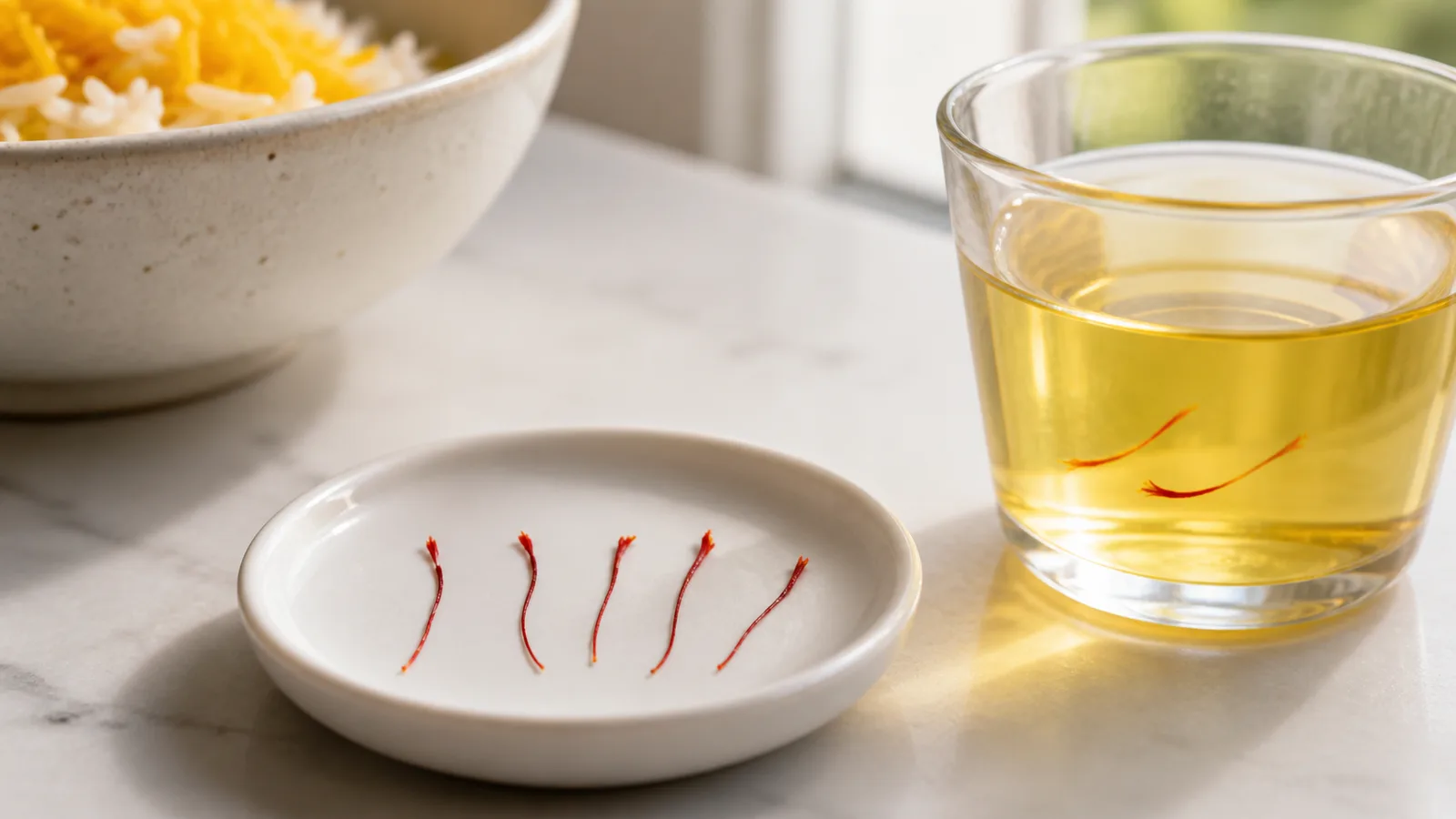
Real saffron stigmas are thin, dry and brittle, widening into a small trumpet-like end. They are usually deep red with an orange-red tip. Perfectly flat strips, abundant unrelated petals or fibres that all look machine-cut deserve caution.
Check the aroma
Genuine saffron has a complex floral, hay-like scent. No aroma, mustiness or an obvious chemical perfume is a warning. A weak aroma can also mean genuine but stale saffron, so scent alone does not prove authenticity.
Watch a warm-water test
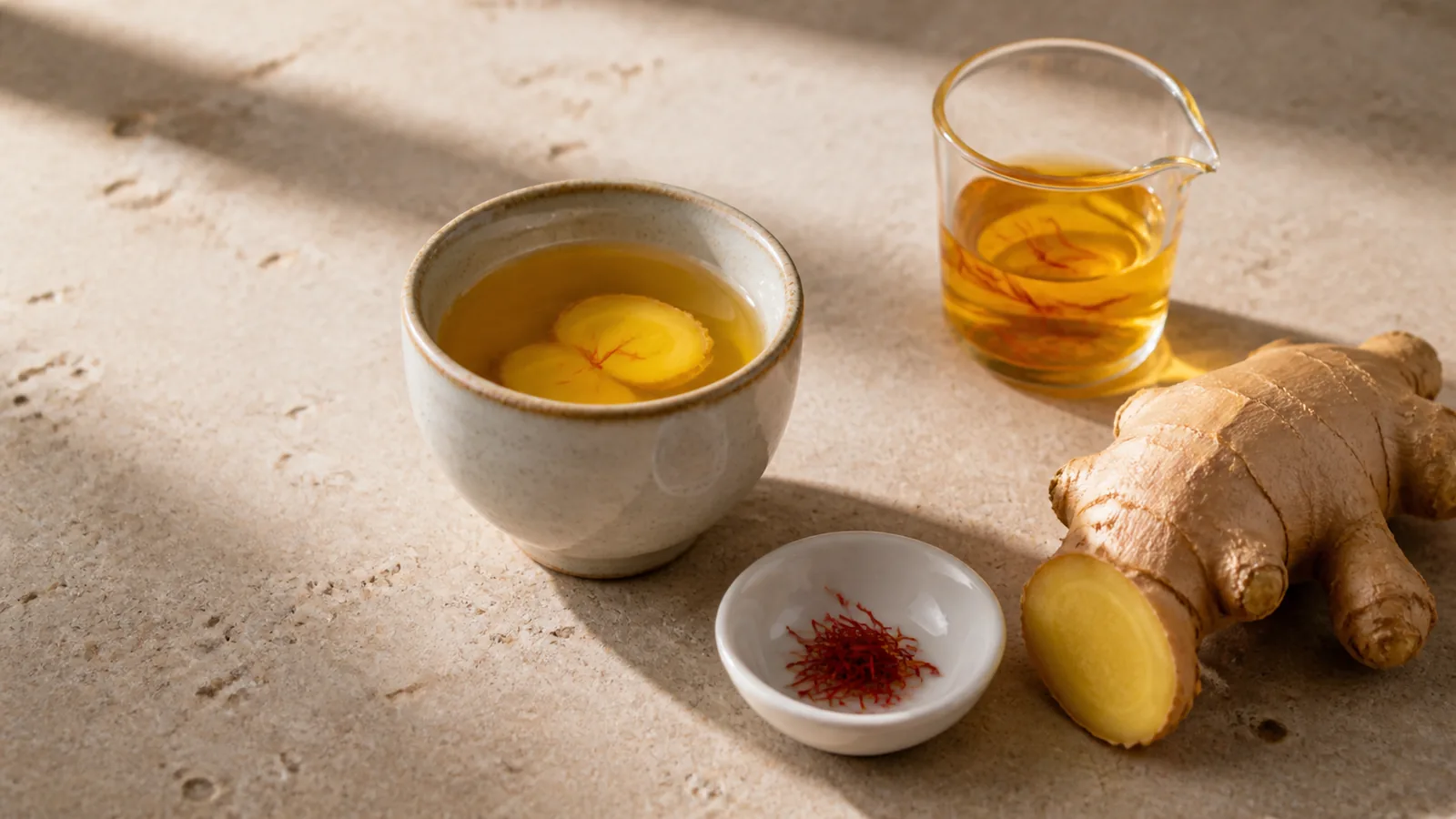
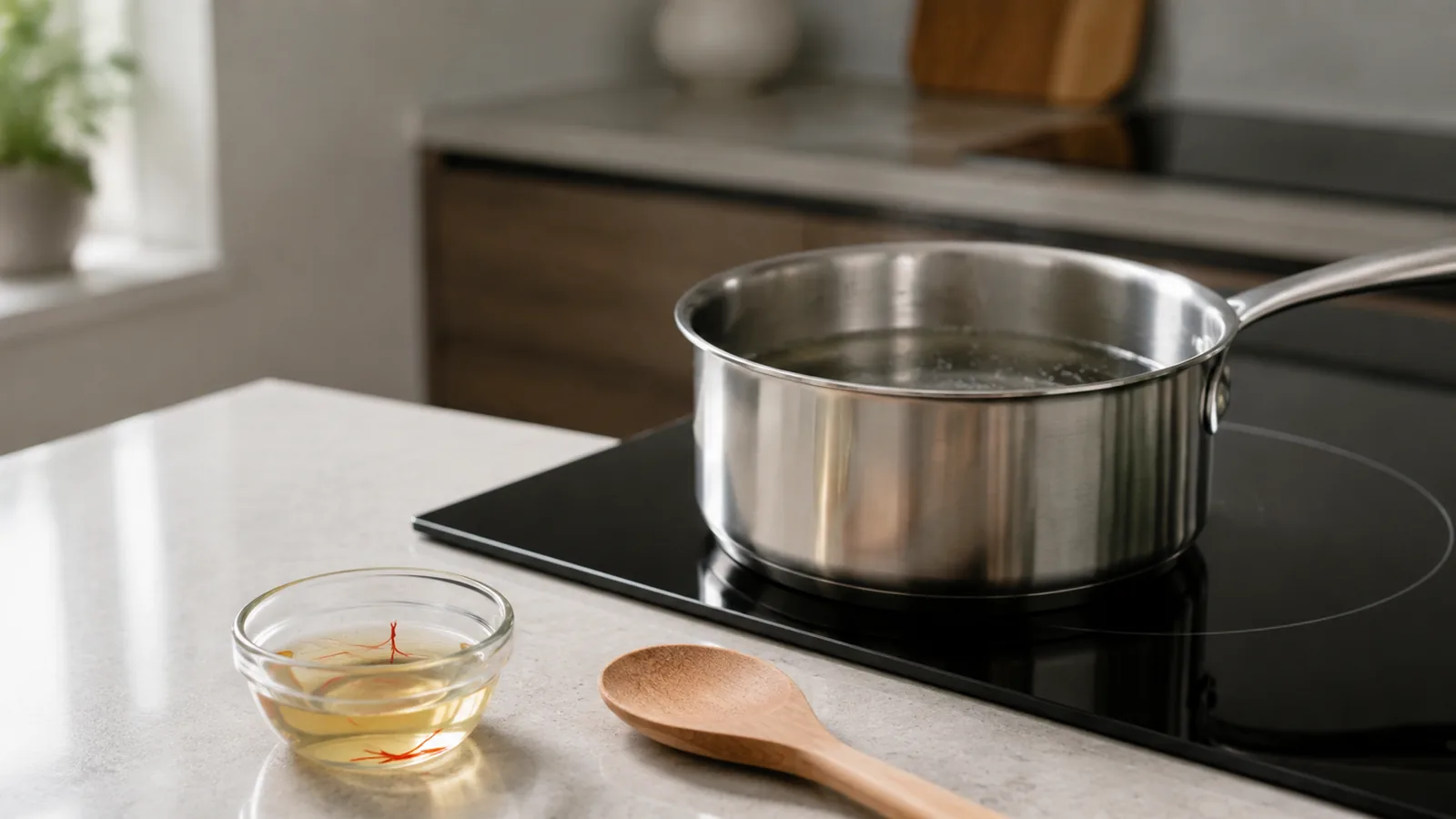
A few genuine threads gradually release a golden-yellow colour into warm water while remaining recognisable. A sudden red cloud, surface dye or material that dissolves like paper is suspicious. Temperature, crushing and steeping time affect extraction, so this test can expose crude adulteration but cannot certify safety, grade or origin.
What to do with a suspicious packet
- Stop serving or tasting it.
- Keep the original package, receipt, lot details and remaining sample.
- Contact the seller and the relevant food-safety authority if it was represented as saffron.
- If anyone has symptoms, contact a clinician or poison service and explain what was eaten.
For commercial quantities or a serious dispute, accredited laboratory testing is more reliable than internet photographs or a single home experiment.
Buy threads you can trace
Whole stigmas are easier to inspect than anonymous powder. Look for a clear net weight, origin, responsible seller and batch information, then store the spice sealed, dry and dark. Our all-red saffron page shows intact threads; the product description and traceability matter more than a promise that no visual test could independently prove.
Can you eat false saffron?
Only when you know exactly what it is and it is sold as a food-grade ingredient—such as properly labelled safflower—should it be considered on its own merits. Do not eat an unknown substitute, adulterated packet or any plant called meadow saffron. When identity is uncertain, the safe decision is to stop and obtain expert identification rather than gamble on colour, taste or price.