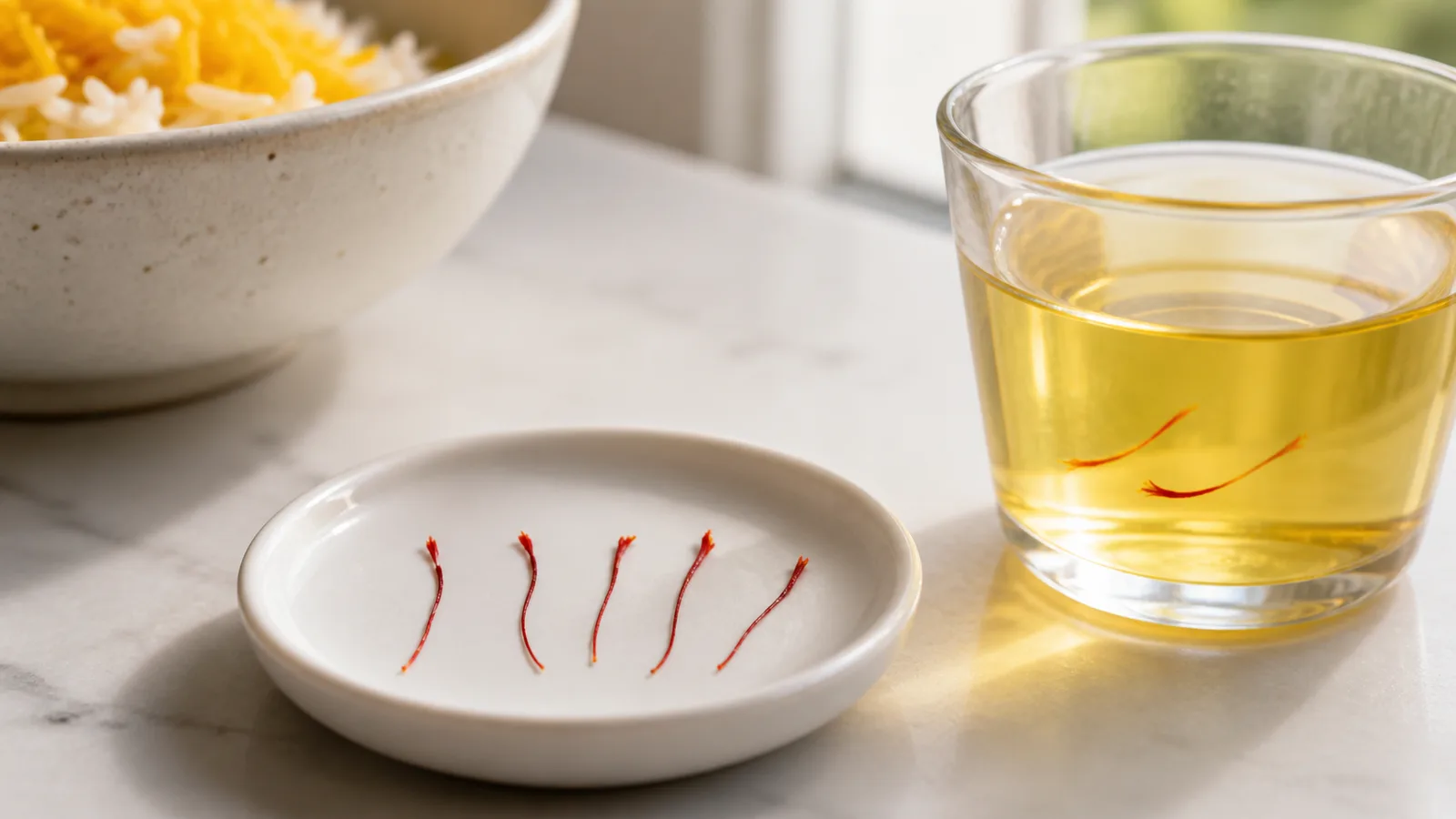
Real saffron can float at first, sink quickly or do both in the same glass. Thread thickness, trapped air, dryness and handling all affect buoyancy, so floating is not a reliable pass-or-fail test. A better saffron water test watches the colour, aroma and condition of the threads over several minutes.
Does real saffron float or sink?
Either behaviour is possible. Dry, loosely arranged threads may stay on the surface briefly because air is caught around them. Other genuine threads become wet and sink almost at once. Threads from the same packet may behave differently.
That is why the answer to “does real saffron float in water?” cannot be reduced to a single rule. Buoyancy says more about the physical condition of a thread at that moment than it does about purity.
How to do a useful saffron water test
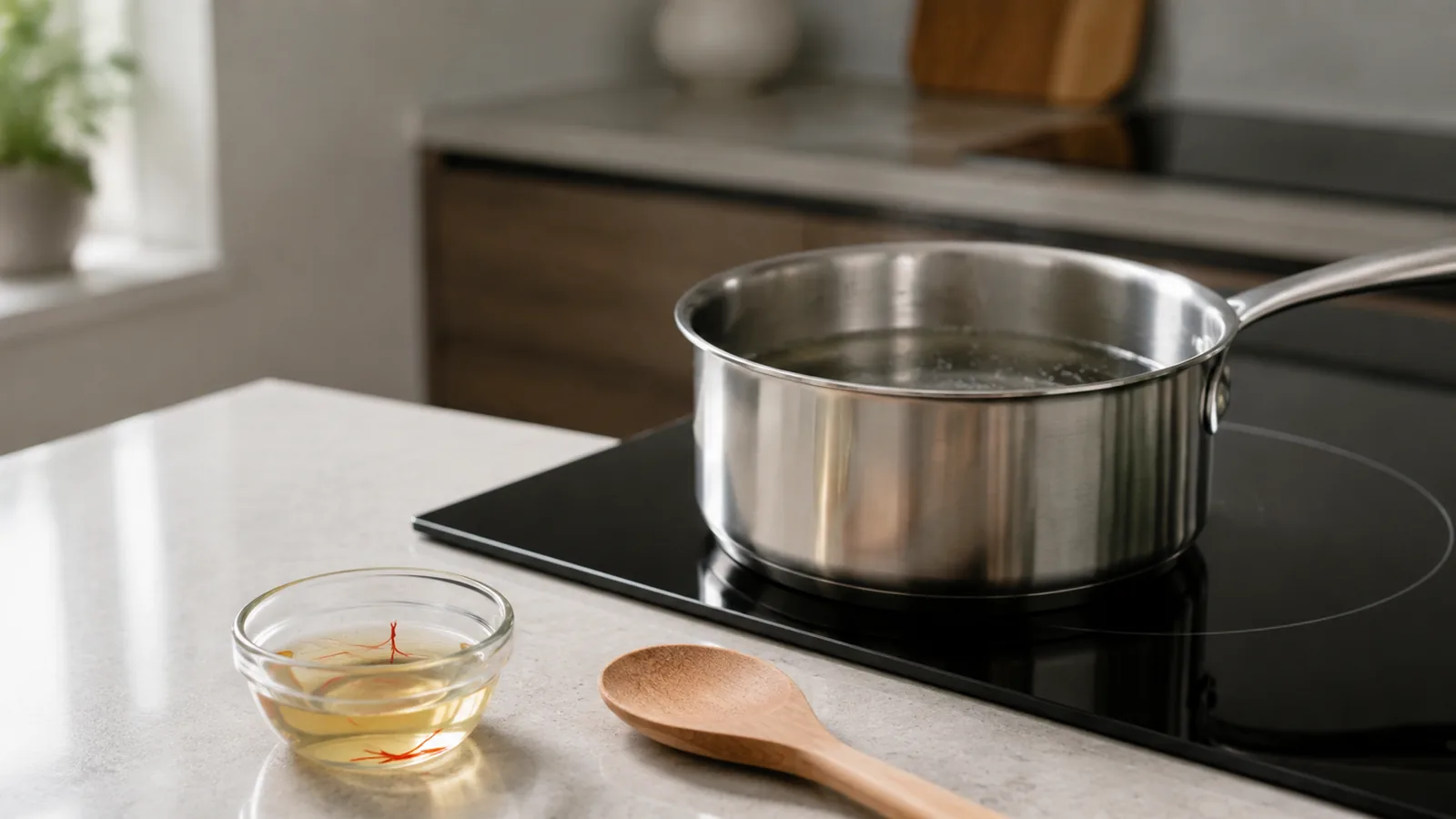
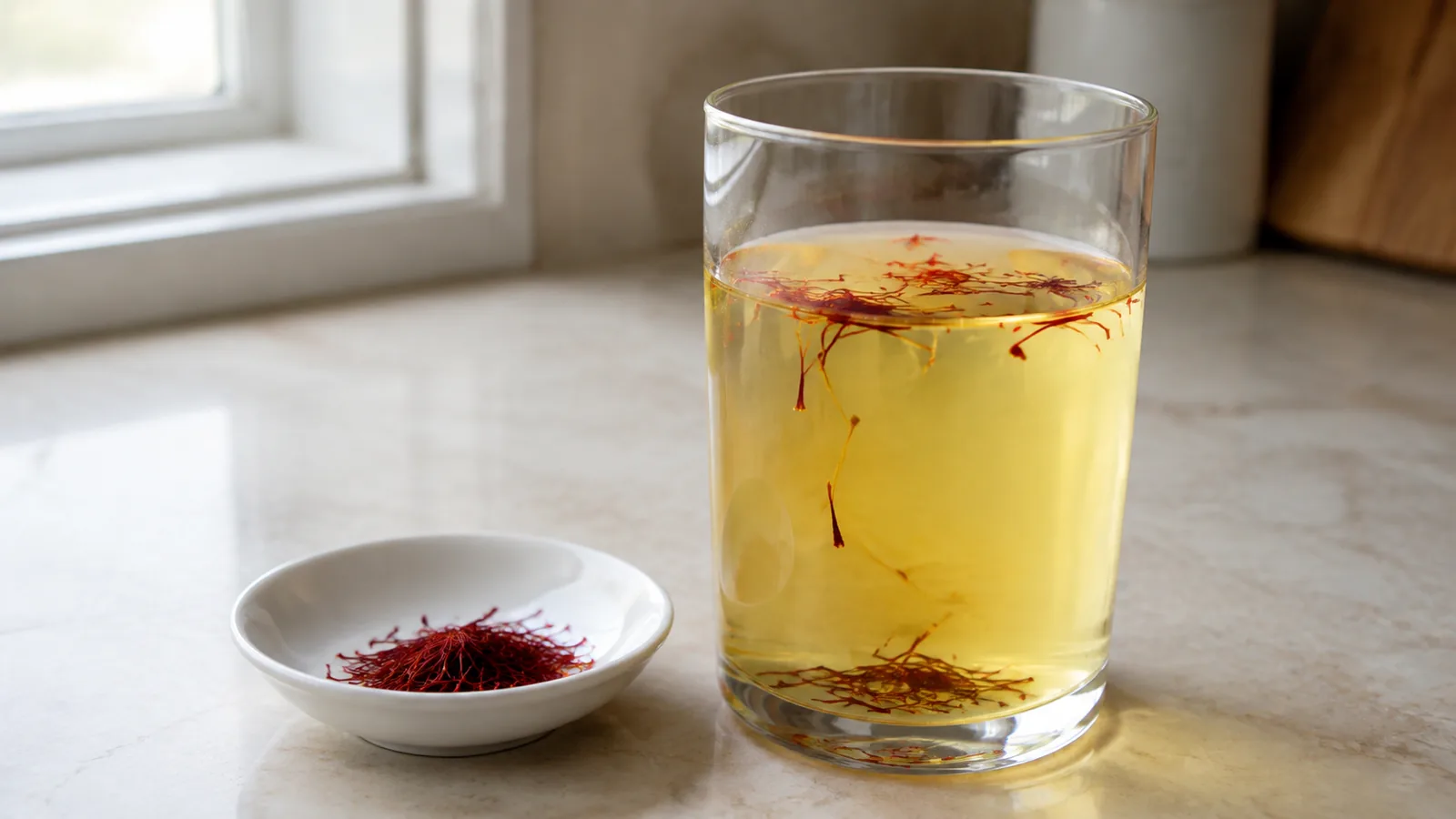
Use a clear, clean glass and plain warm water. Place a small pinch of whole threads on the surface without stirring, then observe the glass in good light for 10 to 15 minutes.
- Notice whether the threads float, partly submerge or sink, but do not judge them on that observation alone.
- Watch how colour spreads through the water. Genuine saffron commonly develops a golden-yellow infusion rather than a sudden cloud of bright red dye.
- Smell the glass. The aroma should be recognisable and complex, not merely sweet, chemical or absent.
- Look at the wet threads. They should remain identifiable plant material rather than dissolving into powder.
- Compare the result with the dry thread shape, packaging, traceability and seller information.
Warm means comfortable brewing water, not a rolling boil. Strong heat can release colour quickly and make a careful comparison harder.
What genuine saffron usually does in water
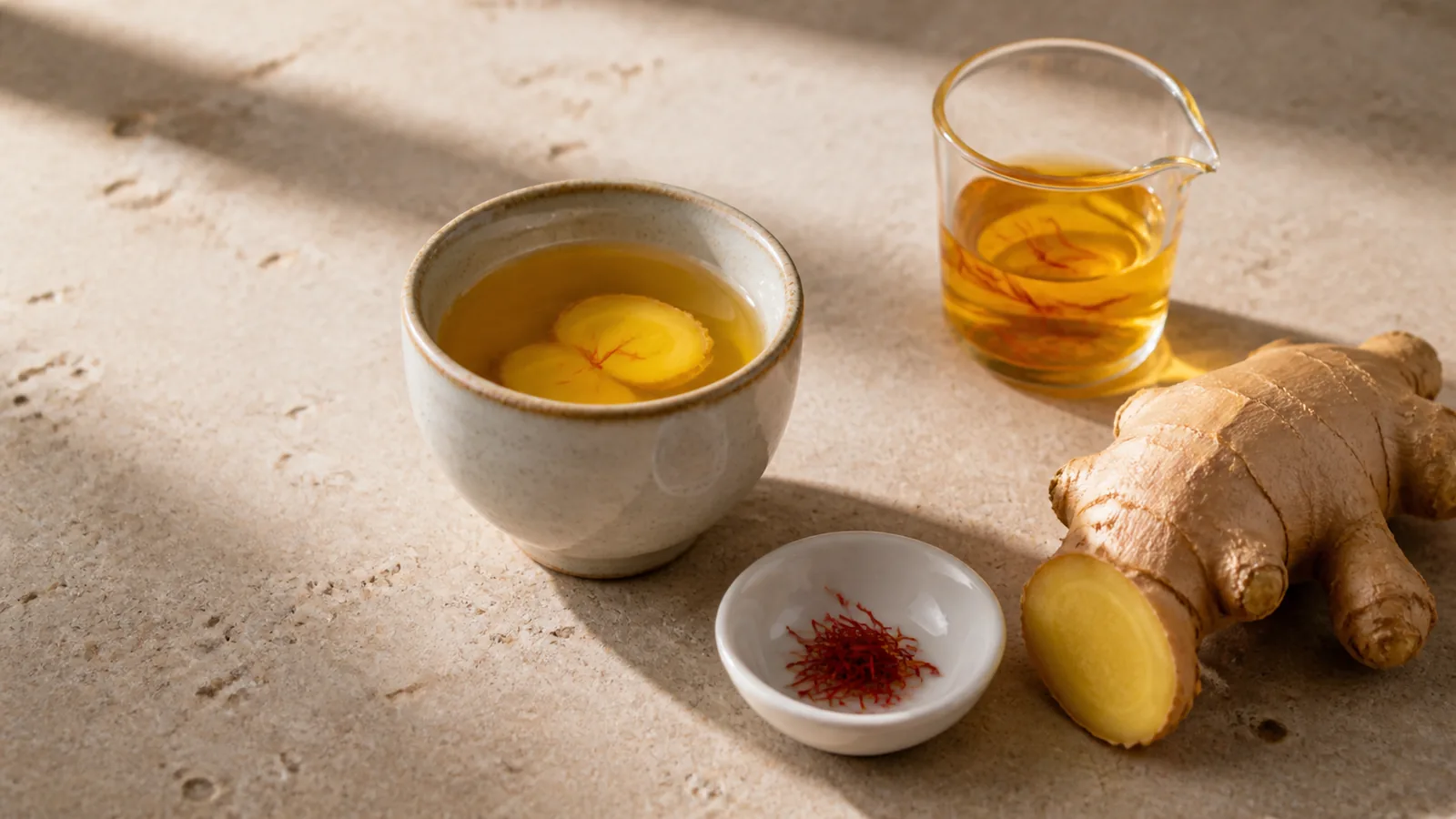
Real saffron in water releases colour from its natural pigments as the threads hydrate. The exact speed varies with grade, particle size, water temperature and whether the spice was crushed. A few whole threads usually colour the water gradually; ground saffron naturally works faster because more surface area is exposed.
The finished colour is generally yellow to deep golden. Concentration and lighting can make it look orange, but an immediate red plume around a thread deserves closer inspection. It may indicate added colouring, although this visual clue still is not laboratory proof.
Why some genuine threads sink faster
A dense thread, a broken piece or material that has already absorbed a little moisture may sink promptly. Stirring also pushes air away and wets the surface. None of those conditions makes the saffron fake.
Conversely, a lightweight substitute can float. A floating result cannot certify genuine material, and a sinking result cannot condemn it. Videos that claim otherwise leave out too many variables.
Colour release matters, but it is not enough
A controlled colour release is useful evidence because saffron should make an infusion. It is not conclusive evidence of identity: coloured fibres and plant substitutes can also tint water. Judge the pattern alongside thread structure and aroma.
Thread integrity after soaking is one useful clue, but storage conditions can also change how quickly older or moisture-exposed material behaves. A genuine thread does not have to remain red forever. Some colour loss after soaking is normal. What matters is whether the object still looks like a hydrated thread rather than a coating that washed off a foreign fibre.
Check the shape before the glass test
Whole saffron consists of dried flower stigmas. Look for slender red threads that widen toward one end. Lots containing excessive yellow style, uniform plastic-looking fibres or an unexplained mixture of petals and debris need further scrutiny.
Natural material is not mechanically identical, so minor variation is expected. Our guide to identifying pure saffron explains how appearance, packaging and recognised analytical standards fit together.
Use aroma and taste carefully
Dry saffron has a distinctive aroma often described as floral, hay-like and warm. Its infusion is aromatic with a restrained bitter edge; it should not taste like sugar water. Added fragrance can be convincing for a moment, so aroma is another clue rather than a verdict.
Do not taste material that smells mouldy, chemical or otherwise unsafe. A home experiment cannot establish that an unknown substance is suitable to consume.
Common mistakes that distort the result
- Using boiling water: it accelerates extraction and makes gradual colour release difficult to judge.
- Testing powder as if it were a thread: powder disperses differently and hides the plant structure.
- Using too much saffron: a concentrated glass darkens quickly even when the product is genuine.
- Stirring immediately: this changes both sinking and colour-release behaviour.
- Relying on one viral rule: no single float, rub, paper or taste trick confirms purity.
How to check saffron is real or fake more reliably
Begin with provenance: a named supplier, intact packaging, a lot or batch reference where available and clear product information. Then compare dry appearance, aroma and a small warm-water infusion. If the purchase is commercially important, unusually cheap or inconsistent, laboratory analysis is more meaningful than another kitchen trick.
For a practical sequence of complementary home observations, see how to test saffron purity at home. These checks can identify warning signs; they cannot replace chemical testing or certify a grade.
The short answer
Real saffron may float briefly, sink slowly or sink at once. Do not reject it because of buoyancy alone. Watch for a gradual golden infusion, intact hydrated threads and characteristic aroma, then consider the spice’s appearance and traceability. The combined evidence makes the saffron water test useful without pretending it is definitive.