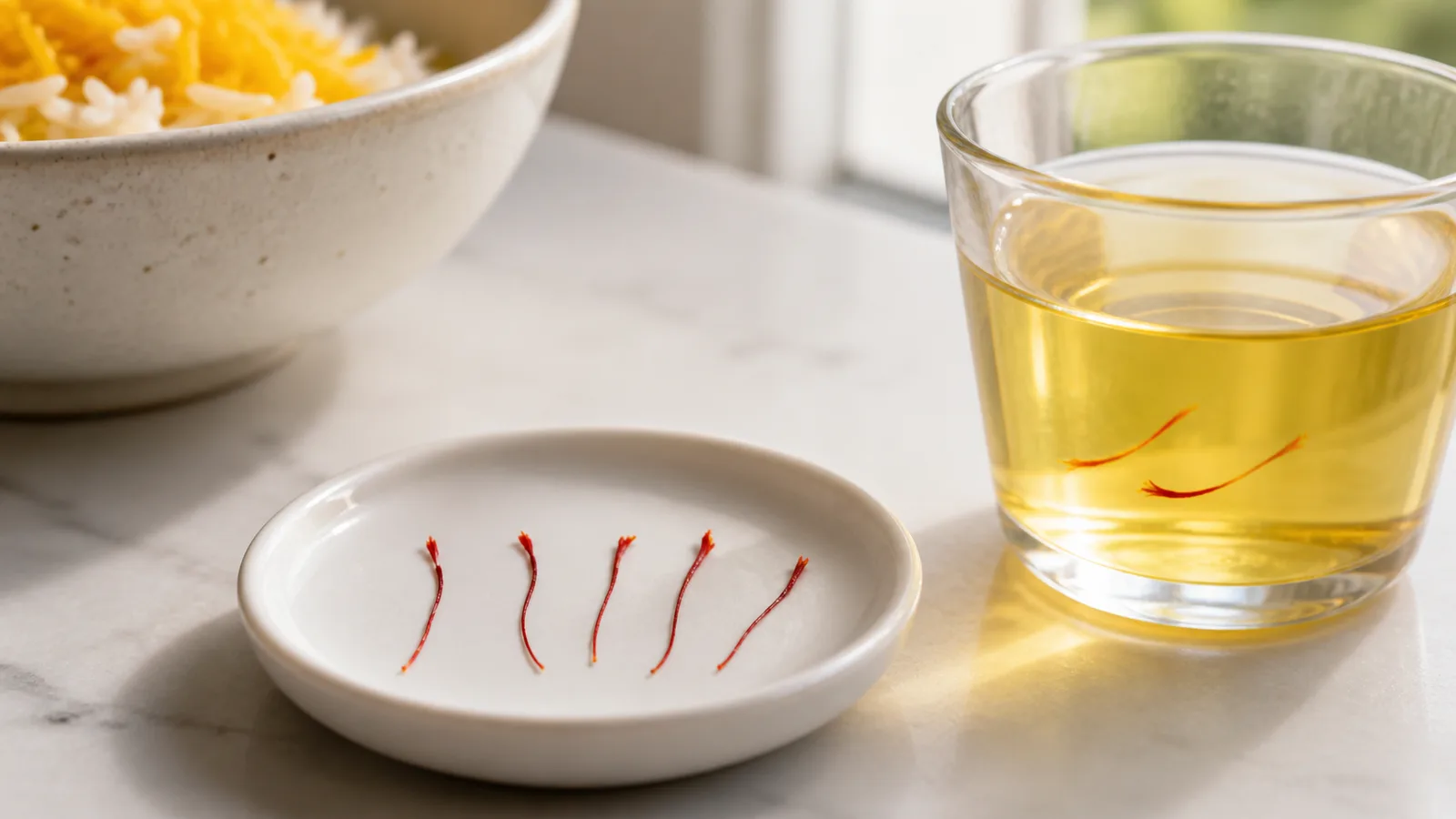
Saffron is expensive because each Crocus sativus flower produces only three usable red stigmas, the flowers open during a short harvest season, and much of the picking and separation must be done carefully by hand. Thousands of flowers are needed even for one ounce of dried spice. Drying, grading, storage and traceable packaging add further cost. Together, these saffron cost factors explain why a small quantity carries a high price.
What is saffron and why is it so expensive?
Saffron is the dried stigma of a cultivated crocus. The valuable part is tiny: three slender red stigmas sit inside a flower that must first be grown, picked and opened. Unlike a crop that can be harvested for a heavy fruit or seed, most of each saffron flower never enters the spice jar.
The cost therefore reflects a long chain of work for a very small final weight. Rarity is part of the story, but labour, timing, land, quality control and losses during drying explain more than a simple luxury label.
Every flower yields only three saffron threads
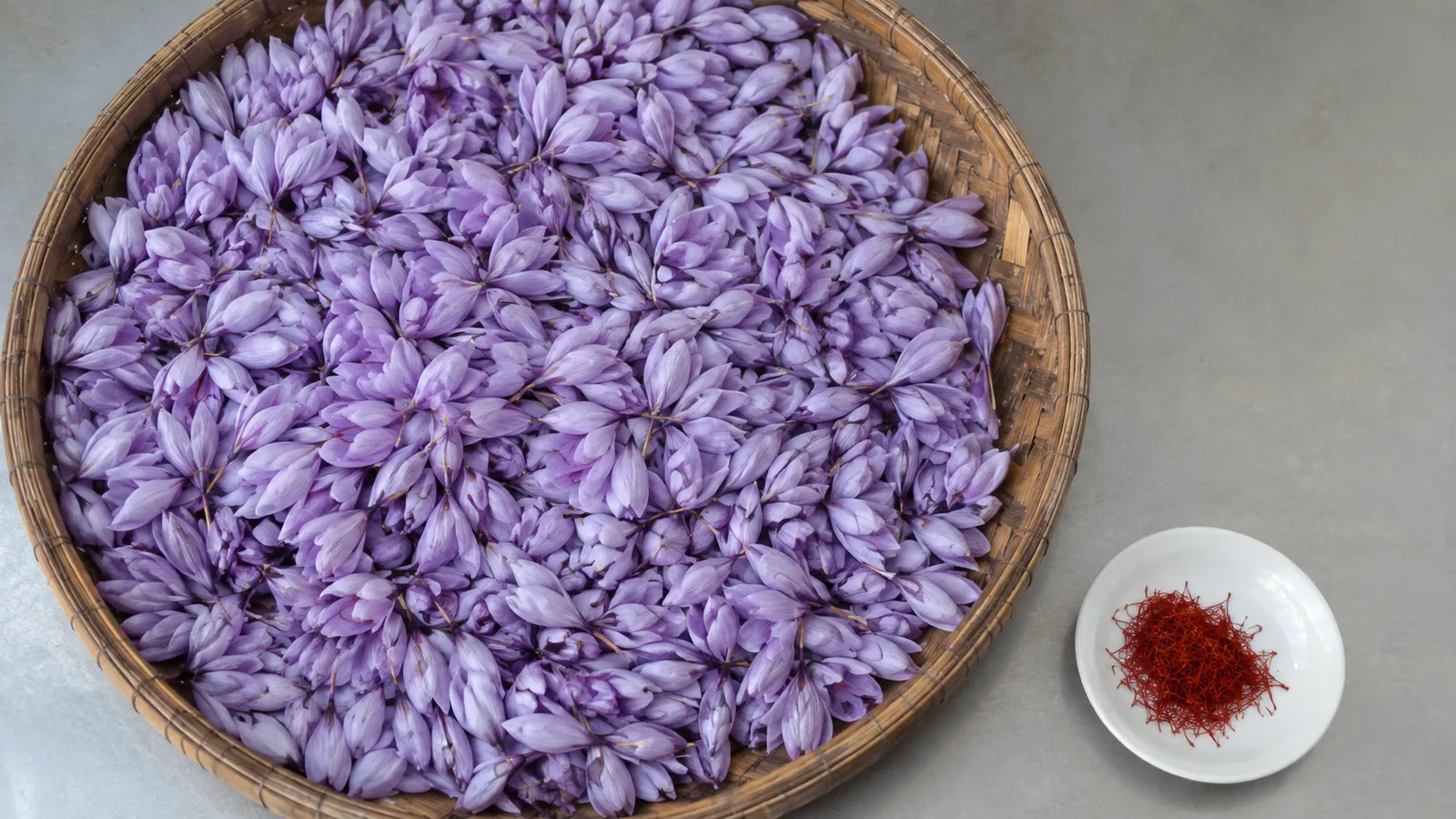
A crocus flower does not provide a spoonful of spice. It provides three fresh stigmas, which lose moisture and weight as they are dried. A producer must handle thousands of flowers to make an ounce of finished saffron and far more for a kilogram.
This low yield is the main reason saffron cannot be priced like turmeric, paprika or other spices harvested in much larger quantities from each plant.
The harvest window is short
Saffron flowers do not wait for a convenient factory schedule. They emerge over a compact autumn flowering period and are commonly collected early, before heat and handling reduce quality. A field can require repeated passes because not every flower opens on the same day.
If labour is unavailable at the right moment, the grower cannot simply postpone the work for weeks. That concentration of effort raises seasonal costs and risk.
Harvesting and separation are labour-intensive
Flowers are picked gently, then the stigmas are separated from petals and other flower parts. Speed matters, but rough handling can bruise or contaminate the material. Mechanisation is difficult because the valuable threads are delicate and sit inside a soft flower.
Our account of the saffron flower harvest shows where handwork enters the process. Labour rates vary by producing region, yet the sequence itself remains demanding.
Cultivation takes land, planning and water at the right time
Crocus sativus is grown from corms rather than seed. Farmers invest in planting material, prepare well-drained soil, manage weeds and disease, and time irrigation around the crop’s seasonal cycle. A planting can produce for several years, but its yield and condition still need active management.
Specific climate and soil conditions suit commercial production better than others. Iran is the dominant producer, while saffron is also grown in India, Spain, Greece, Afghanistan, Morocco and other regions. Limited suitable production does not mean supply can never grow; it means expansion takes time and competent cultivation.
Drying turns fresh stigmas into a stable spice
Fresh stigmas are not ready for a retail jar. They must be dried promptly and evenly so that moisture falls while the desired colour, aroma and flavour are protected. Too much heat can flatten aroma; inadequate drying can shorten storage life or create quality problems.
Because the spice loses water during this stage, the saleable dried weight is much lower than the fresh material brought in from the field.
Grade and purity change the price
Not every saffron lot is equivalent. The proportion of red stigma to yellow style, cutting and sorting, cleanliness, moisture, sensory quality and measured colouring strength can all affect grade and value. Long, carefully separated red threads generally cost more to prepare than mixed or lower-grade material.
Artificially coloured fibres or diluted powder may be cheaper because they are not an equivalent product. A suspiciously low quote should prompt questions about net saffron content, grade, documentation and seller traceability rather than an assumption that all prices are inflated.
Packaging and the sales channel matter
A farm-gate bulk price is not the same as the price of a small sealed jar. Testing, sorting, food-safe packing, labels, freight, insurance, import duties, retailer margins and small-package handling can all enter the final number.
If the question is “is saffron expensive?”, the answer depends partly on whether you compare price per gram, price per serving or wholesale weight. This is also why “how much does saffron cost?” and “what is the price of saffron in Iran?” need a date, market, quantity and grade. The current saffron price page is the appropriate place to check Rowhani Saffron’s live commercial context; this article explains the cost structure rather than quoting a number that will go stale.
Origin affects cost, but it does not decide quality alone
Origin can influence labour, yield, local grading traditions, certification and reputation. It can also be used as a marketing shortcut. Spanish saffron may be expensive for one combination of these reasons and Iranian saffron for another, but a country name by itself does not reveal purity or sensory strength.
Compare the actual grade, batch information, processing and seller, not just a flag or romantic origin story.
Demand is strong because a little goes a long way
Saffron has a distinctive golden colour, aroma and flavour that substitutes do not reproduce exactly. Demand from home cooks, restaurants, food manufacturers and gift markets competes for a crop with inherently low dried yield.
The price per kilogram sounds extreme, but recipes use small measured amounts. For a household, cost per serving is often more useful than the headline price per unit of weight.
Why very cheap saffron deserves scrutiny
- The product may include more yellow style or broken material than a premium red-thread grade.
- The stated weight or grade may not be directly comparable.
- Old or poorly stored stock can lose aroma while keeping some colour.
- Powder makes dilution and substitution harder to see.
- A large bulk offer can legitimately cost less per gram than a tiny retail pack.
Price is a screening clue, not an authenticity test, and trusted suppliers should be able to explain exactly what they are selling. Traceability, thread appearance, aroma and appropriate documentation matter more than choosing either the cheapest or the most expensive jar.
The short answer
Why is saffron so expensive? Each flower yields only three threads, harvesting is concentrated into a short season, separation is delicate handwork and drying reduces the final weight. Farming risk, grading, purity, packaging and global demand build on that costly foundation. Genuine saffron commands a high price because producing a small amount well requires a remarkable amount of careful work.