You can screen saffron at home by comparing its thread shape, dry aroma and behaviour in warm water. These checks can expose obvious dye, substitutes or poor storage, but no home saffron purity test can certify chemical composition or grade. Treat the result as evidence for a buying decision, not laboratory proof.
Start with the packet and the seller
Purity is easier to judge before the seal is broken, which is why buying from reputable suppliers still matters. Look for a named supplier, clear product identity, net weight, origin information and a batch or lot reference where available. Packaging should protect the spice from moisture and make tampering apparent.
An unusually low price is a reason to inspect more carefully, not proof of fraud. Harvest, grade, origin, packaging and sales channel all affect price.
Inspect whole saffron threads in good light
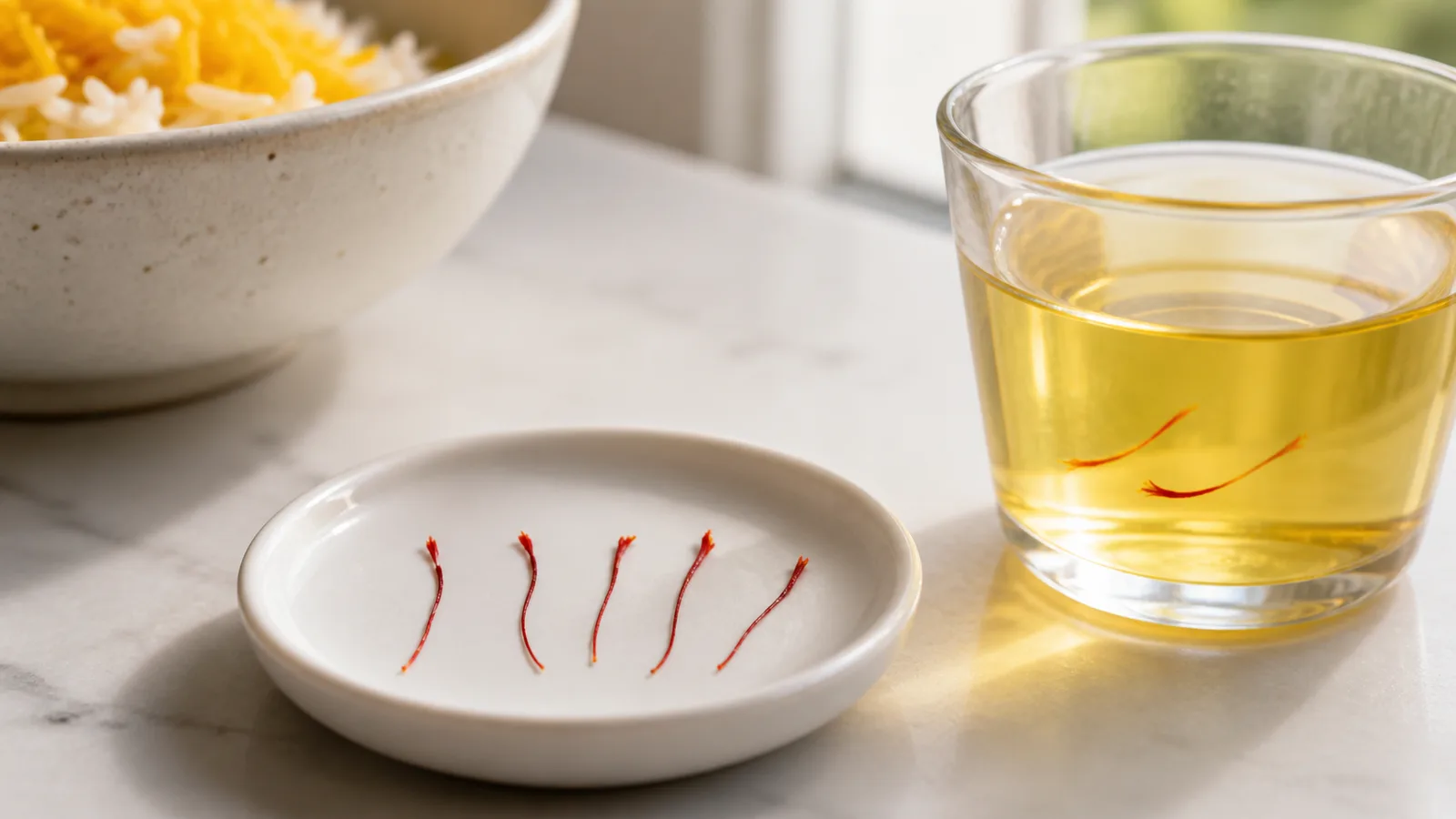
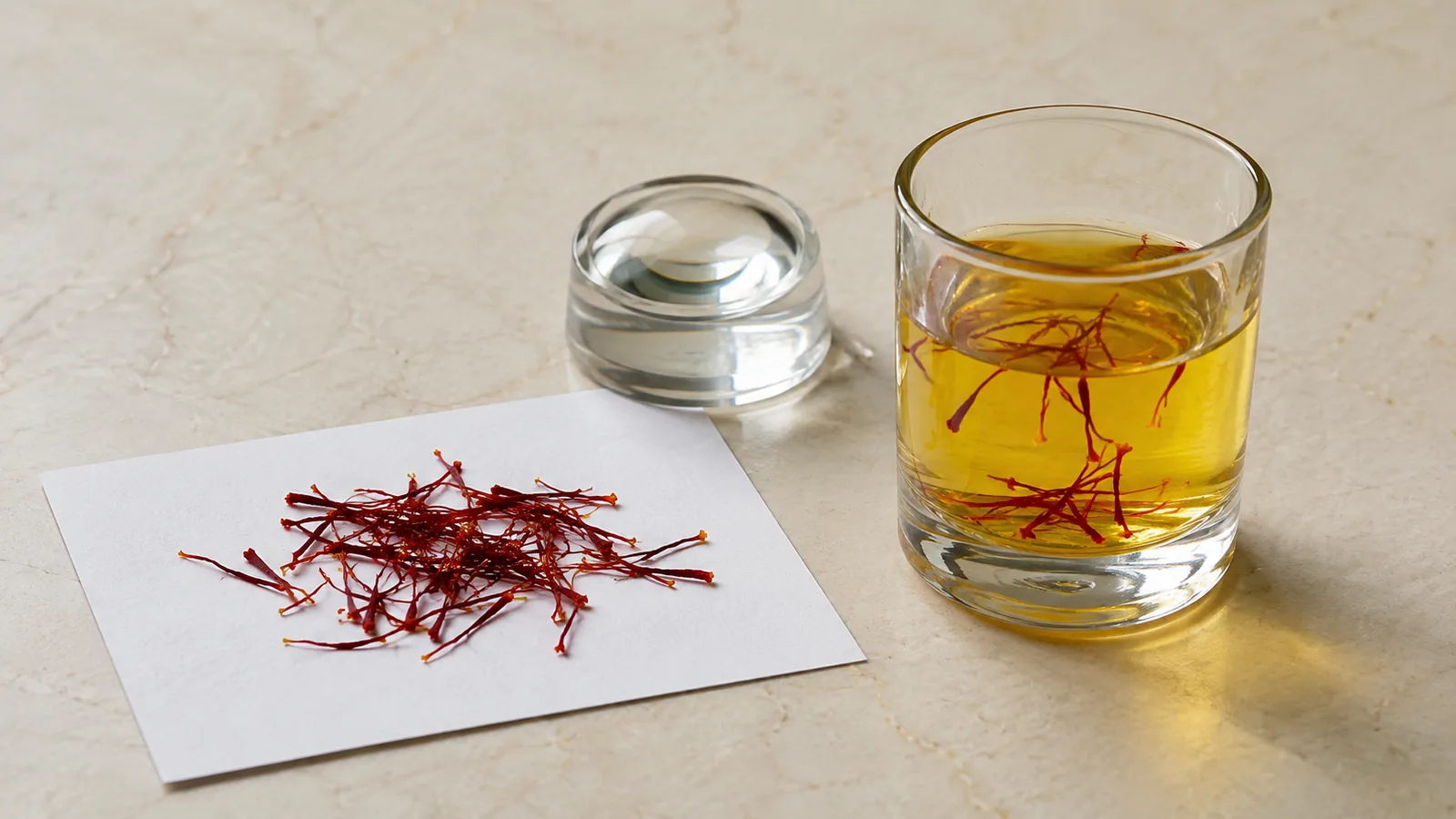
Place a few threads on a plain white plate. Saffron consists of dried stigmas, so genuine pieces are slender, deep red and wider or trumpet-like at one end. Natural threads vary slightly. A pile of perfectly identical fibres, unexplained petals, excessive debris or material with no recognisable stigma shape deserves scrutiny.
Orange-red variation can be normal. Yellow style attached to some threads is also natural plant material, though a large proportion may indicate a lower colouring-strength grade rather than adulteration. White fibres and unrelated plant fragments are different concerns.
Check the dry aroma
Open the container briefly and smell without pressing the spice against your nose. Good saffron has a distinctive, concentrated fragrance often described as warm, floral and hay-like. Some people also notice honey-like notes even though the thread itself is not sweet.
A chemical perfume, mustiness or complete absence of aroma can point to added fragrance, damp storage or old material. Aroma varies with age and storage, however, so it should be combined with the other observations.
Run a controlled warm-water test
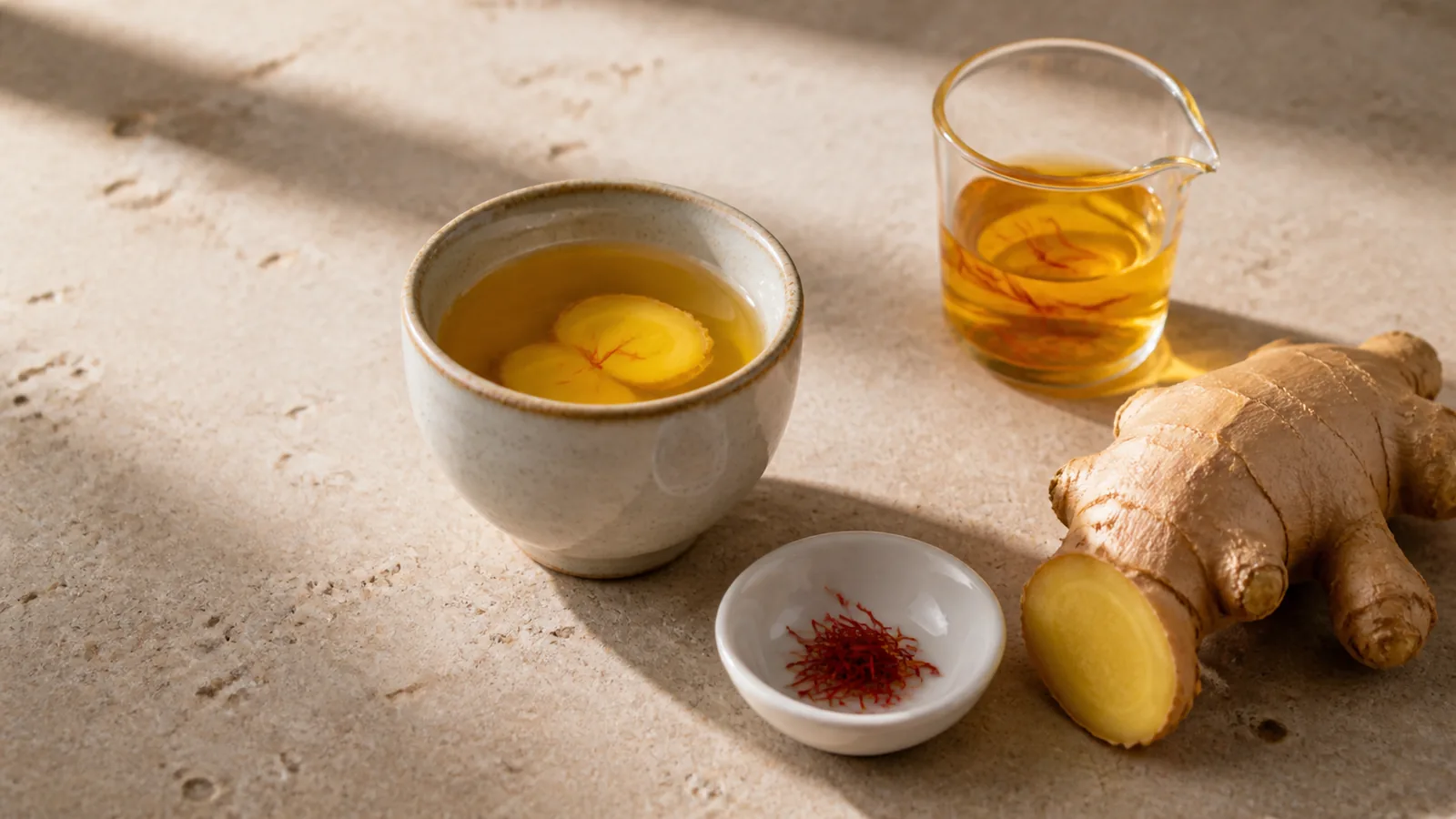
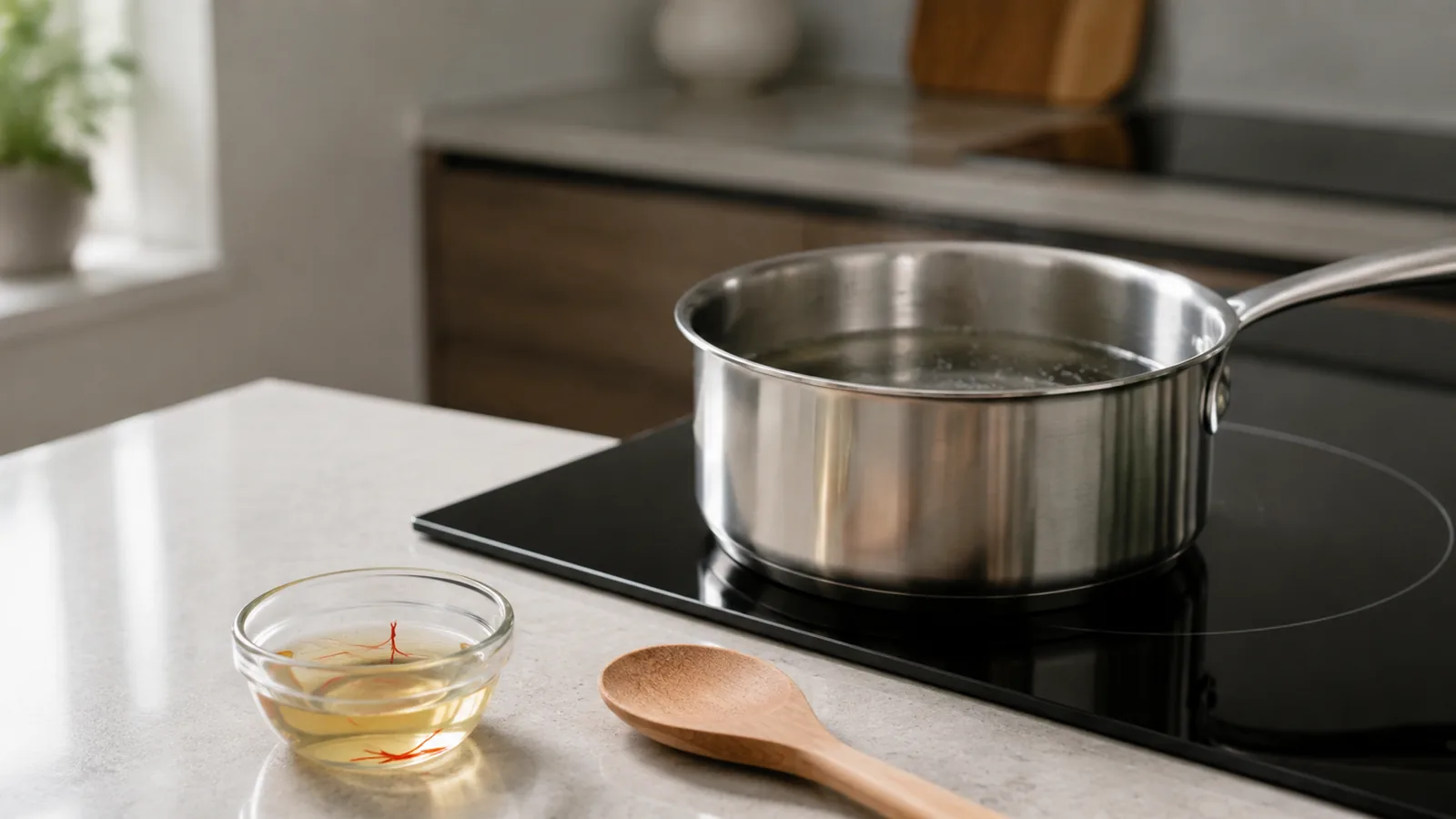
Put a small pinch of whole threads in a clear glass of plain warm water. For this comparison, use water rather than milk because an opaque liquid hides the colour pattern. Do not stir at first. Watch for 10 to 15 minutes, noting the colour of both the water and the hydrated threads.
- The infusion should move toward yellow or deep gold rather than behaving like a drop of bright red ink.
- The threads should retain their shape and remain recognisable after soaking instead of disappearing into the liquid.
- A characteristic aroma should become noticeable as the water warms the spice.
- Some genuine threads may float at first and others may sink; buoyancy alone does not establish purity.
Our closer look at whether real saffron floats in water explains why thread thickness, dryness and trapped air change that result.
Understand fast and slow colour release
Whole threads commonly colour water more gradually than finely ground saffron because less surface is exposed. Crushing, hotter water and a larger dose all speed extraction. Therefore “slow” cannot be assigned a universal number, and “fast” is not automatically fake.
A sudden halo of vivid red dye around intact-looking fibres is a warning sign. Even then, the glass test cannot tell you which colourant or substitute might be present. It tells you to pause and investigate.
Do not use floating as the deciding test
Online demonstrations often say genuine saffron must float or must sink. Both claims are too simple. A dry thread can stay on the surface because of air and surface tension; another genuine thread can wet and descend immediately. Stirring changes the result again.
Record buoyancy if you find it useful, but give more weight to the combined pattern of thread anatomy, golden extraction, aroma, package traceability and seller reliability.
Use touch and taste with restraint
Dry saffron threads are delicate, but brittleness increases with age and very dry storage. Rubbing them hard wastes aroma and can make naturally fragile material look suspicious. A light crush between clean fingers is enough to release scent.
If the material is from a trusted food source and shows no spoilage, a tiny amount has a characteristically bitter, aromatic taste rather than a sugary one. Do not taste an unknown fibre to identify it. Discard material that smells mouldy, chemical or unsafe.
Be cautious with viral home tests
Paper rubbing, baking soda, flame and saliva tests circulate widely, but they are difficult to standardise and can be misleading. Paper can pick up natural pigment and oil; powders conceal structure; heat can damage the sample. A hazardous flame experiment adds no sensible value for a household buyer.
Use a simple, repeatable visual-and-water comparison instead. Photograph the dry threads and the glass at the start and after the same interval if you need to compare two lots.
What a home test cannot tell you
A kitchen check cannot measure the compounds used to assess saffron’s colouring strength, aroma and bitterness. It also cannot confirm pesticide residues, microbial safety, geographical origin or a formal grade. Those questions require appropriate sampling, documentation and laboratory methods.
For a broader explanation of microscopy, recognised standards and packaging evidence, read our guide to how to identify pure saffron.
A practical decision sequence
- Confirm the packet and supplier are traceable.
- Compare several whole threads rather than judging one fragment.
- Smell the dry product for a clean, characteristic aroma.
- Observe a measured warm-water infusion without stirring immediately.
- Stop using the product if the combined result suggests dye, foreign fibre, dampness or spoilage.
- Request documentation or professional testing when the value or risk justifies it.
The short answer
The best home saffron purity test combines packaging, thread shape, aroma and a controlled warm-water infusion. Genuine-looking saffron should form a golden, aromatic liquid while its threads remain identifiable, but none of those clues certifies purity on its own. When observations conflict, rely on traceability and testing rather than forcing a verdict from a single trick.