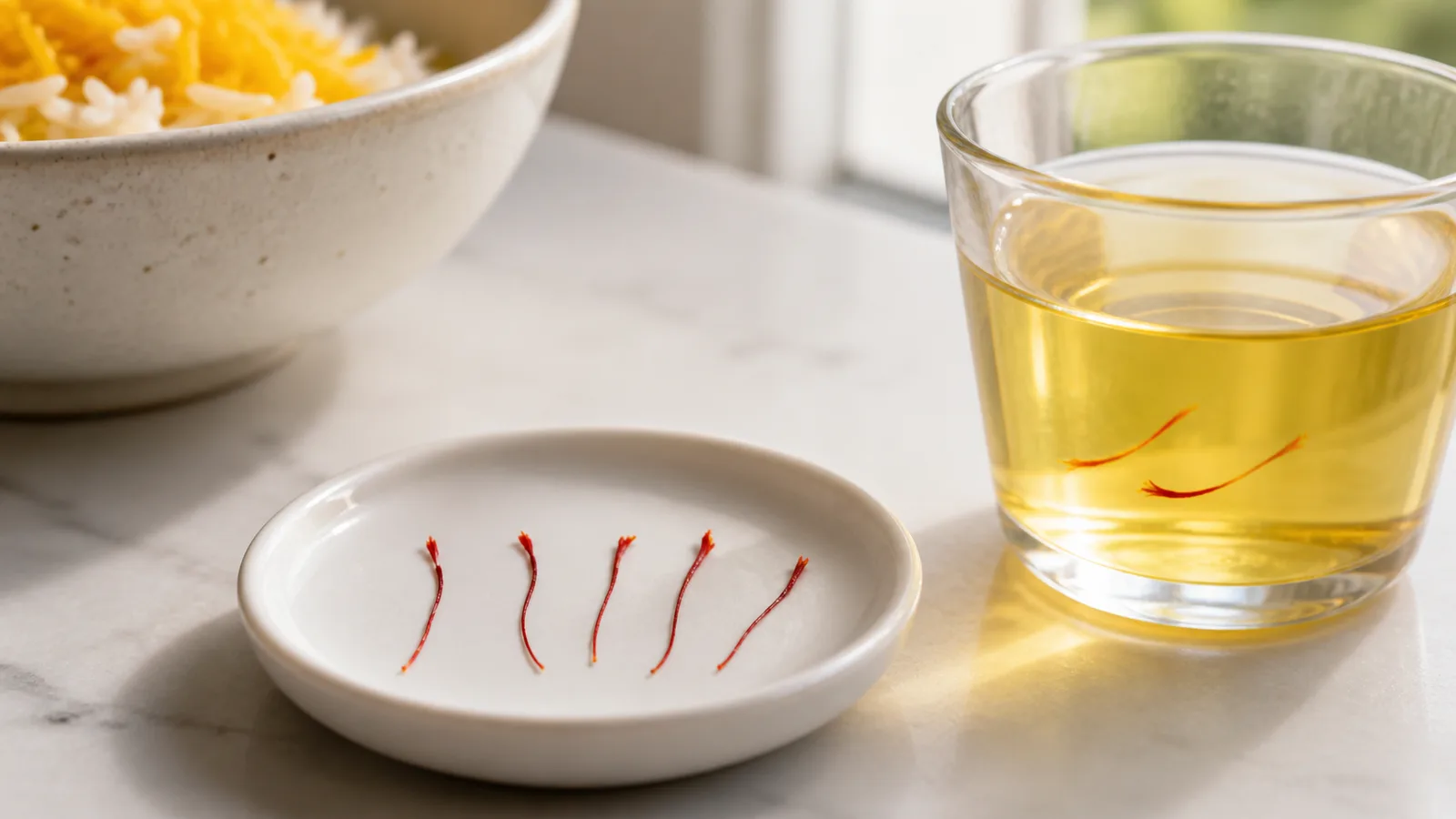
If saffron is not turning milk yellow, give it more time before assuming anything is wrong. Lightly crush the threads, steep them in a few spoonfuls of warm milk for 10 to 15 minutes, then stir the whole infusion into the rest. Good saffron usually creates a warm golden-yellow tint rather than a bright artificial yellow.
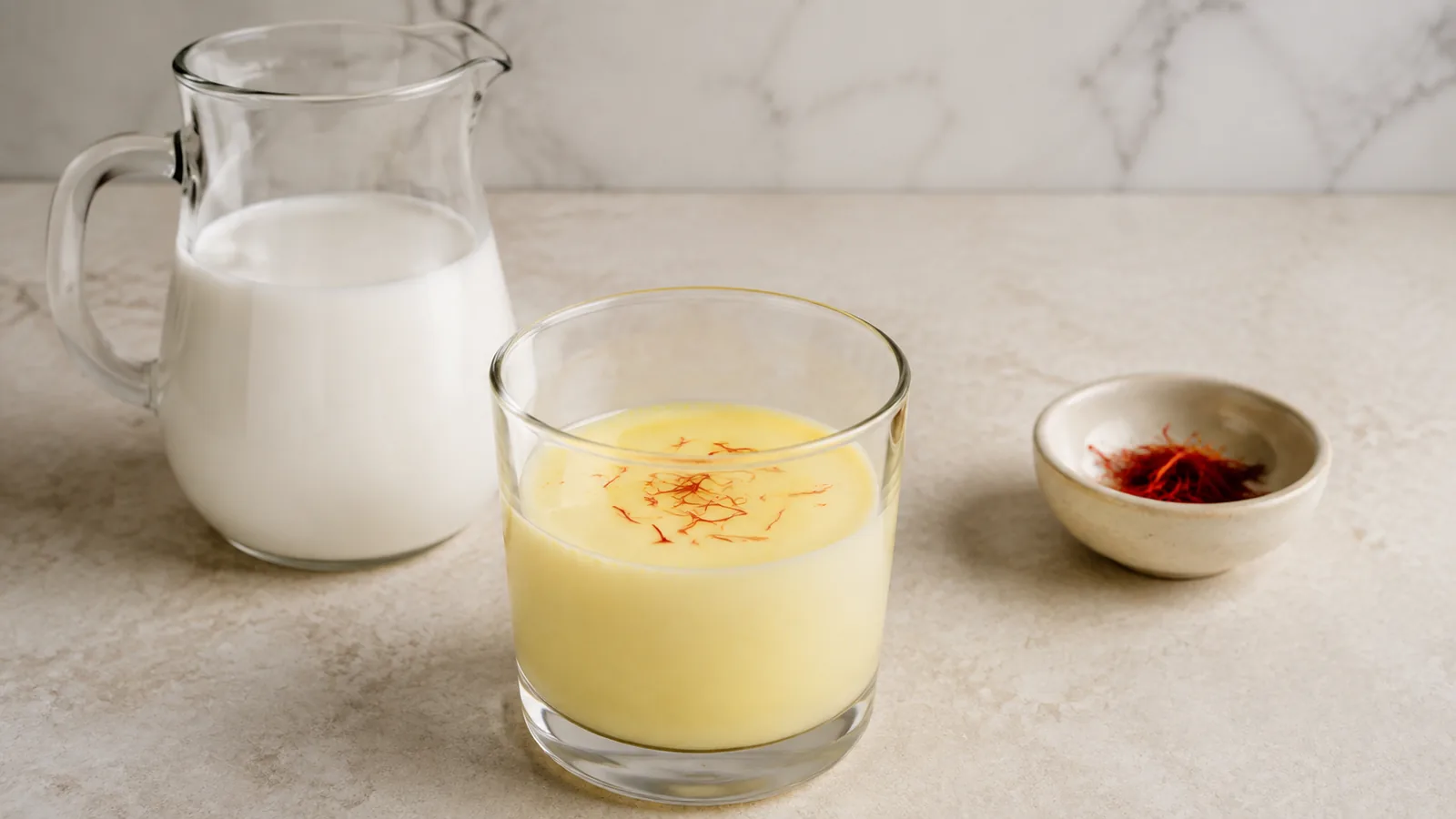
Why saffron changes milk more slowly than water
Milk is naturally opaque, so the first colour released by saffron is harder to see than it would be in clear water. Crocin, the main water-soluble pigment associated with saffron’s golden colour, may be extracting even before the change looks dramatic in an opaque drink. The milk’s own white colour softens the effect, while its fat and proteins can make the finished shade look creamy gold instead of transparent yellow.
This means a pale result is not automatically a failed result. Aroma and flavour may be developing even when the colour still looks subtle.
Bloom the saffron in a small amount first
Dropping whole threads straight into a full saucepan gives them a large volume of liquid to colour. A small, concentrated infusion makes the change easier to see and helps distribute it evenly.
- Measure the saffron while the threads are whole.
- Crush them lightly with a clean mortar and pestle or between clean fingertips.
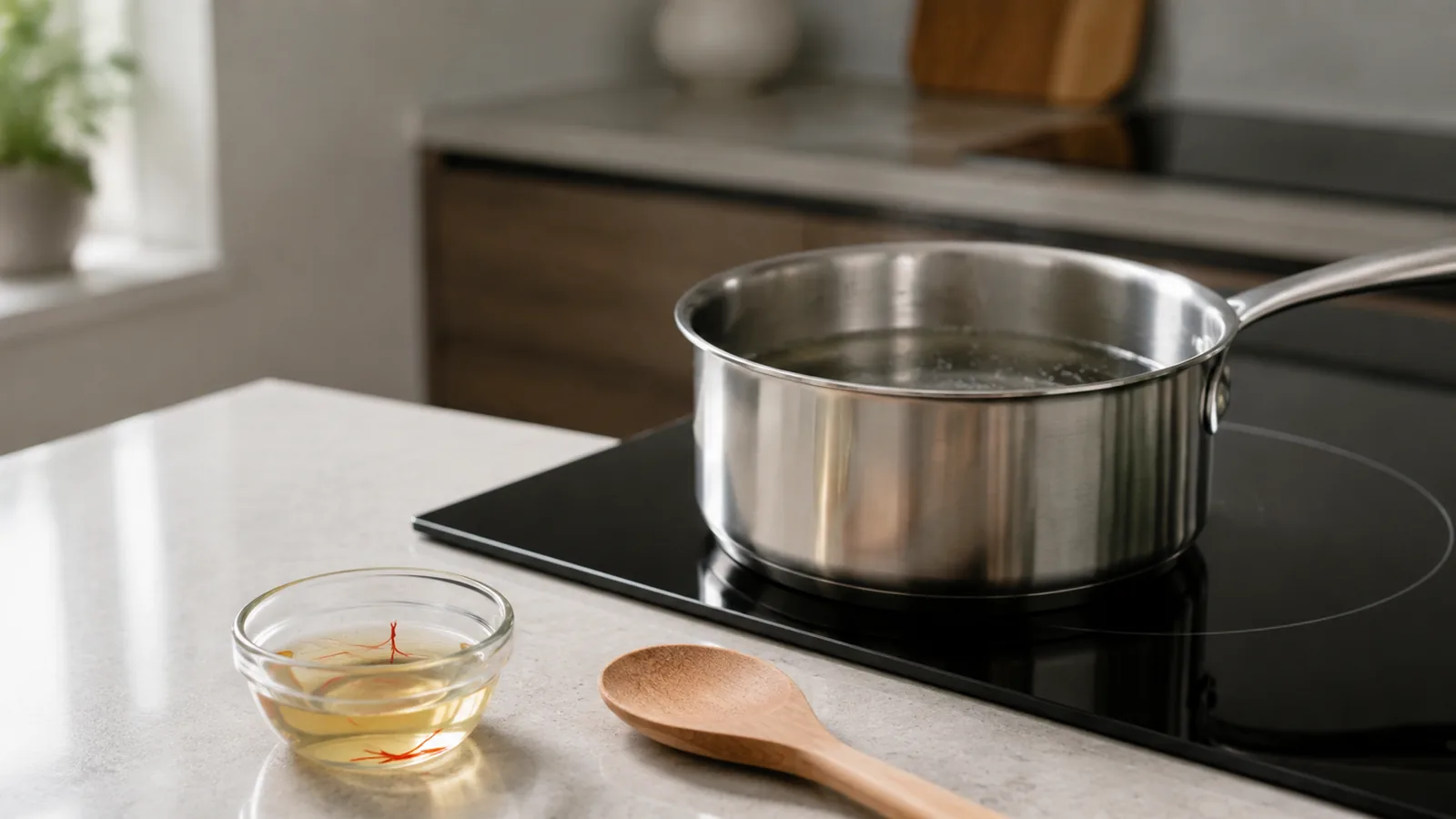
- Warm a few spoonfuls of milk until comfortably hot but not boiling.
- Add the saffron, cover the cup and leave it for 10 to 15 minutes.
- Stir both the liquid and softened threads into the remaining milk.
For recipes that allow a longer preparation time, the covered infusion can stand for 20 minutes. Our guide to how long to infuse saffron in milk explains how time and temperature change the result.
Check the temperature
Cold milk extracts saffron slowly. Boiling is not the answer, however: prolonged high heat can flatten the delicate aroma. Warm milk gives a practical balance, especially when the infusion will later be heated again as part of a custard, pudding or drink.
If the saffron was added to refrigerated milk, place it in the refrigerator and allow more time rather than leaving dairy at room temperature for an extended period.
Use enough saffron for the amount of milk
A few threads cannot turn a large pot deeply golden. The appropriate amount depends on the recipe and the strength of the saffron, so begin with the recipe’s stated quantity and avoid adding large unmeasured handfuls. Too much can make the flavour bitter or medicinal.
Colour also appears lighter in cream, condensed milk and thick dairy mixtures than in ordinary milk. Judge the final dish under neutral light before adding more.
Look at the threads and their condition
Fresh, well-stored saffron releases more colour and aroma than threads that have spent months exposed to heat, air, moisture or direct sunlight. Store it tightly closed in a cool, dark cupboard and keep wet spoons away from the container.
Authentic saffron consists of dried red stigmas, although individual threads can have natural colour variation. A strong instant red cloud, surface dye or colour that washes off while the material underneath looks unlike a saffron stigma deserves caution. No single kitchen trick proves authenticity by itself.
Why grinding makes a difference
Light crushing increases the surface area in contact with milk, so colour extraction begins faster. The goal is small pieces, not powder so fine that it disappears into the grinder. A clean mortar matters because traces of coffee, pepper or other spices can mask saffron’s aroma.
Whole threads can still work. They simply need more time, and their colour may appear in streaks until the milk is stirred.
Water or milk: which is better?
Both can work. Water makes the developing colour easier to judge and is useful when a small amount will not disturb the recipe. Milk integrates naturally into puddings, ice cream, custards and warm drinks. The better choice is the liquid the recipe can accept without changing its texture.
If you are deciding between the two, see our practical comparison of soaking saffron in milk or water.
What colour should you expect?
Proper saffron color extraction gives milk a golden, honeyed or pale yellow appearance. It does not need to resemble neon food colouring. The exact shade changes with the dose, steeping time, milk type, recipe ingredients, vessel and lighting.
Spices such as turmeric can produce a stronger yellow but create a different flavour and should not be treated as evidence of stronger saffron. Likewise, a photograph taken under warm light is not a reliable standard for the shade in your kitchen.
A quick troubleshooting order
- Wait: allow at least 10 to 15 minutes in warm milk.
- Crush: break whole threads lightly to expose more surface.
- Concentrate: bloom in a small portion before mixing.
- Stir: distribute the infusion through the full volume.
- Review the dose: compare it with the amount of milk and the recipe.
- Check storage: consider age, heat, moisture and light exposure.
If those steps produce aroma and a gentle golden tone, the saffron is doing what it should. If there is still virtually no colour, flavour or fragrance after a proper warm infusion, the threads may be old, poorly stored, adulterated or not what they were sold as.