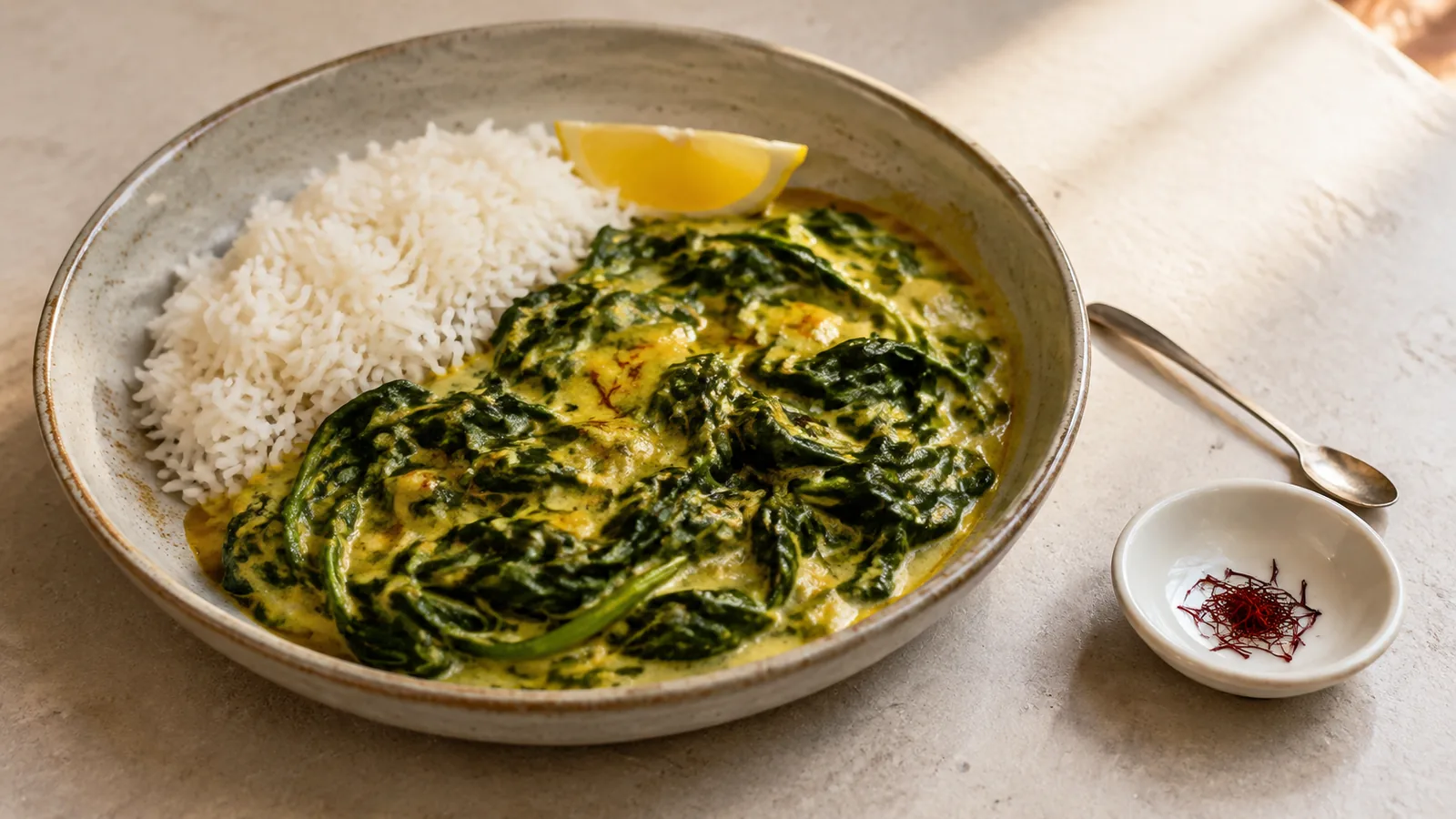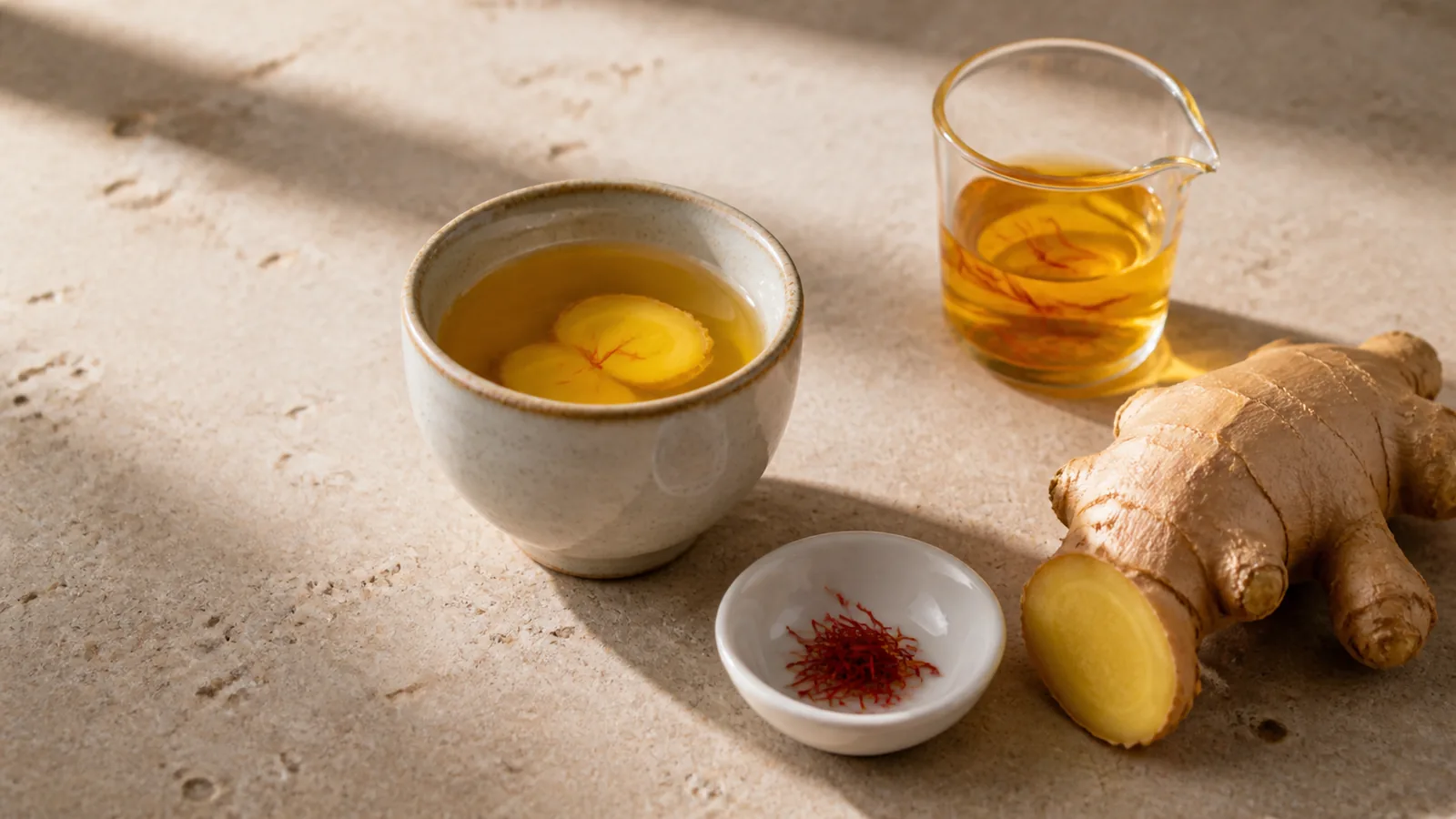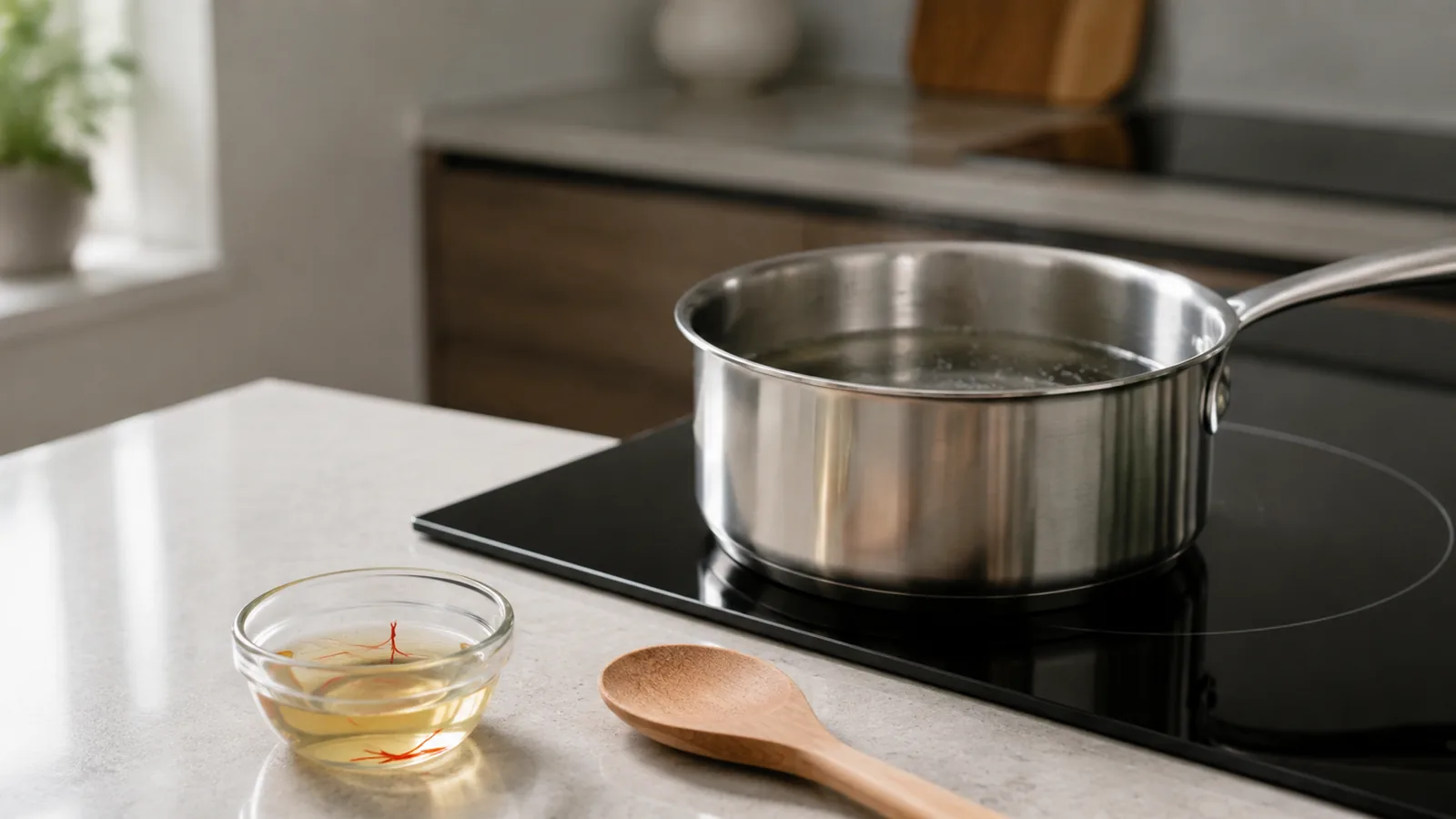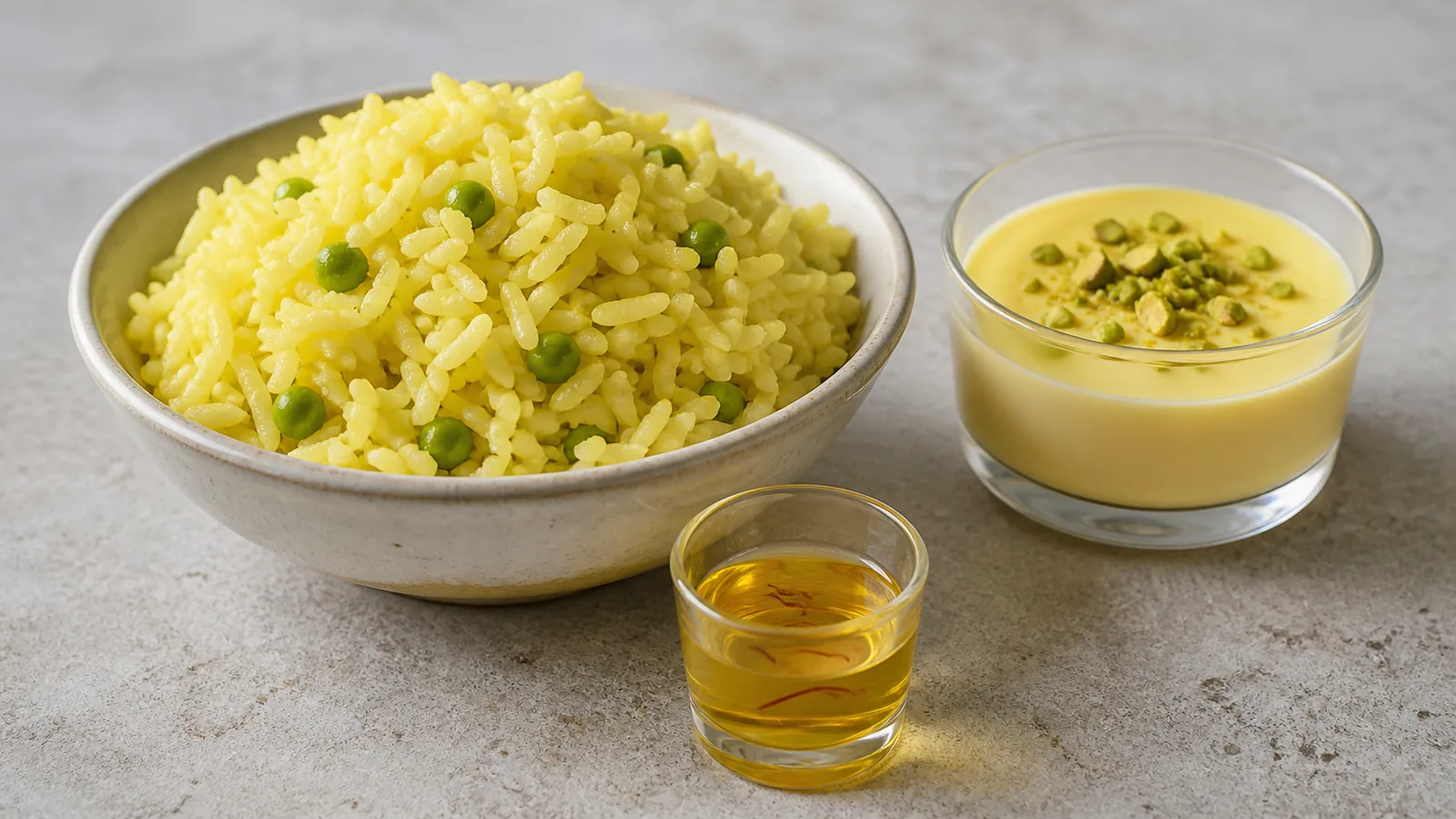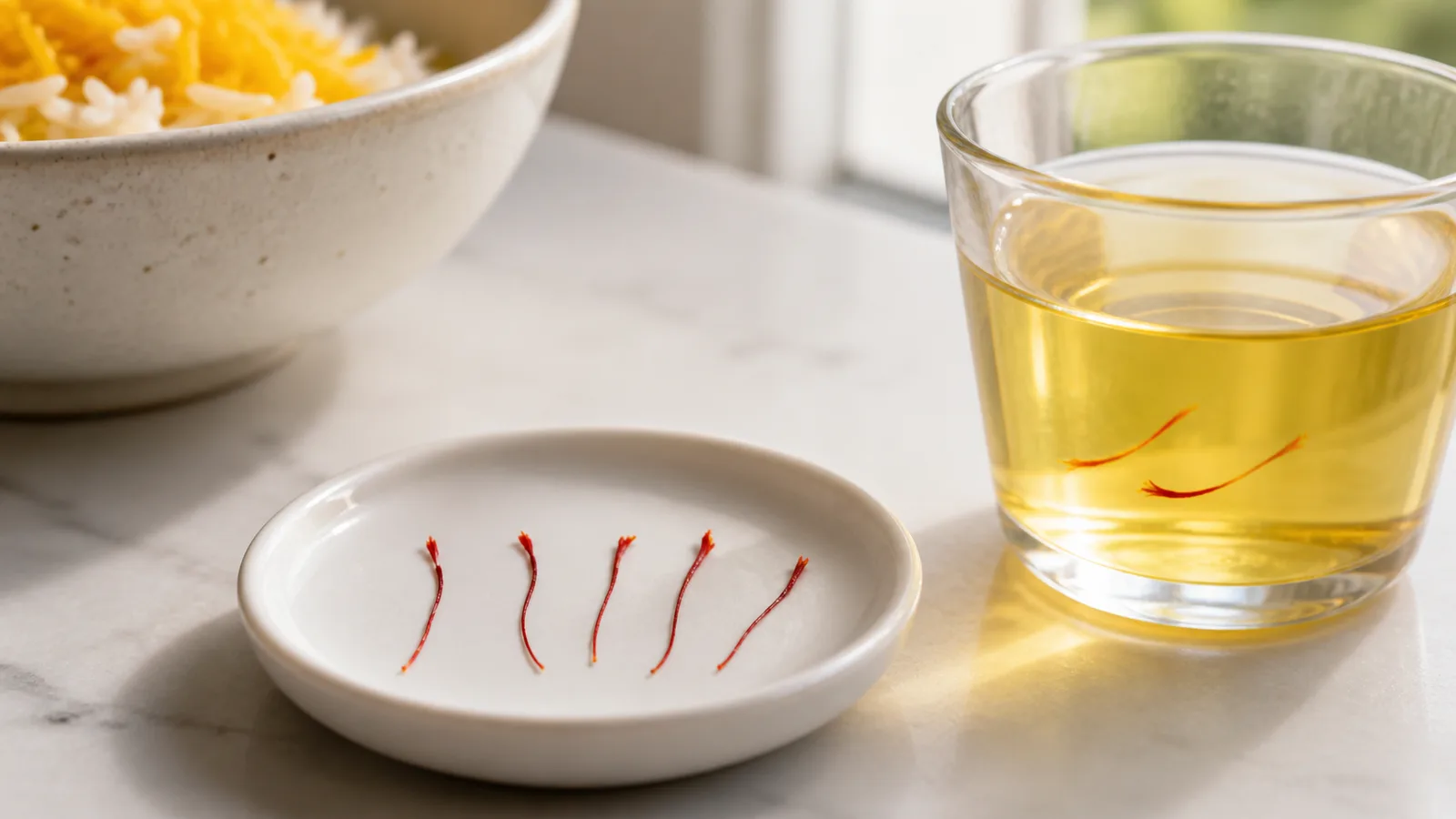
Boiling does not instantly ruin saffron. Heat helps water extract its golden colour, but a long, vigorous uncovered boil can drive off delicate aroma; the floral and earthy notes may become muted while bitterness grows more obvious. The practical approach is to bloom saffron in warm liquid and give it enough cooking time to integrate without boiling it hard for longer than the recipe needs.
Understanding these boiling saffron effects matters most when you are deciding whether to add the spice at the beginning of a stew, into rice liquid, or near the end of a sauce.
What heat does to saffron colour
Saffron’s golden-yellow colour comes mainly from water-soluble crocins. Warm water helps move those pigments out of the threads and into the dish. That is why a bloomed infusion colours rice more evenly than a few dry threads scattered on top.
Brief simmering in a recipe usually extracts rather than destroys the colour. Prolonged high heat, especially with a small volume of liquid, can gradually degrade pigments and concentrate the dish in unpredictable ways. More boiling is not a reliable method for getting “extra” colour.
What heat does to aroma
Safranal is an important contributor to saffron’s aroma. Aromatic compounds are volatile and can evaporate, so steam and an uncovered rolling boil can carry some fragrance away. The result may still be yellow but smell less floral and hay-like.
A covered pot retains more aroma than an open pan, while a rapidly reduced sauce loses water and concentrates flavour at the same time. Those competing effects are why cooking method matters more than a simple claim that any heat is harmful.
What heat does to flavour
Saffron is naturally bitter. In the right amount, that bitterness gives structure to its floral aroma. Too much saffron, poor distribution or a long aggressive boil can make the bitter, medicinal side more obvious.
If a dish tastes flat after prolonged cooking, adding a large new pinch may only make it harsher. A small fresh infusion added during the later stage is a better correction.
How to bloom saffron before cooking
- Measure a modest amount for the recipe.
- Lightly crush the threads.
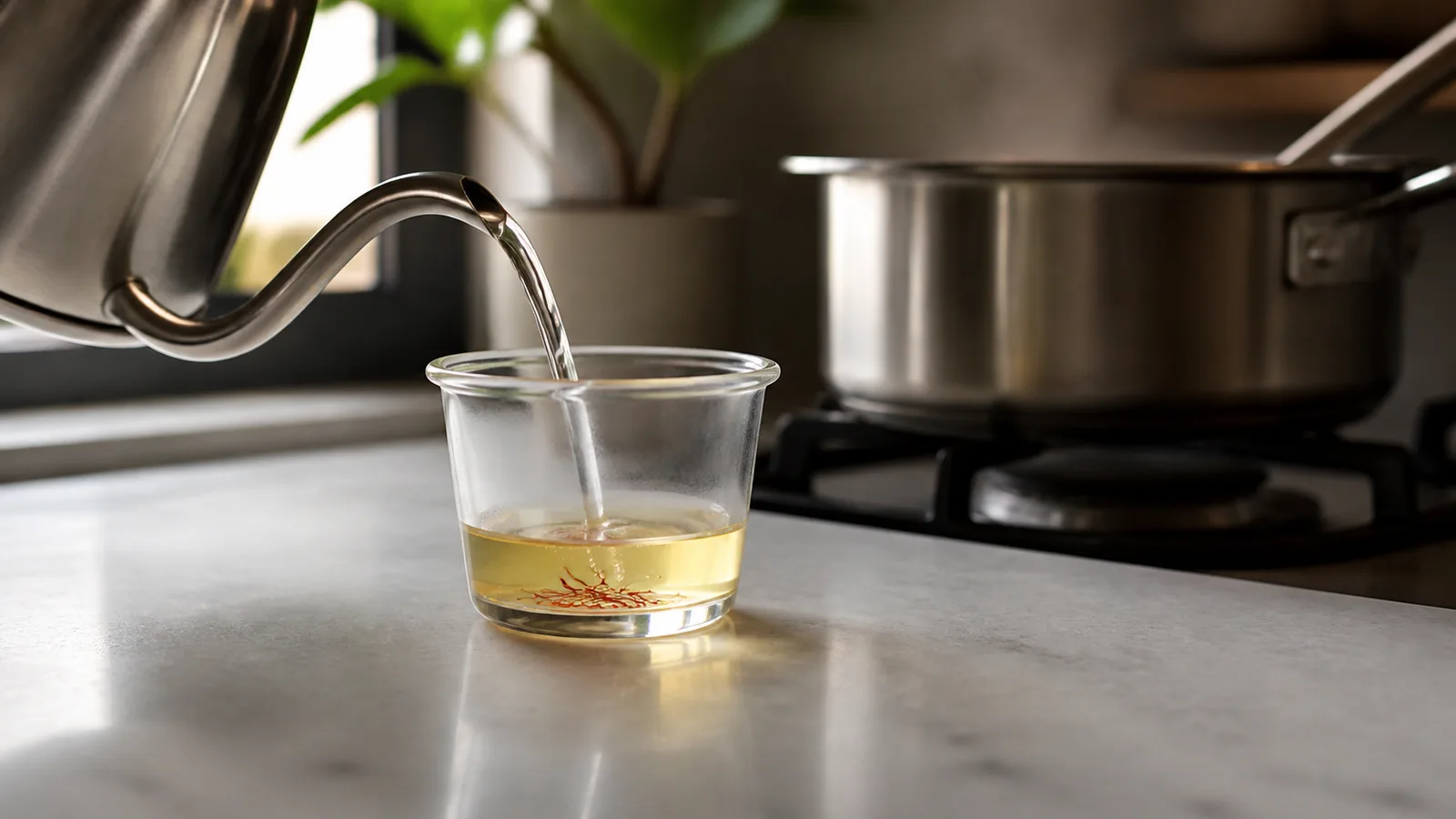
- Cover them with a few spoonfuls of warm water, milk or stock.
- Leave the mixture for 10 to 15 minutes.
- Add both the golden liquid and the softened threads.
The liquid does not need to be boiling. If you have just boiled water, let the violent bubbling settle before pouring a small amount over the threads. Warmth and time do the extraction work.
When to add saffron to different dishes
Rice and grains
Add the bloomed infusion to part of the cooking liquid so it can spread. For layered rice, mix it into one portion and distribute that portion through the finished dish. Saffron can tolerate the normal covered cooking period; it does not need to simmer alone first.
Soups and stews
Stir in the infusion during the latter part of cooking. Give it several minutes to integrate, but avoid hours of hard boiling. If the stew will rest before serving, that resting time also lets the aroma settle into the broth.
Sauces
Add saffron after the most aggressive reduction, particularly in cream or butter sauces. Reducing first prevents you from concentrating a large saffron dose into too little liquid.
Milk, custard and desserts
Bloom the threads in warm milk or cream, then add that infusion to the mixture. Gentle heating is enough. Follow the food-safety requirements of the recipe, but do not keep saffron dairy at a rolling boil merely to extract colour.
Tea
Bring the water to a boil, take it off the heat, then pour it over a few threads and steep. This gives a clear golden drink without continually boiling away aroma. Taste before adding more.
Common mistakes
- Boiling dry threads in a tiny uncovered pan until the water nearly disappears.
- Using extra saffron to compensate for poor blooming or stale threads.
- Adding the infusion before a sauce undergoes a long, hard reduction.
- Assuming a bright yellow dish must have retained all its aroma.
- Grinding a large batch in advance, increasing its exposure to air and light.
Quality and storage still matter
Fresh whole threads give you a better starting point than anonymous powder. Keep saffron airtight, cool, dry and dark, and crush only what you need. Our saffron products page shows whole-thread formats for cooking.
So, what happens when you boil saffron? It releases colour quickly, while prolonged vigorous boiling can diminish the finer aroma and upset the flavour balance. Bloom first, use normal recipe heat, and add the infusion late enough to protect aroma but early enough to spread through the dish.