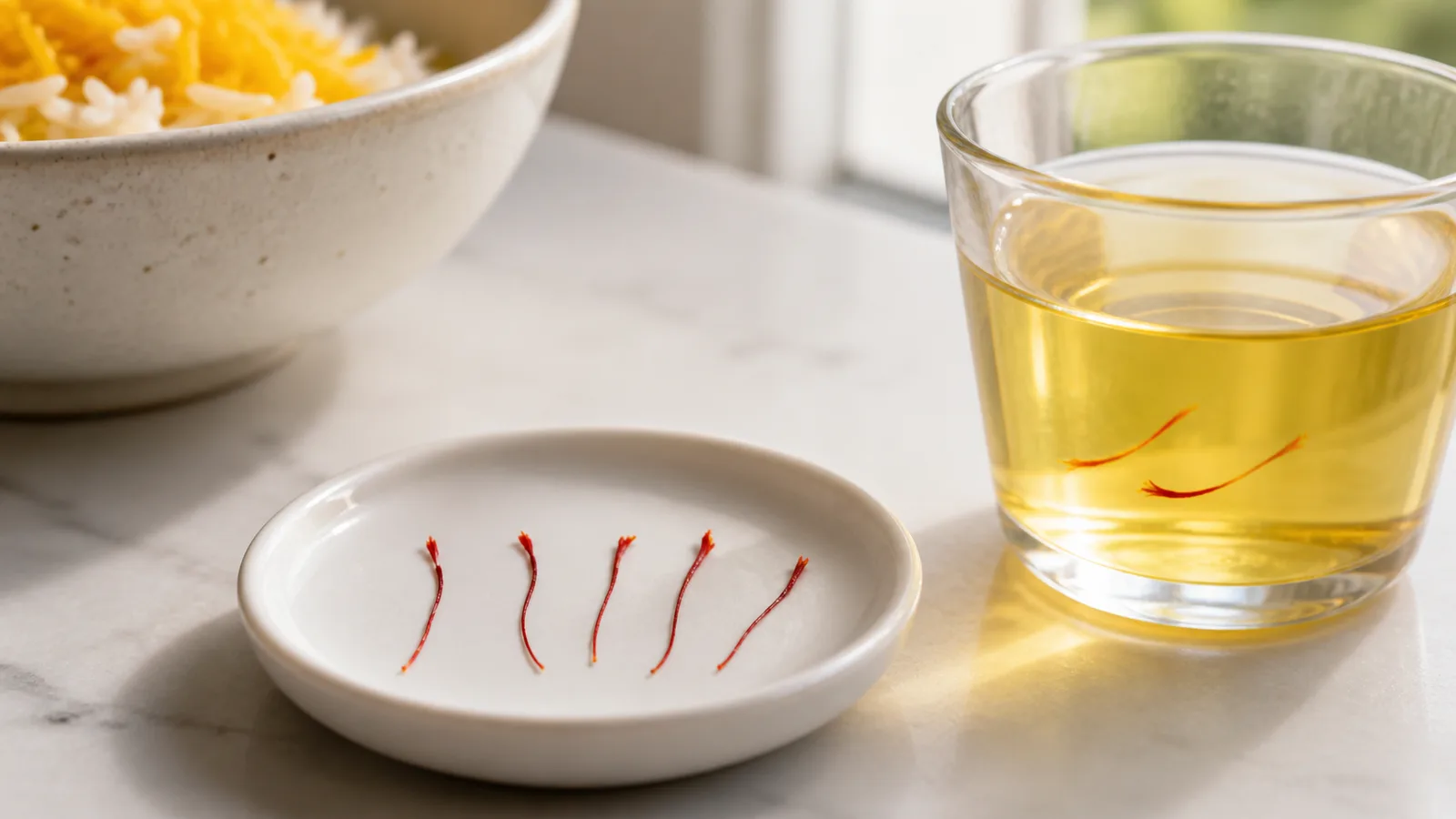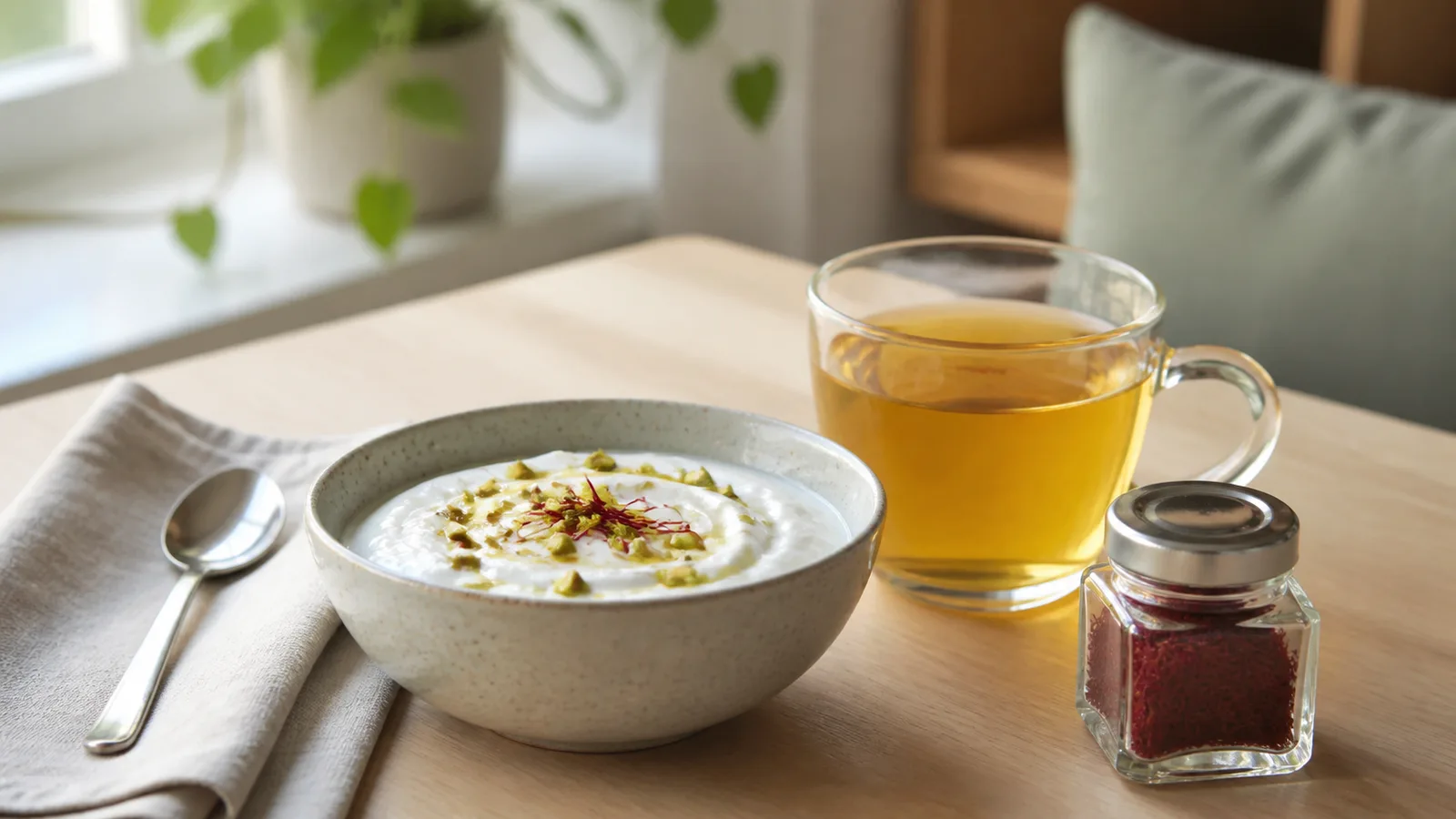
If you eat a small culinary amount of saffron every day, the most predictable effects are flavour, aroma and colour in your food. Research has also examined measured saffron supplements for mood and other outcomes, but a few threads in a meal are not the same product or dose.
Claims about daily saffron benefits therefore need context. Daily culinary use can be part of a varied diet; it is not proven to boost immunity, prevent chronic disease, treat anxiety or fix digestion.
What daily culinary use may feel like
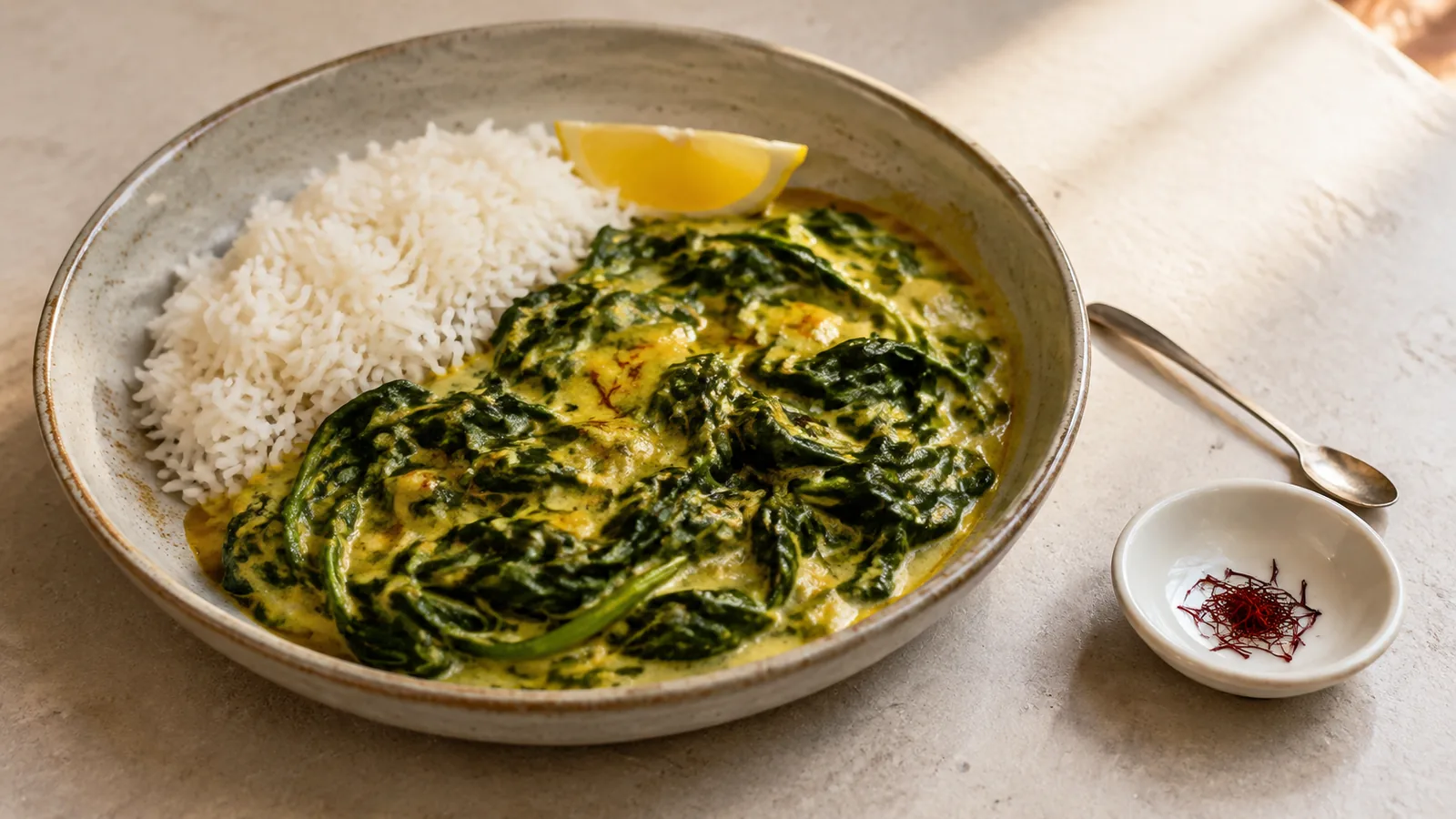
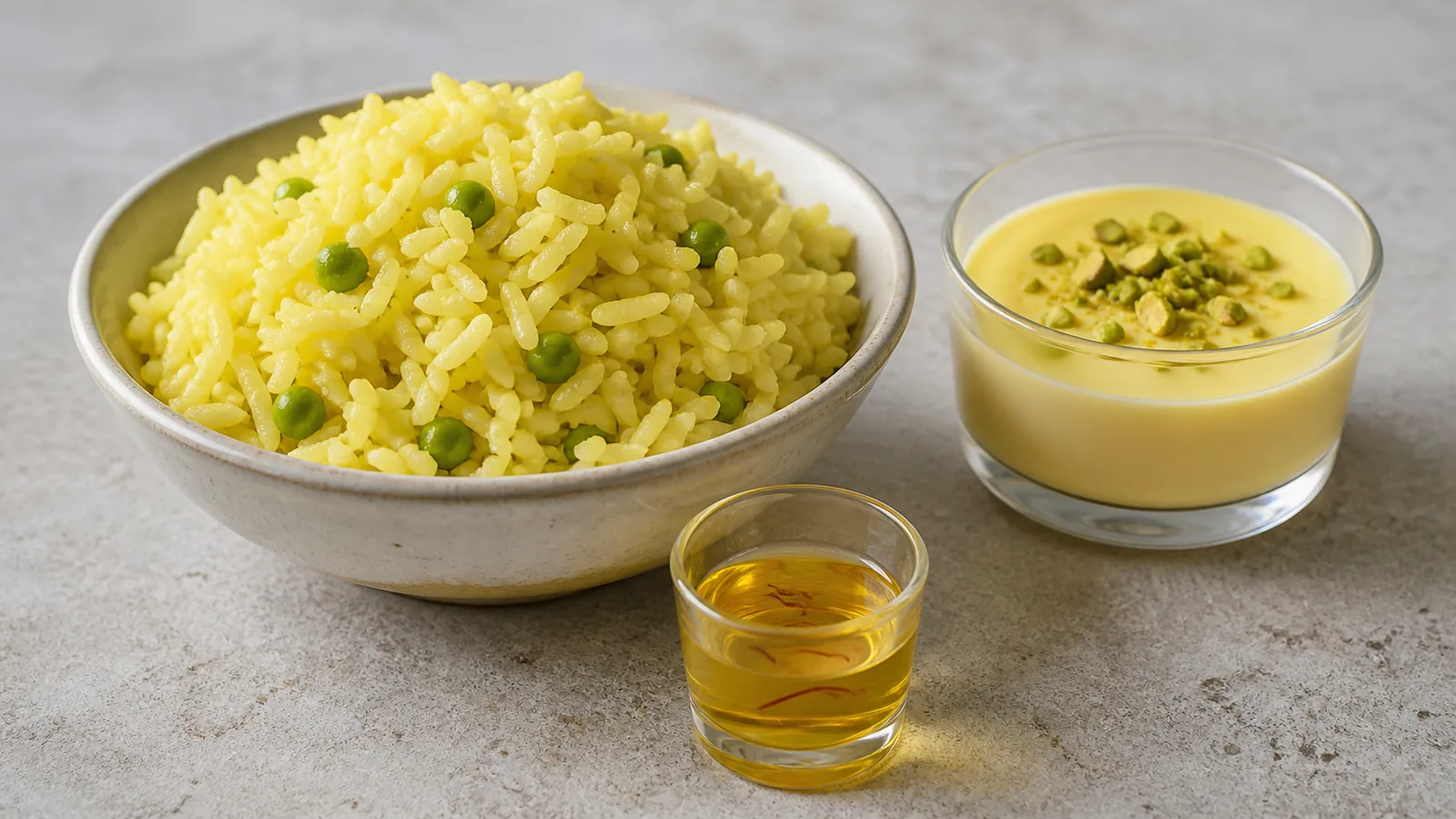
Saffron has a floral, hay-like aroma and a gentle bitterness. Bloomed in warm liquid, a small amount can make rice, soup, milk or dessert more fragrant and visually appealing. That may help a cook make a simple dish satisfying without relying entirely on sweetness or heavy seasoning, but it does not guarantee lower salt or sugar intake.
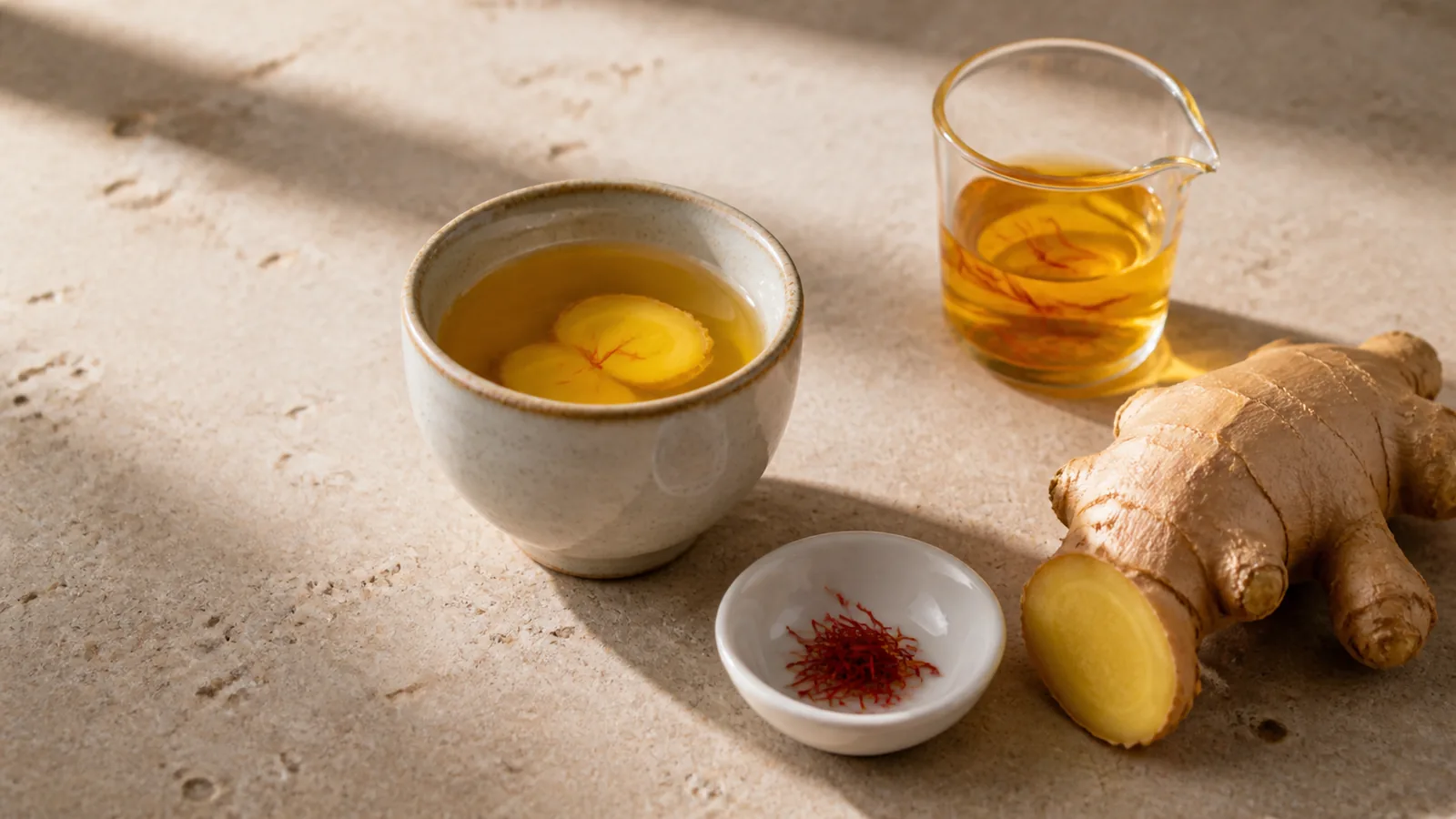
Two to four threads per serving can be a conservative flavour starting point in tea or a small dish. It is not a medical dose or an official daily allowance. Threads vary in size and weight, and a shared recipe distributes them across several people.
What research says about mood
Saffron supplements have been studied for depression, anxiety and mood symptoms. A 2026 systematic review and meta-analysis of 34 randomised trials found favourable pooled results for several outcomes, while assessing the certainty of evidence with GRADE.
Those trials do not show that culinary saffron eaten daily will produce the same effect. Extract composition, measured dose, participant group and study duration matter. Saffron should not replace assessment, psychological care or prescribed medication, and medication should not be stopped without the prescriber’s help.
Crocin, crocetin and safranal
Saffron contains crocin and crocetin pigments as well as the aroma compound safranal. Laboratory research describes antioxidant activity and effects in oxidative stress models, but “contains antioxidants” is not proof that a daily pinch protects cells from ageing, prevents chronic disease or boosts immunity in a person.
Human health outcomes require controlled evidence. Food can still be enjoyed for its culinary qualities without turning each compound into a treatment claim.
Digestion, bloating and appetite
There is not enough reliable evidence to promise that a small daily food amount improves digestion, reduces bloating or corrects appetite. People can also respond differently to a strongly aromatic spice. If saffron repeatedly coincides with discomfort, stop using it and discuss persistent symptoms with a healthcare professional rather than increasing the dose.
Digestive changes, loss of appetite and bloating have many possible causes. A spice should not delay appropriate assessment.
Culinary saffron and supplements are different
- Whole threads in food: used in small amounts for flavour and colour, often shared across servings.
- Powder: disperses quickly but is harder to inspect and easier to overmeasure.
- Extract or capsule: a concentrated, measured product that should be used according to its label and professional advice.
Do not count threads to imitate milligrams from a clinical paper. If you are considering a supplement, review the exact product, medicines and health history with a clinician. The FDA’s dietary supplement guidance notes that supplements can interact with medicines and advises discussing them with a healthcare professional.
Who should be more cautious?
Ask for medical advice before regular supplemental use if you are pregnant or breastfeeding, take medicines that affect mood, blood pressure or blood clotting, have a chronic condition, or plan to give saffron regularly to a child. Allergic reactions are uncommon but possible with any food.
Larger-than-culinary amounts may cause nausea, vomiting, dizziness, headache or low blood pressure. A review of saffron safety and clinical research discusses studied doses and adverse effects; it is not a household instruction to test higher quantities.
How to use saffron in everyday meals
- Start with the small amount your recipe needs.
- Lightly crush the threads.
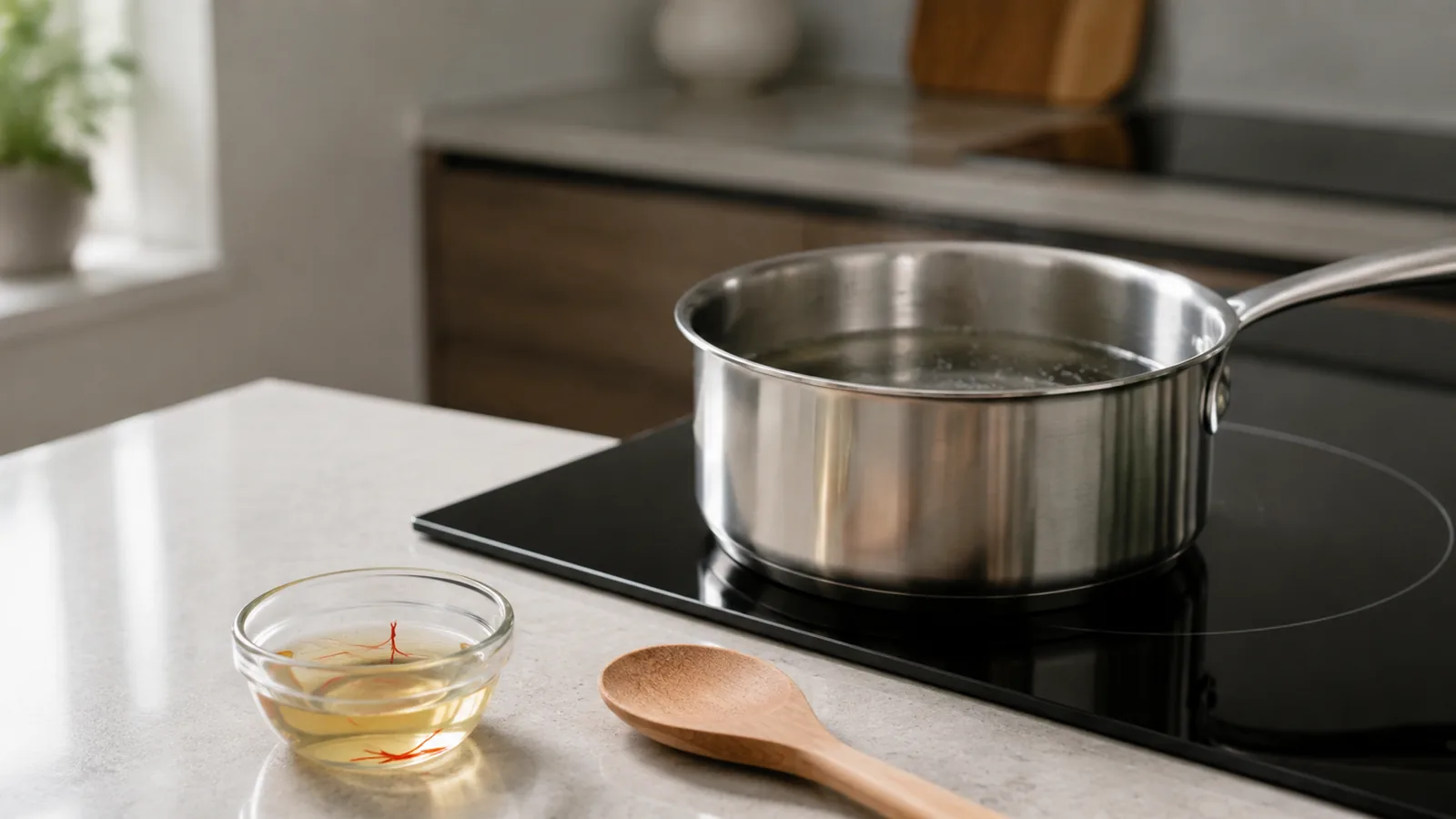
- Bloom them in a few spoonfuls of warm water, milk or stock for 10 to 15 minutes.
- Add both liquid and threads, then taste before using more.
- Count all sources if you use saffron in more than one food or drink that day.
Store the jar airtight, cool, dry and dark. Whole deep-red threads from an identifiable supplier are easier to inspect than anonymous powder. Our saffron products are available for clearly described culinary uses; product quality can support flavour and traceability, not guarantee a health result.
The practical answer
Eating a few saffron threads daily in food is mainly a culinary choice. The spice contains interesting compounds and measured supplements have produced promising trial results, but daily food use has not been proven to deliver the broad mood, immunity, digestive or metabolic benefits often advertised. Keep the amount modest, separate food from supplementation, and seek individual advice when health conditions or medicines are involved.