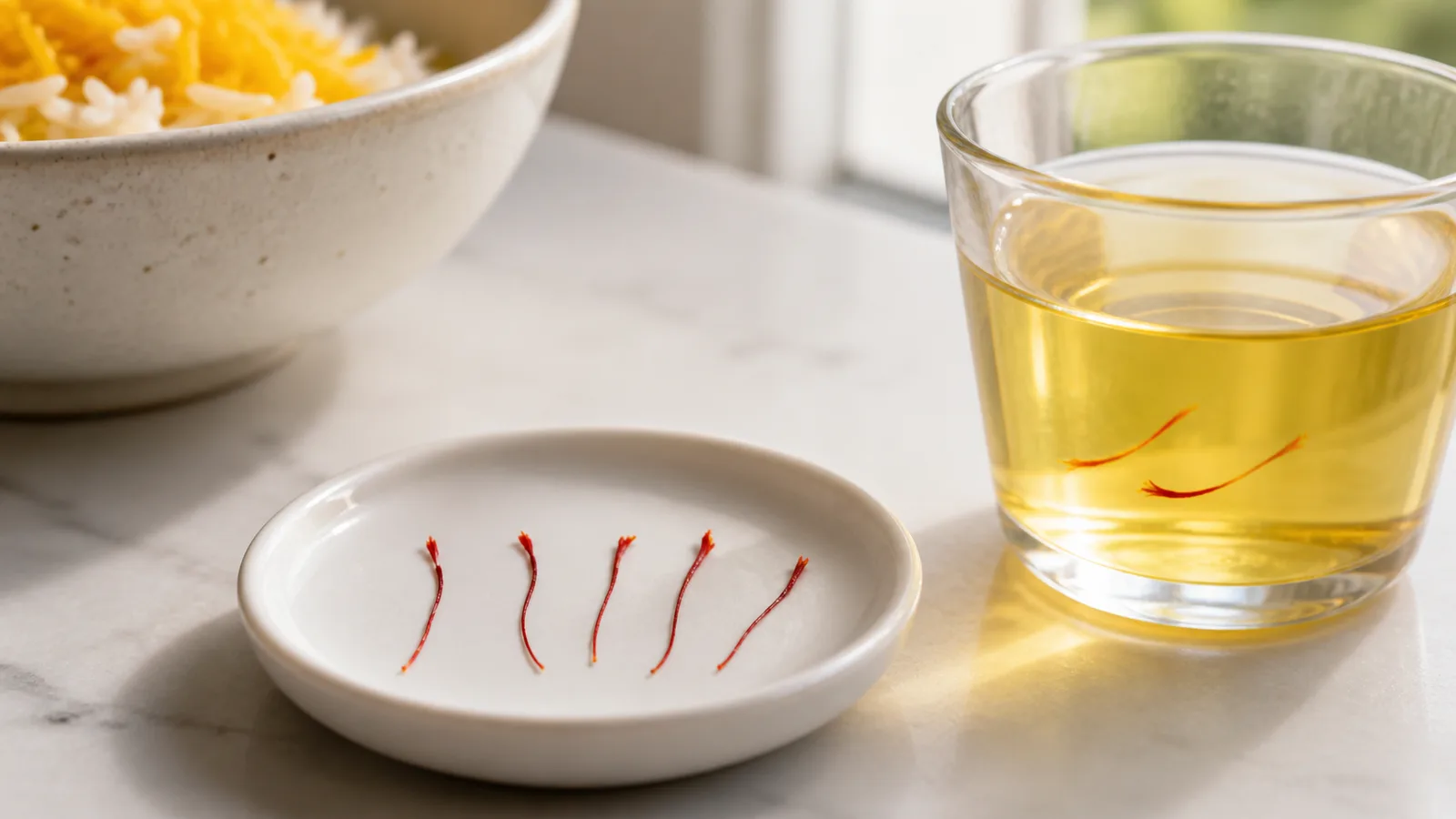
For a dish serving four people, begin with a small pinch—roughly 10 to 15 intact threads—then adjust after the saffron has bloomed and spread through the food. This is a practical starting point, not a universal formula. Thread size, grade, recipe volume and the strength you want all change the answer.
The most reliable saffron quantity for cooking is the smallest amount that gives the finished dish a clear golden colour and recognisable aroma without a bitter, medicinal edge.
Why a thread count is only a starting point
Saffron threads vary in length, thickness, breakage and moisture. Ten large stigmas can weigh more than ten short pieces. A pinch varies even more from one cook to another. If a recipe gives a weight, use a scale or the measured package rather than converting milligrams into a guessed number of threads.
Recipe concentration matters too. Fifteen threads in one cup of liquid will taste stronger than the same amount spread through a large pot of rice. Count servings and volume before adding more.
Bloom saffron before cooking
- Measure the amount you plan to use.
- Lightly crush the threads with clean fingers or a mortar and pestle.
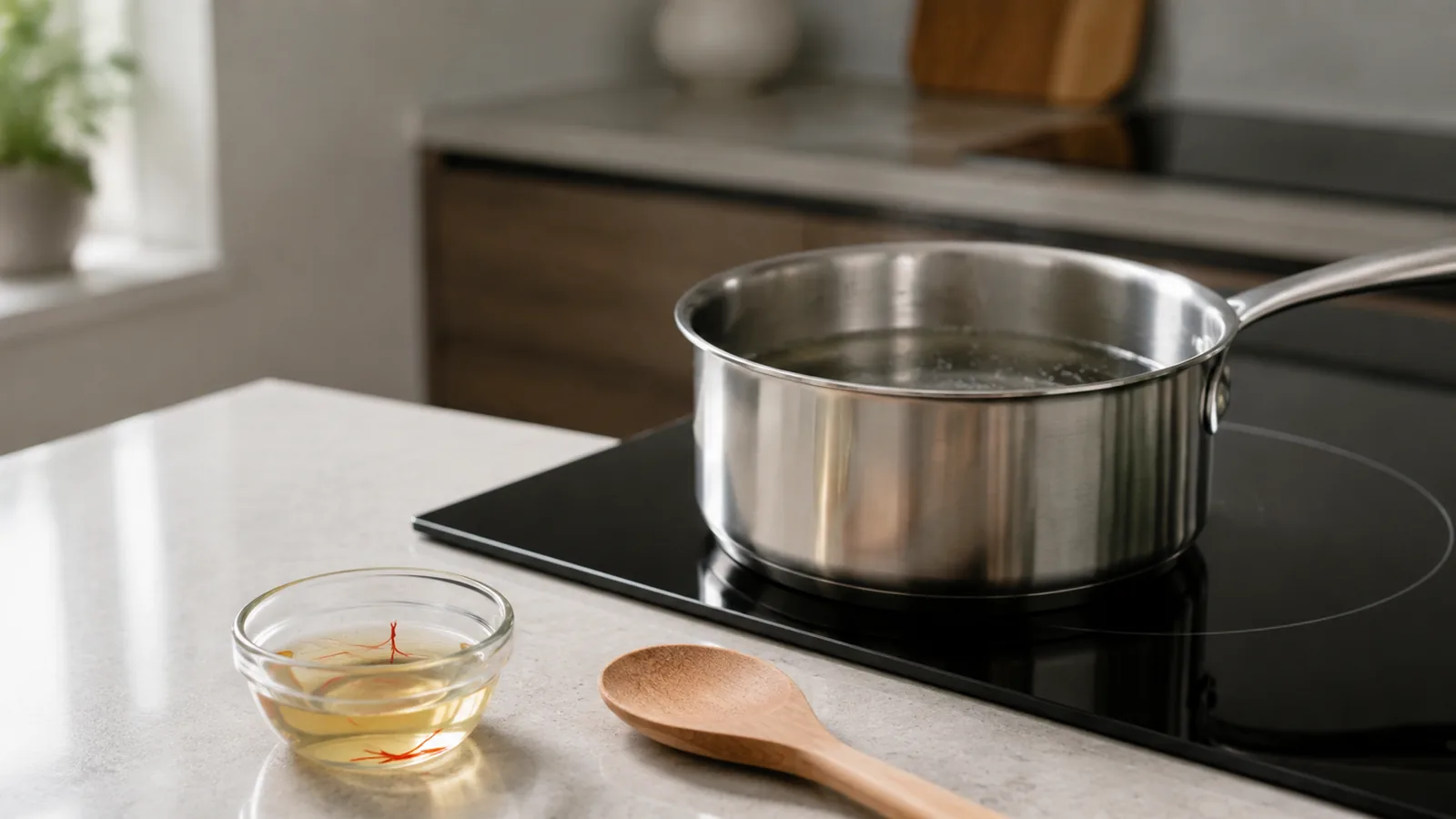
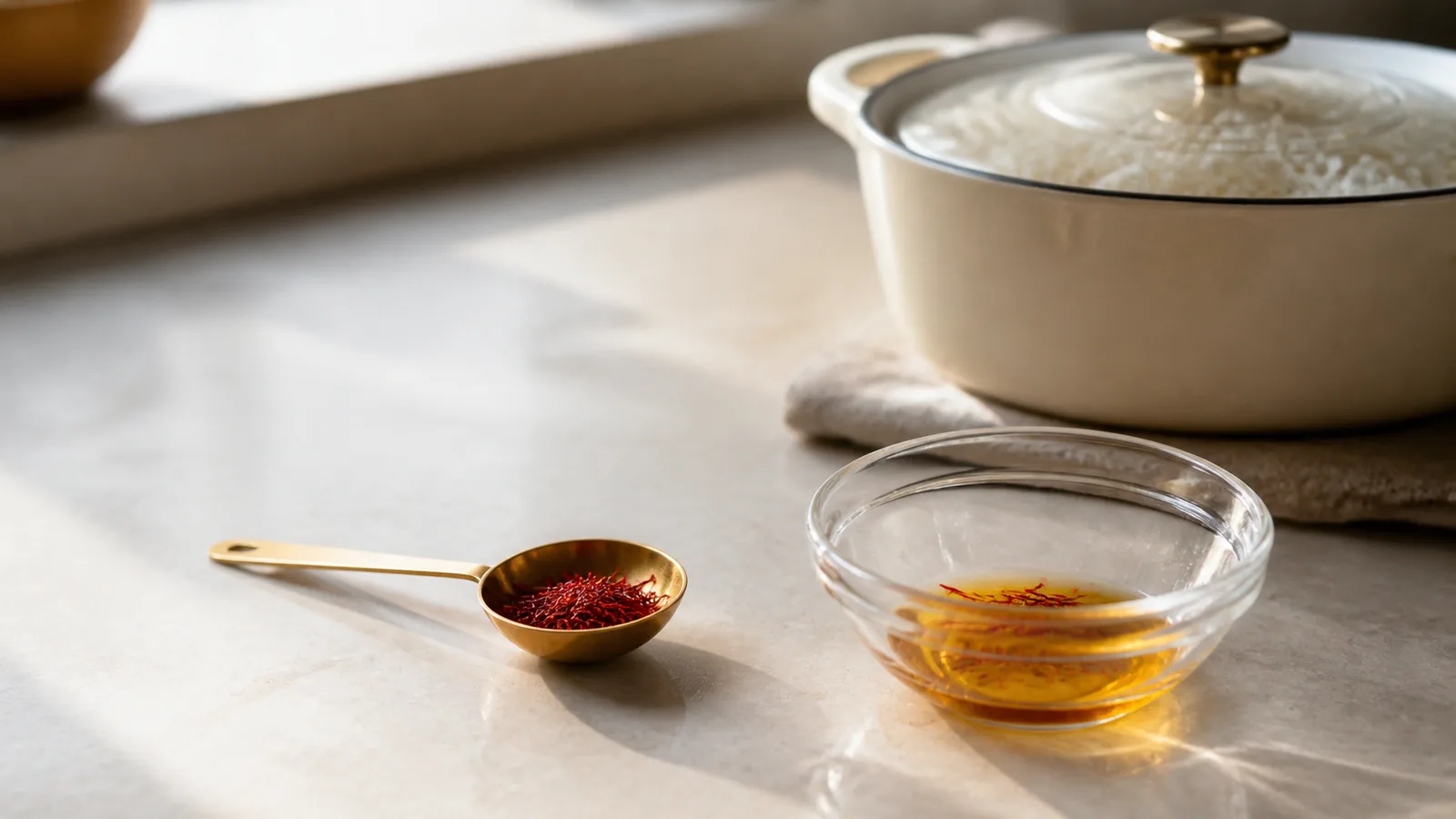
- Cover them with a few spoonfuls of warm water, milk or stock.
- Leave the mixture for 10 to 15 minutes.
- Add both the golden liquid and the softened threads to the recipe.
Blooming distributes colour and aroma much more evenly than scattering dry saffron into one spot. The liquid should be warm, not aggressively boiling. Very high heat and long exposure can flatten the delicate aroma.
How much to use in rice
For four servings of rice, 10 to 15 threads are a cautious first batch. Bloom them, mix the infusion into part of the cooking liquid, and check the result before increasing it next time.
Paella, biryani and risotto have different broths and competing seasonings. A lightly seasoned risotto may show saffron quickly, while a large biryani with warm spices may need a little more. Do not compensate by adding a handful at once; increase in small measured steps.
Soups, stews and sauces
Begin with a small pinch for a pot serving four. Add the bloomed saffron near the end of cooking, but early enough that it has several minutes to integrate without hours of hard boiling. Taste before serving.
Tomato, seafood stock, cream and butter all carry saffron well. In a reduction, remember that the liquid becomes more concentrated, so use less at the start than you would in a full bowl of soup.
Desserts and drinks
For custard, pudding or ice cream, bloom the threads in part of the warm milk or cream. A few threads may be enough for a single cup; a family-size dessert can begin near the four-serving amount. Sweetness softens bitterness, but it can also hide the moment when too much saffron has been added.
For tea or warm milk, start with two or three threads per cup for flavour. This is a culinary suggestion, not a medical daily dose. Allow the drink to steep, then judge aroma before adding more.
Whole threads, crushed threads and powder
Lightly crushed saffron extracts faster than intact decorative threads, so the same amount can seem stronger. Powder disperses fastest but is harder to inspect and easy to overmeasure. If you use powder, choose a traceable product and follow a recipe by weight rather than assuming a spoonful equals a thread count.
Whole threads also make adjustments easier. You can inspect their colour and structure, count a small starting amount and crush only what the recipe needs.
Signs you used too much or too little
- Too little: the finished dish has almost no saffron aroma or colour after proper blooming.
- Too much: bitterness or a medicinal note dominates the other ingredients.
- Poor distribution: one spoonful is intense while the rest is pale; improve the blooming and mixing before increasing the dose.
- Weak old saffron: adding more may deepen bitterness without restoring lost aroma; replace stale stock.
Keep a simple kitchen record
When a dish works, note the product, approximate thread count or weight, liquid volume, servings and blooming time. That record is more useful than a universal “perfect amount” because it reflects your saffron and your recipe.
Store the remaining threads airtight, cool, dry and dark, and use clean dry utensils. Our saffron products page shows whole-thread options for cooking. Begin modestly, bloom well and adjust between batches; that is the safest route to balanced colour, flavour and aroma.