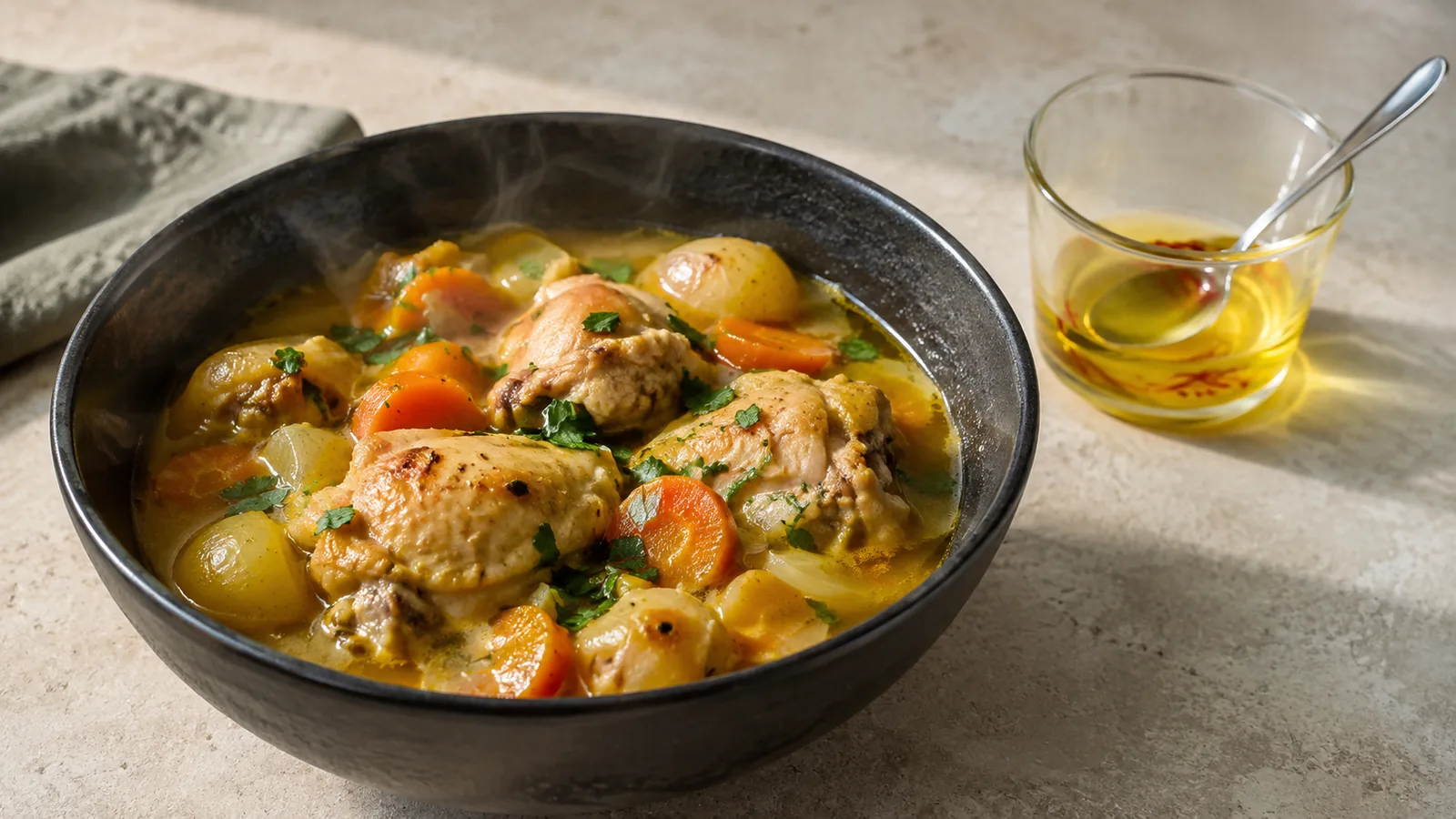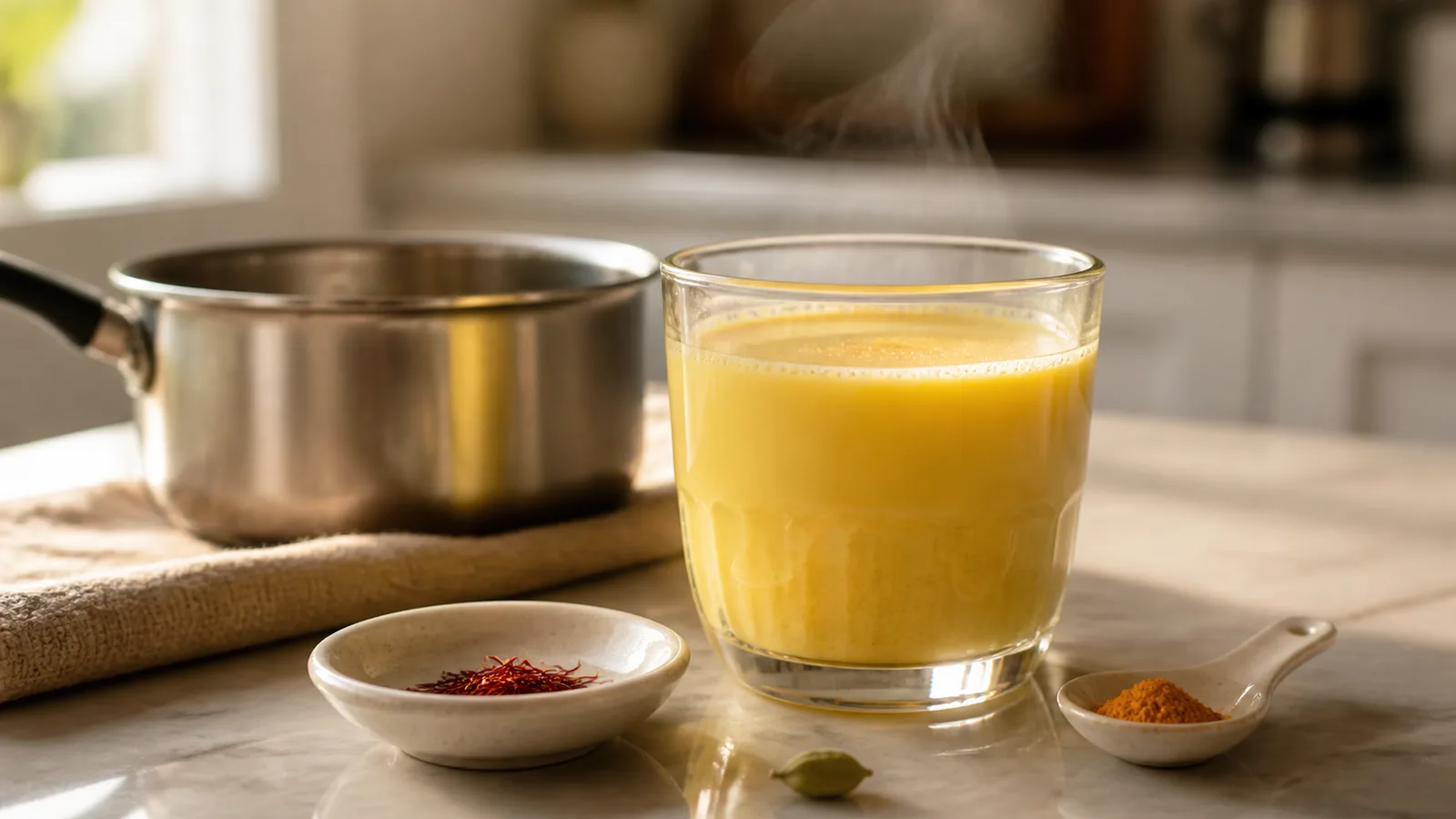
Yes, you can combine turmeric and saffron in milk. The two spices are not the same, but they work well together when used sparingly: turmeric brings an earthy warmth and deep yellow colour, while saffron adds a lighter floral aroma. A balanced cup of saffron and turmeric milk needs only a small pinch of each.
Start with 3–5 saffron threads and about 1/8 teaspoon of ground turmeric for one cup of milk. Bloom the saffron separately, warm the milk gently and taste before adding more. That keeps turmeric from masking a spice that is both subtler and more expensive.
How to make turmeric milk with saffron
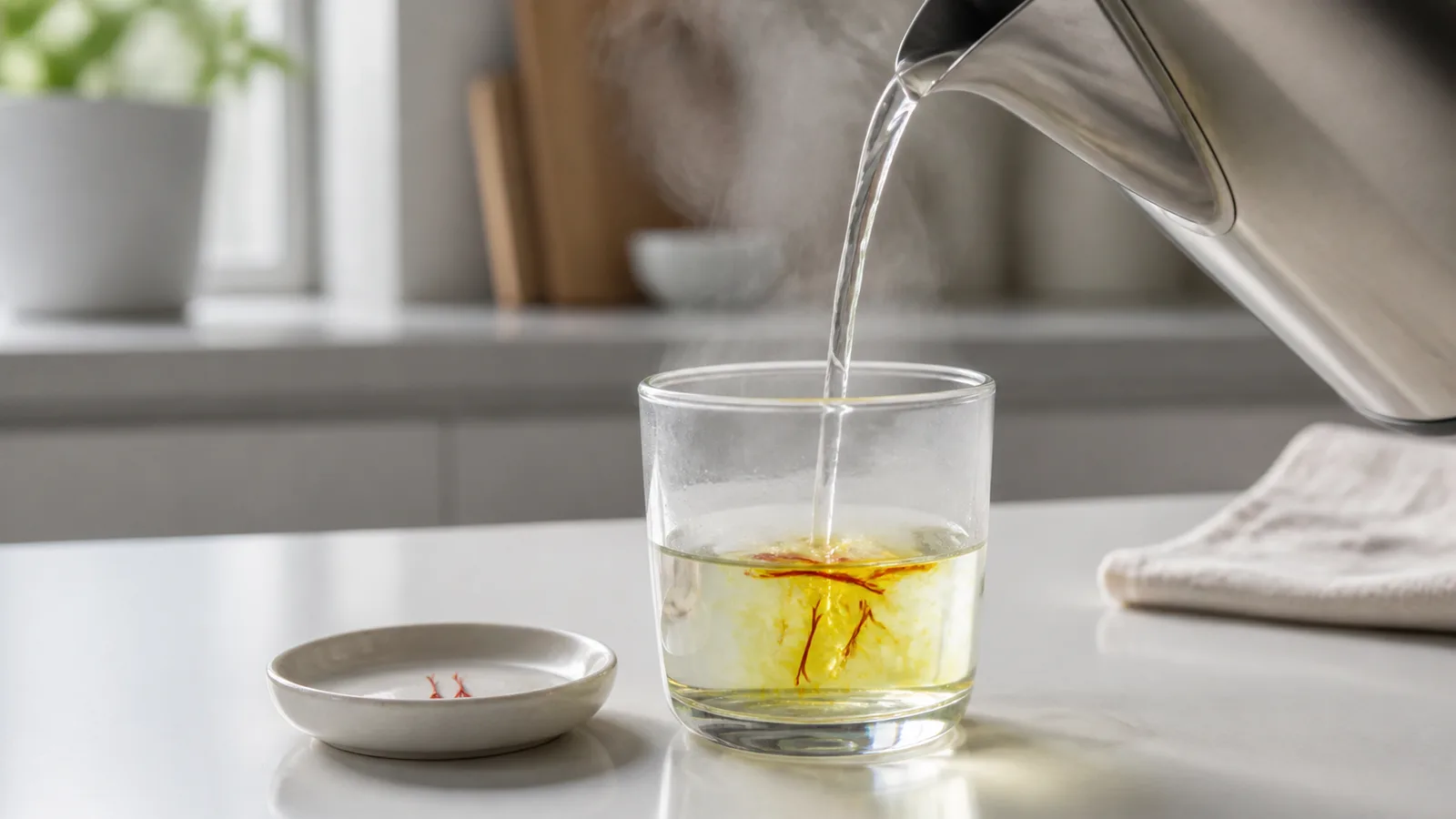
- Lightly crush 3–5 saffron threads in a small cup.
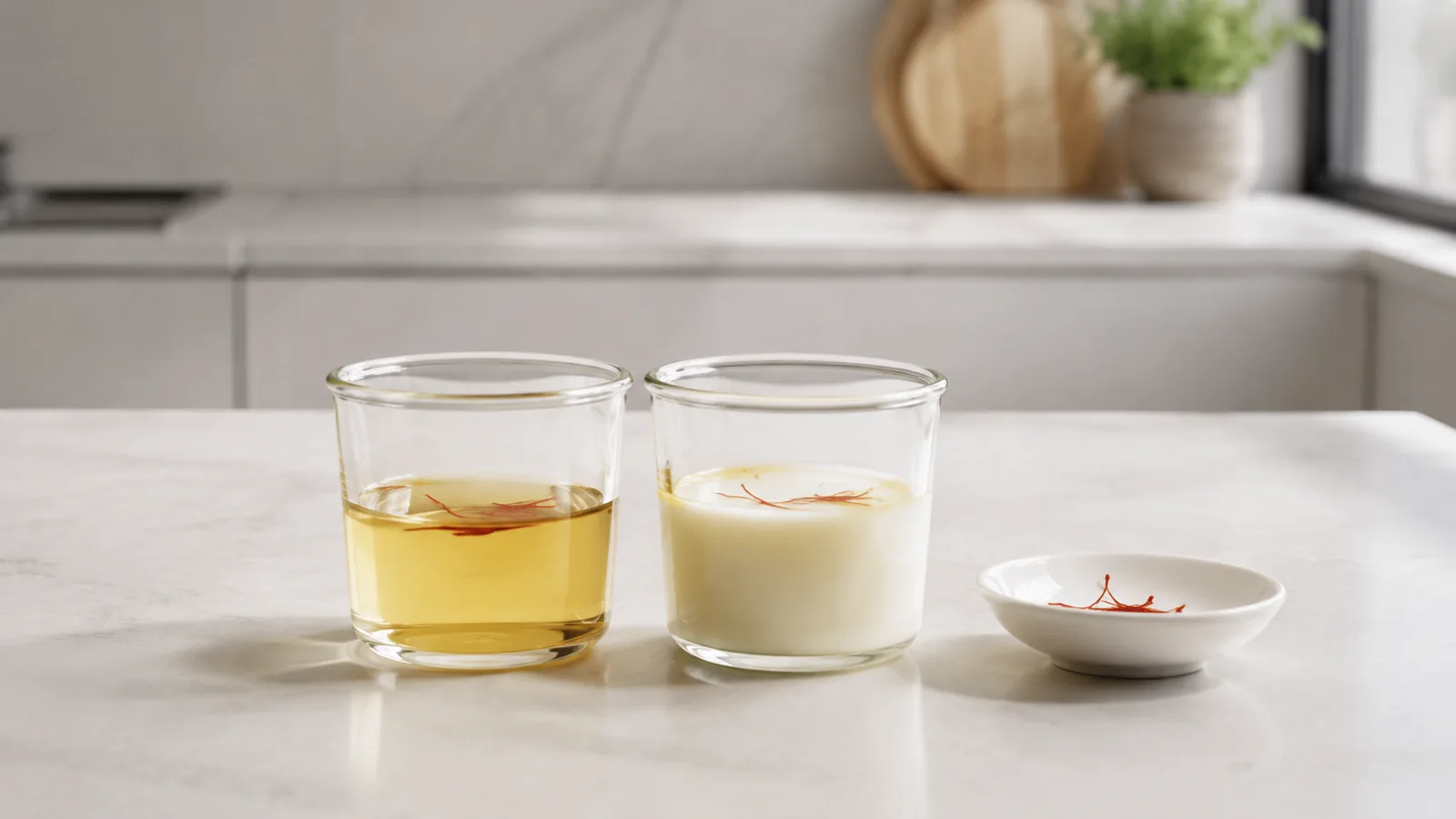
- Add one tablespoon of warm milk and leave the threads to bloom for 5–10 minutes.
- Warm one cup of dairy or unsweetened plant milk in a small pan. Do not let it scorch.
- Whisk in about 1/8 teaspoon of ground turmeric, or a small amount of finely grated fresh turmeric.
- Add the saffron infusion and heat gently for another minute or two.
- Taste before sweetening with a little honey or sugar. Add cardamom if you want a more aromatic finish.
Ground turmeric can settle, so stir before drinking. If you use fresh root, strain the milk for a smoother cup. Saffron’s colour will be less obvious because turmeric is already vivid yellow, but its aroma should still be distinct.
Is saffron the same as turmeric?
No. Saffron comes from the dried red stigmas of Crocus sativus flowers. Turmeric is the underground stem, or rhizome, of Curcuma longa, a plant in the ginger family. Curcumin contributes much of turmeric’s yellow colour; saffron has a different set of compounds, including crocin and safranal.
That botanical distinction answers several versions of the same question: is saffron and turmeric the same thing, or is turmeric and saffron the same thing? They are separate spices with different aromas, textures, sources and prices. “Indian saffron” is sometimes used as a common name for turmeric, but it does not make turmeric a substitute for genuine saffron threads.
Balancing saffron and turmeric
Turmeric has the louder flavour. Too much can make the drink dusty, bitter or medicinal-tasting; too much saffron can also become bitter. The small starting quantities above let both appear without turning the cup into an expensive spice concentrate.
If you want stronger saffron character, bloom one or two additional threads rather than adding a large pinch. For stronger turmeric, increase by a small fraction of a teaspoon. Change one ingredient at a time so you know what improved—or upset—the balance.
Milk choice and texture
Whole milk gives a rounded texture, while oat milk offers a naturally soft sweetness. Almond milk can suit the spices but contributes its own nutty aroma. Choose an unsweetened product first, then control sweetness yourself. If using plant milk, check the label for allergens and follow its heating instructions.
Cardamom, cinnamon and black pepper
One lightly cracked cardamom pod is usually enough. Cinnamon can add warmth, although a large quantity will crowd out saffron. Black pepper is common in golden milk recipes; it is optional for flavour, not a requirement for an ordinary culinary drink. Concentrated turmeric or curcumin products formulated with piperine are a different safety question from a tiny kitchen pinch.
What can saffron turmeric milk benefits honestly mean?
The dependable benefits of this recipe are culinary: a warm drink, a complex aroma and an appealing golden colour. Saffron contains antioxidant compounds and turmeric contains curcuminoids, but the presence of a compound does not prove that one cup prevents inflammation, improves mood or treats disease.
The US National Center for Complementary and Integrative Health says that there is not enough evidence to conclude definitively that turmeric or curcumin is beneficial for health purposes. It also distinguishes normal food use from higher-dose or enhanced-bioavailability products, which may carry different risks. The same discipline applies when discussing saffron: a recipe is not a clinical dose.
Similarly, a search for saffron water benefits for female is a different topic from whether the two spices taste good in milk. Neither women nor men should be promised sex-specific health effects from this drink without relevant clinical evidence.
Who should be more cautious?
Ordinary culinary quantities are different from supplements, yet individual circumstances still matter. If you are pregnant or breastfeeding, take regular medicines, have a liver or gallbladder condition, are preparing for surgery, or want to use a concentrated turmeric, curcumin or saffron product, discuss it with a healthcare professional. NCCIH notes that turmeric supplements may be unsafe during pregnancy, that evidence above food amounts while breastfeeding is limited, and that some highly bioavailable curcumin formulations have been associated with liver injury.
Stop using the drink if it causes an unwanted reaction. Do not use saffron and turmeric milk as a substitute for prescribed treatment.
A simple golden milk with saffron
For a consistent cup, remember the order: bloom the saffron, warm the milk with a modest pinch of turmeric, combine, then taste. Avoid a hard boil, which can scorch milk and flatten saffron’s aroma. Sweeten only after the spices have had a chance to speak.
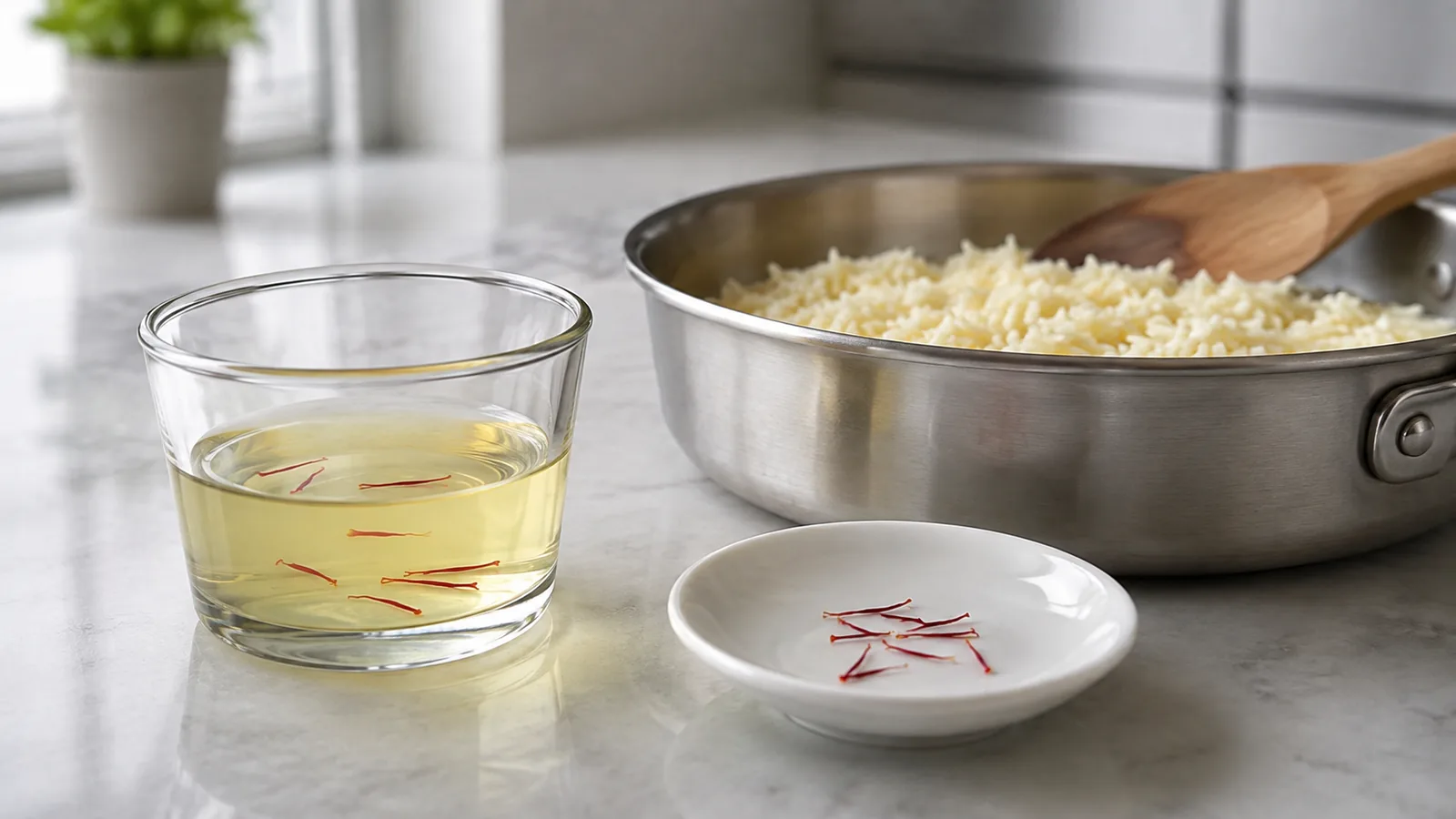
The Rowhani Saffron products page lists whole-thread options for turmeric and saffron recipes. Whole threads also make the amount easier to see and measure than an anonymous mixed powder.