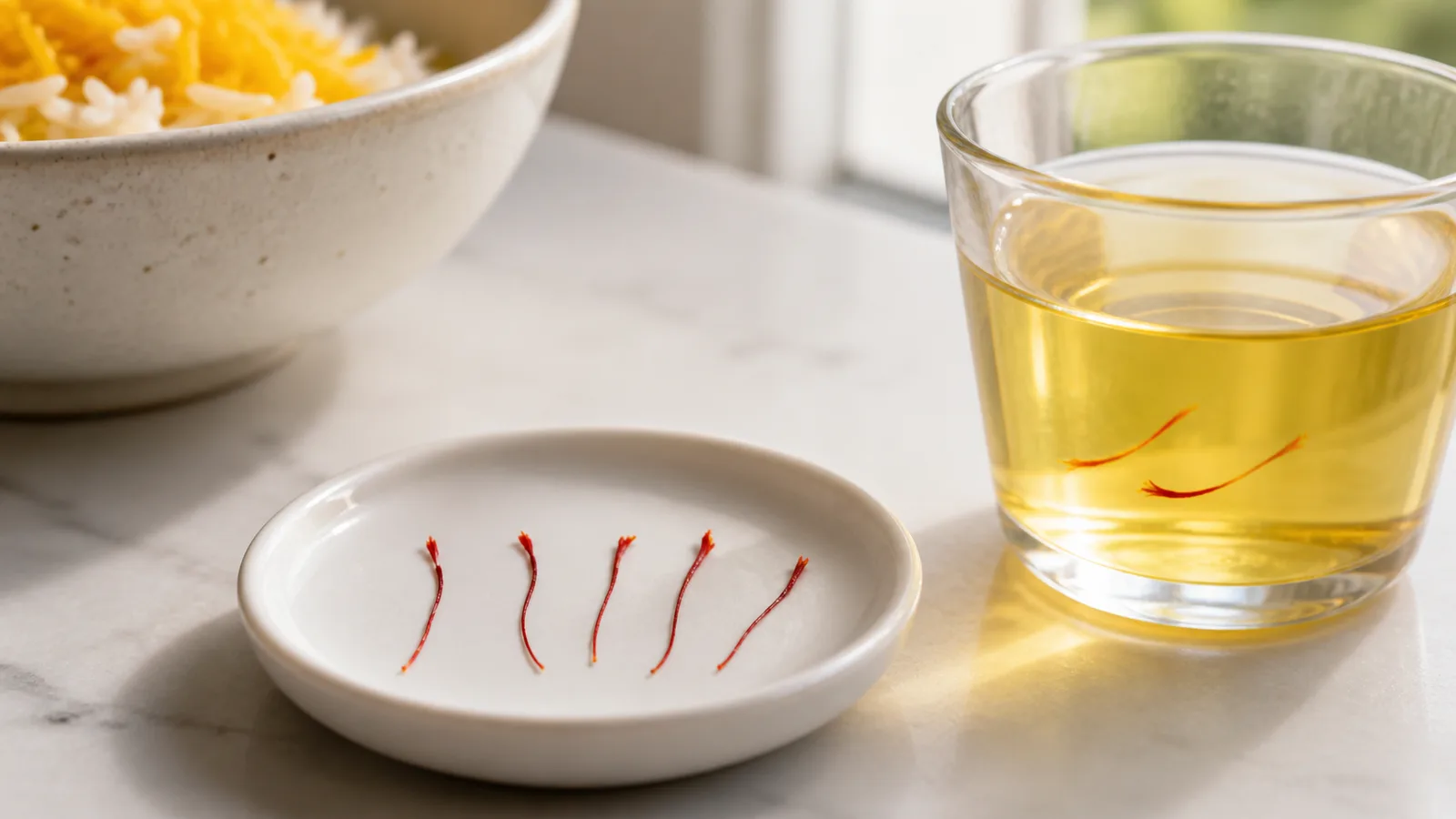
Saffron gives food a warm, floral flavour with earthy depth, a honey-like aroma and a fine thread of bitterness. The saffron taste profile is noticeable without being hot or sugary. Used well, it adds fragrance and a lingering finish; used heavily, the same bitterness can turn medicinal.
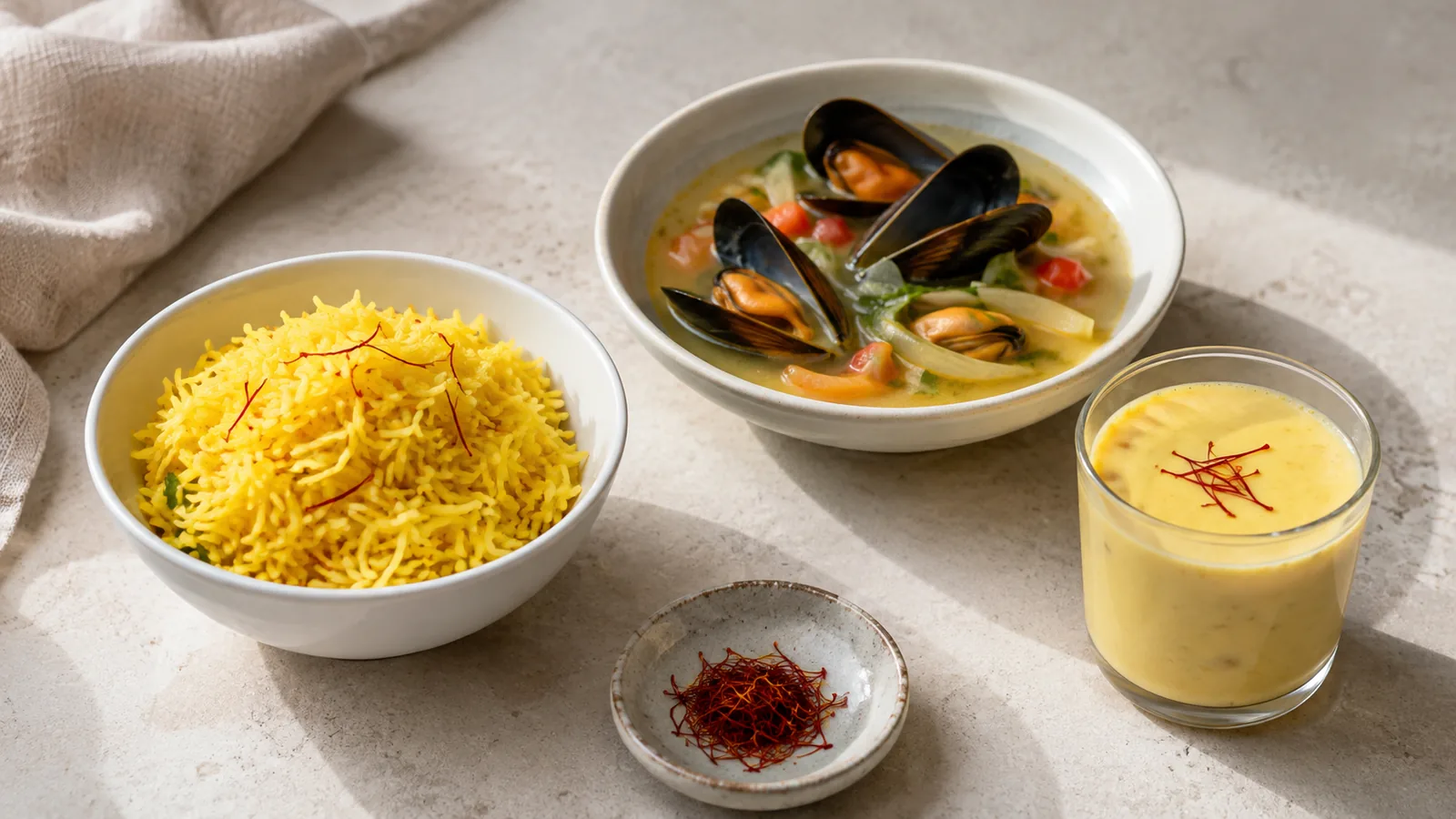
What flavour does saffron give a dish?
It contributes more than one note. At first you may notice the smell of warm flowers or dried hay. A gentle sweetness follows, although the spice contains no sweetness comparable to added sugar. Earthiness and mild bitterness keep the aroma from feeling perfumed.
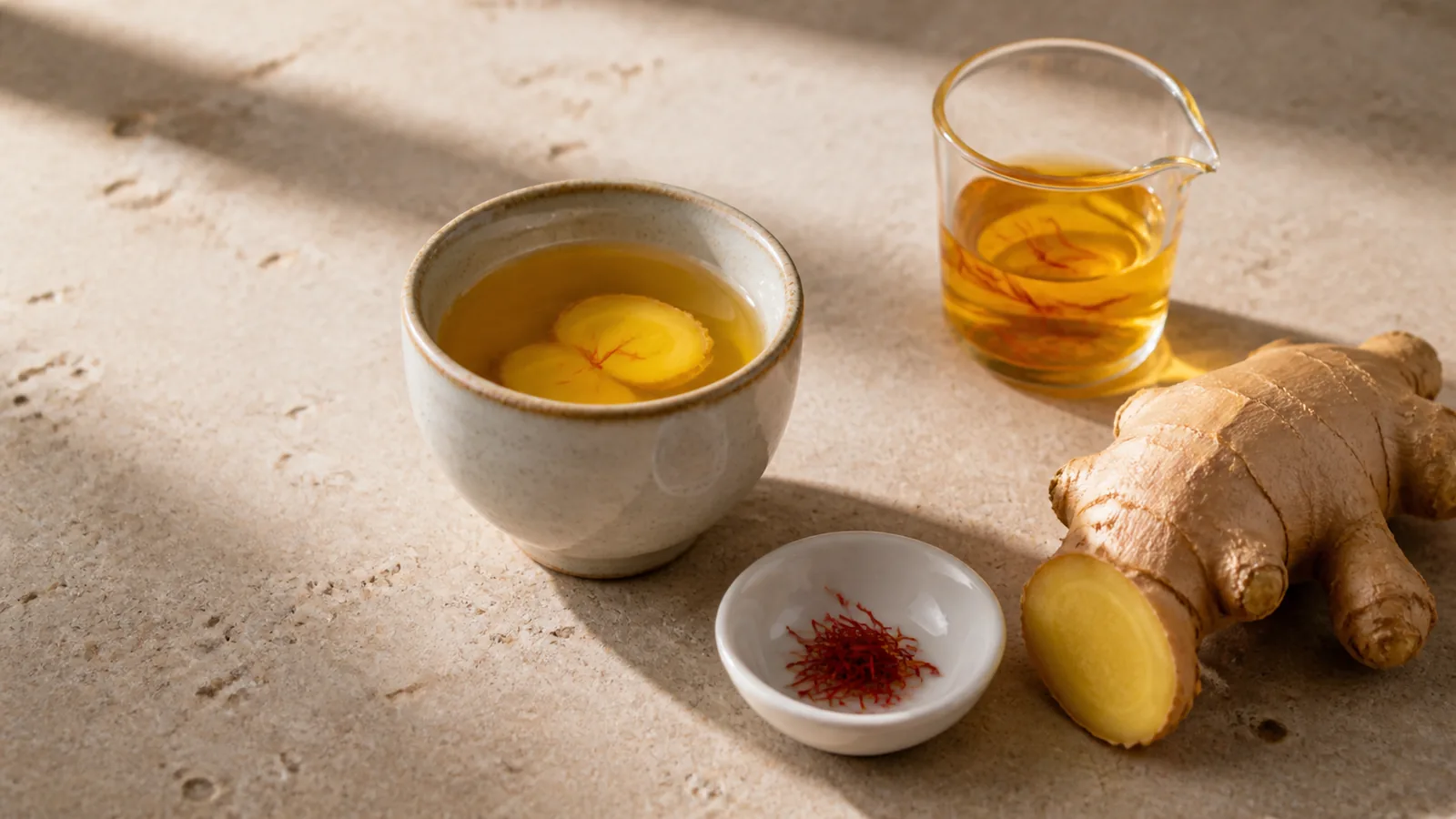
Does saffron have a taste of its own? Yes. The related question, “What does saffron taste like?”, has a plain answer: floral, earthy, aromatic and lightly bitter. A simple warm-water infusion makes that clear. In a finished recipe, however, the result depends on dose, extraction and the ingredients around it.
How saffron flavour changes in savoury food
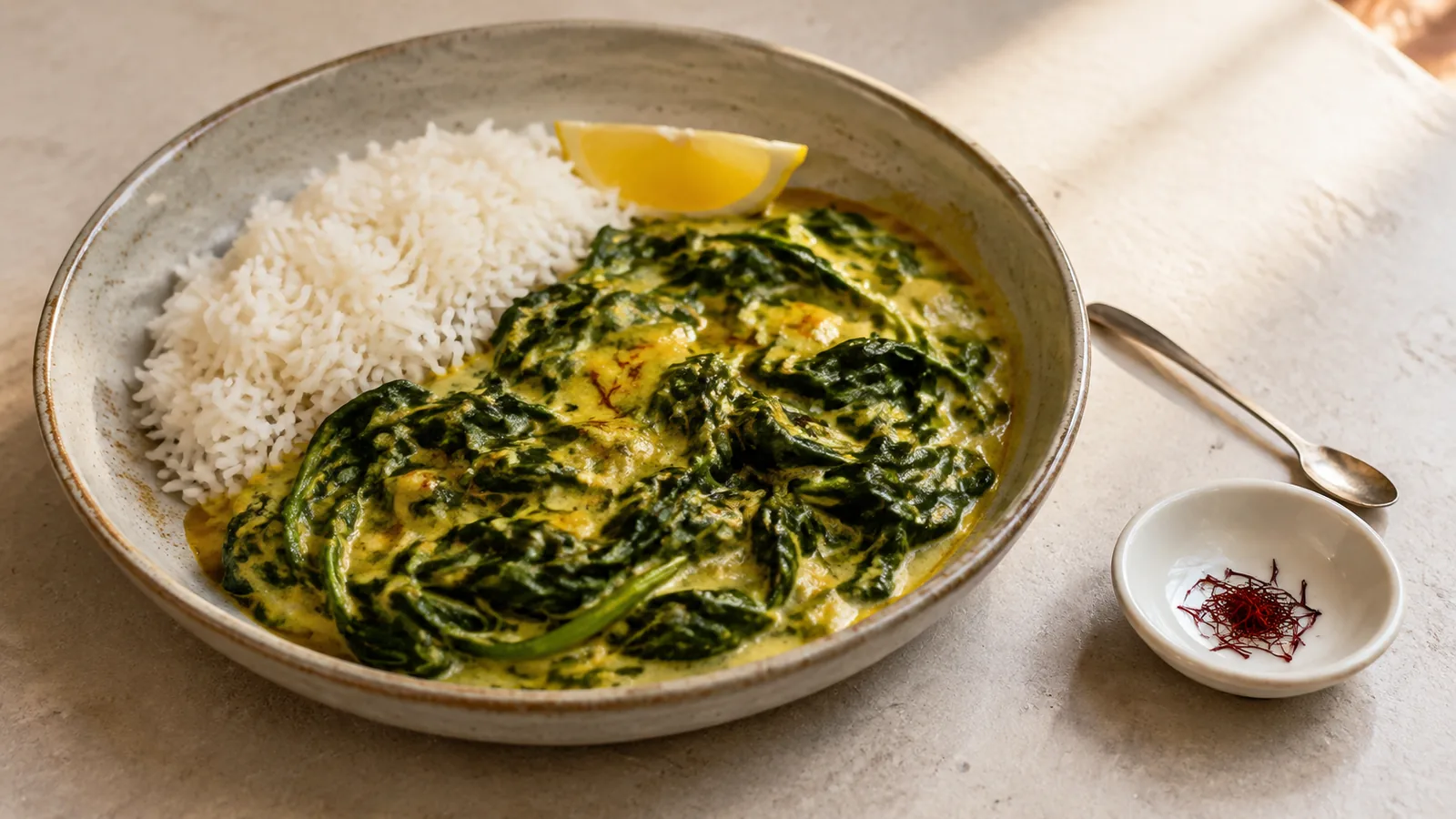
Rice
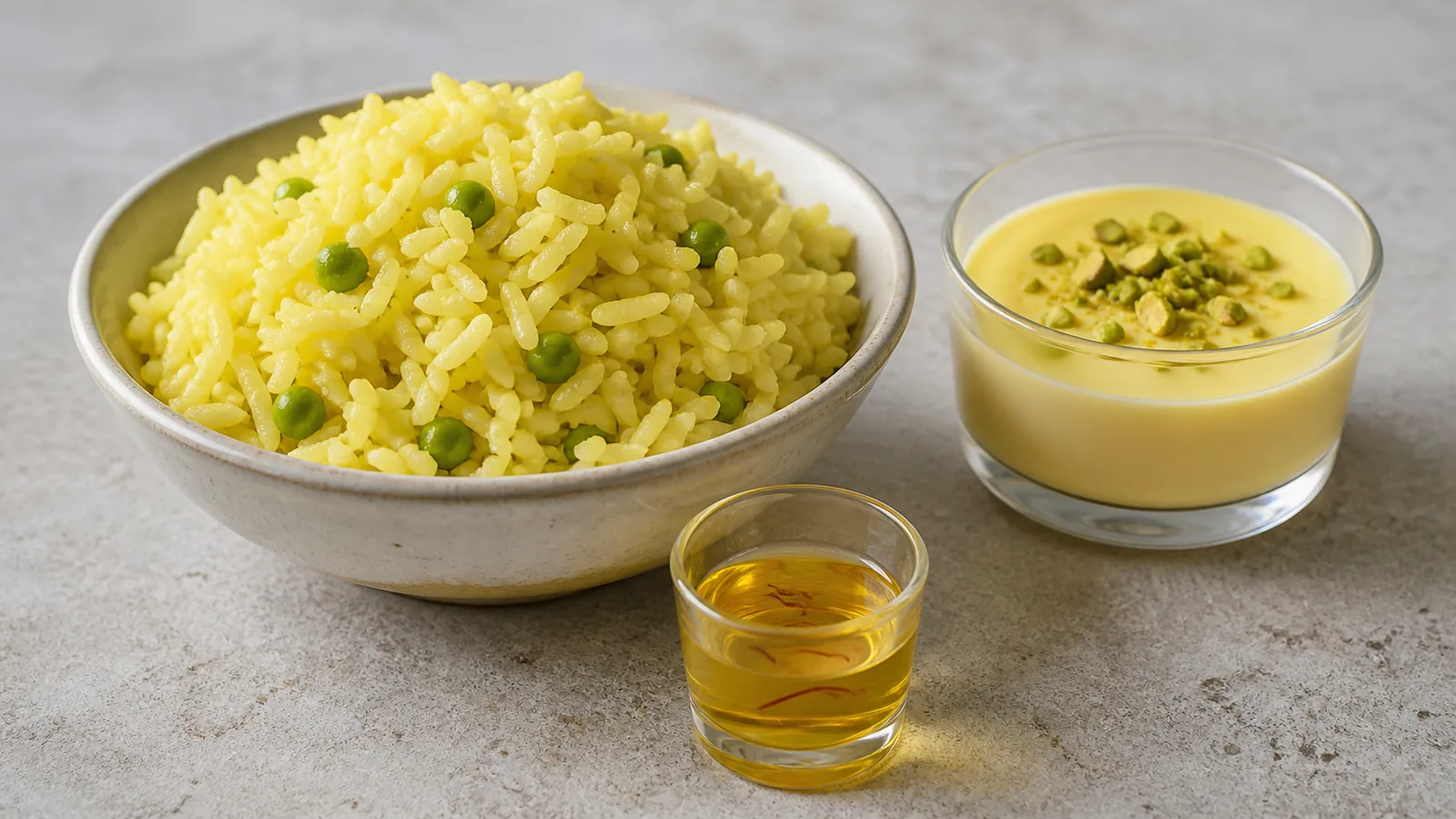
Plain rice gives saffron room to show its character. It brings a warm fragrance, an earthy finish and a golden colour. The taste should be distributed through the grains rather than concentrated in one bitter patch.
Soups and stews
In a light broth, saffron can link sweetness, salt and fat while adding a dry floral aroma. Strong chilli, smoke or a heavy spice blend can cover it. Add the infusion early enough to spread, but avoid prolonged fierce boiling.
Seafood
Saffron’s floral-earthy side works particularly well with mild seafood and a clean broth. It gives the dish depth without the heat of pepper. Garlic, tomato and acidity should remain balanced so the saffron is still perceptible.
What saffron adds to desserts and drinks
Milk, cream and sugar make the aroma feel rounder. In custard, rice pudding, ice cream or cake, people often notice honey and warm floral notes before bitterness. Rosewater and cardamom can be good partners, but either can dominate if poured freely.
In teas or another beverage, a small infusion adds fragrance and a dry finish. Begin gently. A very concentrated cup can taste harsh, and a crowded herbal blend makes the saffron difficult to identify.
Flavour and colour are not the same test
A vivid yellow color does not automatically mean a dish carries strong saffron flavour. Colour may extract before the full aroma develops, and other ingredients can colour food without reproducing saffron’s taste. Artificial colouring can also make poor material look convincing.
Judge the complete experience: thread appearance, dry aroma, infused aroma, flavour and seller traceability. Taste alone cannot authenticate a product, and colour alone certainly cannot.
How to release the flavour properly
- Measure a small pinch of threads.
- Crush them lightly rather than reducing the whole pack to powder.
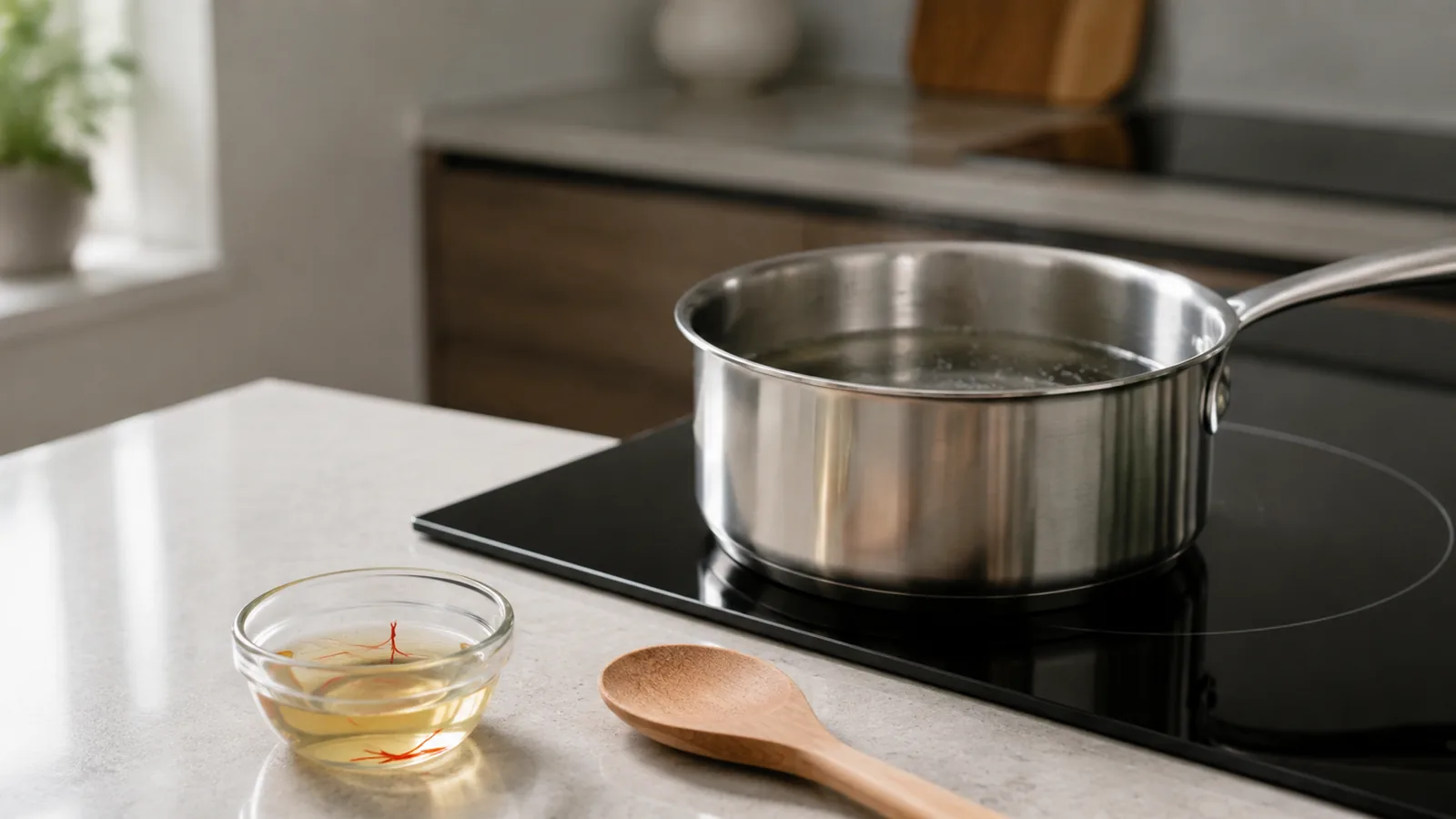
- Cover with a few tablespoons of warm water, milk or broth.
- Steep for about 10–15 minutes.
- Add the liquid and threads evenly to the recipe.
Warm liquid helps the spice disperse. Violent boiling is unnecessary, and dry threads scattered at the last moment may release unevenly. See how to brew saffron for a fuller method.
How much flavour should you expect?
Saffron is subtle, but “subtle” should not mean absent. The right amount depends on the volume of food, the strength of the batch and the surrounding ingredients. Start with a measured recipe quantity, taste, and adjust the next time rather than tipping in a large extra pinch.
If the result is weak, check extraction and storage before adding more. Old threads, an open container near the cooker, damp conditions or a strongly seasoned base can all quieten the flavour.
Why saffron sometimes tastes bitter
A slight bitterness belongs in the profile. It adds structure to the floral and honey-like aroma. Sharp bitterness usually means the dose or concentration is too high, the food has another bitter element, or the spice was handled poorly.
Do not try to hide an excessive dose with more sugar. Balance is easier to achieve by using less saffron and distributing a mild infusion through the dish.
Can another spice give the same flavour?
No single substitute recreates the combination. Turmeric can provide yellow colour but tastes earthy in a different way. Safflower may add colour and visual threads with far less aroma. Vanilla supplies sweetness and fragrance but not saffron’s dry, lightly bitter finish.
If you need more words for the sensory experience, our guide to describing saffron’s taste separates aroma, taste and texture.
Keeping the taste fresh
Store dry threads in an airtight container away from light, heat and moisture. Open it briefly and use a dry utensil. Crush only the portion you need, because a larger exposed surface loses aroma faster.
The short answer
Saffron flavour is floral, earthy, honey-like and mildly bitter. It makes rice and savoury dishes warmer and more aromatic, while dairy and desserts bring out its softer fragrant side. Careful infusion and a restrained dose produce depth; excess produces bitterness.