Saffron may affect appetite in some study settings, but it is not established as a reliable appetite suppressant. Research on saffron appetite effects has mostly used measured extracts in specific groups, not the few threads added to tea, milk, rice or dessert. Culinary use should therefore be valued for flavour and colour, not sold as portion control.
The evidence is mixed. One small trial reported less snacking with a branded extract, while another placebo-controlled trial found no significant reduction in food craving. That is not enough to predict what a saffron meal will do to one person’s hunger.
What studies on saffron cravings actually tested
A 2010 randomised trial enrolled 60 mildly overweight women and tested 176.5 mg per day of a particular saffron extract for eight weeks. The extract group recorded fewer snacking episodes than the placebo group. It was a small, product-specific supplement study, not a trial of normal culinary saffron.
A later 12-week randomised trial in overweight women with depression tested 30 mg saffron capsules and found no significant effect on food craving. Different populations, products, outcomes and trial methods can produce different results. Taken together, they do not justify promising that saffron curbs cravings.
Does saffron make you feel full?
There is no good evidence that a few threads mechanically create fullness or keep everyone satisfied for longer. Fullness after saffron rice or milk may come from the whole meal: portion size, protein, fibre, fat, liquid volume, eating pace and personal expectations all contribute.
A pleasant aroma can make a meal feel more rewarding, but that is not the same as altering hunger hormones. Claims that saffron compounds directly “regulate hunger signals” in people go beyond what the available evidence can establish.
Does saffron help with weight management?
It should not be treated as a weight-loss shortcut. A systematic review and meta-analysis of trials in people with overweight or obesity found no significant overall reduction in body weight, body mass index, waist circumference or hip circumference, although some other measures were described as promising. The authors called for better-quality evidence.
One spice cannot replace an eating pattern, activity, sleep, medical assessment or treatment appropriate to the person. If appetite or weight changes unexpectedly, look for the cause rather than automatically trying a suppressant.
Appetite loss can also be an unwanted effect
Nausea, dry mouth, headache, stomach discomfort and poor appetite have been reported with saffron preparations. A reduced desire to eat because a product makes someone unwell is not a benefit. Stop a new supplement if it causes an adverse reaction and seek advice when symptoms are serious or persistent.
Older adults, children and people receiving treatment for cancer, digestive disease, an eating disorder or another condition may be particularly vulnerable to unintended weight or appetite loss. They should not use saffron to manipulate appetite without clinical guidance.
Mood and eating behaviour
Mood, stress and eating patterns can be related, and saffron supplements have been studied separately for mood outcomes. That does not prove a chain in which saffron lifts mood and therefore controls eating. Depression, anxiety, binge eating and restrictive eating deserve evidence-based care, not an inference from a spice study.
If food thoughts, loss of control, restriction or body-image distress are disrupting daily life, speak with a qualified healthcare professional. Saffron should not replace mental-health or nutrition support.
Using saffron in balanced meals
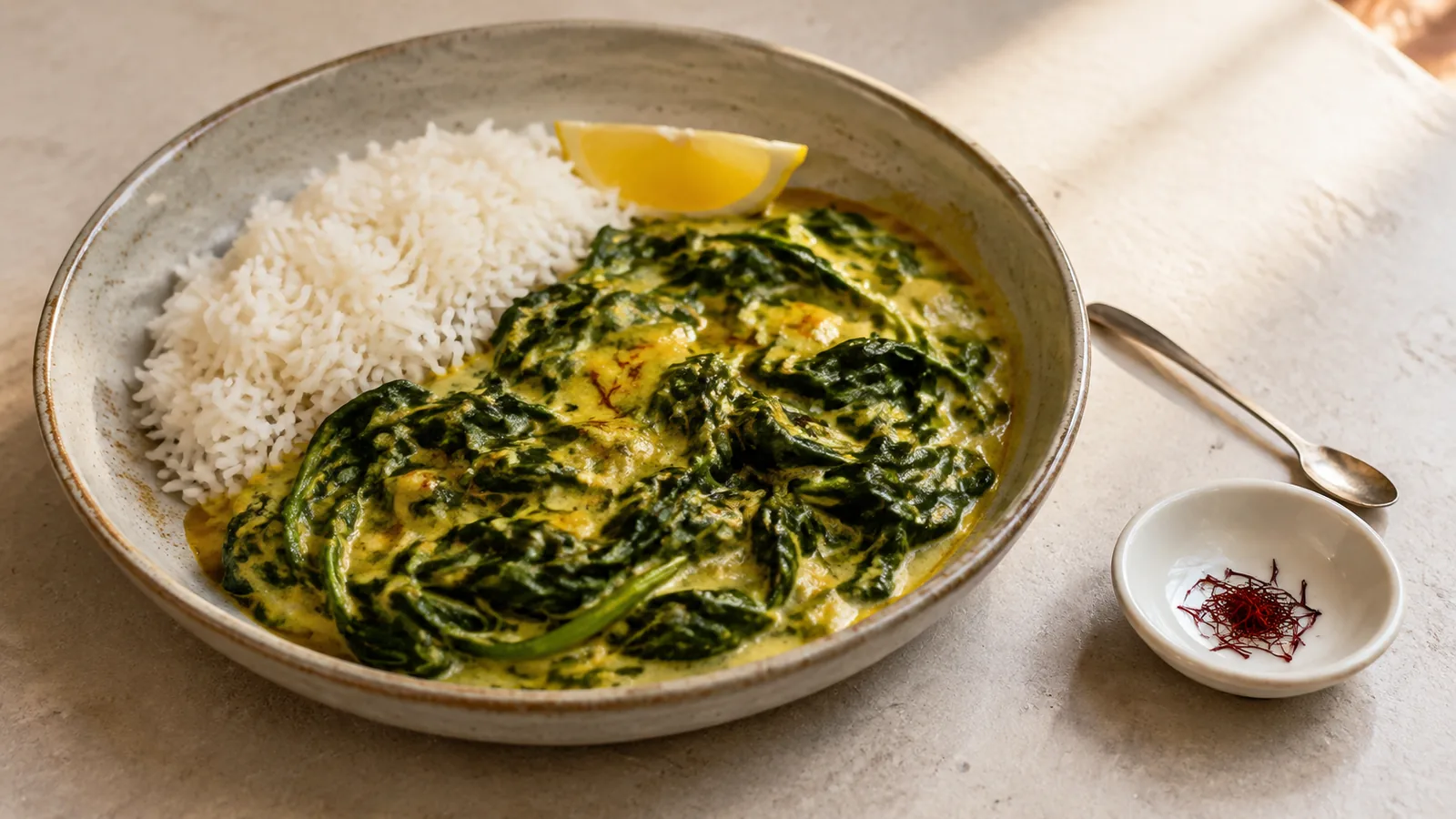
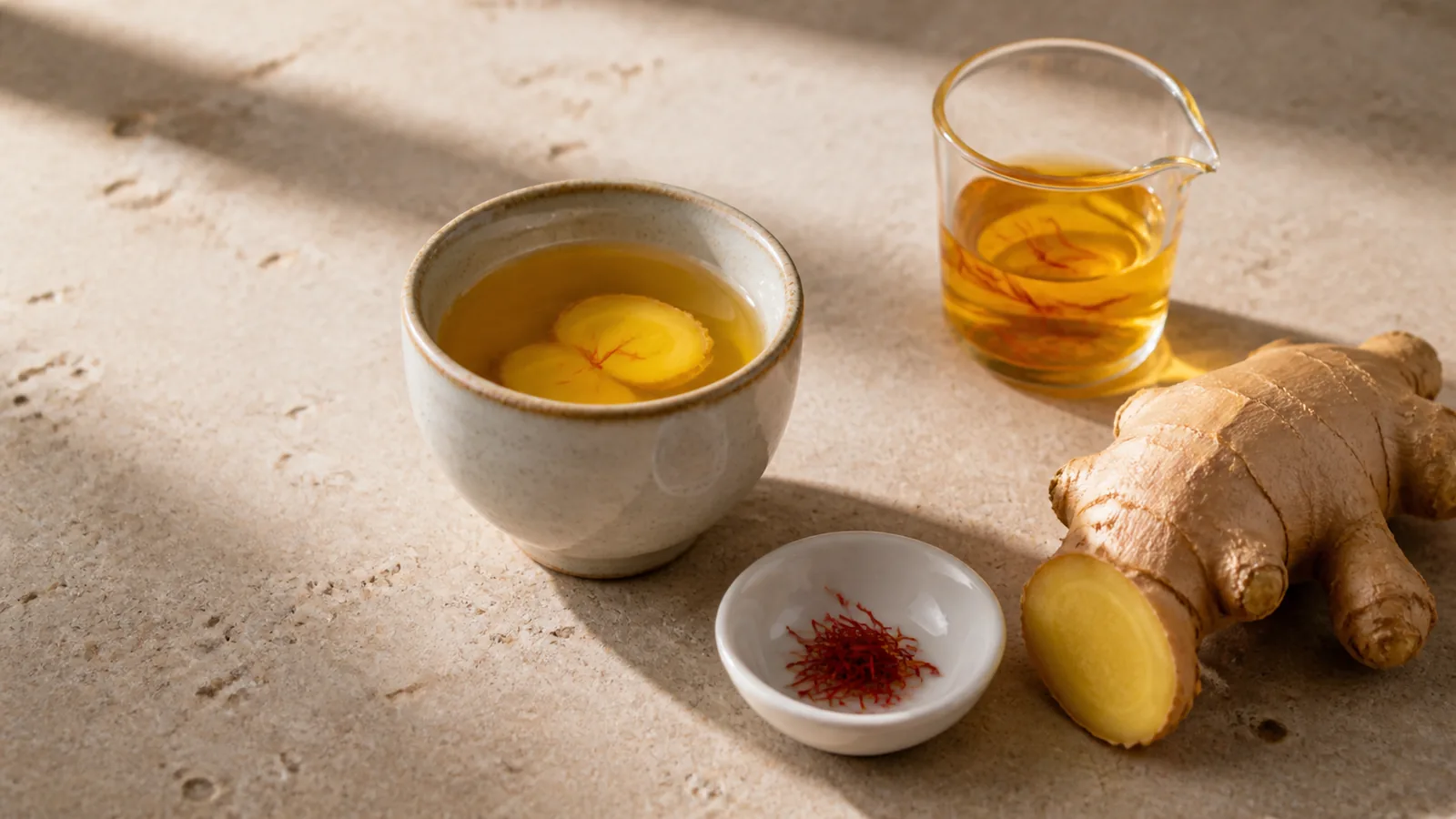
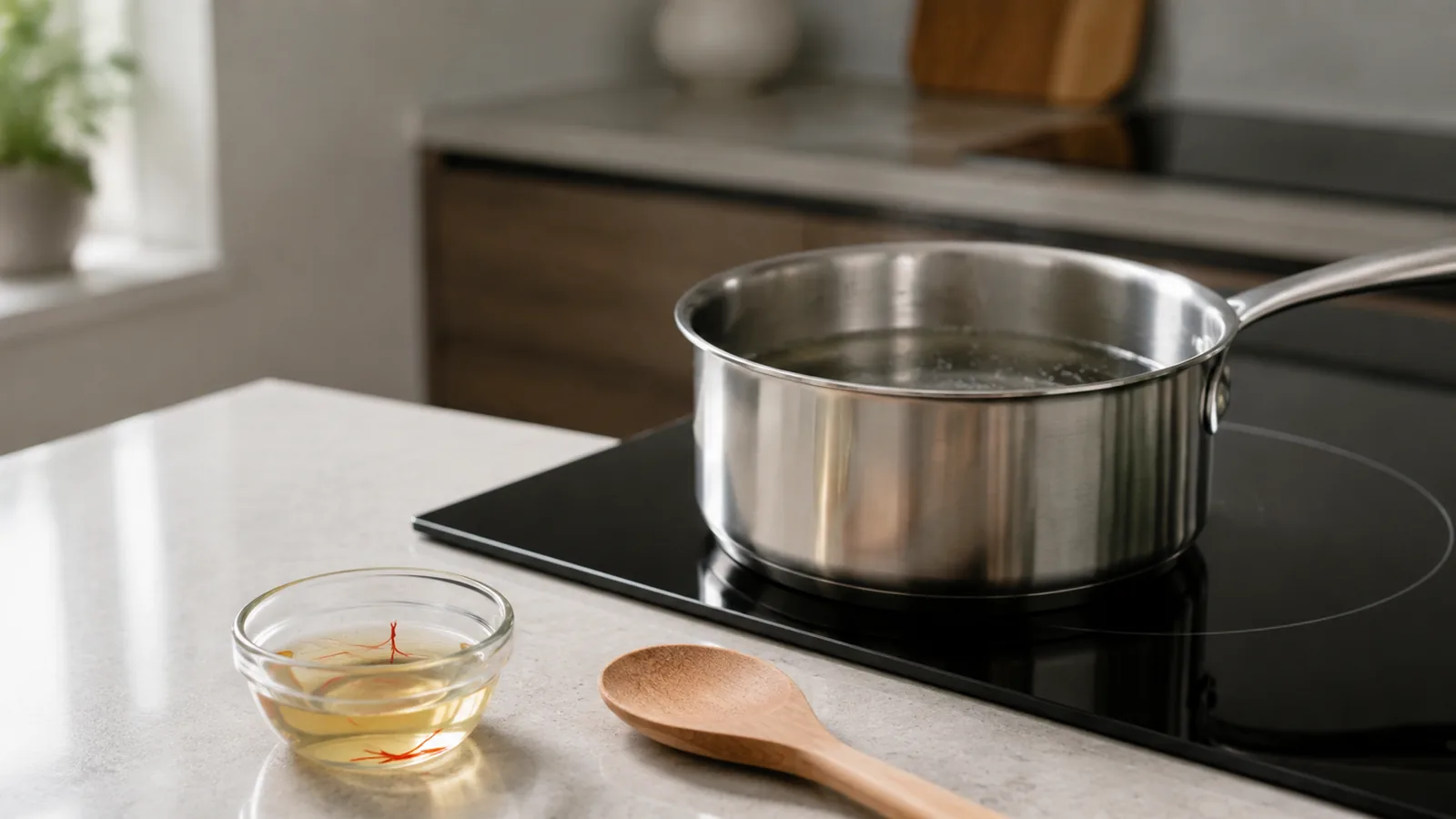
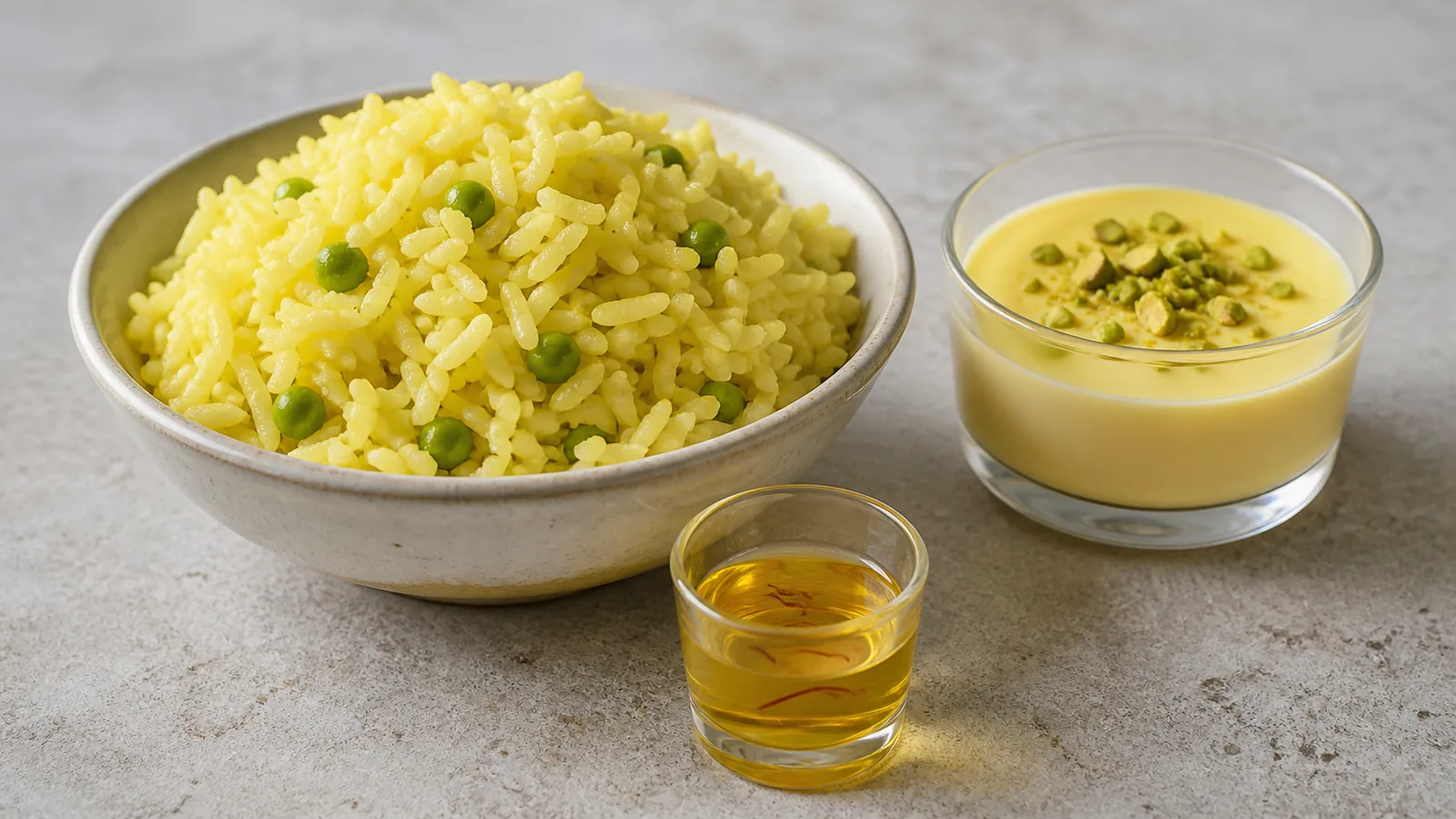
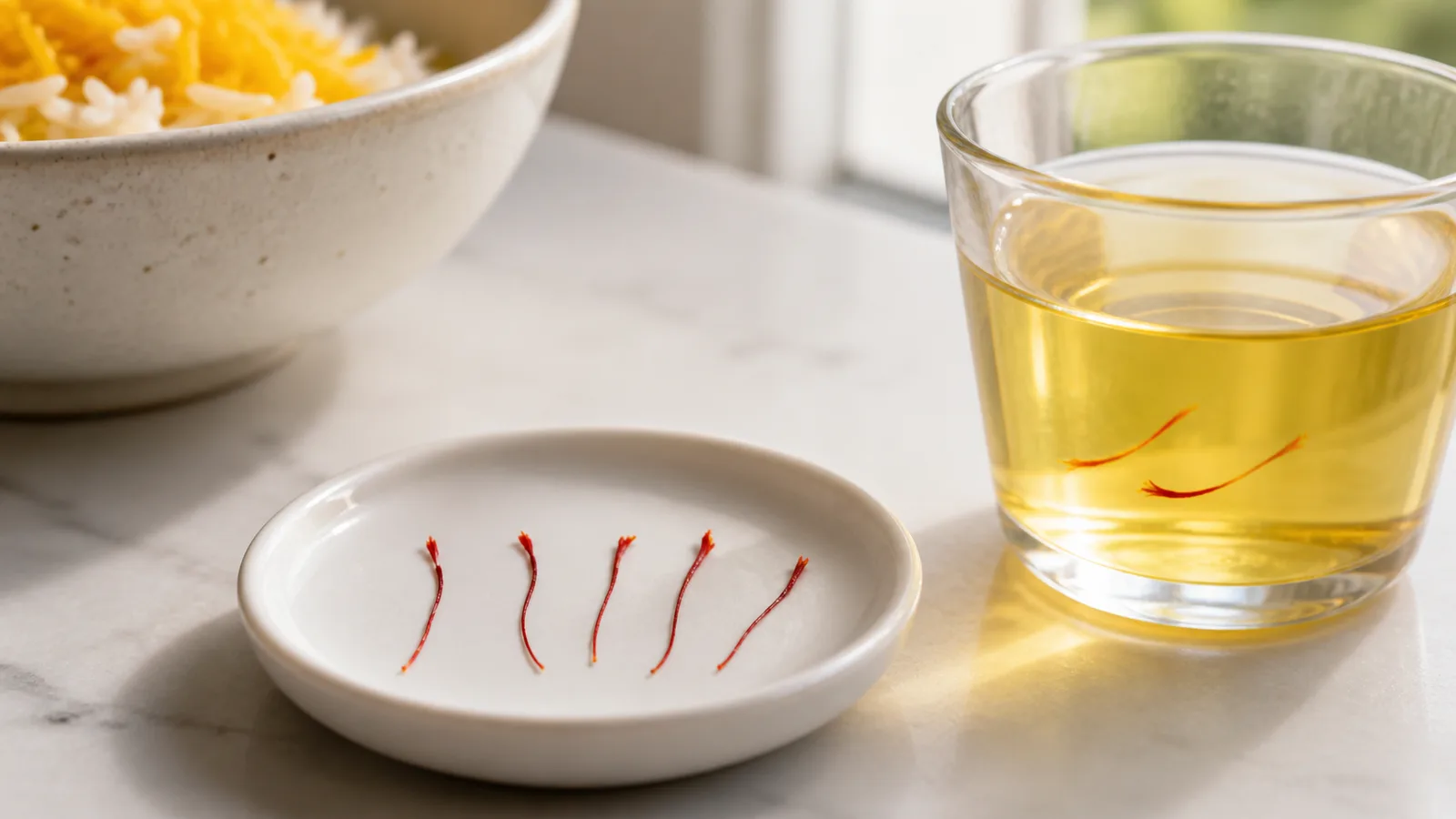
Bloom a few threads in warm water or milk to spread their aroma and colour through a dish. Add the infusion to rice, soup, vegetables or tea. This makes a modest amount work well; it does not preserve “potency” for appetite control.
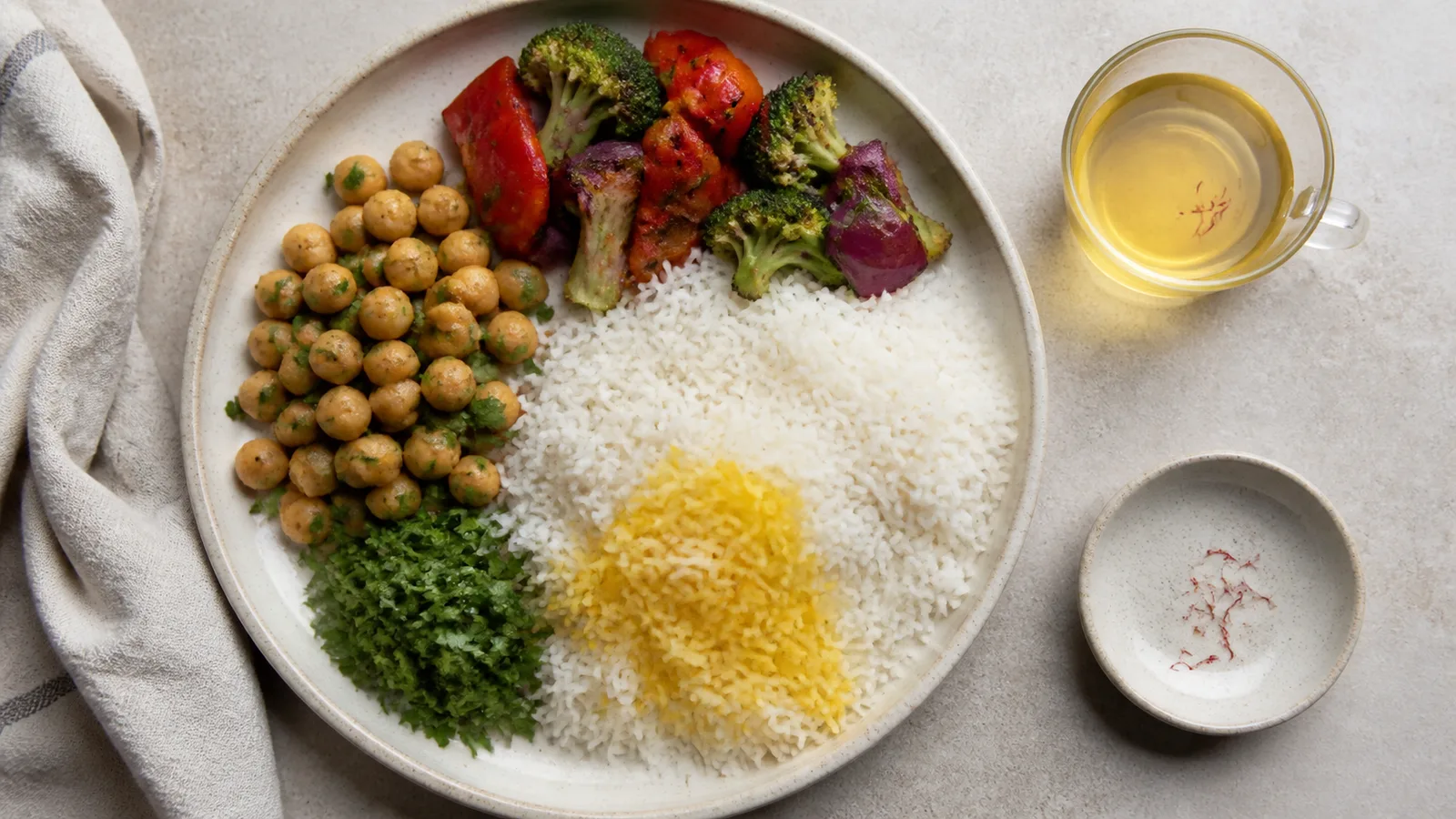
For a satisfying meal, pay attention to the whole plate. Protein, fibre-rich foods, vegetables and an appropriate portion are more dependable foundations than trying to make saffron suppress hunger. Dessert or sweetened saffron milk can still be enjoyed, but their energy and sugar do not disappear because saffron is present.
When to ask before using a supplement
Discuss concentrated saffron with a clinician or pharmacist if you are pregnant or breastfeeding, take regular medicines, have a medical condition, are preparing for surgery, or are already receiving care for appetite or weight. Do not convert research milligrams into a homemade number of threads; extracts and whole spice are not equivalent.
Authentic whole threads make culinary identity and measurement easier, but quality cannot guarantee a body-weight or appetite effect. The Rowhani Saffron products page lists whole-thread formats for cooking. Use them to improve a meal’s sensory character, not to promise hunger control.