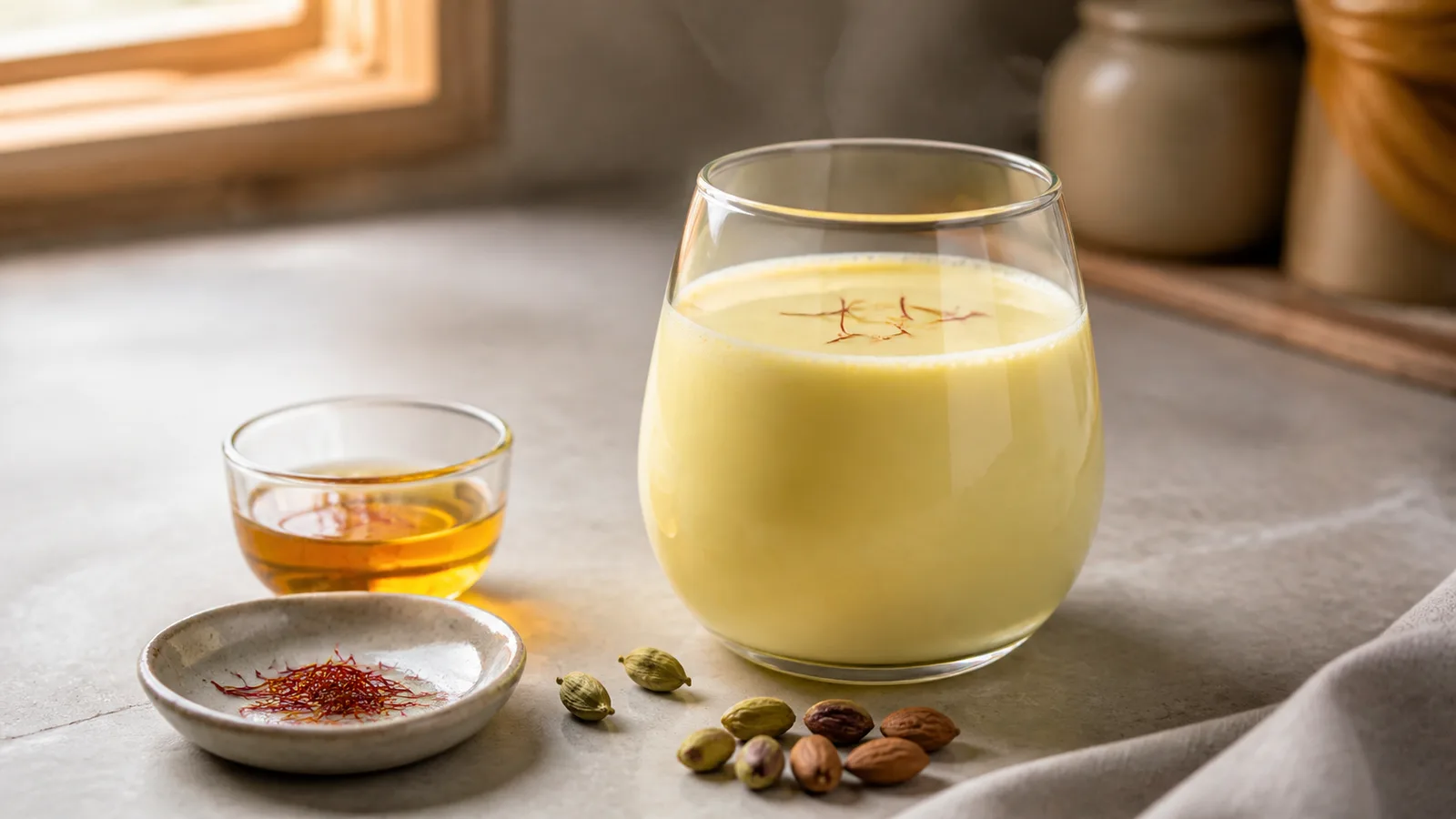
Saffron milk is warm milk infused with a small pinch of saffron, often finished with cardamom and a little honey or sugar. To make one cup, bloom 8 to 12 genuine threads, warm the milk gently, and steep everything together for a few minutes. The result is a fragrant saffron drink with a pale golden color.
This saffron milk recipe gives both one-cup and five-cup amounts, plus dairy-free, cold, milkshake, smoothie, and biryani variations. It also separates the drink’s real culinary qualities from health claims based on concentrated supplements.
What is saffron milk?
Saffron milk—often called kesar milk—is milk and saffron prepared as a hot or cold drink. Cardamom, almonds, pistachios, honey, or sugar are common additions, but none is required. The flavor should stay balanced: creamy and gently sweet, with saffron’s floral, hay-like aroma and a restrained bitter edge.
In other words, saffron with milk and saffron and milk describe the same basic drink. The useful question is how the threads are prepared and how much sweetness and heat the recipe needs.
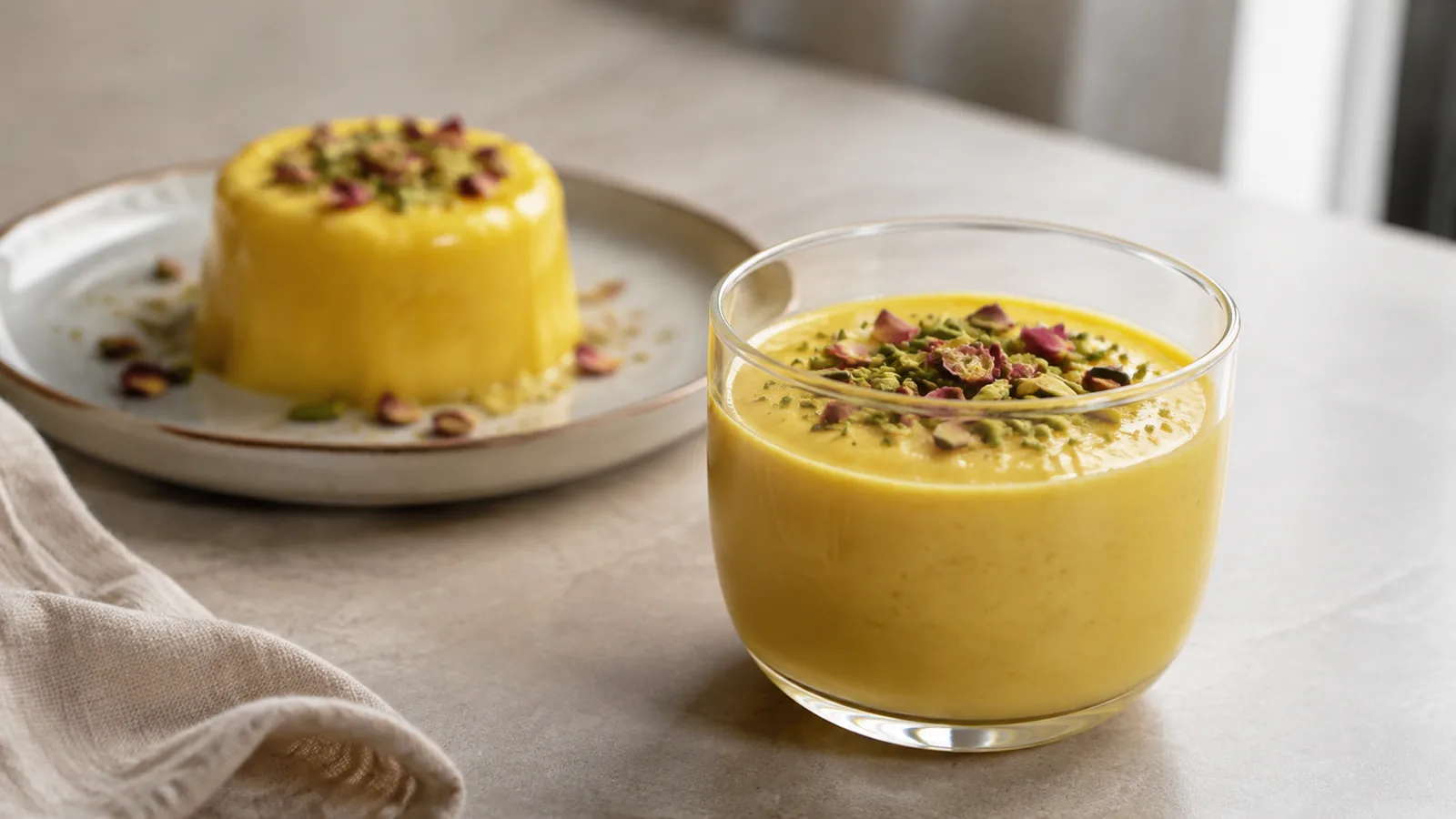
It is not the same as a saffron milkshake, which is thicker and usually blended cold, or the saffron-infused milk used to color biryani. The basic infusion can be adapted for both.
Saffron milk ingredients
For one cup
- 1 cup (240 ml) milk
- 8 to 12 good saffron threads, or one small pinch
- 1 tablespoon warm water or milk, for blooming
- 1 to 2 teaspoons sugar or honey, optional
- seeds from 1 green cardamom pod, lightly crushed, optional
- 1 teaspoon chopped almonds or pistachios, optional
For five cups
- 5 cups (1.2 liters) milk
- about 1/4 teaspoon loosely packed saffron threads, gently crushed
- 2 tablespoons warm water or milk, for blooming
- 2 to 5 tablespoons sugar or honey, according to taste
- seeds from 2 green cardamom pods, optional
- 2 tablespoons chopped almonds or pistachios, optional
How much saffron should you use in milk?
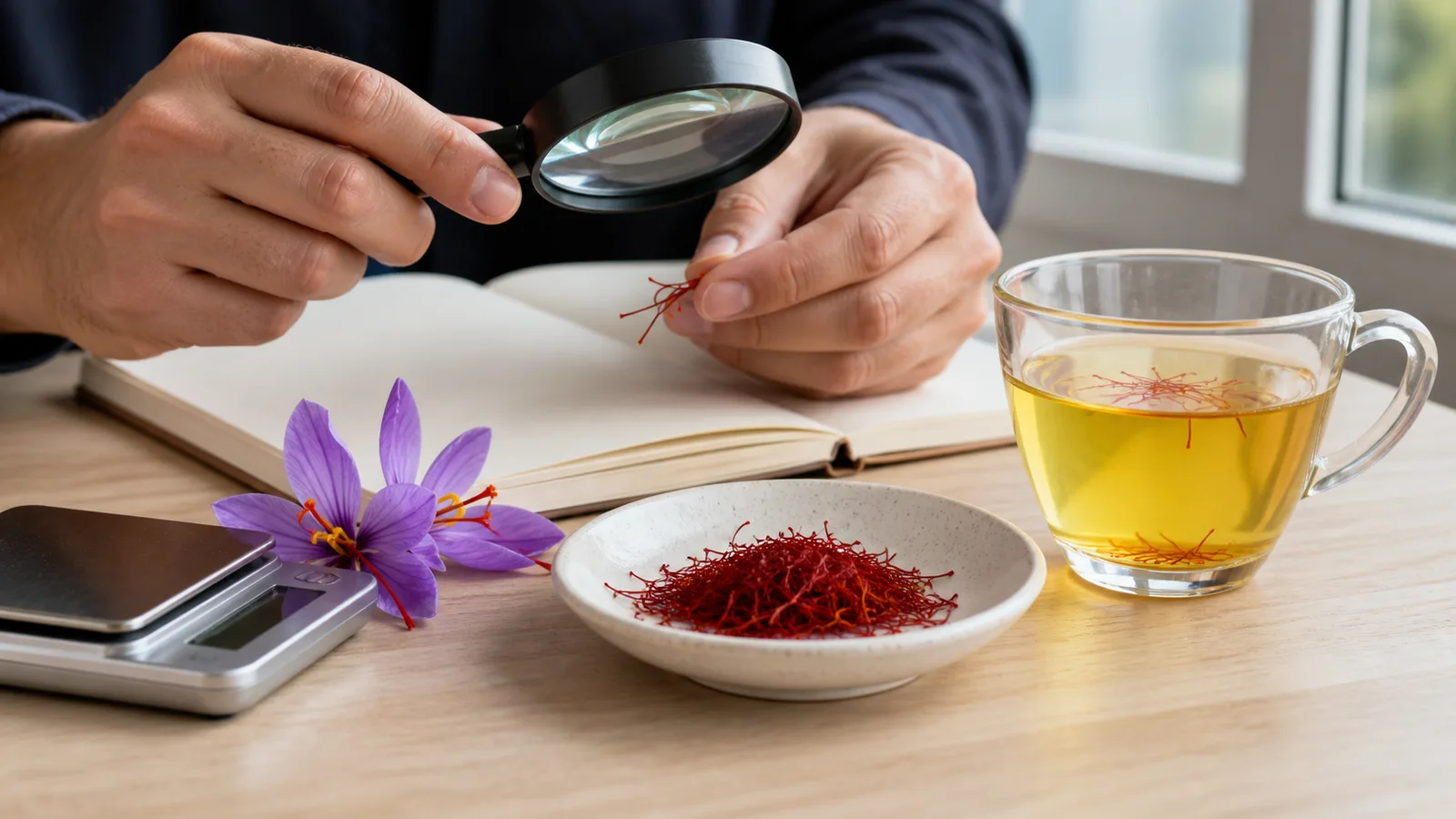
Thread size and potency vary, so counts and teaspoons are starting points rather than medical doses. Add less first; too much saffron makes milk bitter and wastes an expensive spice. Ground saffron disperses quickly but is harder to inspect for quality; grinding whole threads just before blooming gives better control.
How to make saffron milk
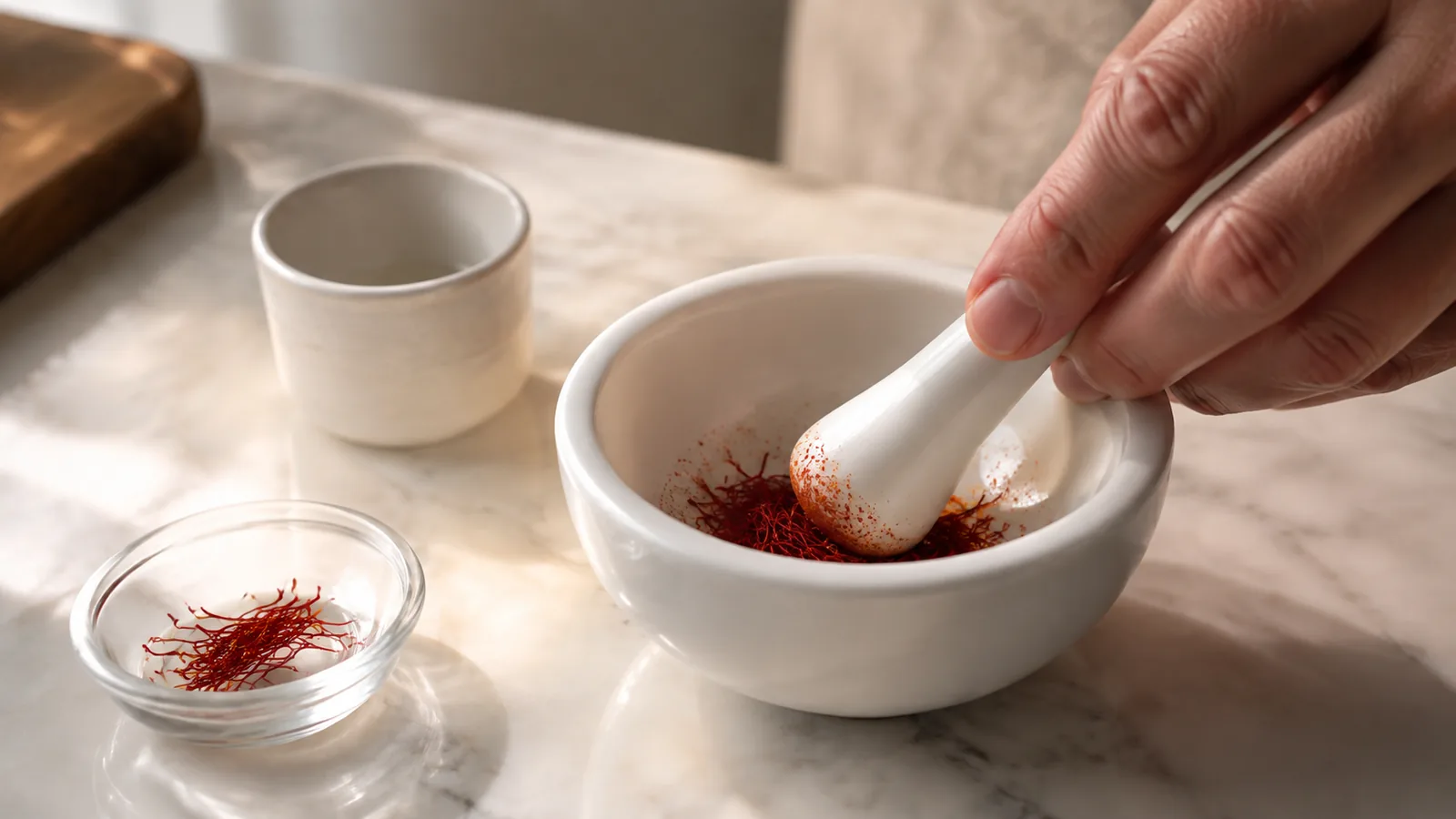
- Bloom the saffron. Gently crush the threads with clean, dry fingers or a mortar. Cover with the warm water or milk and leave for 10 to 15 minutes.
- Warm the milk. Pour the milk into a small heavy pan. Heat over medium-low, stirring occasionally, until it steams and small bubbles form around the edge.
- Add saffron and cardamom. Stir in the bloomed saffron, including the threads, and the optional cardamom.
- Infuse gently. Keep the milk just below a vigorous boil for 3 to 5 minutes, stirring so it does not catch on the pan.
- Sweeten to taste. Remove from the heat, then add sugar or honey. Start with less and taste before adding more.
- Serve. Strain if you prefer a smooth drink, or leave the fine saffron and cardamom pieces in. Finish with nuts only if everyone can eat them safely.
This is also the simplest answer to how to use saffron in milk: crush, bloom, warm gently, and taste. Do not add a dry heap directly to a cold glass and expect even color or aroma.
Can you boil saffron in milk?
You can bring milk briefly to a gentle boil when a recipe or food-safety situation calls for it, but hard boiling is unnecessary for extracting saffron. Prolonged high heat can create a cooked-milk flavor, form a thick skin, scorch the pan, and flatten delicate aromas.
Blooming first and keeping the pan at a gentle simmer gives better control. Saffron’s color will continue to deepen for a few minutes after it enters the milk.
Why add sweetener at the end?
Sugar or honey does not automatically destroy saffron’s aroma or quality, as the old recipe implied. Adding it near the end simply makes it easier to taste the infused milk before deciding how sweet it needs to be.
Honey has its own strong aroma. Use a mild variety if you want the saffron to remain noticeable. Never give honey to a child under 12 months.
Which milk works best?
- Whole milk: richest texture and rounded flavor.
- Low-fat milk: lighter, with a more obvious saffron edge.
- Lactose-free dairy milk: works normally and may taste slightly sweeter.
- Soy milk: good body and protein; choose a plain, unsweetened version.
- Oat milk: naturally sweet and creamy, but some brands thicken when heated.
- Almond milk: light and nutty; unsuitable for a nut allergy.
Plant drinks differ in protein, sugar, calcium, and vitamin fortification. Shake the carton, check the label, and heat gently to reduce separation.
Saffron milk benefits: what is established?
The clearest benefits of saffron milk are culinary and nutritional: it is a warm, aromatic drink, and its nutrients mostly come from the milk you choose. Dairy milk typically supplies protein, calcium, riboflavin, vitamin B12, and—when fortified—vitamin D. Plant alternatives vary widely.
Saffron contributes color, aroma, and small amounts of plant compounds such as crocin and safranal. A few threads do not turn the drink into a proven treatment.
Mood and relaxation
Systematic reviews of randomized trials report promising mood results from defined saffron preparations. Those findings do not show that a cup of saffron milk treats depression, reduces anxiety, lowers cortisol, or releases “feel-good hormones.” The warmth and familiar ritual may help someone unwind without being a medical effect.
Sleep quality
Several short trials have examined standardized saffron extracts for sleep quality. The evidence does not establish that saffron milk cures insomnia. A calm bedtime routine can be enjoyable, but persistent insomnia, loud snoring, breathing pauses, or marked daytime sleepiness deserves assessment.
Antioxidants and inflammation
Saffron compounds have antioxidant and anti-inflammatory activity in laboratory research. This does not prove that drinking saffron milk prevents oxidative damage, reduces inflammation in the body, or protects against a specific disease.
Brain and metabolic claims
Saffron milk has not been shown to boost brain function, protect brain cells, strengthen the immune system, regulate blood sugar, or increase energy. Research on cognitive function or metabolic markers usually tests measured extracts or powders, not this recipe. It is not a way to prevent Alzheimer’s disease or Parkinson’s disease.
Can you drink saffron milk every day?
Many adults can include a modest culinary drink in an otherwise suitable diet, but “every day” is not automatically better. Consider the milk, sweetener, total calories, allergies, lactose tolerance, health conditions, and other saffron products you use.
If you have diabetes, the added sugar or honey matters more than the saffron. If you have a milk allergy, choose an appropriate alternative rather than lactose-free dairy milk. People with kidney disease or another medically managed diet may need advice on fluid, potassium, phosphorus, or protein.
Saffron milk during pregnancy
Queries about how to make saffron milk during pregnancy need a safety distinction. A few threads in an ordinary food or drink are different from a concentrated supplement, but there is no universal medicinal dose established as safe in pregnancy.
Do not use saffron milk or a supplement to change fetal complexion, for uterine stimulation, to bring on labor, or to treat pregnancy symptoms. Higher exposures have been linked in the literature with miscarriage risk. Ask the obstetric clinician, physician, or midwife before using saffron beyond normal food amounts, especially in a high-risk pregnancy or with bleeding, contractions, or regular medicine. Our guide to saffron pregnancy risks and supplement safety explains the evidence in detail.
How to make cold saffron milk
Prepare the drink as above, cool it promptly, then refrigerate in a covered container. Serve chilled over ice within three days. Do not leave warm milk at room temperature for more than two hours.
Warm saffron milk suits colder seasons; for summer, add a strip of orange peel while the milk cools, then remove it. A syrup is not required; keeping sweetener modest lets the saffron stay clear.
Saffron milkshake and smoothie
A saffron milkshake does not need 30 to 40 minutes of simmering. Make and cool a concentrated half-cup of saffron milk, then blend it with cold milk and either:
- a scoop of vanilla ice cream for a milkshake; or
- plain yogurt and half a frozen banana for a smoothie.
The yogurt-and-banana version is a saffron smoothie rather than a milkshake; its tang and thickness will be different.
Add pistachios or almonds only when allergy-safe. Blend briefly so the drink stays cold and does not become foamy.
Saffron milk for biryani
For biryani, you need an infusion rather than a full drink. Bloom a pinch of saffron in 1/4 cup warm milk for 10 to 15 minutes. Spoon it over the layered rice before the final steaming. Do not add sugar, honey, or nuts unless the biryani recipe specifically calls for them.
Troubleshooting
The drink is pale
The threads may need more blooming time, or the saffron may be old or weak. Do not keep adding powder immediately. Wait several minutes; genuine saffron releases color gradually.
It tastes bitter
Too much saffron, scorched milk, or excessive cardamom can all create bitterness. Dilute with more milk and adjust sweetener only after correcting the balance.
The milk separated
High heat, an acidic ingredient, or an unstable plant drink may be responsible. Use medium-low heat and avoid lemon or other acids. Separation is a texture problem; discard the drink if the milk smells sour or was stored unsafely.
Storage and food safety
Serve hot saffron milk promptly or cool it quickly and refrigerate. Keep it covered and use within three days. Reheat only what you need until steaming, stirring often. Do not repeatedly warm and cool the same batch.
The balanced reason to make saffron milk is simple: milk’s creaminess carries saffron’s aroma beautifully. Use a small, genuine amount, control the heat and sweetness, and enjoy the drink without turning supplement research into a promise about the recipe.