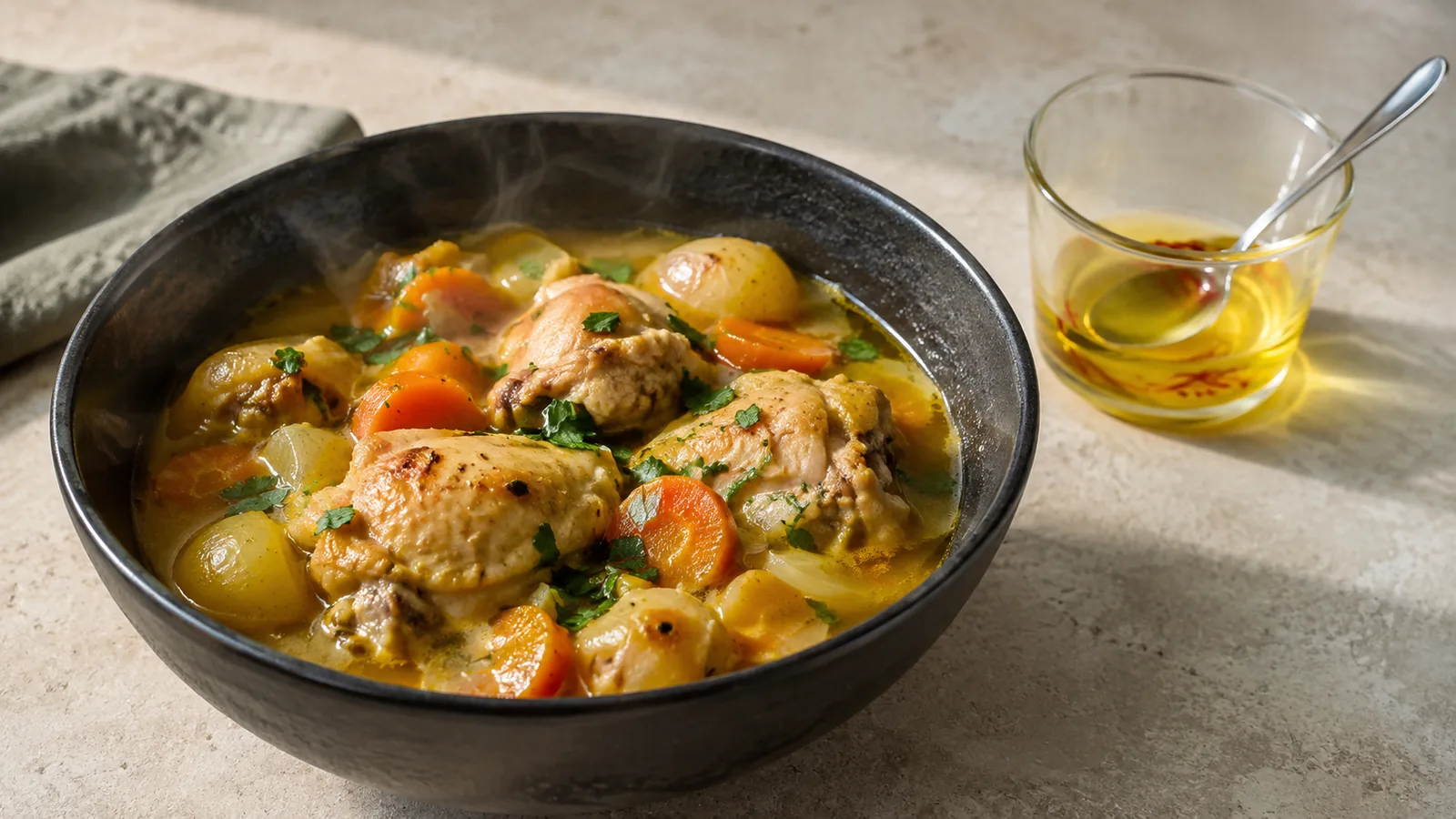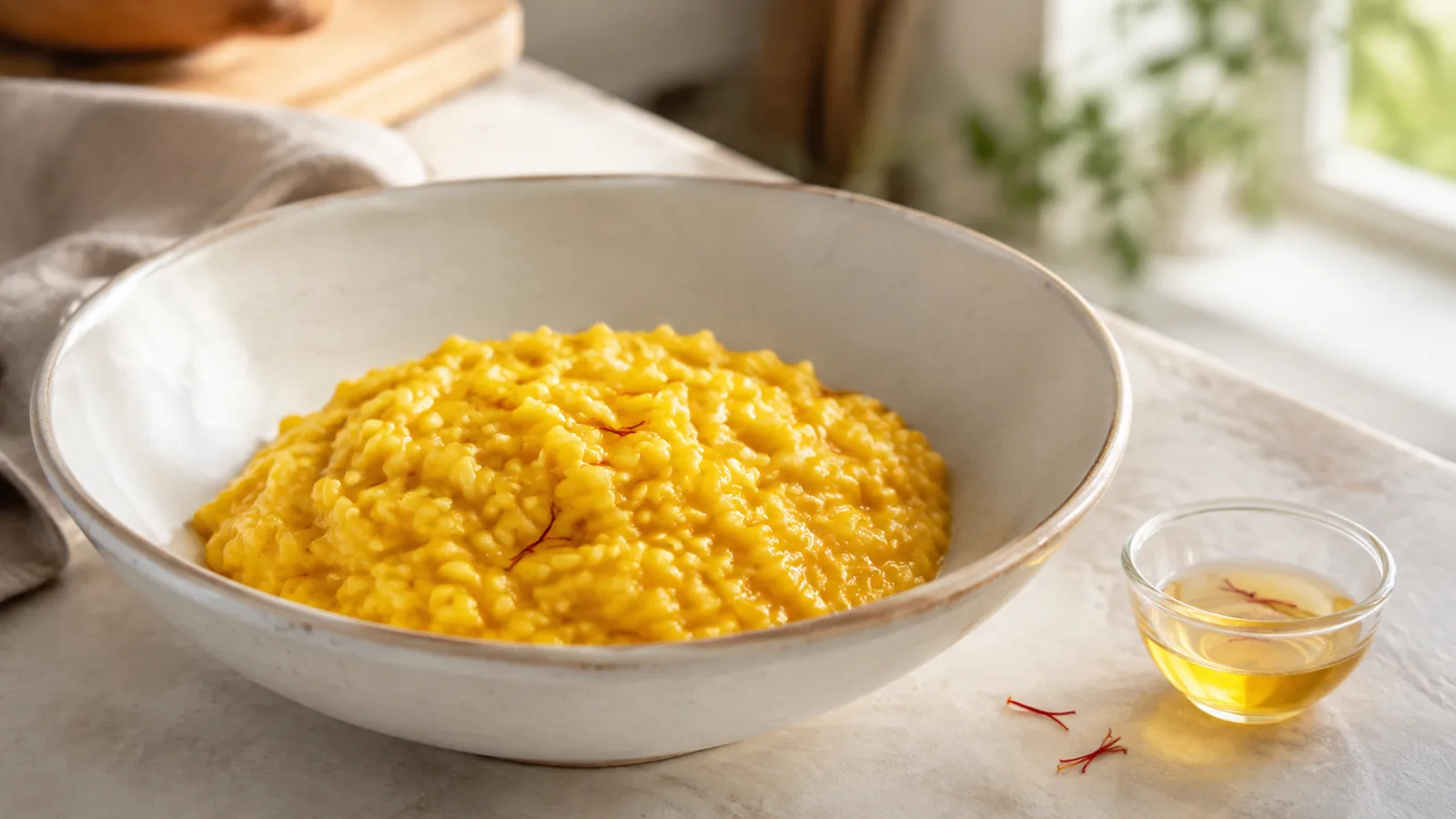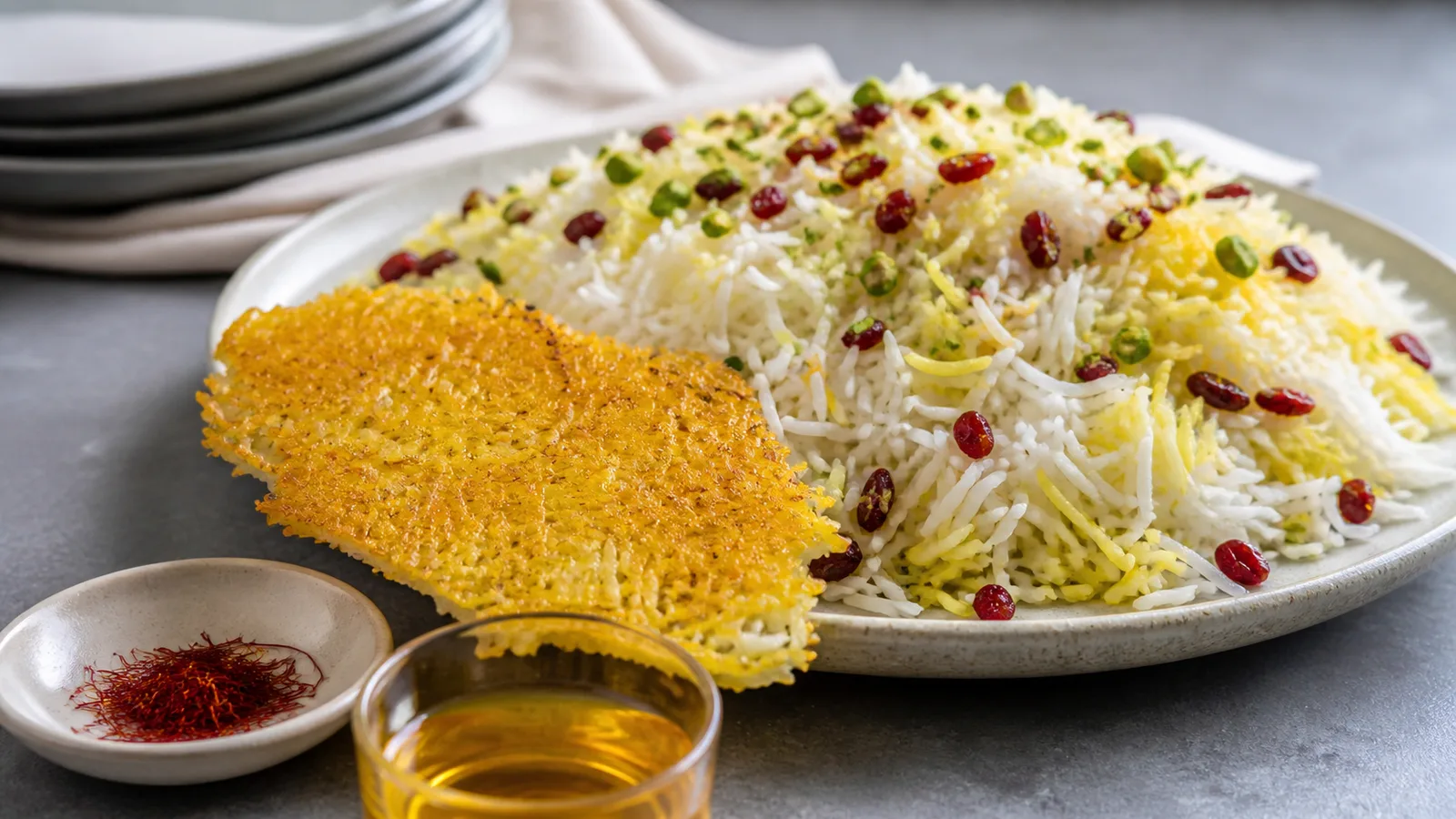
Saffron yogurt crust is a crisp Persian rice layer made by pressing parboiled rice mixed with yogurt, egg yolk, saffron infusion, and oil into the bottom of the pot. The remaining rice steams above it, while the base turns deeply golden and releases as one piece.
This version reflects the traditional Mashhadi style described in the original recipe. Families make it differently for ordinary meals, celebrations, and special occasions, so treat garlic, onion powder, barberries, pistachios, and other spices as optional choices rather than rules.
What is saffron yogurt crust?
In Persian cooking, the crisp layer at the bottom of a rice pot is called tahdig. A simple version uses rice, bread, or potato. Saffron yogurt crust binds part of the parboiled rice with thick yogurt and egg, giving the base a cohesive texture and a more even saffron color.
This is related to saffron rice crust with yogurt, but it is not the same as tahchin, a larger baked or pot-cooked rice dish in which much more of the rice is mixed with yogurt and eggs, often around a filling. Here, the mixture stays in a thin bottom layer.
Ingredients
Makes 4 to 6 servings
- 2 cups (about 380 g) basmati rice
- 1/2 cup (120 g) thick full-fat plain yogurt
- 1 large egg yolk
- 2 tablespoons strong brewed saffron
- 4 tablespoons neutral oil, melted butter, or ghee, divided
- 1 1/2 tablespoons salt for the boiling water, plus a pinch for the crust mixture
- optional: 1/4 teaspoon garlic powder or onion powder
- optional garnish: prepared barberries and chopped pistachios
A mild olive oil can work, although a strongly flavored extra-virgin oil changes the traditional taste.
You will also need a heavy 20 to 23 cm (8- to 9-inch) nonstick pot with a well-fitting lid. A larger pot makes a thinner crust and may cook faster.
Before you start
Brew the saffron
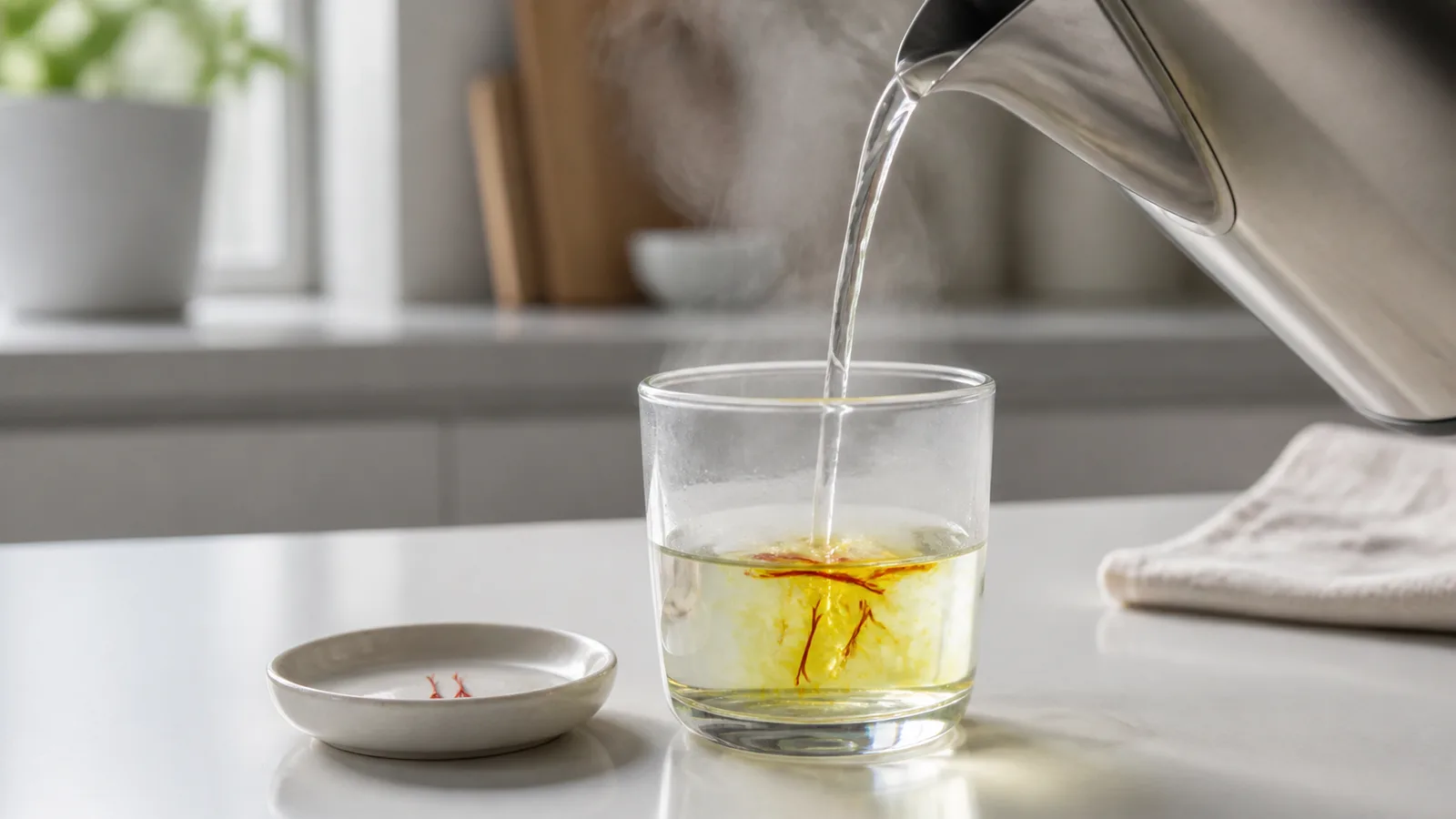
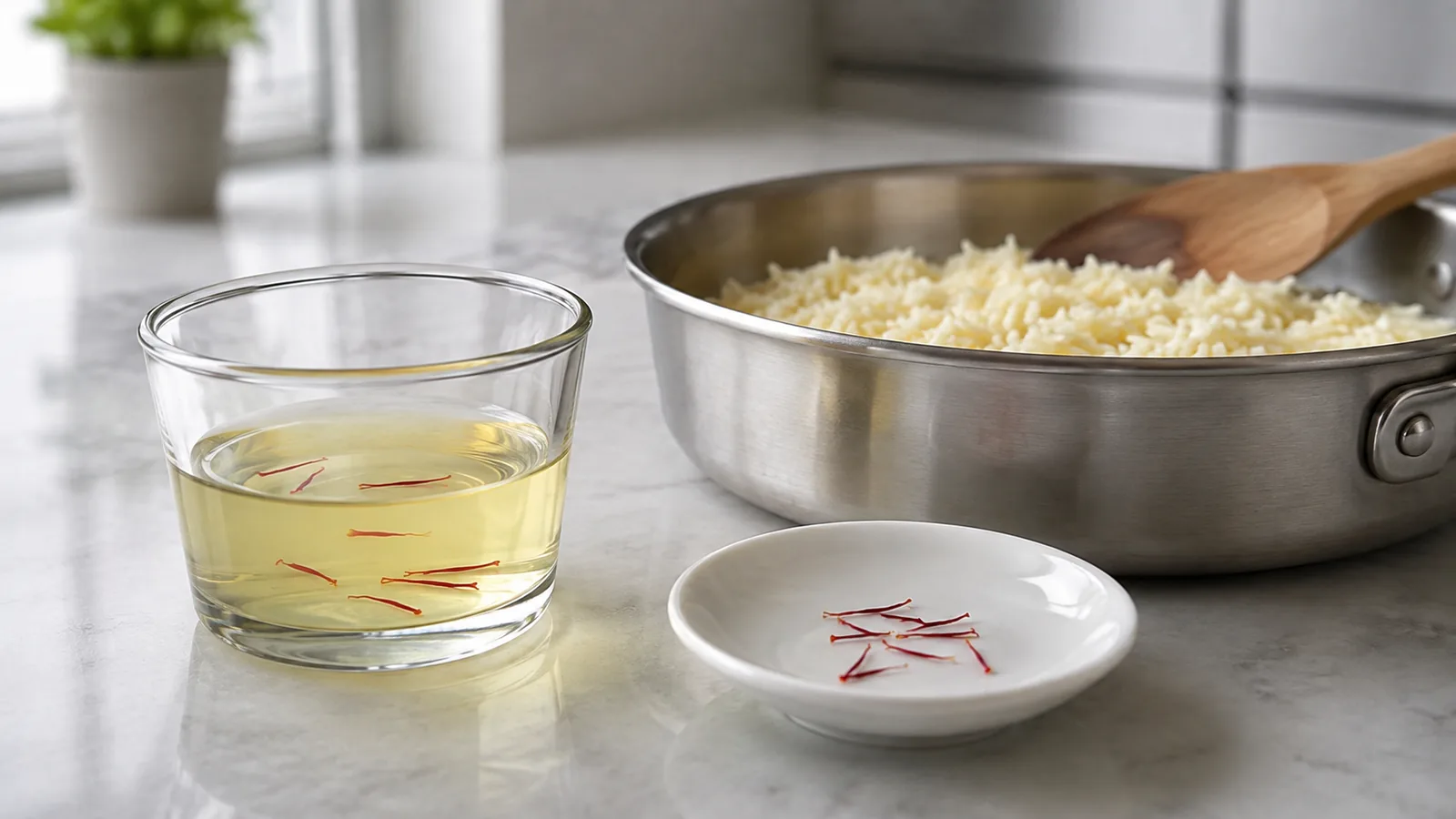
Gently grind a generous pinch of threads. Cover with 2 tablespoons of warm water and leave for 10 to 15 minutes. The liquid should be fragrant and strongly colored, because it will be diluted by yogurt and rice.
Rinse and soak the rice
Rinse the basmati several times until the water is much clearer. If time allows, soak it for 30 to 60 minutes in salted water, then drain. Rinsing removes loose surface starch; it does not need to continue until the water is perfectly transparent.
How to make Mashhadi saffron yogurt crust
- Parboil the rice. Bring a large pot of water to a vigorous boil and add the salt. Add the drained rice. Cook until a grain is flexible and tender on the outside but still has a firm core, usually 5 to 7 minutes depending on the rice and soak. Drain promptly.
- Make the yogurt mixture. Whisk the yogurt, egg yolk, brewed saffron, 2 tablespoons oil, a pinch of salt, and optional garlic or onion powder until smooth.
- Coat part of the rice. Fold about 2 cups of the warm parboiled rice into the yogurt mixture. Stir gently so the grains stay mostly intact.
- Prepare the pot. Add the remaining 2 tablespoons oil and rotate the pot to cover its base.
- Build the crust. Spread the coated rice across the bottom in an even layer about 1.5 to 2 cm thick. Press just enough to close large gaps; packing it hard makes the crust dense.
- Add the plain rice. Spoon the remaining rice over the base in a loose mound. Make three or four steam holes with the handle of a wooden spoon without piercing the crust.
- Start the crust. Cover and cook over medium heat for 6 to 8 minutes, until steam builds. If your lid is clear, look for condensation; do not wait for a burnt smell.
- Steam gently. Wrap the lid in a clean kitchen towel, keeping every edge well away from the flame or heating element. Reduce the heat to low and cook for 35 to 45 minutes.
- Rest and release. Turn off the heat and rest for 5 minutes. Run a flexible spatula around the edge. Place a wide plate over the pot and invert decisively, or lift the crust out in sections if you prefer.
How to tell when it is ready
A finished crust is a rich yellow-gold to amber, smells toasted rather than scorched, and holds together when lifted. The top rice should be separate and fully tender. For a darker, drier crust, extend the low-heat stage only a few minutes at a time so it does not burn.
If the crust is pale, the heat may have been too low at the start or the pot may be too heavy for the burner. If it is dark before the rice is cooked, the starting heat was too high. Make one adjustment at a time on the next attempt; stoves and pots differ.
Common problems
The crust sticks
Use an intact nonstick pot, enough oil to coat the base, and the short resting period. Placing the hot pot on a cool, damp towel for a minute sometimes helps release the base, but keep water away from the food and hot oil.
The crust breaks
The layer may be too thick, the rice may be undercooked, or the yogurt mixture may be too loose. Thick yogurt and one egg yolk provide enough binding without turning the base into an omelet.
The rice is soft or clumped
Drain when the center of each grain is still firm. Do not press the rice in the colander; shaking it gently is enough. Overcooked parboiled rice cannot regain a fluffy texture during steaming.
The crust is greasy
Four tablespoons of fat is a starting point for an 8- to 9-inch pot, not a rule to add oil generously. A good nonstick surface may need slightly less. The base needs coverage, not a deep pool.
Barberries and pistachios
For a classic-looking finish, rinse dried barberries carefully and pick out any grit or stems. Sauté them briefly in a little butter over low heat; add a small pinch of sugar only if you want to soften their tartness. Scatter them over the finished rice with chopped pistachios.
Do not cook barberries for long. They darken and turn bitter quickly. Keep the garnish on top so the bright red and green remain distinct from the golden crust.
What to serve with saffron yogurt crust
Serve it beside roast or braised chicken, grilled vegetables, kebabs, a mild stew, or a crisp herb salad. Small crisp pieces can be an appetizer, and the crust can also be the textured base of a rice plate with yogurt and fresh herbs.
The old article suggested putting the crust into salads, sauces, cakes, cookies, and desserts. Its crisp, savory rice texture does not suit all of those uses. Leftover pieces are better reheated uncovered in a skillet or oven until hot and crisp.
Storage and reheating
Because the dish contains cooked rice, egg, and yogurt, refrigerate leftovers within two hours. Use a shallow covered container and eat within three to four days. Reheat until steaming hot throughout; do not leave cooked rice at room temperature for extended periods.
A skillet restores the crispest base. Add a few drops of oil, cover briefly to heat the center, then uncover to dry the surface. A moderate oven also works. A microwave heats the rice but softens the crust.
Nutrition and the meaning of “benefits”
This is a satisfying rice dish, not a treatment. Rice supplies carbohydrate; yogurt and egg add some protein, vitamins, and minerals; and the oil or butter makes the crust crisp. The exact calories, carbohydrate, fat, protein, calcium, potassium, and zinc depend on ingredient brands, amounts, pot size, serving size, and how much oil remains in the food.
The old calorie table listed values without a serving size and mixed calories with nutrient figures that could not describe a real recipe. It has been removed rather than presenting false precision.
Clinical research has examined standardized saffron preparations for depression and anxiety, but this saffron yogurt crust has not been shown to treat either condition. Saffron’s laboratory anti-inflammatory activity also does not turn a serving of rice into anti-inflammatory therapy.
The worthwhile benefits are concrete: a fragrant meal, a crisp contrast to fluffy rice, familiar ingredients, and a dish that can carry family and regional tradition. Portion it according to the rest of the meal and your own dietary needs.
A final note on Mashhadi identity
Mashhad is closely associated with saffron, and many households there prepare saffron-rich rice dishes. Recipes travel and change within families, so it is better to describe this as a Mashhadi-style method than to claim one universal formula. The technique—not a rigid garnish or spice blend—is what makes the crust work.
Once you understand parboiling, the thin yogurt layer, and the two-stage heat, saffron yogurt crust becomes repeatable. Keep the mixture balanced, watch the pot rather than the clock alone, and let the saffron support the rice.