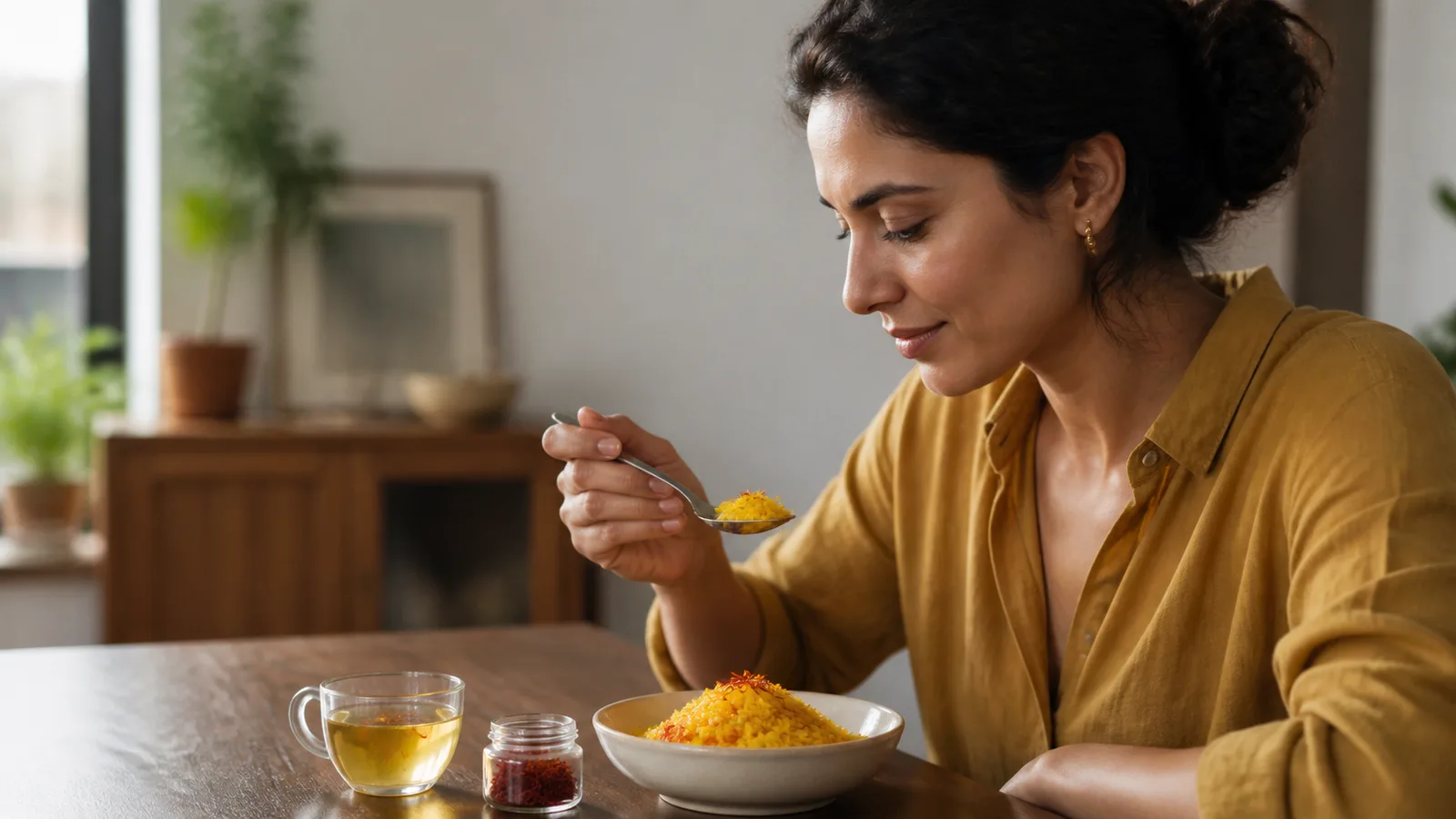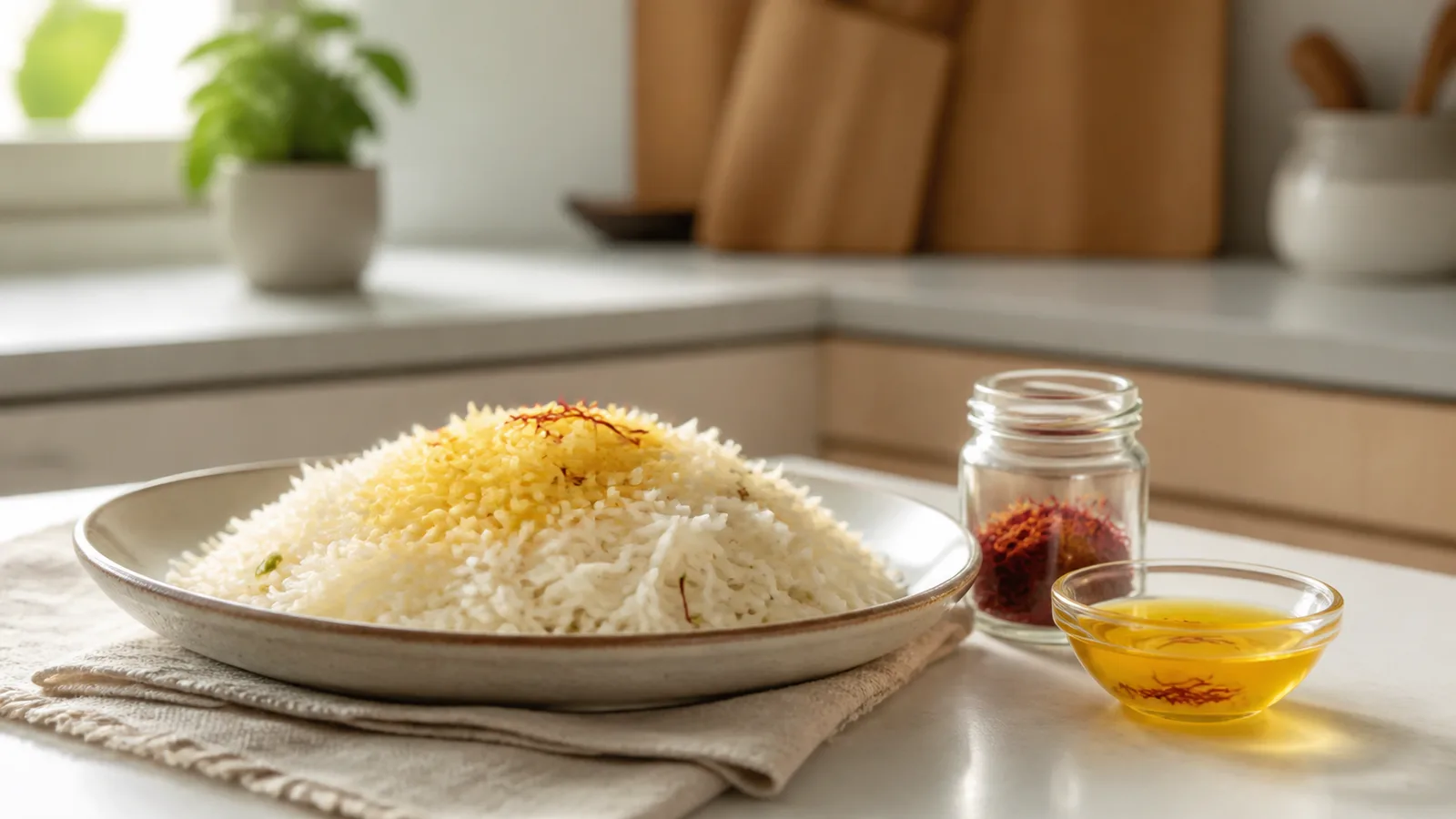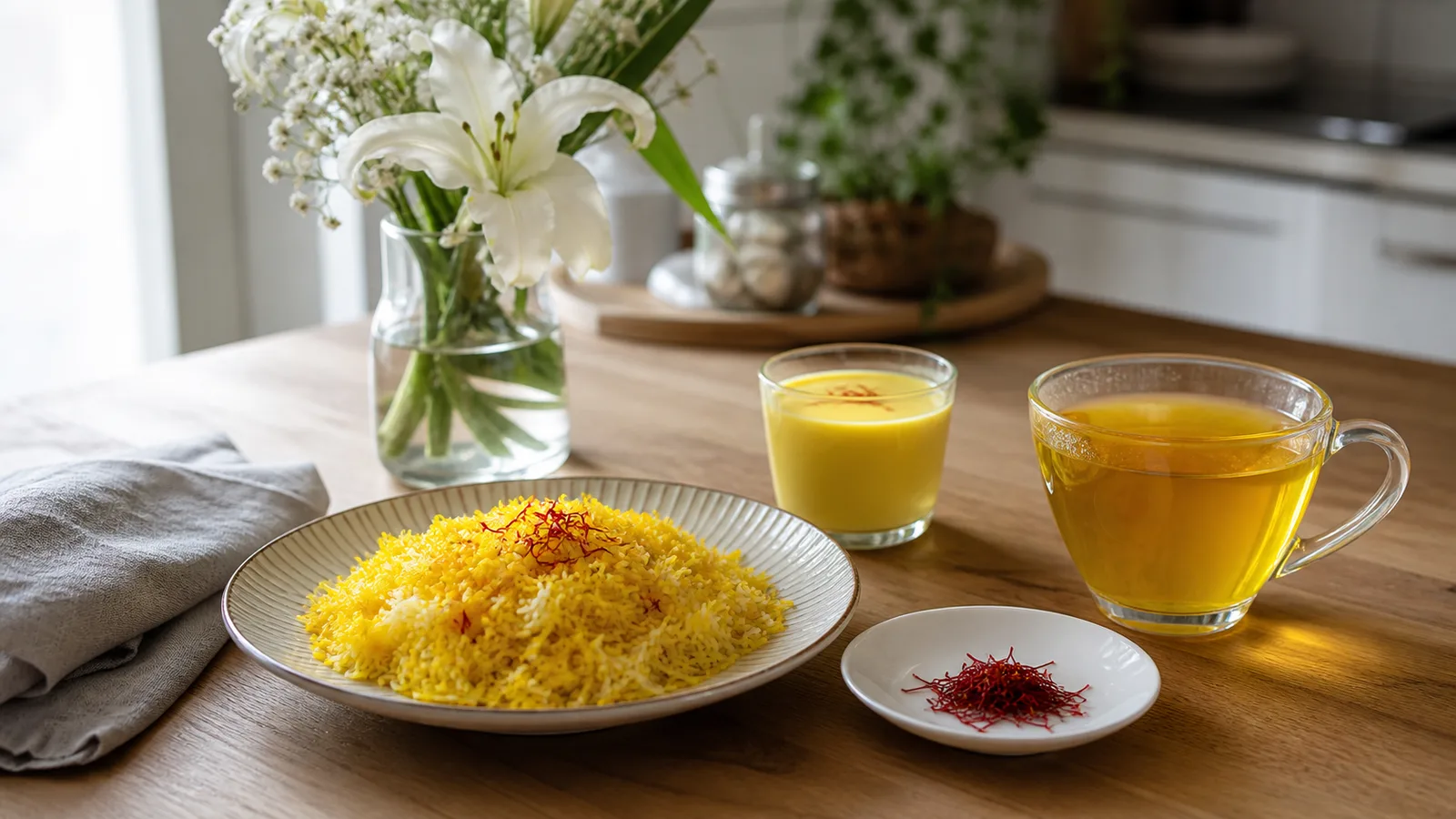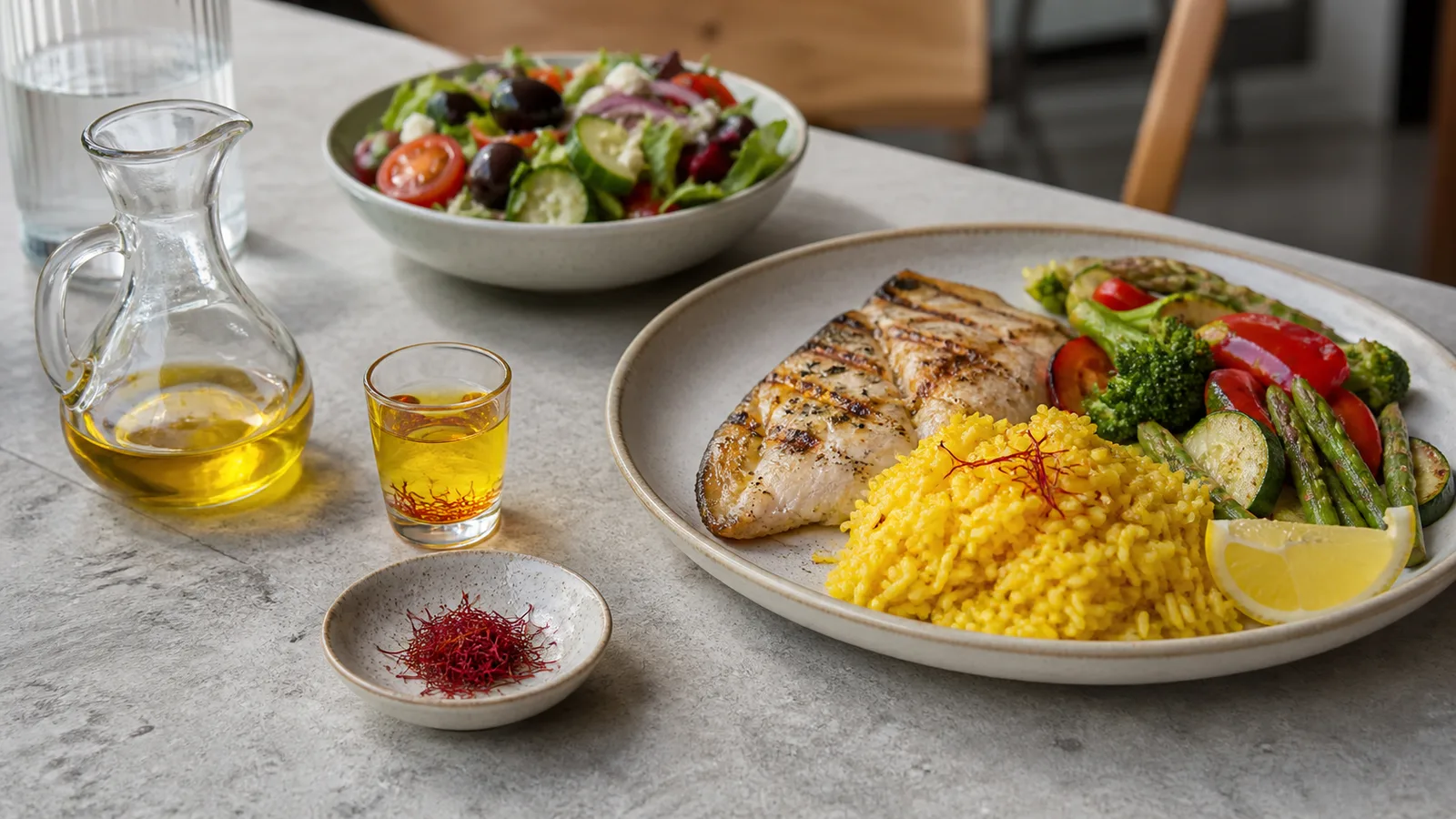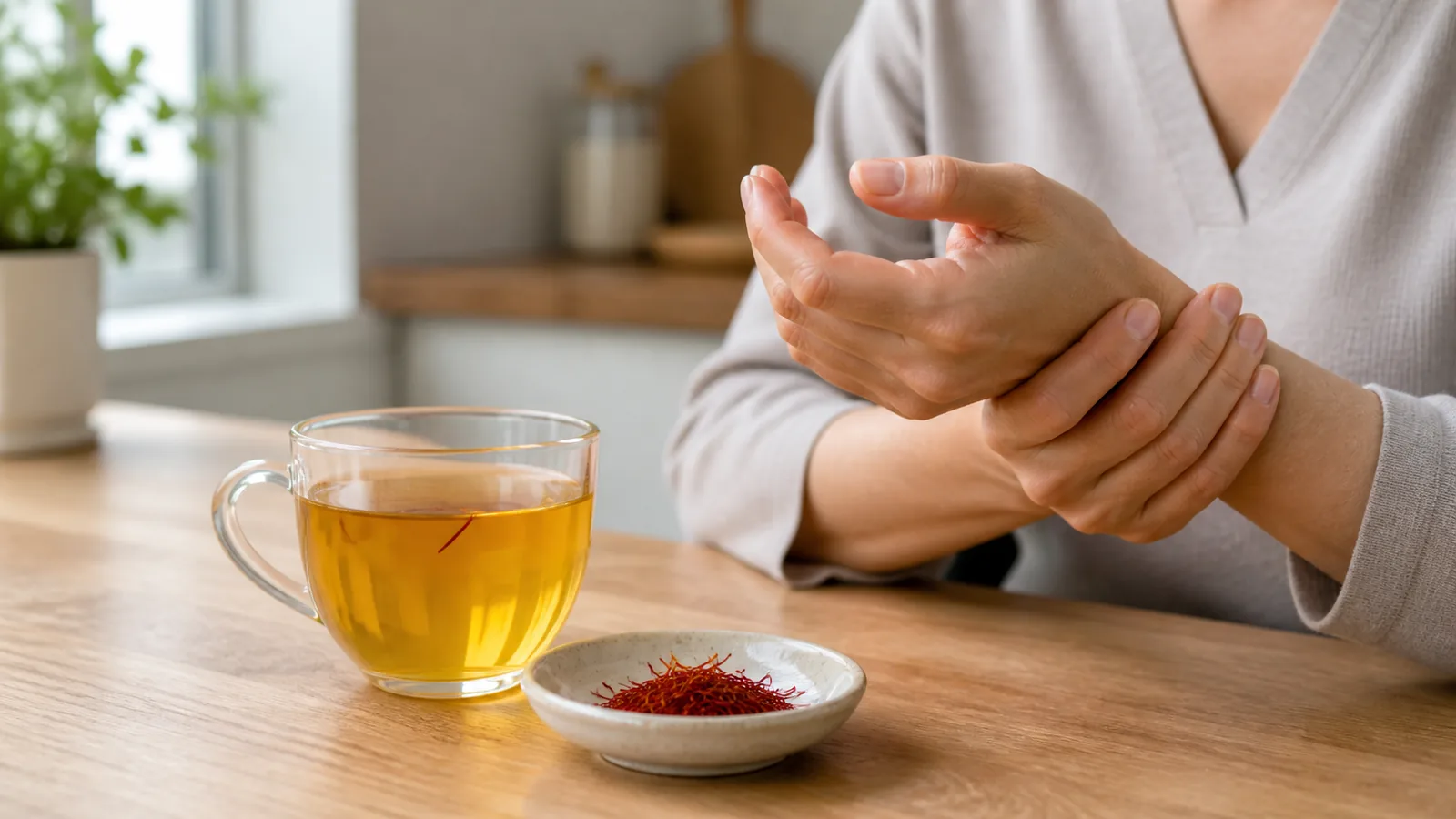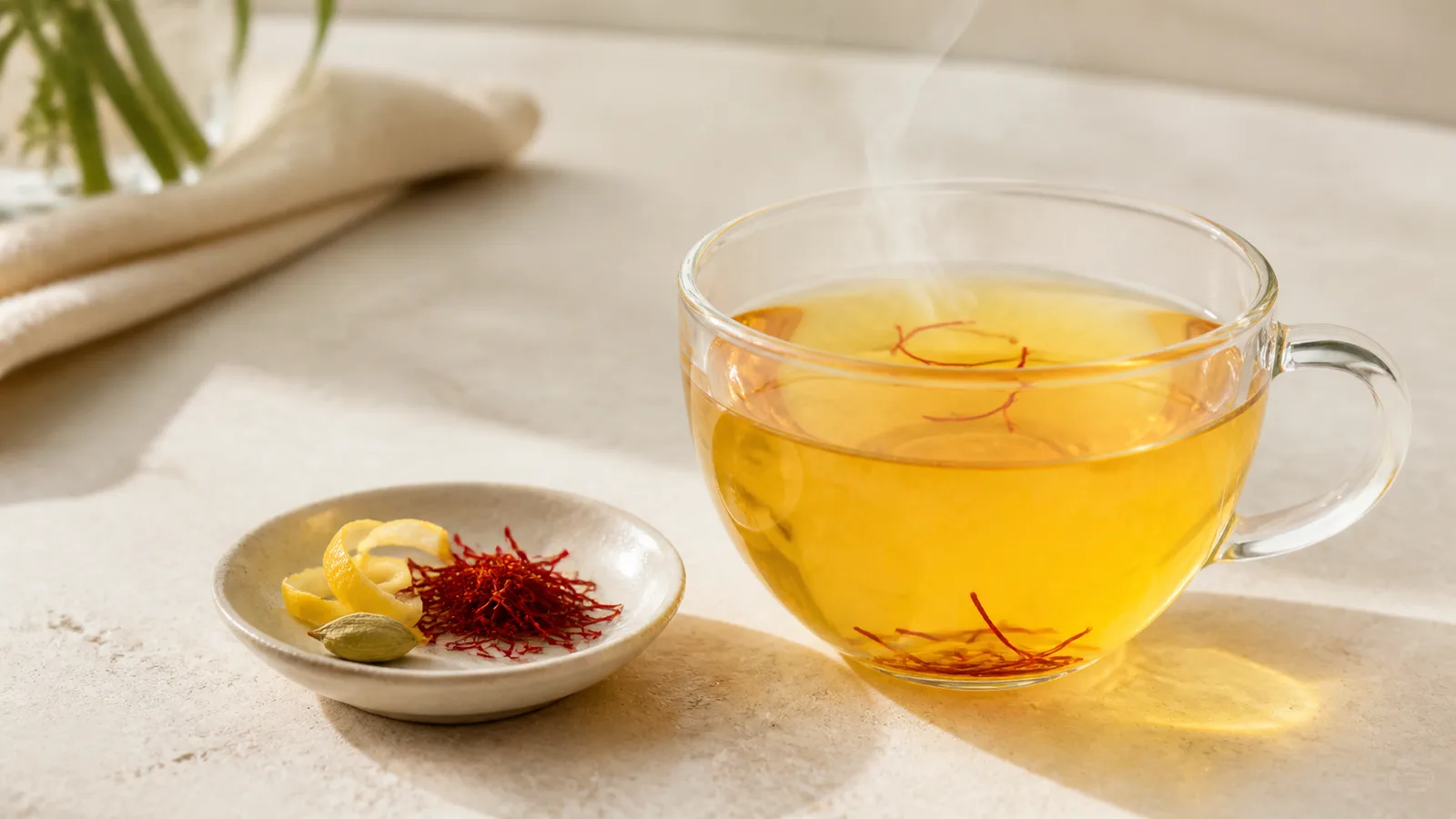
Saffron tea is a golden, floral infusion made by steeping a small amount of Crocus sativus stigma in hot water. Its clearest benefits are practical: it is naturally caffeine-free, can be served without sugar, and offers saffron’s aroma and color in a simple drink.
Research has also examined saffron for mood, premenstrual symptoms, sexual function, appetite, metabolism, memory, and eye health. Those studies generally use standardized capsules or extracts—not a cup of saffron tea. The distinction prevents promising research from turning into an unsupported treatment claim.
What is saffron tea?
Saffron is the dried red stigma of the purple saffron crocus. Each flower produces three stigmas, which are separated and dried. The spice contains crocin-family pigments, picrocrocin, safranal, and other plant compounds associated with its color, bitterness, and aroma.
Saffron tea contains no tea leaf unless a recipe adds black, green, or herbal tea. Plain saffron infusion is therefore naturally free from caffeine. Saffron is sometimes called kesar, so “kesar tea” usually means the same spice infusion.
American saffron is different. That name is often used for safflower (Carthamus tinctorius), which is not Crocus sativus and does not have the same composition or evidence base. Claims about American saffron tea benefits should not be transferred to true saffron tea, or vice versa.
8 saffron tea benefits and evidence limits
These eight points separate benefits you can expect from drinking saffron tea from effects that researchers have studied in other saffron preparations.
1. A naturally caffeine-free warm drink
Plain saffron tea provides warmth and fluid without caffeine. That can be useful for someone who enjoys an evening drink or wants a break from coffee and ordinary tea. It does not induce sleep or treat insomnia simply because it is caffeine-free.
2. Flavor and color without added sugar
Saffron gives water a floral aroma, golden color, and mild bitterness. It needs no sugar to release those qualities. Honey or sugar is optional; leaving it out keeps the drink low in calories and avoids turning it into a sweetened beverage.
3. A simple way to enjoy saffron’s sensory qualities
The covered steeping method captures aroma while the pigments disperse into the water. Many people find the preparation and fragrance pleasant. That experience is a legitimate reason to drink it, though a relaxing ritual is not a clinical treatment for stress, anxiety, or pain.
4. Exposure to saffron’s plant compounds
Saffron contains crocin, crocetin, safranal, picrocrocin, and kaempferol. Laboratory research describes antioxidant activity, but it is too broad to say that one cup “neutralizes free radicals in the body” or prevents chronic disease. The amount extracted into tea varies with the threads, water, temperature, and steeping time.
5. Mood research is promising but does not establish a tea effect
Systematic reviews of randomized trials report that defined saffron preparations may improve some depression and anxiety measures. The evidence applies to the studied products and schedules. It does not establish that culinary saffron tea boosts mood, treats depression, or can replace psychotherapy or medication.
If low mood is persistent, severe, or accompanied by thoughts of self-harm, seek professional or emergency help rather than increasing saffron intake.
6. PMS and sexual-health studies use defined preparations
Trials and reviews have examined saffron for premenstrual syndrome, dysmenorrhea, and some forms of sexual dysfunction, including symptoms associated with antidepressants. Results are not a general aphrodisiac promise, and the evidence cannot be converted into a tea recipe or dose.
The earlier article cited a small one-month study using a 30 mg daily saffron supplement for erectile function. That product amount is not a recommended tea dose, and one brief trial cannot establish self-treatment guidance.
Severe menstrual pain, unusual bleeding, erectile dysfunction, or a change in sexual function can have causes that need proper assessment. Saffron tea should not delay that care.
7. Appetite and cardiometabolic findings remain product-specific
Some studies of saffron supplements have measured appetite, snacking, body weight, blood sugar, cholesterol, or other cardiometabolic outcomes. The results vary, and studies commonly use concentrated preparations. Drinking saffron tea has not been shown to produce reliable weight loss, control diabetes, or treat heart disease.
An unsweetened cup can fit a weight-management plan because it adds little energy. That benefit comes from the beverage choice, not from a demonstrated fat-burning effect.
8. Cognition and eye research is preliminary
Small clinical studies and reviews have investigated saffron products in age-related macular degeneration and cognitive conditions. These findings do not make saffron tea a treatment for Alzheimer’s disease, dementia, vision loss, or another eye disorder. Regular eye examinations and evidence-based medical care remain essential.
What saffron tea does not do
Cell and animal studies are useful for generating research questions, but they do not show that drinking saffron tea prevents or treats cancer in humans. The same caution applies to broad claims about immune function, inflammation, “detoxing,” kidney health, blood vessels, or brain-cell protection.
A personal or family history of cancer calls for appropriate screening and clinical advice, not a tea regimen. Diabetes, heart disease, Alzheimer’s disease, depression, and eye disease also require professional assessment and treatment.
How to make saffron tea
Hot-water method
- 8 to 12 saffron threads
- 250 ml hot water
- optional: lemon, cardamom, mint, or a small amount of honey
- Crush the threads lightly to expose more surface area.
- Place them in a heat-safe cup or small pot.
- Add hot water that has just stopped boiling.
- Cover and steep for 10 to 15 minutes.
- Taste before adding a sweetener.
The old rule of one teaspoon of ground saffron in half a cup of water is far more concentrated than a normal single drink and wastes an expensive spice. Indirect heat for 20 minutes is also unnecessary for an ordinary cup. Gentle covered steeping is enough.
Ice-bloom method
Place lightly crushed saffron in a small dish with one or two ice cubes and let them melt at room temperature. Dilute the resulting liquid with warm or cold water. This method is slower. It can produce vivid color, but there is no universal evidence that ice always extracts more color or makes better tea than controlled hot water.
Saffron green tea
For saffron green tea, steep the saffron first, then add green tea leaves for the time recommended for that tea and strain. Green tea introduces caffeine and its own flavor. The benefits of saffron green tea cannot be assumed to equal the combined claims made for two separate supplements.
Saffron tea benefits for female health
This search phrase often refers to PMS, menstrual discomfort, mood, fertility, pregnancy, or postpartum recovery. Evidence for defined saffron preparations in PMS does not establish benefits for fertility or pregnancy, and it does not make tea a treatment for severe period symptoms.
Culinary saffron in ordinary food is different from repeated concentrated intake. During pregnancy or breastfeeding, discuss saffron supplements, medicinal use, or unusually strong tea with a clinician or midwife. Do not use saffron tea to induce labor or manage bleeding.
Saffron tea side effects and precautions
A lightly prepared cup may be tolerated by many adults, but saffron can cause nausea, headache, dizziness, dry mouth, digestive upset, or an allergic reaction. Stop using it and seek help for swelling, hives, breathing difficulty, faintness, or another severe reaction.
Speak with a healthcare professional before regular or concentrated use if you are pregnant or breastfeeding, have a medical condition, take prescription medicine, have low blood pressure, or have a bleeding disorder. Supplements are not interchangeable with culinary tea, and “natural” does not mean risk-free.
Use genuine saffron from a traceable source. An anonymous powder is harder to inspect and easier to adulterate. Store threads airtight, dry, and away from heat and light so the tea keeps its expected aroma and color.
So, is saffron tea good for you? It can be an enjoyable caffeine-free drink, especially when unsweetened. Its stronger medical reputation comes mainly from research on preparations other than tea. Brew it for flavor and treat health claims with care.
Sources
- 2026 GRADE-assessed systematic review and meta-analysis of saffron for depression, anxiety, and mood disorders
- 2026 systematic review and meta-analysis of saffron for PMS and dysmenorrhea
- Evidence map and meta-research review of saffron health outcomes
- Systematic review of saffron supplementation and cardiometabolic indices in diabetic and prediabetic participants
- Systematic review of saffron and its constituents in ocular disorders