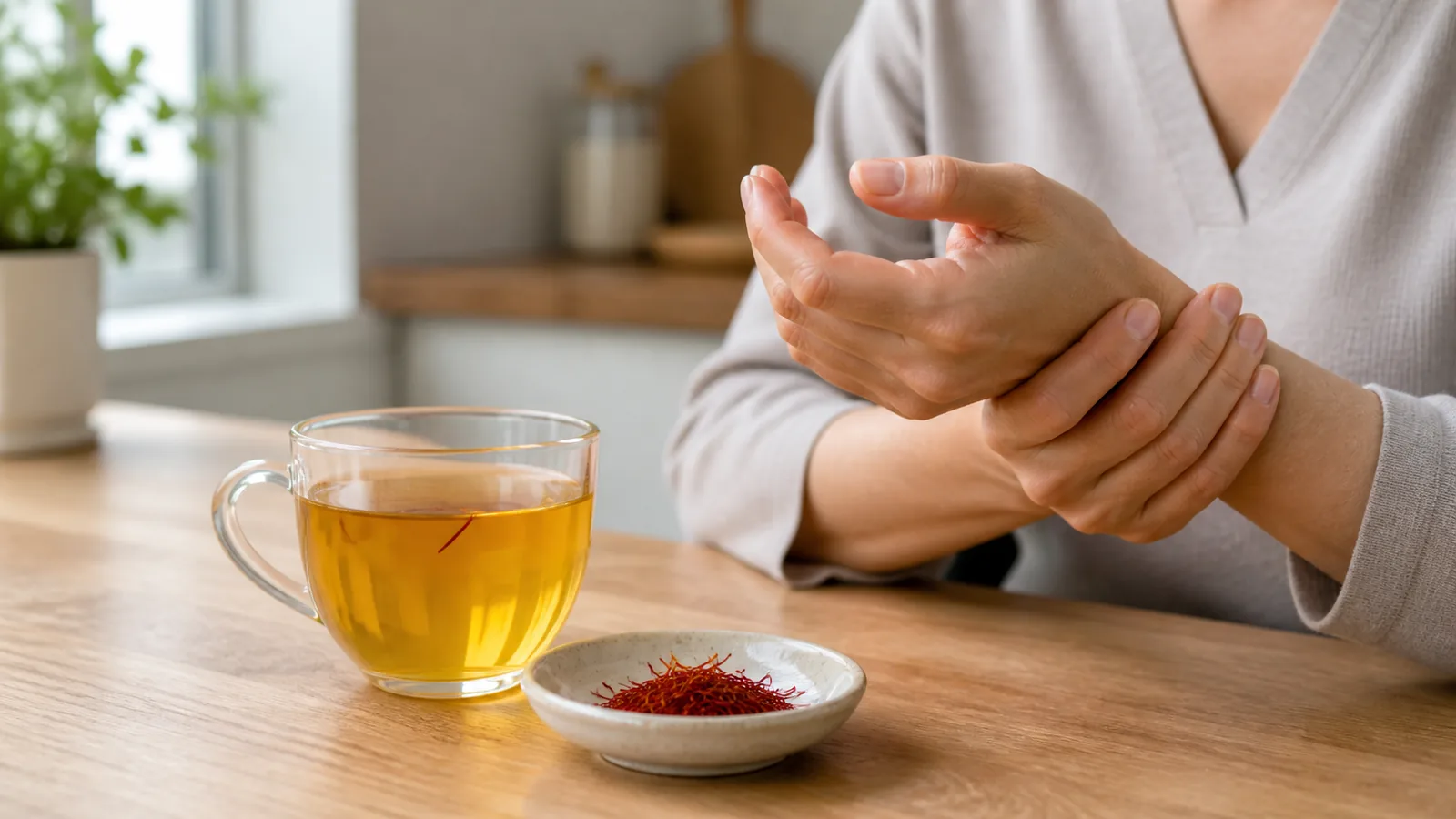
Saffron is being studied for joint pain, but the evidence is not strong enough to call it a proven treatment for managing pain and inflammation. A few small trials have tested measured saffron or crocin products in people with osteoarthritis or rheumatoid arthritis. Their results are interesting, yet they do not show that seasoning food with saffron will relieve pain or reduce inflammation.
The fairest account of saffron joint benefits is therefore cautious: there is early human research, larger and more independent trials are needed, and saffron should not replace an assessment or established care for a painful joint.
What has research on saffron for pain found?
A 2025 randomized double-blind trial gave adults with osteoarthritis either a 50 mg saffron-extract tablet or placebo each day for 12 weeks. Both groups improved in pain and physical-activity scores; the saffron group had a reduction in one inflammatory marker and used fewer non-steroidal anti-inflammatory drugs over time. The authors also reported important limitations, including a small, mostly female sample, dropout imbalance and self-reported adherence.
An earlier 40-person osteoarthritis trial of a crocin product measured pain and immune markers over four months. Pain scores fell in both the intervention and placebo groups, while some laboratory measures differed. This is not the same as showing that ordinary saffron threads ease stiffness and pain.
Another small trial has examined a saffron supplement in rheumatoid arthritis, which is an autoimmune condition rather than ordinary “wear-and-tear” osteoarthritis. Results from one joint disease, preparation or dose should not be generalized to every cause of joint discomfort.
What about crocin, safranal and inflammation?
Saffron contains bioactive components such as crocin and safranal. Laboratory research often describes antioxidants and anti-inflammatory compounds and examines how they affect inflammatory pathways. Those mechanism studies help researchers form hypotheses; they do not prove pain relief in everyday use.
Marketing language sometimes says these compounds “inhibit inflammation” and therefore support joint health. Human pain is more complicated. The source may be osteoarthritis, rheumatoid arthritis, gout, injury, infection or another condition, and each has different treatment. A biological mechanism cannot diagnose the cause or establish a useful dose.
Can saffron complement a joint-friendly lifestyle?
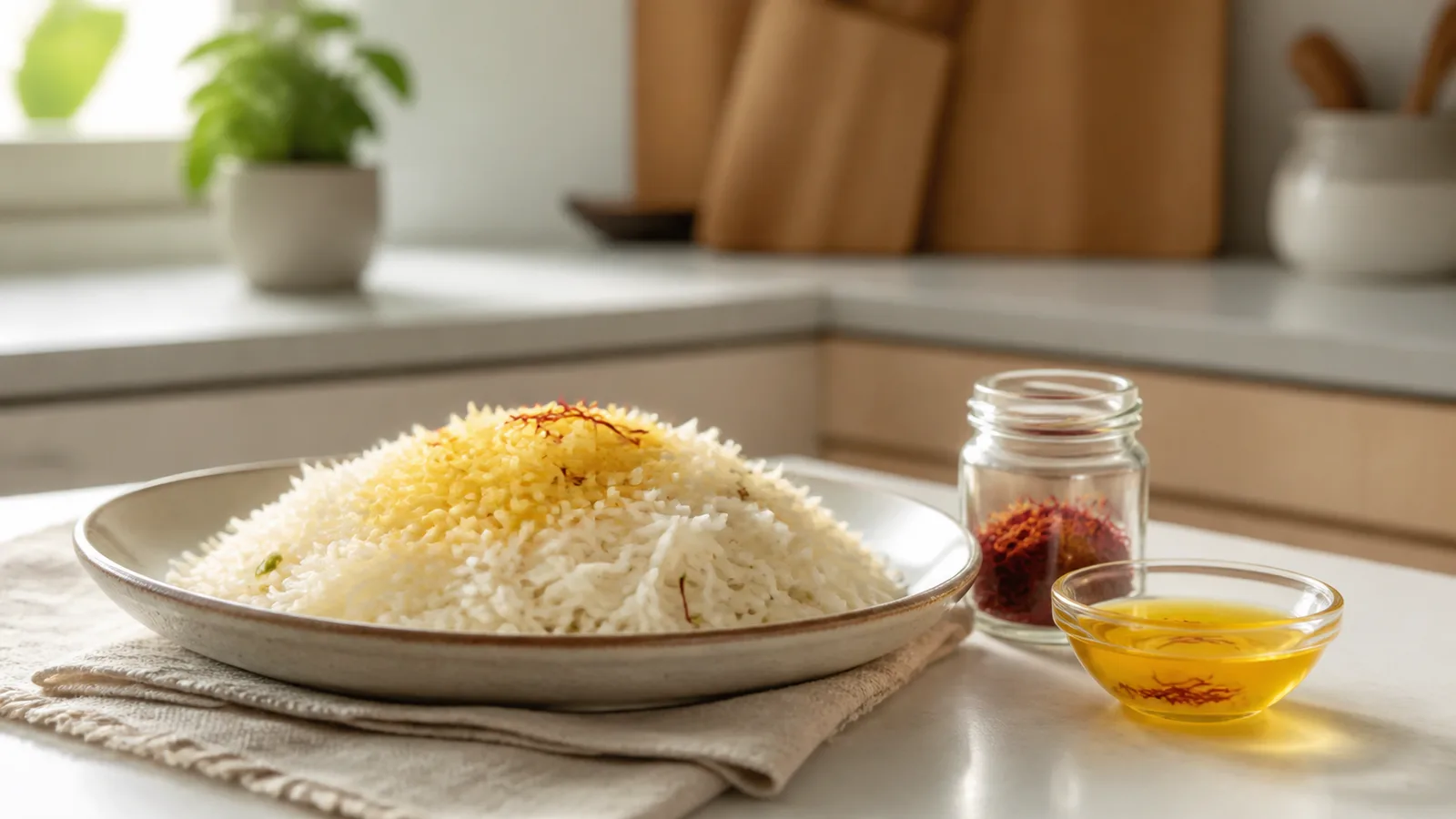
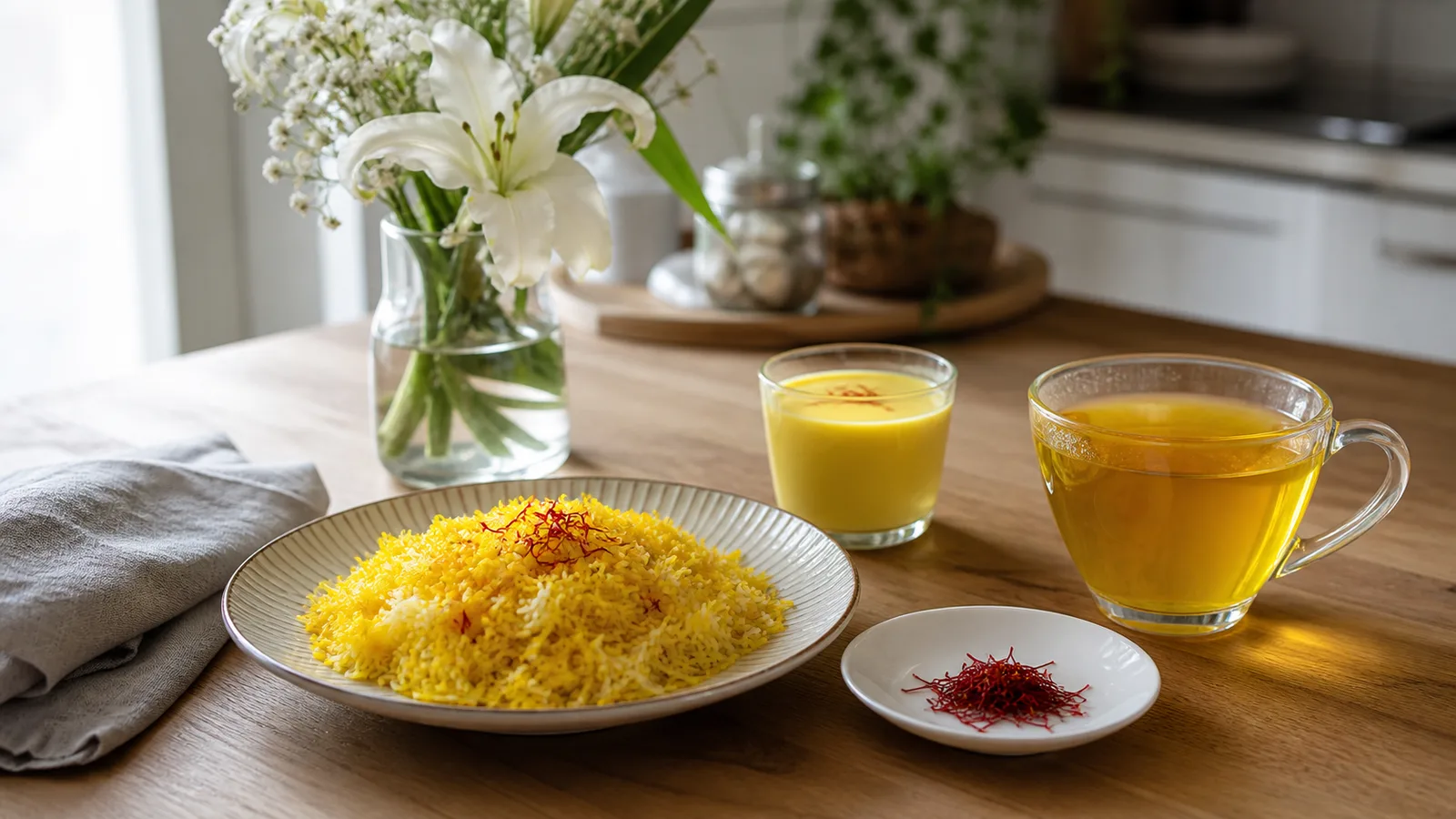
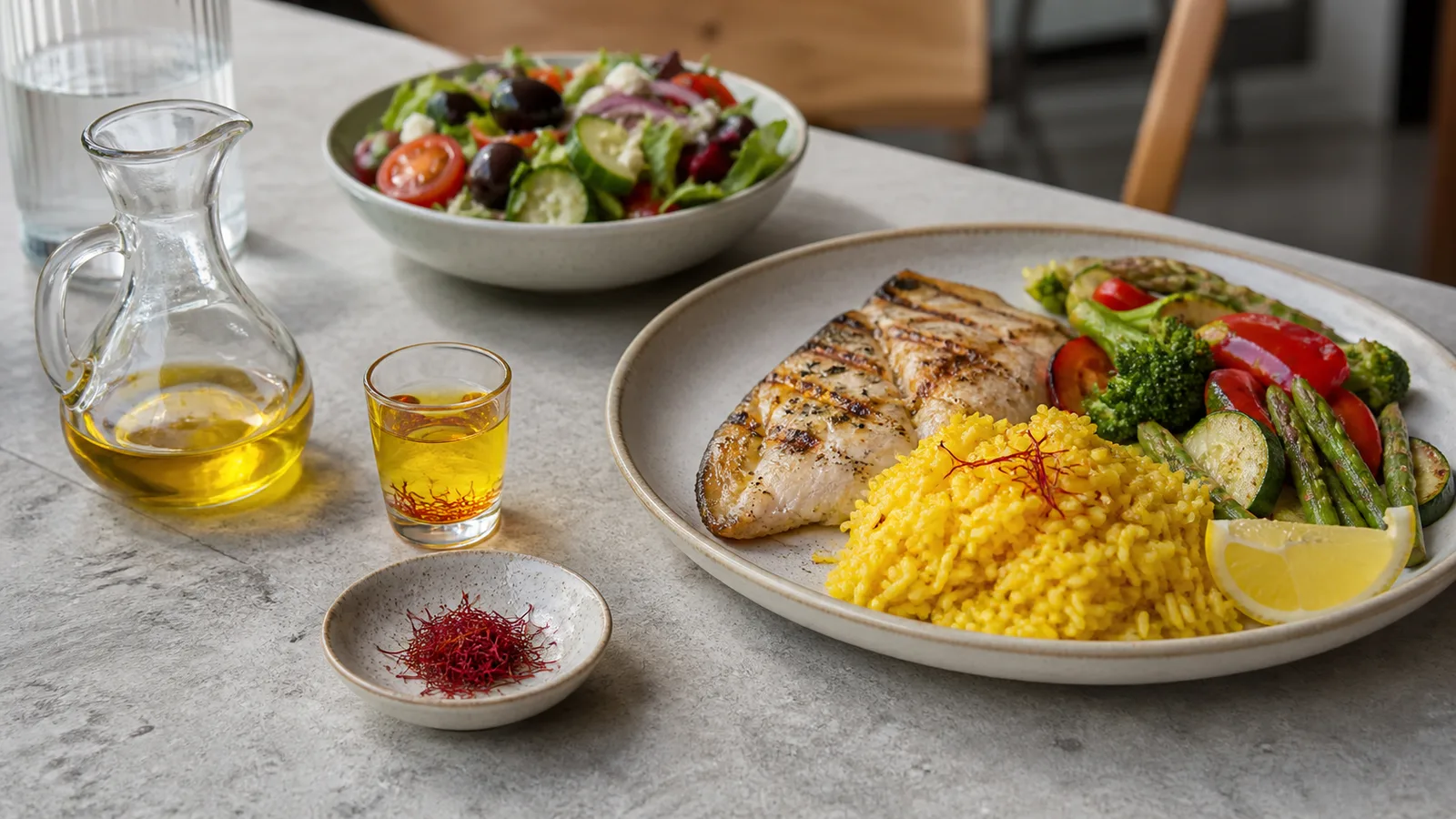
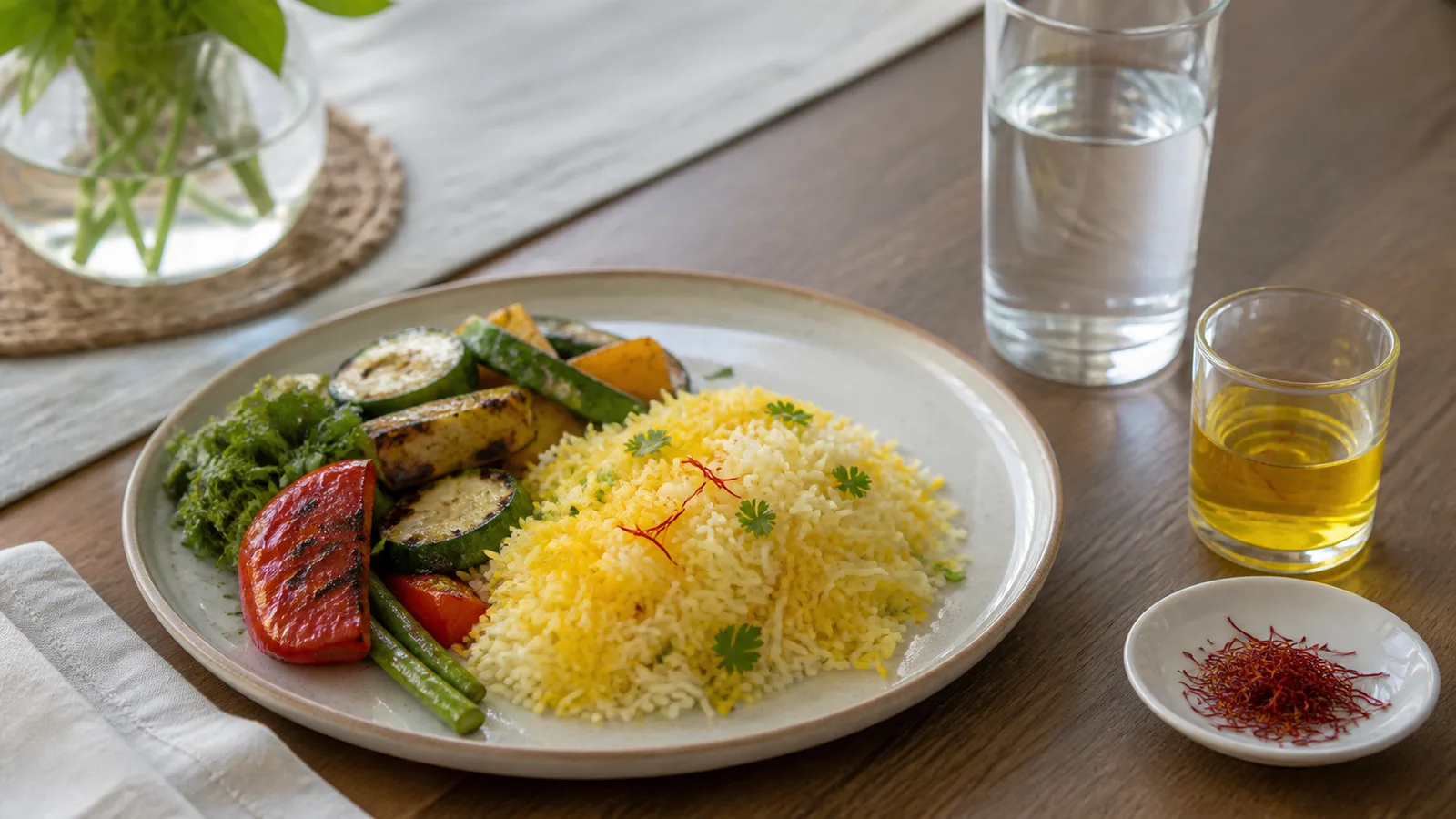
Saffron can be part of a varied or joint-friendly diet because it adds flavour and colour to rice, vegetables, legumes, fish and soups. That culinary role is reasonable. Calling a food “joint-friendly” does not mean it treats arthritis, and adding a few threads cannot compensate for delayed diagnosis or replace medical treatment.
For osteoarthritis, the NICE guideline identifies tailored therapeutic exercise and, where appropriate, weight management as core care, alongside information and support. Medicines and other options depend on the joint, symptoms and individual risks. These are better-established approaches than relying on saffron for pain.
Culinary use and high-dose supplements are different
Using saffron in culinary amounts exposes a person to far less than a concentrated trial product. A plate of saffron rice cannot be assumed to reproduce a capsule result. Conversely, a high-dose supplement should not be treated as “just a spice.” Product formulation, other ingredients, medicines, pregnancy and existing health conditions can all change safety.
High-dose supplements warrant medical supervision. Ask a healthcare professional before adding a concentrated saffron product for joint symptoms, particularly if you take anticoagulants, blood-pressure medicines or several prescriptions. Do not stop a prescribed arthritis treatment because a supplement seems natural.
Quality matters, but it does not guarantee a benefit
Choose dry, recognisable deep-red threads from a traceable supplier when using saffron for cooking or tea. Low-quality or adulterated saffron can introduce contaminants or other undeclared material, so authenticity reduces uncertainty. It cannot maximize health benefits, guarantee pain relief or turn a culinary product into a medical one.
Our all-red saffron is sold for food and drinks, not as a joint-pain treatment or for wellness applications. Its aroma and colour are culinary qualities; they do not establish greater joint comfort.
When joint pain needs medical attention
Seek prompt care for a joint that becomes suddenly hot, red or very swollen; pain after a serious injury; fever with joint symptoms; or an inability to bear weight. Persistent pain, morning stiffness, repeated swelling or declining movement also deserves a clinical assessment. These features can change what the safest next step is.
The practical conclusion
Is saffron good for joint pain? Small clinical studies justify further research, but they do not establish saffron as a reliable natural anti-inflammatory or pain treatment. If you enjoy it, use a modest amount in food for flavour. If you are considering a measured extract for a diagnosed joint condition, discuss the actual product with your clinician and keep proven care in place.
That distinction protects the useful part of the evidence without promising more than the studies show: saffron may be a research candidate, but “may help with pain relief and inflammation naturally” is not yet a conclusion that can be offered to every reader.