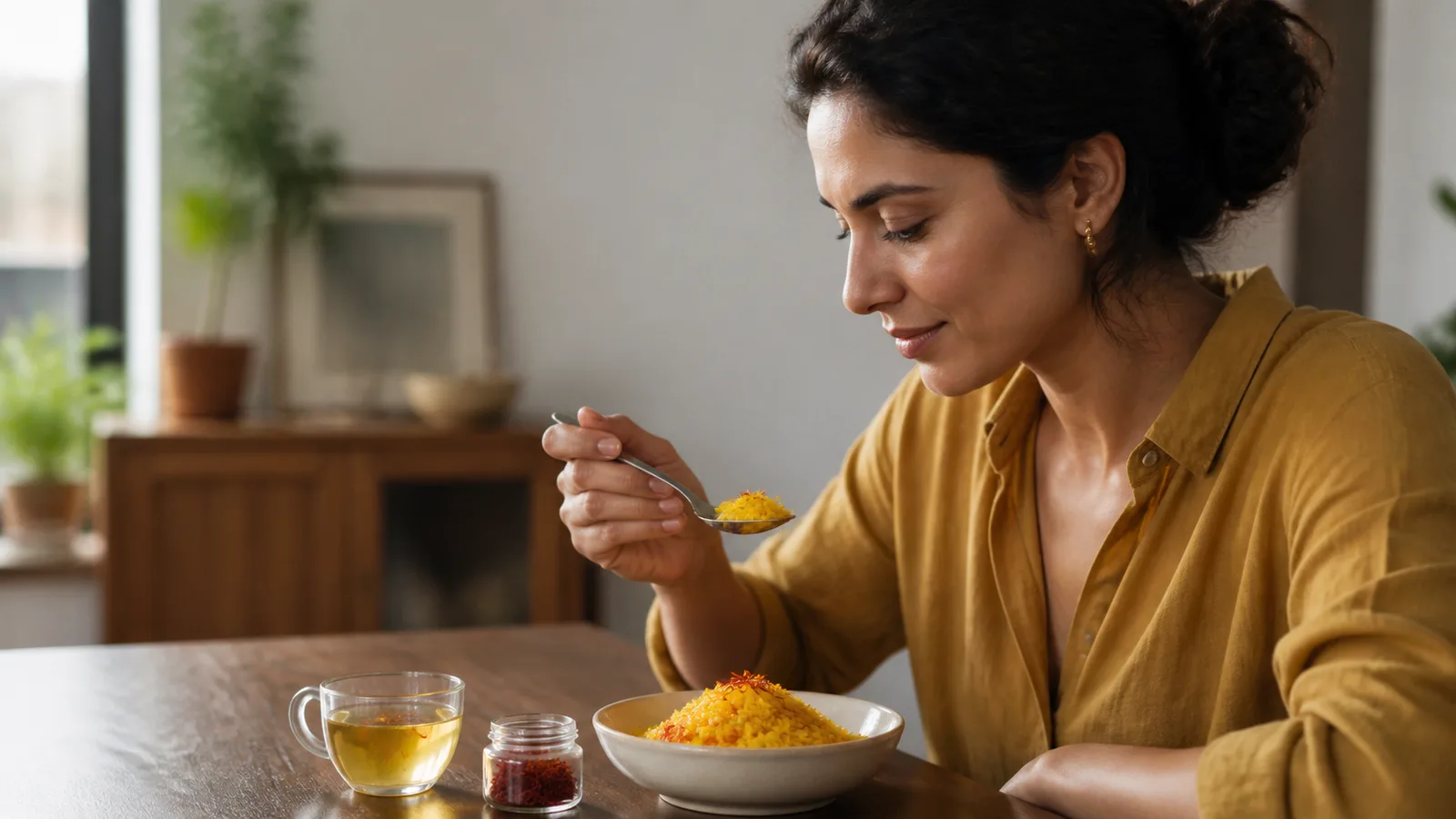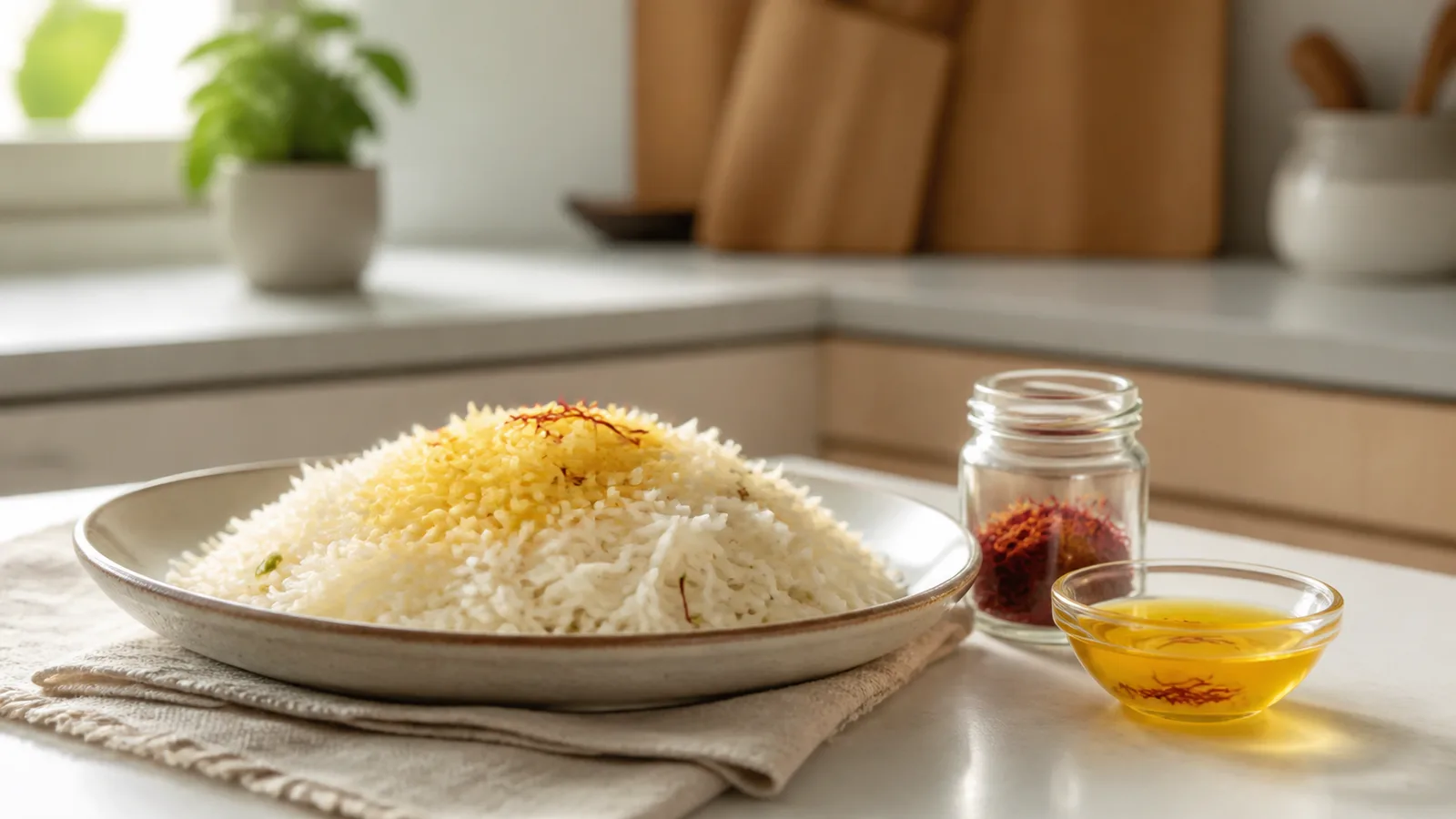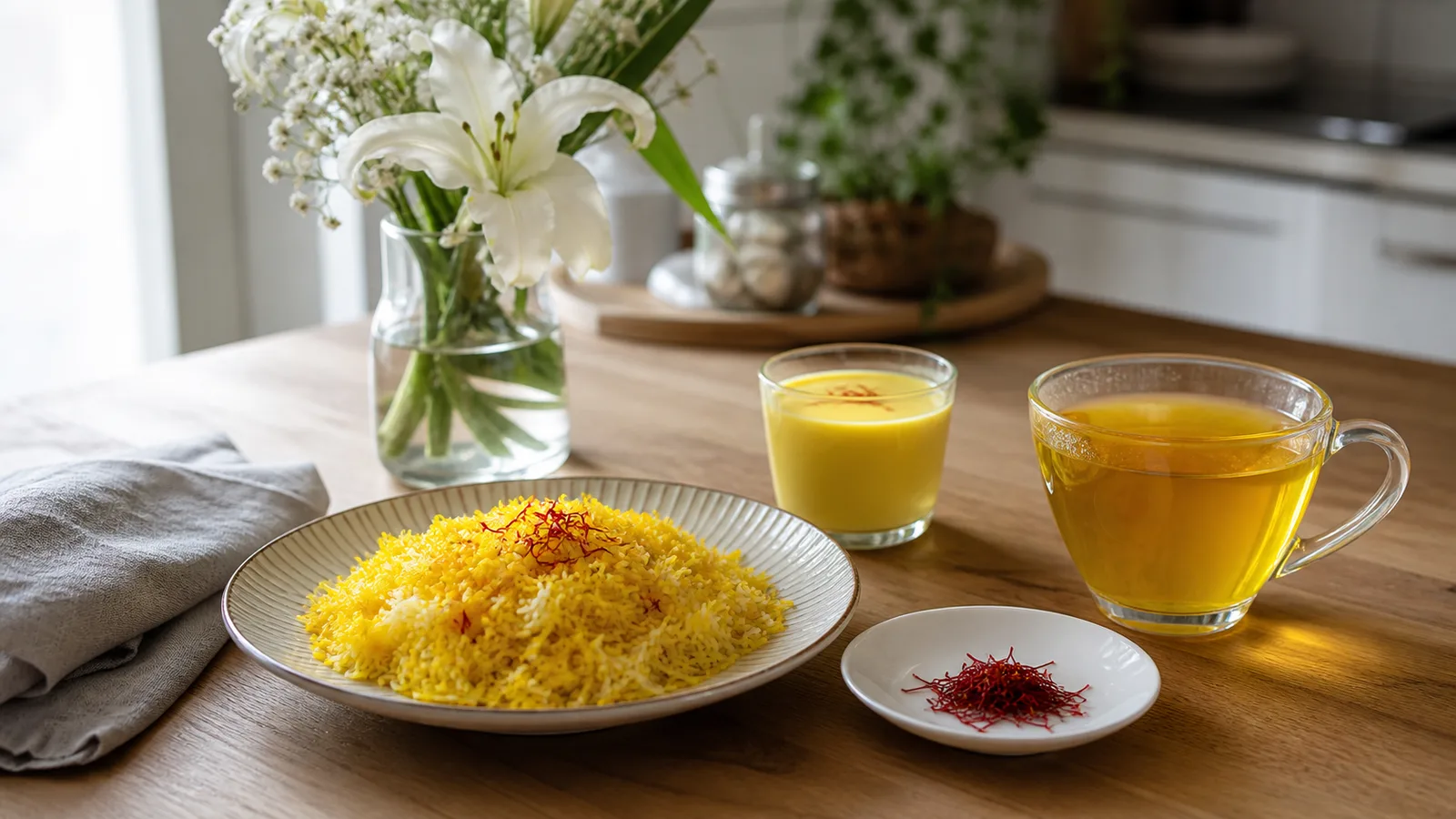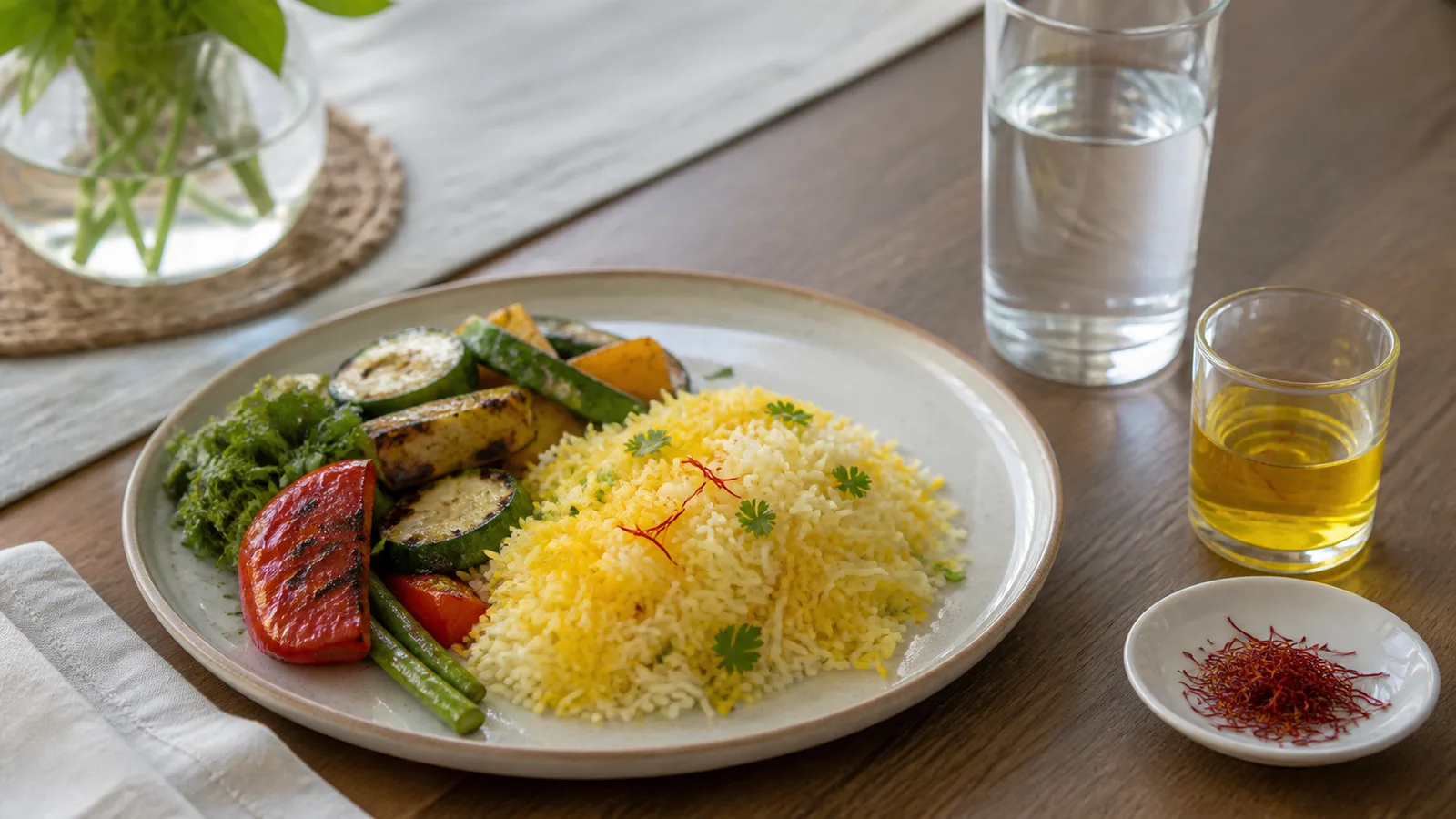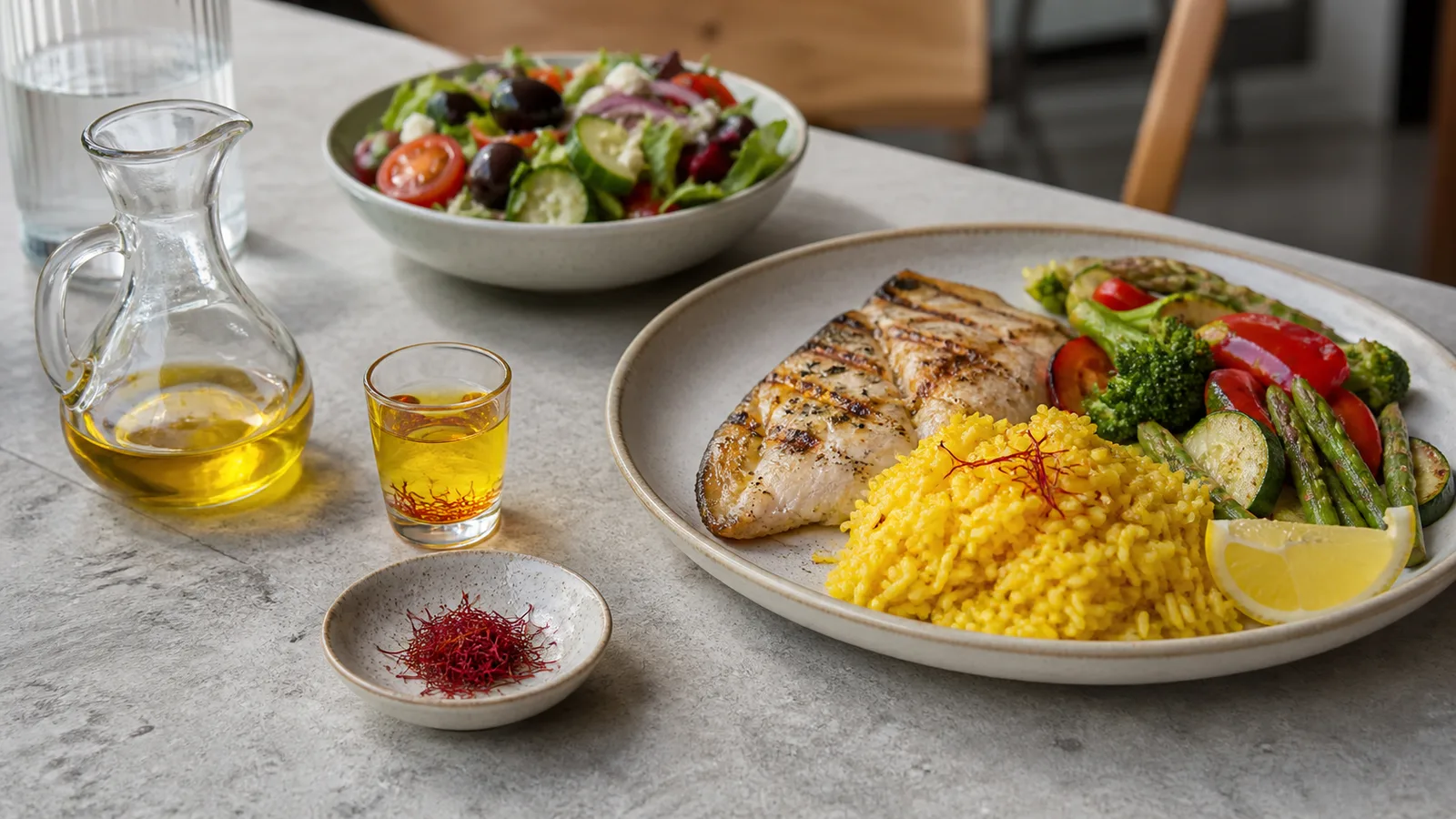
A few saffron threads used to season food are not known to be bad for the heart in most healthy adults. That practical answer does not make saffron a heart treatment, and it does not establish the safety of concentrated supplements for someone with cardiovascular disease.
Saffron heart effects depend on the form, amount, medicines and health of the person using it. Keep ordinary cooking separate from extracts marketed for cardiovascular health, blood pressure, cholesterol or “heart wellness.”
Does saffron support heart health?
Saffron contains crocin, safranal and other compounds studied for antioxidant and anti-inflammatory properties. Laboratory work often examines oxidative stress and cardiovascular function. These mechanisms are scientifically interesting, but they do not prove that adding saffron to a meal prevents heart disease or improves heart function.
Human studies and meta-analyses have tested defined saffron products against outcomes such as blood lipids and blood pressure. A 2025 meta-analysis of lipid trials found a small reduction in total cholesterol but no significant effect on LDL cholesterol, HDL cholesterol or triglycerides, and called for further high-quality trials. That is not evidence for a blanket claim that saffron heart effects are generally positive.
The whole meal matters more than one spice
A saffron dish can fit a heart-conscious eating pattern when the rest of the plate supports it. Vegetables, legumes, whole grains, fish and unsaturated fats matter; so do sodium, portions and foods high in saturated fat. Saffron can make a lower-salt dish more aromatic, but it cannot cancel a heavy sauce or transform a poor overall diet.
The American Heart Association’s 2026 dietary guidance summary emphasizes overall patterns built around vegetables, fruits, whole grains, healthy protein sources and liquid plant oils. Saffron is an optional flavour within that pattern, not the active centre of it.
Can saffron lower blood pressure too much?
Research has explored saffron and blood pressure, so excessive intake deserves more caution than ordinary seasoning. A person who already has low blood pressure, feels faint, or uses blood-pressure medication should not start a concentrated product on the assumption that natural means harmless.
There is no useful thread count that predicts an interaction. Formulations vary, and heart medications cover many different drug classes. If you have an existing heart condition, bring the actual supplement label to your clinician or pharmacist before using it. Do not change prescribed treatment to accommodate saffron.
Culinary amounts and supplements are not equivalent
Blooming a small pinch for a family meal is a culinary exposure. A capsule or extract may contain a measured concentration and possibly other ingredients. Evidence about one cannot automatically answer questions about the other.
The FDA’s dietary-supplement guidance advises discussing supplements with a health professional because they can interact with medicines, interfere with tests and cause adverse effects. This matters especially when someone is already being treated for blood pressure, rhythm problems, clotting or another cardiovascular condition.
Who should be more cautious?
- People with low blood pressure or unexplained dizziness.
- Anyone with an underlying cardiovascular condition.
- People taking heart medications, anticoagulants or several prescriptions.
- Anyone considering high-dose, daily or multi-ingredient saffron supplements.
- Pregnant people considering more than ordinary food use.
New chest pain, fainting, severe shortness of breath or a sudden irregular heartbeat needs urgent medical attention. It should never be self-managed with a spice or supplement.
Quality helps, but does not guarantee safety
Recognisable deep-red threads from a traceable supplier reduce the chance of undeclared filler. Low-quality or adulterated products may introduce contaminants or harmful additives. Verified quality describes the identity and handling of a product; it cannot maximize heart benefits, eliminate interactions or certify wellness purposes.
Our all-red saffron is intended for cooking and tea. Its strong aroma and colour are culinary qualities, not evidence of health-supporting properties.
The practical answer
Is saffron bad for the heart? In normal food use, there is no established reason for most healthy adults to avoid it solely because of cardiovascular risk. The claim should go no further. Saffron has not been proved to protect the heart, and a concentrated supplement may be inappropriate for someone with low blood pressure, interacting medicines or heart disease.
Use a small amount for flavour, judge the whole meal, and ask a clinician about deliberate high-dose use. That preserves saffron’s genuine culinary value without turning early research into a promise about overall heart wellness.