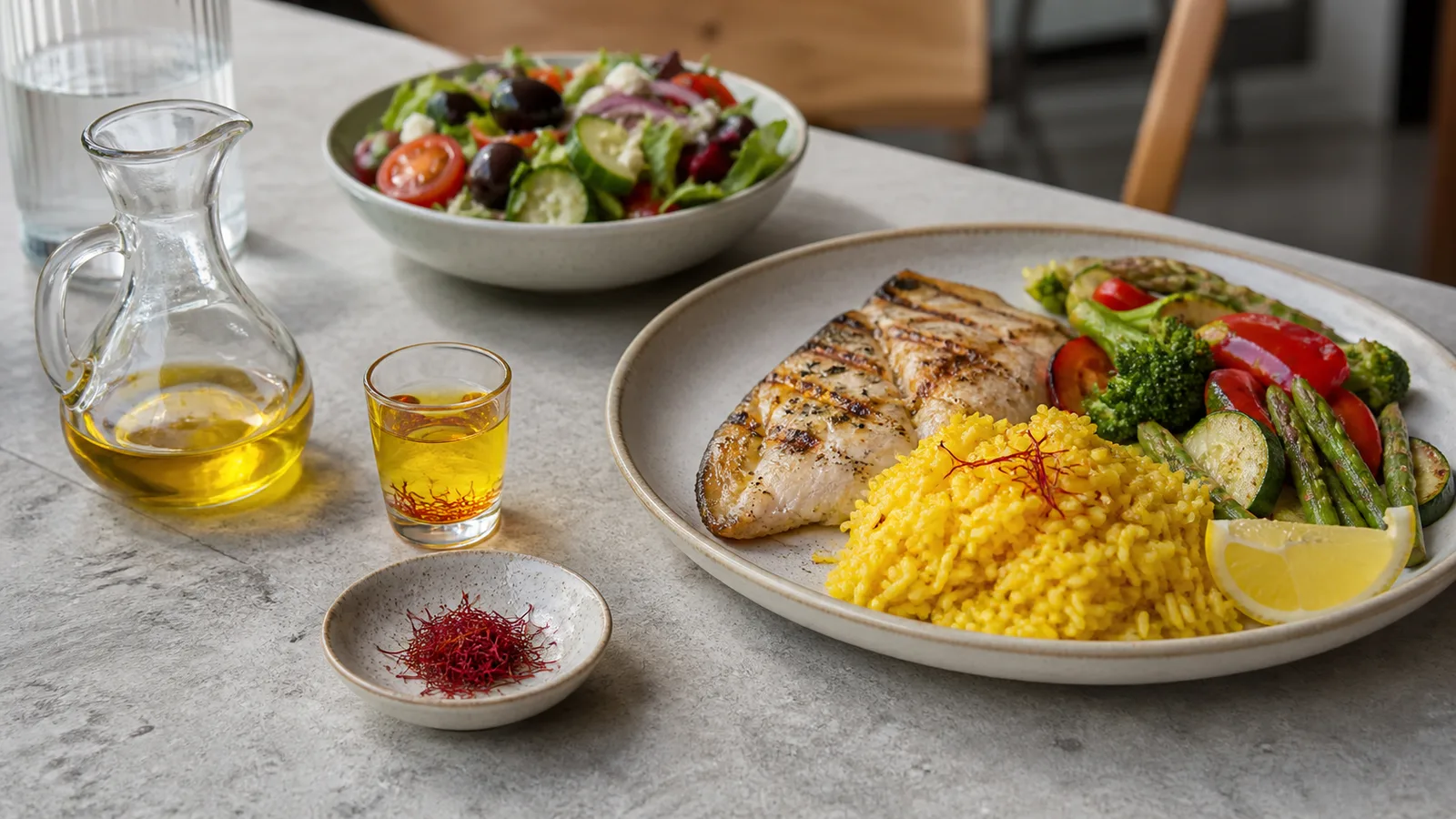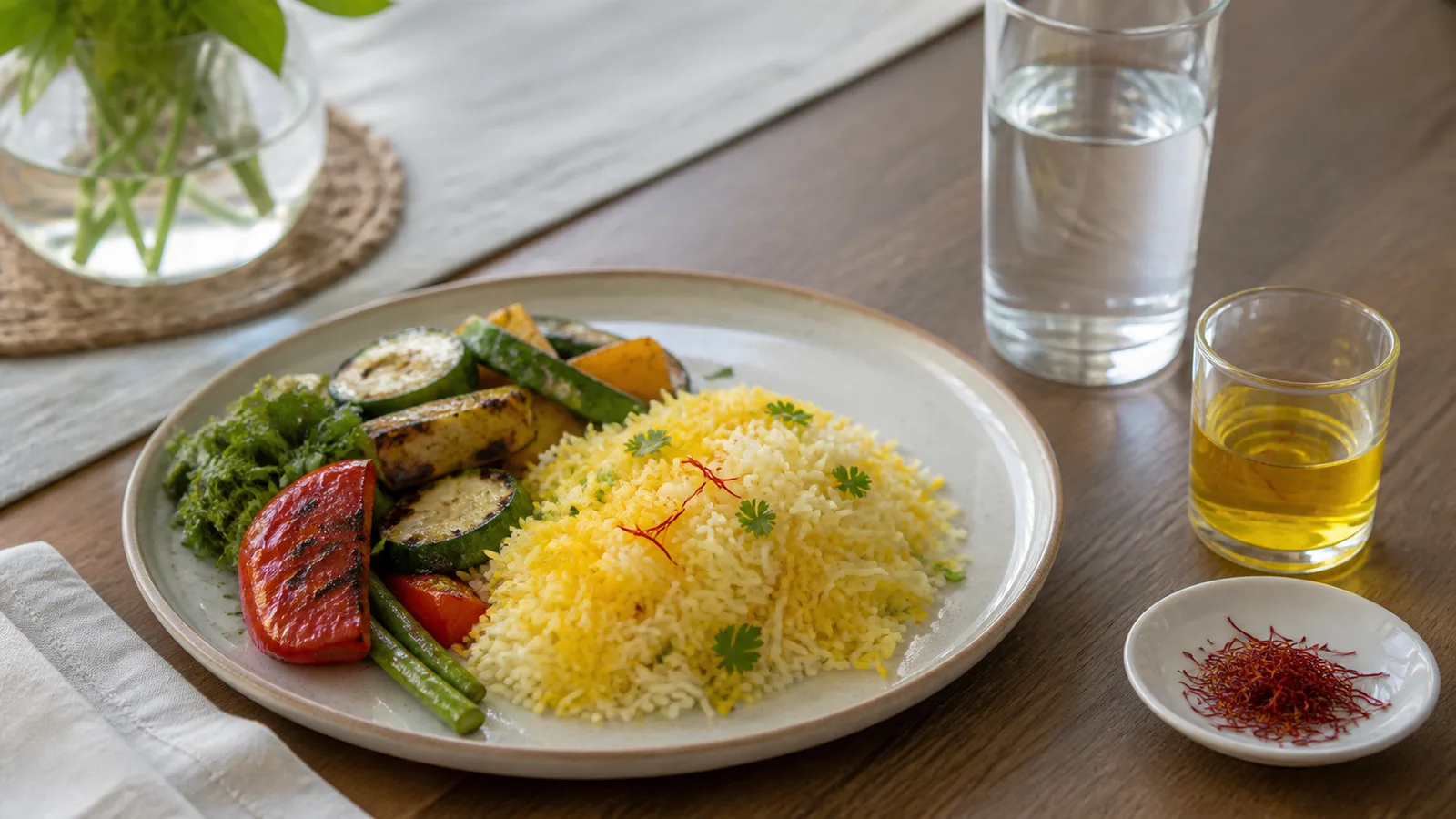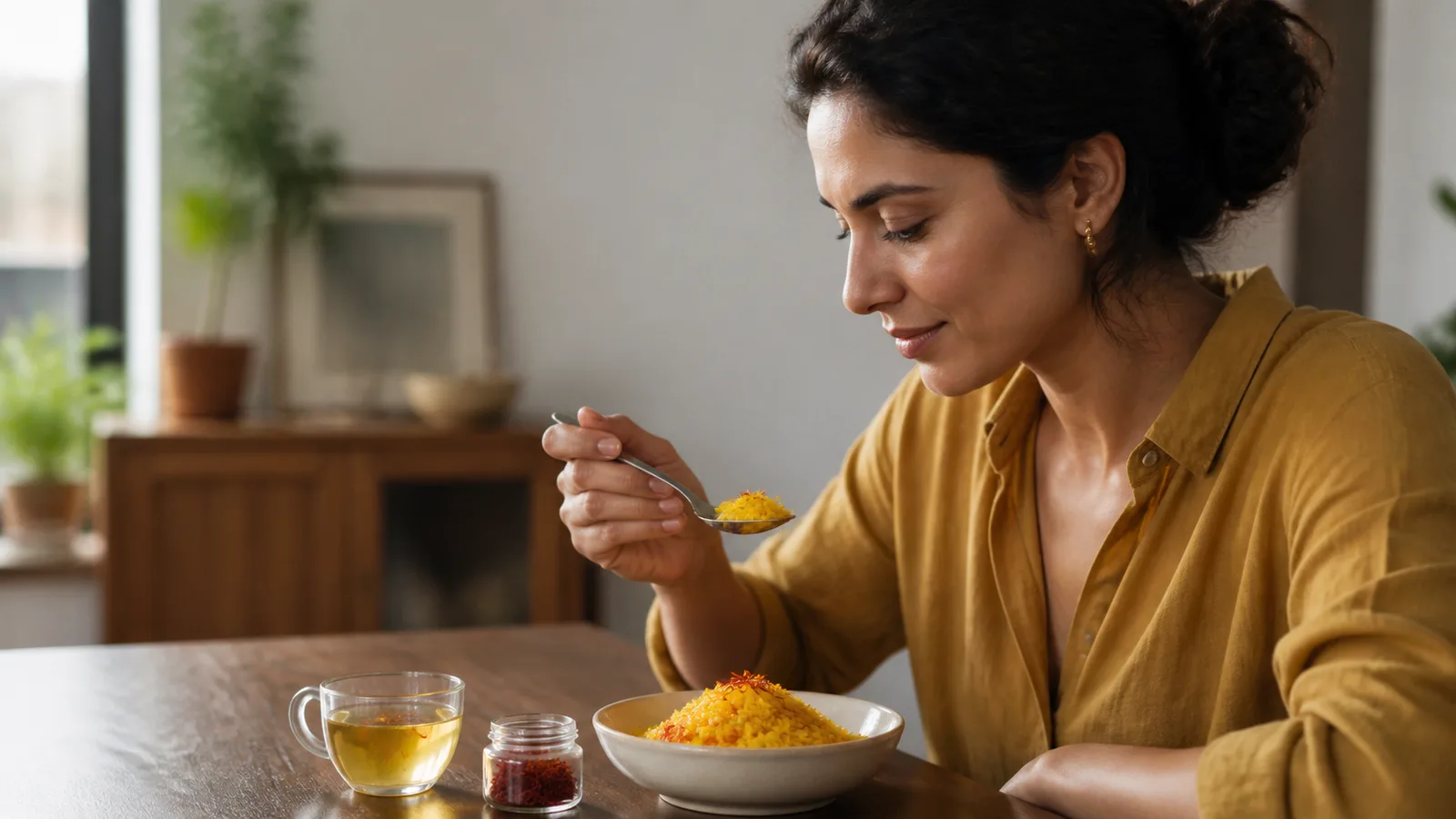
For most people, the immediate effect of saffron is culinary: it adds a golden colour, a floral-hay aroma and a gently bitter, honeyed flavour to food or drink. Other saffron effects on the body depend on the form and amount. A few threads in rice are not equivalent to a standardised extract used in a clinical trial.
Saffron contains compounds that researchers study, including crocin, crocetin and safranal. Their presence does not mean one serving treats a disease, changes mood on demand or “detoxes” the body. The honest answer separates what a cook can expect from what clinical research is still testing.
What you notice when saffron is used in food
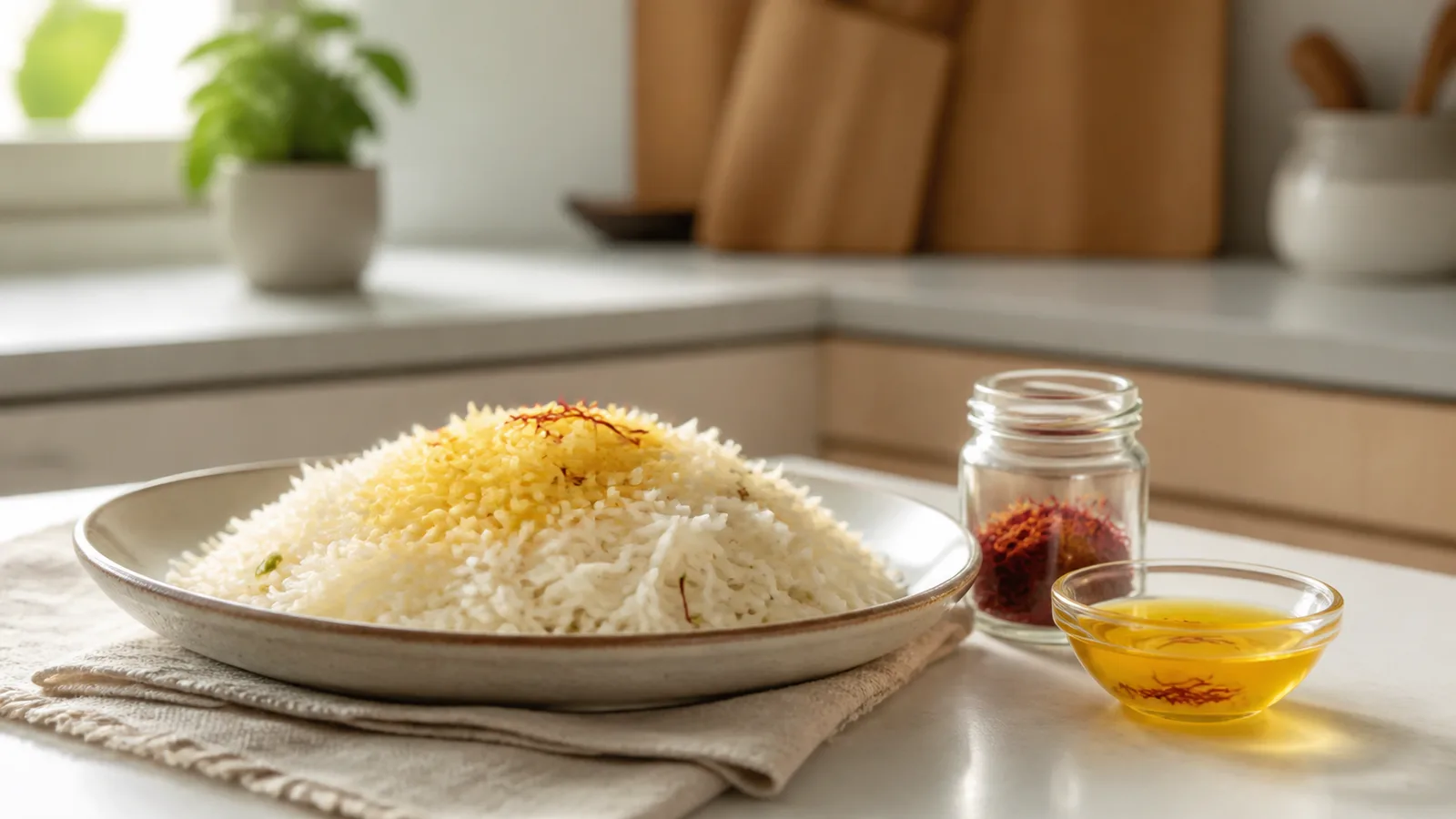
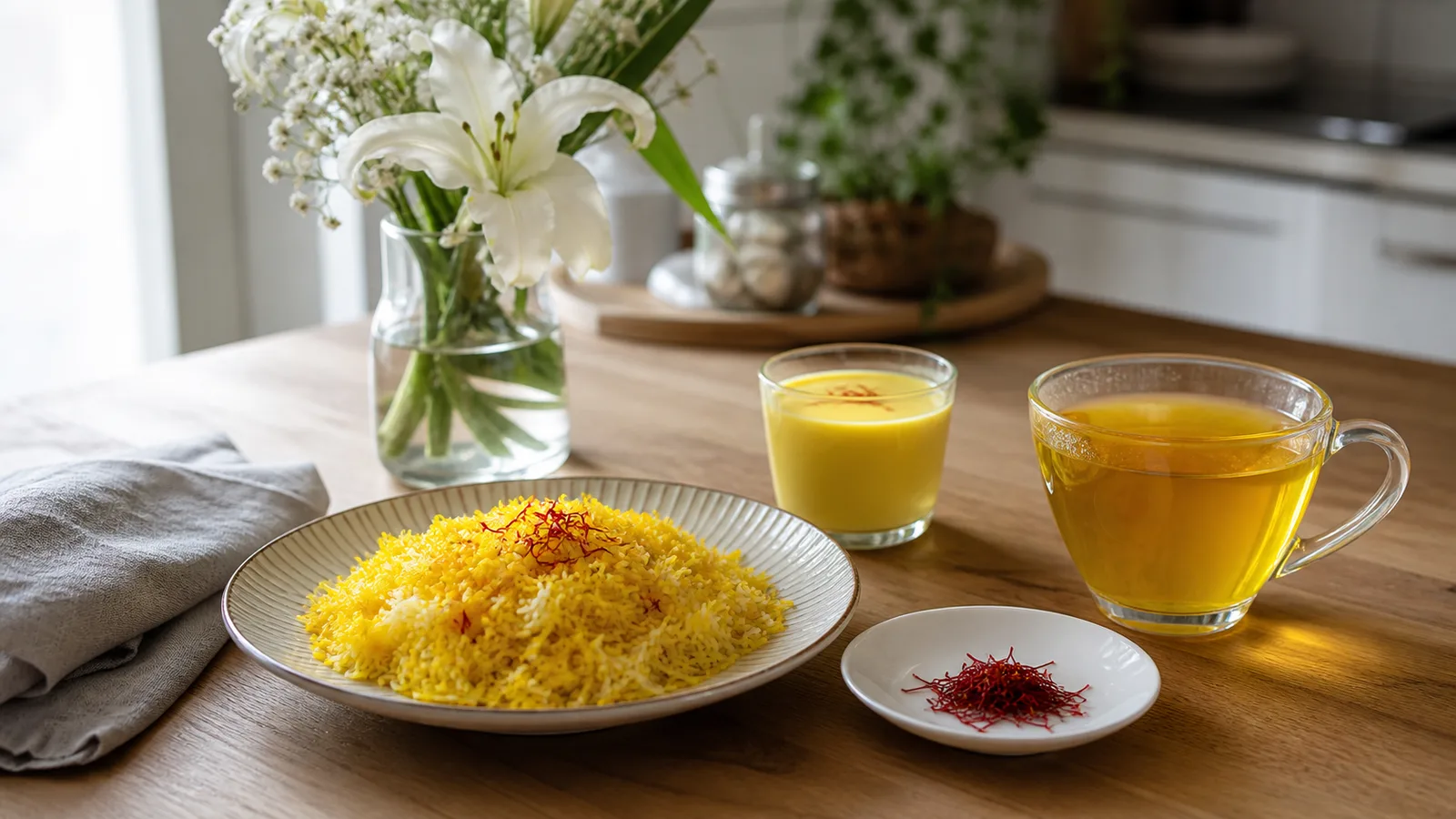
Crocin contributes strongly to saffron’s colour. Safranal is important to its aroma, while picrocrocin contributes bitterness. Blooming a few lightly crushed threads in warm water, milk or broth spreads those qualities more evenly through rice, soup, sauces and tea.
The experience is sensory rather than medicinal: the dish smells different, its colour warms and its flavour gains complexity. Using too much can make food bitter, and prolonged fierce heat can flatten the aroma. Thread quality and storage affect intensity, so the same count may not taste identical from one batch to another.
What research says about mood
Saffron supplements have been studied for depression, anxiety and mood. A 2026 GRADE-assessed review of 34 randomised trials found improvements in some self-reported scales but not in several clinician-rated measures; the authors rated the evidence moderate and called for better trials. The studies used defined interventions over weeks, not an occasional saffron meal.
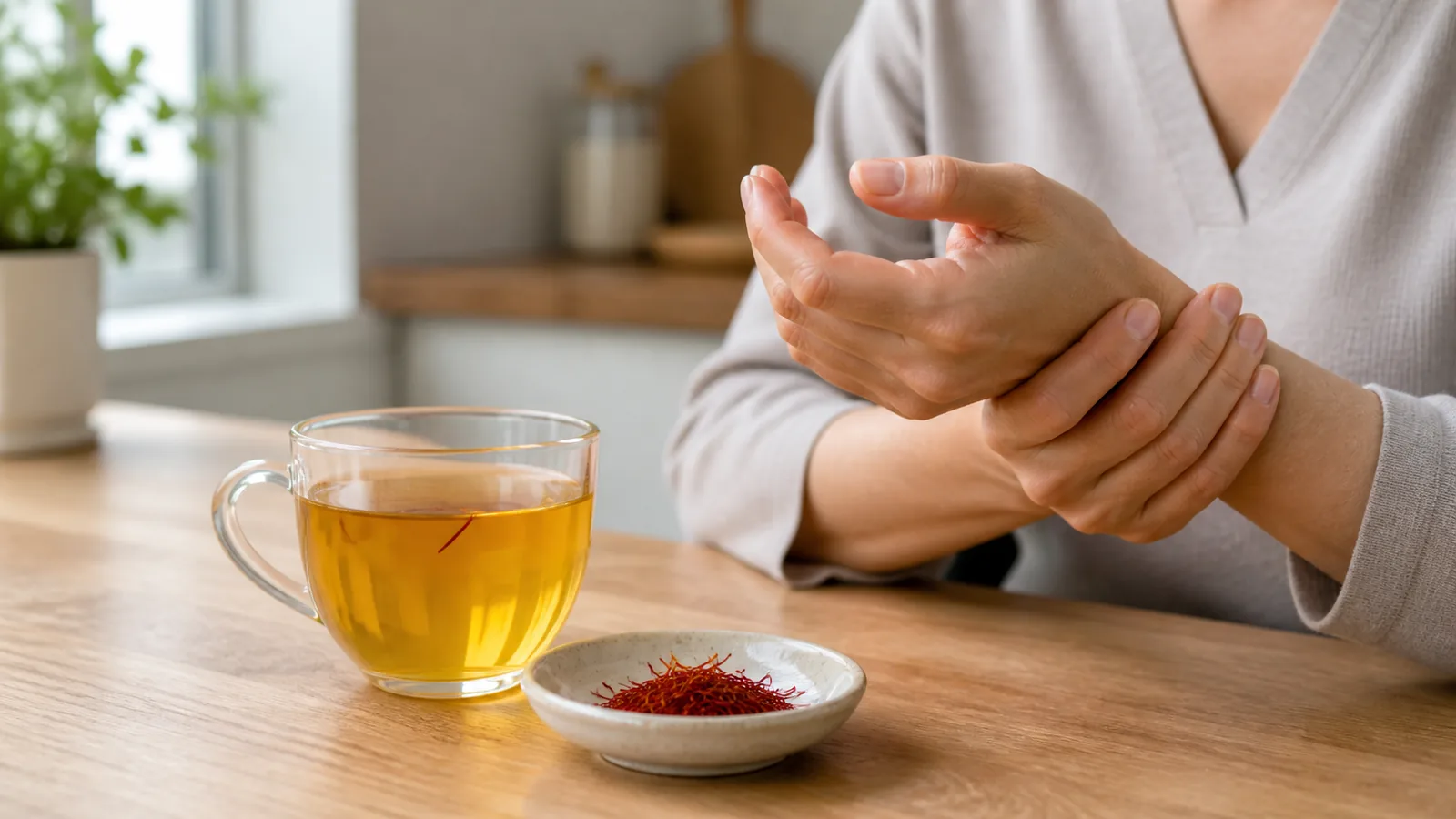
That distinction matters. A pleasant tea ritual may feel calming, but it is not proof of a pharmacological effect. Saffron should not replace counselling, prescribed medicine or urgent mental-health support. Anyone with persistent depression, anxiety, thoughts of self-harm or a sudden change in behaviour needs appropriate professional care.
Digestion and appetite
Saffron is often discussed in traditional digestive contexts, yet there is not strong clinical evidence that normal culinary use eases stomach problems. A warm soup or tea may feel comfortable after a meal, but the preparation, temperature and other ingredients may matter as much as the saffron.
Concentrated saffron can also produce unwanted effects such as nausea, vomiting, diarrhoea or abdominal discomfort in some people. Stop a new product if it repeatedly coincides with symptoms, and seek medical advice when symptoms are severe, persistent or accompanied by dehydration, blood, breathing difficulty or faintness.
Antioxidants are compounds, not a health guarantee
Crocin, crocetin and other saffron constituents show antioxidant activity in laboratory research. It is inaccurate to turn that fact into “protects every cell from free radicals” or a promise about the heart, eyes, immune system or ageing. Biological mechanisms do not establish a meaningful clinical outcome in a person eating a spice.
Food can be enjoyable and nutritionally varied without every ingredient needing to function as treatment. The amount of saffron used for colour and aroma is also much smaller than many experimental preparations.
Possible unwanted effects
A 2026 systematic review of saffron adverse events examined human studies of stigma powder and extracts. Reported effects and their relevance vary with preparation and exposure; the review is a reason to avoid saying that every product and dose is risk-free, not a reason to frighten people away from normal cooking.
Allergy is possible. Stop using saffron after hives, itching, swelling or another suspected reaction. Breathing difficulty, throat or tongue swelling, faintness or rapidly worsening symptoms require emergency care.
Who should ask before concentrated use?
Speak with a doctor, pharmacist or other qualified professional before using saffron as a supplement if you are pregnant or breastfeeding, take regular medicines, have a bleeding disorder or unstable blood pressure, live with kidney or liver disease, or are preparing for surgery. Show them the exact product and label rather than asking about “saffron” in the abstract.
Do not convert a research dose into a homemade number of threads. Extracts can be standardised, threads vary in size and potency, and multi-ingredient products introduce further uncertainty.
Using saffron sensibly
- Use a few whole threads for culinary colour, aroma and flavour.
- Bloom them in warm liquid to distribute a small quantity well.
- Store the closed container away from heat, light and moisture.
- Do not take more to chase a stronger health effect.
- Stop after an adverse reaction and seek advice suited to its severity.
Authentic saffron makes identity and culinary measurement easier, but “premium” does not prove medical potency or suitability for every person. The Rowhani Saffron products page lists whole-thread formats intended for cooking. The best-supported promise is a better sensory experience—not a cure.