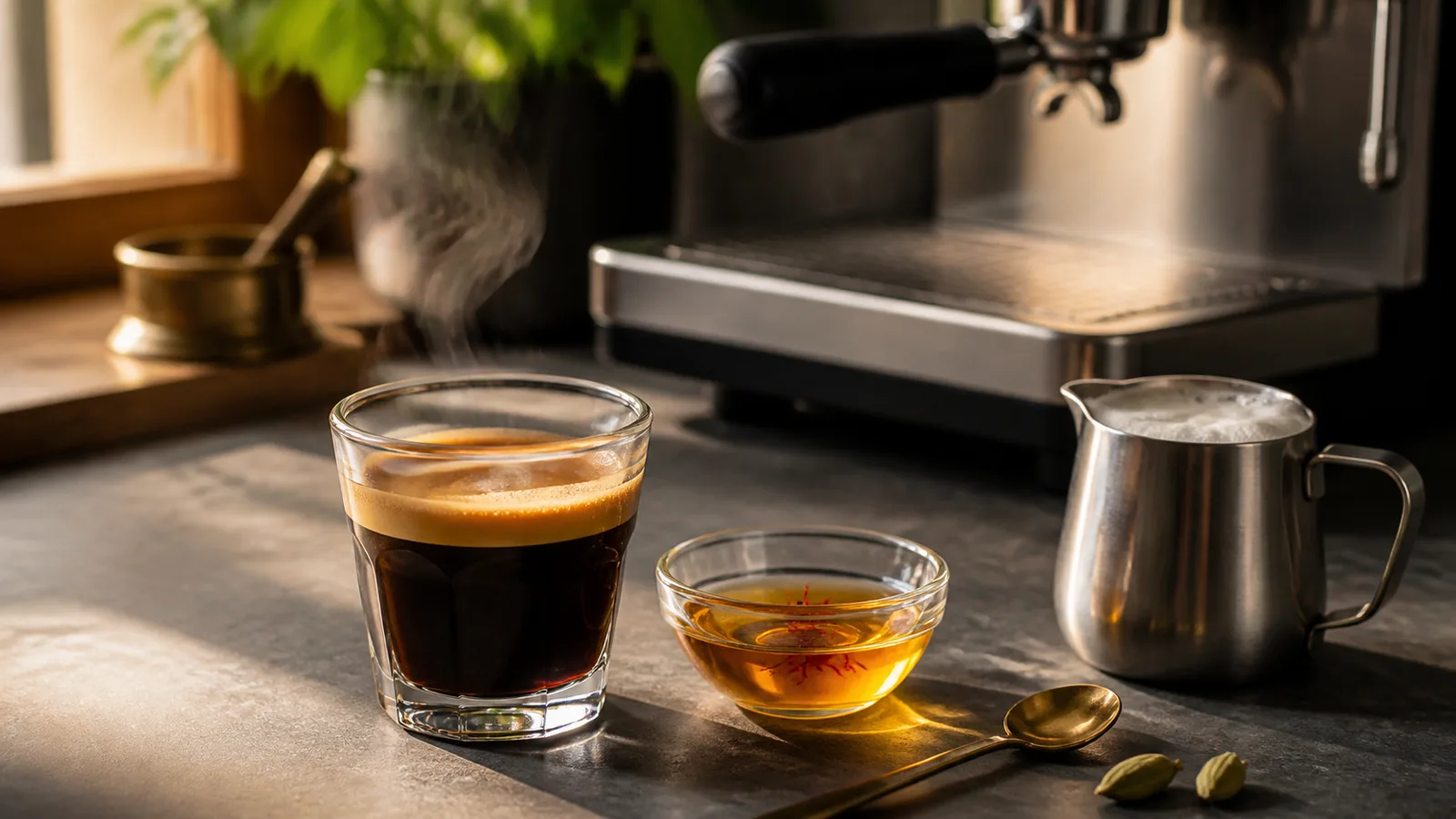
Saffron and Its Medicinal Benefits sit at the meeting point between a valuable cooking spice, traditional practice and modern clinical research. Saffron is the dried red stigma of Crocus sativus. It can give rice, drinks and sweets a distinctive aroma and golden colour, but a culinary use is not automatically a medical treatment.
Human trials have studied standardized saffron powders and extracts for several health outcomes. Some results are promising, especially in mood research, yet product, dose and study quality vary. Saffron should not replace prescribed treatment, and there is no universal “permissible amount” that applies equally to a shared meal, strong tea and a concentrated capsule.
What are the medicinal uses of saffron?
Traditional systems have used saffron for mood, sleep, digestion, pain and reproductive concerns. In Persian terminology it is often described as warm and dry; in South Asia the flower or spice may be called kesar or kumkum. These descriptions are part of cultural medical traditions. They are not the same as a diagnosis, a measured clinical effect or proof that saffron can clear “blockages” in the head, liver, stomach or another organ.
Modern research asks narrower questions. A 2021 evidence map of 19 saffron meta-analyses reported signals across mood, cognition, blood glucose, blood pressure, cholesterol and sexual function. The authors also found that the quality of the underlying reviews needed improvement and called for larger, high-quality trials in multiple countries. That combination—interesting findings with important limitations—is more accurate than calling saffron a cure-all.
Where is the clinical evidence most developed?
Mood and depressive symptoms are among the most frequently studied uses. Reviews have found that some standardized saffron products performed better than placebo in selected trials. This does not mean a pinch in dinner has an antidepressant dose, that every branded extract is equivalent or that someone should stop medication. Diagnosis, suicide risk, pregnancy and drug interactions all require professional care.
Research also exists for metabolic measures, age-related eye conditions, cognitive symptoms and sexual dysfunction. Results differ by population and preparation, and many trials are small or short. A useful way to read a claim is to ask four questions: Was the study in humans? Was the product standardized? Was it compared with placebo or usual care? Did it measure a patient-important outcome rather than only a laboratory marker?
What saffron is not proven to do
There is no good basis for saying that inhaling saffron treats a severe headache or insomnia, or that saffron mixed with honey expels kidney stones. A pleasant aroma may be part of a calming routine, and honey may change taste, but neither observation proves a medical effect. Severe headache, persistent insomnia or possible kidney-stone symptoms deserve the appropriate diagnosis.
Saffron is not a substitute for medicine prescribed for depression, diabetes, high blood pressure, dementia, eye disease or another condition. A supplement may also interact with medication or complicate care. Discuss the exact bottle and amount with a doctor or pharmacist instead of relying on the word “natural.”
How much saffron is safe to consume?
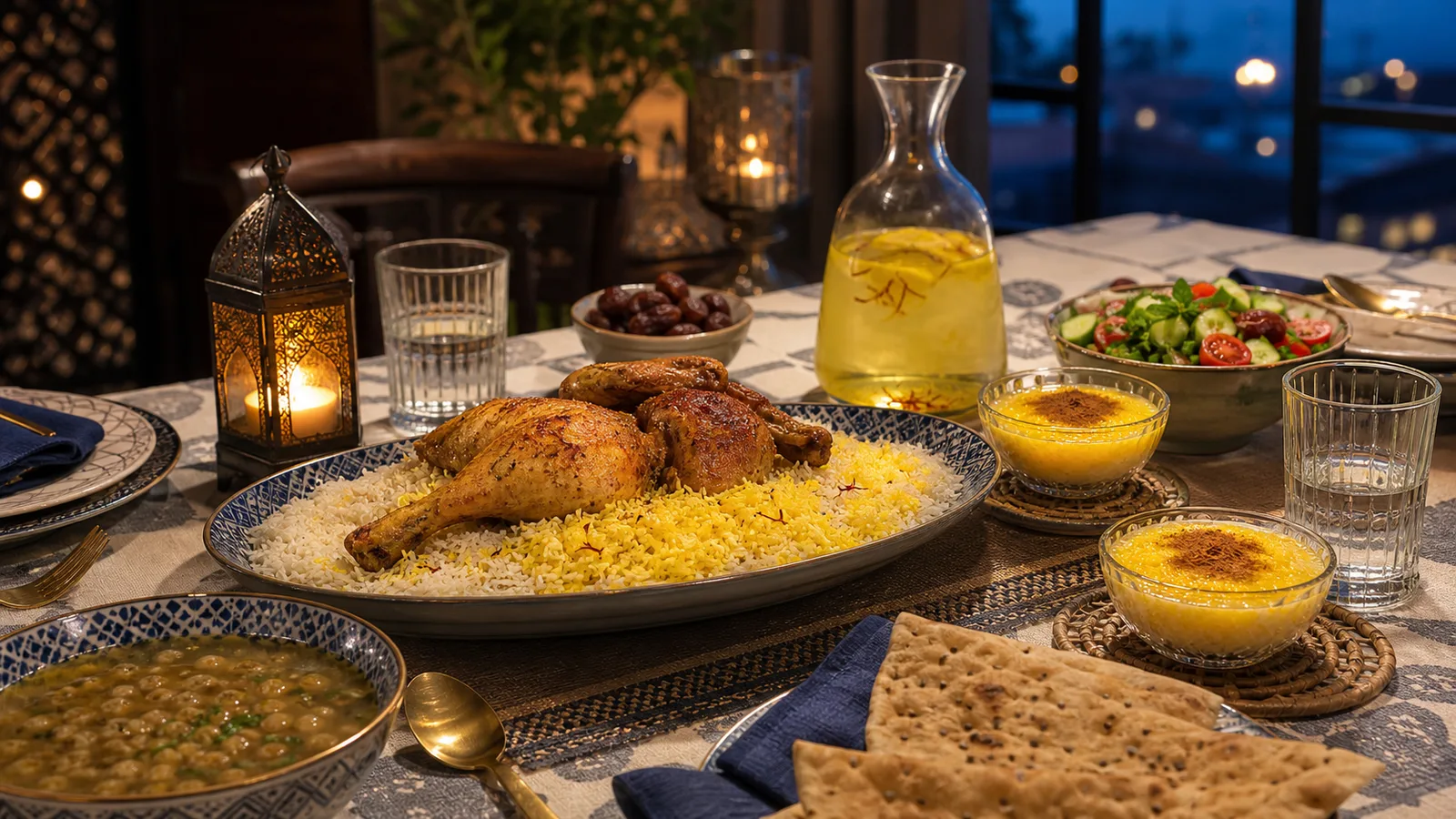
No single number can answer that responsibly. Food commonly uses a small pinch distributed through several servings. Clinical trials use measured powders or extracts, usually in milligrams, for a defined population and time. Those trial doses are not a household allowance and cannot be converted casually into an amount of tea or threads.
Claims that every adult may take 0.1 g daily, that 1 g is a universal medicinal maximum, or that a particular gram amount always causes bleeding or death are too absolute. Product concentration, health, pregnancy, medicines and exposure time matter. Use saffron sparingly for flavour; follow the labelled serving for a supplement only after checking that the product is appropriate for you; and never escalate the dose because a smaller amount did not produce a feeling.
A 2026 systematic review of saffron adverse events found that saffron was generally well tolerated in human studies, with gastrointestinal problems the most commonly reported effects and usually minor. It also advised clinical monitoring for medicinal use at higher doses or over longer periods. Stop the suspected product and seek advice if symptoms occur; breathing difficulty, facial or throat swelling, fainting, chest pain, severe persistent digestive symptoms or unusual bleeding needs prompt care.
Who should avoid self-prescribing saffron supplements?
Pregnant or breastfeeding people, children, anyone preparing for surgery, and people with a chronic condition or regular prescription medicines need individualized advice before using a concentrated saffron product. The same caution applies after a previous allergic reaction. A culinary pinch and a capsule are different decisions.
Do not use saffron to delay care for persistent pain, bleeding, jaundice, severe mood symptoms or another worrying change. If a large or unknown quantity has been swallowed, contact a local poison service or urgent medical provider rather than trying a home antidote.
Counterfeit saffron and why home tests have limits
Saffron’s price makes it vulnerable to economic adulteration. The US Food and Drug Administration’s food-fraud guidance specifically notes that saffron may be bulked with cheaper plant material; dyes are another form of spice fraud. Powder is harder for a buyer to assess because the original thread shape has already been lost.
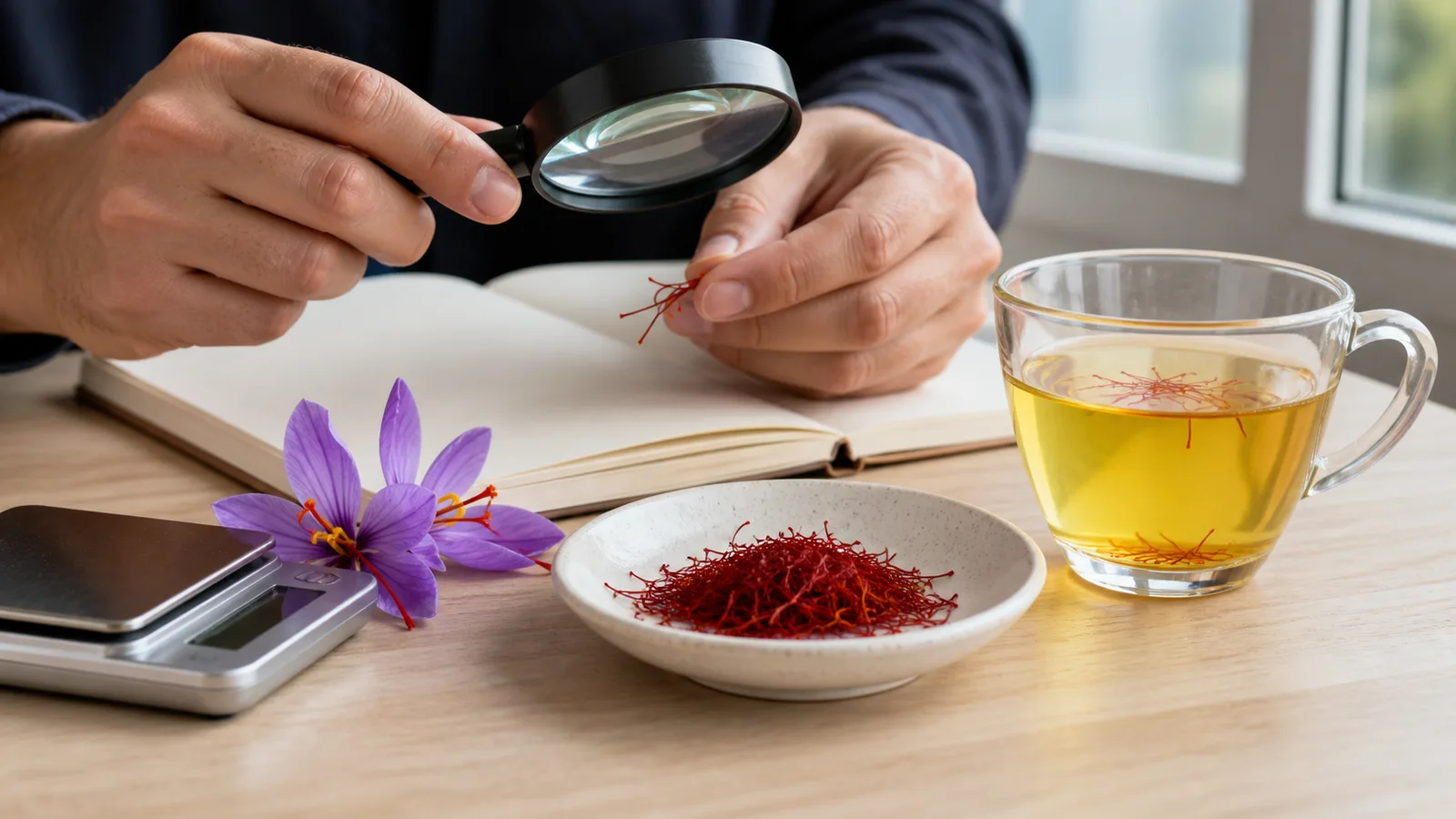
Whole genuine threads usually widen at one end and taper toward the other, but appearance, aroma and colour release can only flag a concern. They cannot certify purity. Do not burn saffron or put it in gasoline: those old home tests introduce fire, vapour and ingestion hazards and still do not replace analysis.
The current ISO 3632-1:2025 saffron specification covers dried saffron in filament, cut-filament and powder forms, while laboratory test methods assess identity and quality. At home, the safer protection is traceability: buy from a seller that provides origin, batch or packing information and uses intact, dry packaging. Our guide to identifying pure saffron explains what visual checks can and cannot establish.
Can turmeric or marigold replace saffron?
Turmeric can provide a yellow colour, but its earthy flavour is different. Edible marigold petals can add colour and a floral note, yet they do not reproduce saffron’s aroma. These are culinary substitutions, not medicinal equivalents, and a substitute should be labelled honestly rather than sold as saffron.
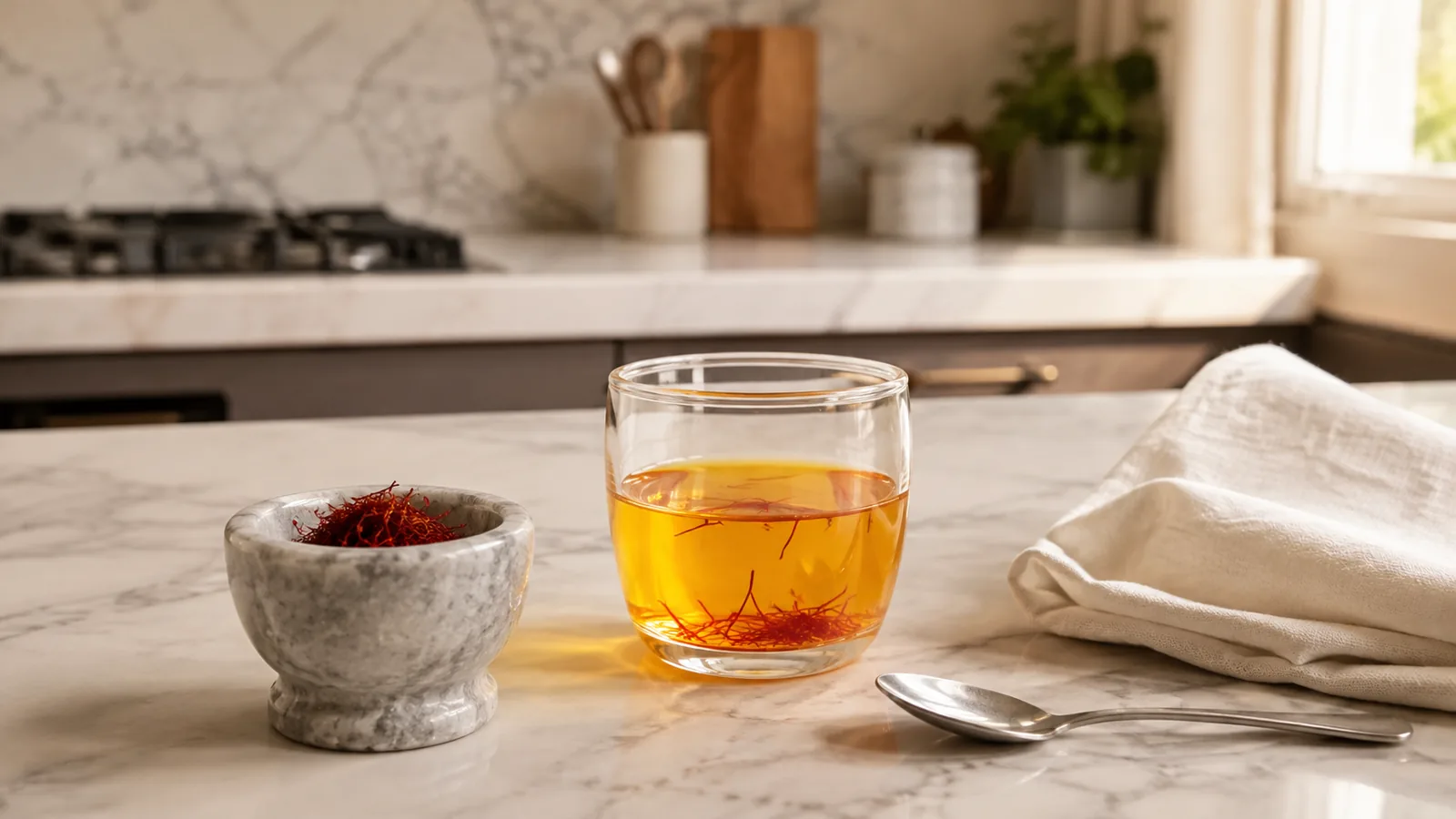
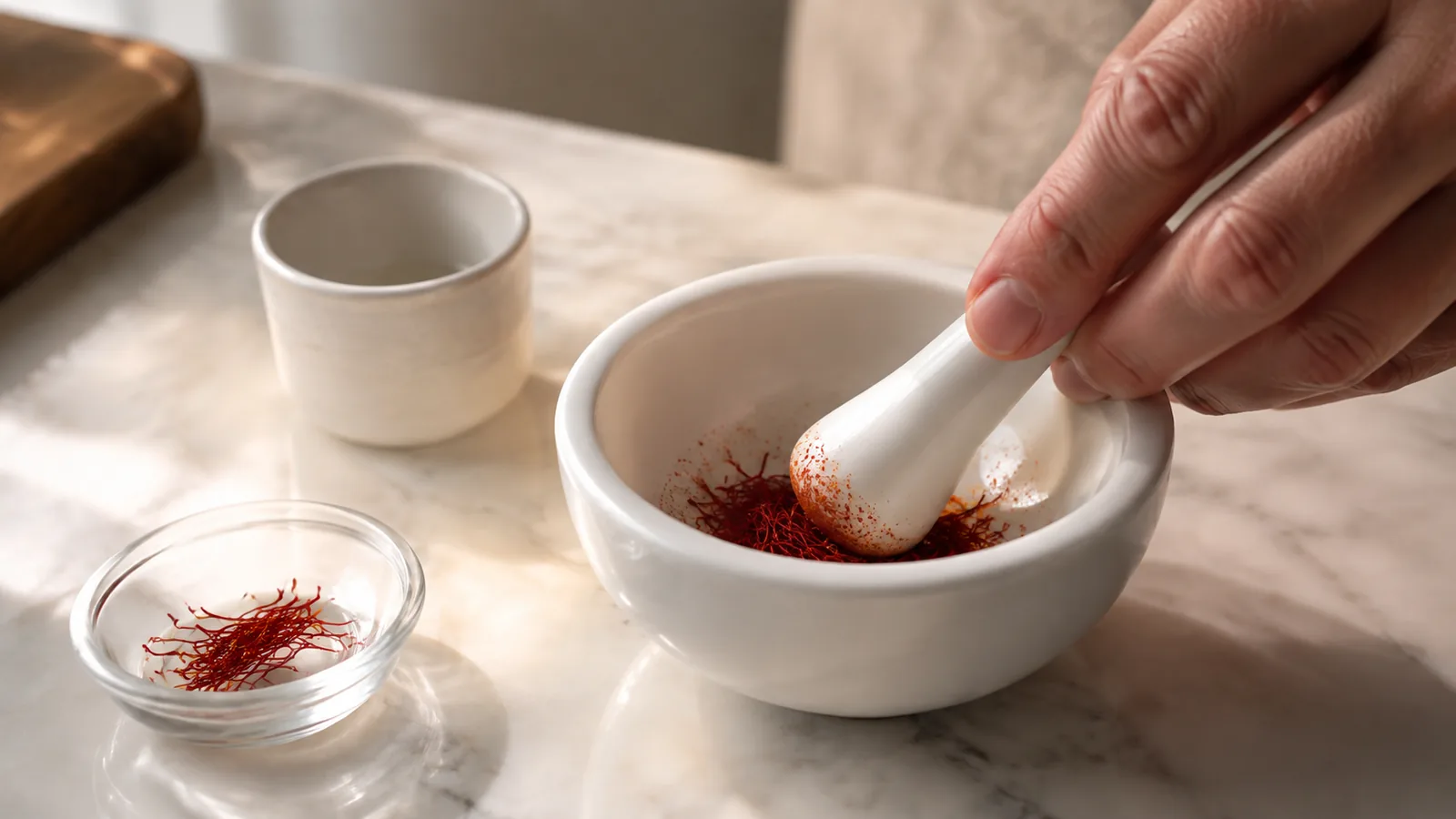
For cooking, bloom lightly crushed saffron in a small amount of warm water and add it near the end of preparation. This spreads flavour and colour without requiring a large quantity. Grinding is optional; if you do grind it, use clean, dry equipment and prepare only what you need.
How to store threads and bloomed saffron
Keep dry threads in an airtight food-safe container away from light, heat, steam and moisture. Clear glass is acceptable inside a dark cupboard; metal or tinted glass can also work. The important controls are dryness, a good seal and stable room temperature—not a claim that all plastic instantly destroys “potency.”
Brew or bloom only a small amount at a time. Once water is added, treat it as a prepared food: cover it, refrigerate it promptly and use it soon rather than keeping a jar indefinitely. A dry spice may gradually lose aroma; a wet preparation has a separate food-safety concern.
Saffron’s value comes from an unusual flower, laborious harvest and a flavour that is difficult to copy. Its medicinal research deserves the same restraint as the spice itself: identify the preparation, look at the quality of the evidence, keep culinary and clinical doses separate, and make treatment decisions with a qualified professional.