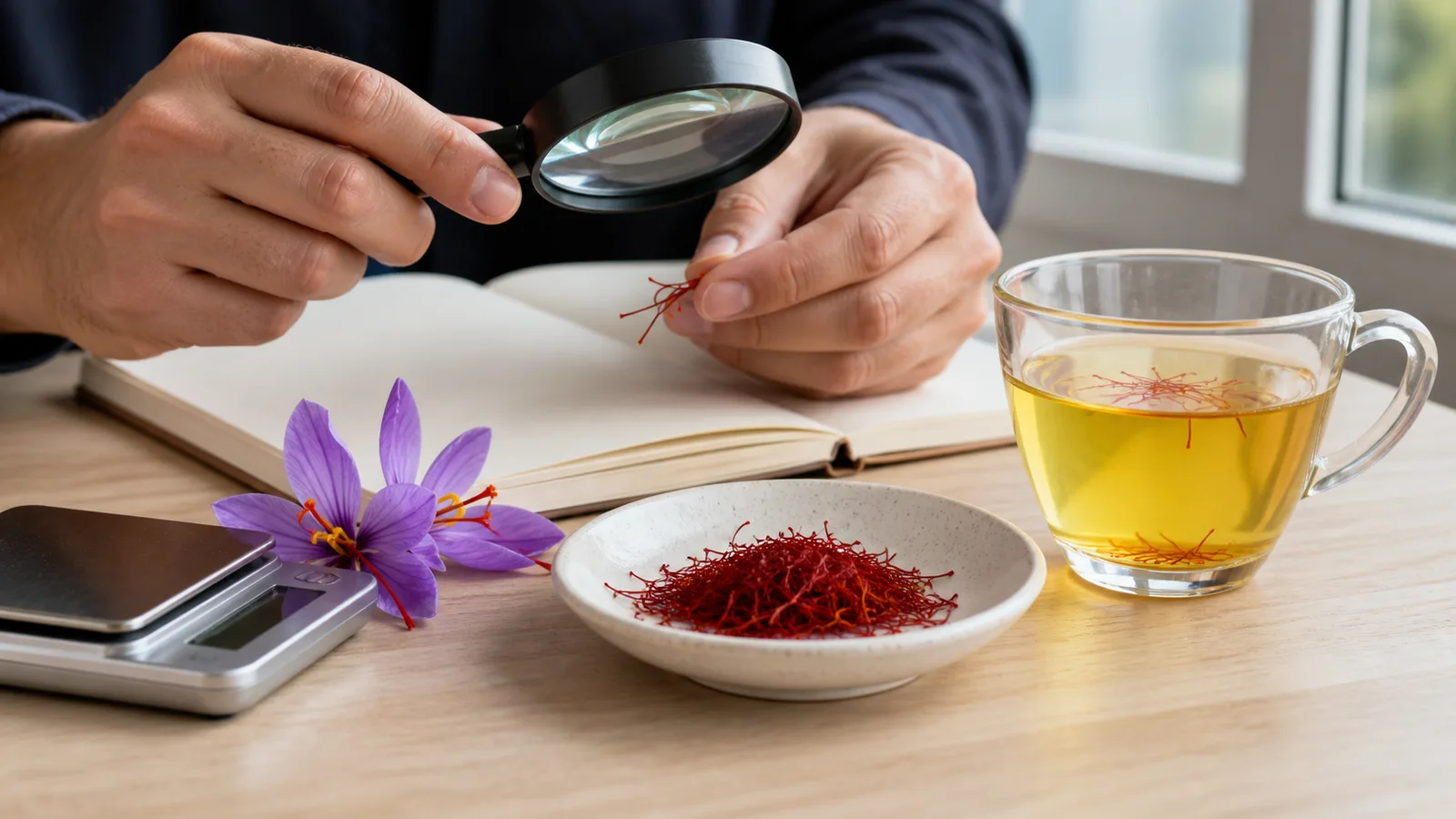
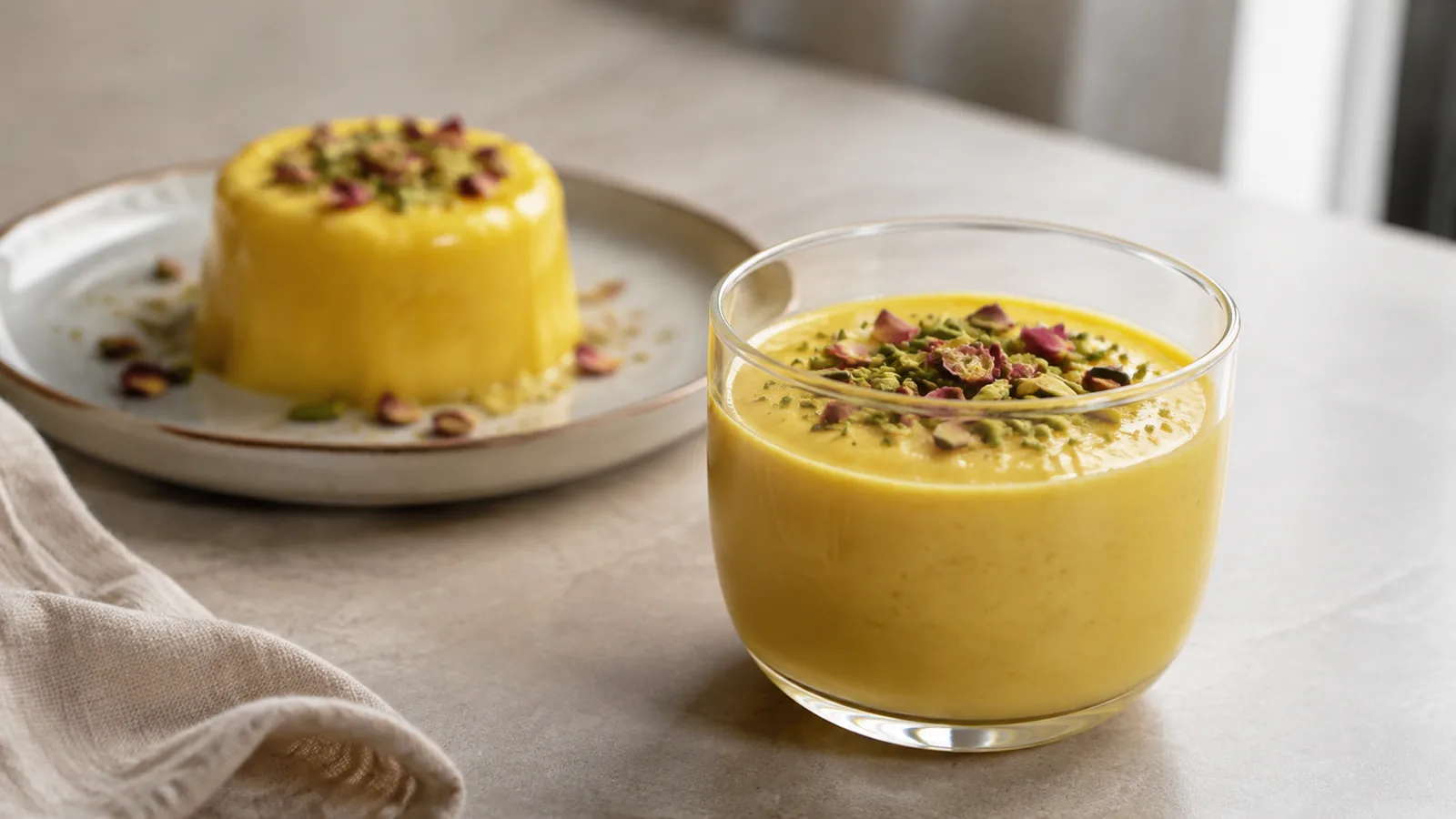
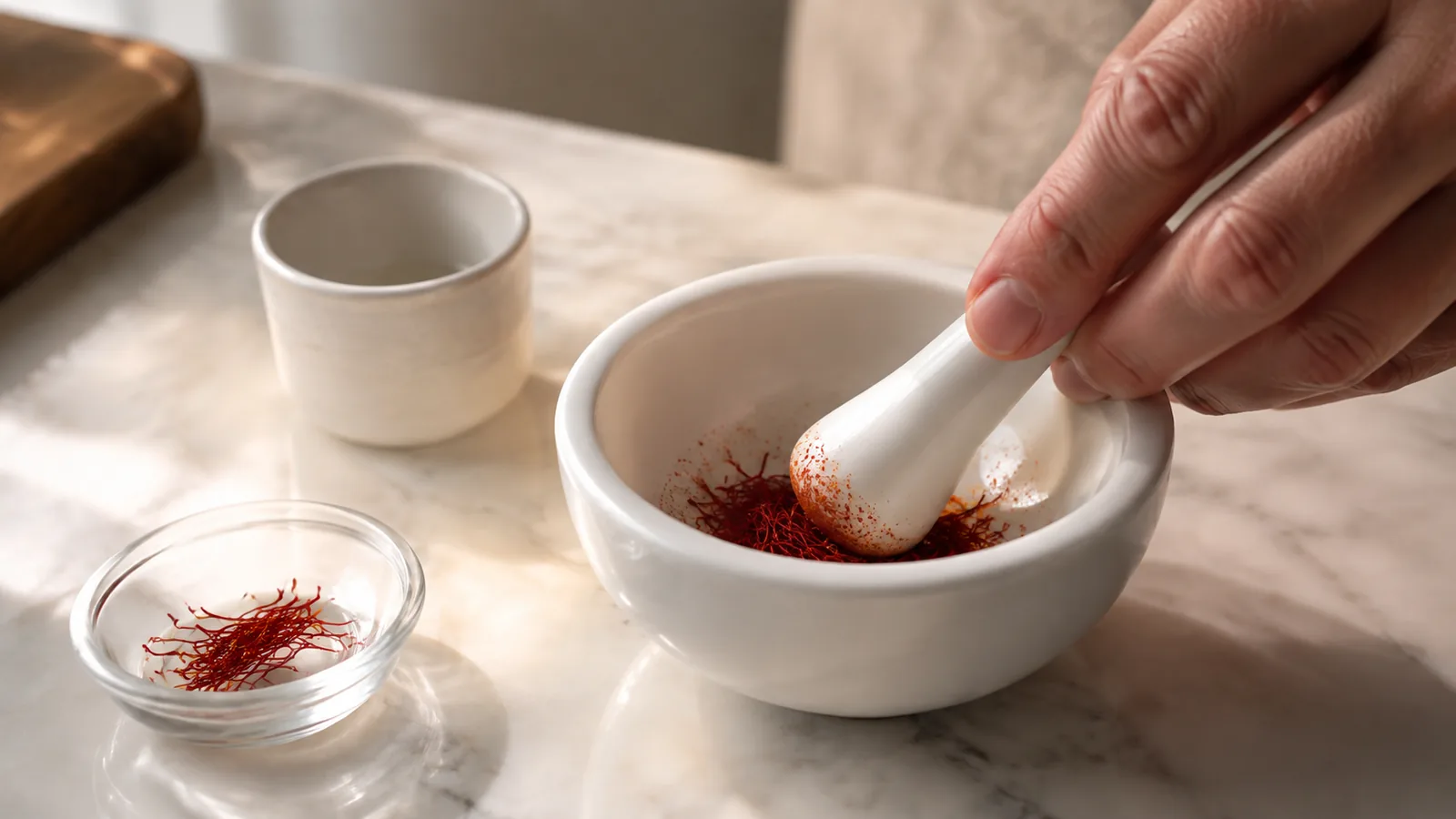
Yes, you can put saffron in coffee. The easiest method is to bloom a small pinch of threads in a spoonful of hot water, then stir that liquid into brewed coffee or espresso. This keeps saffron out of the coffee machine and gives its floral aroma a chance to open before it meets coffee’s roasted bitterness.
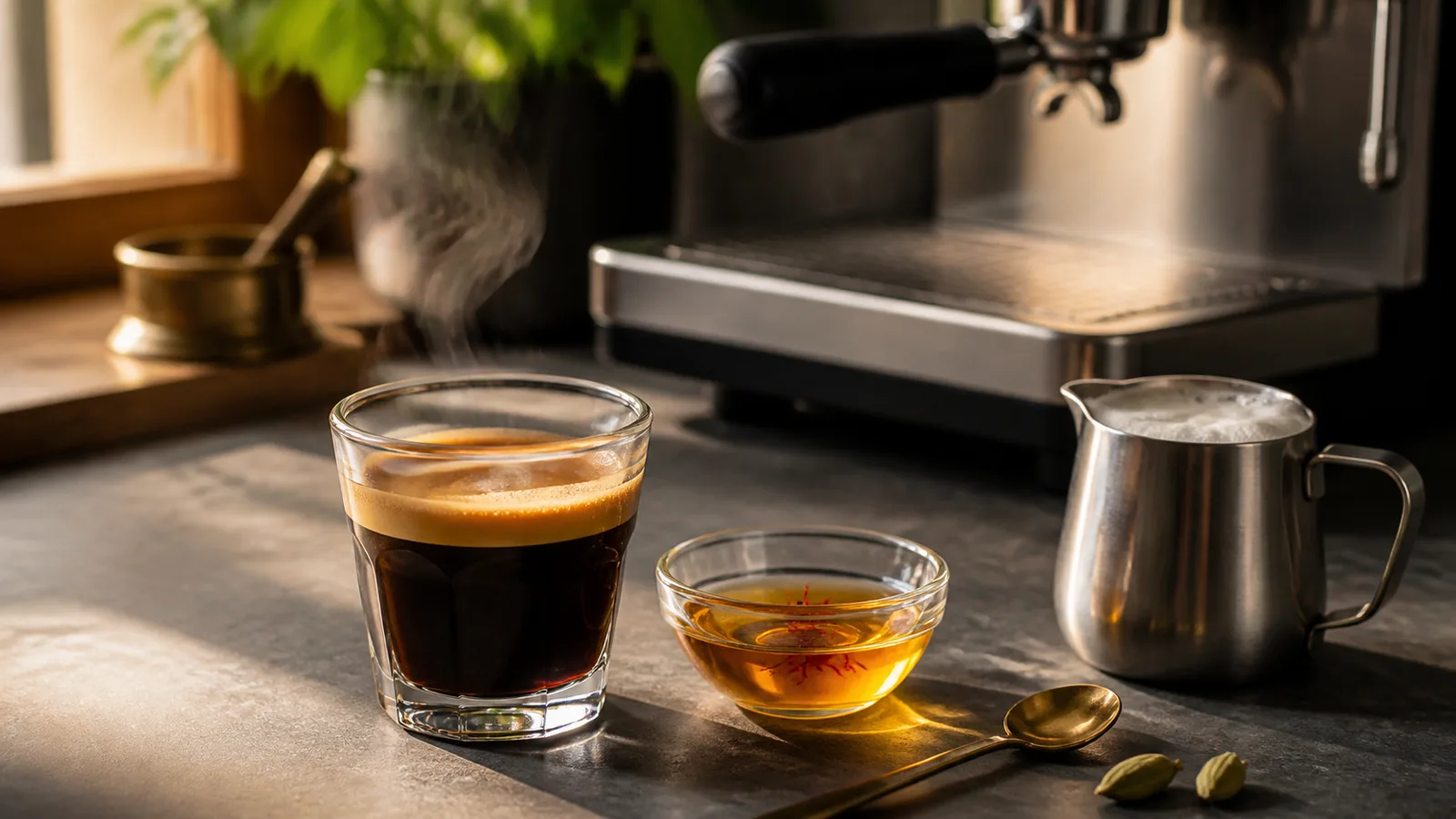
Saffron coffee benefits are often overstated. The combination can make a distinctive, enjoyable drink, but adding saffron does not remove caffeine, “neutralize” coffee or turn one cup into treatment for depression. The recipes below preserve the traditional saffron, cardamom and rosewater flavours while keeping those health claims in proportion.
Can you add saffron to coffee?
You can add saffron to Turkish coffee, espresso, filter coffee, a latte or a cappuccino. Start with 5–8 threads per serving. Lightly crush them and steep in 1 tablespoon of hot water for 5–10 minutes. The water should turn golden and smell floral before you mix it into the finished drink.
More saffron is not automatically better. A large amount can taste metallic or bitter and becomes expensive quickly. Whole threads are also easier to inspect than unlabelled powder. If the coffee is strongly roasted, try the lower end of the range first; a delicate saffron aroma is easy to bury under dark roast and sweet syrups.
Saffron coffee recipe for Turkish-style coffee
For one small cup, you will need:
- 60–75 ml cold water;
- 1 heaped teaspoon very finely ground Turkish coffee;
- 5–8 saffron threads, bloomed in 1 tablespoon hot water;
- sugar to taste; and
- a small pinch of ground cardamom or a few drops of food-grade rosewater, optional.
- Add the cold water, coffee and optional sugar to a cezve or small coffee pot.
- Warm slowly over low heat. Do not stir once the coffee begins building a cap of foam.
- As the foam rises, lift the pot from the heat before it spills over.
- Stir in the bloomed saffron and optional cardamom or rosewater.
- Pour into a small cup and let the grounds settle before sipping.
This method adds saffron near the end rather than boiling a quarter teaspoon of powder in the pot. The smaller measure is enough to be noticed without turning the drink gritty.
How to make saffron espresso
Pull an espresso shot as usual. Stir in 1–2 teaspoons of the bloomed saffron liquid, taste, then add the remainder if the roast can carry it. Add sugar only if wanted. A drop or two of rosewater can work, but it takes over quickly.
Do not put saffron threads, rosewater, sugar or cardamom into an espresso machine’s water reservoir or group head. Brew the coffee normally and combine the flavours in the cup. That protects the equipment and lets you control each ingredient.
Saffron latte or cappuccino
For a saffron latte, mix the bloomed saffron into one espresso shot and add steamed milk. For a saffron cappuccino, use a smaller amount of milk with a thicker layer of foam. Cardamom suits both. If you want the saffron visible in the final drink, place two or three threads on the foam rather than adding a large pinch.
What does coffee with saffron taste like?
Coffee supplies roast, bitterness and body. Saffron adds a dry floral aroma, a faint hay-like note and golden colour. Cardamom makes the cup brighter and more resinous; rosewater pushes it toward perfume; milk softens both the bitterness and the spice.
The best balance depends on the coffee. A lighter roast leaves more room for saffron, while a dark espresso may need a little milk or sugar before the aroma becomes clear. If the cup tastes medicinal, reduce the saffron or rosewater next time rather than adding more sweetener to hide it.
What are the benefits of saffron in coffee?
The benefits of coffee with saffron are easy to overstate. There is no reason to invent a new therapeutic effect for the pairing. Coffee and saffron have been researched separately, but a kitchen cup containing a few saffron threads is not the same intervention as a standardized saffron extract used for weeks in a clinical trial.
Saffron research includes trials on mood and other neurological or psychiatric outcomes. A 2024 systematic review summarized encouraging findings across several conditions. Those studies used defined saffron preparations and treatment periods; they do not show that saffron coffee prevents depression, creates instant happiness or gradually produces unnamed health benefits.
Coffee’s caffeine can increase alertness, which some people experience as useful energy. Saffron does not cancel the caffeine. The US Food and Drug Administration says that caffeine sensitivity varies widely; too much can cause negative effects, and medicines or health conditions can change a person’s response.
Claims that caffeine and crocin work together to boost immunity, or that saffron removes the harmful effects of coffee, are not established by evidence for this drink. Enjoy the cup for flavour and ritual. Treat a medical condition with appropriate professional care, not a stronger coffee recipe.
Saffron and caffeine interaction
Adding culinary saffron does not make a caffeinated drink decaffeinated. If coffee causes jitters, palpitations, anxiety, reflux or poor sleep, the practical options are a smaller serving, less coffee, a lower-caffeine bean, decaf or an earlier drinking time. Adding more saffron is not a proven solution.
The FDA cites 400 mg of caffeine per day as an amount not generally associated with negative effects for most adults, while stressing that individual response varies. That number is not a target, and cup size is a poor caffeine measure because beans and brewing methods differ. People who are pregnant, breastfeeding, taking medication or concerned about a health condition should ask their clinician what limit fits them.
Is saffron hot or cold in nature?
“Hot” and “cold” are traditional temperament terms used in several food and medical traditions. They are not measurements of beverage temperature, caffeine content or a modern clinical interaction. Within that traditional vocabulary, saffron and cardamom are commonly described as warm, while different descriptions of coffee can vary with preparation and source.
It is fine to explain that cultural framework as tradition. It should not be turned into a physiological claim that daily coffee creates “coldness in the body” or that saffron is required to restore balance. A person can value the inherited flavour pairing without presenting the framework as proof that coffee becomes safer.
Choosing saffron for coffee
Use dry, deep-red threads with a clean distinctive aroma. Avoid material that smells damp, looks unnaturally uniform or releases an immediate artificial-red cloud. Store saffron sealed, dry and away from light. Coffee should also be fresh enough that its aroma has not gone flat.
Bloom only the amount you need for the cups being served. If you prepare extra saffron liquid, cover and refrigerate it for prompt use rather than leaving it at room temperature. For broader quantity and safety context, see our guide to saffron side effects and sensible use.
The most reliable saffron coffee is also the simplest: brew the coffee correctly, bloom a few threads separately and combine them in the cup. From there, cardamom, rosewater, milk and sweetness are matters of taste—not a requirement to claim a health benefit.