How to Check Saffron Quality at Home: Simple Methods to Test Purity
You can screen saffron at home by examining the threads, smelling them, and watching a small sample infuse in warm water. These checks may reveal obvious dye, plant material or poor storage, but no home saffron test can certify botanical identity, purity, grade or origin. Laboratory analysis and traceable supply records are needed for confirmation.
That distinction matters when learning how to test saffron at home. If you are asking how to check original saffron or how to know if saffron is real, begin by preserving the pack details and comparing several observations. A genuine batch can behave differently because the threads are broken, old, damp, strongly coloured or prepared in hotter water. An adulterated sample may also be designed to imitate one popular test. Treat the result as a reason to investigate, not a verdict.
How to check quality of saffron before a home test
Before placing anything in water, photograph the package and batch details. Check the seal, net weight, seller, lot or harvest information, country statement and ingredient list. Keep the invoice. A transparent supply chain is more valuable than a dramatic trick performed after the label has been discarded.
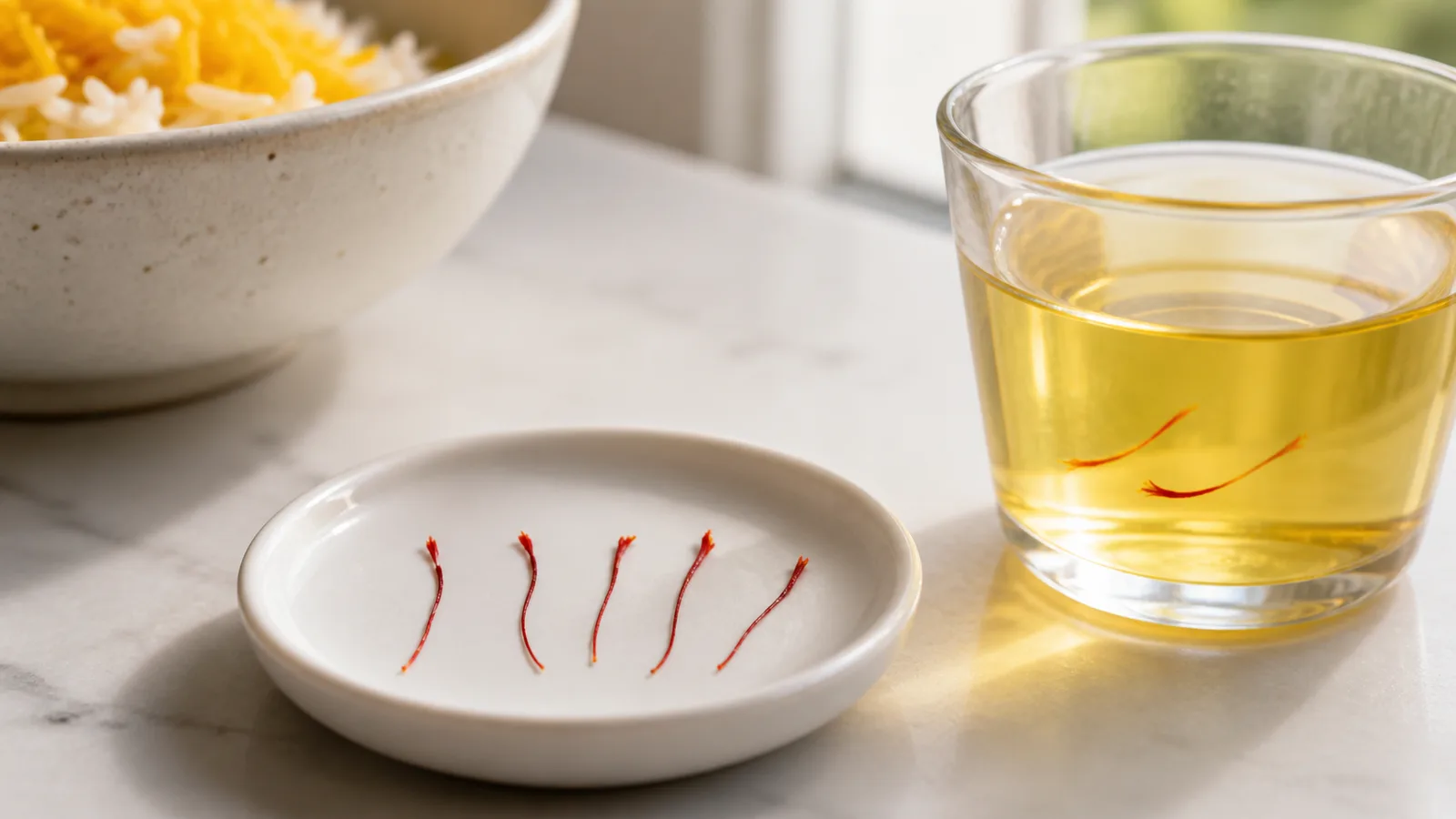
Tip a small sample onto a clean white plate in good daylight. True culinary saffron consists of dried stigmas from Crocus sativus. Expect red to deep-red thread-like pieces, sometimes with a small yellow-orange style portion. To identify good quality saffron, inspect dryness, aroma, condition and traceability as well as colour. Commercial cutting styles vary, so an all-red thread is not automatically superior and an orange tip is not automatic proof.
1. The Water Test
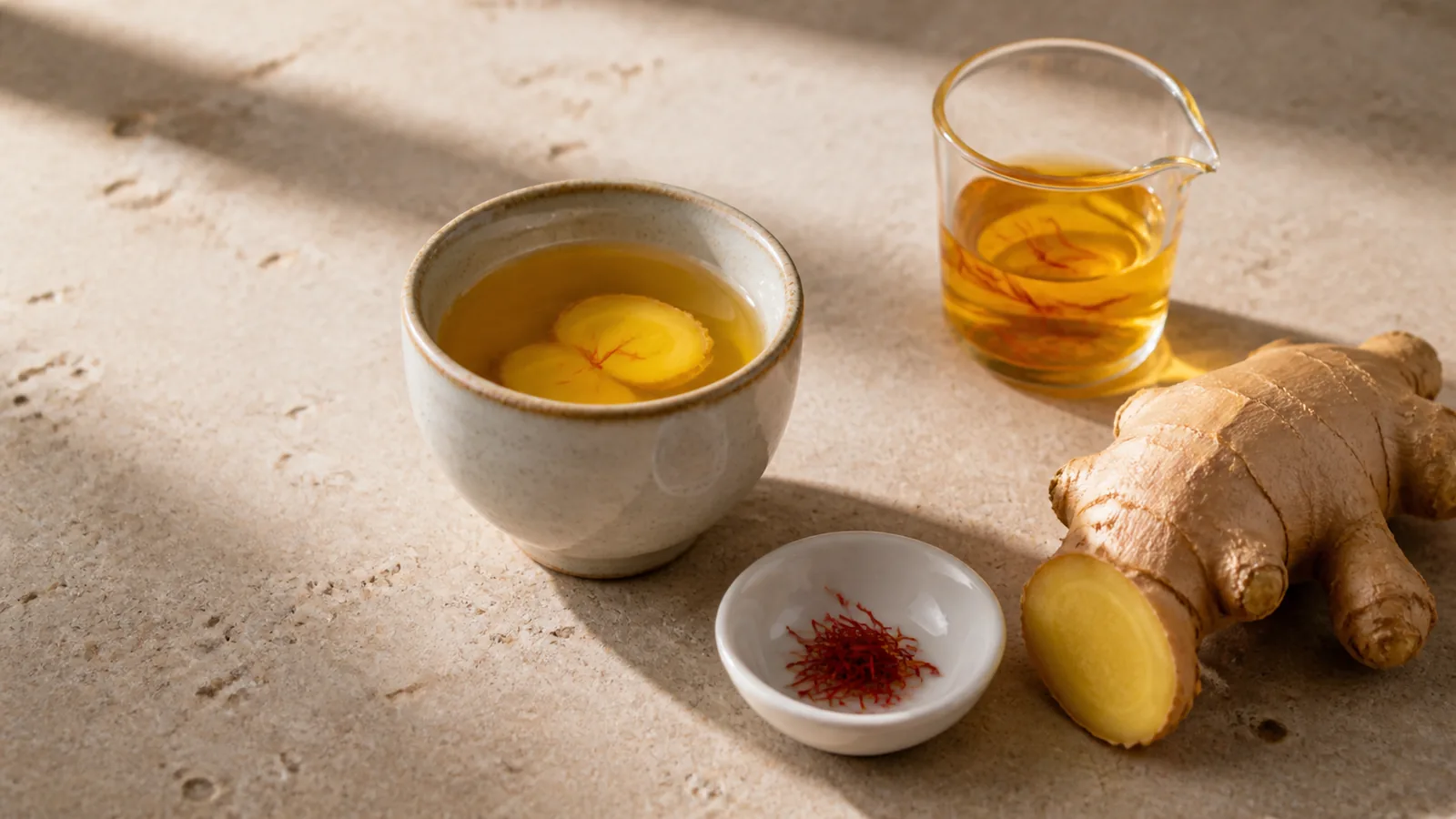
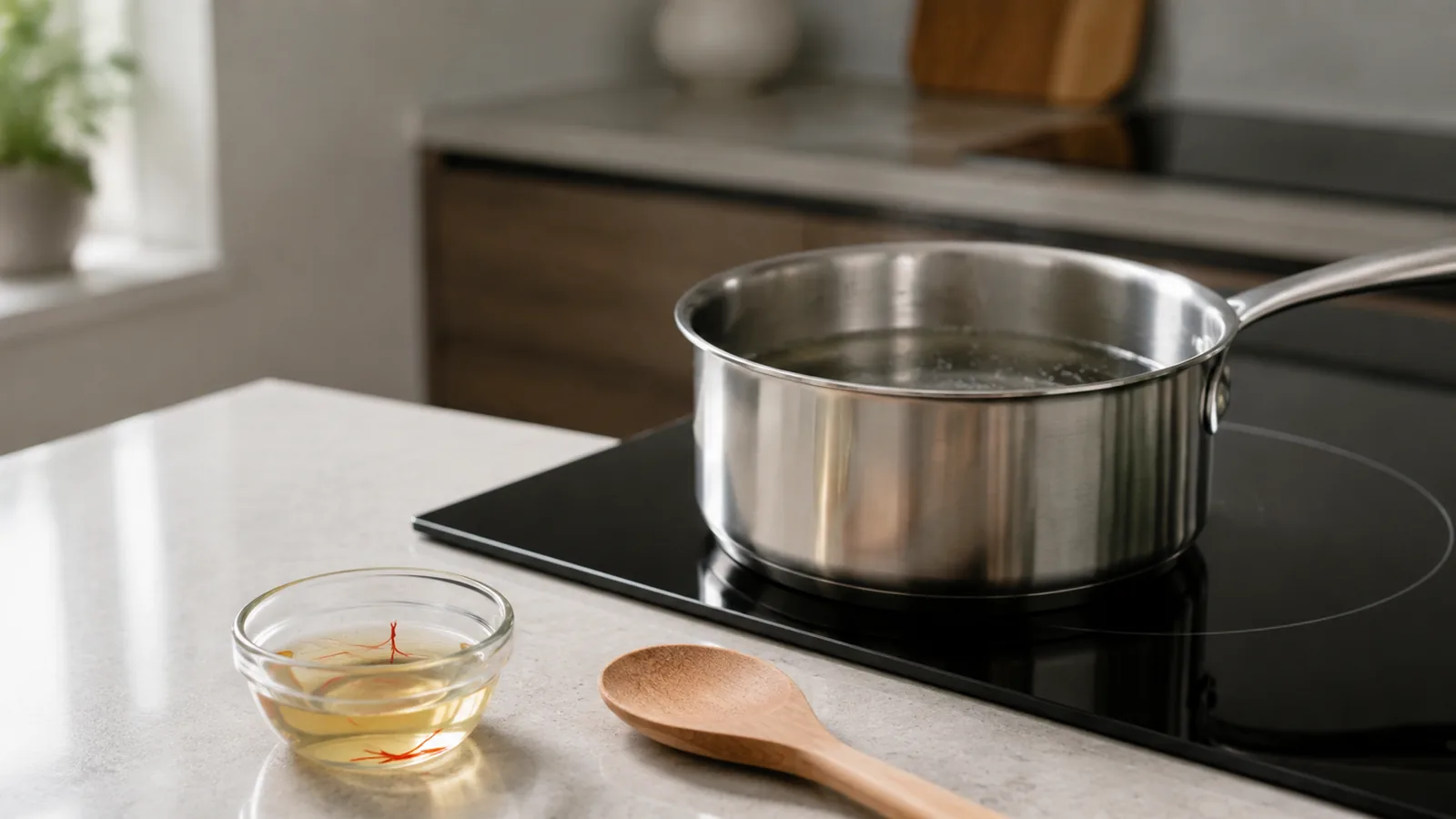
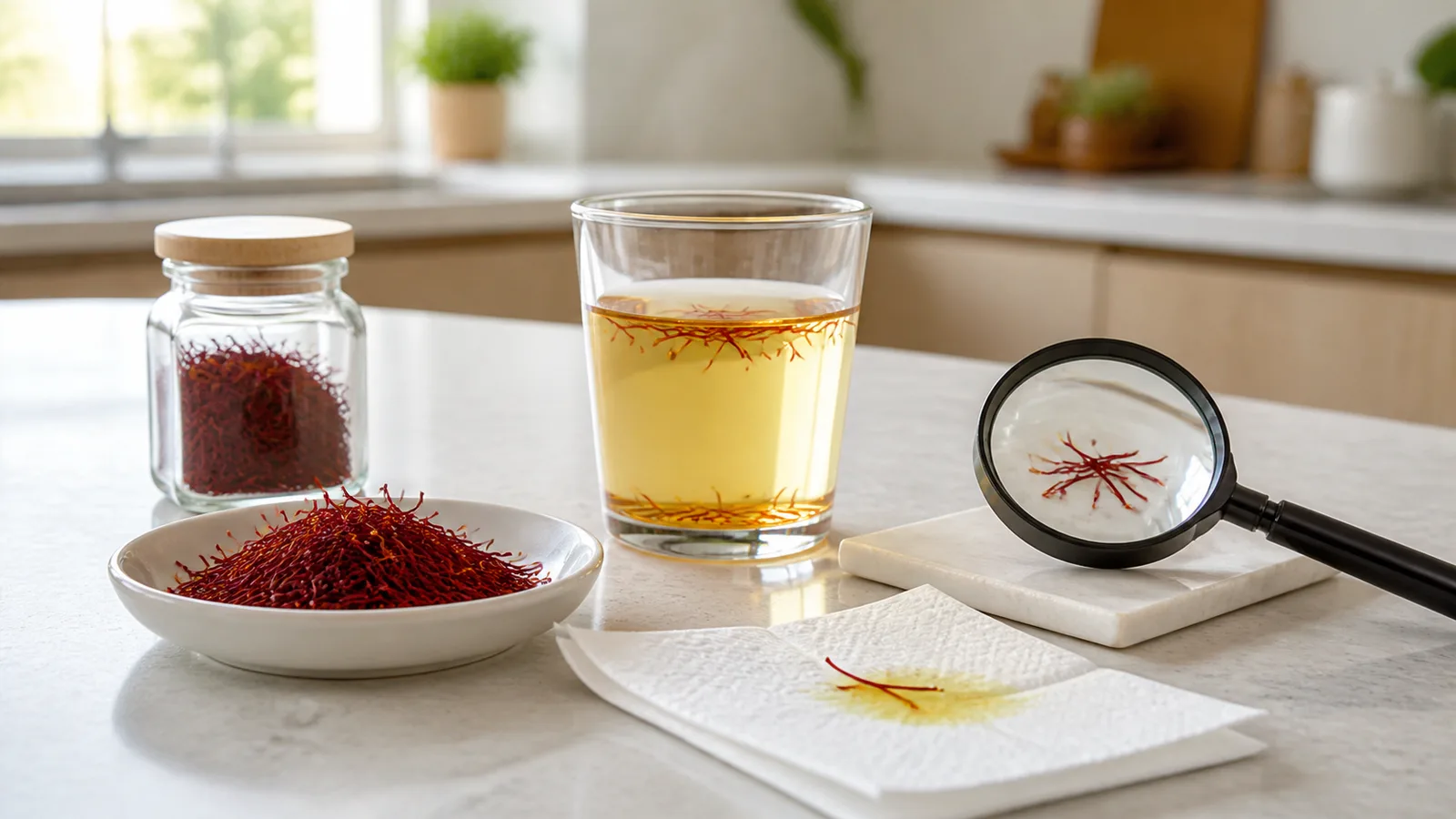
For a saffron water test, place three to five threads in a clear glass of comfortably warm water. Do not crush them first. Watch for 10 to 15 minutes, then stir gently. Genuine saffron commonly releases a transparent yellow-to-golden colour while some red material remains visible. The aroma should develop with the infusion rather than smelling like synthetic perfume.
Instant colour is not an automatic failure. Broken, finely cut or previously damaged genuine threads have more exposed surface area and can release colour quickly; water temperature and the amount used also matter. Conversely, a fake sample can be dyed to produce a convincing golden liquid. The old rule that pure saffron will immediately release vibrant colour while fake saffron may not change the water is therefore too simple.
Look for a coloured cloud that washes abruptly off the surface, a thread that becomes pale or reveals a different plant material, sediment, or an odd chemical odour. Those are reasons to stop using the lot and contact the seller. They still do not identify the adulterant on their own.
2. The Paper Towel Test
Lift one wet thread onto a plain white paper towel after the water test. A yellow or orange stain is expected because saffron’s colour compounds have moved into the water. A stain alone does not prove authenticity, and a pale stain does not prove a fake. The amount of water, thread damage, paper absorbency and infusion time all change the mark.
Do not rely on claims that genuine saffron leaves no oily mark or that one exact stain shape identifies it. Paper is useful for seeing whether a separate surface dye runs away from the thread; it is not an official saffron purity test.
3. The Milk Test
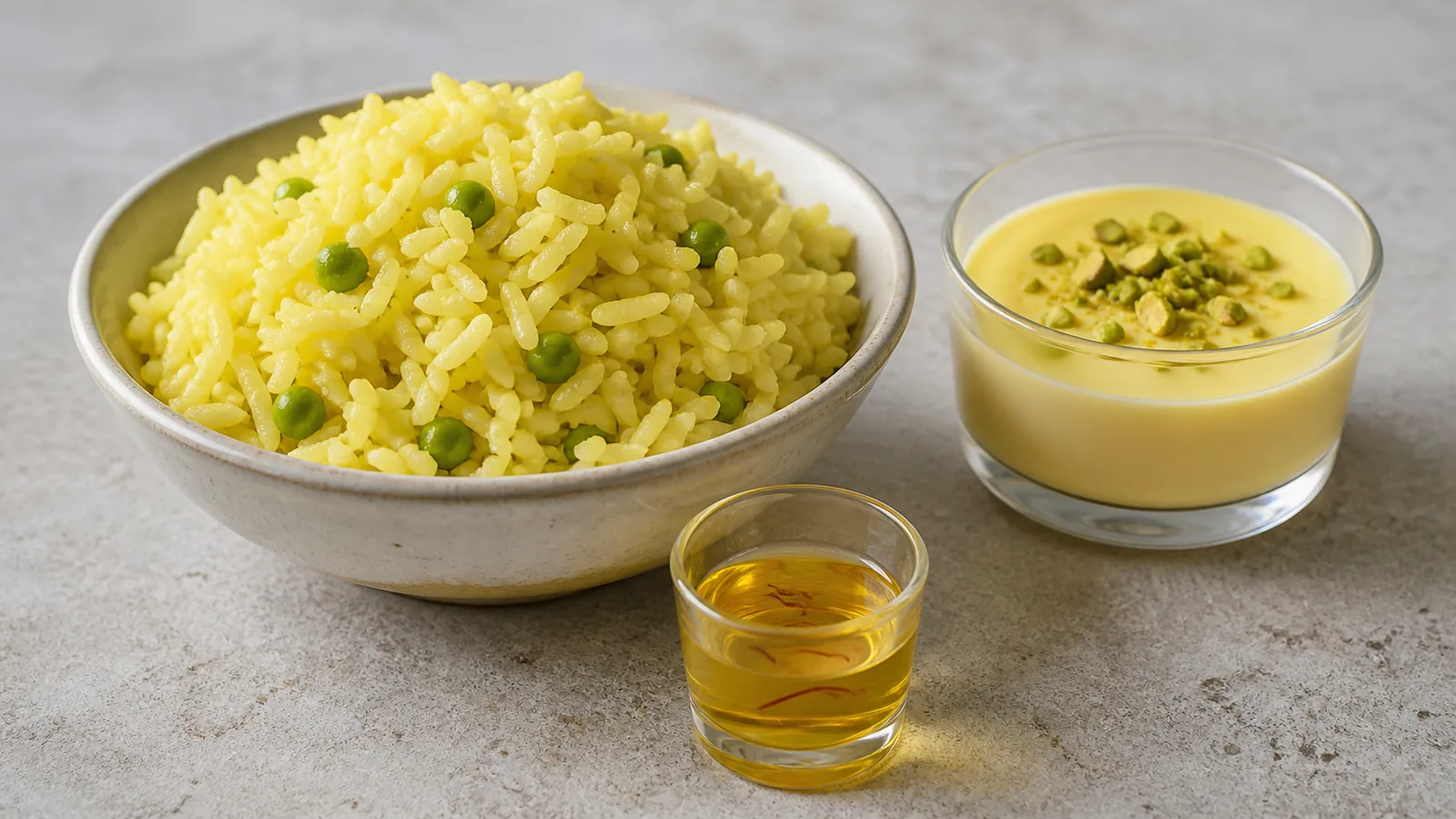
Add a few threads to warm milk only if milk is part of how you plan to use the spice. Genuine saffron can turn milk yellow or golden as it infuses, but the milk’s opacity makes the colour harder to assess than clear water. Fat content, heat, thread amount and added cardamom, turmeric or sweetener can change what you see and smell.
The claim that real saffron must make milk deep yellow or orange is not a reliable threshold. Artificial colour can tint milk too. Use the milk check to understand flavour and infusion for a recipe, not to certify purity.
4. The Texture and Length Test
Use a phone macro setting or magnifying glass. A complete saffron stigma widens toward one end and narrows toward the other; pieces may look trumpet-like or gently flared. Threads should be dry rather than wet, sticky or oily. They need not all be long or identical, because harvesting, trimming, drying and transport create natural variation.
Uniform red fibres, flat dyed strips, shredded petals, abundant yellow material or pieces that lack any stigma-like structure deserve a closer look. Chopped saffron is not automatically fake, though short fragments are harder to identify at home. Powder cannot be authenticated by shape at all.
5. The Smell Test
Saffron’s aroma is distinctive but difficult to reduce to one comparison. People describe warm hay, honey, dried flowers, earth and a faint metallic or medicinal edge. It should smell like a spice, not air freshener, solvent or burnt plastic.
A weak aroma can mean age, heat damage, moisture exposure or poor packaging rather than adulteration. A chemical-like odour is a warning sign, but a strong fragrance is not proof of purity because scent can be added. Avoid inhaling powder closely, especially if you have asthma or a spice allergy.
How to identify real and fake saffron without unsafe tricks
Do not burn saffron, hold it over a gas flame or mix it with petrol, gasoline or another solvent. Those methods create fire, fume and food-contamination risks and still do not provide dependable identification. Do not taste an unknown bulk sample to see whether it is bitter; an adulterant or misidentified plant should not be swallowed.
Float-versus-sink behaviour is also inconclusive. Genuine and adulterated pieces may float initially, sink after wetting or behave differently because of trapped air, size and surface treatment. A real saffron in water test is a set of observations, not a single pass/fail moment.
What quality, purity, authenticity and freshness mean
These words answer different questions. Authenticity asks whether the material is really Crocus sativus stigma. Purity asks whether other material, colour or undeclared substance is present. Quality can include chemical strength, moisture, foreign matter and condition. Freshness concerns how storage and age have affected aroma, colour and flavour.
This is why a real saffron test is not automatically a saffron quality test. A genuine but stale batch may have weak aroma. An authentic low-grade lot may contain more style material without being fake. A beautifully coloured sample may still need laboratory analysis to establish strength or adulteration.
How to test real saffron and confirm purity
How to test saffron quality? and How to check purity of saffron? are laboratory questions when a dependable answer is required. Formal methods can assess identity, colouring strength, aroma-related measures, moisture and foreign material under controlled conditions.
The current ISO 3632-1:2025 specification defines requirements for dried saffron. ISO 3632-2 test methods cover analytical procedures rather than kitchen tricks. Codex CXS 351-2022, amended in 2025, also defines saffron styles, quality factors and the requirement that the product be free from adulteration.
Depending on the problem, specialists may use microscopy, spectrophotometry, chromatography, spectroscopy or DNA-based methods. Research on microscopy-assisted saffron identification illustrates why structure can help while chemical and molecular questions need other tools. FAO’s current work on saffron authenticity testing methods likewise focuses on validated analytical approaches.
For a household purchase, ask the seller what testing applies to the specific batch and whether a report can be matched to its lot number. A generic certificate with no batch link is weaker evidence.
How to know saffron is expired or badly stored
Dry saffron does not change from genuine to fake when it ages. Instead, aroma and flavour fade, colour may become less vivid, and damp storage can lead to clumping, mould or spoilage. Check the best-before date and storage history, but use your senses too.
Discard threads that are visibly mouldy, insect-damaged, wet, slimy or contaminated by a foreign odour. If they are simply older and less aromatic, the problem is quality loss rather than proof of adulteration. Keep saffron airtight, dry, cool and dark.
Where to Buy High-Quality Saffron
Buy from a seller who gives a clear net weight, ingredient description, batch identity, contact details and a realistic return or complaint process. Whole threads are easier to examine than powder. Be cautious with vague origin stories, health promises, perfect-looking certificates that cannot be tied to the batch, or prices that make little sense for the claimed weight.
Our broader guide to identifying pure saffron covers common substitutes, float-and-sink claims and the difference between commercial appearance and laboratory evidence.
Conclusion: Testing Saffron Quality at Home
Use the package, dry-thread inspection, warm-water observation, paper, milk and aroma together. They can expose obvious warning signs and help you document a complaint. None can ensure authenticity or replace a laboratory.
If you still cannot tell whether saffron is real or fake, stop using the questionable lot, keep the packaging and contact the seller or an appropriate food authority. The most reliable home decision is sometimes not to guess.