This saffron pudding recipe gives you two reliable choices: a simple cornstarch pudding served in cups, or a cream-and-gelatin version firm enough to unmould. Both use bloomed saffron and restrained rosewater, with biscuit and jelly variations for layered desserts.
Choose the texture before you start
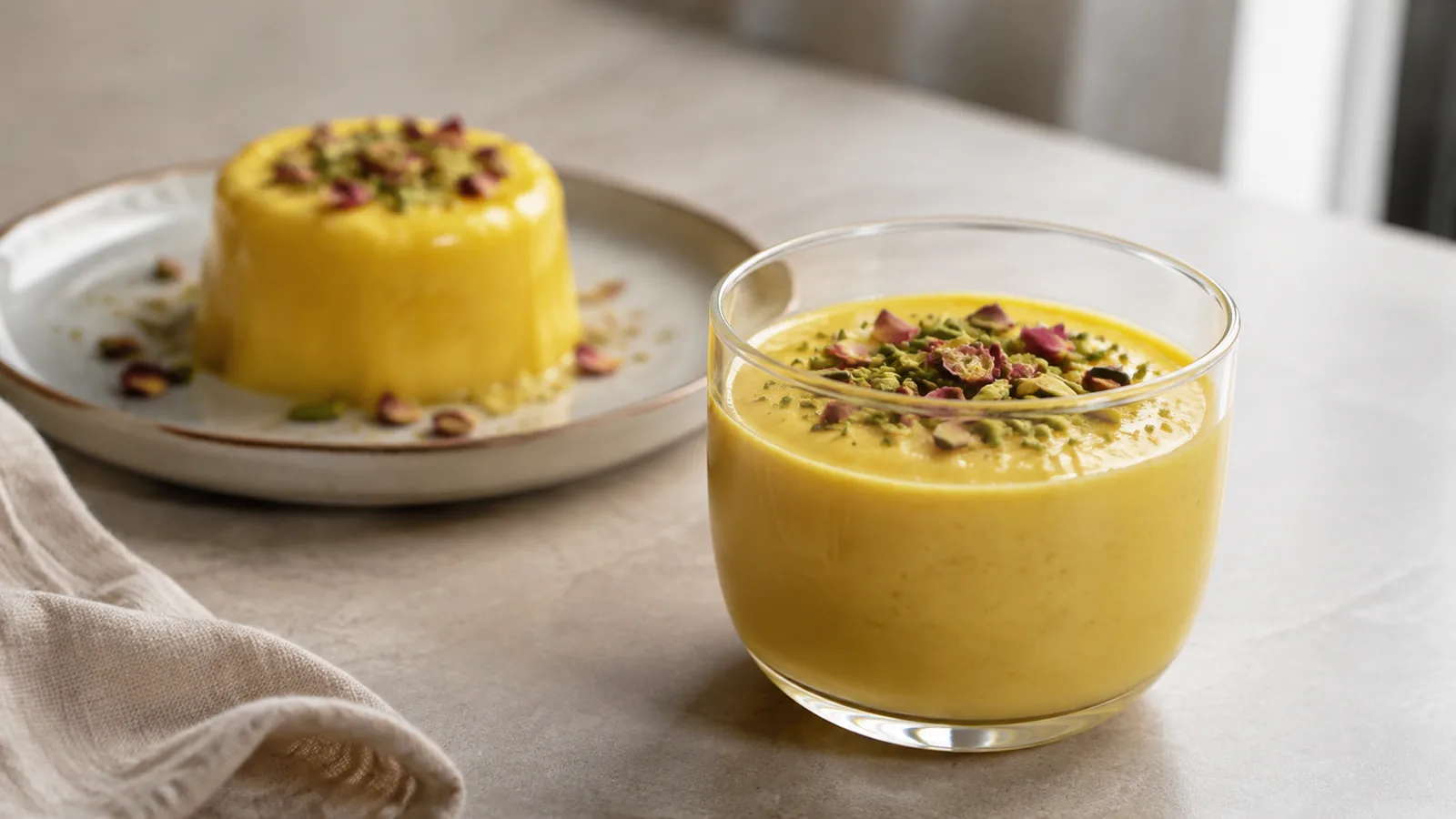
Cornstarch pudding is creamy, spoonable and naturally egg-free. It sets as it cools but remains too soft for an elaborate mould. A gelatin pudding has a cleaner slice and can be turned onto a platter, although it needs careful measuring and enough time in the refrigerator.
The two setting methods are not interchangeable. Adding a large amount of gelatin to an already thick cornstarch custard produces a rubbery dessert. Decide whether you want cups or a mould, then follow the matching recipe.
Simple saffron pudding without gelatin or cream
Ingredients
- 4 cups whole milk, divided
- ½ to ¾ cup sugar, according to taste
- 5 tablespoons cornstarch
- ¼ teaspoon saffron threads, crushed and bloomed in 3 tablespoons hot water
- 1 tablespoon rosewater, plus more only if needed
- A small pinch of salt
- 1 tablespoon unsalted butter, optional
Method
- Whisk the cornstarch with one cup of cold milk until completely smooth.
- Pour the remaining milk into a heavy saucepan. Add the sugar and salt, then warm over medium-low heat until the sugar dissolves.
- Whisk the starch mixture again and pour it slowly into the pan.
- Cook over medium-low heat, stirring constantly and scraping the base and corners. Do not walk away; milk and starch catch quickly.
- When the mixture reaches a gentle bubble and thickens enough to coat the spatula, continue cooking for one minute to remove the raw starch taste.
- Take the pan off the heat. Stir in the bloomed saffron, rosewater and optional butter.
- Pour into six small cups while warm. Cool briefly, cover and refrigerate for at least three hours.
The chilled pudding should hold a spoon mark but remain soft. If it is runny, the starch may not have reached a gentle simmer. If it is lumpy, it was added to hot milk without first being dispersed in cold liquid.
Saffron pudding with cream and gelatin
This version is designed for a mould. Gelatin brands vary in strength, so check the packet as well as the quantity below.
Ingredients
- 3 cups whole milk, divided
- 1 cup whipping cream
- ½ cup sugar
- 1 tablespoon powdered unflavoured gelatin
- ¼ teaspoon saffron threads, crushed and bloomed in 3 tablespoons hot water
- 1 tablespoon rosewater
- 1 teaspoon vanilla extract
- A small pinch of salt
Method
- Put ¼ cup of the cold milk in a small bowl. Sprinkle the gelatin evenly over the surface and leave it for five to ten minutes to bloom. Do not pour the powder into hot milk in a heap.
- Warm the remaining milk, cream, sugar and salt over medium-low heat. Stir until the sugar dissolves and the mixture steams; do not let it boil hard.
- Remove the pan from the heat. Add the bloomed gelatin and stir until no granules remain.
- Stir in the saffron infusion, rosewater and vanilla. Taste a cooled spoonful before adding more rosewater.
- Lightly oil a clean mould with a neutral oil, then wipe away every visible pool with kitchen paper.
- Pour in the pudding, cool briefly and refrigerate for at least six hours, preferably overnight.
The older recipe used egg as well as four tablespoons of gelatin, but did not include a safe custard-cooking step. Egg is unnecessary for this moulded version, and that much gelatin can produce a very stiff texture. Cream supplies richness while a measured amount of gelatin supplies the set.
How to unmould saffron pudding cleanly
Run a thin flexible knife just around the top edge. Dip the outside of the mould in warm—not hot—water for five to eight seconds, dry it, place a chilled plate on top and invert. If it does not release, repeat the brief dip once. Long exposure to hot water melts the outer layer.
For detailed shapes, use a flexible silicone mould. A plain ring or loaf mould is easier for a first attempt and gives the pudding a clean shape without heavy greasing.
Saffron pudding with biscuits
Make the cornstarch version and let it cool for about ten minutes, stirring occasionally so a skin does not form. Layer it with plain tea biscuits, Petit Beurre or thin pieces of sponge cake in individual glasses.
For a crisp crumb, crush the biscuits and mix them with a small amount of melted butter, then chill the base before adding cool pudding. For a cake-like layer, leave the biscuits whole and allow them to soften overnight. Do not add a warm custard to a delicate glass straight from the refrigerator; the temperature change can crack it.
Saffron pudding with jelly
Jelly and pudding can form attractive separate layers, but each layer must set before the next goes in. Prepare the jelly according to its packet and pour a shallow layer into glasses. Refrigerate until firm.
Make the cornstarch saffron pudding and cool it to room temperature, stirring from time to time. Spoon it gently over the set jelly and chill again. Pouring hot pudding onto jelly melts the boundary and makes the colours run together.
Choose a flavour that works with saffron, such as orange, lemon or a mild berry. The jelly is optional; it adds colour and a firmer texture but does not improve the saffron itself.
How to bloom saffron for pudding
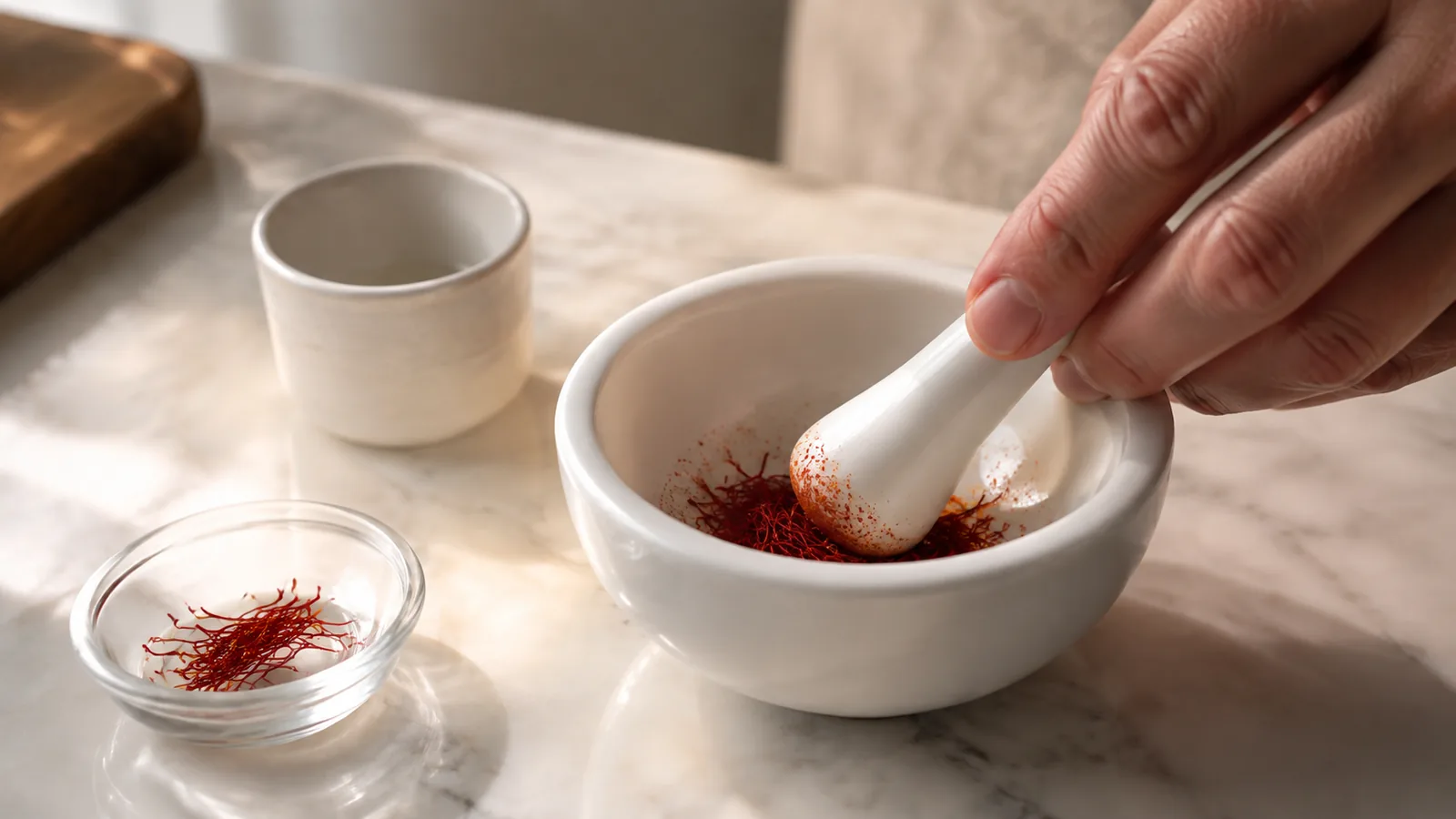
Crush the threads in a small mortar, add three tablespoons of hot water, cover and leave for 10 to 15 minutes. This makes a concentrated infusion that colours the milk evenly. Our guide to brewing saffron explains hot-water and ice methods in more detail.
Add the infusion after the custard has thickened or after the hot cream mixture comes off the heat. A long, hard boil dulls the aroma. Include the infusion in the recipe rather than adding extra water without adjusting the texture.
Garnishes that suit saffron pudding
- Slivered pistachios or almonds
- A small pinch of dried culinary rose petals
- Unsweetened coconut
- Fresh orange segments or berries added just before serving
- A light dusting of cinnamon
Garnish shortly before serving so nuts stay crisp and fruit does not release liquid onto the surface. Keep the decoration restrained; the pudding’s colour should remain visible.
Troubleshooting the saffron pudding recipe
The cornstarch pudding is too thin
It may not have simmered long enough, or the starch may have been measured loosely. Return it to low heat and stir until it bubbles gently for a full minute. Remember that it thickens further as it cools.
The pudding is lumpy
Cornstarch must be dispersed in cold milk before it meets heat. Small lumps can be removed by passing the hot pudding through a fine sieve; do this before adding garnishes.
The gelatin pudding did not set
The gelatin may not have bloomed, may not have dissolved or may be too weak for the total liquid. Give it a full overnight chill before deciding. Next time, weigh the gelatin and follow the strength guidance on its packet.
The flavour is perfumed or bitter
Too much rosewater tastes soapy and too much saffron can become bitter. Start with the measured amounts, taste the warm mixture after cooling a spoonful, and adjust in small steps.
Storage and serving
Cover saffron pudding and keep it refrigerated. Serve the cornstarch version within about three days and the cream-and-gelatin version within two to three days, sooner if any added fruit is very ripe. Do not leave a milk pudding at room temperature for an extended buffet.
For Ramadan or another gathering, individual cups are the easiest option: they cool quickly, need no unmoulding and make portioning simple. Prepare the pudding the day before and add nuts or fruit shortly before serving.
Which version should you make?
Choose the simple cornstarch saffron pudding when you want a quick, creamy dessert without gelatin or cream. Use the gelatin version for a decorative mould, the biscuit version for a richer layered glass, or the jelly version when clean colour bands suit the occasion. Each works because its thickener, liquid and serving style have been planned together.