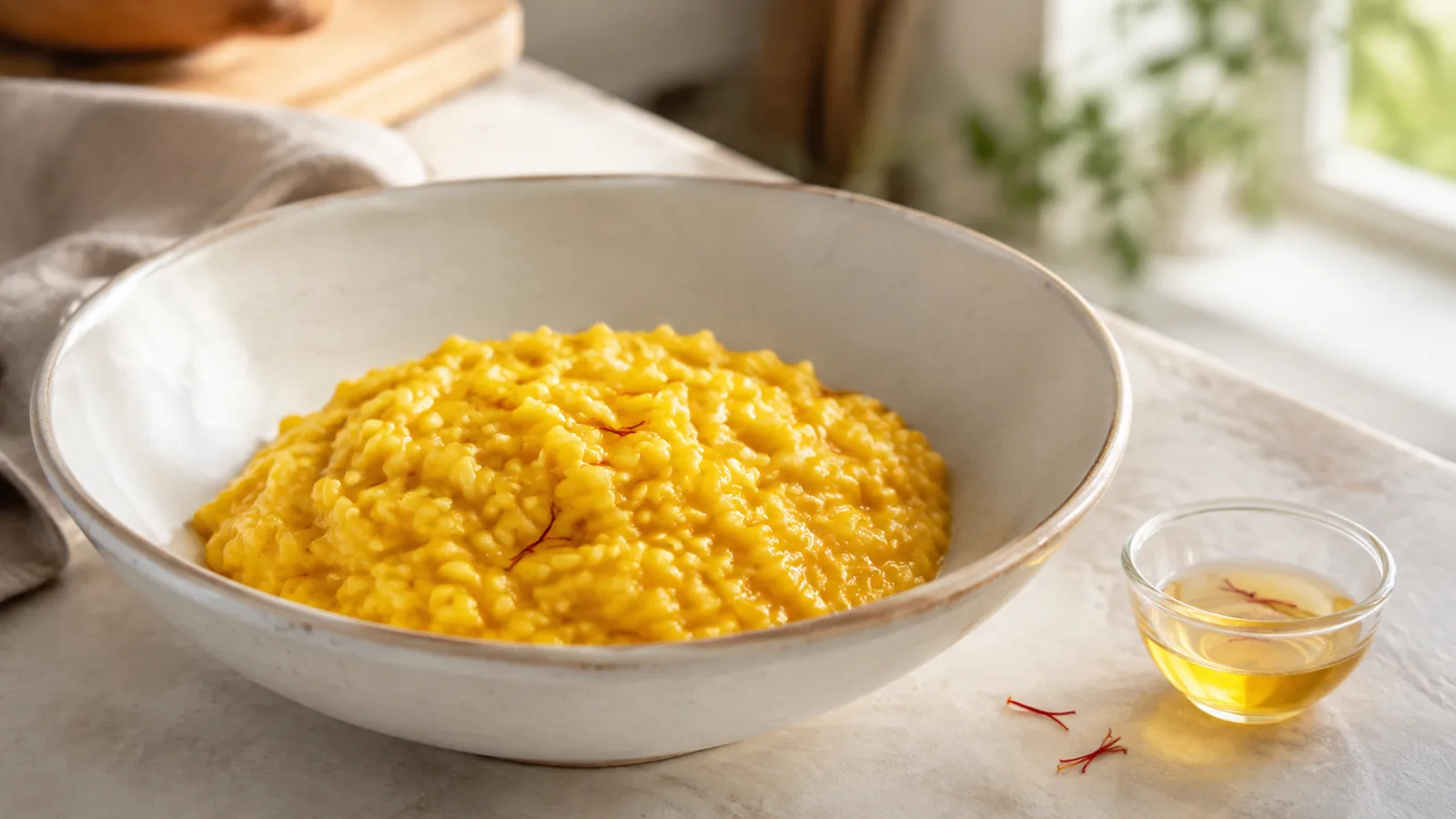
Iranian saffron dishes range from steamed rice and crisp tahdig to chicken, kebabs, sweets and chilled sharbat. Saffron is not poured into every Persian recipe; it is saved for places where its colour and aroma have a clear purpose, often in food prepared for guests and celebrations.
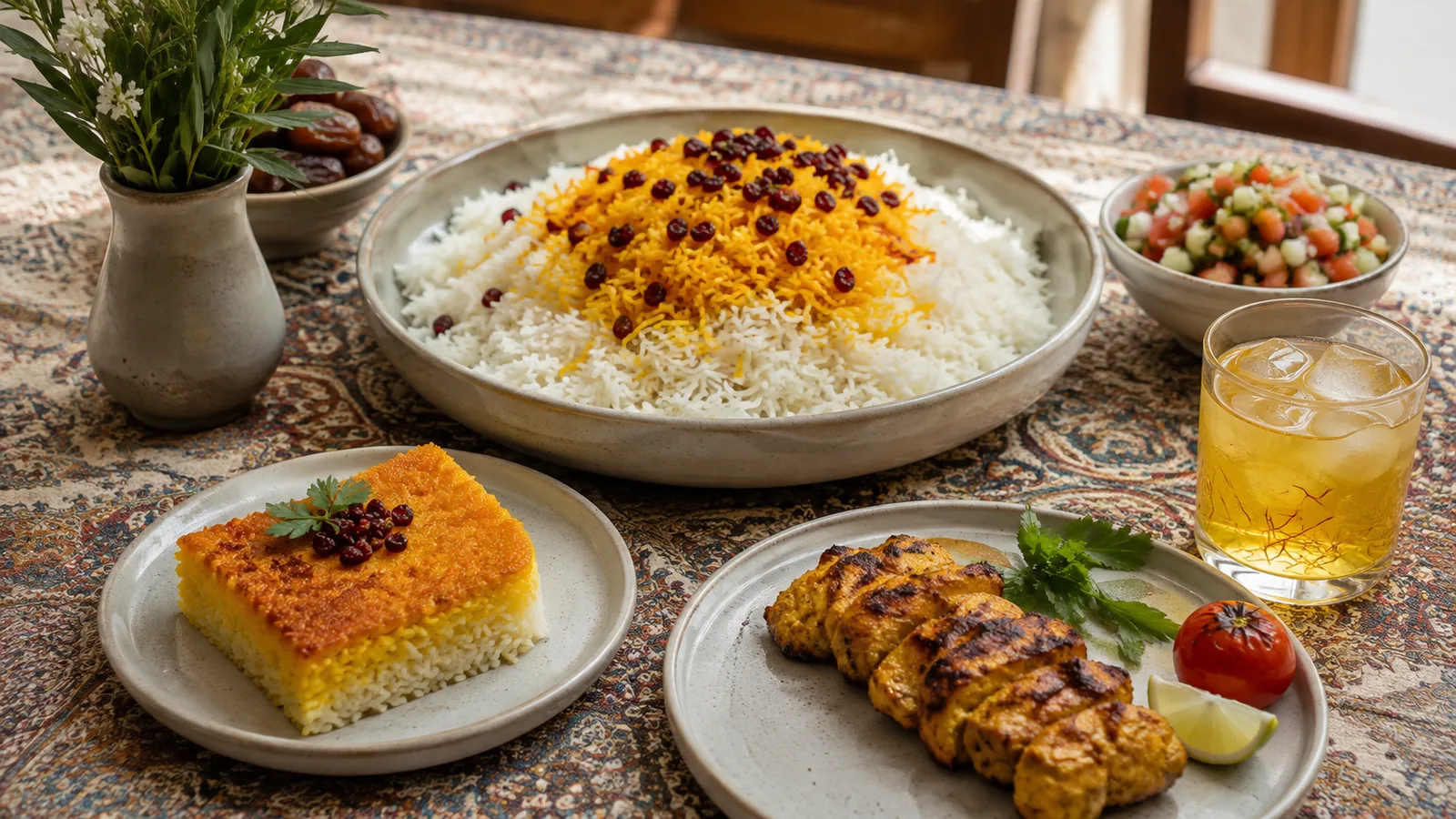
What foods have saffron in Iranian cooking?
The best-known foods containing saffron fall into a few practical groups: rice dishes, chicken and kebab marinades, selected stews, puddings and sweets, and drinks. If you are looking for a dish with saffron, start with one of these established combinations rather than adding the spice to a strongly flavoured recipe where it will disappear.
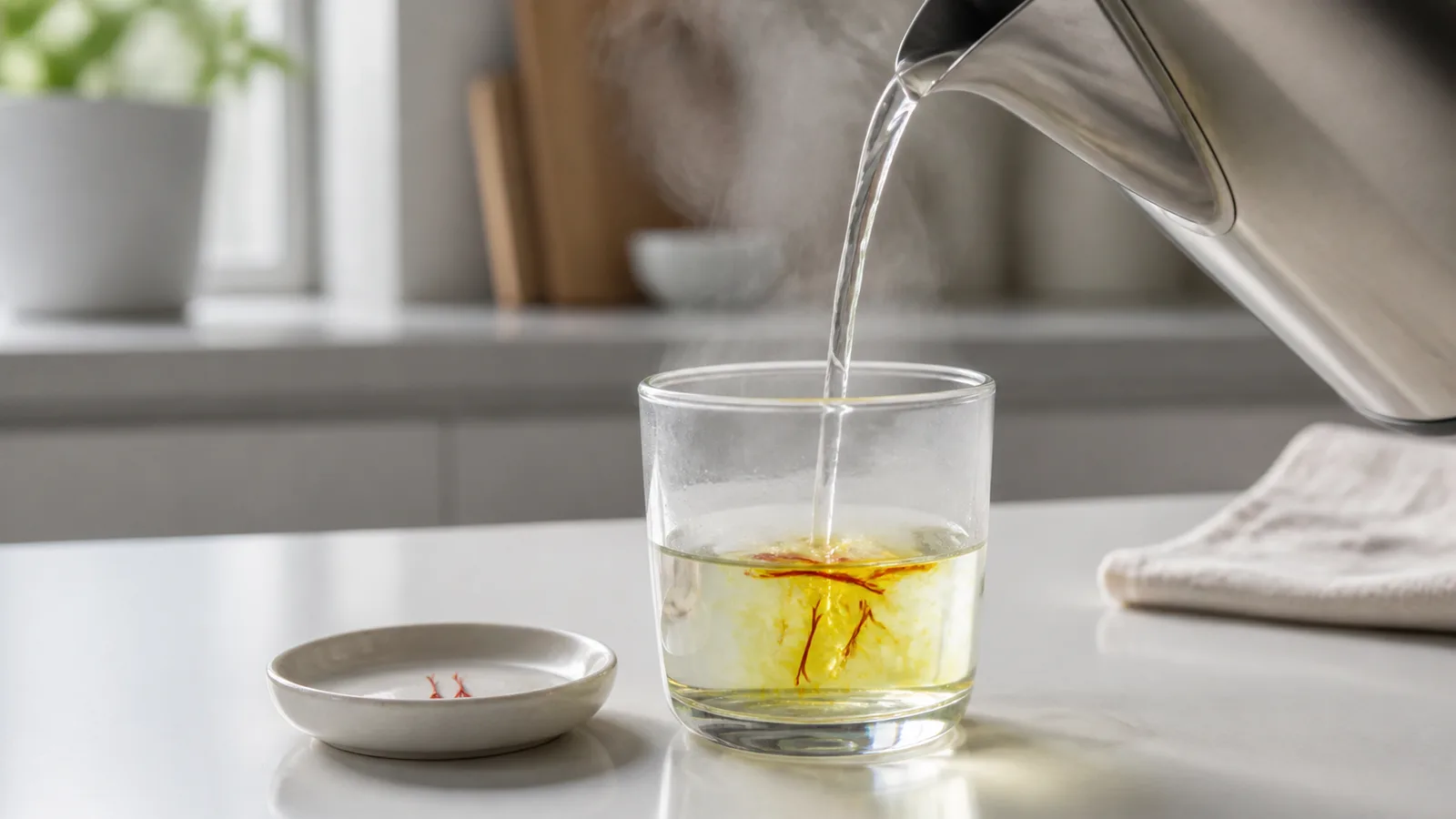
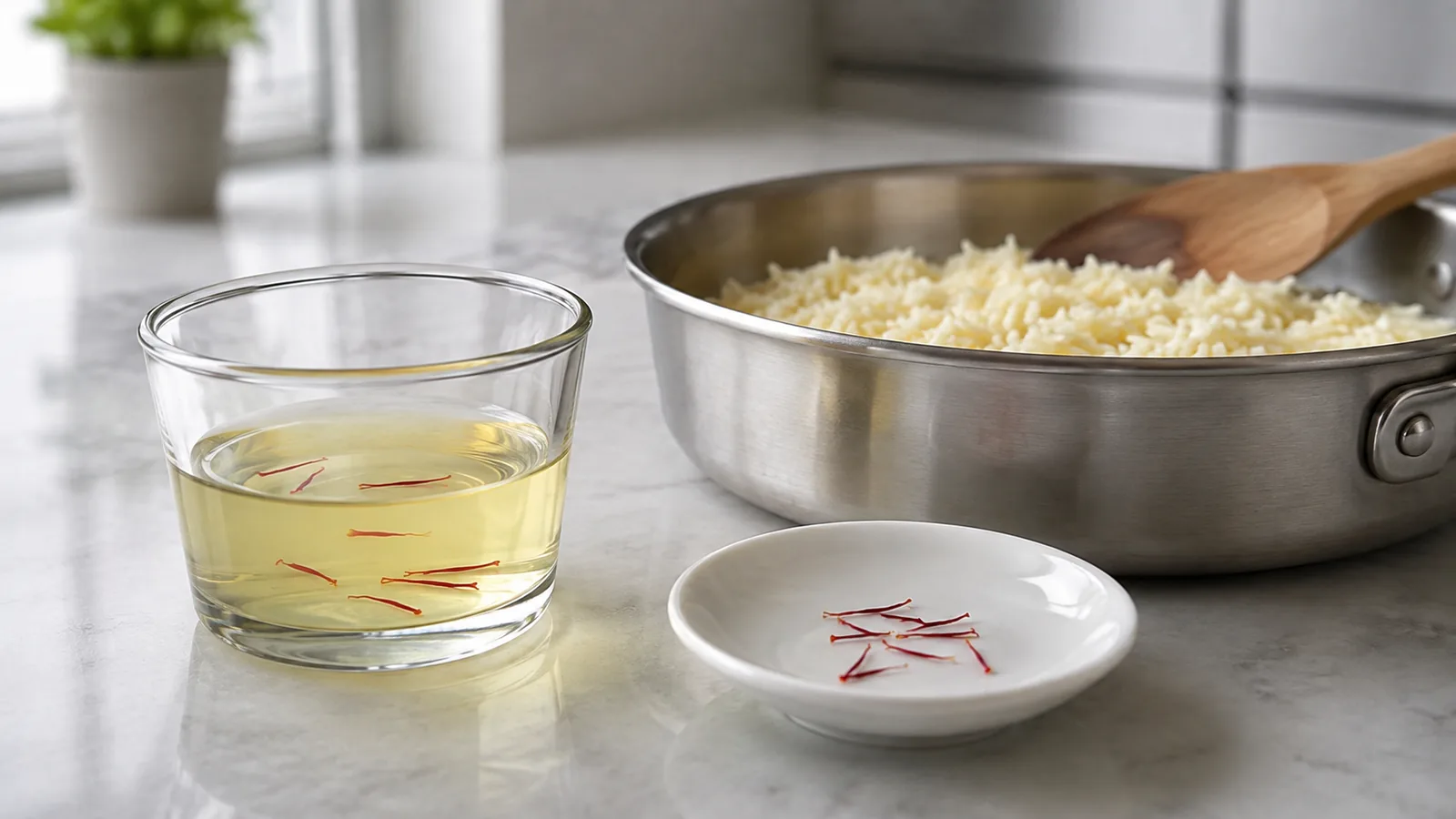
Persian food with saffron often uses an infusion. The threads are crushed, bloomed in a small amount of water and then mixed into part of the food. This spreads the colour and keeps stray dark threads from creating intense, bitter bites.
Famous saffron dishes from Iran
Persian saffron rice
Steamed basmati rice is one of the most familiar saffron meals. Most of the rice may remain white while a smaller portion is folded with saffron and arranged across the top. The gold-and-white contrast is as important to the presentation as the aroma. Our Persian saffron rice recipe explains soaking, parboiling, steaming and the final topping.
Saffron tahdig
Tahdig is the crisp layer at the bottom of a Persian rice pot. A saffron-yogurt rice base forms an even golden crust, while potato and thin flatbread produce different textures. The detailed saffron crispy bottom recipe covers heat control and several variations.
Chicken tahchin
Tahchin combines rice with yogurt, egg and saffron to make a cohesive rice cake with a browned exterior. Chicken, barberries and nuts are common additions. It is more substantial than a thin tahdig and is often turned onto a platter for serving.
Zereshk polo ba morgh
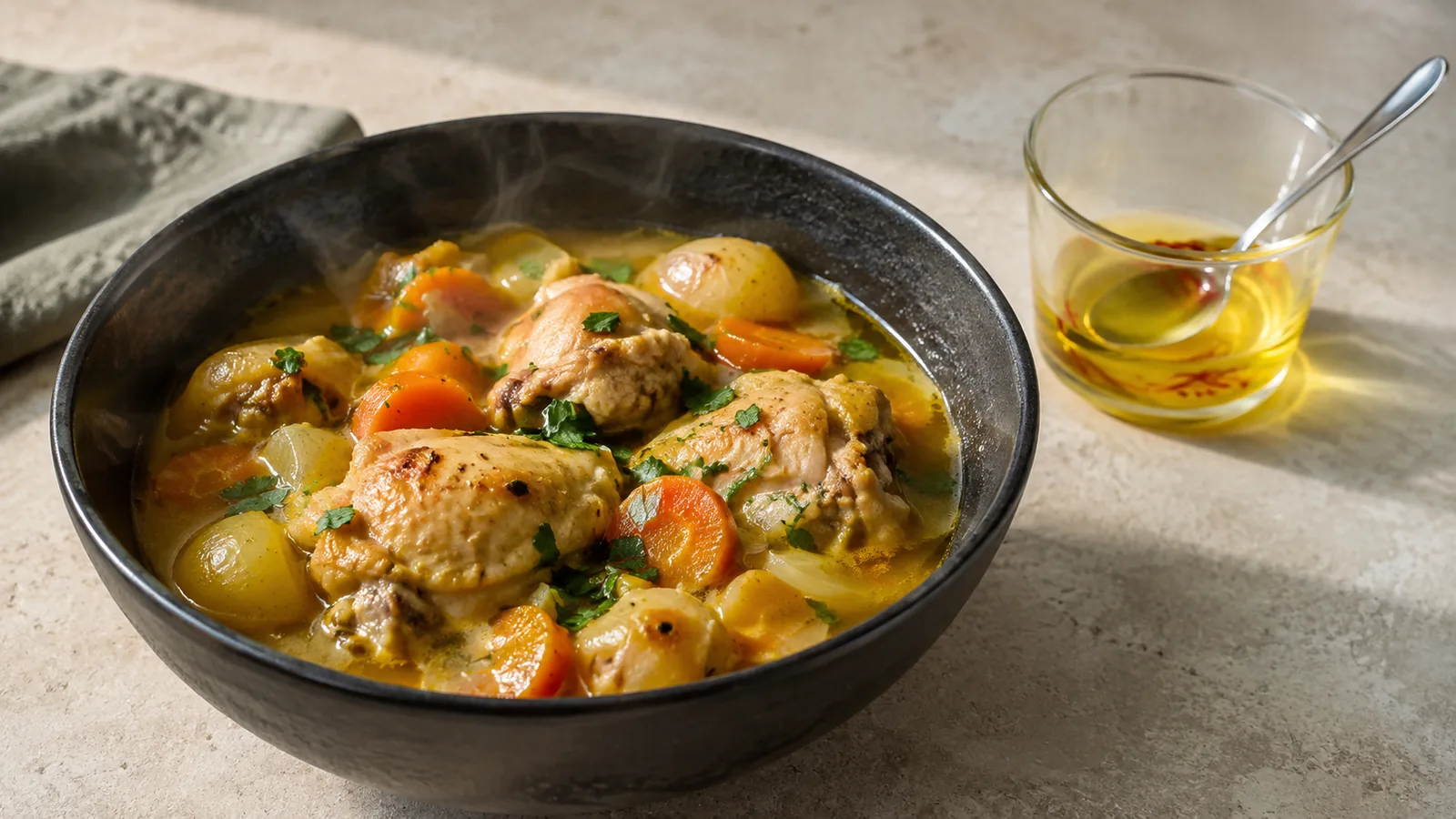
This celebration dish pairs steamed rice with barberries and braised chicken. Bloomed saffron may season the chicken sauce and colour part of the rice. The barberries are warmed briefly with butter and, if desired, a little sugar so they stay bright rather than burning.
Saffron Kebab: Joojeh Kebab
Iranian saffron chicken kebab is usually marinated with onion, lemon, saffron and oil. The spice is infused before it meets the meat, which gives more even colour than scattering dry threads. Cooked over charcoal, in an oven or in a pan, the chicken should remain juicy rather than being left in an acidic marinade for an excessive time.
Chelo kebab
Chelo kebab is grilled meat served with steamed rice, often finished with saffron rice and butter. The phrase refers to the combination of chelo and kebab, not to a “saffron pilaf with meat.” The rice and grilled meat remain distinct parts of the plate.
Khoresh-e gheimeh
Gheimeh is a tomato-based stew made with diced meat, yellow split peas, dried lime and fried potato. Some cooks add a modest saffron infusion near the end. It is not normally made from ground meat and chickpeas, as the older version of this article stated.
Morasa polo and shirin polo
These festive rice dishes use sweet and colourful ingredients such as orange peel, carrots, barberries, raisins and nuts. Saffron seasons portions of the rice and supports the citrus and fruit. Balance matters: the finished rice should be fragrant and gently sweet, not syrupy.
Iranian saffron desserts
Sholeh zard
Sholeh zard is a saffron rice pudding made with water, sugar and rosewater, usually decorated with cinnamon and nuts. Its texture should be soft and spoonable. Because the base is mild, the saffron is easy to taste and does not need help from artificial colouring.
Persian saffron ice cream
Bastani sonnati combines saffron, rosewater and pistachio in a rich frozen dessert. Some versions include small pieces of frozen cream. The saffron is infused in the dairy base, where the fat helps carry its aroma.
Halva, masghati and cookies
Saffron appears in Persian halva, starch-set masghati and festive cookies. Each handles moisture differently, so add the infusion with the recipe’s liquid rather than pouring it into a finished dough or hot oil. Our collection of saffron dessert ideas is a useful place to choose a first recipe.
Iranian saffron drinks
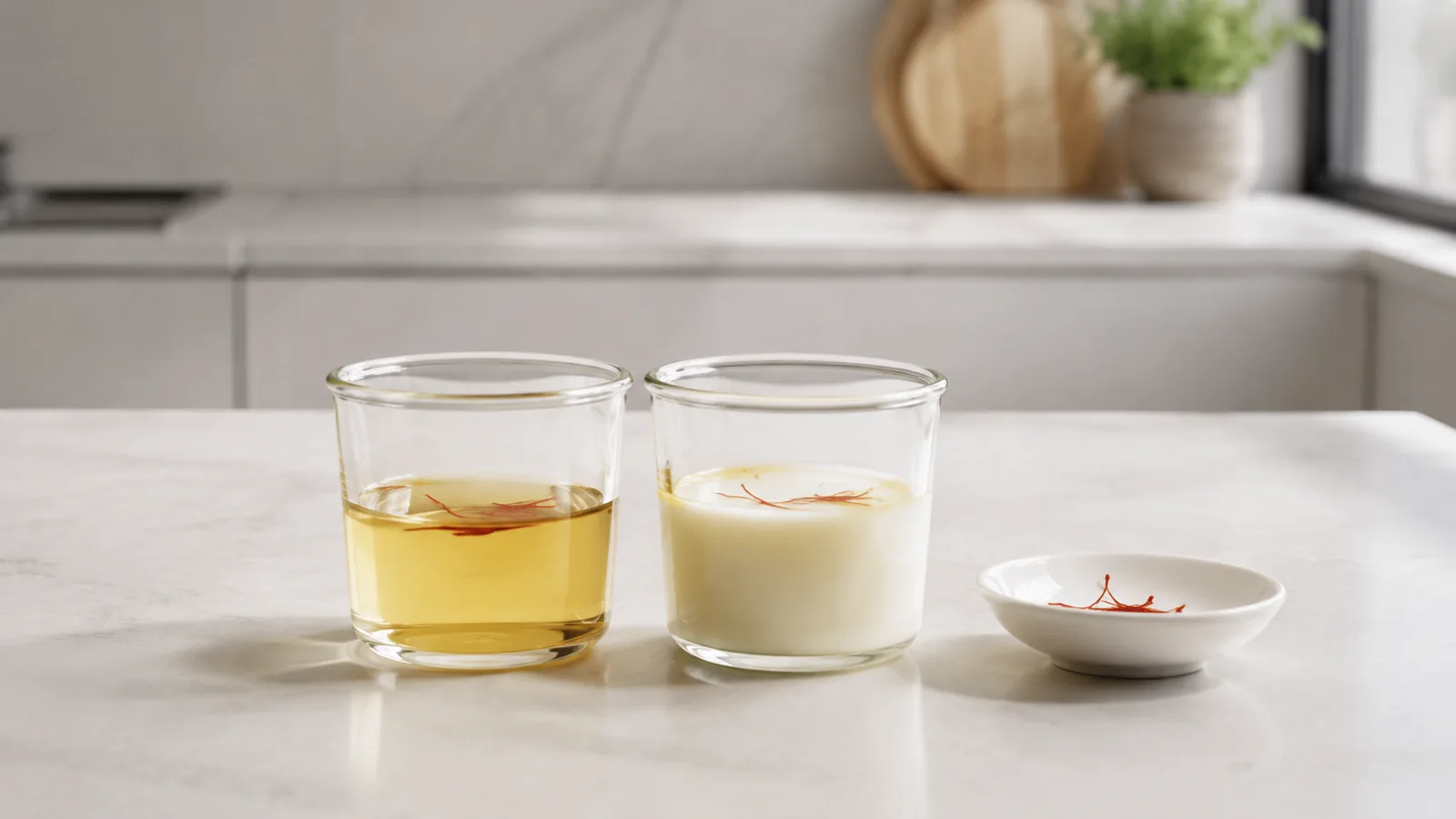
Saffron sharbat is a chilled drink made from a cooled saffron infusion, water and a measured sweetener, often with rosewater or citrus. Saffron tea is another simple use. In both cases, prepare a concentrate first; dry threads release colour slowly in cold liquid.
Keep sweet drinks refrigerated and make only what you can use promptly. Saffron changes the aroma and colour, but it does not preserve the drink.
Saffron uses in cooking
The same spice behaves differently depending on when and where it is added. These saffron uses in food are also the most dependable saffron cooking uses:
- Rice: fold an infusion into a small cooked portion or drizzle it before the final steam.
- Chicken and meat: distribute it through a marinade or braising liquid.
- Stews: add a modest infusion late enough to preserve aroma.
- Desserts: mix it into the water, milk or other liquid before setting or baking.
- Drinks: cool a concentrated infusion before combining it with cold ingredients.
For precise grinding and steeping, use our guide to brewing saffron. Treat the infusion as part of the recipe’s liquid so a rice crust, dough or pudding does not become wetter than intended.
What spices go with saffron?
Cardamom and rosewater are familiar partners in Iranian sweets. Cinnamon often appears as a garnish, while turmeric, cumin and dried lime belong in selected savoury dishes. They are not a compulsory blend. Combining every aromatic spice at once can hide the saffron you paid for.
Choose companions according to the recipe. Lemon and onion suit chicken; barberries and pistachios suit rice; cardamom and rosewater suit desserts. The purpose is balance, not a longer ingredient list.
How much saffron should you use?
There is no useful amount for “all saffron dishes.” A family rice pot, a glass of sharbat and a tray of cookies need different concentrations. Begin with the tested quantity in a reliable recipe, taking account of how strongly your saffron colours the infusion. You can add a little more liquid before serving, but bitterness is difficult to remove.
Measure threads before grinding. A tablespoon of loose threads, a tablespoon of powder and a tablespoon of diluted saffron water are not equivalent. Many confusing recipes use the word “saffron” without saying which form they mean.
Common mistakes with saffron in food
- Adding dry threads to a large pot and expecting even colour.
- Boiling saffron hard for a long time and losing its delicate aroma.
- Using turmeric as a substitute while expecting the same flavour.
- Pairing saffron with so much chilli or spice that it cannot be noticed.
- Using large quantities simply to make the food look expensive.
- Calling any yellow rice an Iranian saffron dish without using real saffron.
What cuisine uses saffron beyond Iran?
Spanish, Indian, Italian, French and other Middle Eastern and Mediterranean cuisines also have foods with saffron. Paella, biryani, risotto alla Milanese and some fish soups are well-known examples. Those traditions deserve their own methods; they are not interchangeable versions of Persian rice.
For a wider international view, see saffron in traditional and modern dishes. This page stays focused on Iranian saffron dishes and the roles the spice plays within Persian cooking.
Choosing your first Iranian saffron dish
Start with saffron rice if you want to practise blooming and colour distribution. Choose joojeh kebab for a marinade, tahdig for heat control, sholeh zard for a simple dessert or sharbat for a cold drink. Each teaches a different saffron use in food without requiring the spice to carry an unsuitable recipe.
The defining quality of these dishes is restraint. Saffron supports the rice, meat, fruit or dairy around it. Used carefully, it creates the fragrance and golden detail people remember without making every course taste the same.