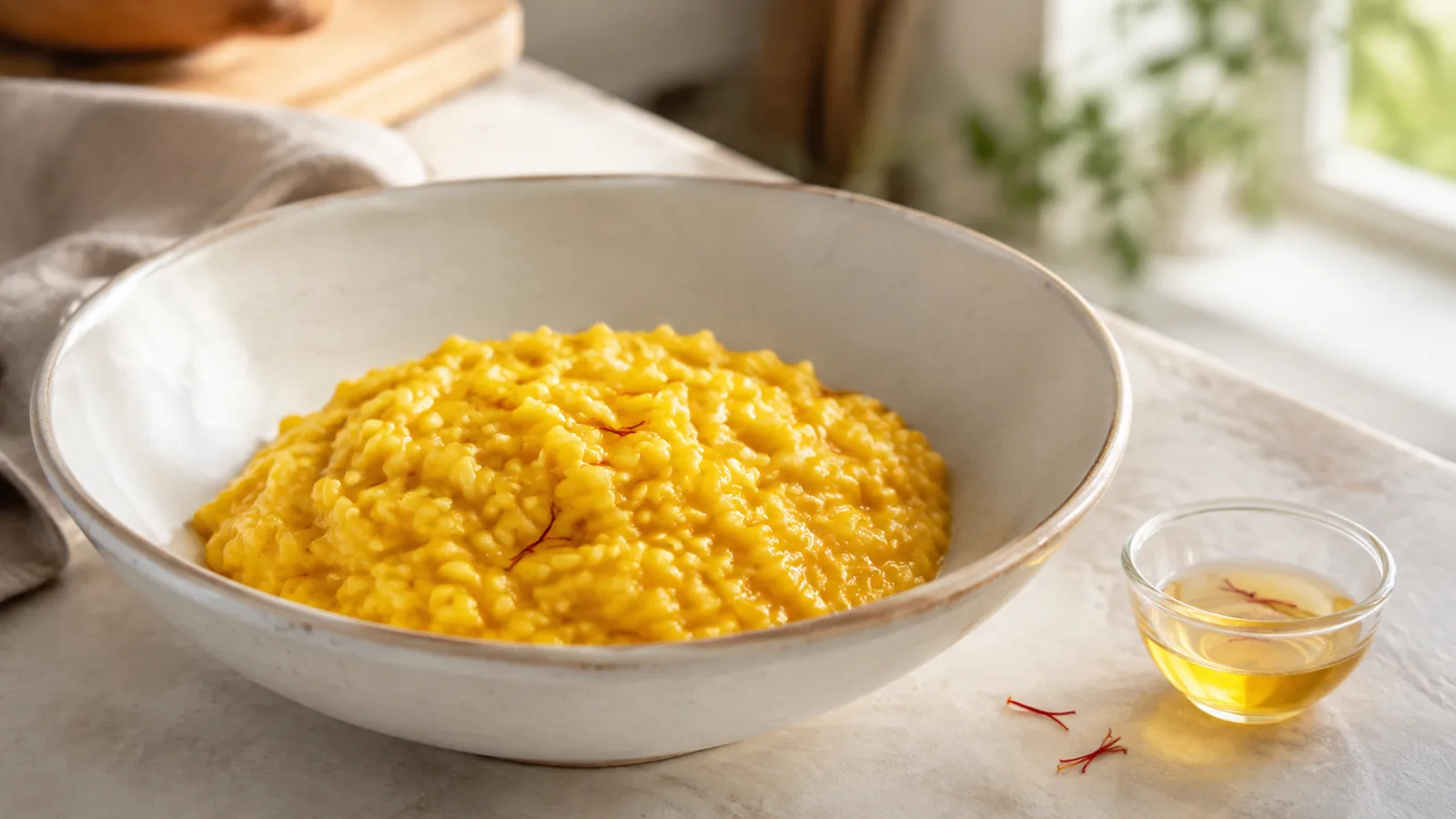
Saffron dishes appear in kitchens from Iran and India to Spain, Italy and the Mediterranean coast. The spice can colour rice, perfume a broth, deepen a marinade or give a dessert its warm floral edge. The best results come from using it with purpose rather than adding it to everything.
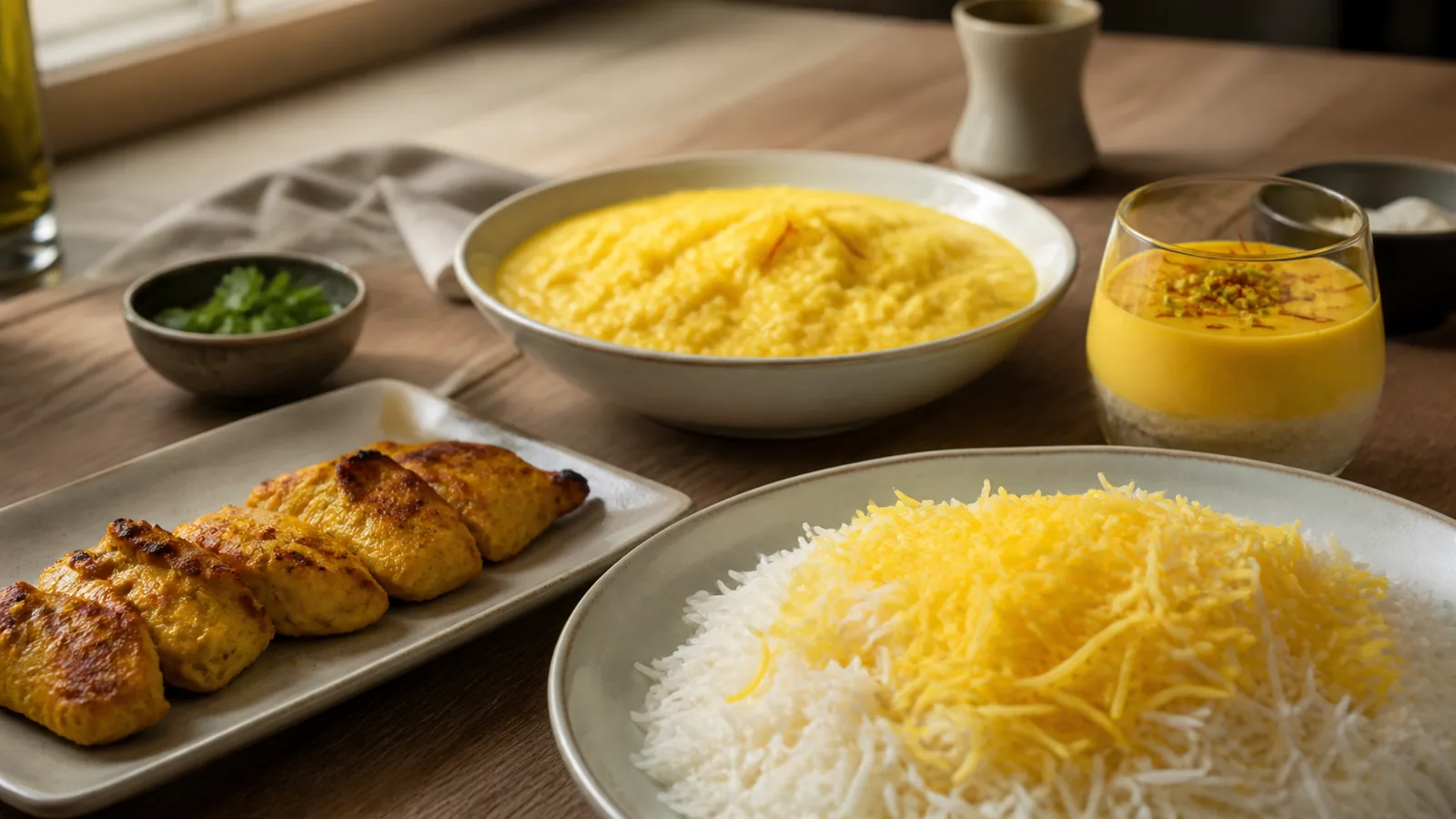
What saffron contributes to a dish
Saffron brings three things at once: a golden colour, a dry floral aroma and a gently bittersweet flavour. It does not taste like turmeric, and the two spices are not interchangeable. Turmeric colours food quickly and has an earthy character; saffron is more delicate and works best after its threads have been crushed and infused.
A small amount is usually enough. Too much can make a dish medicinal or bitter, while too little disappears behind strong chilli, smoke or heavy spice blends. The right quantity depends on the food, serving size and strength of the saffron.
Traditional Persian saffron dishes
Saffron tahchin
Tahchin is a baked or pot-cooked rice dish made with yogurt, egg and bloomed saffron. Chicken is a common filling, although meat and vegetable versions also exist. Its appeal comes from the contrast between a golden crust and a tender rice centre. Our four-person chicken tahchin recipe gives the full ratios and cooking cues.
Persian saffron rice and tahdig
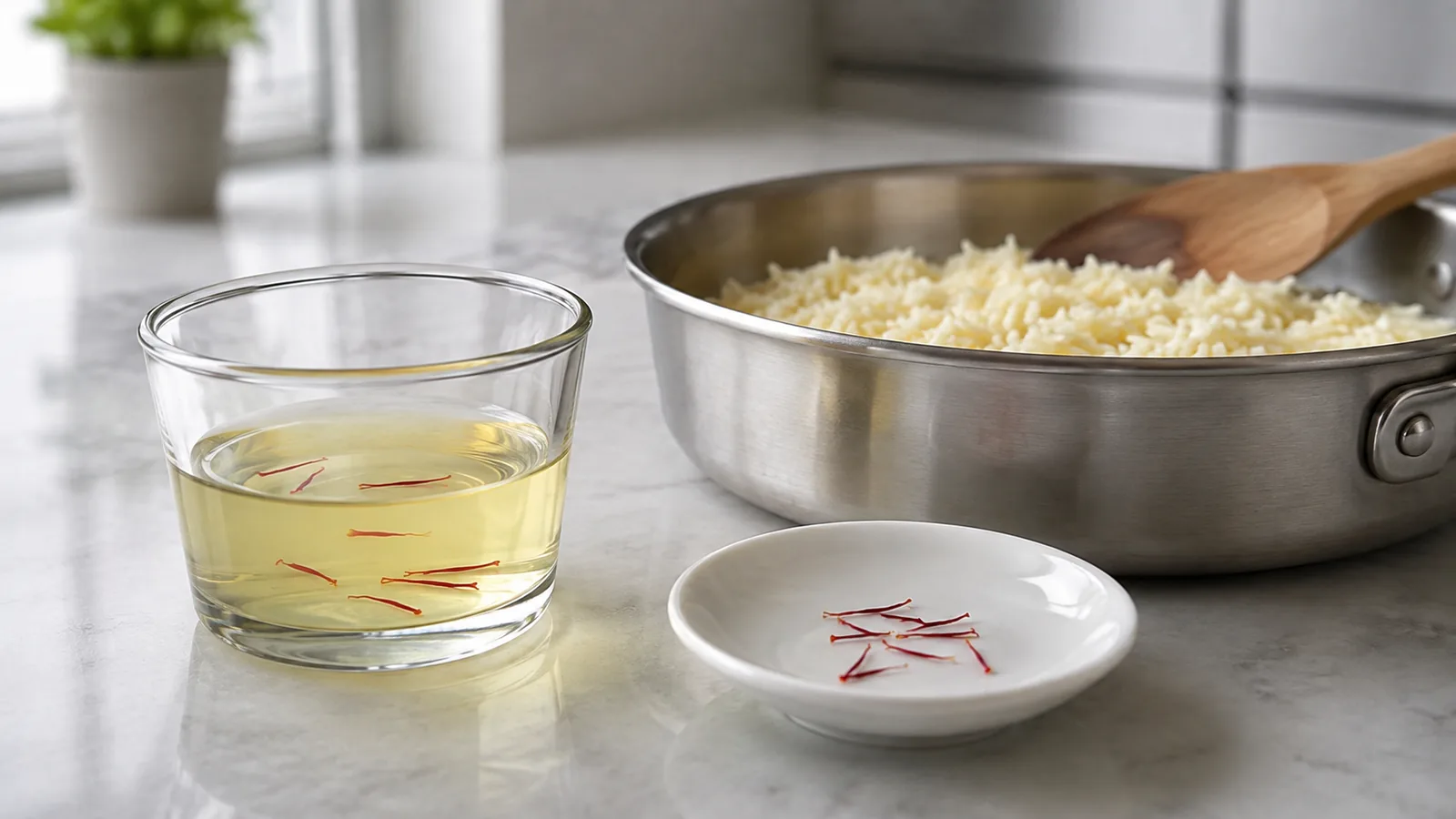
In a classic presentation, most steamed rice remains white and a smaller portion is mixed with saffron for the golden topping. The contrast shows the length of the grains and distributes the spice without making the entire pot intense. Follow the Persian saffron rice method for soaking, parboiling and steaming.
Tahdig is the crisp layer at the bottom of the rice pot. It may be made from rice, potato or thin flatbread. Saffron and yogurt can turn the rice version into a cohesive golden crust.
Saffron chicken kebab
Joojeh kebab often combines chicken with onion, lemon, saffron and oil. The saffron belongs in a liquid marinade so it reaches the surface evenly; sprinkling dry powder over meat wastes spice and leaves dark spots. Our saffron chicken kebab guide covers skewers, an oven method and a pan method.
Sholeh zard
Sholeh zard is a Persian rice pudding with saffron, sugar and rosewater, commonly finished with cinnamon, almonds or pistachios. Unlike a dairy rice pudding, it is usually made with water. Saffron supplies the colour and much of the aroma, so it should be bloomed before it goes into the soft rice.
Saffron sweets and drinks
Persian cooks also make saffron ice cream, halva, masghati, cookies and saffron tea. The amount is often modest because rosewater, cardamom and nuts share the aromatic space. Browse our saffron dessert ideas for practical combinations rather than treating the spice as decoration alone.
Saffron dishes around the world
Spanish paella
Saffron is associated with many paella recipes, where it colours and perfumes the cooking liquid before the rice absorbs it. It should complement the stock, vegetables and seafood or meat rather than dominate them. The rice is left relatively undisturbed so the grains cook evenly and a toasted base can form.
Italian risotto alla Milanese
Risotto alla Milanese uses saffron in a creamy rice preparation, traditionally served with dishes such as osso buco. Here the texture comes from gradual stirring and starch release, the opposite of the separate grains sought in Persian rice. Add saffron infusion during cooking so its colour spreads through the risotto.
Indian biryani and sweets
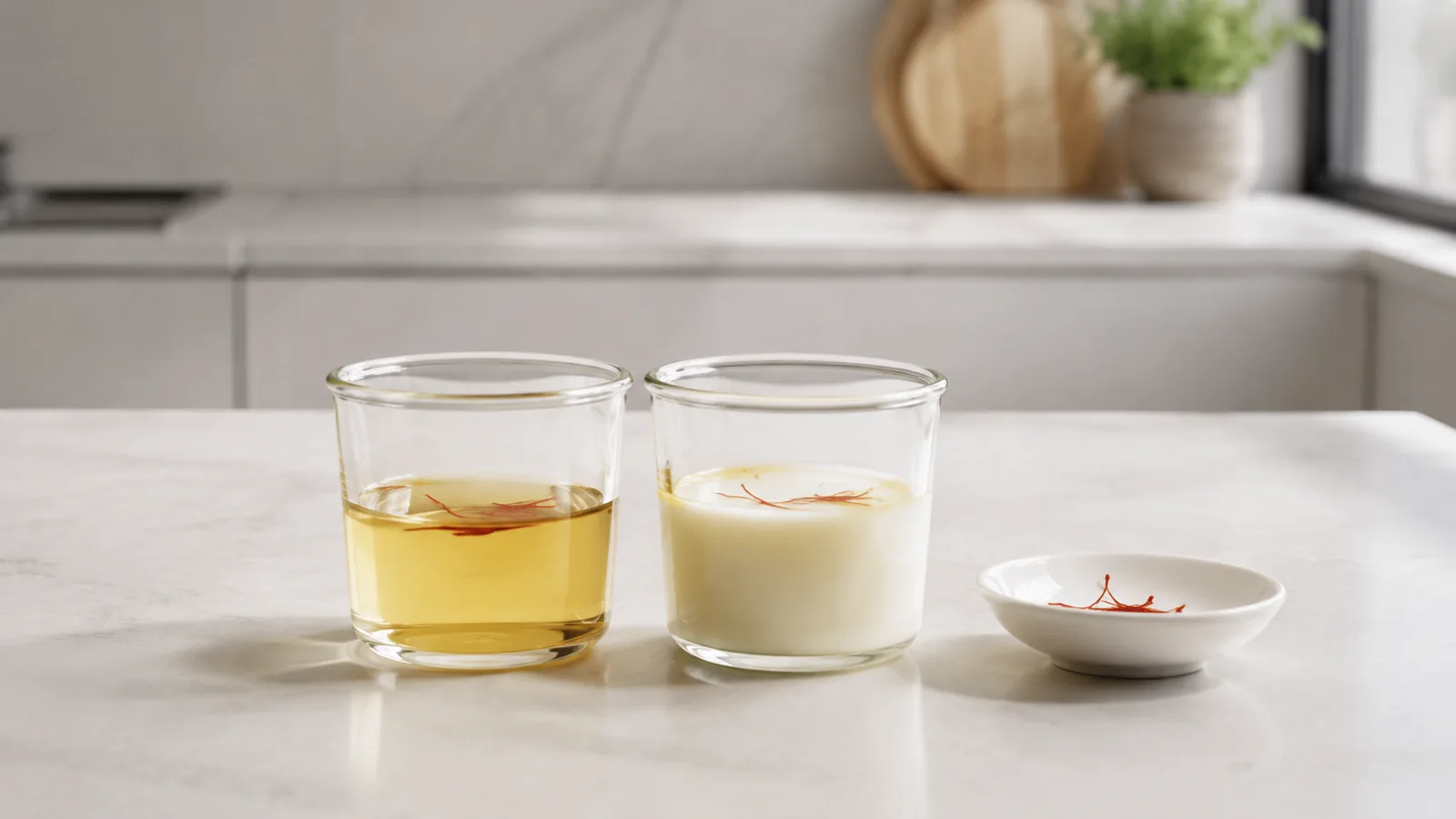
In biryani, saffron is often steeped in warm milk or water and drizzled across the rice before the final steam. This creates yellow and white streaks rather than one uniform colour. Kheer, kulfi and festive milk drinks may also use saffron alongside cardamom and nuts.
French and Mediterranean seafood
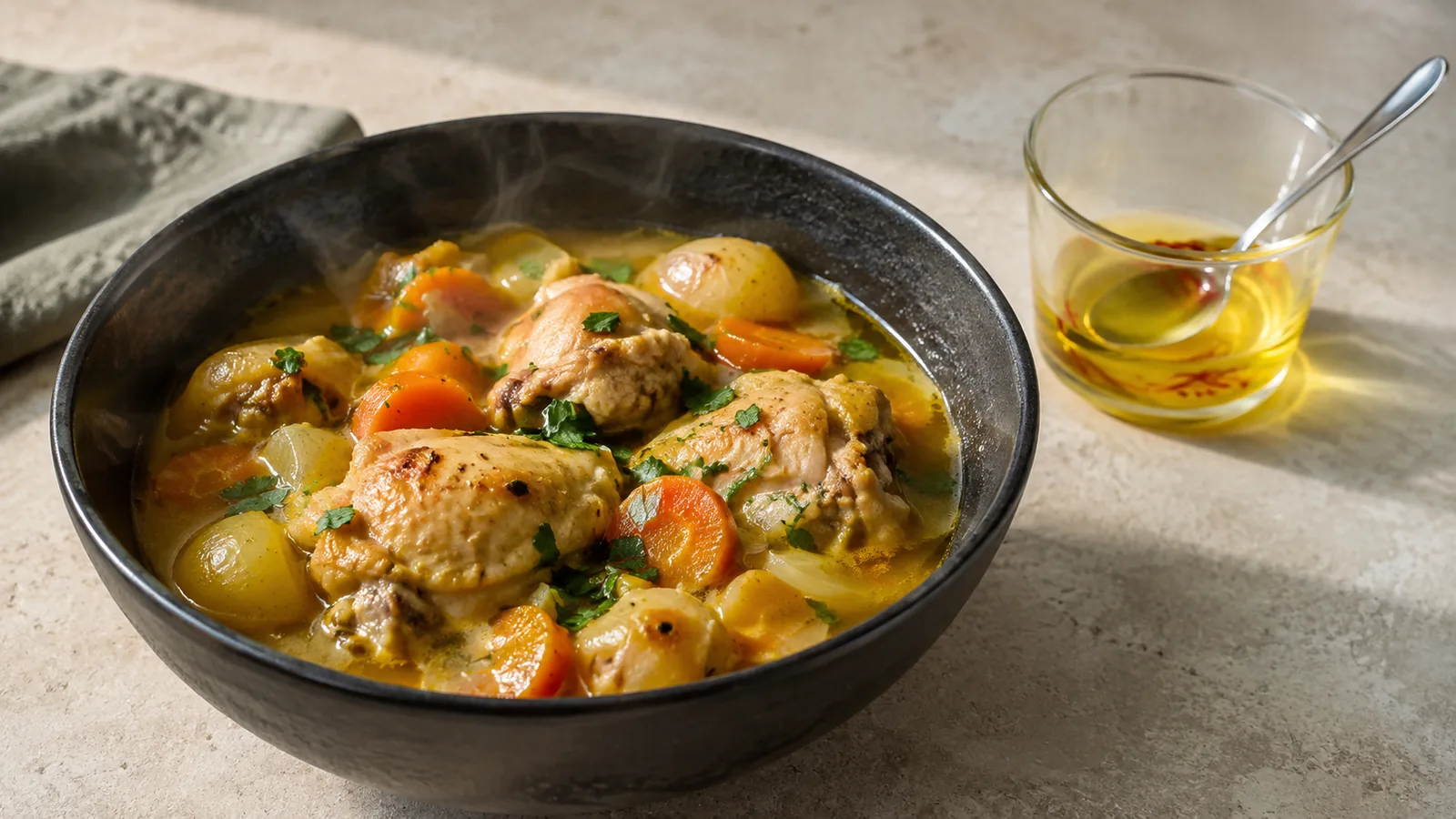
Some preparations of bouillabaisse and related fish soups use saffron in the broth. The spice suits shellfish, tomato, fennel and garlic when handled lightly. It should be infused in warm stock, not scattered dry over cooked fish.
Modern ways to cook with saffron
Vegetable and grain dishes
Bloomed saffron works well in couscous, quinoa, barley or roasted cauliflower when there is enough moisture or fat to distribute it. Pair it with lemon, toasted nuts and herbs rather than burying it under an aggressive sauce. A saffron vegetable stock can also turn a simple grain bowl into a coherent main dish.
Pasta, sauces and soups
Add saffron infusion to a light cream sauce, seafood pasta or vegetable soup near the end of cooking. A long, hard boil drives away aroma. For a dairy-free sauce, reduce a little stock, add the saffron and finish with olive oil.
Baking and pastry
Saffron can flavour enriched breads, shortbread, custards and fruit desserts. Infuse it in the recipe’s milk, water or melted butter, then add that liquid with the wet ingredients. Keep the rest of the flavouring restrained so the saffron remains recognisable.
Cold drinks
A chilled saffron drink begins with a concentrated infusion, because dry threads release poorly in cold water. Combine the cooled infusion with citrus, honey or a light tea. Make the drink fresh and keep it refrigerated rather than leaving a sweet infusion at room temperature.
How to prepare saffron for cooking
- Measure the threads before grinding; adding more later is easier than correcting bitterness.
- Crush them to a coarse powder in a small mortar.
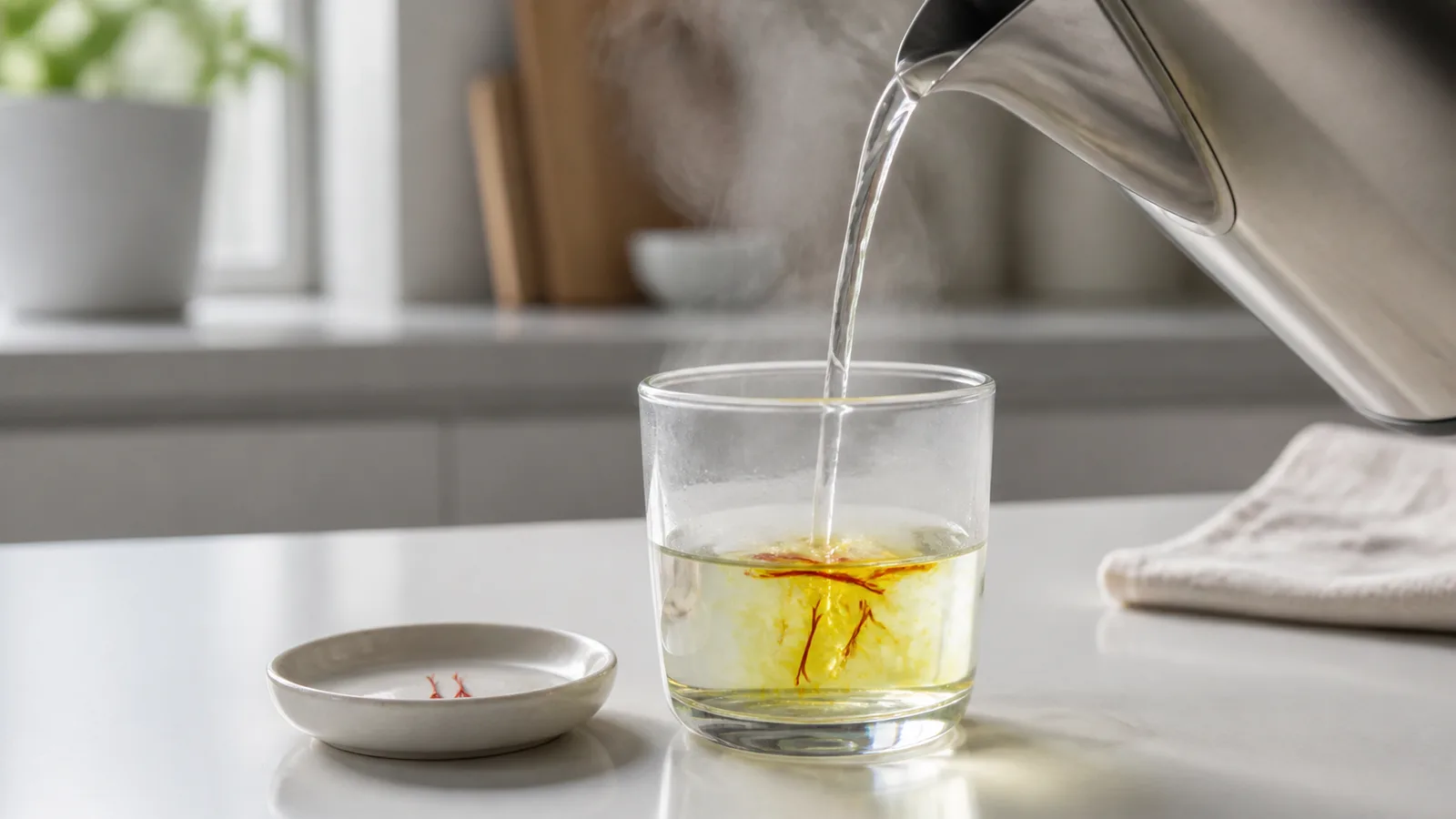
- Add a little hot water, warm milk or another recipe liquid.
- Cover and allow 10 to 15 minutes for the colour and aroma to develop.
- Add the infusion at the stage when it can spread without enduring unnecessary high heat.
Our detailed guide to brewing saffron compares hot-water and ice methods. Whichever approach you choose, use clean equipment and include the infused liquid in the recipe’s total moisture.
Flavours that pair well with saffron
- Rice and grains: a neutral base that makes colour and aroma easy to notice.
- Chicken and seafood: mild proteins that accept a saffron marinade or sauce.
- Citrus: lemon and orange brighten saffron’s floral notes.
- Dairy: milk, yogurt, cream and butter carry aroma in desserts and savoury sauces.
- Rosewater and cardamom: classic partners, best used with restraint.
- Nuts and dried fruit: pistachio, almond and barberry bring texture and contrast.
Common mistakes in saffron dishes
- Using dry threads as the main method: most of the dish stays unflavoured while a few bites become intense.
- Boiling the infusion for a long time: prolonged hard heat dulls its aroma.
- Adding too much: stronger colour does not guarantee a more pleasant flavour.
- Hiding saffron under heavy seasoning: spend the spice where the recipe lets it be noticed.
- Expecting saffron to fix weak ingredients: it cannot rescue stale rice, poor stock or overcooked meat.
Choosing a saffron dish to cook first
Begin with Persian saffron rice if you want to learn blooming and colour control. Choose chicken kebab to see how saffron works in a marinade, sholeh zard for a dessert, or risotto for a different rice texture. Once you understand how the infusion behaves, modern uses become much easier to judge.
The strongest saffron dishes give the spice a clear job. They do not rely on exaggerated quantities or decorative threads. Prepare it carefully, match it to a suitable base and let its colour and aroma support the food.