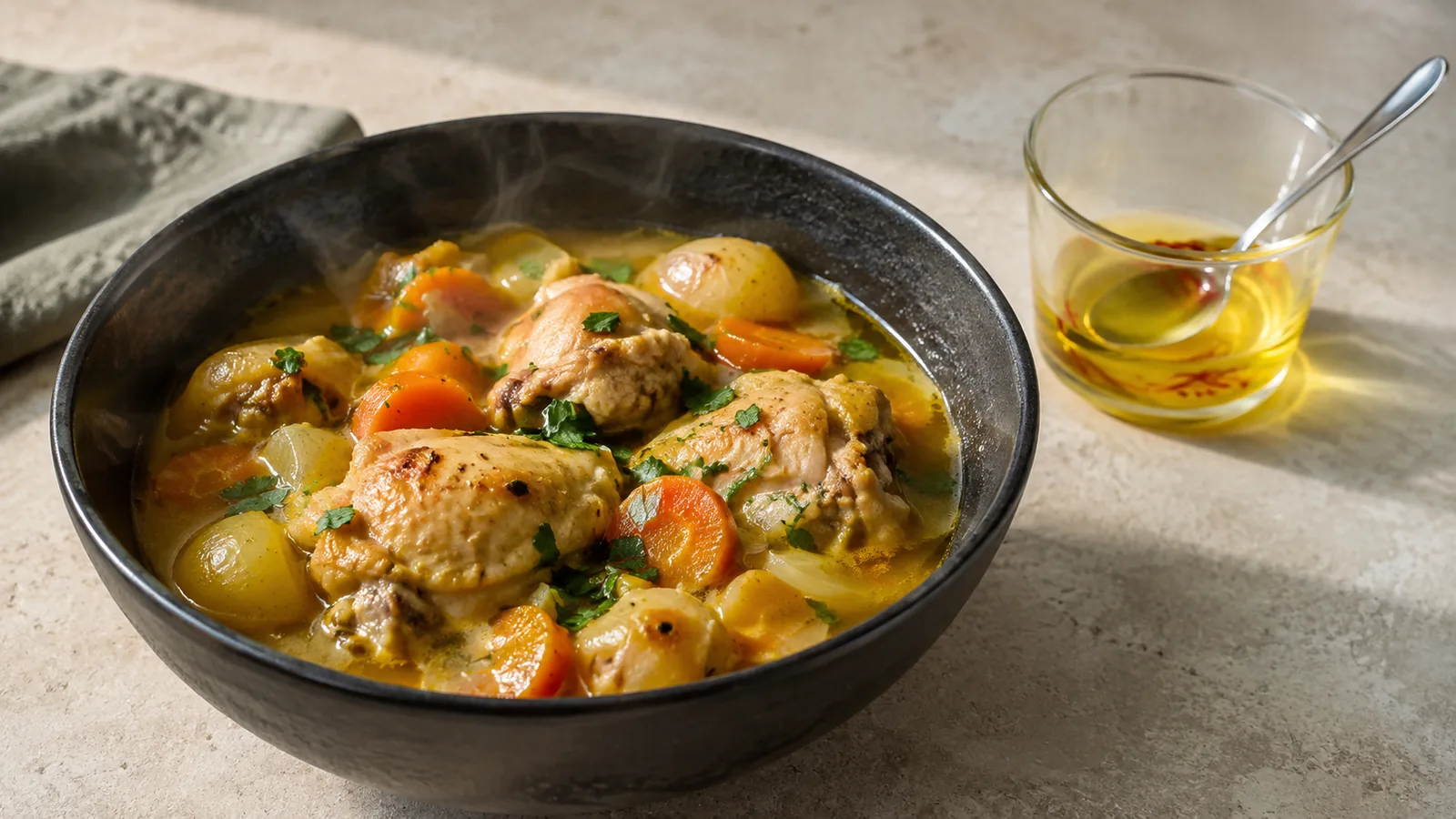
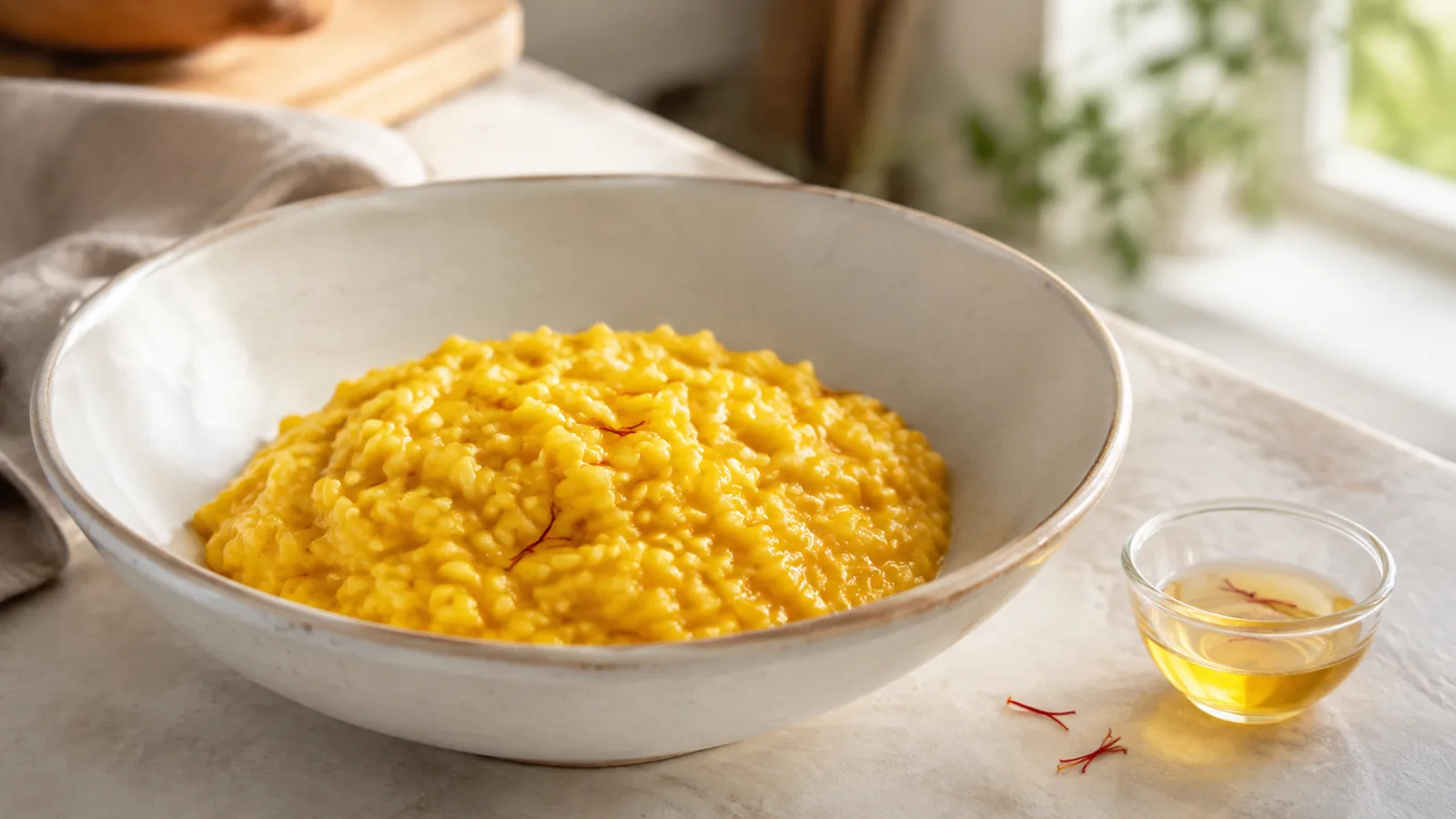
This saffron rice recipe gives you separate, fluffy grains with a fragrant golden finish—the style of Iranian saffron rice served beside kebabs, stews and celebratory dishes. The method is straightforward: soak and parboil basmati rice, steam it gently, then colour part of the cooked rice with properly bloomed saffron.
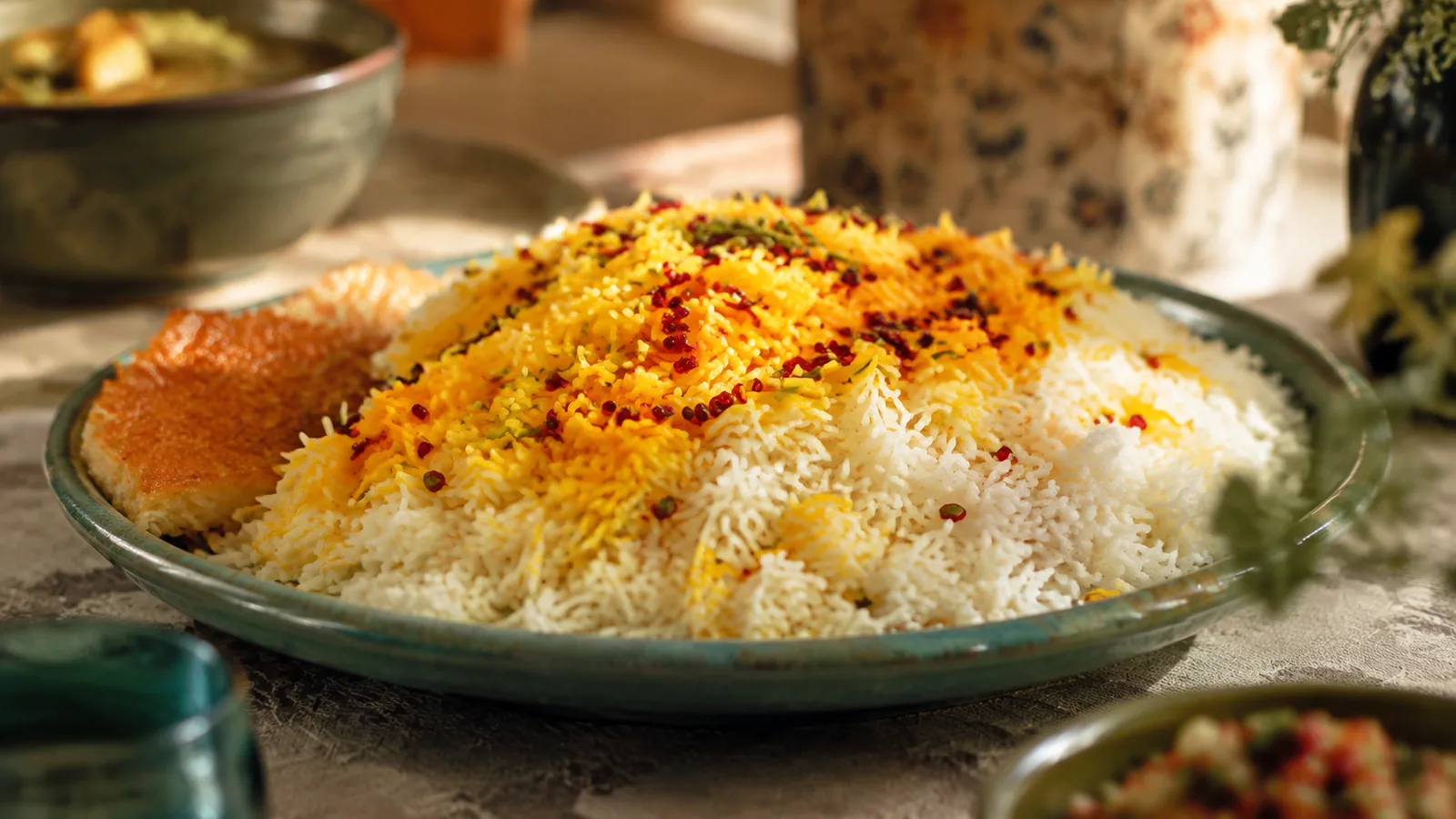
What is Persian saffron rice?
Persian saffron rice is usually a steamed white rice, or chelow, finished with a portion of vivid saffron rice on top. Instead of colouring every grain, the cook often keeps most of the rice white and folds a concentrated saffron mixture into a smaller amount. The contrast looks elegant and gives each serving a balanced aroma.
You can also tint the whole pot. That produces a uniformly golden saffron rice dish and works well for a buffet, but it uses more saffron and loses the familiar white-and-gold presentation.
Saffron rice ingredients
This quantity serves six to eight people as a side dish.
- 4 cups aged basmati rice
- Fine salt for soaking and cooking
- ¼ teaspoon saffron threads, loosely packed
- 3 tablespoons hot water
- 3 tablespoons butter, ghee or neutral oil, divided
- Water for soaking and parboiling
Aged basmati is the easiest choice for long, separate grains. The precise amount of salt depends on how heavily you salt the soaking and boiling water; taste one grain before draining and adjust the finishing rice only if needed.
How to prepare saffron for rice
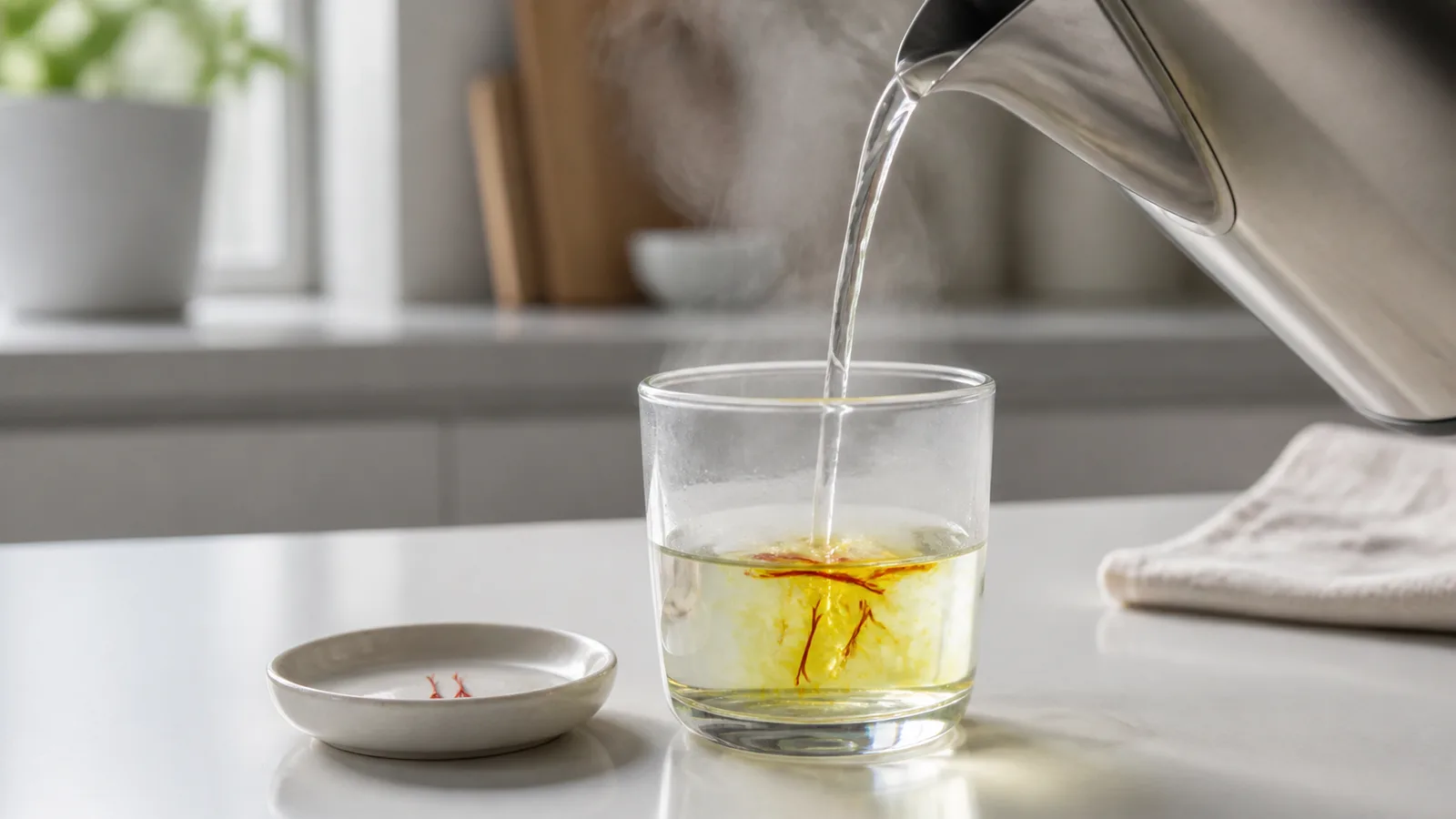
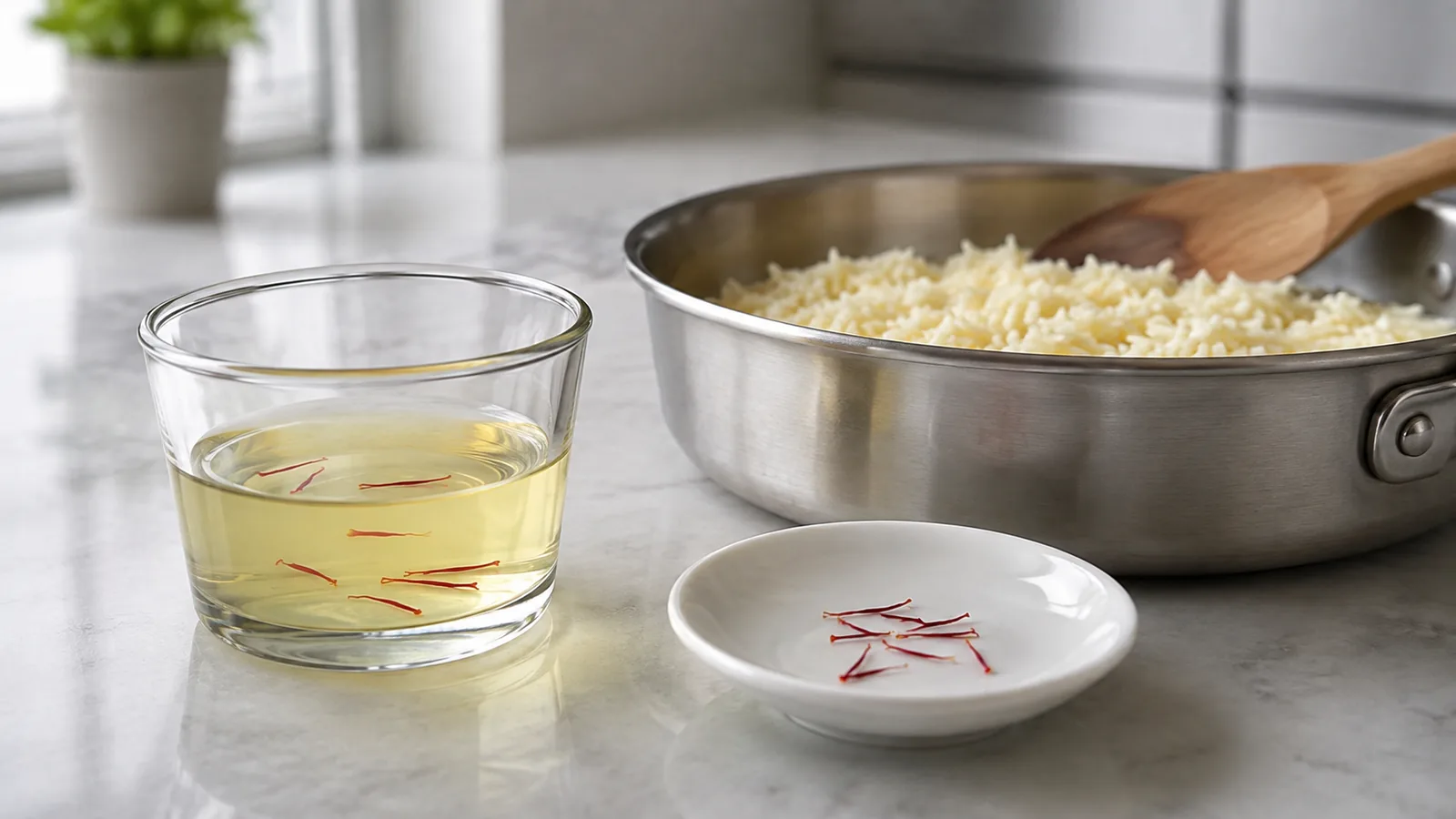
Crush the saffron threads to a coarse powder in a small mortar. Add three tablespoons of hot—but not furiously boiling—water, cover the cup and leave it for 10 to 15 minutes. This concentrated liquid distributes colour more evenly than scattering dry threads into the pot.
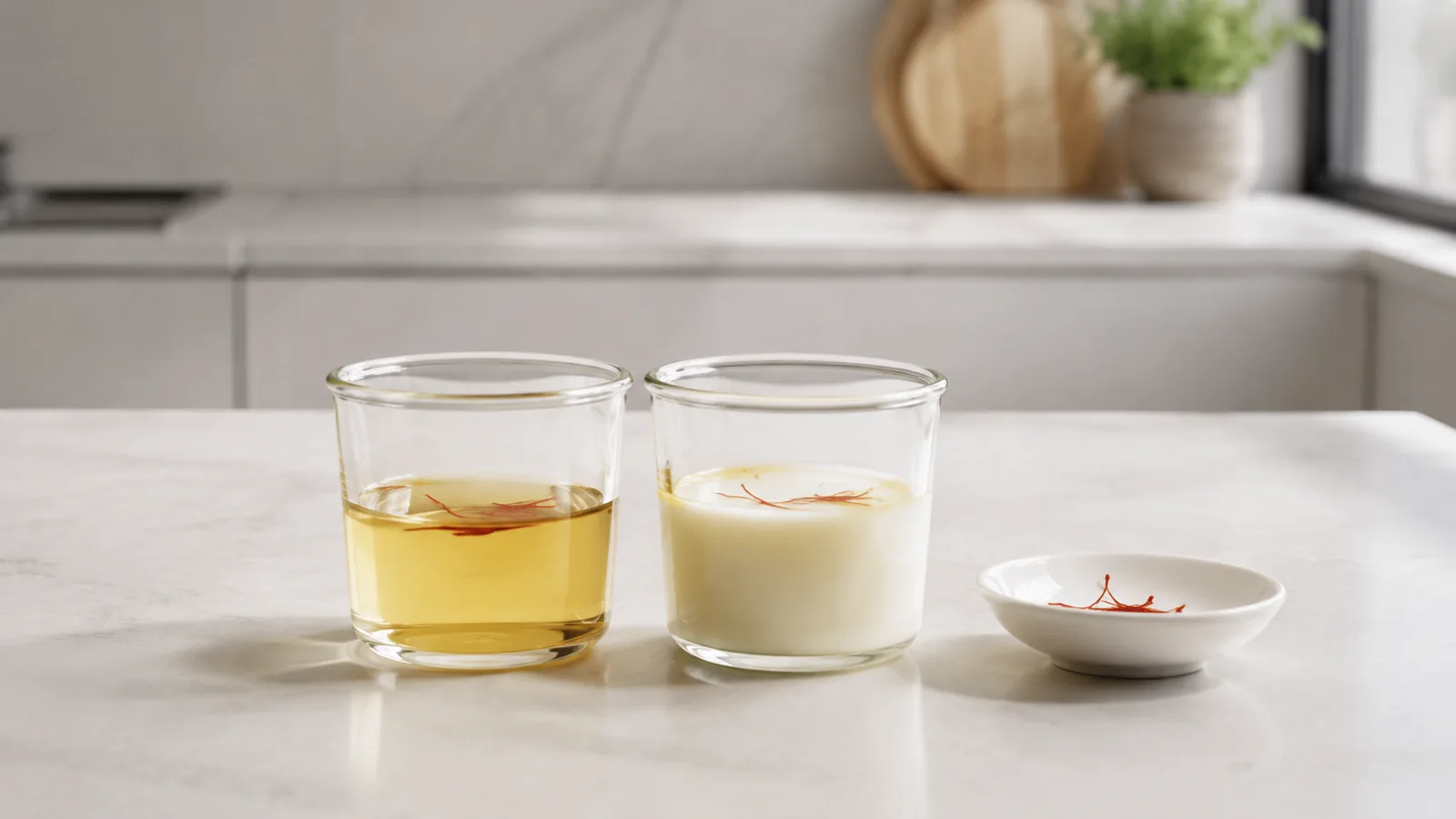
If you want a closer look at water temperature, grinding and ice blooming, see our guide to the best way to brew saffron. For this recipe, a small hot-water infusion is quick and reliable.
How to cook rice with saffron, step by step
If you are asking how to make saffron rice with separate grains, use the parboil-and-steam sequence below and judge the rice by texture at each stage.
1. Rinse and soak the rice
Put the rice in a large bowl and rinse gently with cool water until the runoff is much less cloudy. Cover it with fresh water by several centimetres, add salt and soak for one to two hours. A short soak hydrates the grains so they cook more evenly; it does not need to run all day.
2. Parboil until the centre is still firm
Bring a large pot of water to a strong boil. Drain the soaking water, add the rice and stir once so no grains settle on the base. Cook for about five to seven minutes, beginning to test early.
A ready grain should be soft on the outside but retain a small firm centre when bitten or pressed between your fingers. Drain immediately into a fine colander and rinse briefly with lukewarm water only if the rice tastes too salty. Do not cook it until fully tender at this stage; the steam finishes the centre.
3. Prepare the pot
Return the empty pot to medium heat and add one tablespoon of butter or oil with two tablespoons of water. For a simple crust, spread a thin layer of rice across the base. Mound the rest loosely on top without compressing it, leaving space around the sides for steam to rise.
Make three or four holes through the mound with the handle of a wooden spoon. Cover the lid with a clean tea towel, keeping every corner well away from the flame, and put the lid on tightly.
4. Steam gently
Use medium heat for about five minutes, just until steam builds, then reduce to low. Cook for 30 to 40 minutes. The exact time depends on the pot, burner and rice. Avoid lifting the lid repeatedly; escaping steam slows the cooking and can dry the top layer.
Turn off the heat when the grains are tender and separate. Let the pot rest, covered, for five minutes before fluffing. This short pause lets surface moisture settle.
5. Make the golden saffron rice
Put about two cups of the cooked white rice in a wide bowl. Stir the saffron infusion with the remaining two tablespoons of melted butter or oil, pour it over the rice and fold gently with a fork or spatula. Work from the sides so the grains stay long rather than becoming mashed.
Spoon the white rice onto a platter and scatter the golden grains over the top. If the pot formed a crisp base, loosen it separately and serve it beside the rice rather than forcing it out in broken pieces.
How to make the whole pot golden
For fully coloured saffron rice, prepare twice the saffron infusion and drizzle it over the rice just before the lid goes on. Distribute it in several narrow streams instead of one pool, then fold only the top few centimetres very gently. Steam as directed.
This method gives more saffron in every serving. Keep the concentration moderate: adding dry powder or a great deal of dark infusion can make some patches bitter while others remain pale.
How to use saffron in rice: when should you add it?
When should you add saffron to rice? Add bloomed saffron after the rice has been parboiled. For a decorative topping, mix it into a portion of the finished rice. For an all-gold pot, add it immediately before steaming. Both approaches protect the aroma better than boiling saffron in a large pot of water and then draining it away.
How to keep the grains separate
- Use a roomy pot: rice needs space to move during the boil.
- Test instead of relying only on time: different brands and ages soften at different rates.
- Drain while the centre is firm: fully cooked rice will become soft during steaming.
- Do not pack the mound: loose rice allows steam to circulate.
- Keep condensation off the rice: the towel around the lid absorbs droplets.
- Fold gently: vigorous stirring breaks the grains and releases starch.
Troubleshooting saffron rice
The rice is sticky
It was probably parboiled too long, stirred too much or steamed with excess water. Next time, drain as soon as the outside is tender and the centre remains firm. Rinsing the raw rice until the water clears also removes loose surface starch.
The rice is dry in the centre
It may have been drained too early or steamed without enough initial moisture. Sprinkle two or three tablespoons of hot water around the sides, cover and steam on low for another five to ten minutes. Add a little at a time; flooding the pot will make the lower layer soggy.
The colour is patchy
The infusion was too concentrated in one spot. Bloom the saffron in enough liquid to distribute it and combine it with warm butter or oil before folding it into the rice.
The saffron tastes bitter
Too much saffron, scorched threads or very fine dark sediment can dominate the dish. Use a measured amount, grind gently and keep the infusion away from direct heat.
Serving and storing
Serve Persian saffron rice hot with kebab, braised lamb, chicken, fish or a vegetable stew. Barberries, slivered pistachios or almonds can be added for a festive platter, but the plain white-and-gold version lets the rice and saffron remain the focus.
Cool leftovers promptly in a shallow container and refrigerate them. Reheat only the portion you need until it is steaming throughout. A spoonful of water and a covered pan help restore moisture without turning the grains soft.
The secret to perfect saffron rice
The real secret is not an unusual ingredient. It is stopping the parboil at the right moment, steaming over low heat and adding saffron in a concentrated infusion rather than losing it in the cooking water. Follow those cues and this saffron rice recipe produces fragrant, separate grains with a clean golden finish.