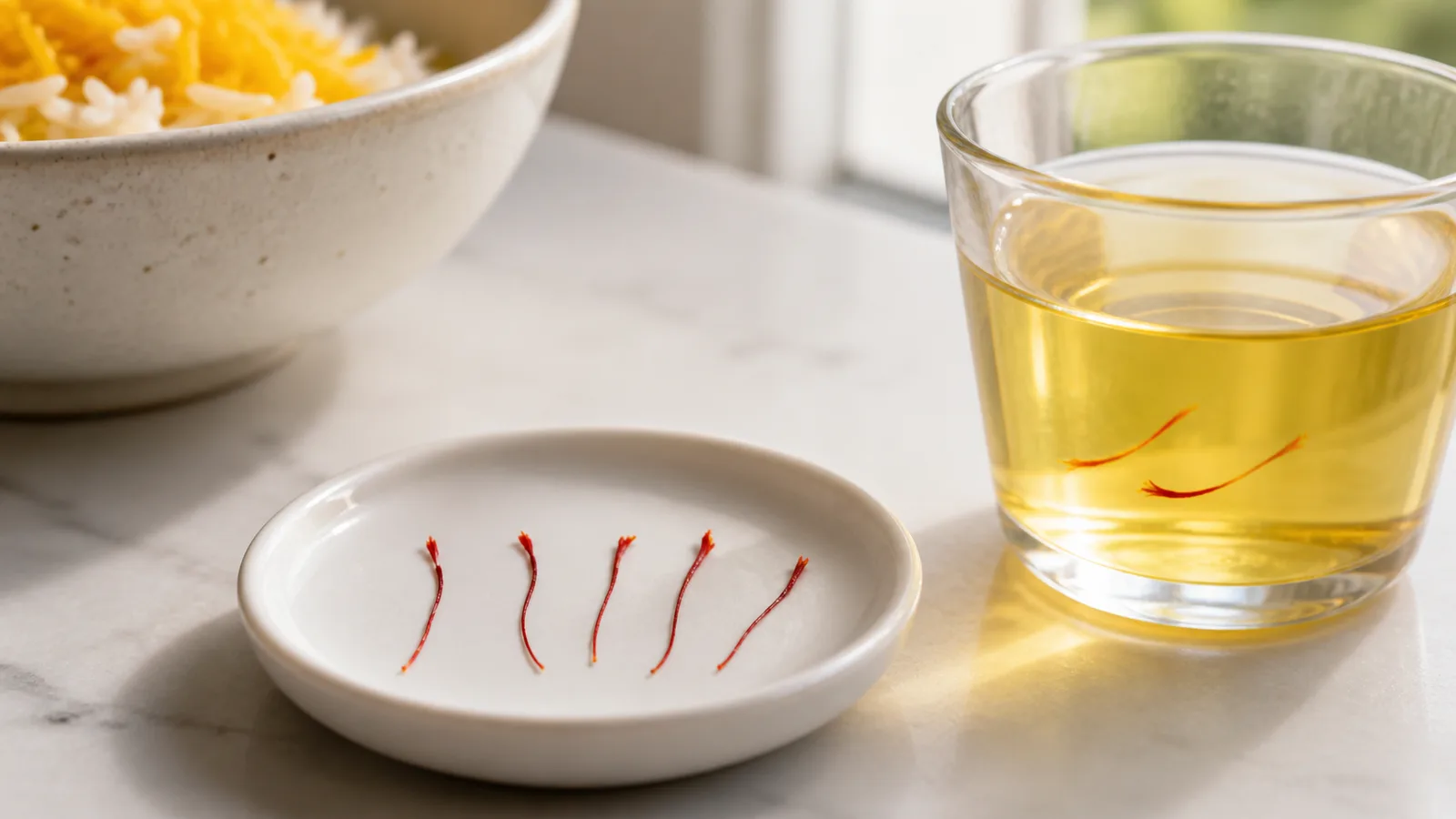
How Much Saffron to Buy: The Right Quantity for Your Needs
For a first purchase or occasional home cooking, 0.5 gram is usually a sensible place to start. Choose 1 gram if you already cook with saffron regularly, and buy 2 grams or more only when you have specific dishes, guests or repeat use in mind. Saffron is powerful by weight, but the amount a recipe needs varies. Buying a small, fresh pack is better than saving a little per gram and leaving most of it in a cupboard.
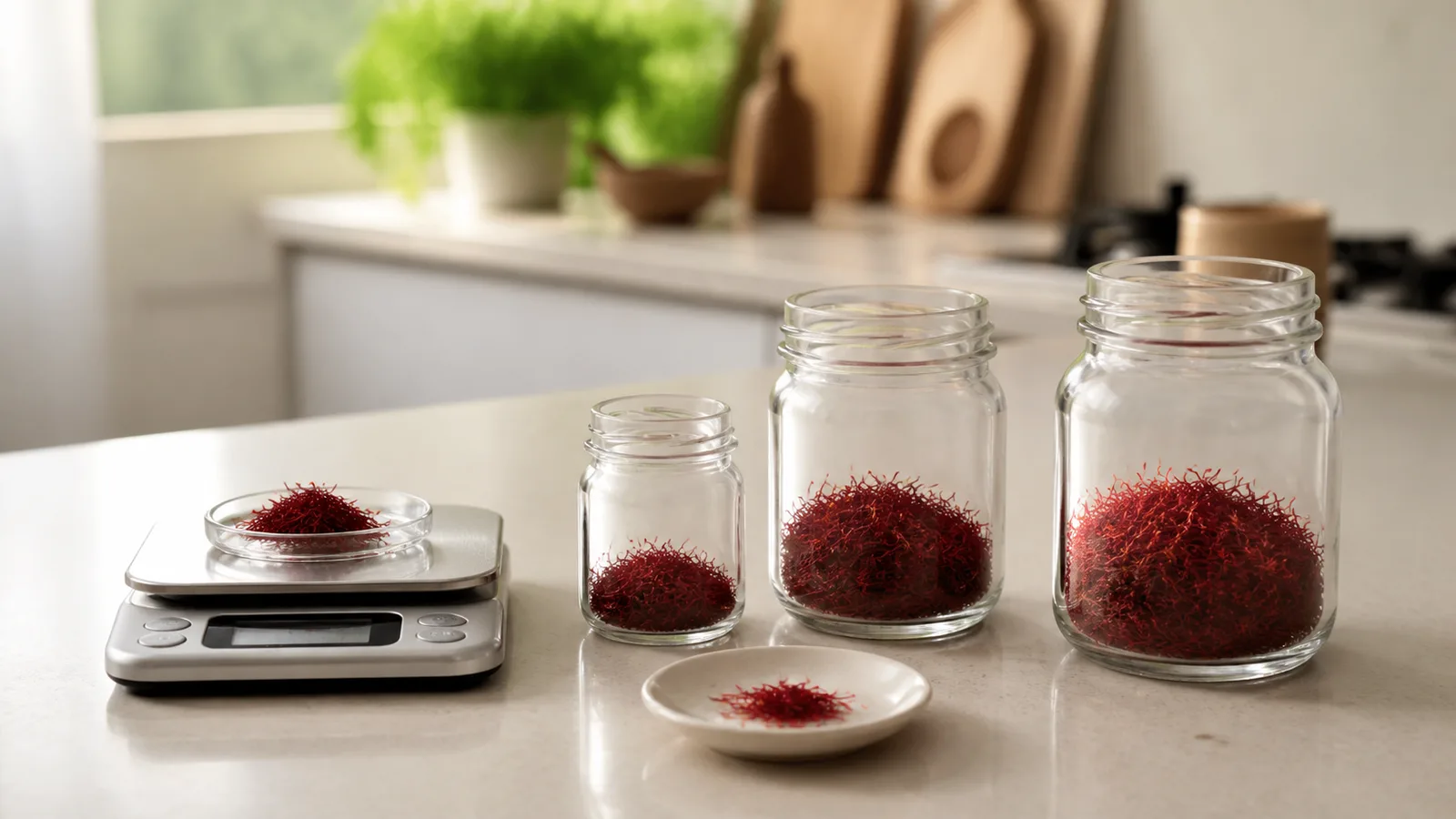
The ideal saffron quantity to buy comes from three practical questions: what will you make, how often will you make it, and how is the saffron packed? A paella, Persian rice, a tray of pastries and a cup of tea do not use identical amounts. Start with the recipe in front of you, then allow a little extra for a second attempt rather than guessing at a large supply.
How Much Saffron to Buy for Occasional Use?
A 0.5-gram pack gives a new cook room to learn how saffron blooms, tastes and colours food without committing to a large container. It suits someone making one saffron dish now and another later, or using a few threads to infuse a drink. If you discover that saffron has become part of your normal cooking, move to a 1-gram pack next time.
You may see claims that one gram can flavour 30 to 40 dishes. That is possible only when each dish uses a very small pinch; it is not a dependable serving guarantee. Thread thickness, grade, moisture, recipe size and the strength you enjoy all change the result. Use a scale or the recipe’s stated amount when precision matters.
How Much Saffron to Buy for Frequent Cooking or Large Meals?
One gram is a practical home-kitchen size when saffron appears in rice, stews, drinks or desserts more than once a month. A cook planning several family meals might choose 2 grams. A single dish that serves 6 to 8 people rarely justifies emptying an entire 1-gram pack into it; bloom a measured portion first, taste the finished recipe, and adjust the next batch.
Five grams and larger packs make more sense for a restaurant, caterer, baker or household with a known rate of use. Before buying in bulk, divide your usual amount per recipe by how often you cook it. That calculation is more useful than a generic “large family” recommendation. Check that the pack can be resealed, or plan to divide it immediately among clean airtight containers.
How to buy saffron without buying too much
Make a short cooking plan before comparing pack prices. Write down the saffron recipes you expect to prepare over the next few months and the quantity each trusted recipe calls for. Add those amounts and a modest allowance for one extra meal. This keeps a lower unit price from persuading you to buy far more than you can use well.
- Trying saffron for the first time: start with 0.5 gram.
- Cooking with it regularly at home: 1 gram is a useful default.
- Several planned meals or a gathering: calculate the recipes; 1 to 2 grams may be appropriate.
- Professional or genuinely frequent use: consider 5 grams or more only with suitable storage and predictable turnover.
Compare the final price for the same net weight, not the apparent size of the box. Decorative packaging can make a tiny quantity look substantial. The label should state the net weight clearly, and the seal should be intact. Our saffron price page explains why grade, origin, testing, packaging and order size can change the price per gram.
Do not turn a purchase quantity into a daily dose
Buying saffron for cooking is different from choosing a supplement dose. There is no reliable universal answer to how many threads of saffron per day a person should take: threads are not uniform, and clinical studies use defined preparations that cannot be converted accurately by counting strands at home.
The US Food and Drug Administration lists saffron as a flavouring and colouring ingredient under good manufacturing practice. That food use does not establish a medicinal daily amount. If you are buying saffron to treat a symptom, use it during pregnancy, combine it with medicines or give it to a child, discuss the intended product and amount with a qualified healthcare professional rather than estimating from a culinary pack.
Quality of Saffron: Why It Matters When Buying
Whole threads are easier to inspect than powder. Look for dry, aromatic threads in a sealed container, with the net weight, seller details and lot information visible. A deep red appearance can be encouraging, but colour alone cannot prove purity, origin or strength. Powder is not automatically poor quality, yet it is harder for a shopper to judge and easier to mix with other material.
Laboratory quality is measured rather than guessed. The current ISO 3632-1:2025 specification defines requirements for dried saffron, while its companion test-method standard covers laboratory analysis. A seller’s traceability and, where relevant, testing information are more meaningful than superlatives such as “the world’s strongest saffron.”
Buying authentic saffron also means resisting bundles that seem impossibly cheap for their stated weight. Compare like with like, read the return policy, and keep the invoice or batch details until you have opened and used the product.
How to Store Your Saffron After Buying?
Keep the threads in a tightly closed, food-safe container in a cool, dry and dark cupboard, away from the cooker, sink and direct sunlight. Open the container only as long as needed, use clean dry utensils, and close it promptly. Light, heat, moisture, air and strong nearby odours all work against the aroma and colour you paid for.
Large purchases lose their value if the container is opened every day or absorbs moisture. Divide a bulk pack into smaller airtight containers so most of it stays sealed. Do not refrigerate dry saffron merely to make it last longer; temperature changes can introduce condensation when the container is opened. Our detailed guide to storing saffron covers containers, light, moisture and longer-term handling.
In Conclusion: How Much Saffron to Buy
Choose 0.5 gram for a first or occasional purchase, 1 gram for regular home use, and a larger pack only after adding up real recipes. Those are buying guides, not fixed recipe doses. The right amount is the one you can use while its aroma and colour are still at their best.
Buy whole, traceable threads in a clearly labelled pack, store them well, and measure for the dish instead of pouring by eye. That approach gives you better value without turning a precious spice into forgotten cupboard stock.